By David Joel Miller, MS, Licensed Therapist & Licensed Counselor.
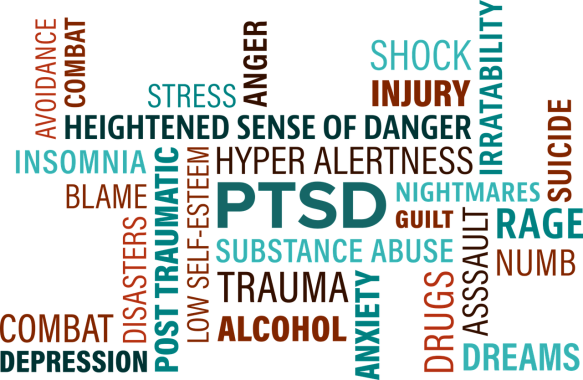
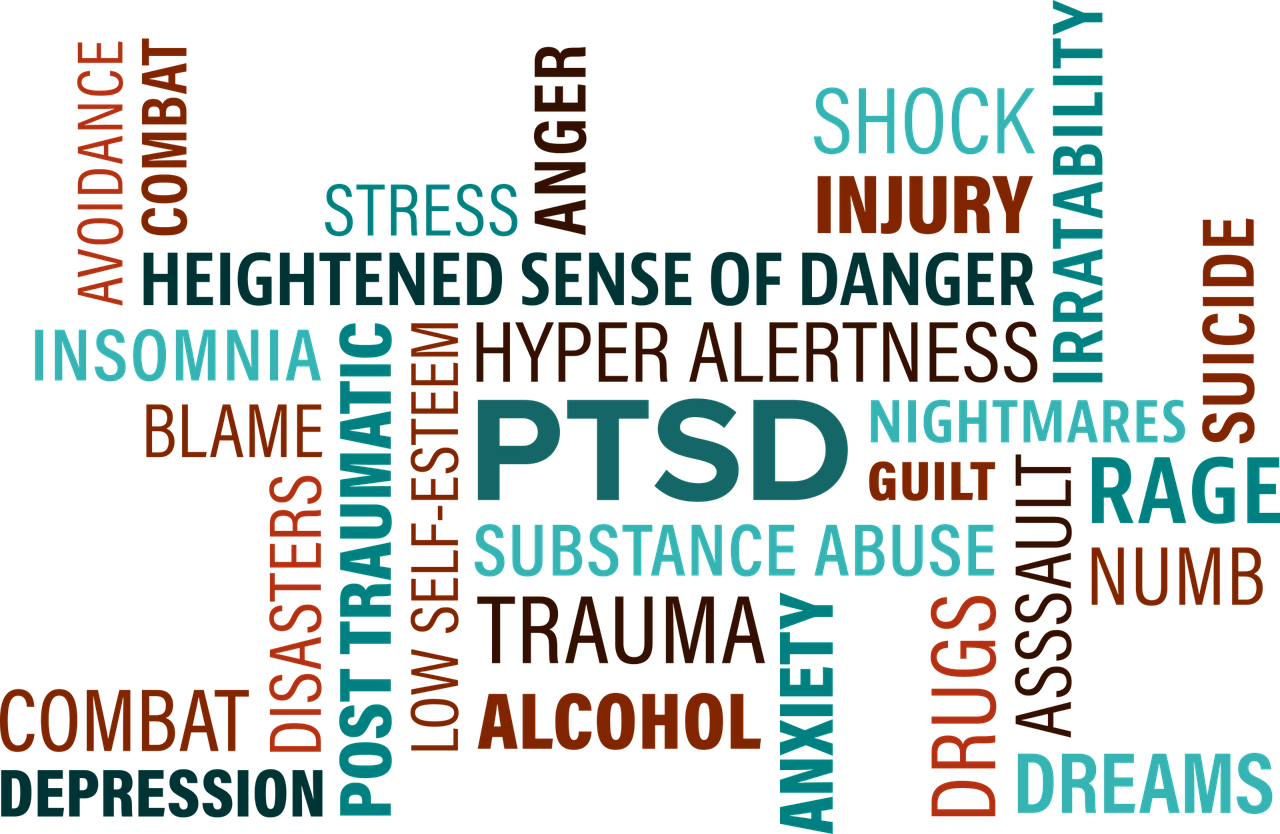
PTSD.
Photo courtesy of Pixabay.com
What’s the difference between PTSD and Acute Stress?
Feeling stressed out?
Photo courtesy of Pixabay.com
PTSD, Post-Traumatic Stress Disorder has made the news a lot recently. This is a good thing. More recognition of PTSD should result in more treatment and less suffering from those who have PTSD. Stress caused problems may or may not be from a Trauma.
What hasn’t gotten as much notice and should have, is the role of Acute Stress Disorder in the events that knock people down and cause a lot of suffering. Acute Stress Disorder creates a lot of problems for a lot of people. Reactions to severe stress can cause long-term changes in people’s feelings and behaviors. Many of these changes go unrecognized and untreated. Acute Stress Disorder may be missed more often than it is diagnosed. More on that later in this blog post.
Stress can harm you.
We know stress is a problem a lot of the time, for a lot of people. Outside the field of mental health, there are lots of blog posts and books on stress, what it is, and how to deal with it. I have written posts about stress and managing it for those of you who have too much stress in your life even if it does not get you a diagnosis or disability.
Stress, plain simple stress, can break people down even if they never meet the criteria for a mental illness. Think of stress like this:
Remember those spectacular car crashes at those televised car races? Some of those crashes were the result of car parts (or drivers) under stress. All-day, for hundreds of miles that car and that poor car part, ran hard and fast. The stress just kept coming, then suddenly that part breaks, that car goes all which way and the crash occurs.
Stress on people can be like that. Too much stress too long and the person develops mental health problems. Some of those problems need a day off, others become diagnosable illnesses. In the past, we tended to think of stress-related disorders like Post-Traumatic Stress Disorder (PTSD) as close cousins to Anxiety. That has started to change.
Beginning soon mental health professionals will begin to use new coding systems. The DSM-5 or the newer ICD codes. In those systems, Stress and Trauma-Related Disorders get their own chapter. While Stressor-Related Disorders can cause anxiety and have some symptoms in common with anxiety disorders they also have some differences.
Trauma- and Stressor-Related Disorders.
From the day you are born till the day you die too much stress can cause you a problem. One key factor in Trauma- and Stressor-Related Disorders is that there has to be a specific thing that happened to you, the stressor. Trauma is the king of all stressors.
So these things do not just suddenly happen for no reason and they are presumably not something you are born with. This fuzzes up the expression that mental illness is a brain disorder, in that the cause of these disorders are things that happen to you.
If life events result in acquiring a mental illness, then events, as in therapy and learning, can be helpful in treating that disorder. Much of the treatments for stressor-related disorders are cognitive type therapies.
Trauma and Stressor-Related Disorders also can have features that are similar, we might even say overlap, depression, anxiety, obsessive-compulsive, and the often overlooked dissociation. Not every other mental illness is caused by stress or trauma. We just need to be aware that sometimes there can be connections. This similarity to other issues results in a lot of stress-related disorders not being diagnosed until years later when the person is severely mentally ill or disabled.
What is Acute Stress Disorder and why is it important?
Acute Stress Disorder has two sets of “symptoms,” the things people experience that are a problem for them and the technical things professionals use to give out the diagnosis.
Some of the things you might experience as a result of having Acute Stress Disorder are also symptoms of other mental health issues or other mental illnesses. There are a variety of diagnoses that someone might get as a result of injuries they sustained due to stress.
These symptoms can impact your life in long-term ways. People may find their personality has changed.
Poor or no sleep is a cause for worry. Poor sleep now, predicts mental health issues down the road. In the aftermath of stressors, many people report that they do not sleep well. Some report bad dreams, nightmares, or night terrors. A few days of bad sleep after you are stressed and you should get back to normal. If the sleep disturbance goes on for very long it starts to change your functioning and your life.
Panic attacks are common in the first month after a severe life stressor. The time period of thirty days becomes important when we try to separate Acute Stress Disorder from other problems. This panic attack may first be experienced immediately after a stressful incident and then go on to become Panic Disorder.
If you have been through a severely stressful incident it is not unusual for you to blame yourself for not expecting it, not doing something differently, and not being able to prevent it. Rationally you should know that it may not have been possible to prevent what happened, but people commonly experience guilt or even shame over not being able to stop that trauma.
After a trauma, some people report that happiness or joy has been sucked out of life. They stop caring about themselves or others. They may begin to take risks that they never took before. They drive too fast, gamble, take more sexual risks. Some trauma or stress survivors become angry, bitter, and more argumentative. They get in more fights, verbally, and physically. It is as if they have changed who they are and they no longer care.
If you knew about the traumatic experience you might understand why the changes in behavior occurred. If that trauma survivor kept the trauma a secret, and many do, you might think this was all bad behavior.
Trauma survivors, even those who do not go on to develop more serious mental health problems, may become confused or think they are losing their minds. They may get tested for or treated for concussions. They could have both a concussion and a longer-term mental illness.
After a trauma or a crisis from the buildup of long-term stress, you may find it difficult to go back to places that remind you of the trauma. People become unable to go back to work, visit certain places or they avoid social situations.
How do professionals diagnose Acute Stress Disorder and why is that diagnosis so rare?
The official criteria for Acute Stress disorder are found in the DSM-5 or DSM-4-TR if your agency is still using that one. The DSM’s are published by the APA and you can order the full text from them. Here is my oversimplified plain language version of that criteria. I hope I do not make errors in this explanation.
A warning
Self-diagnosis or diagnosing your family and friends is a risky behavior. If after reading all this you believe you or someone close to you has Acute Stress Disorder, another Trauma- and Stressor-Related Disorder, or any other mental health problem, go see a professional and get it checked out. There are treatments available for all of these conditions and there is no need to suffer alone.
There are 5 things the professional needs to look at for Acute Stress Disorder
-
Did you experience a really bad Traumatic Stressor Recently?
There is a “waiting period” of 3 days. Most people have difficulty for a few days after a serious trauma. Then there is the requirement that the problems you are having must last UP TO 30 days. This is a huge thing for Acute Stress Disorder. If your problems go on more than 30 days the name we call this (diagnostic code) changes to something more long-term like Post-Traumatic Stress Disorder (PTSD.)
The result of this time factor is that a whole lot of people who have this problem do not ever get diagnosed. In outpatient settings, it can take 30 days to get your insurance settled and to get in for an appointment. In hospital settings this diagnosis may be found more often using “strict criteria” but in most other places the results of trauma do not show up till years later and the issues then get called something other than Acute Stress Disorder.
-
You must have at least 9 of 14 possible symptoms.
This leads to lots of ifs. Depending on who is doing the evaluating some things get counted and not others. Another problem is that trauma victims do not like to talk about their trauma. One symptom is avoiding reminders of the trauma and talking about it again is a reminder. So not having said they have a symptom can rule people out who did, in fact, meet the criteria and do have Acute Stress Disorder.
I will not go through all the 14 criteria here, just a few of the big ones.
You can’t get the trauma or stressor out of your head.
This is sometimes called intrusive thoughts. You may also have dreams and things will trigger the memories so much you begin avoiding those emotional triggers. After the 30 days waiting period this may become PTSD.
From now on you are in a bad mood and can’t get out of it.
The happiness and joy get sucked out of your life. You are in a bad mood all the time for no apparent reason. Some people, kids, and men mostly, become irritable, angry, and possibly violent. In my view, Acute Stress Disorder and its aftermath are involved in a lot of these unexpected violent incidents.
People may “space out.”
Researchers have noted that zoning out, technically called dissociation, is common, almost universal in the first three days after a trauma. If that dissociation continues after the third day we think it indicates Acute Stress Disorder. After thirty days that dissociation gets diagnosed as something else. I believe that there are more cases of dissociation than gets recognized. Some are ignored and some get another name like Psychosis NOS (not otherwise specified.)
Acute Stress Disorder is time-limited.
Acute Stress Disorder must last more than three days and less than thirty. Beyond the thirty the name gets changed. Many people try their hardest to cope and do not report symptoms. They can’t work and go on disability for a while until that runs out. Some end up alone and homeless. They get angry, depressed, or anxious and their relationships suffer. They develop panic attacks or obsessive-compulsive disorders. Some get other mental illness diagnoses.
Having Acute Stress Disorder really matters.
This disorder, like most things we call mental illness, really makes a difference in people’s lives. It interferes with their ability to work or go to school. Having Acute Stress disorder can interfere with or destroy relationships with family and friends. It causes the people who have it a lot of suffering even when they can’t express how or why they are suffering. It can also damage other important areas of your life, such as religious observances, hobbies, and so forth.
Acute Stress Disorder is not something else.
Professionals are continually reminded to avoid putting the wrong label (diagnoses) on things. If you only have these symptoms because of a medical issue or because you are drunk or high when you have the symptoms then we do not say you have Acute Stress Disorder.
This does not mean that people with medical problems or who use drugs can’t get Acute Stress Disorder, we just want to be careful we do not get the diagnosis wrong and count as symptoms things that were not caused by the stressor.
One last thing to consider.
There are two other groups of mental health problems in the Trauma and Stressor-Related Disorder chapter. Attachments Disorders, those problems that begin in very early life and Adjustment Disorders, which are reactions to stress that may not be life-threatening but have a huge impact on your mental health. These groups of life problems, sometimes, they rise to the level of a mental illness or a mental health problem.
I have written elsewhere about how Attachment Disorders and Adjustment Disorders can wreck someone’s life if not attended to. I am out of time and space here to talk about these other groups of Trauma and Stressor-Related Disorders.
Hope this post did not run too long. I do not think I have written a post of this length in the past but this seemed like a topic that needed more space and discussion.
Staying connected with David Joel Miller
Seven David Joel Miller Books are available now!
My newest book is now available. It was my opportunity to try on a new genre. I’ve been working on this book for several years, but now seem like the right time to publish it.
Story Bureau.
Story Bureau is a thrilling Dystopian Post-Apocalyptic adventure in the Surviving the Apocalypse series.
Baldwin struggles to survive life in a post-apocalyptic world where the government controls everything.
As society collapses and his family gets plunged into poverty, Baldwin takes a job in the capital city, working for a government agency called the Story Bureau. He discovers the Story Bureau is not a benign news outlet but a sinister government plot to manipulate society.
Bumps on the Road of Life. Whether you struggle with anxiety, depression, low motivation, or addiction, you can recover. Bumps on the Road of Life is the story of how people get off track and how to get your life out of the ditch.
Dark Family Secrets: Doris wants to get her life back, but small-town prejudice could shatter her dreams.
Casino Robbery Arthur Mitchell escapes the trauma of watching his girlfriend die. But the killers know he’s a witness and want him dead.
Planned Accidents The second Arthur Mitchell and Plutus mystery.
Letters from the Dead: The third in the Arthur Mitchell mystery series.
What would you do if you found a letter to a detective describing a crime and you knew the writer and detective were dead, and you could be next?
Sasquatch. Three things about us, you should know. One, we have seen the past. Two, we’re trapped there. Three, I don’t know if we’ll ever get back to our own time.
For these and my upcoming books; please visit my Author Page – David Joel Miller
Want the latest blog posts as they publish? Subscribe to this blog.
For videos, see: Counselorssoapbox YouTube Video Channel



 counselorssoapbox