
Is nicotine a stimulant or a depressant?

By David Joel Miller, MS, Licensed Therapist & Licensed Counselor.

Full ashtray

Smoking cigarettes.
Photo courtesy of Pixabay.com

Is Tobacco an upper or a downer?

Half the articles I read tell me that Nicotine is a depressant. The other half, just as authoritatively, say it is a stimulant. It can’t be both, can it?

Smokers will tell you that when they get up in the morning they need a smoke to wake them up and get them going. Those very same smokers will tell you that at bedtime then need one last cigarette to calm them down and put them to sleep. How is this working?

Nicotine is one of a very small group of chemicals, probably the only one that is in common use, which works as both a stimulant and a depressant. Chemicals like this are called Biphasic.

Pure Nicotine is very, very poisonous.

As an insecticide, in its pure form, it will kill insects like crazy. But as a pure chemical, if it is sprayed on a field and gets on workers, those laborers will end up in the hospital and may die. So why doesn’t it kill smokers, quick like? If it killed you the first time you used it, there wouldn’t be many long-term smokers would there?

The nicotine from three packs of cigarettes, if consumed in pure form, would kill the average adult. A child could die from much less. Most of the nicotine in a cigarette is broken down by the burning and is taken in slowly, a small amount at a time. This result is a chronic low-level of the poisonous chemicals in the bloodstream rather than a single large fatal dose. A small child or pet eating a few cigarettes could reach a toxic, fatal level.

Most cases of nicotine poisoning and death are the result of being exposed to highly concentrated nicotine used as an insecticide. While nicotine was commonly used as an insecticide in the past, it has been replaced by newer more modern insecticides.

The one area in which nicotine is still permitted is in “organic” crops since nicotine is derived from a plant. Some countries have banned the use of nicotine as an insecticide and it appears likely that even the use for organic food will soon be eliminated.

Nicotine’s effects depend on the blood level.

In the early stages, the nicotine stimulates many responses in the body. The smoker, by taking in that first puff in the morning, believes they are energized.

As the day progresses the levels of nicotine in the bloodstream fluctuate. After each smoke, the level rises. The body, principally the liver, attempts to remove the toxin and the level is reduced. This up-down action creates the craving the smoker experiences.

The administration of any drug in many small doses, particularly by smoking, increases the addiction potential.

Late in the day, the smoker will have achieved a relatively high level of nicotine in the bloodstream. At high doses, the nicotine begins to depress systems in the body. Just before bedtime, the habitual smoker will smoke more in a shorter period of time in an effort to relax for sleep. The level of nicotine will slowly fall during the night as the liver detoxifies the drug.

Smokers instinctively respond to these low dose – high dose effects. A smoker who is trying to feel stimulated will take many short puffs. The smoker trying to sedate themselves will take fewer long puffs and raise the level in the bloodstream more rapidly.

It seems likely that many poisonous chemicals would affect the body in the same biphasic way. At low doses, the poison stimulates the body to defend itself and at high doses, the body shuts down under the effects of the poison. Nicotine, unlike many other poisons, is different in that it is able to produce these body and mind-altering effects which users find so pleasant while producing the diseases and death slowly over time rather than quickly.

Nicotine withdrawal.

Another reason for Nicotine’s calming effects is that repeated smoking counteracts the withdrawal or abstinence effect. As the level of nicotine in the smoker’s body drops they begin to experience withdrawal and become agitated. By replacing the nicotine in the bloodstream the smoker is delaying the withdrawal and reliving the agitation.

Tobacco keeps its users alive and dependent on it for their mood state changes for as long as it can.

Why do the effects of nicotine on the body matter to readers of a blog on mental health and substance abuse issues?

Because, by one report, the majority of cigarettes consumed in America are smoked by people with a diagnosed mental illness. Hope this post helps explain the way in which nicotine can both stimulate and depress the body.

Staying connected with David Joel Miller

Seven David Joel Miller Books are available now!

My newest book is now available. It was my opportunity to try on a new genre. I’ve been working on this book for several years, but now seem like the right time to publish it.

Story Bureau.

Story Bureau is a thrilling Dystopian Post-Apocalyptic adventure in the Surviving the Apocalypse series.

Baldwin struggles to survive life in a post-apocalyptic world where the government controls everything.

As society collapses and his family gets plunged into poverty, Baldwin takes a job in the capital city, working for a government agency called the Story Bureau. He discovers the Story Bureau is not a benign news outlet but a sinister government plot to manipulate society.

Bumps on the Road of Life. Whether you struggle with anxiety, depression, low motivation, or addiction, you can recover. Bumps on the Road of Life is the story of how people get off track and how to get your life out of the ditch.

Dark Family Secrets: Doris wants to get her life back, but small-town prejudice could shatter her dreams.

Casino Robbery Arthur Mitchell escapes the trauma of watching his girlfriend die. But the killers know he’s a witness and want him dead.

Planned Accidents  The second Arthur Mitchell and Plutus mystery.

Letters from the Dead: The third in the Arthur Mitchell mystery series.

What would you do if you found a letter to a detective describing a crime and you knew the writer and detective were dead, and you could be next?

Sasquatch. Three things about us, you should know. One, we have seen the past. Two, we’re trapped there. Three, I don’t know if we’ll ever get back to our own time.

For these and my upcoming books; please visit my Author Page – David Joel Miller

Want the latest blog posts as they publish? Subscribe to this blog.

For videos, see: Counselorssoapbox YouTube Video Channel

Health Improvement programs – what works what doesn’t

By David Joel Miller, MS, Licensed Therapist & Licensed Counselor.

Full ashtray

Smoking cigarettes.
Photo courtesy of Pixabay.com

Have you seen any shortage of weight loss programs?

Not from what I can see. Weight loss especially quick weight loss and get in shape fast programs are everywhere. In the vast literature of “self-improvement,” weight loss and fitness is king. Some programs work, at least a little. Many do not, especially in the long run.

SAMHSA recently looked at health improvement programs targeted towards the mentally ill. It is especially difficult for people on psychiatric meds to maintain or reduce their weight. Fitness is a goal that eludes many mentally ill. Psychiatric meds pack on the pounds or demolish the appetite and result in severe weight loss. There seems to be no middle ground.

So what worked and what did not?

Short-term improvement programs did not work!

The longer the program the better! We have all heard about quick weight loss programs. A very few really do take some weight off quickly in time for that reunion. The problem with quick weight loss programs is that the weight comes right back on a, d usually brings some of its friends. The net result – you weigh more after the crash diet than before.

For long-term permanent weight loss, even weight management to stabilize weight, six months was a minimum time. The longer the length of time in the program the more effective it was.

Wellness education by itself did not work!

Reading books and taking classes do not work unless coupled with a set of activates that produce the desired results. Having a guide or a partner who does the activities with you is much more effective than listening to a teacher tell you how to do something healthy and then having to do the activity on your own.

Diet alone rarely works.

Programs that include diet or improved nutrition were only effective when they also included an increase in activities. Conversely, an increase in activity is often offset when the increase in appetite which makes you hungry and you eat more. It takes both an increase in activity and a reduction in food intact to result in significant weight loss.

Interestingly though, people who increased their activity and exercised more had improved health even when they did not diet and lost no weight.

Conclusions about health improvement programs for the mentally ill.

While these are important ideas for everyone, they are especially important to those with mental illnesses. More than 42% of adults with serious mental illness are obese. Over 80 % of those with schizophrenia do not physically exercise despite the fact the anti-psychotics are notorious for causing weight gain. Research suggests that as little as a 5% weight loss improves health.

It is important to reiterate that more than half of all the cigarettes smoked in America are consumed by someone with a mental health or substance abuse disorder. There has been some research that suggests that nicotine is soothing to those with emotional problems. Anyone who has worked in the mental health field learns to identify the person with psychosis by the scent of tobacco even before they see the client. People with psychosis often are two and three packs per day smokers. Even if nicotine may have an effect on some of the brain’s receptors and make people with psychosis feel better I remain concerned about the poisonous effects of nicotine. Additionally, anything on fire is likely to cause damage to the body when sucked into the lungs.

A healthy lifestyle for someone with a mental illness should include not just weight loss but an improved activity level and other lifestyle changes that result in a healthier life. Those changes are more likely to be effective when the health improvement program includes others as active participants, continues over a long time frame, and involves exercise, diet, and improved lifestyle choices.

Staying connected with David Joel Miller

Seven David Joel Miller Books are available now!

My newest book is now available. It was my opportunity to try on a new genre. I’ve been working on this book for several years, but now seem like the right time to publish it.

Story Bureau.

Story Bureau is a thrilling Dystopian Post-Apocalyptic adventure in the Surviving the Apocalypse series.

Baldwin struggles to survive life in a post-apocalyptic world where the government controls everything.

As society collapses and his family gets plunged into poverty, Baldwin takes a job in the capital city, working for a government agency called the Story Bureau. He discovers the Story Bureau is not a benign news outlet but a sinister government plot to manipulate society.

Bumps on the Road of Life. Whether you struggle with anxiety, depression, low motivation, or addiction, you can recover. Bumps on the Road of Life is the story of how people get off track and how to get your life out of the ditch.

Dark Family Secrets: Doris wants to get her life back, but small-town prejudice could shatter her dreams.

Casino Robbery Arthur Mitchell escapes the trauma of watching his girlfriend die. But the killers know he’s a witness and want him dead.

Planned Accidents  The second Arthur Mitchell and Plutus mystery.

Letters from the Dead: The third in the Arthur Mitchell mystery series.

What would you do if you found a letter to a detective describing a crime and you knew the writer and detective were dead, and you could be next?

Sasquatch. Three things about us, you should know. One, we have seen the past. Two, we’re trapped there. Three, I don’t know if we’ll ever get back to our own time.

For these and my upcoming books; please visit my Author Page – David Joel Miller

Want the latest blog posts as they publish? Subscribe to this blog.

For videos, see: Counselorssoapbox YouTube Video Channel
Third Hand Smoke.

By David Joel Miller, MS, Licensed Therapist & Licensed Counselor.

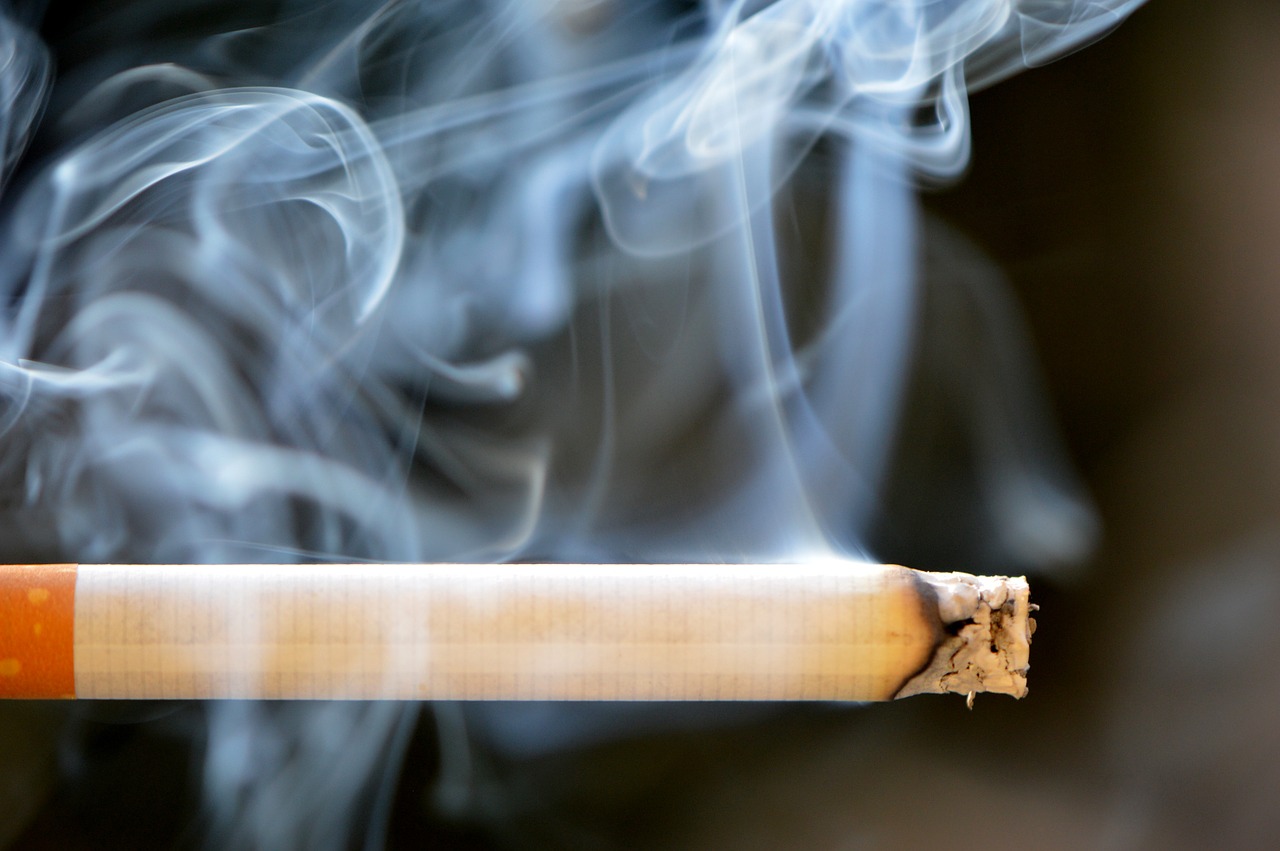
Cigarette

Cigarette smoking is addictive.
Photo courtesy of Pixabay.com

Have you ever heard of third-hand smoke?

Most people haven’t. There is a lot more awareness of second-hand smoke these days, but not third hand.

It took us a long time to recognize the health damages of smoking. There are still some people who try to argue that smoking is not harmful to health. They can point to some old person who lived a long life and smoked every day. They can also show us instances of people who never smoked and developed lung or another cancer anyway. But the studies continue to pile up that show that for any group of people we look at, the non-smokers, overall, have fewer health challenges than the smokers.

Smoking mental health connection.

This is especially important to me as a counselor because there is a strong connection between smoking and mental and emotional disorders. Substance abusers and the mentally ill smoke a lot, as any counselor who works around this group can tell you. It is not just the act of smoking that causes problems, which is where second-hand and third-hand smoking comes into play.

Now cigarettes are not the only problem. Areas with high air pollution and poor air quality are likely to have increased rates of people with respiratory problems. Anything on fire is likely to cause problems. One stud, I read, said that people who burn a lot of incense can develop respiratory problems also. Sure smoke from a poorly set fireplace can fill a room with smoke, though most of this goes up the chimney. Forest fires and structure fires are not good for the lungs either. But cigarettes are the major cause of indoor air pollution.

Smoke goes where it wants to.

The smoke, fine particles, and hot gas from the cigarette, are not the only problem. The basic chemicals in cigarettes are also significant issues. Tar and nicotine in the air don’t know to only go into the smoker’s lungs. They float around and fill everyone in the room’s lungs. Now we know about the risk of second-hand smoke in restaurants and bars. We are also connecting the dots that show that kids who live with smokers have more asthma and other breathing problems. Parents and other adults should not smoke in an enclosed space where kids, the elderly, or other susceptible people are present. Waiting till the kids leave is not enough though.

Where is the smoke when you can’t see it?

Eventually, the “smoke” in the air disappears. Where does to go? Some of it sticks to the walls and the ceiling, a lot of it settles to the floor. Now that residue, that tar, nicotine, ash, and other nasty stuff waits patiently in the carpet and stuck to the floor.

Eventually, someone walks on the carpet, maybe a child crawls around in the shag. This could be weeks or months after the smoker has left the room.  The longer the smoker was in the room the more gunk is in the carpet. Shampooing and vacuuming get some of it out but there is still plenty left.

When that child crawls around they are stirring up a lot of that residue. They are only inches from the surface and the little particles find their way into their lungs. Now they are exposed to the smoke of a smoker who has not lived in the house since they moved in. They may never have met that smoker but they are impacted by that residual smoke.

So there you have it. Third-hand smoke is breathing in the residue from smoking that is stirred up from surfaces long after the smoker has left. It may not be possible to ever completely decontaminate the room. This has led to a movement to keep some rooms forever uncontaminated by anyone who has smoked.

We would like to think that this would solve the problem. But we know that despite all the warnings parents still smoke in the car with their kids present and we know that if they smoke in the house even when the kids are not home those kids and other people long after will be exposed to the toxins from that smoke.

Quitting cigarettes is hard.

Now I know that quitting smoking is not easy. Former Heroin addicts tell me it was easier to kick heroin than cigarettes and I believe them. But maybe the idea that long after the smoker has gone their children or grandchildren may still be breathing in the results of their smoking will spur some people to try to quit.

This blog is about having a happy life. So if you chose to keep smoking that is on you. But as hard as it is to quit I can’t think of anyone who has stopped smoking and stayed quit that has ever told me they regretted quitting. That is my encouragement on making the change if you decide to do so.

If you are still smoking, isn’t it time for you to quit?

Staying connected with David Joel Miller

Seven David Joel Miller Books are available now!

My newest book is now available. It was my opportunity to try on a new genre. I’ve been working on this book for several years, but now seem like the right time to publish it.

Story Bureau.

Story Bureau is a thrilling Dystopian Post-Apocalyptic adventure in the Surviving the Apocalypse series.

Baldwin struggles to survive life in a post-apocalyptic world where the government controls everything.

As society collapses and his family gets plunged into poverty, Baldwin takes a job in the capital city, working for a government agency called the Story Bureau. He discovers the Story Bureau is not a benign news outlet but a sinister government plot to manipulate society.

Bumps on the Road of Life. Whether you struggle with anxiety, depression, low motivation, or addiction, you can recover. Bumps on the Road of Life is the story of how people get off track and how to get your life out of the ditch.

Dark Family Secrets: Doris wants to get her life back, but small-town prejudice could shatter her dreams.

Casino Robbery Arthur Mitchell escapes the trauma of watching his girlfriend die. But the killers know he’s a witness and want him dead.

Planned Accidents  The second Arthur Mitchell and Plutus mystery.

Letters from the Dead: The third in the Arthur Mitchell mystery series.

What would you do if you found a letter to a detective describing a crime and you knew the writer and detective were dead, and you could be next?

Sasquatch. Three things about us, you should know. One, we have seen the past. Two, we’re trapped there. Three, I don’t know if we’ll ever get back to our own time.

For these and my upcoming books; please visit my Author Page – David Joel Miller

Want the latest blog posts as they publish? Subscribe to this blog.

For videos, see: Counselorssoapbox YouTube Video Channel