The perspective of age

The perspective of age
Photo courtesy of Pixabay.com

The perspective of age.

By David Joel Miller, MS, Licensed Therapist & Counselor.

Things look different as you drive farther down life’s road.

When I’ve gone on long trips, I’ve noticed that the mountains off in the distance don’t seem that far away, but after driving for several hours, those mountains don’t appear to be getting any closer. It’s not until you get to the foothills and start climbing up and down, and up again, that you begin to experience going over those mountains for real. The journey of life is a lot like that trip. As you age, things will look differently.

Your perspective will change as you live life.

I remember being young and anxious to grow up. Getting some of the pleasures of adulthood seemed very attractive. I remember how important it was to me to get first, my learner’s permit and then my driver’s license. Now that I’m past 70, I must retake the driving test in person. I know the numbers are different in other states, but the principle is the same. Eventually, when you get old, you start to lose some things you have become accustomed to.

Moving from one grade to another seemed like such a huge accomplishment. Leaving elementary school for middle school was a giant step. Leaving middle school for high school opened up new horizons. Then came college and graduate school.

When I was young, there was so much to do.

When I finally graduated from high school, the road suddenly took a sharp turn. I hadn’t seen all of the obstacles that would loom ahead of me in life while I rode along on the educational train. Suddenly, I face the challenge of finding a job or going to college. I have embraced lifelong learning, having gone to school for more than 70 years, both as a student and as faculty. Some semesters, I’ve been both taking a class and teaching one. I do a little bit of life coaching in addition to my counseling and therapy work, and I find coaching a lot like teaching a class only to one student at a time.

Only one of my four grandparents had graduated from high school. I don’t believe I had known anyone other than my teachers who had been to college. My conversations about going to college consisted of about fifteen minutes with a high school counselor who wanted to know what college I planned to attend.

With no real plan other than a love of learning, I enrolled at the community college more to avoid giving up going to school than because I understood what college would involve or how having a degree might affect the rest of my life.

Along the road of life, the scenery changed.

First, I got married. Then I went looking for a job. The next thing I knew, I was a father working to support my wife and child. Along that road, there were twists and turns. I got old enough to drink alcohol. Being twenty-one meant I was an adult.

Eventually, I discovered that being an adult meant watching my child grow up, get married, and see my grandchild be born. I also discovered that being an adult meant realizing my drinking was causing me problems and required me to break up with my long-term friend, Ethel, ethyl alcohol.

Growing old is not synonymous with growing up.

Growing old largely depends on the number of trips you make around the sun. Each year, the Earth makes one long rotation around that sun. I think that after a certain number of trips, you start to get dizzy, and it feels like each succeeding trip is moving more rapidly.

Looking back on my life, I realize the tremendous number of things I have had to learn and an even larger number of things I could have learned but haven’t mastered yet. The growing old part is relatively easy. The growing up part, that is hard. Despite being past retirement age, I still don’t know what I want to be when I grow up.

The body becomes high mileage as you age.

I like to think of my body as a vintage car. All the parts are still there, and they work most of the time, but they don’t always work as well as they used to, and sometimes, more than one part is giving me problems at the same time.

The longer you live, the more wear and tear there is on your body. I feel undeservedly lucky that despite my poor care of my body, I am in as good a shape as I am at this age. Eventually, the body begins to accumulate problems. Some people must face more medical challenges than others. Things that were only minor inconveniences can turn into major health challenges.

One thing you see from the perspective of age is that more and more of your life is behind you, and less is ahead. The biggest regrets for most people when they grow old are the things they always wanted to do but never found the time for. Try to live your life so that you have a minimum of regrets when you get to the end.

Does David Joel Miller see clients for counseling and coaching?

Yes, I do. I can see private pay counseling and therapy clients if they live in California, where I am licensed. If you’re interested in information about that, please email me or use the contact me form.

Recently, I began working with a telehealth company called Grow Therapy. If you’d like to make an appointment to work with me, contact them, and they can do the required paperwork and show you my available appointments. The link for making an appointment to talk with me is David Joel Miller, LMFT, LPCC. 

Life coaching clients must be working toward a specific problem-solving goal. Coaching is not appropriate if you have a diagnosable mental health problem. Also, life coaching is not covered by insurance. If you think coaching for creativity or other life goals might be right for you, contact me directly.

Staying in touch with David Joel Miller.

Want the latest blog posts as they are published? Subscribe to this blog.

For more information about my writing journey, my books, and other creative activities, please subscribe to my blog at davidjoelmillerwriter.com

Seven David Joel Miller Books are available on Amazon now! And more are on the way.

For more about my books, please visit my Amazon Author Page – David Joel Miller.

For information about my work in mental health, substance abuse, and having a happy life, please check out https://counselorssoapbox.com

For videos, see Counselorssoapbox YouTube Video Channel

Are you an indoor mountain climber?

Are you an indoor mountain climber?
Photo courtesy of Pixabay.com

Are you an indoor mountain climber?

By David Joel Miller, MS, Licensed Therapist & Counselor.

I think of myself as an indoor mountain climber.

As a child, I was sick a lot and was always skinny. I was not particularly good at sports, but that didn’t keep me from seeking out challenges. I don’t especially like cold and snow or heat and dehydration either, for that matter. Skinning my knuckles, breaking bones, or falling long distances to the rocks below has never particularly appealed to me.

When I first began applying the mountain climber metaphor to my life, I was thinking mainly of intellectual and creative challenges. More recently, I have begun to see how the idea of starting from nothing, achieving some level of success in a particular field, and eventually watching my abilities decline as I aged might be an apt metaphor for the entire process of living life.

My interest in intellectual challenges began in elementary school.

I think one of the great turning points in my life was the time my class went on a field trip to the school library. All the other students seemed to know just how to select a book. I had come from a home with virtually no books. What few books we had in our household were religious volumes, not especially suited for a child.

As the other students checked their books out, my teacher watched me with looks somewhere between annoyance and downright anger. Finally, in desperation, the teacher walked over, pulled a book off the shelf, and handed it to me. That book, part of the Laura Ingalls Wilder Little House on the Prairie series, got me started on nonstop reading.

In the early grades, I devoured largely fiction.

Throughout most of my elementary and middle school years, books were my primary friend. I recall several years when I read one book a day on average. Those books were largely escape fiction, and they fueled many of the constant daydreams I explored when I was supposed to be listening to the teacher in class.

In high school, teachers sparked my curiosity about nonfiction topics.

Gradually, I began to read about more and more subjects. Whether I started with the love of learning or it developed in me as a result of reading so many varied books, I can’t be sure. But what I am sure of is that while I struggled with the required subjects in high school, I developed a strong interest in pursuing whatever eclectic subject most interested me.

My college career resembles a hike across an unexplored continent.

I have said many times, and I’m only half joking, that I have been going to school for over 70 years. College extended from the time I was 18 until the present day when I am 76. Throughout most of that time, I have been taking classes, teaching classes, or often doing both at the very same time.

Along the way, my majors have changed repeatedly.

I have, in no particular order, studied natural history, art, business, economics, psychology, both normal and abnormal and a host of other topics too long to list here. But what I mainly discovered was that among my top character strengths were, love of learning, curiosity, and creativity. I am happiest when I am learning something new and sharing it with others, something that gives my life meaning and purpose.

Sixty-plus years later, my interest returned to fiction when I started to write my own novels. For more about my books, please visit my Amazon Author Page – David Joel Miller

Sitting safely at my desk, I seek out challenges.

Now, in my seventy-sixth year on this planet, I continue to think of myself as an indoor mountain climber. The mountain climber metaphor applies to a lot of people. Some people invest in stocks, and others invest in vintage cars. Your meaning and purpose in life may lie in discovering a new bacteria, proposing a new theory of economics, or learning to rebuild an engine. Most any pursuit can be worthy if it interests you and doesn’t harm others. That not harming others, therein lies the rub.

The process of aging looks a lot like the process of climbing a mountain.

Recently, I realized that mountain climbing as a metaphor not only fits the pursuit of new knowledge and skills but it also fits many of the things that have happened to me, and that seem to happen to almost everyone as we grow older. I can’t say that I’m an expert on geriatrics. I’ve purposely avoided learning more about that topic than I had to. But recent events, both personally and professionally, have forced me to learn a lot more about some of the things that might happen mentally and physically as I and others accumulate more trips around the sun.

When time permits, I want to tell you about how my life of pursuing various goals has affected my way of looking at the process of aging.

Does David Joel Miller see clients for counseling and coaching?

Yes, I do. I can see private pay clients if they live in California, where I am licensed. If you’re interested in information about that, please email me or use the contact me form.

Recently, I began working with a telehealth company called Grow Therapy. If you’d like to make an appointment to work with me, contact them, and they can do the required paperwork and show you my available appointments. The link for making an appointment to talk with me is: David Joel Miller, LMFT, LPCC 

Staying in touch with David Joel Miller.

Want the latest blog posts as they are published? Subscribe to this blog.

For more information about my writing journey, my books, and other creative activities, please subscribe to my blog at davidjoelmillerwriter.com

Seven David Joel Miller Books are available on Amazon now! And more are on the way.

For more about my books, please visit my Amazon Author Page – David Joel Miller

For information about my work in mental health, substance abuse, and having a happy life, please check out https://counselorssoapbox.com

For videos, see: Counselorssoapbox YouTube Video Channel

I feel like a fifth grader again

Technology
Photo courtesy of Pixabay.com

I feel like a fifth grader again.

By David Joel Miller, MS, Licensed Therapist & Counselor.

Rapidly changing technology makes me feel like an overwhelmed fifth grader.

Last week, I sat at my keyboard and experienced an overwhelming desire to break down and cry. I haven’t felt this overwhelmed and helpless since my elementary school days. Being a senior citizen, I have a lot of life experiences, and being a professional counselor, I have a lot of tools at my disposal. Still, sometimes the frustration gets so bad the only conceivable response is to act as immaturely as possible. Let me tell you about my growing frustration with the tech gods.

Recently, I’ve been struggling more than usual to keep up with rapidly evolving technology. Ever since the start of the Covid epidemic, when we moved to remote technology, I have been struggling to catch up. The upward curve of technological change turned into a vertical wall and is now an overhanging cliff.

I thought I was doing reasonably well. I moved the lecture materials between blackboard, canvas, and canvas companion with the adept skill of a fire juggler. I’ve learned to turn my lecture material into PowerPoints and my PowerPoints into videos. I have even established a YouTube channel so those videos are available continuously around the clock.

Despite some struggles, I’ve managed to keep my primary mental health blog going and occasionally add some posts to my writer’s blog. And through all this, I have written and published seven books. I thought I was doing reasonably well. Then, the avalanche of tech changes collapsed on top of me.

Let me tell you a parable about an overwhelmed ten-year-old.

Once upon a time, in a land far, far, away from sunny California, in a rural area where people ignored troublesome laws, there lived a sheltered, naïve ten-year-old boy. His family’s largest claim to fame was the mass quantities of ethyl alcohol, which they frequently consumed. One particular older male habitually consumed alcohol to the state of extreme incapacitation.

On this particular night, it was imperative that the man who could no longer walk on two legs and was having difficulty crawling on all fours somehow reached home before he froze to death in the snow. Hence, the patriarch of this story decided to have his ten-year-old son drive him back across the open fields to the farmhouse. What follows is my vague remembrance of the conversation between the father and son.

“Son, you gots to drive me home,” The old man said.

“But Dad, I don’t know how to drive,” the boy said.

“It for to is easy, I teaches you how. Here, tase these keys.”

“Now what?”

“Get in car and drive.”

“I can’t get in. The door is locked,” the boy said.

“Unlock the door.”

“How do I do that?”

“Stick the keys in the lock.”

“I put the key in the lock, but the door still won’t open.”

“Did you turn the key?”

“I have to turn the key?”

“Yes, yous got to turn the key.”

“I turned the key around, but the other end won’t fit.”

“Here, Leslie, me dooes it.”

At this point, the conversation is terminated when the patriarch falls face down in the snow, and their connection is terminated. If we were to wait several hours for the older gentleman to regain consciousness, we could listen in on the continuing conversation as the young man struggles to figure out how to put the key into the ignition, put the car into gear, and then drive across the open field without ending up in the ditch. I hope you can see how totally frustrating this might be to the young boy.

Fast forward sixty-five years later.

Four emails arrived in one day, all indicating that the protocols for logging into email accounts have been changed. Each of the four companies the boy, now an elderly adult, works for has decided to change their login, password, and security system. Each has changed in a different direction using different outside vendors.

“Tech support. How can I help you?” The tech bot says.

“I’m having trouble logging into my account.” The man says.

“Did you download the login app? You need to download the login app.” Click.

What download app? The old man asks. Only to be greeted by silence and, finally, the hum of the dial tone.

Wait a minute, wait a minute. If I am hearing a dial tone this is not a cell phone. Click. Again.

Minutes later the man connects with tech support.

“Did you download the login app?” Tech support says.

“What’s an app?” The old man replies. Click.

Clearly, this conversation is going nowhere.

A five-year-old gets to cry.

What does a seventy-five-year-old man get to do?

The old man calls tech service again after struggling for several hours to download the Bloody app.

“I can’t get into my login app. What do I do?”

“What kind of authenticator are you using?”

“What’s an authenticator?” The old man asks. Click.

Imagine that this scenario repeats itself four times with four different vendors.

I don’t have to imagine this. That sort of scenario seems to be happening to me on a regular basis.

I think I could catch up if they would just stop changing things.

How about you? Are you having trouble keeping up with technology?

Does David Joel Miller see clients for counseling and coaching?

Yes, I do. I can see private pay clients if they live in California, where I am licensed. If you’re interested in information about that, please email me or use the contact me form.

Staying in touch with David Joel Miller.

Want the latest blog posts as they are published? Subscribe to this blog.

For more information about my writing journey, my books, and other creative activities, please subscribe to my blog at davidjoelmillerwriter.com

Seven David Joel Miller Books are available on Amazon now! And more are on the way.

For more about my books, please visit my Amazon Author Page – David Joel Miller

For information about my work in mental health, substance abuse, and having a happy life, please check out https://counselorssoapbox.com

For videos, see: Counselorssoapbox YouTube Video Channel

Avoiding the Grim Reaper.

Avoiding the Grim Reaper
Photo courtesy of Pixabay.com

Avoiding the Grim Reaper.

By David Joel Miller, MS, Licensed Therapist & Counselor.

The Grim Reaper’s handiwork is everywhere.

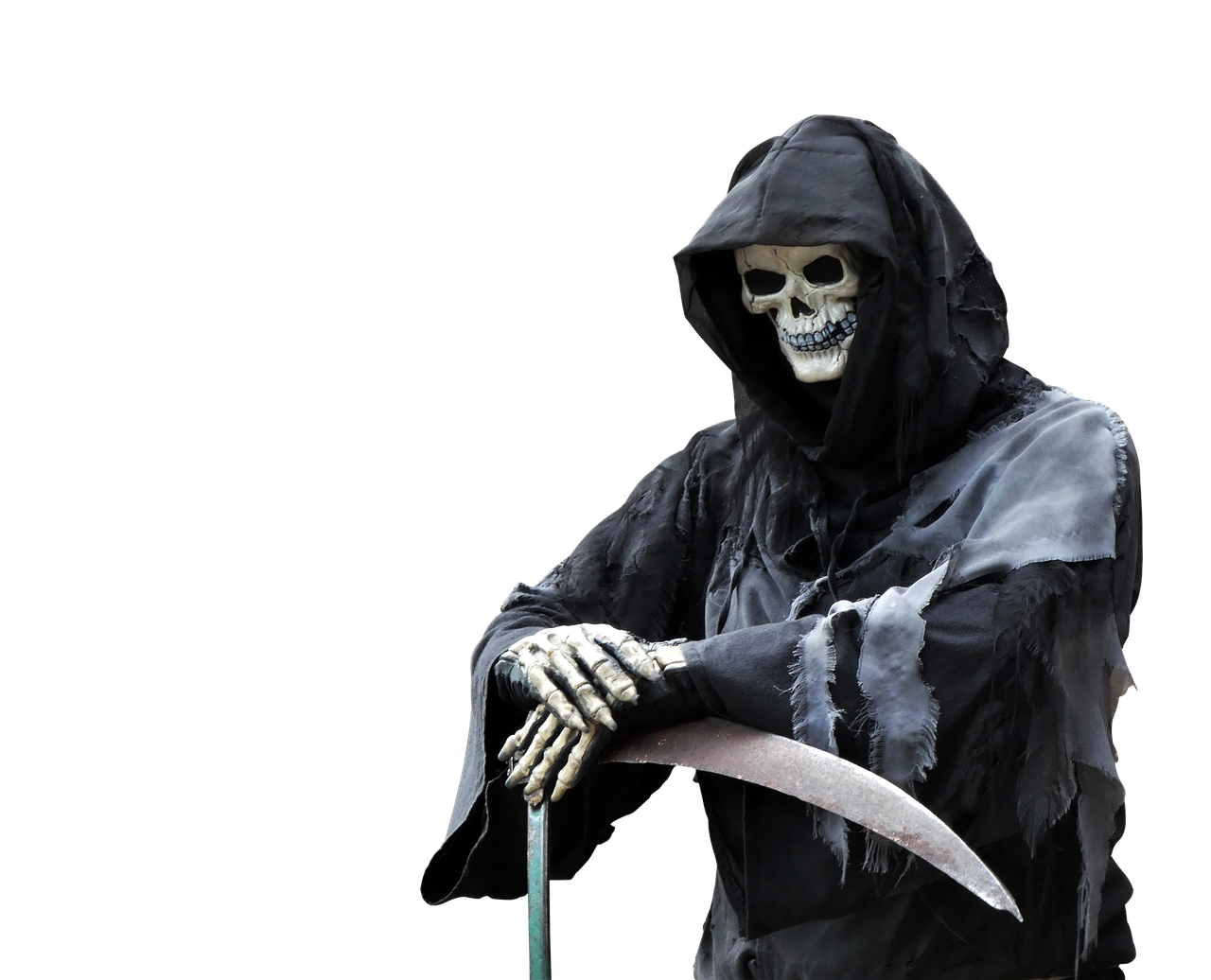
Being one of those older people, I become increasingly conscious of the Grim Reaper and his handiwork. For those unfamiliar with this persona, the Grim Reaper is that long-standing picture of the ways of death stocks humankind just waiting for his opportunity to take one of us.

There was a time in history when the Grim Reaper frequently passed through the human village. I read that in the early eighteen hundreds in the American Midwest, as many as 30% of the people in a town might die every spring. We had a variety of names for the Grim Reaper’s tools. Sometimes, we would call it cholera, yellow fever, scarlet fever, or tuberculosis.

When I was a young person, the Grim Reaper frequently used the disease named polio, which left his victims unable to breathe until they finally died. I remember being among one of the very early groups to receive the polio vaccine, and gradually, this disease, like so many others, disappeared from the front pages of the news.

Gradually, the specter of the Grim Reaper’s nightly visit faded. Rather than a fear of diseases, we have come to fear wars, guns, gun violence, and those various diseases that were uncommon simply because humans had the good sense to die before reaching old age. In some parts of the world, this taker of life still uses wars and famine to reap his harvest.

Covid and other new evolving diseases have ripped the mask off the Grim Reaper.

Covid was definitely a shock to those of us who thought that modern medicine had largely tamed the area of infectious diseases, leaving the Grim Reaper to work only through the disorders of the elderly. Eventually, I expected that cancer, dementia, or some other disease of aging would get me. But if you were like me, you were totally unprepared for the onslaught of Covid and other new infectious diseases.

My strategies for keeping ahead of the Grim Reaper.

For most of my life, I simply ignored the Grim Reaper and lived my life as if Death would have difficulty finding me. I did take some simple precautions. I will describe here my choices and I am not trying to make a political statement about what I think others should do. Personally, I always wear my seatbelt when in the car. I get my vaccines. And when my doctor prescribed some medication for me, I attempt to take it as prescribed.

Beyond those simple precautions, as I have accumulated additional birthdays, I have begun to pay more attention to things I can do to maintain my physical health. Some of those supposed remedies have proven to be either allusive or ineffective.

One thing I have tried to do is to keep moving as much as possible. I think being active certainly keeps me out of the reach of the Grim Reaper for longer than sitting on the couch waiting for his visit. I recently underwent surgery for a problem I had neglected a great many years, and this forced me to take a further look at other things I might do to improve my health.

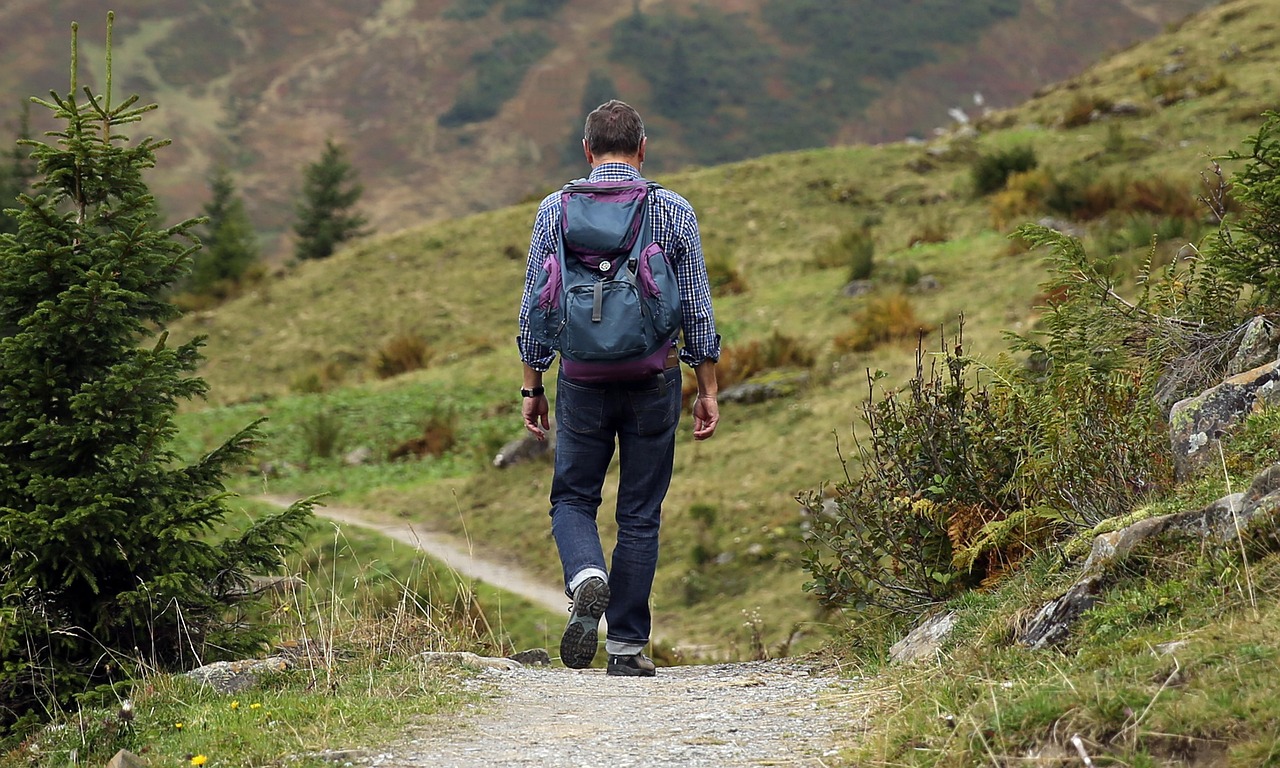
Walking appears to be mandatory for humans.

After my surgery, my doctor suggested that I should be walking at least 8000 steps a day. I believe that’s a reduction from the previous prescription of 10,000 steps per day. Initially, I thought this would be impossible, but I started with the modest goal of walking 4000 steps per day, which proved quite doable. Over time, I’ve increased that goal and am now routinely walking 4 miles per day, and on a good day, I may walk six or 7 miles.

Walking every day won’t keep me out of the Grim Reaper’s grip forever, but I’m going to make him work to catch up with me.

There is another significant benefit of walking.

I have read repeatedly, and I’ve told many clients my conclusion that walking outdoors, particularly where there are trees and greenery, improves your mental health. Walking outdoors for 15 to 20 minutes a day, five days or more per week, is just as effective at treating depression as taking some antidepressant medications.

Please, however, if you are currently on an antidepressant, don’t stop taking it and turn to walking. Antidepressant discontinuation syndrome, problems you will experience if you suddenly stop taking your medication, is a very real thing. Talk to your doctor before you stop any medication. However, I believe that in addition to medication, changes in behavior, such as walking and changes in thinking, which come from therapy, all work together to reduce depression and may also benefit many other mental health problems.

My attempt to lose weight was delusional.

Somewhere I had gotten the idea that I should lose weight. In fact, three doctors in a row had suggested that I needed to control my weight. Not that it was seriously out of control, but over the years, my weight gradually crept up from being a skinny person first to normal and then to being overweight. My past efforts to lose weight were ineffective, probably because I thought about it while sitting in my desk chair eating a package of cookies.

I somehow mistakenly thought that all this extra walking I had begun to do would miraculously result in weight loss. It didn’t. What it may well have done is convert some of the fat I had into muscles.

On a recent visit to the doctor, I told him I had tried losing weight but to no avail. His answer was that he no longer thought I should attempt to lose weight. I read now that older people, presumably those beyond retirement age, may actually be somewhat healthier if they are slightly above the BMI suggestions for normal weight.

It turns out that all people fall; some of them fall a lot, and a few extra pounds can be some padding. This is certainly no excuse if your blood sugar is out of control, but barring type II diabetes, I think a few extra pounds are not a problem for someone my age. Don’t take my word for this; however, make sure you consult with your personal physician.

Eating a healthy diet has proved to be more elusive.

I’m definitely not a nutritionist and hesitate to give you any advice in this area. I have learned, however, that becoming overly concerned about your diet in your past retirement life may be a mistake. Nutrition is a whole lot more complicated than switching to only eating vegetables. Balance in nutrition is just as important as it is in many other parts of our lives. Some of those foods we think of as unhealthy” when eaten in small amounts, may be beneficial for maintaining a balanced diet. My suggestion is not to go on a crash diet, trying to eat healthy and end up with nutritional deficiencies. Talk to your doctor or a nutritionist before you eliminate food from your diet that you have been eating for a long time.

So those are some of my thoughts and experiences now that I’ve reached a point in life where I am focusing more on trying to stay healthy and keep my life in balance. Comments are welcome. Hope you will continue to read this blog.

Does David Joel Miller see clients for counseling and coaching?

Yes, I do. I can see private pay clients if they live in California, where I am licensed. If you’re interested in information about that, please email me or use the contact me form.

Staying in touch with David Joel Miller.

Want the latest blog posts as they are published? Subscribe to this blog.

For more information about my writing journey, my books, and other creative activities, please subscribe to my blog at davidjoelmillerwriter.com

Seven David Joel Miller Books are available on Amazon now! And more are on the way.

For more about my books, please visit my Amazon Author Page – David Joel Miller

For information about my work in mental health, substance abuse, and having a happy life, please check out https://counselorssoapbox.com

For videos, see: Counselorssoapbox YouTube Video Channel

My Scary Encounter with the Department of Motor Vehicles

My Scary Encounter with the Department of Motor Vehicles
Photo courtesy of Pixabay.com

My Scary Encounter with the Department of Motor Vehicles

By David Joel Miller, MS, Licensed Therapist & Counselor.

The longer I live the more challenging life has become.

Recently, I was forced to confront the fact that I have gotten somewhat older. I have been putting off calling myself a senior citizen. Even though it’s not politically correct, I continue to refer to myself as an “old person.” For some reason, I’m resisting the term senior citizen. Maybe it’s because I’m so old that I’m stuck in my ways. In the interest of full disclosure here, I will turn seventy-six in the early days of 2024. I think seventy-six qualifies as an old guy.

Has the earth begun to move more rapidly?

Everything about life seems to be moving at an accelerating pace. I realize that one possibility might be that I am moving more slowly. But I’m doing my best to keep up. I think I do pretty well for an old guy, considering I am still working somewhere near full-time. I do write a blog, and I do have a YouTube channel. I did need to use the services of some technical consultants. One of my interns showed me how to answer a text message. And a preschooler has been teaching me how to stream videos. Even with the help of some younger people, it’s still getting harder to keep up.

Why did the rules keep changing?

One of the major challenges of adding more trips around the sun to your total is that the rules of life keep changing. Recently, I received a letter from the nice folks at the California Department of Motor Vehicles, informing me that since I was past seventy, I would need to take a written test at the DMV to renew my license. No more mail or online renewals for me. This struck terror in my heart.

What does an old academic do when faced with a challenge?

Of course, the first thing I did was go online and locate a copy of the current driving rules. I was flabbergasted to find out that they had significantly changed the driver’s handbook since I passed my first written test in 1964. Warning here: beware of online guides to passing your driver’s test. Even though I typed “California driver’s exam” into the search bar, I discovered some of the answers they taught me do not apply to California.

What new rules did I need to learn about?

It seems quite a bit of new content has been added to the driver’s handbook since I first learned to drive. I’ll only give you a short summary here.

Bicycle lanes.

I don’t remember anything about bicycle lanes in the driver’s handbooks from the nineteen sixties. If it was there, it wasn’t important. I was learning how to drive, after all. I had been riding a bicycle for ten or twelve years by this point. What was new and surprising were all the rules about when a motor vehicle could enter a bike lane. Bikes have lanes?

Some other things they snuck in just to confuse me.

Most of these changes in the rules came on, so gradually, I simply learned how to cope with them by watching what other people were doing and driving each day. But when it came to passing a written test on these changes in the law, I discovered I really needed to study.

For example, what are the rules applying to roundabouts? What are those blue signs and those blue zones? Of course, I knew about blue zones from having had a family member with a disabled parking permit, but the blue signs, they were a mystery.

I also discovered that there is a new sign appearing on the back of slow-moving vehicles. Apparently, we need to be told that horse-drawn carriages move more slowly than motor vehicles. I didn’t think I needed to be told that with that special sign since I remembered that they were on the roads first, and those of us driving vehicles came later.

Are all the stoners being discriminated against?

As I have aged, I’ve given up a lot of things. Among them are alcohol, drugs, and staying up past midnight. But do you realize that now the use of marijuana is included in the driver’s handbook? Just like open containers of alcohol, possession of an open container of marijuana is not permitted in a motor vehicle. Who knew?

Staying relevant can be quite a challenge as you age.

I felt pretty good that I could use the terminal to take my written driving test. Some people who were ten years younger than me needed to use the written test. And I did pass on my first try. One poor young man, probably barely past seventy, who was ahead of me in line, had just failed his written test for the third time.

I shouldn’t feel too cocky, however. I had just come to the DMV from picking up my new glasses. I now have one pair of glasses for looking at computer screens and a second set specifically for driving.

I have to feel sorry for the clerks at DMV. As hard as it must be for some of us senior citizens to be told our days of driving are coming to an end, it must be very hard for the employees to have to tell someone they can’t renew their license. All the people I talked with that day who worked at DMV were very kind and courteous. But the experience does serve as a reminder to me that the day may be coming when I will not be able to do some of the things, I used to be able to do.

Compared to DMV, my encounters with the technology people over the last few weeks suggest that some of the ghouls, fiends, and sadists who were unemployed after Halloween had moved into the technology sector. But that is a topic for another post.

In the meantime, try to have the best life possible, whatever that may mean to you.

Does David Joel Miller see clients for counseling and coaching?

Yes, I do. I can see private pay clients if they live in California, where I am licensed. If you’re interested in information about that, please email me or use the contact me form.

Staying in touch with David Joel Miller.

Want the latest blog posts as they are published? Subscribe to this blog.

For more information about my writing journey, my books, and other creative activities, please subscribe to my blog at davidjoelmillerwriter.com

Seven David Joel Miller Books are available on Amazon now! And more are on the way.

For more about my books, please visit my Amazon Author Page – David Joel Miller

For information about my work in mental health, substance abuse, and having a happy life, please check out counselorssoapbox.com

For videos, see: Counselorssoapbox YouTube Video Channel

At least I didn’t die.

By David Joel Miller, MS, Licensed Therapist & Licensed Counselor.

The hospital thought I had Covid.

If you are a regular reader of this blog, you probably noticed that there weren’t very many posts in November. Part of that was by design. I was doing the NaNoWriMo writing contest during November. And despite some challenges, I did finish a first draft of that book. 2020 makes the fifth time I have completed the first draft of a book during November. More on that in an upcoming post.

Five days in the hospital, mostly in the ICU, changed my plans.

This illness came on very suddenly. Tuesday evening, I thought it was a little cold in the house. My toes and my fingers both felt chilly. So, I turned up the heater and wore socks to bed. Wednesday morning, I felt normal. By noon I was so cold I was shaking. When I tried to type on the computer, I couldn’t hit the keys. Dialing 911 turned out to be a significant challenge.

My feeling cold turned out to be fever and chills.

Since I felt so incredibly cold, it never occurred to me that I was running a fever. I tried to take my temperature, but my hand shook so much I couldn’t get an accurate reading. By the time I got to the hospital, I was shaking so severely the EMT thought I was having a seizure. I’ll leave it to the medical professionals to debate that one.

If it looks like Covid, you must treat it like Covid.

So many of my symptoms implied an infection with the Covid virus that once they got me admitted, I was sent to the Covid ICU unit. In addition to fever and chills, my blood pressure dropped severely. I’ve never been one to have to worry about high blood pressure, but in retrospect, the numbers they were getting for my blood pressure should’ve made me question whether I was still alive. I had to be given an intravenous medication just to get my blood pressure back within the wishing distance of normal.

Life on the Covid ICU unit.

Being on the Covid ICU unit for four days was a scary experience. My heart goes out to the people who must work in that unit. And remember, I’ve worked on locked psychiatric units, but this one scared me. I feel that I got excellent care. I won’t mention the name of the specific facility. Everyone has their preferences, and some people have had bad experiences, even with an excellent provider. Let me say that I’m delighted to continue to be a member of this medical system.

Watching the staff enter and exit my room was a little like what you might see in a science fiction movie when someone has taken aboard the alien ship. Everyone wore a facemask and a shield. To come into the room, workers had put on an additional transparent plastic garment that totally covered them. When they left the room, that entire outer garment was disposed of. This virus is a nasty enemy, and we can’t be too cautious.

My Covid tests came back negative.

I was told at one point that I had received two separate Covid tests. Eventually, I was given the results, which was that I was negative for Covid. Of course, that didn’t explain blood pressure readings that sounded more like the score of a professional football game, as well as my extreme weakness and inability to eat.

What I had was diverticulitis.

The short version of this is that diverticulitis is an inflammation of the intestine. Some of that nasty junk that should’ve stayed in my intestine had seeped through into surrounding tissue and caused a systemic infection throughout my body. Apparently, I wasn’t far from taking that last elevator ride, which takes you either all the way up or all the way down.

It’s been a slow recovery.

Even once I was able to get discharged from the hospital, I still wasn’t back to normal. Being that sick left me extremely exhausted, and I took the following week off. I am slowly getting back to doing the things I like to do, which for me is working, teaching, and of course, my writing. I have several ideas for topics I want to write about, but that will take me some time.

My online teaching.

To date, I have taught four classes online. I’ve also been taking classes and how to do a better job of teaching online. While online education is a vital necessity in this age of the coronavirus, I believe it’s another one of those long term changes whose time has come. Remember that first portable phone, the giant brick that required hours to recharge? Just as our mobile communication devices have evolved, I fully expect online education to continue to evolve. As the year 2020 comes to an end, and I look forward to 2021, I expect the pace of change to accelerate.

I’m just extremely glad to be alive to be both a witness and a participant in all this change. Please continue to read the counselorssoapbox.com blog, where I will continue to talk about how I see things in the fields of recovery from substance use disorders, mental health, and having a happy life.

P. S. What do you think of the new featured image at the top of this blog? Is it an improvement? Or do you miss the old header?

Staying connected with David Joel Miller

Seven David Joel Miller Books are available now!

My newest book is now available. It was my opportunity to try on a new genre. I’ve been working on this book for several years, but now seemed like the right time to publish it.

Story Bureau.

Story Bureau is a thrilling Dystopian Post-Apocalyptic adventure in the Surviving the Apocalypse series.

Baldwin struggles to survive life in a post-apocalyptic world where the government controls everything.

As society collapses and his family gets plunged into poverty, Baldwin takes a job in the capital city, working for a government agency called the Story Bureau. He discovers the Story Bureau is not a benign news outlet but a sinister government plot to manipulate society.

Bumps on the Road of Life. Whether you struggle with anxiety, depression, low motivation, or addiction, you can recover. Bumps on the Road of Life is the story of how people get off track and how to get your life out of the ditch.

Dark Family Secrets: Doris wants to get her life back, but small-town prejudice could shatter her dreams.

Casino Robbery Arthur Mitchell escapes the trauma of watching his girlfriend die. But the killers know he’s a witness and want him dead.

Planned Accidents The second Arthur Mitchell and Plutus mystery.

Letters from the Dead: The third in the Arthur Mitchell mystery series.

What would you do if you found a letter to a detective describing a crime and you knew the writer and detective were dead, and you could be next?

Sasquatch. Three things about us, you should know. One, we have seen the past. Two, we’re trapped there. Three, I don’t know if we’ll ever get back to our own time.

For these and my upcoming books; please visit my Author Page – David Joel Miller

Want the latest blog posts as they publish? Subscribe to this blog.

For videos, see: Counselorssoapbox YouTube Video Channel

Aging.

Aging.
Photo courtesy of Pixabay.com

Aging

Sunday Inspiration.     Post by David Joel Miller.

“Some day you will be old enough to start reading fairy tales again.”

― C.S. Lewis

“Wrinkles should merely indicate where the smiles have been.”

― Mark Twain

“When I was your age, television was called books.”

― William Goldman, The Princess Bride

Wanted to share some inspirational quotes with you.  Today seemed like a good time to do this. There are an estimated 100,000 words in the English language that are feelings related. Some emotions are pleasant, and some are unpleasant, but all feelings can provide useful information. If any of these quotes strike a chord with you, please share them.

Look at these related posts for more on this topic and other feelings.

Emotions and Feelings.

Inspiration

How to become a morning person.

By David Joel Miller, MS, Licensed Therapist & Licensed Counselor.

Man sleeping

Sleeping person.
Photo courtesy of Pixabay.com

Is morning a real struggle for you?

When you’re younger, in your teens or early twenties, being a night owl can have its perks. At that age, you’re looking to have fun, and being groggy in the morning isn’t a big deal. But over time, your career and reaching life goals become more important. If you want to be successful at your job, staying up late and being barely functional in the mornings becomes a disadvantage.

To some extent, whether you’re a morning person or a night person may be a part of your personality. But like many other parts of who you are, you can shift your sleep-wake cycle so that your more alert and productive in the mornings.

Some creative people can adjust their work schedules to fit their periods of maximum productivity. But if you work for someone else, or you have other people in your home who schedules don’t match yours, becoming more alert in the mornings has its benefits, and there are things you can do to improve your morning functioning. Here are some of the helpful things.

Allowing enough time for sleep helps start your morning.

For a while, productivity gurus were telling us that the way to get more done was to sleep less. While that may have worked for some people in the short run, research suggests that depending on your biology; there’s a certain number of minimum hours of sleep you need each night. Less than that amount will impair your cognitive functions, lead to weight gain, and hold you back in life.

Scheduling yourself with not enough hours between the time you go to bed and the time you get up will take its toll. Don’t think you can do that Monday through Friday and then try to make up the sleep deficit by sleeping in late on the weekends. If you’re exhausted, the extra sleep may help temporarily. But changing bedtime and awakening times will make it harder for you to get adequate sleep as you move back-and-forth.

Most people require somewhere between seven and nine hours of sleep. While it’s possible to learn to break that up, allowing enough hours for sleep each night improves your health. If you routinely sleep less than six hours or more than nine, you should consult a medical doctor or mental health professional.

Make going to bed a priority if you want to be a morning person.

Don’t try to borrow hours from tomorrow. No matter how tempting it is to stay up and watch the end of the movie, or play one more videogame, spending hours you should be sleeping is sure to damage your alertness and productivity the next day. Cumulatively those late-night activities could damage your physical and emotional health. Set a bedtime that allows you to get enough hours of sleep and stick to it.

Don’t dance with the snooze alarm.

Rest is most restorative when your sleep moves through the standard stages. Interrupted sleep stages don’t allow the brain to heal and prepare for the day ahead. Getting into the habit of being overtired and trying to catch a few more minutes of sleep each morning prevents you from developing a regular sleep routine.

Practice good sleep hygiene to wake up rested.

If you want to avoid being tired in the morning, you need to develop a good sleep routine. Avoid caffeine or strenuous exercise before bedtime. Turn off the electronics and avoid blue light from screens for an hour or more before your planning to go to sleep. You’re more likely to be able to fall asleep if the room is both dark and cooler. Doing all the things you can to get your body ready for sleep will help you fall asleep faster and wake up more rested.

Allow enough time for your morning ritual.

You’ll have a better day if you don’t start the day rushed and behind schedule. You can create problems for the next day when you went to bed too late and struggled to get up the next day. Leave plenty of time in the morning so that getting ready for your day doesn’t leave you stressed. Make morning something you look forward to, whether that’s your morning cup of coffee or a few minutes with your family or pets. Being chronically stressed and hurried in the morning can take all the joy out of waking up.

For a better morning, invite some sunshine into your life.

Natural light tells the brain it’s time to get moving. Being able to spend a few minutes outdoors in the sunshine improves your mood. There’s something very soothing about plants and flowers. Our bodies have developed a natural reaction to sunshine.

Psych yourself up each morning for a better day.

A positive mindset makes the morning go better, and a better morning leads to a better day. Avoid looking at what you must do today as more stress you’d like to avoid and try to view it as an opportunity. The mindset you take into the day has a significant impact on how you experience that day. When you wake up looking forward to the day, morning becomes your friend.

Taking time for breakfast makes morning pleasurable.

Incorporate some time for breakfast into your daily routine. Even a small amount of food gets the body prepared for activity. Students who eat breakfast tend to get better grades in school. Workers who have a good breakfast arrive ready to work and are clearheaded and more productive.

Straighten up after yourself for a less stressful morning.

Allowing time in the evening before bed to straighten up means you wake up in a pleasant clean environment. Make your bed each morning. Taking the time to honor your environment sets up the whole day. Make the bed, straighten things up, leave your home ready to greet you when you return. Make waking up and going to bed a part of good self-care rather than a chore that interferes with your playtime.

Being well-rested reduces the risk of burnout.

When you’re chronically tired, every task is overwhelming. Work can be stressful. People who go to work already worn out don’t have the resiliency they need and are at increased risk of experiencing burnout.

Are you ready to become a morning person?

Are you a morning person or a night owl or somewhere in between? Would it be easier to fit into your work life and your family life if you were more of a morning person? Please leave a comment and tell me your thoughts about the morning and becoming a morning person.

For more on this and related topics, please see – Sleep

Staying connected with David Joel Miller

Seven David Joel Miller Books are available now!

My newest book is now available. It was my opportunity to try on a new genre. I’ve been working on this book for several years, but now seem like the right time to publish it.

Story Bureau.

Story Bureau is a thrilling Dystopian Post-Apocalyptic adventure in the Surviving the Apocalypse series.

Baldwin struggles to survive life in a post-apocalyptic world where the government controls everything.

As society collapses and his family gets plunged into poverty, Baldwin takes a job in the capital city, working for a government agency called the Story Bureau. He discovers the Story Bureau is not a benign news outlet but a sinister government plot to manipulate society.

Bumps on the Road of Life. Whether you struggle with anxiety, depression, low motivation, or addiction, you can recover. Bumps on the Road of Life is the story of how people get off track and how to get your life out of the ditch.

Dark Family Secrets: Doris wants to get her life back, but small-town prejudice could shatter her dreams.

Casino Robbery Arthur Mitchell escapes the trauma of watching his girlfriend die. But the killers know he’s a witness and want him dead.

Planned Accidents  The second Arthur Mitchell and Plutus mystery.

Letters from the Dead: The third in the Arthur Mitchell mystery series.

What would you do if you found a letter to a detective describing a crime and you knew the writer and detective were dead, and you could be next?

Sasquatch. Three things about us, you should know. One, we have seen the past. Two, we’re trapped there. Three, I don’t know if we’ll ever get back to our own time.

For these and my upcoming books; please visit my Author Page – David Joel Miller

Want the latest blog posts as they publish? Subscribe to this blog.

For videos, see: Counselorssoapbox YouTube Video Channel

What have you lost?

By David Joel Miller, MS, Licensed Therapist & Licensed Counselor.

Bereavement

Bereavement, grief and loss.
Picture courtesy of pixabay.

We have lost more to the coronavirus than we may realize.

Real, profound losses don’t heal in an instant. The losses from coronavirus continue to add up. I suspect it’s going to be a long time before we, as a society, feel the full impact of those losses. Some of those losses we can attribute directly to the virus. But other losses will linger and won’t be fully recognized for a long time to come.

The most obvious loss is the people who have died.

If one of your family members, or someone close to you, has passed, you are no doubt feeling it acutely right now. Beyond the close personal family, we have all lost people who were supposed to be our safety net. The losses of doctors and nurses, first responders, the firemen, the police, the ambulance drivers, those losses will continue to affect us for a considerable time. Will people rush to fill those gaps? Or will more people avoid those professions as simply too risky for them and their families?

The fact that our death toll from the coronavirus has now exceeded that of any other country should give us a reason for concern. Despite China’s larger population, our losses have been higher. I’m sure there will be some who will try to obscure this fact by suggesting that the reporting of deaths in China were inaccurate. I think we already know, or should know, that we probably underestimated the American death toll also. The lack of adequate testing has undoubtedly resulted in a substantial number of deaths from the coronavirus, which were attributed to pneumonia, or other underlying medical issues.

We have lost our sense of safety.

Our sense of safety as a society has been eroding for a long time. Attending large gatherings has become increasingly dangerous. The repeated shooting at schools and public get-togethers has been met with discussions about how to identify the crazy people before they do it, even though most of those shooters did not have a serious or persistent mental illness. Trainings in the schools and public places for active shooter situations suggested to us that if we learned enough, it couldn’t happen to us. No amount of knowledge is going to protect us from these repeated occurrences if we, together as a society, do not attack the causes.

I’m inclined to think that the current coronavirus crisis, as serious and tragic as it is, has allowed us to take our eyes off the real, long-term dangers in our society. The fundamental premise of our capitalist society is that things, and the profits of businesses, matter more than people. We can afford billions for ventilators, and even more billions poured into the financial markets. Still, our spending on things like advanced education, and public health, are a much lower priority.

If we were realistic, we might compare the current losses from the coronavirus to the 1,400,000 people who died as a result of firearms over a 50-year period. Every year large numbers of people in our society died from treatable illnesses.

The belief that the elderly are being cared for has been shattered.

For a very long time, we’ve not paid attention to the plight of seniors in nursing homes and memory care facilities. Whenever a story comes up across the news about seniors abandoned or left with inadequate care, we look for someone to blame as if this is the abnormality. The low level of funding for most senior care facilities has left those people housed there chronically vulnerable. During this coronavirus episode, those care facilities have turned into killing fields.

Some dying businesses can’t be resuscitated.

Healthy businesses will struggle for a long time. Social distancing and avoiding large gatherings have reduced the spread of coronavirus. It’s likely there are a lot of people in the population who have not yet been infected. We also know there are asymptomatic carriers. How willing will you be to book a cruise, take your children to a crowded movie theater, or return to other crowded activities when businesses try to reopen for business as usual?

Will some of the efforts to revive the economy cause lasting harm?

I hope you been paying attention to the way in which interest rates have been hammered down to close to zero over the last few years. We should be asking ourselves who that benefits and who that harms. The principal beneficiaries are the large banks and corporate businesses. Their existence is predicated on the belief that there can be no limits to how large they can grow and how vast the profits will be.

Who have low interest rates harmed?

One significant impact of the low interest rates has been a reduction in the income of pension plans. Most pension plans were already inadequately funded. With lower rates of return on their investments, those plans have just begun to chase riskier and riskier investments. One potential outcome of this development, and a consequence we are already seeing, is pension plans cutting their benefits or, in some cases eliminating them altogether.

Social Security is expected to run out of money in the not-too-distant future. Social Security has always been predicated on the idea that in the future, there will be more workers making larger salaries paying into the system. Past surpluses were invested in buying government debt, which was supposed to pay an interest rate into the Social Security fund. Those surpluses are gone now, spent by the ever-growing federal budget, and the interest rates have fallen to near zero.

Saving for your old age was once considered a virtue. While having a safety net of savings is still an excellent idea, the idea that your savings could earn a rate of return that made your retirement years more secure has proven to be a mirage.

Will the jobs lost to the coronavirus distancing ever return?

The long-term consequences for where we work, where we shop, and how we get our education are extremely unclear at this point. The idea that we can wave a magic wand, dump trillions of federal dollars into the economy, and suddenly everyone will be working again, happy and secure in the knowledge that their government will provide for them right up until the time they die. That notion may turn out to be the party on the Titanic rather than the lifeboat for a sinking economy.

I suspect many of you are feeling uncertainty and loss in many parts of your life. The list of losses I’ve detailed is probably the short version, and I have missed many others. How is the coronavirus episode affected you? What losses have you experienced?

Staying connected with David Joel Miller

Seven David Joel Miller Books are available now!

My newest book is now available. It was my opportunity to try on a new genre. I’ve been working on this book for several years, but now seem like the right time to publish it.

Story Bureau.

Story Bureau is a thrilling Dystopian Post-Apocalyptic adventure in the Surviving the Apocalypse series.

Baldwin struggles to survive life in a post-apocalyptic world where the government controls everything.

As society collapses and his family gets plunged into poverty, Baldwin takes a job in the capital city, working for a government agency called the Story Bureau. He discovers the Story Bureau is not a benign news outlet but a sinister government plot to manipulate society.

Bumps on the Road of Life. Whether you struggle with anxiety, depression, low motivation, or addiction, you can recover. Bumps on the Road of Life is the story of how people get off track and how to get your life out of the ditch.

Dark Family Secrets: Doris wants to get her life back, but small-town prejudice could shatter her dreams.

Casino Robbery Arthur Mitchell escapes the trauma of watching his girlfriend die. But the killers know he’s a witness and want him dead.

Planned Accidents  The second Arthur Mitchell and Plutus mystery.

Letters from the Dead: The third in the Arthur Mitchell mystery series.

What would you do if you found a letter to a detective describing a crime and you knew the writer and detective were dead, and you could be next?

Sasquatch. Three things about us, you should know. One, we have seen the past. Two, we’re trapped there. Three, I don’t know if we’ll ever get back to our own time.

For these and my upcoming books; please visit my Author Page – David Joel Miller

Want the latest blog posts as they publish? Subscribe to this blog.

For videos, see: Counselorssoapbox YouTube Video Channel

How has the coronavirus affected you?

By David Joel Miller, MS, Licensed Therapist & Licensed Counselor.

Illustrate illness storm.

Coronavirus storm.
Photo courtesy of Pixabay.com

Has the coronavirus changed your life?

When I think about the coronavirus, the picture that comes to my mind is a giant storm, like a hurricane, moving slowly towards us all. I sat down yesterday to write a post about how the coronavirus had altered my life. I live in California, and because of our early sheltering in place orders, many of us got into our safe places before the storm hit. When you’re in that safe place, it’s easy to forget the magnitude of the hurricane that is still coming your way.

It was easy for me to rattle off a list of ways in which the winds of change have altered my life. It’s been stressful, but somehow, I’ve been coping. It would be easy to feel overwhelmed by all that’s happened.

And then I turned on the news.

I watched what’s happening around the world. We could see pictures of the coronavirus storm coming ashore in New York City. The casualties are mounting. It would be reassuring if we could find something different about those people who have died. When the news told us that it was only very old people, people with underlying health problems, people locked away in nursing homes, I could fool myself, believe that I’m healthy and active, I’m at low risk. But now we see that healthy people, strong people, first responders, doctors, and nurses – the coronavirus is getting them now.

Just because the hurricane came ashore a few miles down the road doesn’t mean you’re safe. Sometimes infections, like hurricanes, pass by and leave people unscathed. But this storm doesn’t appear to be losing strength. It seems to be standing in place, growing in intensity.

You can’t start recovery when the storm is still raging.

I don’t think that at this point, anyone can tell us with any accuracy how long the coronavirus will ravage our country. We know for a certainty that more people are going to die. But what we don’t know yet is whether our safe places, our hospitals, and homes can withstand the epidemic. Our medical system has been seriously overloaded, and the strain is showing. There are not enough doctors and nurses for those people with insurance coverage, and certainly not enough capacity for those who are uninsured.

For a long time, we have blamed those people who were homeless or unemployed, and as a result, didn’t have medical coverage, for their own suffering. For the last 50 years or better, we had a common myth that if you wanted a job, you could find one. The popular belief was that if the government threw enough money into the storm, businesses would thrive, and anyone who wanted to work would be safe. There aren’t many people alive now who lived through the Great Depression when able-bodied people couldn’t find work. The coronavirus storm calls into question many of our fundamental beliefs.

So, what do I think is ahead?

I think there are going to be some dark, rainy nights ahead. More people will get sick, and more will die. The worst of the coronavirus storm has not reached us. Our medical system will be battered, and in some places, will break. We may repair the system, or we may leave it the way it used to be where some people get treatment, and others don’t. That means accepting that the homeless and unemployed will continue to be health risks to those with jobs.

I don’t expect to live long enough to see our system return to the way it was before this storm. Some businesses, many small businesses, even some large corporations, won’t weather the storm no matter how much bailout money they get. But other businesses and jobs will spring up to take their place.

We will recover. Granted, there will be scars from the trauma and the people we have lost. Somehow humans go on. As a result of our experiences, people will develop some new skills. I think there will be a major expansion in online education and working from home, as people adapt to this new way of being.

I’m also quite confident that as a result of the stay at home orders, nine months or a year from now, there are going to be a lot of babies born who will only know about the coronavirus from what their parents tell them. The question in my mind is, will the world those children inherit be a better one as a result of the lessons we’ve learned, or will they have to repeat the same experiences this generation has?

Would you like to share your thoughts?

Staying connected with David Joel Miller

Seven David Joel Miller Books are available now!

My newest book is now available. It was my opportunity to try on a new genre. I’ve been working on this book for several years, but now seem like the right time to publish it.

Story Bureau.

Story Bureau is a thrilling Dystopian Post-Apocalyptic adventure in the Surviving the Apocalypse series.

Baldwin struggles to survive life in a post-apocalyptic world where the government controls everything.

As society collapses and his family gets plunged into poverty, Baldwin takes a job in the capital city, working for a government agency called the Story Bureau. He discovers the Story Bureau is not a benign news outlet but a sinister government plot to manipulate society.

Bumps on the Road of Life. Whether you struggle with anxiety, depression, low motivation, or addiction, you can recover. Bumps on the Road of Life is the story of how people get off track and how to get your life out of the ditch.

Dark Family Secrets: Doris wants to get her life back, but small-town prejudice could shatter her dreams.

Casino Robbery Arthur Mitchell escapes the trauma of watching his girlfriend die. But the killers know he’s a witness and want him dead.

Planned Accidents  The second Arthur Mitchell and Plutus mystery.

Letters from the Dead: The third in the Arthur Mitchell mystery series.

What would you do if you found a letter to a detective describing a crime and you knew the writer and detective were dead, and you could be next?

Sasquatch. Three things about us, you should know. One, we have seen the past. Two, we’re trapped there. Three, I don’t know if we’ll ever get back to our own time.

For these and my upcoming books; please visit my Author Page – David Joel Miller

Want the latest blog posts as they publish? Subscribe to this blog.

For videos, see: Counselorssoapbox YouTube Video Channel