
By David Joel Miller, MS, Licensed Therapist & Licensed Counselor.
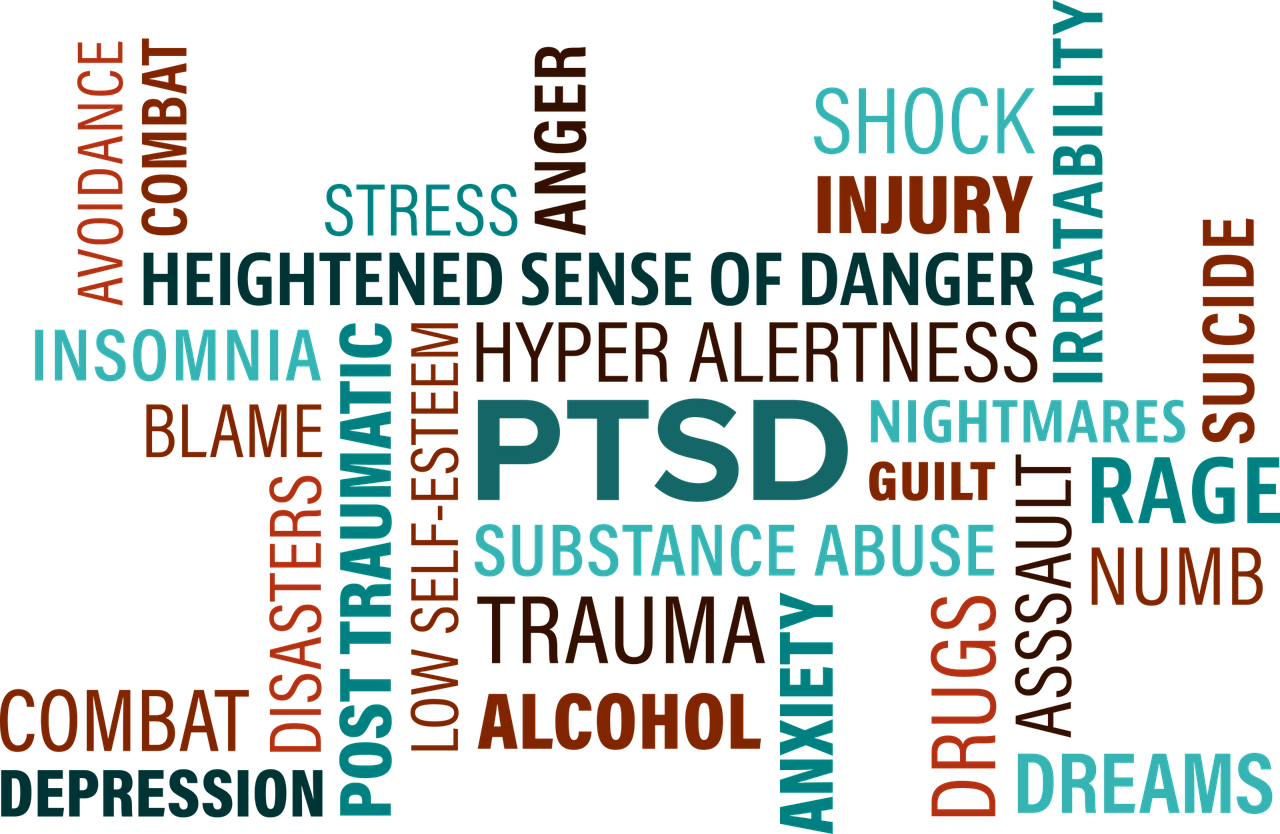
PTSD.
Photo courtesy of Pixabay.com
We have been hearing a lot more about PTSD these days.
The returning military is experiencing this problem in larger numbers than in the past. The military is not the only place we see PTSD. Children who have been abused, battered women and men, and people who have lived through traumas like hurricanes and tornadoes are also experiencing PTSD. The counseling profession, as well as society in general, is looking for solutions to this problem.
Recently at a convention for therapists and counselors, PTSD and the need to improve treatment was a major topic. I listened to the big-name people; the ones who have written books and given lectures, as they talked about how we should treat the disorder. Two of the biggest names in therapy did not agree on the best treatment. If they disagree, what is the person with PTSD to think? This made me start searching for answers.
Why do some people get PTSD and others do not experience it. In combat, let’s say ten men are in the same incident some get PTSD and some do not, why? Stix in a Scientific American article reported that of people who were traumatized by a single traumatic event, 90 % recovered from the trauma without therapy. So some people have concluded that PTSD is not a normal response to trauma. Maybe some form of resiliency is more common than PTSD. Maybe we have been doing it backward by studying the few who get PTSD instead of the many who bounce back from adversity.
We know from another study that kids who grow up in dysfunctional homes are more likely to suffer from PTSD, depression, and anxiety. From 50% to 67% of exposed kids develop some mental health issue, but the other one-third to one-half does not. Kids from this sort of background have repeated trauma and they have less social support. I wanted to know why some got PTSD and others did not.
There is a lot of research going on right now into the area of resilience. Some people seem to not develop PTSD when exposed to trauma. Others bounce back quickly. A few have lifelong problems. We need to know why these variations and how do we improve the ability to bounce back from adversity. A quick check of one journal database disclosed over 1400 articles about resiliency. I haven’t read them all yet but I will try to tell you the things I learn as I read them.
One thing seems clear from the articles I have read so far, and I am always comparing the research I read to what my clients tell me. Resilience, that ability to bounce back from adversity, is not something we are born with. Resilience can be learned and it can vary from situation to situation.
The subject is of such importance that I think there needs to be a book or books on how people can increase their resilience. So my plan at this stage is to share with you the things I learn and to add your comments and suggestions to what I find. In the process there just might be a book that needs writing. I will keep you posted on my efforts to write that book.
There are lots of writings on recovery, particularly from substance abuse or dependence, what it means to recover and be recovered. We are concluding that many people have both substance abuse disorders and mental health issues. It would be important to know how recovery is like resilience and how it is different, assuming these two terms do not describe the same thing.
One more thing I need to tell you about at this time. Some people experience a traumatic event and it changes their lives forever in a positive way. We call this Post Traumatic Growth (PTG). This intrigued me. Why and how is it that some people use a traumatic experience to transform their lives and grow into a stronger better person? We talk a lot about the way PTSD damages people but not much about the way in which it might inspire them. So I have been reading everything I can find on PTG. But I am also listening with new ears to the stories people tell about their life-changing experiences.
There is more to come on this subject so I hope you stay tuned for my postings and a possible book on Posttraumatic Stress Disorder (PTSD), Posttraumatic Growth (PTG), and the whole issue of how resilience is created and how you or someone you know can learn to bounce back from adversity.
For more information on Stress and PTSD see:
Posttraumatic Growth (PTG) vs. Posttraumatic Stress Disorder
Acute Stress Disorder vs. PTSD
Staying connected with David Joel Miller
Seven David Joel Miller Books are available now!
My newest book is now available. It was my opportunity to try on a new genre. I’ve been working on this book for several years, but now seem like the right time to publish it.
Story Bureau is a thrilling Dystopian Post-Apocalyptic adventure in the Surviving the Apocalypse series.
Baldwin struggles to survive life in a post-apocalyptic world where the government controls everything.
As society collapses and his family gets plunged into poverty, Baldwin takes a job in the capital city, working for a government agency called the Story Bureau. He discovers the Story Bureau is not a benign news outlet but a sinister government plot to manipulate society.
Bumps on the Road of Life. Whether you struggle with anxiety, depression, low motivation, or addiction, you can recover. Bumps on the Road of Life is the story of how people get off track and how to get your life out of the ditch.
Dark Family Secrets: Doris wants to get her life back, but small-town prejudice could shatter her dreams.
Casino Robbery Arthur Mitchell escapes the trauma of watching his girlfriend die. But the killers know he’s a witness and want him dead.
Planned Accidents The second Arthur Mitchell and Plutus mystery.
Letters from the Dead: The third in the Arthur Mitchell mystery series.
What would you do if you found a letter to a detective describing a crime and you knew the writer and detective were dead, and you could be next?
Sasquatch. Three things about us, you should know. One, we have seen the past. Two, we’re trapped there. Three, I don’t know if we’ll ever get back to our own time.
For these and my upcoming books; please visit my Author Page – David Joel Miller
Want the latest blog posts as they publish? Subscribe to this blog.
For videos, see: Counselorssoapbox YouTube Video Channel
 counselorssoapbox