Is your thinking full of bad habits?

By David Joel Miller, MS, Licensed Therapist & Licensed Counselor.
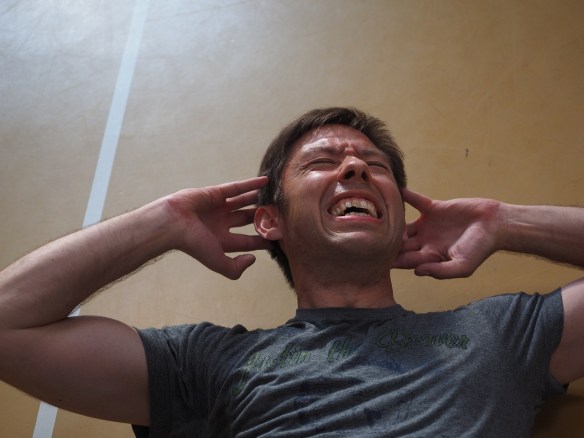
Is your thinking full of bad habits?
Photo courtesy of Pixabay.com

Poor mental health can be the result of bad thinking habits.

People diagnosed with both depression and anxiety disorders often engage in a lot of thinking behaviors that therapists call “unhelpful thoughts.” Sometimes these unhelpful thoughts are called dysfunctional or irrational thoughts. I prefer the term unhelpful thoughts because when you have them you don’t experience them as either illogical or dysfunctional. What may be missing from these discussions is how often those “unhelpful thoughts” are the result of bad thinking habits.

Recently I have been reading some research on habit formation. When we talk about bad habits, we are usually talking about behaviors. But experimenters have shown that they can influence how people think about events, and with enough practice, people can learn automatically to have very “unhelpful thoughts.” Let me give you an example.

How to create an unhelpful thought.

One way to measure unhelpful thought formation is to have people complete a sentence whose ending is ambiguous. Imagine for a moment that a friend’s child or grandchild has come over to your house for a visit. The child is full of energy and wants to go out in your backyard and play. Let’s assume the back yard is fenced. And that you don’t live in a neighborhood with a lot of drive-by shootings.

After 10 minutes, you look out to check on the child, and what you see is this child is ______.

How did you fill in the sentence? People who are high in anxiety or depression often fill in the sentence by imagining that the child is: missing or dead. If you are high in anxiety and try to anticipate all possible negative outcomes, you are likely to worry about things and imagine the worst possible alternative. People with depression also show bias towards unhelpful thoughts.

People who are lower in worry or depression are likely to complete the sentence with something like – After 10 minutes you look out to check on the child, and what you see is this child is _____, playing with a ball, or excitedly running around chasing the dog.

People whose worry rule is “only worry about the big things” are likely to imagine the neutral or happy endings for the sentence. People whose worry rule is “worry about every possible negative outcome” are much more likely to imagine something terrible has happened to the child.

The way you complete the sentence alters the way you think and behave.

People who repeatedly complete ambiguous sentences with negative or unhelpful endings become increasingly depressed or anxious. You can start to mistakenly believe that by keeping the child in the house, you are protecting them from undesirable outcomes. Unfortunately, children who don’t get to go out in the yard and play and are kept continuously where the adult can see them are often babysat by TVs and electronic devices.

The results of your unhelpful thinking that if the child can play in the backyard, something terrible will happen to them, results in children who don’t get enough exercise and are at increased risk of developing type II diabetes and ADHD.

It’s easier to develop a bad thinking habit than to change them.

When people come for counseling, they tend to believe that if they think something is dangerous, it is. Therapists call that emotional reasoning. And it is an especially unhelpful thought. Most of these unhelpful thoughts people have been practicing for a long time. And just like behavioral habits, unhelpful thinking habits can be hard to change.

The first step in changing unhelpful thoughts is to notice that you have developed certain thinking habits. Becoming aware of those unhelpful thoughts can help you to start challenging them and to develop more helpful thinking habits.

A warning about trying to change thinking habits.

Don’t try to change a negative thinking habit into an unrealistically positive thinking habit. We often use positive affirmations to help people move from negative thoughts to positive ones. But don’t try to fool your brain by lying to it. In the example above of the child playing in the backyard, it’s best to substitute a more neutral outcome for the negative one you habitually think. Don’t try telling your brain that your child is so smart that nothing terrible will ever happen to them. Your brain will know you’re lying and disregard that kind of positive affirmation. He also may want to check on the child every few minutes just to reassure yourself.

Become aware of your thoughts and how unhelpful thoughts may have become a bad thinking habit you need to work on changing.

Staying connected with David Joel Miller

Seven David Joel Miller Books are available now!

My newest book is now available. It was my opportunity to try on a new genre. I’ve been working on this book for several years, but now seem like the right time to publish it.

Story Bureau.

Story Bureau is a thrilling Dystopian Post-Apocalyptic adventure in the Surviving the Apocalypse series.

Baldwin struggles to survive life in a post-apocalyptic world where the government controls everything.

As society collapses and his family gets plunged into poverty, Baldwin takes a job in the capital city, working for a government agency called the Story Bureau. He discovers the Story Bureau is not a benign news outlet but a sinister government plot to manipulate society.

Bumps on the Road of Life. Whether you struggle with anxiety, depression, low motivation, or addiction, you can recover. Bumps on the Road of Life is the story of how people get off track and how to get your life out of the ditch.

Dark Family Secrets: Doris wants to get her life back, but small-town prejudice could shatter her dreams.

Casino Robbery Arthur Mitchell escapes the trauma of watching his girlfriend die. But the killers know he’s a witness and want him dead.

Planned Accidents  The second Arthur Mitchell and Plutus mystery.

Letters from the Dead: The third in the Arthur Mitchell mystery series.

What would you do if you found a letter to a detective describing a crime and you knew the writer and detective were dead, and you could be next?

Sasquatch. Three things about us, you should know. One, we have seen the past. Two, we’re trapped there. Three, I don’t know if we’ll ever get back to our own time.

For these and my upcoming books; please visit my Author Page – David Joel Miller

Want the latest blog posts as they publish? Subscribe to this blog.

For videos, see: Counselorssoapbox YouTube Video Channel

Fondness.

Sunday Inspiration.     Post by David Joel Miller.

Fondness.
Photo courtesy of Pixabay.com

“I am fond of pigs. Dogs look up to us. Cats look down on us. Pigs treat us as equals.”

― Winston S. Churchill

“He was fond of books, for they are cool and sure friends”

― Victor Hugo, Les Misérables

“A fondness for reading, properly directed, must be an education in itself.”

― Jane Austen, Mansfield Park

Wanted to share some inspirational quotes with you.  Today seemed like a good time to do this. There are an estimated 100,000 words in the English language that are feelings related. Some emotions are pleasant, and some are unpleasant, but all feelings can provide useful information. If any of these quotes strike a chord with you, please share them.

Look at these related posts for more on this topic and other feelings.

Emotions and Feelings.

Inspiration

Aspire.

Aspire

Aspire.
Photo courtesy of Pixabay.com

Sunday Inspiration.     Post by David Joel Miller.

The truth – that Love is the ultimate and highest goal to which man can aspire. Then I grasped the meaning of the greatest secret that human poetry and human thought and belief have to impart: The salvation of man is through love and in love.”

― Viktor E. Frankl, Man’s Search for Meaning

“If you have built castles in the air, your work need not be lost; that is where they should be. Now put the foundations under them.”

― Henry David Thoreau, Walden

“To understand the heart and mind of a person, look not at what he has already achieved, but at what he aspires to.”

― Kahlil Gibran, The Madman

Wanted to share some inspirational quotes with you.  Today seemed like a good time to do this. There are an estimated 100,000 words in the English language that are feelings related. Some emotions are pleasant, and some are unpleasant, but all feelings can provide useful information. If any of these quotes strike a chord with you, please share them.

Look at these related posts for more on this topic and other feelings.

Emotions and Feelings.

Inspiration

Ways to perform well when you’re under pressure.

By David Joel Miller, MS, Licensed Therapist & Licensed Counselor.

Performing well under pressure.
Photo courtesy of Pixabay.com

How do you perform when you’re under pressure?

Are you one of those people who are at your best when under pressure? Or are you one of those people who choke when the pressure is on?

People who perform well under pressure have developed the right mindsets, attitudes, and skills. Challenges don’t derail them; they energize them. You too can learn to perform well under pressure. Here are some of the techniques that will help you do better when the pressure is on.

Giving yourself as much time as possible reduces the pressure.

Some people delude themselves into believing that the way to get something done is to wait until the last possible minute. They tell themselves that they perform better under pressure. Unfortunately, what many people do when the pressure is lower their standards. Students who wait until the night before the paper is due can get an essay written in a very short amount of time. They also often do poorly and then use the lack of time as an excuse. Start as soon as possible on any new project. That allows you to correct mistakes. Build some extra time in your plans for those tasks, which ended up taking longer than you expected.

Practice skills beforehand reduce the pressure.

When under pressure, humans tend to revert to their usual way of doing things. To be able to make use of skills you are learning, you need to over-practice those skills until they become automatic. The better prepared you are for the challenge, the less stressful it will be. If you have thoroughly practiced a necessary skill, your muscles will remember it and perform that task automatically.

Use positive affirmations to reduce stress.

Putting yourself down will damage your performance. People who believe in themselves do better. Positive affirmations shouldn’t be a matter of lying to yourself. Tell yourself you can do it, and you probably will be able to. Tell yourself this will be the best performance anyone has ever done, and your brain will know you’re lying and try to sabotage you. Positive affirmations are a way to psych yourself up and maximize your performance.

Developing a positive stress mindset improves performance.

Viewing the task ahead as stressful makes it more challenging to accomplish. Looking for opportunities to grow and develop improves your performance. People with a positive stress mindset are energized by opportunities rather than being exhausted by them.

Tell your inner critic to shut up.

The evidence from psychology tells us that self-criticism is rarely helpful. Everyone has an inner critic telling them they can’t do this, or they’re not good enough. Some people are so used to listening to the inner critic that they find daily life stressful. Other people have practiced ignoring that inner critic enough that they rarely hear the inner critic’s voice anymore. The time for evaluation of what you have done is after everything is over, not before. Don’t start making excuses before you even begin the project.

For more on this topic see this article.

Staying connected with David Joel Miller

Seven David Joel Miller Books are available now!

My newest book is now available. It was my opportunity to try on a new genre. I’ve been working on this book for several years, but now seem like the right time to publish it.

Story Bureau.

Story Bureau is a thrilling Dystopian Post-Apocalyptic adventure in the Surviving the Apocalypse series.

Baldwin struggles to survive life in a post-apocalyptic world where the government controls everything.

As society collapses and his family gets plunged into poverty, Baldwin takes a job in the capital city, working for a government agency called the Story Bureau. He discovers the Story Bureau is not a benign news outlet but a sinister government plot to manipulate society.

Bumps on the Road of Life. Whether you struggle with anxiety, depression, low motivation, or addiction, you can recover. Bumps on the Road of Life is the story of how people get off track and how to get your life out of the ditch.

Dark Family Secrets: Doris wants to get her life back, but small-town prejudice could shatter her dreams.

Casino Robbery Arthur Mitchell escapes the trauma of watching his girlfriend die. But the killers know he’s a witness and want him dead.

Planned Accidents  The second Arthur Mitchell and Plutus mystery.

Letters from the Dead: The third in the Arthur Mitchell mystery series.

What would you do if you found a letter to a detective describing a crime and you knew the writer and detective were dead, and you could be next?

Sasquatch. Three things about us, you should know. One, we have seen the past. Two, we’re trapped there. Three, I don’t know if we’ll ever get back to our own time.

For these and my upcoming books; please visit my Author Page – David Joel Miller

Want the latest blog posts as they publish? Subscribe to this blog.

For videos, see: Counselorssoapbox YouTube Video Channel

Learning

Learning.

Sunday Inspiration.     Post by David Joel Miller.

“I’ve learned that people will forget what you said, people will forget what you did, but people will never forget how you made them feel.”

― Maya Angelou

“Once you learn to read, you will be forever free.”

― Frederick Douglass

“Live as if you were to die tomorrow. Learn as if you were to live forever.”

― Mahatma Gandhi

Wanted to share some inspirational quotes with you.  Today seemed like a good time to do this. There are an estimated 100,000 words in the English language that are feelings related. Some emotions are pleasant, and some are unpleasant, but all feelings can provide useful information. If any of these quotes strike a chord with you, please share them.

Look at these related posts for more on this topic and other feelings.

Emotions and Feelings.

Inspiration


Thanksgiving Day.

Thanksgiving Day.

Post by David Joel Miller.

Happy Thanksgiving

Happy Thanksgiving.
Photo courtesy of Pixabay.com

Today is the traditional Thanksgiving Day celebration here in America. Mostly it is celebrated with lots of food, some family, and assorted other traditions.

For some people, this is a time to eat a lot and watch sports. Other people are planning their “Black Friday” Christmas shopping for tomorrow. A few of us old dinosaurs are remembering that today was created to think about all the things that we have to be grateful for and how this country almost didn’t make it, a couple of times.

Below are a few quotes that remind me of things to think about today.

“After a good dinner, one can forgive anybody, even one’s own relations.”

― Oscar Wilde, A Woman of No Importance

As we express our gratitude, we must never forget that the highest appreciation is not to utter words, but to live by them. ~John Fitzgerald Kennedy

An optimist is a person who starts a new diet on Thanksgiving Day. ~Irv Kupcinet

We can only be said to be alive in those moments when our hearts are conscious of our treasures. ~Thornton Wilder

None is more impoverished than the one who has no gratitude. Gratitude is a currency that we can mint for ourselves, and spend without fear of bankruptcy. ~Fred De Witt Van Amburgh

Thanksgiving is an emotional holiday. People travel thousands of miles to be with people they only see once a year. And then discover once a year is way too often. ~Johnny Carson

Wanted to share some inspirational quotes with you. But these were all I could find. Today seemed like a good time to do this. If any of these quotes strike a chord with you please share them.

Trying.

Trying.
Photo courtesy of Pixabay.com

Trying.

Sunday Inspiration.     Post by David Joel Miller.

“Anyone who has never made a mistake has never tried anything new.”

― Albert Einstein

“Think left and think right and think low and think high. Oh, the thinks you can think up if only you try!”

― Dr. Seuss

“Try to be a rainbow in someone’s cloud.”

― Maya Angelou, Letter to My Daughter

“These are the times that try men’s souls.”

― Thomas Paine, The American Crisis

Wanted to share some inspirational quotes with you.  Today seemed like a good time to do this. There are an estimated 100,000 words in the English language that are feelings related. Some emotions are pleasant, and some are unpleasant, but all feelings can provide useful information. If any of these quotes strike a chord with you, please share them.

Look at these related posts for more on this topic and other feelings.

Emotions and Feelings.

Inspiration

Do you worry too much?

By David Joel Miller, MS, Licensed Therapist & Licensed Counselor.

Man worrying,

Do you worry too much?
Photo courtesy of Pixabay.com

Not everyone means the same thing when they say they worry.

Pretty much everyone “worries” at one time or another. When some people say worry, they mean they are concerned about something. People worry about having enough money for retirement, and that may motivate them to save more. It’s reasonable to be concerned and take action if you don’t have money or a job. People who are high in anxiety may worry unreasonably about everything. If you worry repetitively, and you worry about things that have a low probability of happening, you may be suffering from a serious mental illness called Generalized Anxiety Disorder.

Worry means more than just being concerned about something.

Dictionary definitions for the word worry include to give way to anxiety or unease, to dwell on one’s difficulties or troubles, a state of anxiety or uncertainty about one’s troubles, either actual or potential. Problematic worry involves worrying excessively about your problems rather than taking action to solve them or spending a great deal of time thinking about possible problems in the future even when the chances that will come to pass are very small. Ruminating about the future can make you more anxious and results in mental health problems.

Some worry is normal.

Doubts, worries, and anxieties are normal. Being concerned about something, having a real worry or anxiety, should motivate you to take action to prepare for possible negative outcomes. Buying insurance is one way of reducing your worries.

Worry and Anxiety can become your friends or your enemies.

How worry and anxiety affect you depends on your stress mindset. We all experience some stress before a novel experience. Going for a job interview, giving a speech, and athletic competition, taking a test, or a first date, can all be stressful. Some people interpret the butterflies in their stomachs as excitement and the second themselves up to do better. Other people become so anxious they avoid these kinds of situations.

How can you tell if you’re worrying too much?

Constant or excessive worry takes its toll on your physical and emotional health. Worry can interfere with your sleep and your ability to relax. If you’re not able to rest up between episodes of stress, you’re at high risk of developing burnout. Uncontrolled excessive worry can leave you unable to cope with life.

One sign of excessive worry is having constant negative, unhelpful thoughts. If worry becomes persistent, you’re worrying too much. People with uncontrolled worry begin to worry about every possible what-if.

Using drugs and alcohol to treat worry makes it worse.

It’s easy to fall into the trap of thinking that alcohol or drugs can help you cope with worry and anxiety. Unfortunately, substances only work for a very short time. Once the alcohol wears off you will experience rebound anxiety, which will be stronger than before. Using substances may help you forget about your worries temporarily, but they will interfere with your ability to take action to solve those problems.

Unexplained physical ailments are a sign your worry is out of control.

Worry leads to anxiety, and anxiety leads to a host of physical ailments. Excessive worry is a common cause of tension headaches. Worry can also lead to gastrointestinal difficulties, both constipation, and diarrhea. Worry increases the stress hormones in your bloodstream. If you’re in real physical danger and need to run for your life those stress hormones can be useful. But if your worry is creating those stress hormones, you’re going to feel it everywhere in your body.

People worry excessively are more likely to experience muscle aches and pains even when they haven’t used those muscles. Worry can also impair your concentration leading to poor performance at school or work. Worry leads to irritability, which can damage your relationships with family, friends, and coworkers.

You can learn to control your worrying.

Somehow you learn to worry, and you learn to stop worrying so much. Changing the way you think about worry, and eliminating unhelpful thoughts will reduce your worry. If worry is impairing your happiness or making you sick you may want to work with a counselor who can teach you techniques to reduce unnecessary worries.

Staying connected with David Joel Miller

Seven David Joel Miller Books are available now!

My newest book is now available. It was my opportunity to try on a new genre. I’ve been working on this book for several years, but now seem like the right time to publish it.

Story Bureau.

Story Bureau is a thrilling Dystopian Post-Apocalyptic adventure in the Surviving the Apocalypse series.

Baldwin struggles to survive life in a post-apocalyptic world where the government controls everything.

As society collapses and his family gets plunged into poverty, Baldwin takes a job in the capital city, working for a government agency called the Story Bureau. He discovers the Story Bureau is not a benign news outlet but a sinister government plot to manipulate society.

Bumps on the Road of Life. Whether you struggle with anxiety, depression, low motivation, or addiction, you can recover. Bumps on the Road of Life is the story of how people get off track and how to get your life out of the ditch.

Dark Family Secrets: Doris wants to get her life back, but small-town prejudice could shatter her dreams.

Casino Robbery Arthur Mitchell escapes the trauma of watching his girlfriend die. But the killers know he’s a witness and want him dead.

Planned Accidents  The second Arthur Mitchell and Plutus mystery.

Letters from the Dead: The third in the Arthur Mitchell mystery series.

What would you do if you found a letter to a detective describing a crime and you knew the writer and detective were dead, and you could be next?

Sasquatch. Three things about us, you should know. One, we have seen the past. Two, we’re trapped there. Three, I don’t know if we’ll ever get back to our own time.

For these and my upcoming books; please visit my Author Page – David Joel Miller

Want the latest blog posts as they publish? Subscribe to this blog.

For videos, see: Counselorssoapbox YouTube Video Channel

Impatient.

Impatient.

Sunday Inspiration.     Post by David Joel Miller.

Impatient.
Photo courtesy of Pixabay.com

“It’s a universal law– intolerance is the first sign of an inadequate education. An ill-educated person behaves with arrogant impatience, whereas truly profound education breeds humility.”

― Aleksandr I. Solzhenitsyn

Impatience, on the other hand, is a symptom of selfishness. It is a trait of the self-absorbed. It arises from the all-too-prevalent condition called “center of the universe” syndrome, which leads people to believe that the world revolves around them and that all others are just supporting cast in the grand theater of mortality in which only they have the starring role.”

― Dieter F. Uchtdorf

“Experience has further taught me this, that we ruin ourselves by impatience.”

― Michel de Montaigne

Wanted to share some inspirational quotes with you.  Today seemed like a good time to do this. There are an estimated 100,000 words in the English language that are feelings related. Some emotions are pleasant, and some are unpleasant, but all feelings can provide useful information. If any of these quotes strike a chord with you, please share them.

Look at these related posts for more on this topic and other feelings.

Emotions and Feelings.

Inspiration

Service.

Service.

Service

Service.
Photo courtesy of Pixabay.com

Sunday Inspiration.     Post by David Joel Miller.

“The best way to find yourself is to lose yourself in the service of others.”

― Mahatma Gandhi

“Everybody can be great…because anybody can serve. You don’t have to have a college degree to serve. You don’t have to make your subject and verb agree to serve. You only need a heart full of grace. A soul generated by love.”

― Martin Luther King Jr.

“Those who are happiest are those who do the most for others.”

― Booker T. Washington, Up from Slavery

Wanted to share some inspirational quotes with you.  Today seemed like a good time to do this. There are an estimated 100,000 words in the English language that are feelings related. Some emotions are pleasant, and some are unpleasant, but all feelings can provide useful information. If any of these quotes strike a chord with you, please share them.

Look at these related posts for more on this topic and other feelings.

Emotions and Feelings.

Inspiration