Inhumane

Inhumane
Photo courtesy of Pixabay.com

Inhumane

Sunday Inspiration.     Post by David Joel Miller.

“It is inhumane, in my opinion, to force people who have a genuine medical need for coffee to wait in line behind people who apparently view it as some kind of recreational activity.”

― Dave Barry

“Of all the forms of inequality, injustice in health care is the most shocking and inhumane.”
― Martin Luther King Jr.

“Please try to remember that what they believe, as well as what they do and cause you to endure does not testify to your inferiority but to their inhumanity.”

― James Baldwin, The Fire Next Time

Wanted to share some inspirational quotes with you. Today seemed like a good time to do this. There are an estimated 100,000 words in the English language that are feelings related. Some emotions are pleasant, and some are unpleasant, but all feelings can provide useful information. I’ve also included some words related to strengths and values since the line between what we think and what we feel may vary from person to person. If any of these quotes strike a chord with you, please share them.

Look at these related posts for more on this topic and other feelings, strengths, and values.

Emotions and Feelings.                      Inspiration

Staying in touch with David Joel Miller.

For more information about my writing journey, my books, and other creative activities, please subscribe to my blog at davidjoelmillerwriter.com

Seven David Joel Miller Books are available on Amazon now! And more are on the way.

For these and my upcoming books, visit my Amazon Author Page – David Joel Miller

For information about my work in mental health, substance abuse, and having a happy life, Please check out counselorssoapbox.com

For videos, see: Counselorssoapbox YouTube Video Channel

February

February
Photo courtesy of Pixabay.com

February

Inspiration.      Post by David Joel Miller.

“April and May were painful, lonely months for me because I couldn’t talk to you. I never knew that spring could be so painful and lonely. Better to have three Februarys than a spring like this.”

― Haruki Murakami

“Like most New Englanders, she’d never outgrown a childlike anticipation of the season’s first snow. Of course, also like most New Englanders, what she wished for in December she’d come to loathe by February,”

― Lisa Genova, Still Alice

“Used to be, he recalled, that Menotaur would play house music on nights like tonight. Now, that was his groove. Now, it seemed like they only played house on the fifth week in February.”

― Casey Hamilton

Since time is such an important part of human existence, humans being finite after all, the passage of time on planet Earth has affected our customs and our thinking. After writing a series of posts about various feelings and, character strengths, and values, I thought it might be worth exploring the connection between the seasons and our experiences and emotions.

Because planet Earth is tilted, the seasons in the northern and southern hemispheres are opposite. How you experience Mother Earth and our changing weather depends on where you’re situated on this planet. My apologies to those who might read this who live in the southern hemisphere, but since I am much more familiar with the weather and the seasons in the northern hemisphere, I’ll am following that system.

Our current calendar is heavily weighted toward the Roman calendar. Originally, there were only ten months with the stormy times after New Year’s left out. Eventually, two more months had to be added to cover what we now call January and February. The Irish calendar, sometimes called the Celtic calendar, begins each of the seasons one month earlier, probably due to the difference in the weather farther north. I hope you find some of these thoughts worthwhile.

Emotions and Feelings.                      Inspiration

Staying in touch with David Joel Miller.

For more information about my writing journey, my books, and other creative activities, please subscribe to my blog at davidjoelmillerwriter.com

Seven David Joel Miller Books are available on Amazon now! And more are on the way.

For these and my upcoming books, visit my Amazon Author Page – David Joel Miller

For information about my work in mental health, substance abuse, and having a happy life, Please check out counselorssoapbox.com

For videos, see: Counselorssoapbox YouTube Video Channel

Is making lists a good thing? AI weighs in.

Making Lists
Photo courtesy of Pixabay.com

Is making lists a good thing? AI weighs in.

By David Joel Miller, MS, Licensed Therapist & Counselor.

I make a lot of lists. I think it’s one of the things that helps me stay organized and productive, but not all of my family agrees with me. I suggested to a particular family member that they should start making lists. Their immediate response was that they were not retarded or senile, and they definitely did not have autism. This got me to wondering about reasons why something could be both good and bad. Especially when that divided opinion involves making lists.

I had initially planned to write a blog post titled “Why you need to write things down.” But that seemed problematic if, in fact, my penchant for list-making was indicative of some sort of mental pathology. I had one girlfriend, a very long, long time ago, who accused me of being autistic or at least on the autism spectrum, but I wrote that appraisal off to her diagnosed mental illnesses. Our conflicted short-term relationship was the start of my going back to school to complete a Master’s degree in counseling and marriage and family therapy.

A brief search for articles on the values and dangers of making lists did not return any conclusive evidence, so I thought I would turn to an ultimate authority. Two efforts to seek a final ultimate opinion resulted in two contradictory lists of reasons. I will need your help deciding which of these authorities is correct.

The authorities I consulted were AI programs. I may have skewed the results somewhat since I had to rewrite the prompt to get 2 different opinions. I asked AI if making lists was a sign of an intelligent, productive person, and I also asked AI if making lists was a sign of mental retardation, autism, or some other mental pathology. Below, you will find the two lists created by AI because of my two different prompts. Please let me know your thoughts about the original question and the two varying AI opinions.

Exhibit 1

Making lists is a sign of high intelligence.

Please create a list of at least twelve reasons why making lists is a sign of high intelligence and a well-organized person.

Certainly! Creating lists can be indicative of high intelligence and organizational skills for several reasons. Here’s a list of twelve reasons:

  1. Cognitive Organization: Making lists requires categorizing and organizing thoughts, showcasing the ability to structure information mentally.
  2. Prioritization Skills: Lists often involve ranking items in order of importance, demonstrating the ability to prioritize tasks or goals effectively.
  3. Memory Enhancement: Writing things down helps in encoding information, aiding memory recall and reducing the cognitive load.
  4. Time Management: Lists assist in planning and scheduling, reflecting an awareness of time constraints and the importance of efficient time management.
  5. Goal Setting: Creating lists often involves setting specific, measurable, achievable, relevant, and time-bound (SMART) goals, a key aspect of intelligent goal-setting.
  6. Task Completion Tracking: Lists provide a visual representation of progress, allowing individuals to track completed tasks and gain a sense of accomplishment.
  7. Clarity of Thought: Organizing thoughts into a list format can enhance clarity and understanding, facilitating more effective communication.
  8. Decision-Making Aid: Lists can serve as decision-making tools, helping individuals weigh options and make informed choices based on clear criteria.
  9. Stress Reduction: Having a list can alleviate stress by breaking down complex tasks into manageable steps, making daunting projects seem more achievable.
  10. Adaptability: Lists can be easily modified and updated, reflecting adaptability and flexibility in responding to changing circumstances.
  11. Effective Communication: The ability to convey information concisely and systematically through lists indicates strong communication skills, a hallmark of intelligence.
  12. Self-Awareness: Creating lists requires self-reflection and an understanding of personal priorities, showcasing a high level of self-awareness and introspection.

In summary, making lists involves a combination of cognitive skills, organizational abilities, and effective communication, all of which are associated with high intelligence and a well-organized mindset.

Exhibit 2

Making lists is a sign of dementia.

Can making lists be a symptom of dementia or low IQ? Please create a list of reasons why this might be the case.

While making lists is generally associated with positive cognitive traits, in certain situations, it might not be indicative of high intelligence. Here’s a list of reasons why making lists could potentially be a symptom of dementia or low IQ:

  1. Difficulty in Sequential Thinking: Individuals with cognitive impairments, such as dementia, may struggle with organizing thoughts sequentially, leading to a reliance on lists as a compensatory strategy.
  2. Memory Impairment: Memory loss is a common symptom of dementia, and individuals may use lists as external memory aids to compensate for their cognitive challenges.
  3. Lack of Cognitive Flexibility: People with lower cognitive abilities might find it challenging to adapt their thinking and strategies, resulting in a rigid dependence on lists as a coping mechanism.
  4. Inability to Prioritize: Difficulty in discerning priorities and setting goals could lead to a constant need for external cues, like lists, to guide actions.
  5. Executive Functioning Deficits: Executive functions, which include skills like planning, organizing, and initiating tasks, can be compromised in individuals with lower cognitive abilities, necessitating the use of lists.
  6. Limited Problem-Solving Skills: Those with lower IQ may struggle with problem-solving and decision-making, relying on lists to guide them through tasks instead of independently navigating challenges.
  7. Reduced Ability to Synthesize Information: Lower cognitive abilities may hinder the capacity to synthesize information, leading to a reliance on lists as a way to break down complex concepts into simpler components.
  8. Difficulty with Abstract Thinking: Creating mental frameworks and abstract thinking might be challenging for individuals with lower cognitive abilities, making lists a more concrete and accessible method of organization.
  9. Impaired Verbal Communication: Difficulties in expressing thoughts verbally might lead to a preference for written lists as a means of clearer communication.
  10. Limited Working Memory: People with lower cognitive abilities may have a reduced working memory capacity, making it harder to hold and manipulate information mentally, hence relying on external aids like lists.
  11. Attention Deficits: Dementia and certain cognitive conditions may lead to attention deficits, making it challenging to focus on tasks without external prompts like lists.
  12. Decreased Initiative: Lower motivation and initiative, common in some cases of cognitive decline, may result in a dependence on lists for guidance rather than independent decision-making.

It’s important to note that while these points suggest potential reasons, they are not definitive indicators. Making lists alone is not diagnostic of dementia or low IQ; a comprehensive assessment by healthcare professionals is necessary for an accurate evaluation of cognitive functioning.

Which of the AI experts is correct?

Look at those 2 explanations and feel free to leave a comment weighing in on the question: “List making, is it good or bad?”

Recommended Mental Health Books

David Miller at counselorssoapbox.com is an Amazon Affiliate and may receive a small Commission if you purchase a book or product using the link on this page. Using the link will not increase the cost to you.

Does David Joel Miller see clients for counseling and coaching?

Yes, I do. I can see private pay clients if they live in California, where I am licensed. If you’re interested in information about that, please email me or use the contact me form.

Staying in touch with David Joel Miller.

Want the latest blog posts as they are published? Subscribe to this blog.

For more information about my writing journey, my books, and other creative activities, please subscribe to my blog at davidjoelmillerwriter.com

Seven David Joel Miller Books are available on Amazon now! And more are on the way.

For more about my books, please visit my Amazon Author Page – David Joel Miller

For information about my work in mental health, substance abuse, and having a happy life, please check out https://counselorssoapbox.com

For videos, see: Counselorssoapbox YouTube Video Channel

Creating the life you want.

Changing your life

Time for a life change?
Photo courtesy of Pixabay.com

Creating the life you want.

By David Joel Miller, MS, Licensed Therapist & Counselor.

Are you satisfied with the life you have?

Among the people I talk with daily, an almost universal characteristic is that they are unhappy with their lives. I realize some of that may be skewed because I work as a counselor and mental health therapist. When I’m not doing those things, I also work with a very limited number of clients, trying to coach them on creating a plan for life and achieving the goals they would like to achieve. You don’t have to be mentally ill to want more out of life than what you have now.

If you’re one of those many people who aren’t happy with the life you’re living, now might be a good time to look at where you are and figure out how you’ll get where you want to be. For most people, life is a road trip to unexpected places, relationships, and events. But it’s a lot easier to get to the destination you’re headed for if you have a roadmap. The map doesn’t have to control your journey, but it can sure keep you from making wrong turns.

Start by figuring out who you are and where you are.

On any journey, and life is absolutely a journey, it is helpful to start by knowing where you are and where you want to be. Even if, so far, you have been living your life as one long road trip, taking what comes along, it’s never too late to take stock of where you are and figure out where you want to be.

It’s helpful to take an inventory of your life. Make sure you balance the inventory by looking at the good and the bad. It may be hard to notice the good parts when life is challenging. In twelve-step recovery, taking an inventory is a formal part of the process. But as any successful business person knows, taking inventory needs to be done again periodically.

Your life consists of many segments or parts. I read a lot about work-life balance, but there are many other aspects of your life that need to be in balance also. In a future post, we will examine those various segments of your life and how achieving a better balance between the various aspects of your life and the roles you perform can lead to a more satisfactory life and better mental health.

Who you are has been changing as you’ve lived your life.

In the process of living, you have probably accumulated a lot of life experiences, both good and bad. When life is good, we tend to ignore the problems. But if your life has not you down, at this point, the only thing you may be able to see is the ground you’re lying on.

Don’t fall into the trap of believing that a flourishing, contented, satisfying life is outside your reach because life has brought you to where you are. Some people would call this a happy life, but the definition of what that happy life should look like varies so much that I will save the discussion of what a happy life is and what it can be for a future post.

As much as you can hold onto the idea that maybe, just possibly, life can get better. My experience tells me that for everyone I’ve worked with and known, it has been possible to make their life better. What that better might be for you is something you’ll need to think about, plan for, and begin taking action towards. We’ll talk about all these steps in future blog posts.

Start your journey to a better life by getting to know yourself.

Begin by looking at who you are now. Looking back over your shoulder at the past to see how past experiences and choices have made you who you are is something you may have to do a little at a time. Planning for the future that comes later. The best starting point is wherever you are right now.

For some people, their experiences in the past are so painful they can only deal with one layer at a time. I think of this as “peeling the onion.” You take off a tiny little layer of past experiences, and if it becomes too painful, you cry for a while. When you’ve healed from that experience, you may be able to take further steps.

Sometimes, this process of cleaning up the wreckage of your past, the things people have done to you, and the things you have done to others requires working with a counselor or therapist. Sometimes, it happens in twelve-step groups by talking with your sponsor and working the steps. Some people can make significant self-change by reading blog posts like this one and self-help books.

Because the project seems overwhelming, don’t let that keep you from starting this journey. One rule I hold onto personally and professionally is “better is better.” Another saying that fits this situation is “progress, not perfection.”

Self-knowledge is the key to any self-improvement or change process. Think about what is important to you. Is it money? Are you looking for success? Or are relationships more important to you?

Do you have particular beliefs and principles? Any plan for accomplishing things must be consistent with your religious and spiritual beliefs and your value system. Spend some time thinking about what your core priorities are.

I’m suggesting that you spend some time on yourself. Study yourself and find out who you are. Like any good student, you will learn better if you take notes. If possible, write down your notes by hand in a journal or other safe place.

Does David Joel Miller see clients for counseling and coaching?

Yes, I do. I can see private pay clients if they live in California, where I am licensed. If you’re interested in information about that, please email me or use the contact me form.

Staying in touch with David Joel Miller.

Want the latest blog posts as they are published? Subscribe to this blog.

For more information about my writing journey, my books, and other creative activities, please subscribe to my blog at davidjoelmillerwriter.com

Seven David Joel Miller Books are available on Amazon now! And more are on the way.

For more about my books, please visit my Amazon Author Page – David Joel Miller

For information about my work in mental health, substance abuse, and having a happy life, please check out https://counselorssoapbox.com

For videos, see: Counselorssoapbox YouTube Video Channel

Idolize

Idolize
Photo courtesy of Pixabay.com

Idolize

Sunday Inspiration.     Post by David Joel Miller.

“I’ve often stood silent at a party for hours listening to my movie idols turn into dull and little people.”

― Marilyn Monroe

“Never touch your idols: the gilding will stick to your fingers.”

― Gustave Flaubert, Madame Bovary

“All truly great thoughts are conceived while walking.”

― Friedrich Nietzsche, Twilight of the Idols

Wanted to share some inspirational quotes with you. Today seemed like a good time to do this. There are an estimated 100,000 words in the English language that are feelings related. Some emotions are pleasant, and some are unpleasant, but all feelings can provide useful information. I’ve also included some words related to strengths and values since the line between what we think and what we feel may vary from person to person. If any of these quotes strike a chord with you, please share them.

Look at these related posts for more on this topic and other feelings, strengths, and values.

Emotions and Feelings.                      Inspiration

Staying in touch with David Joel Miller.

For more information about my writing journey, my books, and other creative activities, please subscribe to my blog at davidjoelmillerwriter.com

Seven David Joel Miller Books are available on Amazon now! And more are on the way.

For these and my upcoming books, visit my Amazon Author Page – David Joel Miller

For information about my work in mental health, substance abuse, and having a happy life, Please check out counselorssoapbox.com

For videos, see: Counselorssoapbox YouTube Video Channel

Infatuated

Infatuated
Photo courtesy of Pixabay.com

Infatuated

Sunday Inspiration.     Post by David Joel Miller.

“And when you love someone you don’t always see them realistically.”

― P.C. Cast, Awakened

“I had to touch you with my hands, I had to taste you with my tongue; one can’t love and do nothing.”

― Graham Greene, The End of the Affair

“Real, sane, mature love—the kind that pays the mortgage year after year and picks up the kids after school—is not based on infatuation but on affection and respect.”

Wanted to share some inspirational quotes with you. Today seemed like a good time to do this. There are an estimated 100,000 words in the English language that are feelings related. Some emotions are pleasant, and some are unpleasant, but all feelings can provide useful information. I’ve also included some words related to strengths and values since the line between what we think and what we feel may vary from person to person. If any of these quotes strike a chord with you, please share them.

Look at these related posts for more on this topic and other feelings, strengths, and values.

Emotions and Feelings.                      Inspiration

Staying in touch with David Joel Miller.

For more information about my writing journey, my books, and other creative activities, please subscribe to my blog at davidjoelmillerwriter.com

Seven David Joel Miller Books are available on Amazon now! And more are on the way.

For these and my upcoming books, visit my Amazon Author Page – David Joel Miller

For information about my work in mental health, substance abuse, and having a happy life, Please check out counselorssoapbox.com

For videos, see: Counselorssoapbox YouTube Video Channel

What gives your life meaning and purpose?

What gives your life meaning and purpose?

Meaning and Purpose.
Photo courtesy of Pixabay.com

What gives your life meaning and purpose?

By David Joel Miller, MS, Licensed Therapist & Counselor.

Have you found your life’s meaning and purpose?

Knowing why you are living life the way you have been is often more important than learning how to live that life. Discovering your life’s meaning and purpose is a challenging task. Having a meaning and purpose for your life is one of the principal components of creating a satisfying, flourishing life. Some people would call this a happy life, and in the future blog post, I want to explore the components of creating a happy life.

In his hierarchy of needs, Maslow places meaning and purpose, along with mastery, at the highest apex of his list, in a category he calls self-actualization. Many people spend their lives struggling to meet the basic physiological needs for food, water, air, and shelter. In this era of high material possessions, there are still people who struggle to meet these basic needs. But once those needs are fulfilled, people’s attention turns to the more abstract needs. Chief among those abstract needs are meaning, purpose, and mastery.

In his book Man’s Search for Meaning, Victor Frankel described what he learned about struggle and the meaning of life while a prisoner in a concentration camp. One of the lessons he learned is that if you have a “why for your living,” you can survive almost any how.

In my counseling and therapy practice, many clients come to me with issues of anxiety and depression. Some come to talk about jobs and relationships. Others come to counseling because they struggle with substance use and abuse. They can usually tell me that what they have been doing hasn’t been making them happy. What most people can’t tell me is what gives their life meaning and purpose. If the life you’re living has no purpose, how can you achieve more than fleeting, temporary happiness?

The search for meaning and purpose in life requires a conscious effort. Once you find the thing that makes your life worth living, whatever challenges you face become far less daunting. Clients often ask me how they should go about finding their meaning and purpose. I can suggest a lot of homework and processes to find your meaning and purpose, but identifying the one thing that might give your life meaning and purpose is often a matter of serendipity. You will never find what you’re looking for unless you’re out looking for it, and then, if you’re lucky, you may discover something that makes all the struggles of life worthwhile.

The first question to answer is, “Who are you?”

Now, by “who are you?” I don’t mean your name, the job you do, or the home you live in. In defining who you are, it’s important to look at much more than your surface characteristics. In the course of your lifetime, you will spend more time with yourself than with any other person.

Wherever you go, when you wake up in the morning, you will be there. It’s essential that you develop a good relationship with yourself. Come to know everything there is to know about that person you call you.

Remember that who you are is likely to change across your lifespan. I know from personal experience that the David Joel Miller of 2024 is nothing like the David Joel Miller of 2000 or the David Joel Miller of 1960.

Here’s a list of some things you may want to explore.

  1. Your values.

By values, I don’t mean things like honesty, bravery, and thriftiness. Those abstract qualities that we used to attribute to good character or good breeding. Those kinds of character values are fleeting and often appear in one situation and not another. What I’m talking about when I say your values is much more concrete.

Think about what things really matter to you. Is it money and physical possessions? Are your relationships your priority, and if so, which relationships? How important are your spiritual and political views?

  1. Your personality.

When I say personality, I’m talking about your likes and dislikes. Think about your preferences. In the midst of winter, would you rather be inside curled up with a good book or outside playing in the snow? Do you like the crowd and excitement, or would you prefer a quiet walk alone in the woods?

Clinical and research psychologists spend a lot of time studying personality and giving personality tests and inventories. Enough has been written about personality to fill a good-sized library. Mental health professionals rarely diagnose personality problems unless it has a severe impact on someone’s functioning.

You will find more articles I’ve written about personality in the category labeled aptly enough “Personality.”

  1. Your goals.

You’re going to be you for a long time, and learning a little bit about setting and achieving goals will benefit you greatly. There are several excellent books and some trainings on how to set and accomplish goals. Time permitting, I’ll try to help out here by writing a few posts about goals. Feel free to leave any questions about goals in the comments or use the contact me form.

  1. Your roles in life.

Everyone plays a variety of roles in life. You wouldn’t be reading this if you hadn’t been someone’s son or daughter. In your lifetime, you may also play the role of mother or father and eventually a grandmother or grandfather. You are also likely to play the role of a partner and a friend. Then, again, you may not play any of those roles. Your occupation is possibly a role you will fulfill. Some people fill the roles of leaders, and others are followers.

In a day, a person may play various roles at home, at work, in their spiritual life, and in their leisure time. Think about which of those roles adds to your life’s meaning and purpose. One of these roles may be your life’s defining meaning and purpose, but then again, it’s possible that all these roles simply aid in your pursuit of some other meaning and purpose.

  1. Your aspirations.

When you think about aspirations, it’s crucial to distinguish between what you want to do and who you want to be. One exercise that counselors sometimes use to help people define their aspirations in life is to ask them to write their obituary the way they would like it to appear in the newspaper after they die. Trying to sum up your entire life in a paragraph can bring your many aspirations and goals into sharp focus.

  1. Who are your heroes, and who has been influential in your life?

Role models and heroes often lay down the path we follow throughout our lives. Think carefully about who influences you. I’ve heard it said that we become the average of the five people we spend the most time with. Spending time doesn’t have to be a matter of physical presence. What people, living and dead, real or fictional, do you spend a lot of time thinking about? Trying to emulate their lives may be one of the things that gives your life meaning and purpose. Remember that bracelet, WWJD?

I hope some of these ideas have gotten you started on the journey of self-exploration and discovering what gives your life meaning and purpose.

If 2024 turns out the way I’m hoping it will, I plan to write more posts about each of these areas of personal exploration.

Does David Joel Miller see clients for counseling and coaching?

Yes, I do. I can see private pay clients if they live in California, where I am licensed. If you’re interested in information about that, please email me or use the contact me form.

Staying in touch with David Joel Miller.

Want the latest blog posts as they are published? Subscribe to this blog.

For more information about my writing journey, my books, and other creative activities, please subscribe to my blog at davidjoelmillerwriter.com

Seven David Joel Miller Books are available on Amazon now! And more are on the way.

For more about my books, please visit my Amazon Author Page – David Joel Miller

For information about my work in mental health, substance abuse, and having a happy life, please check out counselorssoapbox.com

For videos, see: Counselorssoapbox YouTube Video Channel

Kindly

Kindly
Photo courtesy of Pixabay.com

Kindly

Sunday Inspiration.     Post by David Joel Miller.

“Kindness is a language which the deaf can hear and the blind can see.”

― Mark Twain

“Always find opportunities to make someone smile, and to offer random acts of kindness in everyday life.”

― Roy T. Bennett, The Light in the Heart

“Kind words can be short and easy to speak, but their echoes are truly endless.”

― Mother Teresa

Wanted to share some inspirational quotes with you. Today seemed like a good time to do this. There are an estimated 100,000 words in the English language that are feelings related. Some emotions are pleasant, and some are unpleasant, but all feelings can provide useful information. I’ve also included some words related to strengths and values since the line between what we think and what we feel may vary from person to person. If any of these quotes strike a chord with you, please share them.

Look at these related posts for more on this topic and other feelings, strengths, and values.

Emotions and Feelings.                      Inspiration

Staying in touch with David Joel Miller.

For more information about my writing journey, my books, and other creative activities, please subscribe to my blog at davidjoelmillerwriter.com

Seven David Joel Miller Books are available on Amazon now! And more are on the way.

For these and my upcoming books, visit my Amazon Author Page – David Joel Miller

For information about my work in mental health, substance abuse, and having a happy life, Please check out counselorssoapbox.com

For videos, see: Counselorssoapbox YouTube Video Channel

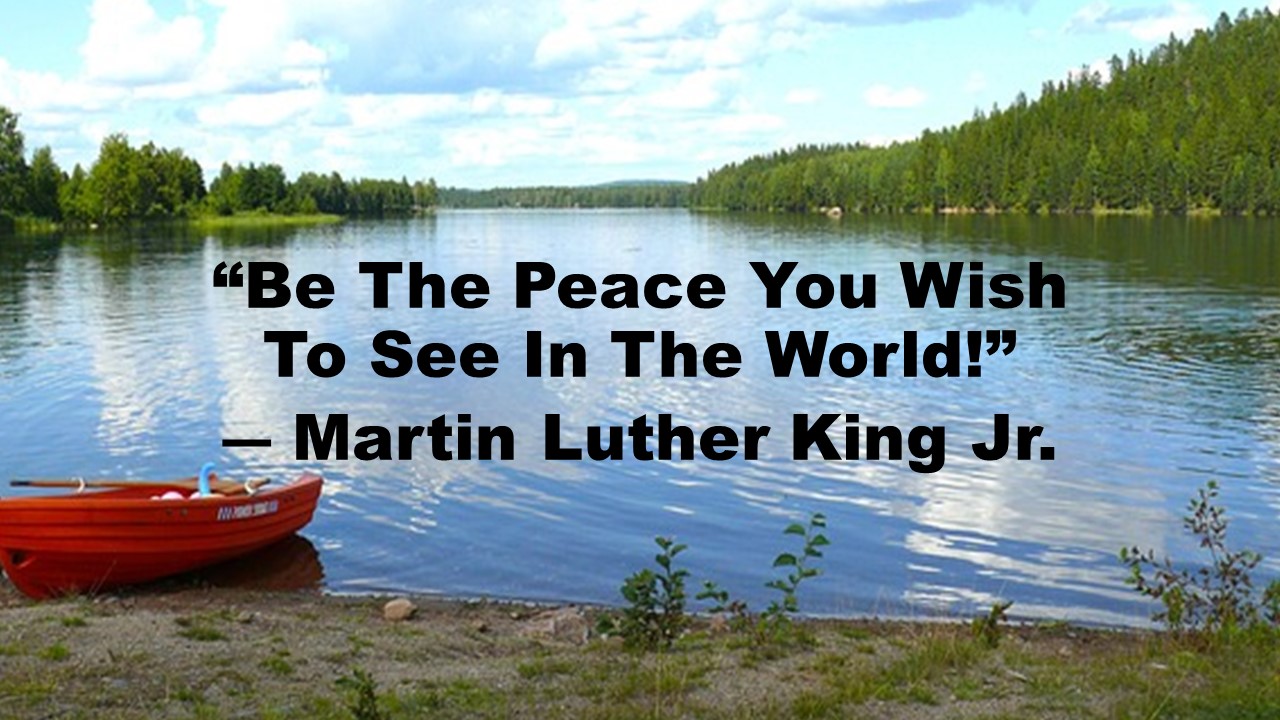
Martin Luther King Jr. Day

MLJ Day 2015

Today we celebrate Martin Luther King Jr. Day

Staying in touch with David Joel Miller.

For more information about my writing journey, my books, and other creative activities, please subscribe to my blog at davidjoelmillerwriter.com

Seven David Joel Miller Books are available on Amazon now! And more are on the way.

For these and my upcoming books, visit my Amazon Author Page – David Joel Miller

For information about my work in mental health, substance abuse, and having a happy life, Please check out counselorssoapbox.com

For videos, see: Counselorssoapbox YouTube Video Channel

Leadership

Leadership
Photo courtesy of Pixabay.com

Leadership

Sunday Inspiration.     Post by David Joel Miller.

“Our chief want is someone who will inspire us to be what we know we could be.”

― Ralph Waldo Emerson

“Success is not how high you have climbed, but how you make a positive difference to the world.”

― Roy T. Bennett, The Light in the Heart

“Keep your fears to yourself, but share your courage with others.”

― Robert Louis Stevenson

Wanted to share some inspirational quotes with you. Today seemed like a good time to do this. There are an estimated 100,000 words in the English language that are feelings related. Some emotions are pleasant, and some are unpleasant, but all feelings can provide useful information. I’ve also included some words related to strengths and values since the line between what we think and what we feel may vary from person to person. If any of these quotes strike a chord with you, please share them.

Look at these related posts for more on this topic and other feelings, strengths, and values.

Emotions and Feelings.                      Inspiration

Staying in touch with David Joel Miller.

For more information about my writing journey, my books, and other creative activities, please subscribe to my blog at davidjoelmillerwriter.com

Seven David Joel Miller Books are available on Amazon now! And more are on the way.

For these and my upcoming books, visit my Amazon Author Page – David Joel Miller

For information about my work in mental health, substance abuse, and having a happy life, Please check out counselorssoapbox.com

For videos, see: Counselorssoapbox YouTube Video Channel