Life is choked with transitions.

Hallway of transitions
Photo courtesy of Pixabay.com

Life is choked with transitions.

By David Joel Miller, MS, Licensed Therapist, Counselor, and Certified Life Coach.

Over the last few years, my practice as a therapist and counselor has shifted. Some of that is because of COVID and learning to work remotely online, doing telehealth. I’ve found that my practice has shifted from working mainly with young people starting out in life to serving an ever-increasing number of older people.

I hesitate to call these people elderly since most of them are younger than me, but I’m sure that I am the exception that proves the rule. I feel fortunate that, despite being 77 years old, I can still work and be productive.

Two things stand out in my online practice, which are different from what I saw when I worked for the county or in an office in private practice. I am seeing far fewer children or couples, and many more single adults and older adults. While the specific mental health diagnoses vary a great deal, what I see most often is people struggling with life’s transitions.

When the challenges life throws at you are overwhelming, you’re very likely to develop high anxiety, severe depression, a substance use disorder, or some kind of dysfunctional behavior.

For better or worse, I have personally gone through a pretty large number of life transitions. I tell my clients that I have learned a lot more about life’s problems, particularly aging, than I ever wanted to know. I’ve spent a lot of time studying the challenge of transitioning from one thing to another, both by reading the research and by living the experience.

I mentioned these things not because I want anyone to feel sorry for me, but because I’ve developed a special sensitivity to the role that transitions play in all our lives.

There are certainly developmental transitions, and some people experience difficulty navigating those. Progressing through school involves its share of developmental challenges. Graduating, whether it’s from high school or college, and then entering the workforce can be a major transition for many people. In my role as a clinical counselor, I have studied career counseling and the challenges of finding the right job. That task deserves an entire series of posts.

Getting into and out of relationships involves a great many painful as well as joyous transitions. I believe that the increasing lifespan has led to more people ending one relationship and starting another than at any other time in human history. I intend to talk about the changing nature of human relationships in an upcoming post.

At some point, most of us will go through conflicts with our spouses, and some people will experience breakups or divorces. If you live long enough, you may experience the death of a spouse. An increasing number of family members are struggling with a loved one who is in Hospice and dying, or living in a long-term care facility. There’s also the transition of the person who loses individual functioning. Dementia has become more common and causes a great deal of suffering both for the person with dementia and for those who encounter the dementia sufferer.

For something to be considered a mental illness, it has to affect a person in four basic areas. If your problem interferes with social functioning, your ability to have relationships with family and friends, including your romantic partner, then it’s a reason for your problems to be considered a mental illness. Any problem which is severe enough to interfere with occupational functioning is also diagnosable. By occupation, we don’t just mean paid employment. We also would include school or the duties of parenting if that were a full-time activity.

The third criterion for diagnosing someone with a mental illness is that it causes them subjective distress. If something is so upsetting to you that you just can’t stand it, and the pain of this event or condition is unbearable, then we call that a mental illness. And lastly but not least, if what you’re dealing with interferes with your ability to function in some other area that is important to you, even if it is a hobby or a recreational activity, it may qualify as a mental health diagnosis.

From that brief description of reasons why something might be diagnosed, I think we can all see that transitions or changes in any one of those areas can be overwhelming.

Eventually, I will probably get around to discussing most, if not all, of these issues. But being very action-oriented, I thought I’d start with a brief description of what I understand to be the main ways in which people cope with and sometimes overcome the challenges of life’s transitions.

The next stop in our journey of understanding the nature of life transitions and how to overcome them will be a brief review of the two major theories about how to navigate life transitions.

Does David Joel Miller see clients for counseling and coaching?

Yes, I do. I can see private pay clients if they live in California, where I am licensed. If you’re interested in information about that, please email me or use the contact me form.

Recently, I began working with a telehealth company called Grow Therapy. If you’d like to make an appointment to work with me, contact them, and they can do the required paperwork and show you my available appointments. The link for making an appointment to talk with me is: David Joel Miller, LMFT, LPCC 

Life coaching clients must be working toward a specific problem-solving goal. Coaching is not appropriate if you have a diagnosable mental health problem. Also, life coaching is not covered by insurance. If you think life coaching for creativity or other life goals might be right for you, contact me directly.

Staying in touch with David Joel Miller.

Want the latest blog posts as they are published? Subscribe to this blog.

For more information about my writing journey, my books, and other creative activities, please subscribe to my blog at davidjoelmillerwriter.com

Seven David Joel Miller Books are available on Amazon now! And more are on the way.

For more about my books, please visit my Amazon Author Page – David Joel Miller

For information about my work in mental health, substance abuse, and having a happy life, please check out https://counselorssoapbox.com

For videos, see: Counselorssoapbox YouTube Video Channel

Wrapping up 2025 and my life

Changing your life

Time for a life change?
Photo courtesy of Pixabay.com

Wrapping up 2025 and my life.

By David Joel Miller, MS, Licensed Therapist, Counselor, and Certified Life Coach.

There is less than a week to go in 2025, and I’m already thinking about all those things I wanted to do this year that didn’t get done. I’m also very mindful of all the things I hadn’t planned on that I did, or that happened to me.

Since I was born before 1950, I’m painfully aware that the century of my birthday disappeared long before I was ready to leave it and that my time on earth may well be running out. That started me thinking about the meaning of life and all the things that I have learned while making this journey.

Please don’t get me wrong, I’m in no rush to exit this earth. I have told my romantic partner that I have definite plans for my 100th birthday and that she is an essential part of those plans.

There are two contrary forces setting the course of our lives as we age. We have that process of constantly learning new things and having new experiences. At the same time, aging results in some very necessary losses.

Having passed my 75th birthday and rapidly approaching my 80th, I am acutely aware that some things will become more difficult and some things may well become impossible. I’m not especially resigned to that process.

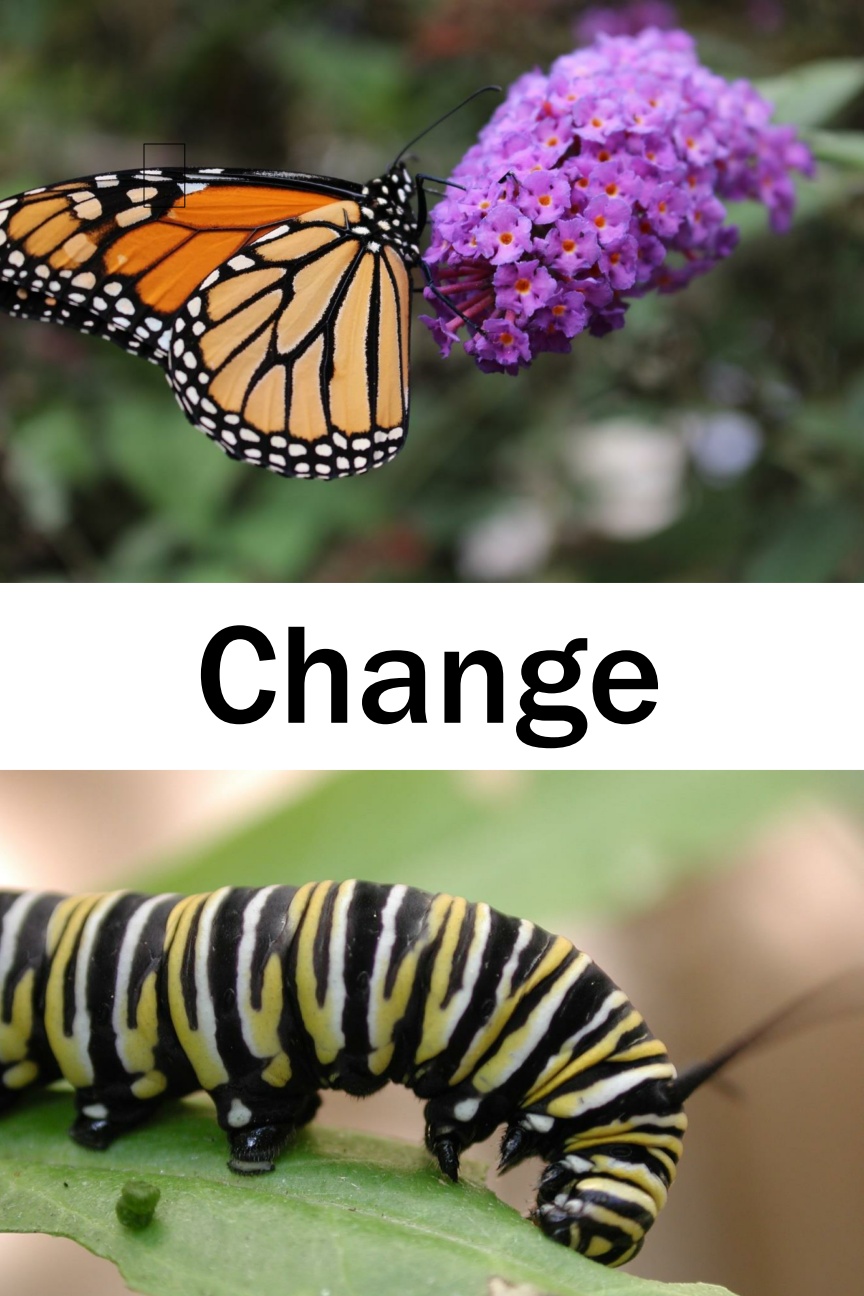
I have told my clients over the last year, and those few friends who will listen, that I have been learning far more about the process of getting old than I ever wanted to know. Entering is just the most recent change in a long string of life changes I’ve experienced. Because people are living longer and the percentage of older people in the population has been growing, there’s more notice being paid to these issues. Still, the principles involved in undergoing change are remarkably similar regardless of what change you are experiencing.

Within that process of aging, each person undergoes certain transitions. Of course, the process of undergoing transitions is not limited to the old or the almost old. The events that happened during COVID. Since roughly 2020, the process of transitional change has accelerated.

In my work as a therapist and counselor, many of my clients are undergoing life transitions. I wanted to get a head start on the blog posts for the year 2026 with this introductory post. During the coming year, as time permits and as my own life transitions allow, I want to talk some more about transitions, navigating those transitions, and, as always, how to have the best life possible.

Life essentially is one transition after another. Each person undergoes transitions as they move from one age group to another. Some people move from house to house or even from family to family. It’s common to move from school to school. And in this process, we undergo a series of new relationships.

Life will also bring economic transitions. There are major life milestones like graduation from school, job and career changes, and achieving certain privileges, such as a driver’s license. Somewhere in the later years, a time we rarely want to think about until it’s forced upon us, sooner or later, most of us will lose abilities and those privileges we worked so hard to achieve.

I thought I would recap for you what I’ve learned about navigating life’s transitions, from my own experiences, the experiences of my clients, and the books and research I have read. Forgive me if this doesn’t progress smoothly and if I take some detours into areas of knowledge I think might be useful to others undergoing one of life’s transitions. Along the way, I would like to share some of the lessons I’ve learned, in the hope that they might be helpful to someone else who is moving along life’s journey.

If any of these topics are relevant to you or to someone in your life, I hope you’ll read these blog posts and share your comments.

Best wishes to everyone in the year 2026 and beyond.

Does David Joel Miller see clients for counseling and coaching?

Yes, I do. I can see private pay clients if they live in California, where I am licensed. If you’re interested in information about that, please email me or use the contact me form.

Recently, I began working with a telehealth company called Grow Therapy. If you’d like to make an appointment to work with me, contact them, and they can do the required paperwork and show you my available appointments. The link for making an appointment to talk with me is: David Joel Miller, LMFT, LPCC. 

Life coaching clients must be working toward a specific problem-solving goal. Coaching is not appropriate if you have a diagnosable mental health problem. Also, life coaching is not covered by insurance. If you think life coaching for creativity or other life goals might be right for you, contact me directly.

Staying in touch with David Joel Miller.

Want the latest blog posts as they are published? Subscribe to this blog.

For more information about my writing journey, my books, and other creative activities, please subscribe to my blog at davidjoelmillerwriter.com

Seven David Joel Miller Books are available on Amazon now! And more are on the way.

For more about my books, please visit my Amazon Author Page – David Joel Miller.

For information about my work in mental health, substance abuse, and having a happy life, please check out https://counselorssoapbox.com

For videos, see: Counselorssoapbox YouTube Video Channel.

Do people with problems not want to change?

By David Joel Miller, MS, Licensed Therapist & Licensed Counselor.

Need to change

Time for you to make a change?
Photo courtesy of Pixabay.com

Why do they say that people with problems want to be that way?

Lots of people, with varying problems and disabilities, seem to be dismissed with the expression that the reason for their problems is that they do not want to change. Is there any truth to these claims and why do we hear this so often?

First, let me give you a list of the things I have heard recently. Some of this comes from professionals, some from the news media, and some from just average people. After the list let me tell you why I think we are hearing this more these days and lastly what we should be doing about this.

People with depression are using this illness to avoid doing anything.

Fat people don’t really want to lose weight.

There is no such thing as mental illness, those people just want to get on disability.

People who say they have anxiety are just trying to get other people to take care of them.

The homeless prefer to live out on the street.

Drug users do not quit because they want to use.

The unemployed are unemployed because they do not want to work.

There are many other forms of these statements, but mostly they seem to me to be ways of dismissing people with problems by blaming them for having those problems and then saying that they are unwilling to change.

So why if obesity, homelessness, unemployment, loneliness, drug addiction, and mental illness cause all that pain, do people seem to so strenuously avoid doing exactly the things that would change their situation? Doesn’t it look sometimes as if people with problems really do not want to change or they would?

Turns out that change is far harder most of the time than doing nothing.

I can see why society and people who work in the helping fields could start blaming the people with the problems for their lack of progress. As long as we can blame them we do not have to think that our programs and policies might be letting the suffering down. It is easier to think that the homeless like to be out there in the cold, the rain, or the snow than to really try to tackle those issues.

Why do we blame those with problems for those problems?

Turns out that change is hard for humans. We learn a certain way of coping and then we continue that coping style over and over. Even when we come to believe that what we are doing is not working, deciding to do something different and then carrying through on that decision is difficult. People in these situations sometimes have to give up everything they have to reach for something else. Here are some examples.

Unemployment is rarely a choice.

If I think that unemployment is caused by a lack of jobs, I might get scared I could end up out of work. If I can convince myself it is because they don’t want to work I can pretend it won’t happen to me.

For a huge stretch of time since World War II here in the United States, we have had growth and expanding employment. There have been ups and downs but overall more people work as time goes on. There was a time when any able-bodied person who wanted to work could find a job. Recently we have seen a trend, there are jobs available, but those jobs require advanced skills and are often in distant places.

Many who are unemployed lack the skills needed to get a good job, they may live in places with high unemployment and as a result, become seriously depressed. When you are depressed doing anything can be at the limits of your abilities.

For the homeless shelters may mean giving up all you have.

If you are homeless, most of your friends and partners are homeless also. If you have a boyfriend or girlfriend you need to leave them behind. Your pet? That dog that kept you warm and comforted you on that cold night? That animal goes to the pound. There are few places a homeless person can take their partner or their pet.

While in the homeless shelter you need to be there in the early afternoon and leave in the early morning. Getting to and from the shelter takes up the whole day. Your life begins to revolve around being a recipient of a place to sleep.

When you have next to nothing you use what tools you can find to cope. Many homeless people drink to dull the pain, physical and emotional. Without an address, it is hard to get into medical or psychiatric services.

Homeless programs often require that the people they house stop alcohol and drug use altogether to get housed. It is easy to say that the homeless do not want housing and harder to recognize that they may not be willing to give up friends, relationships, pets, or other coping mechanisms to fit into the requirements of a given program.

Obesity is about more than just eating less.

Once upon a time, we idolize the person with some meat on their bones. When food was scarce the healthy, those who were not emaciated, made it through the winter to live another year. Then times change, food became instantly available, and the ideal change.

Weight loss has become big business. Despite a quizillion diet books and weight loss programs, the rate of obesity in America continues to climb. Food is available on every corner. Fast food and food available 24 hours a day in any season. The result of this increased availability of food has not been better health but more unhealthy food.

Most dieters learn all too rapidly that the minute you relax your diet the weight returns and brings a few pounds of extra fat with it. With the weight gain comes physical ailments. Exercise is harder the more weight you need to lose. The modern solution? Surgery to reduce the body’s ability to hold and process food.

The mentally ill are likely to be told to just snap out of it.

For most people who have a mental illness snapping out of it is only slightly more difficult than growing a few inches because you should be taller.

When you have depression, severe major depression, getting out of bed in the morning is an all-day task. This is not laziness, it is horrific work to make yourself do something that you lack the ability to do.

If you have an anxiety disorder, the most common mental disorder in America, you are likely to be told to just not worry about it. If you go for treatment those of you who have social anxiety can look forward to spending hours in crowded waiting rooms with people you do not know and with whom you wish you did not have to spend time.

I know there are exceptions. Programs to treat anxiety that are small and personalized. But all too often treatment programs are organized to meet the needs of the system, not the individual.

The truth is that those with problems no not always use programs, not because they like things the way they are but because they are being asked to do more than they are able to in order to access those helps that most of the rest of us take for granted. We need to stop blaming the sufferers for their illness and look for solutions that work rather than create more programs that fail the people they are designed to serve.

Staying connected with David Joel Miller

Seven David Joel Miller Books are available now!

My newest book is now available. It was my opportunity to try on a new genre. I’ve been working on this book for several years, but now seem like the right time to publish it.

Story Bureau.

Story Bureau is a thrilling Dystopian Post-Apocalyptic adventure in the Surviving the Apocalypse series.

Baldwin struggles to survive life in a post-apocalyptic world where the government controls everything.

As society collapses and his family gets plunged into poverty, Baldwin takes a job in the capital city, working for a government agency called the Story Bureau. He discovers the Story Bureau is not a benign news outlet but a sinister government plot to manipulate society.

Bumps on the Road of Life. Whether you struggle with anxiety, depression, low motivation, or addiction, you can recover. Bumps on the Road of Life is the story of how people get off track and how to get your life out of the ditch.

Dark Family Secrets: Doris wants to get her life back, but small-town prejudice could shatter her dreams.

Casino Robbery Arthur Mitchell escapes the trauma of watching his girlfriend die. But the killers know he’s a witness and want him dead.

Planned Accidents  The second Arthur Mitchell and Plutus mystery.

Letters from the Dead: The third in the Arthur Mitchell mystery series.

What would you do if you found a letter to a detective describing a crime and you knew the writer and detective were dead, and you could be next?

Sasquatch. Three things about us, you should know. One, we have seen the past. Two, we’re trapped there. Three, I don’t know if we’ll ever get back to our own time.

For these and my upcoming books; please visit my Author Page – David Joel Miller

Want the latest blog posts as they publish? Subscribe to this blog.

For videos, see: Counselorssoapbox YouTube Video Channel

Career setbacks and unemployment are top men’s issues

By David Joel Miller, MS, Licensed Therapist & Licensed Counselor.

Filling out a job application

Job application.
Photo courtesy of Pixabay.com

Being out of work can bring a man to his knees.

Lots of men have had to face the harsh reality that they are no longer the “great provider” they thought they would be.

Among all the issues that bring men to counseling being out of work and unable to provide for their family in the way they are used to providing tops the list.

For more on other men’s issues see the post Top 10 Men’s Issues here on counselorssoapbox.com

Staying connected with David Joel Miller

Seven David Joel Miller Books are available now!

My newest book is now available. It was my opportunity to try on a new genre. I’ve been working on this book for several years, but now seem like the right time to publish it.

Story Bureau.

Story Bureau is a thrilling Dystopian Post-Apocalyptic adventure in the Surviving the Apocalypse series.

Baldwin struggles to survive life in a post-apocalyptic world where the government controls everything.

As society collapses and his family gets plunged into poverty, Baldwin takes a job in the capital city, working for a government agency called the Story Bureau. He discovers the Story Bureau is not a benign news outlet but a sinister government plot to manipulate society.

Bumps on the Road of Life. Whether you struggle with anxiety, depression, low motivation, or addiction, you can recover. Bumps on the Road of Life is the story of how people get off track and how to get your life out of the ditch.

Dark Family Secrets: Doris wants to get her life back, but small-town prejudice could shatter her dreams.

Casino Robbery Arthur Mitchell escapes the trauma of watching his girlfriend die. But the killers know he’s a witness and want him dead.

Planned Accidents  The second Arthur Mitchell and Plutus mystery.

Letters from the Dead: The third in the Arthur Mitchell mystery series.

What would you do if you found a letter to a detective describing a crime and you knew the writer and detective were dead, and you could be next?

Sasquatch. Three things about us, you should know. One, we have seen the past. Two, we’re trapped there. Three, I don’t know if we’ll ever get back to our own time.

For these and my upcoming books; please visit my Author Page – David Joel Miller

Want the latest blog posts as they publish? Subscribe to this blog.

For videos, see: Counselorssoapbox YouTube Video Channel