Hope fuels the successful life.

By David Joel Miller, MS, Licensed Therapist & Licensed Counselor.
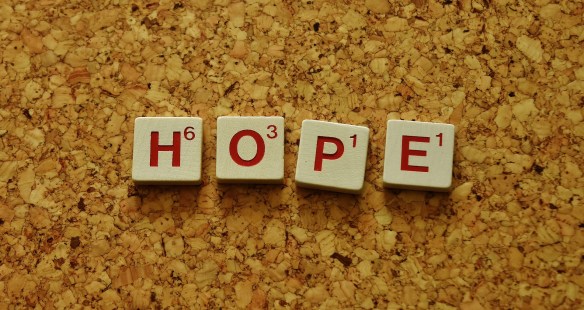
Hope

Hope.
Photo courtesy of Pixabay.com

Genuine hope doesn’t get the respect it deserves.

As we go through this challenging time in our history, we all need to hang onto our hope. Not much gets accomplished by people who give up and stop trying. One of the most important things a counselor can do for their clients is to help that client develop a sense of hope.

While there’s a general understanding that hope plays a role in a successful life, there is not a great deal of agreement on what hope is and where you go to get more of it. I decided now would be an excellent time to look at the research on hope, see what it is, and how people go about developing an adequate supply of this scarce commodity called hope.

Lots of unrelated ideas masquerade under the name of hope.

The more dictionaries you look in for the term hope, the more confusing it becomes. Remember, dictionaries don’t start with the one correct meaning for the word. The way dictionaries are created is to look at the way writers use a word and then record what it meant in that context. The more comprehensive the dictionary, the more meanings you will find for any one word.

As I’m writing this blog post, my editing program keeps trying to get me to substitute words such as optimism, faith, belief, confidence, concern, desire, for the word hope. While all those words have similar or related meanings to the word hope, we need to be sure we’re talking about one specific thing.

One of the ways the word hope is used is in a very passive, wishful sense. Someone might say, “I hope nothing bad happens today.” People hope they’ll be rich someday, but they don’t do anything about improving their financial condition. Hope, in this sense, is nothing more than a vague wish, and hopefully, we all know by now wishes rarely come true without action.

There’s a field of psychological research called hope theory.

Over the last couple of weeks, I’ve read quite a bit of research into the area of hope and discovered there’s an entire field of study in psychology called hope theory. A researcher named Snyder has researched and written extensively about hope theory. I’ll try to explain what I got from reading the research and hopefully won’t distort it too much in the process.

Hope is best understood as goal-directed behavior. While not all the researchers agree on all the fine points, there seems to be a general agreement that people who are high in hope are frequently happier, more productive, and are more successful at reaching their goals. People who are low in hope have difficulty taking action, and in my view, this lack of hope creates them not taking action to get what they want out of life. Why would you do anything about your current problematic situation if you believe changing the situation was outside your control?

Hope theory divides the concept of hope into two distinct categories.

Hope consists of two separate processes, agency, and goals. People who are high in hope generally believe that their own actions will affect the outcome. If they want to be wealthy, whatever that means to them, they don’t depend on the death of a rich uncle or expect to win the lottery as their primary path to financial security. What they do is work, spend less than they make and, over time, save their money.

Agency is the belief that your actions matter.

There is a lot of similarity between the idea of agency and things like self-confidence and self-esteem, and self-efficacy. But in this application, the concept of agency seems to be the idea that your actions matter. People who are high in hope have the belief that they are not helpless victims. They generally believe their efforts have some impact on the outcome. They either have the skills to accomplish something, or they think they can develop those skills.

High hope people believe there’s more than one road to their goal.

People who are low in hope get locked into the belief that there’s only one way to do something, and they keep doing it over and over even when they don’t get the result they want. This inflexibility is probably a good operational definition of crazy behavior. People who are high in hope develop a list of alternative ways of reaching their goal. They start work on the most likely method. But if that route doesn’t take them where they want to go, they have the flexibility to alter their approach and try another path.

What are the benefits of being high in hope?

People who are high in hope keep trying until they find a way to be successful. I found research that says high hope people have better relationships. They are more likely to reach their goals. People who are high in hope don’t get stuck in ruts.

Is it possible to increase your hope?

Absolutely it is possible to increase your level of hope. Your current level of hope is not something you’re just stuck with because of your past experiences. But there are two things you must do to develop higher levels of hope. One is to believe that your actions matter. The other is to create multiple pathways towards reaching your goals. In future blog posts, I want to explore this idea and show you how people who seek out professional help, medical doctors, counselors, or therapists, often become more hopeful even before their first appointment with that professional.

Staying connected with David Joel Miller

Seven David Joel Miller Books are available now!

My newest book is now available. It was my opportunity to try on a new genre. I’ve been working on this book for several years, but now seem like the right time to publish it.

Story Bureau.

Story Bureau is a thrilling Dystopian Post-Apocalyptic adventure in the Surviving the Apocalypse series.

Baldwin struggles to survive life in a post-apocalyptic world where the government controls everything.

As society collapses and his family gets plunged into poverty, Baldwin takes a job in the capital city, working for a government agency called the Story Bureau. He discovers the Story Bureau is not a benign news outlet but a sinister government plot to manipulate society.

Bumps on the Road of Life. Whether you struggle with anxiety, depression, low motivation, or addiction, you can recover. Bumps on the Road of Life is the story of how people get off track and how to get your life out of the ditch.

Dark Family Secrets: Doris wants to get her life back, but small-town prejudice could shatter her dreams.

Casino Robbery Arthur Mitchell escapes the trauma of watching his girlfriend die. But the killers know he’s a witness and want him dead.

Planned Accidents  The second Arthur Mitchell and Plutus mystery.

Letters from the Dead: The third in the Arthur Mitchell mystery series.

What would you do if you found a letter to a detective describing a crime and you knew the writer and detective were dead, and you could be next?

Sasquatch. Three things about us, you should know. One, we have seen the past. Two, we’re trapped there. Three, I don’t know if we’ll ever get back to our own time.

For these and my upcoming books; please visit my Author Page – David Joel Miller

Want the latest blog posts as they publish? Subscribe to this blog.

For videos, see: Counselorssoapbox YouTube Video Channel

Openness.

Sunday Inspiration.     Post by David Joel Miller.

Openness.
Photo courtesy of Pixabay.com

“Around here, however, we don’t look backwards for very long. We keep moving forward, opening up new doors and doing new things, because we’re curious…and curiosity keeps leading us down new paths.”

― Walt Disney Company

“When one door of happiness closes, another opens; but often we look so long at the closed door that we do not see the one which has been opened for us.”

― Helen Keller

“Never close your lips to those whom you have already opened your heart.”

― Charles Dickens

Wanted to share some inspirational quotes with you.  Today seemed like a good time to do this. There are an estimated 100,000 words in the English language that are feelings related. Some emotions are pleasant, and some are unpleasant, but all feelings can provide useful information. If any of these quotes strike a chord with you, please share them.

Look at these related posts for more on this topic and other feelings.

Emotions and Feelings.

Inspiration

Recommended Mental Health Books

David Miller at counselorssoapbox.com is an Amazon Affiliate and may receive a small Commission if you purchase a book or product using the link on this page. Using the link will not increase the cost to you.


 

Coping in the coronavirus world.

By David Joel Miller, MS, Licensed Therapist & Licensed Counselor.

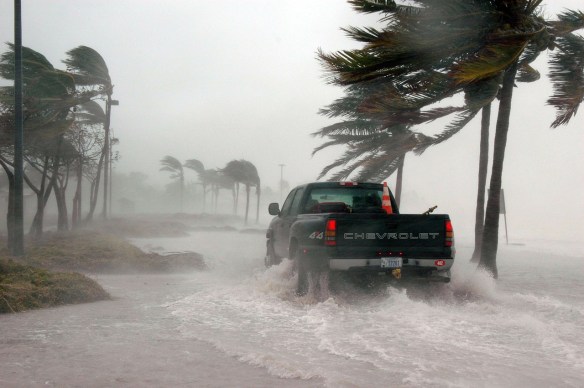
Illustrate illness storm.

Coronavirus storm.
Photo courtesy of Pixabay.com

The coronavirus is changing the way we live our lives.

In my last post, I wrote about the macro issues, the big things we as a society need to grapple with as the coronavirus storm rages, people die, and our healthcare system strains to the breaking point. Today I wanted to share with you some of the micro issues, the challenges I faced in my own life, home, and relationships, as I try to cope with this changing situation. As you read this, please remember I am an old guy, born shortly after World War II and now in my seventies. Keeping up with new technology, changes in fashion, and an ever-evolving world has been a struggle for me even before the coronavirus. The changes now feel like a merry-go-round that has started to accelerate out of control.

What are my significant personal challenges?

Over the last two months, my life has changed more than I could ever imagine. I suspect it has for every one of you who is reading this blog. Now is a good time to share with all of you some of the changes I’ve been experiencing in my life and some thoughts for what the future holds.

Many counselors and therapists are reluctant to share about themselves. As my students, and probably most of you readers, realize, I feel like I need to be more open and honest about my experiences. Here are a few of my experiences and observations on the way the coronavirus has changed my life.

Sheltering in place has changed everything.

I thought I had my schedule all worked out. Each week, I have been spending part of one day at a local nonprofit doing clinical supervision. I had it down to a routine. Show up, run the group, sign the forms, and then go home. Because of the shelter-in-place order, the trainees and interns have had to learn to do therapy via telehealth. I’ve had to learn a whole new technology to do their supervision remotely. What had been a simple routine procedure has had a sharp learning curve.

Beyond the technical parts, every one of those therapists in training is also a person. It’s hard to think about your client when your life is in turmoil. The ever-present thought that by spending time in a small consulting room with the client, you’re putting your life in danger must be reckoned with. Part of each training session now is devoted to having the therapist check in and see how they are coping with the ominous threat of the coronavirus looming over them and their families.

Despite all the difficulties in shifting to an online way of life, I think the shelter-in-place was an enormously wise decision. I live in California, and we implemented the stay-at-home protocol early on. I also live in the Central Valley, a mostly rural and less densely populated area. Early action and sparse population have resulted in extremely low infection rates and even lower death rates. I have every reason to think the virus will get here eventually, but the slow spread has so far avoided overtaxing our medical system.

Shifting from teaching in-person classes to online classes has been traumatic.

I’ve been teaching classes at two different local colleges for over 12 years now. I had my system in place. I have created PowerPoints, quizzes, and tests; all the materials I need to run a class. Suddenly, there were no in-person classes. The classes have all moved online. Fortunately, I’d taken a class on how to teach online courses back in the summer of 2016. My efforts to create videos for the counselorssoapbox YouTube Channel has turned out to be a significant blessing.

While it’s been a frantic pace of the last few weeks, I knew how to convert my lectures to videos and upload them to YouTube so that my students can watch them anytime they want from the relative safety of their home.

If only the transition had been that easy. This semester, I’m teaching three separate classes. One is a 16-week-long semester class. Another is an eight-week, twice-a-week class. While the third class was a hybrid part in-class, part online format, all three have different start, midterm, and end dates. Beyond that, the three classes are being conducted on two separate learning platforms. Over a couple of weeks, I’ve had to become considerably more familiar with both Moodle and Canvas.

Over the years, I’d accumulated quite a test bank of questions. It was easy to assort the questions, print out a copy, and make as many copies as needed for class. The process of turning these into online quizzes and tests turned out to be a whole lot more complicated.

Working from home requires confronting my age.

I’ve been retired from a full-time job for over two years now. Whenever I must enter my birthdate on anything, I am forced to recognize that I’m getting older. Despite having retired, I’ve been doing more part-time work and staying incredibly busy. Keeping busy and active, I suppose, is my way of avoiding admitting I’m not as young as I used to be.

Then, when I got the email from the college saying that anyone over a certain age was not to come on campus, and I realized I was quite a few years past that age, I was forced to admit to myself I’m now in that high-risk older adult category. Furthermore, whatever I may think about taking risks with my own life, I have had to realize that I can’t take the risk of contracting something and bringing it home to others who are at an even higher risk.

I’ve had to transition my therapy clients to distance counseling.

A little over two months ago, I had never even considered using the technologies that today I use every day. I’ve had to learn to use Zoom, FaceTime, and several other online tools. Not only do I have to learn new technology, but I’ve also had to develop some new skills to do remote distance counseling. I remind myself that little over two years ago, I had to have one of my interns teach me how to answer a text message. And today I’m making videos and discussing them with people via Zoom, the process of technological change looks less like a gradual uphill climb and more like scaling a sheer vertical cliff.

Working from home has been exhausting.

When I first considered teaching an online class, I thought it would make my life so much easier. The amount of work that it has taken to prepare the curriculum and upload it to the various platforms has left me exhausted. Stress can be very tiring, even when it motivates you to produce something positive.

Sheltering in place increases isolation.

One of the things I loved about my busy mix of part-time jobs was that it got me out of the house and kept me socializing with a wide variety of friends, students, interns, and clients. I’ve come to feel that the coronavirus has made me a prisoner in my own home office.

One of my colleagues and I were in the graduate program together all those years ago and have made it a habit to keep in touch. We try to get together every month or two for lunch just to check in with each other. With the coronavirus lurking outside, and the restaurants we would generally eat at closed, that monthly lunch together isn’t likely to happen again for a long time.

Last week, we had to improvise our monthly get-together. We sat talking together over FaceTime while I ate my lunch. I suppose that, for me, this is one of the visible aspects of this anxiety-producing situation. One after another, I have found ways to adapt. I continue to teach, albeit online. I still see clients via distance counseling technology. And while my physical contact with other humans has been extremely limited, we’ve created ways to stay in touch with those people who are most important to us.

That’s my story of adapting to the coronavirus threat.

While my life is different now, I’m slowly adapting to this new form of existence. Gradually, I’m getting back to my writing. I’ve developed a whole new set of skills. Somehow, no matter what happens, we humans find a way to adapt.

How are you dealing with the changes the coronavirus forced upon you?

Please share a comment below or send me one through the contact me page. If you use the contact me form, please let me know if it’s okay for me to share your comment here on the blog. Take care of yourself and do everything you can to protect yourself and those who are close to you.

Staying connected with David Joel Miller

Seven David Joel Miller Books are available now!

My newest book is now available. It was my opportunity to try on a new genre. I’ve been working on this book for several years, but now seems like the right time to publish it.

Story Bureau.

Story Bureau is a thrilling Dystopian Post-Apocalyptic adventure in the Surviving the Apocalypse series.

Baldwin struggles to survive life in a post-apocalyptic world where the government controls everything.

As society collapses and his family gets plunged into poverty, Baldwin takes a job in the capital city, working for a government agency called the Story Bureau. He discovers the Story Bureau is not a benign news outlet but a sinister government plot to manipulate society.

Bumps on the Road of Life. Whether you struggle with anxiety, depression, low motivation, or addiction, you can recover. Bumps on the Road of Life is the story of how people get off track and how to get your life out of the ditch.

Dark Family Secrets: Doris wants to get her life back, but small-town prejudice could shatter her dreams.

Casino Robbery Arthur Mitchell escapes the trauma of watching his girlfriend die. But the killers know he’s a witness and want him dead.

Planned Accidents  The second Arthur Mitchell and Plutus mystery.

Letters from the Dead: The third in the Arthur Mitchell mystery series.

What would you do if you found a letter to a detective describing a crime and you knew the writer and detective were dead, and you could be next?

Sasquatch. Three things about us, you should know. One, we have seen the past. Two, we’re trapped there. Three, I don’t know if we’ll ever get back to our own time.

For these and my upcoming books; please visit my Author Page – David Joel Miller

Want the latest blog posts as they publish? Subscribe to this blog.

For videos, see: Counselorssoapbox YouTube Video Channel

Recommended Mental Health Books

David Miller at counselorssoapbox.com is an Amazon Affiliate and may receive a small Commission if you purchase a book or product using the link on this page. Using the link will not increase the cost to you.

Service.

Sunday Inspiration.     Post by David Joel Miller.

Service

Service.
Photo courtesy of Pixabay.com

“At the end of life, we will not be judged by how many diplomas we have received, how much money we have made, how many great things we have done.

We will be judged by “I was hungry, and you gave me something to eat, I was naked, and you clothed me. I was homeless, and you took me in.”

― Mother Teresa

“Generally speaking, the most miserable people I know are those who are obsessed with themselves; the happiest people I know are those who lose themselves in the service of others…By and large, I have come to see that if we complain about life, it is because we are thinking only of ourselves.”

― Gordon B. Hinckley

“You are what you do, not what you say you’ll do.”

― Carl Gustav Jung

Wanted to share some inspirational quotes with you.  Today seemed like a good time to do this. There are an estimated 100,000 words in the English language that are feelings related. Some emotions are pleasant, and some are unpleasant, but all feelings can provide useful information. If any of these quotes strike a chord with you, please share them.

Look at these related posts for more on this topic and other feelings.

Emotions and Feelings.

Inspiration

Feelings fill you up.

By David Joel Miller, MS, Licensed Therapist & Licensed Counselor.

Angry child

What is he feeling?
Photo courtesy of Pixabay.com

Some feelings expand like blowing up a balloon.

Remember the old saying “nature abhors a vacuum?” This is especially true when it comes to feelings. Emotions and feelings are an essential part of human nature. Somewhere along the line, feelings got a bad rap. Some people think the way to deal with feelings is to stuff them down inside and pretend they don’t exist. Other people believe whatever they feel needs to be released before they explode. They justify dumping their feelings all over others by saying venting feelings is healthy.

It’s essential to learn to manage feelings.

Learning to manage feelings is a three-part process. First, you need to learn to recognize that you are feeling something. Next, you will need to determine what this feeling is. Lastly, you’ll need to decide what you want to do with it.

What you don’t want to do is dismiss positive feelings as unimportant and hold onto the negative feelings, the anger, the fear, and the resentment, as you watch them grow.

Have you ever noticed that whenever you feel intensifies when you hold onto that feeling? Going over that feeling repeatedly, a process called rumination, causes it to take root and grow.

Anger expands rapidly.

Have you ever tried to simply sit with your anger? You will notice the longer you sit holding that anger, the larger it becomes. Anger is a high-pressure emotion. It can quickly take over all the space in a human being. Hold onto a little irritation, long enough, and will become chronically filled with rage. Learning to de-escalate your anger is an important skill.

Negative emotions make you heavy and bloated.

Just like some food can upset your stomach, negative emotions, anger, fears, resentments, can leave you feeling tired and drained of energy. It is best to consume these feelings in minimal quantities. Better yet, for good health, avoid putting these feelings into your system in the first place. When you can’t avoid negative emotions, try taking some positive feelings to settle your stomach.

Gratitude is a satisfying feeling.

If you consume a little gratitude each day, you will find your life becomes more satisfying. Like a desert, there is always room for a bit of gratefulness. No matter how happy you feel, you will find there is still room for a little more gratitude.

Some feelings are like cut flowers.

Some feelings will never fill you up. Peak excitement feelings like alcohol, drugs, and sex, frequently are confused with happiness. All these feelings increase the amount of dopamine, the feel-good neurotransmitter chemical, in the brain – temporarily. The problem with trying to fill up on peak experience feelings is that they fade very quickly. You can’t create a beautiful garden by planting cut flowers. An occasional bouquet of flowers in the house can be lovely. But if you try to fill your life with only cut flowers, it quickly comes to look and smell like a funeral parlor. Once people feel these sharp feelings, the bloom fades very quickly. Requiring them to continually hunt for more peak experience feelings to fill their emptiness.

Some feelings are timid and need room to grow.

Some of the most satisfying feelings, contentment, serenity, and satisfaction, grow slowly and are quickly crowded out by the more aggressive, faster-growing feelings. If you spend time cultivating these shy, slow-growing feelings, they will eventually fill your life with joy.

What feelings are you cultivating?

Staying connected with David Joel Miller

Seven David Joel Miller Books are available now!

My newest book is now available. It was my opportunity to try on a new genre. I’ve been working on this book for several years, but now seem like the right time to publish it.

Story Bureau.

Story Bureau is a thrilling Dystopian Post-Apocalyptic adventure in the Surviving the Apocalypse series.

Baldwin struggles to survive life in a post-apocalyptic world where the government controls everything.

As society collapses and his family gets plunged into poverty, Baldwin takes a job in the capital city, working for a government agency called the Story Bureau. He discovers the Story Bureau is not a benign news outlet but a sinister government plot to manipulate society.

Bumps on the Road of Life. Whether you struggle with anxiety, depression, low motivation, or addiction, you can recover. Bumps on the Road of Life is the story of how people get off track and how to get your life out of the ditch.

Dark Family Secrets: Doris wants to get her life back, but small-town prejudice could shatter her dreams.

Casino Robbery Arthur Mitchell escapes the trauma of watching his girlfriend die. But the killers know he’s a witness and want him dead.

Planned Accidents  The second Arthur Mitchell and Plutus mystery.

Letters from the Dead: The third in the Arthur Mitchell mystery series.

What would you do if you found a letter to a detective describing a crime and you knew the writer and detective were dead, and you could be next?

Sasquatch. Three things about us, you should know. One, we have seen the past. Two, we’re trapped there. Three, I don’t know if we’ll ever get back to our own time.

For these and my upcoming books; please visit my Author Page – David Joel Miller

Want the latest blog posts as they publish? Subscribe to this blog.

For videos, see: Counselorssoapbox YouTube Video Channel

Sincerity

Sunday Inspiration.     Post by David Joel Miller.

Sincerity.
Photo courtesy of Pixabay.com

“You can be sincere and still be stupid.”

― Fyodor Dostoevsky

“Any emotion, if it is sincere, is involuntary.”

― Mark Twain

“Hold faithfulness and sincerity as first principles.”

― Confucius, The Analects

Wanted to share some inspirational quotes with you.  Today seemed like a good time to do this. There are an estimated 100,000 words in the English language that are feelings related. Some emotions are pleasant, and some are unpleasant, but all feelings can provide useful information. If any of these quotes strike a chord with you, please share them.

Look at these related posts for more on this topic and other feelings.

Emotions and Feelings.

Inspiration

Cautious

Sunday Inspiration.     Post by David Joel Miller.

Cautious.
Photo courtesy of Pixabay.com

“How prone to doubt, how cautious are the wise!”

― Homer

“The policy of being too cautious is the greatest risk of all.”

― Jawaharlal Nehru

“By striving to do the impossible, man has always achieved what is possible. Those who have cautiously done no more than they believed possible have never taken a single step forward.”

― Mikhail Bakunin

“The cautious seldom err.”

― Confucius

Wanted to share some inspirational quotes with you.  Today seemed like a good time to do this. There are an estimated 100,000 words in the English language that are feelings related. Some emotions are pleasant, and some are unpleasant, but all feelings can provide useful information. If any of these quotes strike a chord with you, please share them.

Look at these related posts for more on this topic and other feelings.

Emotions and Feelings.

Inspiration

Daylight Savings.

Sunday Inspiration.     Post by David Joel Miller.

Daylight Savings.
Photo courtesy of Pixabay.com

My calendar tells me today is the day we enter daylight savings time. Hopefully, you’ve already changed your clocks. With all the years of my life, I’ve saved this time; I wonder what happened all those extra hours. Here are some thoughts about daylight savings time. While this is not exactly a feeling, the change is sure to create feelings in most of us.

“Out of the effort to cut back on civilian use of fuel, it was the Federal Fuel Administration that first introduced daylight saving time a year later, in 1918.”

― Arthur Herman, 1917: Vladimir Lenin, Woodrow Wilson, and the Year That Created the Modern Age

“There are very few things in the world I hate more than Daylight Savings Time. It is the grand lie of time, the scourge of science, the blight on biological understanding.”

― Michelle Franklin

“I object to being told that I am saving daylight when my reason tells me that I am doing nothing of the kind… At the back of the Daylight Saving scheme, I detect the bony, blue-fingered hand of Puritanism, eager to push people into bed earlier, and get them up earlier, to make them healthy, wealthy, and wise in spite of themselves.”

― Robertson Davies, The Papers of Samuel Marchbanks

I wanted to share some inspirational quotes with you.  Today seemed like a good time to do this. There are an estimated 100,000 words in the English language that are feelings related. Some emotions are pleasant, and some are unpleasant, but all feelings can provide useful information. If any of these quotes strike a chord with you, please share them.

Look at these related posts for more on this topic and other feelings.

Emotions and Feelings.

Inspiration

Overwhelmed.

Sunday Inspiration.     Post by David Joel Miller.

Overwhelmed.
Photo courtesy of Pixabay.com

“I have been driven many times upon my knees by the overwhelming conviction that I had nowhere else to go. My own wisdom and that of all about me seemed insufficient for that day.”

― Abraham Lincoln

“Three passions, simple but overwhelmingly strong have governed my life: the longing for love, the search for knowledge, and unbearable pity for the suffering of mankind.”

― Bertrand Russell

“It is quite possible–overwhelmingly probable, one might guess–that we will always learn more about human life and personality from novels than from scientific psychology”

― Noam Chomsky

Wanted to share some inspirational quotes with you.  Today seemed like a good time to do this. There are an estimated 100,000 words in the English language that are feelings related. Some emotions are pleasant, and some are unpleasant, but all feelings can provide useful information. If any of these quotes strike a chord with you, please share them.

Look at these related posts for more on this topic and other feelings.

Emotions and Feelings.

Inspiration

Attention.

Sunday Inspiration.     Post by David Joel Miller.

Attention.
Photo courtesy of Pixabay.com

“The present moment is filled with joy and happiness. If you are attentive, you will see it. (21)”

― Thich Nhat Hanh, Peace Is Every Step: The Path of Mindfulness in Everyday Life

“I pay no attention whatever to anybody’s praise or blame. I simply follow my own feelings.”

― Wolfgang Amadeus Mozart

“The writer should never be ashamed of staring. There is nothing that does not require his attention.”

― Flannery O’Connor

“We must do our work for its own sake, not for fortune or attention or applause.”

― Steven Pressfield, The War of Art.

Wanted to share some inspirational quotes with you.  Today seemed like a good time to do this. There are an estimated 100,000 words in the English language that are feelings related. Some emotions are pleasant, and some are unpleasant, but all feelings can provide useful information. If any of these quotes strike a chord with you, please share them.

Look at these related posts for more on this topic and other feelings.

Emotions and Feelings.

Inspiration

Recommended Mental Health Books

David Miller at counselorssoapbox.com is an Amazon Affiliate and may receive a small Commission if you purchase a book or product using the link on this page. Using the link will not increase the cost to you.