Acknowledge

Acknowledge
Photo courtesy of Pixabay.com

Acknowledge

Sunday Inspiration.     Post by David Joel Miller.

“A brave man acknowledges the strength of others.”

― Veronica Roth, Divergent

“Acknowledging the good that you already have in your life is the foundation for all abundance.”

― Eckhart Tolle, A New Earth: Awakening to Your Life’s Purpose

“Always acknowledge a fault. This will throw those in authority off their guard and give you an opportunity to commit more.”

― Mark Twain

Wanted to share some inspirational quotes with you. Today seemed like a good time to do this. There are an estimated 100,000 words in the English language that are feelings related. Some emotions are pleasant, and some are unpleasant, but all feelings can provide useful information. I’ve also included some words related to strengths and values since the line between what we think and what we feel may vary from person to person. If any of these quotes strike a chord with you, please share them.

Look at these related posts for more on this topic and other feelings, strengths, and values.

Emotions and Feelings.                      Inspiration

Staying in touch with David Joel Miller.

For more information about my writing journey, my books, and other creative activities, please subscribe to my blog at davidjoelmillerwriter.com

Seven David Joel Miller Books are available on Amazon now! And more are on the way.

For these and my upcoming books, visit my Amazon Author Page – David Joel Miller

For information about my work in mental health, substance abuse, and having a happy life, Please check out counselorssoapbox.com

For videos, see: Counselorssoapbox YouTube Video Channel

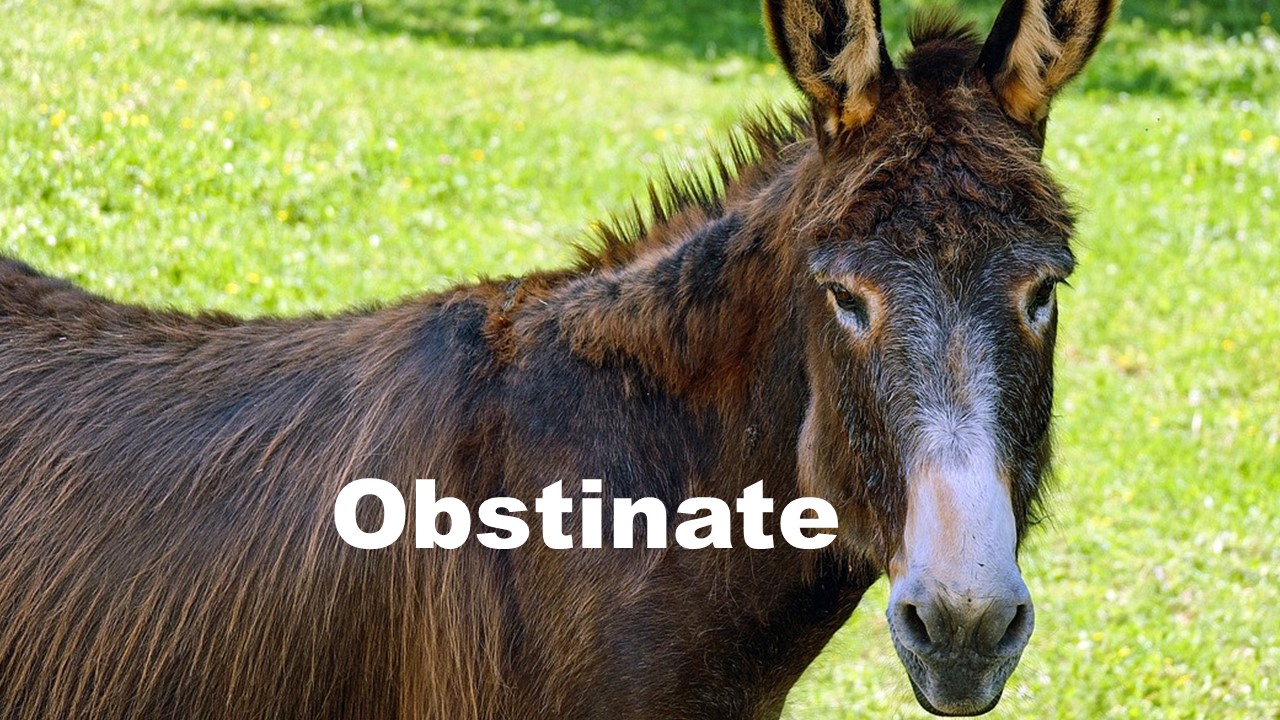
Obstinate

Obstinate
Photo courtesy of Pixabay.com

Obstinate

Sunday Inspiration.     Post by David Joel Miller.

“Can’t you . . . I don’t know. Find a hobby or something?”

“Being charming is my hobby,” said Adrian obstinately. “I’m the life of the party— even without drinking. I wasn’t meant to be alone.”

― Richelle Mead, Bloodlines

“I do not argue with obstinate men. I act in spite of them.”

― Agatha Christie, The Mystery of the Blue Train

“Thinking only begins at the point where we have come to know that Reason, glorified for centuries, is the most obstinate adversary of thinking.”

― Martin Heidegger

Wanted to share some inspirational quotes with you. Today seemed like a good time to do this. There are an estimated 100,000 words in the English language that are feelings related. Some emotions are pleasant, and some are unpleasant, but all feelings can provide useful information. I’ve also included some words related to strengths and values since the line between what we think and what we feel may vary from person to person. If any of these quotes strike a chord with you, please share them.

Look at these related posts for more on this topic and other feelings, strengths, and values.


Emotions and Feelings.                      Inspiration

Staying in touch with David Joel Miller.

For more information about my writing journey, my books, and other creative activities, please subscribe to my blog at davidjoelmillerwriter.com

Seven David Joel Miller Books are available on Amazon now! And more are on the way.

For these and my upcoming books, please visit my Amazon Author Page – David Joel Miller

For information about my work in mental health, substance abuse, and having a happy life, Please check out counselorssoapbox.com

For videos, see: Counselorssoapbox YouTube Video Channel

Ease Your Mind: Proactive Strategies to Prevent Anxiety Attacks

Unlock valuable insights and guidance for navigating life’s challenges by visiting counselorssoapbox.com, where licensed therapist David Joel Miller shares his expert reflections.

Ease Your Mind:
Proactive Strategies to Prevent Anxiety Attacks
Illustration by Freepik

Ease Your Mind:
Proactive Strategies to Prevent Anxiety Attacks

In the hustle and bustle of our daily lives, anxiety often lurks in the shadows, ready to pounce when we least expect it. The unpredictable nature of anxiety attacks can be overwhelming, leaving us feeling vulnerable and out of control. However, understanding the triggers and implementing effective strategies can empower us to take charge and prevent these sudden episodes. This article delves into practical tips and holistic approaches that can help you build resilience and maintain calm amidst the storm, ensuring that anxiety doesn’t dictate your life’s narrative.

Put Your Thoughts on Paper

Writing down your thoughts and feelings can serve as a powerful therapeutic tool, allowing you to process emotions in a structured manner. This practice provides a safe space to express yourself freely, helping to release pent-up feelings and reduce internal stress. By regularly journaling, you can gain valuable insights into your emotional patterns and triggers, fostering greater self-awareness. Over time, this increased understanding can lead to better emotional management and a clearer perspective on your life’s challenges.

Simplify Your Life Through Scheduling

Organizing your daily and weekly tasks via a scheduling system can eliminate the chaos of a cluttered mind. Whether it’s a digital app or a classic planner, find a system that resonates with your lifestyle and use it to keep track of your obligations and appointments, ensuring nothing slips through the cracks. A well-maintained schedule can reduce anxiety by making your responsibilities more manageable.

Consider an Emotional Support Pet

Recognize the emotional support a pet can offer. Animals such as dogs and cats provide unconditional love and a comforting presence that can dramatically decrease feelings of anxiety. Their need for regular care and interaction also establishes a rewarding routine that can help stabilize your day-to-day life. Pets not only offer companionship but also encourage physical activity, which is beneficial for managing anxiety.

Alternative Anxiety Support

When traditional methods don’t align with your preferences, alternative modalities can be an excellent way to manage anxiety before moving toward medication. Consider these options:

  • Try acupuncture: This ancient technique is known for its ability to balance the body’s energy and reduce stress, and it’s shown to have fewer side effects than medication.
  • Utilize essential oils: Aromatherapy using lavender or chamomile can create a calming atmosphere in your home.
  • Look to ashwagandha: Ashwagandha, an adaptogenic herb, is known for its ability to reduce anxiety by lowering cortisol levels and promoting a sense of calm and overall well-being.
  • Explore the benefits of THCa: This non-psychoactive cannabinoid is reputed for its anti-anxiety properties without the high associated with THC. A THCa cartridge can be a practical way to utilize this substance.

Build a Positive Mindset

Learning to frame your experiences positively can transform challenges into opportunities. Instead of viewing a busy week as a source of stress, consider it a chance to advance your projects and goals. This mindset shift can significantly lessen the impact of potential anxiety triggers. Viewing life’s hurdles as growth opportunities fosters resilience against anxiety. By consistently practicing positive reframing, you begin to cultivate a more optimistic outlook that naturally buffers against the pressures of daily life.

Seek Supportive Relationships

Establishing a robust support system is crucial. Surround yourself with friends, family, or community members who understand your experiences with anxiety and are ready to help when needed. Knowing you have a dependable support network can provide immense comfort and a sense of security. They can offer a different perspective or help you through tough moments, reinforcing your ability to manage anxiety.

Engage in Deep Breathing Techniques

Deep breathing is a powerful tool for managing anxiety in the moment. Practice techniques like the 4-7-8 breathing method, which involves breathing in for four seconds, holding the breath for seven seconds, and exhaling for eight seconds. This practice can help control panic and bring immediate relief during anxiety peaks. Consistent practice can make this a go-to strategy during stressful situations.

Embracing these strategies marks the beginning of a transformative journey toward a more serene and controlled life. Each technique offers practical solutions and contributes to a foundational shift in how you experience and manage anxiety. As you integrate these methods, the cumulative effect can profoundly alter your daily interactions and reactions, leading to a sustained enhancement of your mental well-being.

Illustration by Freepik

Guest post courtesy of Jennifer Scott.

Tense

Tense
Photo courtesy of Pixabay.com

Tense

Sunday Inspiration.     Post by David Joel Miller.

“The surest way to become Tense, Awkward, and Confused is to develop a mind that tries too hard – one that thinks too much.”

― Benjamin Hoff, The Tao of Pooh

“Everything you do, if not in a relaxed state will be done at a lesser level than you are proficient. Thus the tensed expert marksman will aim at a level less than his/her student.”

― Bruce Lee

“Carl Jung tells in one of his books of a conversation he had with a Native American chief who pointed out to him that in his perception most white people have tense faces, staring eyes, and a cruel demeanor. He said: “They are always seeking something. What are they seeking? The whites always want something. They are always uneasy and restless. We don’t know what they want. We think they are mad.”

― Eckhart Tolle, The Power of Now: A Guide to Spiritual Enlightenment

Wanted to share some inspirational quotes with you. Today seemed like a good time to do this. There are an estimated 100,000 words in the English language that are feelings related. Some emotions are pleasant, and some are unpleasant, but all feelings can provide useful information. I’ve also included some words related to strengths and values since the line between what we think and what we feel may vary from person to person. If any of these quotes strike a chord with you, please share them.

Look at these related posts for more on this topic and other feelings, strengths, and values.

Emotions and Feelings.                      Inspiration

Staying in touch with David Joel Miller.

For more information about my writing journey, my books, and other creative activities, please subscribe to my blog at davidjoelmillerwriter.com

Seven David Joel Miller Books are available on Amazon now! And more are on the way.

For these and my upcoming books, please visit my Amazon Author Page – David Joel Miller

For information about my work in mental health, substance abuse, and having a happy life, Please check out counselorssoapbox.com

For videos, see: Counselorssoapbox YouTube Video Channel

Is your life where you want it to be?

Climbing Life’s Mountains.
Photo courtesy of Pixabay.com

Climbing Life’s Mountains.

By David Joel Miller, MS, Licensed Therapist & Counselor.

Is your life where you wanted it to be?

Many of the people I talk to in my therapy practice who are in their twenties, thirties, and even forties, men and women both, tell me that they are not where they should be in life. While there can be many reasons for that, I wanted to talk to you today about some of the more common reasons people fail to reach their goals, and even when they do, they don’t feel that they are successful enough.

In a previous post, I talked about how I view my personal process of setting and achieving goals as being metaphorically like an Indoor Mountain Climber. For this post, I will use that metaphor and expand on it. Whether the mountain you’re trying to climb is outdoors or a challenge in your home or work life, there are some questions you need to ask yourself.

How did I pick that goal?

Most people spend more time shopping for a used car than they do picking out a college major or a life partner. Not knowing the person you’re moving in with and not knowing what you will be doing once you get your degree and are working in that field leads to a lot of disappointment.

It’s common to underestimate how hard it is to climb the mountain you have chosen. People who have been in a career field for ten years often compare themselves to people who have been on the job for thirty or forty years and feel they have a lot of ground to catch up. When you have been climbing your mountain for a few hours, and you look up towards the summit, it can easily look like you have not gotten anywhere.

Most overnight successes spent years developing their skills before they got their big break. When you’re partway into your career, don’t complain that you’re not yet at the top of your profession. Take a good look around at how long those people above you have been climbing. It also helps to prevent discouragement to look at those people who are just starting out and realize how far you’ve come.

Did you pick the wrong mountain to climb?

Many people reach a point where they look around and say to themselves, “I think I’m climbing the wrong mountain.” A lot of people discover that the career they are pursuing doesn’t provide the rewards they’re looking for. What you learn in school are the basics. What you learn on the job is the reality.

Lots of things are fun when you’re first learning a new subject. Especially if you are like me and love learning just for the sake of learning. However, once you get on the job, those abstract theoretical questions can become the drudgery of doing the same task over and over. If you are going to spend all day filling out forms, you need to enjoy that process, or there needs to be some other reward in your outside of work life to keep you doing it.

Making a large salary won’t make you happy.

Studies of happiness tell us we have made a mistake in how we evaluate happiness. Happiness and unhappiness are not at opposite ends of a spectrum. Happiness is one feeling, and unhappiness is another. When life is hard, if you live in poverty and struggle to provide the basics of life, it’s likely you will be unhappy. But even in unhappy circumstances, when your partner or children hug you and tell you how much they appreciate you, it makes you happy.

This separateness of happiness and unhappiness explains to me why more money can reduce unhappiness but it will not by itself increase happiness. Spending money on things only makes you happy for a very brief period of time.

If you don’t have a car, buying one that runs makes you less unhappy. Buying a brand-new fancy prestige car may make you happy for a while, but that happiness is off, and you must keep trading up for the newest and latest prestige item.

Everyone needs something that gives their life meaning and purpose.

If you can find and pursue the one thing that gives your life meaning and purpose, you are much more likely to find happiness. For some people, their work is a way to earn enough money so that on their time off, they can do those things that give their life meaning and purpose. Other people are able to find a job which in and of itself fills their life with meaning and purpose.

Have you achieved the right balance between things that support you physically and those activities that give your life meaning and purpose?

Does David Joel Miller see clients for counseling and coaching?

Yes, I do. I can see private pay clients if they live in California, where I am licensed. If you’re interested in information about that, please email me or use the contact me form.

Recently, I began working with a telehealth company called Grow Therapy. If you’d like to make an appointment to work with me, contact them, and they can do the required paperwork and show you my available appointments. The link for making an appointment to talk with me is: David Joel Miller, LMFT, LPCC 

Staying in touch with David Joel Miller.

Want the latest blog posts as they are published? Subscribe to this blog.

For more information about my writing journey, my books, and other creative activities, please subscribe to my blog at davidjoelmillerwriter.com

Seven David Joel Miller Books are available on Amazon now! And more are on the way.

For more about my books, please visit my Amazon Author Page – David Joel Miller

For information about my work in mental health, substance abuse, and having a happy life, please check out https://counselorssoapbox.com

For videos, see: Counselorssoapbox YouTube Video Channel

Smug

Smug
Photo courtesy of Pixabay.com

Smug

Sunday Inspiration.     Post by David Joel Miller.

“You’re pretty smug, Lord Ares, for a guy who runs from Cupid statues.”

― Rick Riordan, The Lightning Thief

“Maybe that’s enlightenment enough: to know that there is no final resting place of the mind; no moment of smug clarity. Perhaps wisdom…is realizing how small I am, and unwise, and how far I have yet to go.”

― Anthony Bourdain

“Thinking I’m a moron gives people something to feel smug about,” Charles Wallace said. “Why should I disillusion them?”

― Madeleine L’Engle, A Wrinkle in Time

Wanted to share some inspirational quotes with you. Today seemed like a good time to do this. There are an estimated 100,000 words in the English language that are feelings related. Some emotions are pleasant, and some are unpleasant, but all feelings can provide useful information. I’ve also included some words related to strengths and values since the line between what we think and what we feel may vary from person to person. If any of these quotes strike a chord with you, please share them.

Look at these related posts for more on this topic and other feelings, strengths, and values.

Emotions and Feelings.                      Inspiration

Staying in touch with David Joel Miller.

For more information about my writing journey, my books, and other creative activities, please subscribe to my blog at davidjoelmillerwriter.com

Seven David Joel Miller Books are available on Amazon now! And more are on the way.

For these and my upcoming books, please visit my Amazon Author Page – David Joel Miller

For information about my work in mental health, substance abuse, and having a happy life, Please check out counselorssoapbox.com

For videos, see: Counselorssoapbox YouTube Video Channel

Navigating life’s transitions.

Transitions.
Photo courtesy of Pixabay.com

Navigating life’s transitions.

By David Joel Miller, MS, Licensed Therapist & Counselor.

Life is time headed in one direction, followed by a transition.

First, you are a child, then you become a teenager, and then, presumably, you become an adult. Some people move through these processes of change smoothly, and other people experience bumps and scrapes along the road. As you pass through life’s various rooms, you can only guess what lies ahead. It’s challenging to think about what comes next when you are busy where you are.

Transitions are hallways between one life room and another.

When I think about life’s transitions, the image I see is one of stepping out of a familiar room into a hallway, not knowing which direction you’re going. If you have spent a lot of time in one familiar situation, followed by transitioning to another place, relationship, or stage of life. It can be very challenging.

You can get lost transitioning from one situation to another.

When you’re not sure what the next stage of life will look like, you can spend a lot of time standing in the hallway looking around. Some people go down the hallway, opening doors and glancing inside, not sure which direction their life should go. Here are some of the major life transitions that may be difficult to navigate.

Leaving the family you grew up in.

Moving away from your parents and getting your own place, with or without a partner, may be something you look forward to, or it may be a traumatic loss. There was a time several hundred years ago when it would have been common for children to leave home between sixteen and eighteen to make their way in the world.

Now, with people living longer, the average thirty-year-old has moved out of their parent’s home “forever” at least three times by the age of thirty. Adolescence has been stretched from a brief period of a couple of years to several decades.

Some people get out on their own right away, and others must experiment before they find their way in life. Some people never do find that adult situation and end up living at their parent’s home until their parents die.

Starting and ending relationships.

In your teens, most people begin dating. You have to explore your sexuality and who you’re attracted to. Sometimes, that first love stays with you, living in your memory for the rest of your life. People get together, and they break up.

Children may enter your life whether you’re in a relationship or not. It’s a huge transition, going from a single person to someone responsible for caring for a younger human. Shifting your focus from your own wants and needs to your children’s needs is challenging. If you haven’t yet established a career and are low-income, the transition to being a parent can be even more difficult.

Finding a job or selecting a career.

Your first job might be the result of a referral from a friend or family. Maybe will answer an ad in the newspaper or spend a long time applying. Some people’s lives get stuck in neutral when they can’t find that first job. Other people settle for what they can get and stay in that type of work for the rest of their lives.

Changing jobs.

People leave jobs for a variety of reasons. If it was a summer job and you are returning to school, it is a happy occasion. You might decide to quit that job, or you might be fired. Companies lay people off, downsize, and sometimes go out of business and close altogether.

You may decide that the job or the career field you’re in is not the right one for you. Many people go to school thinking that it will put them into a better paying job or at least help them find one. The connection between education and employment is a complicated subject. That topic could fill an entire book. When I do career counseling, the connection between education and jobs is something I explore with clients in detail.

Experiencing losses.

Along the road of life, you will gain things, and you will lose things. People enter your life, and they leave again. You’ll make friends and often drift apart; sometimes, you will reconnect, and sometimes you won’t.

People in your life will exit it forever.

Experiencing the death of people close to you is a part of the flow of life. When you lose older relatives, it seems expected. When you lose people who are your own age or younger, it is usually a surprise. It’s extremely hard to lose someone younger than you. Even when a celebrity we don’t know well suddenly dies, it impacts all of us.

You will gain things, and you will lose them.

Things come and go in your life. A new house can be a dream. Losing that house in foreclosure is a nightmare. You buy cars, and eventually, they get old and break down. When you get to the end of your life’s journey, you will have forgotten many of the things you acquired and may have a lot left that you can’t remember why you wanted them in the first place.

Approaching the end of your own life.

Most of our attention is focused on the young, the new, and the things that are growing. As you move through life, you will encounter grief and grieving. Some of your dreams will die. You will lose jobs and relationships, and along the way, you will lose people. Eventually, you will have to face the loss of your own life.

How do you cope with all of these life transitions?

While transitions in life are inevitable, how we each cope with those transitions is a very individual thing. Your religious and spiritual beliefs and values should illuminate your journey through life. If you have a philosophy, it should illuminate your journey. People who have something that gives their life meaning and purpose have a roadmap to follow.

How are you handling your life transitions?

I’d love to hear from some of you readers who have gone through major life transitions, both the joyful and the painful types. Feel free to leave a comment.

Does David Joel Miller see clients for counseling and coaching?

Yes, I do. I can see private pay clients if they live in California, where I am licensed. If you’re interested in information about that, please email me or use the contact me form.

Recently, I began working with a telehealth company called Grow Therapy. If you’d like to make an appointment to work with me, contact them, and they can do the required paperwork and show you my available appointments. The link for making an appointment to talk with me is: David Joel Miller, LMFT, LPCC 

Staying in touch with David Joel Miller.

Want the latest blog posts as they are published? Subscribe to this blog.

For more information about my writing journey, my books, and other creative activities, please subscribe to my blog at davidjoelmillerwriter.com

Seven David Joel Miller Books are available on Amazon now! And more are on the way.

For more about my books, please visit my Amazon Author Page – David Joel Miller

For information about my work in mental health, substance abuse, and having a happy life, please check out https://counselorssoapbox.com

For videos, see: Counselorssoapbox YouTube Video Channel

Productive

Productive
Photo courtesy of Pixabay.com

Productive

Sunday Inspiration.     Post by David Joel Miller.

“A man is but the product of his thoughts. What he thinks, he becomes.”

― Mahatma Gandhi

“We are products of our past, but we don’t have to be prisoners of it.”

― Rick Warren, The Purpose Driven Life: What on Earth Am I Here for?

“Amateurs sit and wait for inspiration, the rest of us just get up and go to work.”

― Stephen King, On Writing: A Memoir of the Craft

“Happiness is not a goal…it’s a by-product of a life well lived.”

― Eleanor Roosevelt

Wanted to share some inspirational quotes with you. Today seemed like a good time to do this. There are an estimated 100,000 words in the English language that are feelings related. Some emotions are pleasant, and some are unpleasant, but all feelings can provide useful information. I’ve also included some words related to strengths and values since the line between what we think and what we feel may vary from person to person. If any of these quotes strike a chord with you, please share them.

Look at these related posts for more on this topic and other feelings, strengths, and values.

Emotions and Feelings.                      Inspiration

Staying in touch with David Joel Miller.

For more information about my writing journey, my books, and other creative activities, please subscribe to my blog at davidjoelmillerwriter.com

Seven David Joel Miller Books are available on Amazon now! And more are on the way.

For these and my upcoming books, please visit my Amazon Author Page – David Joel Miller

For information about my work in mental health, substance abuse, and having a happy life, Please check out counselorssoapbox.com

For videos, see: Counselorssoapbox YouTube Video Channel

Are you an indoor mountain climber?

Are you an indoor mountain climber?
Photo courtesy of Pixabay.com

Are you an indoor mountain climber?

By David Joel Miller, MS, Licensed Therapist & Counselor.

I think of myself as an indoor mountain climber.

As a child, I was sick a lot and was always skinny. I was not particularly good at sports, but that didn’t keep me from seeking out challenges. I don’t especially like cold and snow or heat and dehydration either, for that matter. Skinning my knuckles, breaking bones, or falling long distances to the rocks below has never particularly appealed to me.

When I first began applying the mountain climber metaphor to my life, I was thinking mainly of intellectual and creative challenges. More recently, I have begun to see how the idea of starting from nothing, achieving some level of success in a particular field, and eventually watching my abilities decline as I age might be an apt metaphor for the entire process of living life.

My interest in intellectual challenges began in elementary school.

I think one of the great turning points in my life was the time my class went on a field trip to the school library. All the other students seemed to know just how to select a book. I had come from a home with virtually no books. What few books we had in our household were religious volumes, not especially suited for a child.

As the other students checked their books out, my teacher watched me with looks somewhere between annoyance and downright anger. Finally, in desperation, the teacher walked over, pulled a book off the shelf, and handed it to me. That book, part of the Laura Ingalls Wilder Little House on the Prairie series, got me started on nonstop reading.

In the early grades, I devoured largely fiction.

Throughout most of my elementary and middle school years, books were my primary friend. I recall several years when I read one book a day on average. Those books were largely escape fiction, and they fueled many of the constant daydreams I explored when I was supposed to be listening to the teacher in class.

In high school, teachers sparked my curiosity about nonfiction topics.

Gradually, I began to read about more and more subjects. Whether I started with the love of learning or it developed in me as a result of reading so many varied books, I can’t be sure. But what I am sure of is that while I struggled with the required subjects in high school, I developed a strong interest in pursuing whatever eclectic subject most interested me.

My college career resembles a hike across an unexplored continent.

I have said many times, and I’m only half joking, that I have been going to school for over 70 years. College extended from the time I was 18 until the present day, when I am 76. Throughout most of that time, I have been taking classes, teaching classes, or often doing both at the very same time.

Along the way, my majors have changed repeatedly.

I have, in no particular order, studied natural history, art, business, economics, psychology, both normal and abnormal, and a host of other topics too long to list here. But what I mainly discovered was that among my top character strengths were love of learning, curiosity, and creativity. I am happiest when I am learning something new and sharing it with others, something that gives my life meaning and purpose.

Sixty-plus years later, my interest returned to fiction when I started to write my own novels. For more about my books, please visit my Amazon Author Page – David Joel Miller

Sitting safely at my desk, I seek out challenges.

Now, in my seventy-sixth year on this planet, I continue to think of myself as an indoor mountain climber. The mountain climber metaphor applies to a lot of people. Some people invest in stocks, and others invest in vintage cars. Your meaning and purpose in life may lie in discovering a new bacteria, proposing a new theory of economics, or learning to rebuild an engine. Most any pursuit can be worthy if it interests you and doesn’t harm others. That not harming others, therein lies the rub.

The process of aging looks a lot like the process of climbing a mountain.

Recently, I realized that mountain climbing as a metaphor not only fits the pursuit of new knowledge and skills, but it also fits many of the things that have happened to me, and that seem to happen to almost everyone as we grow older. I can’t say that I’m an expert on geriatrics. I’ve purposely avoided learning more about that topic than I had to. But recent events, both personally and professionally, have forced me to learn a lot more about some of the things that might happen mentally and physically as I and others accumulate more trips around the sun.

When time permits, I want to tell you about how my life of pursuing various goals has affected my way of looking at the process of aging.

Does David Joel Miller see clients for counseling and coaching?

Yes, I do. I can see private pay clients if they live in California, where I am licensed. If you’re interested in information about that, please email me or use the contact me form.

Recently, I began working with a telehealth company called Grow Therapy. If you’d like to make an appointment to work with me, contact them, and they can do the required paperwork and show you my available appointments. The link for making an appointment to talk with me is: David Joel Miller, LMFT, LPCC 

Recommended Mental Health Books

David Miller at counselorssoapbox.com is an Amazon Affiliate and may receive a small Commission if you purchase a book or product using the link on this page. Using the link will not increase the cost to you.

Staying in touch with David Joel Miller.

Want the latest blog posts as they are published? Subscribe to this blog.

For more information about my writing journey, my books, and other creative activities, please subscribe to my blog at davidjoelmillerwriter.com

Seven David Joel Miller Books are available on Amazon now! And more are on the way.

For more about my books, please visit my Amazon Author Page – David Joel Miller

For information about my work in mental health, substance abuse, and having a happy life, please check out https://counselorssoapbox.com

For videos, see: Counselorssoapbox YouTube Video Channel
Happy Father’s Day

Fatherhood

Happy Father’s Day.
Photo courtesy of Pixabay.com