Do you feel unloved? 5 Ways to find love.

By David Joel Miller, MS, Licensed Therapist & Licensed Counselor.
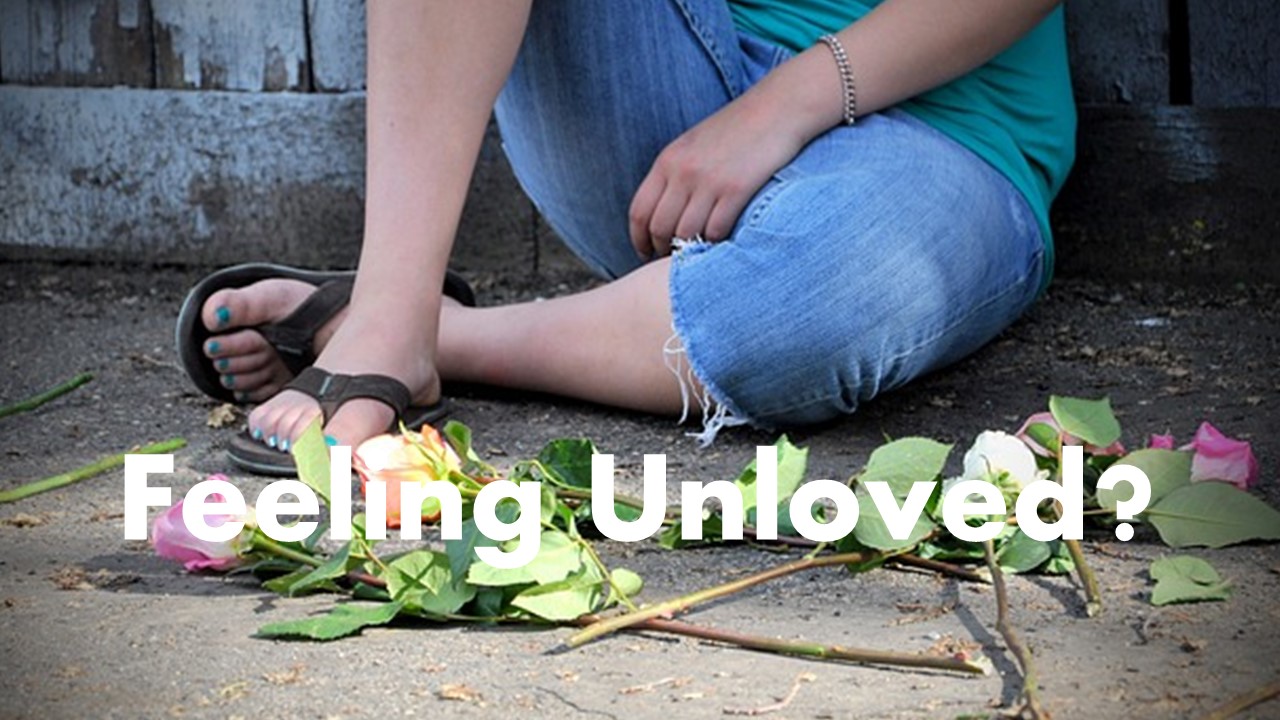
Feeling Unloved

Feeling Unloved
Photo courtesy of Pixabay.com

Think you are unlovable? Here are ways to change that.

5 reasons you feel unloved and what to do about them.

Have you ever felt that you were unlovable? That no one will ever love you and that it is impossible to ever find someone who might really care about you? Both clients and commenters on this blog have expressed the belief that somehow they are different and that no one could possibly love them. This is just not so.

Thoughts of worthlessness or of being unlovable are common thoughts and feelings among people in early recovery from emotional and mental issues as well as those recovering from substance use issues.

Being lovable is not about popularity or people-pleasing. Being lovable and finding love in your life is about being the kind of person you want to be and then developing relationships that support you in being your real authentic self. Here are some reasons you may be feeling unloved and what to do about those issues.

You do not like you.

If you do not like yourself you make it difficult for others to like you. The first step in becoming more likable is to work on liking yourself. Become your own best friend. The one important thing you need to do, and it is not an easy thing sometimes, is to stop judging yourself.

Work on feeling better about yourself. One way to increase your feelings of accomplishment and therefore feel better about yourself is to do more worthwhile things. Learn to stop judging yourself or comparing yourself to others. You are you and how you are is OK. Work on being the best you there is, not on trying to be a copy of someone else.

You set unrealistic goals and expectations for yourself.

If you expect to be perfect, then, of course, you will fail to measure up. Judging yourself harshly does not inspire you to work harder. Negative motivation, beating yourself up, is notorious for keeping people down and depressed, not helping them get their life back on track.

Be realistic. Work on small increments of improvement. Give yourself acknowledgments for things done well even if there is still room for improvement. Look at things that are less than perfect as improvement opportunities, not failures.

Someone in childhood judged you harshly.

Realize that if you came from a non-affirming family and nothing you ever did was good enough you may be perpetuating the unlovability fiction by continuing to judge yourself overly harshly. The result is that you do not think you measure up and therefore do not like yourself.

Understand that there have been others in your life that may have had their own scars from life before you existed. People who do not feel good about themselves judge others harshly as a way to make themselves feel better.

If you were treated poorly or even abused, consider that this treatment was not a statement about you and your worth. You may have had sick people in your life. Sick people can do sick things. If you were abused or mistreated do not continue that pattern of abuse by punishing yourself.

You use this unlovable thing to avoid taking the risks of getting close to others.

Some people use the statements “I am unlovable.” Or “no one will ever be able to love me” as excuses for not trying. Why try when you expect to fail? The result is that they do not have to risk, do not have to love, and hope to be loved in return.

This negative attitude reduces the risk but also eliminates the rewards. Avoid the risks of close relationships and you may not be hurt by rejection but you guarantee the pain of loneliness.

You know that you have done some things you should not have done.

Recovery, from whatever you define as your issue, includes the need to forgive yourself for things you may have done but now regret. As you learn more you should do better things. If you see that things you do or have done have harmed others try to make amends, do what you can to make things right. Then accept and forgive yourself and work on becoming a better person.

Those are my take on five reasons people may have developed a belief that they are unlovable or unworthy of love. Begin today to work on loving yourself and treating yourself as someone worthy of love and see how much better your life can become.

For more posts related to this topic see: Love, relationships, and sex  

Staying connected with David Joel Miller

Seven David Joel Miller Books are available now!

My newest book is now available. It was my opportunity to try on a new genre. I’ve been working on this book for several years, but now seem like the right time to publish it.

Story Bureau.

Story Bureau is a thrilling Dystopian Post-Apocalyptic adventure in the Surviving the Apocalypse series.

Baldwin struggles to survive life in a post-apocalyptic world where the government controls everything.

As society collapses and his family gets plunged into poverty, Baldwin takes a job in the capital city, working for a government agency called the Story Bureau. He discovers the Story Bureau is not a benign news outlet but a sinister government plot to manipulate society.

Bumps on the Road of Life. Whether you struggle with anxiety, depression, low motivation, or addiction, you can recover. Bumps on the Road of Life is the story of how people get off track and how to get your life out of the ditch.

Dark Family Secrets: Doris wants to get her life back, but small-town prejudice could shatter her dreams.

Casino Robbery Arthur Mitchell escapes the trauma of watching his girlfriend die. But the killers know he’s a witness and want him dead.

Planned Accidents  The second Arthur Mitchell and Plutus mystery.

Letters from the Dead: The third in the Arthur Mitchell mystery series.

What would you do if you found a letter to a detective describing a crime and you knew the writer and detective were dead, and you could be next?

Sasquatch. Three things about us, you should know. One, we have seen the past. Two, we’re trapped there. Three, I don’t know if we’ll ever get back to our own time.

For these and my upcoming books; please visit my Author Page – David Joel Miller

Want the latest blog posts as they publish? Subscribe to this blog.

For videos, see: Counselorssoapbox YouTube Video Channel

What is the DSM?

By David Joel Miller, MS, Licensed Therapist & Licensed Counselor.

What is

What is the DSM?
Photo courtesy of Pixabay.

DSM is short for Diagnostic and Statistical Manual of Mental Disorders.

The DSM, short for Diagnostic and Statistical Manual of Mental Disorders is a book created and published by the APA (American Psychiatric Association) which seeks to codify the classification of mental, emotional, or behavioral diagnoses. Currently, the DSM is in its fifth edition (DSM-5.) Each successive edition has seen significant shifts in how we understand and diagnose mental illnesses.

While this volume is published by an American organization it has been widely used throughout the world. A number of reasons for the creation of the DSM have been suggested but a few large reasons stand out as the most important.

The early lists of diseases were about mortality, morbidity, and treatment.

Some of the earliest efforts to categorize diseases had to do with classifying causes of death. Other methods of classification were used on census reports to describe those who were unable to work because of mental retardation or mental illnesses.

It was also useful to doctors to have lists of diseases in order to help direct treatment. That medical model continues to influence mental health treatment. The APA is an organization of those people from a medical specialist who can prescribe medication. The result of reliance on doctors to write the classification system has been the medicalization of mental illness. If the main tool you have to treat illness is medications then they get classified by those disorders that will respond to a particular class of medication rather than those that will be best treated by a particular talk therapy.

Your diagnosis should not change with the place you live or who sees you.

One goal in encouraging the universal use of the DSM (and the International Classification of Diseases or ICD, more on the ICD in another post) is to increase the likelihood that when clinicians in various countries diagnose someone with a mental illness they are using the same definitions and criteria.

When you do research it is important to be researching the same disorder.

Standardized criteria, sometimes called strict criteria, are important in researching the treatment of mental disorders. Being sure that everyone in the research study has the same illness improves the chances that a treatment that works once with one group might work again on people with similar symptoms.

The DSM has undergone some huge alterations over the years. Early thinking separated mental illness into neuroses, the problems of living, and psychosis, the loss of contact with reality. Often mental retardation was tossed in with mental illness or vice versa.

Every time the list of mental illnesses has been revised the list has gotten longer. There is still a lot of debate over whether we have all the possible mental health issues listed in the DSM. The result of this uncertainty is a chapter in the back of the DSM-5 called “conditions for further study.” Some of these conditions will eventually get listed as disorders and some will disappear again.

The first or original version of the DSM came out in 1952. It is reported to have been influenced by government efforts to test soldiers during WWII. This was revised into DSM-II in 1968.

DSM-III was introduced in 1980. It introduced a thing called the “multi-axial system.” This was partially a recognition that the boundaries between mental illness, environmental issues, personality disorders, and physical illness were not always easy to fix precisely. The multi-axial system survived officially until Oct of 2015 when all were, in theory, required to adopt the new DSM-5. In the DSM-5 there is no longer a 5 axis system though we still look for most of the things that used to be placed on these five axes.

The DSM-III version was revised to be DSM-III-R in 1987 with lots of stuff changed and moved around.

In 1994 the DSM became DSM-IV, followed in 2000 by a minor text revision to become the DSM-4-TR.

The latest DSM revision was released in 2013 as the DSM-5. This version includes the codes for use with both the ICD-9 and the ICD-10. For those clinicians trained over the last 20 years, the DSM-5 was a sort of culture shock as some of the things we thought we knew about mental illness have been redefined. There was and continue to be some professional disagreements about how the DSM-5 classifies certain human problems.

The process of treatment research, especially in the area of brain scans and neuroscience makes it likely that our understanding of the human brain and mental illness will continue to change.

FYI These “What is” sometimes “What are” posts are my efforts to explain terms commonly used in Mental Health, Clinical Counseling, Substance Use Disorder Counseling, Psychology, Life Coaching, and related disciplines in a plain language way. Many are based on the new DSM-5; some of the older posts were based on the DSM-IV-TR, both published by the APA. For the more technical versions please consult the DSM or other appropriate references.

See Recommended Books.     More “What is” posts will be found at “What is.”

Staying connected with David Joel Miller

Seven David Joel Miller Books are available now!

My newest book is now available. It was my opportunity to try on a new genre. I’ve been working on this book for several years, but now seem like the right time to publish it.

Story Bureau.

Story Bureau is a thrilling Dystopian Post-Apocalyptic adventure in the Surviving the Apocalypse series.

Baldwin struggles to survive life in a post-apocalyptic world where the government controls everything.

As society collapses and his family gets plunged into poverty, Baldwin takes a job in the capital city, working for a government agency called the Story Bureau. He discovers the Story Bureau is not a benign news outlet but a sinister government plot to manipulate society.

Bumps on the Road of Life. Whether you struggle with anxiety, depression, low motivation, or addiction, you can recover. Bumps on the Road of Life is the story of how people get off track and how to get your life out of the ditch.

Dark Family Secrets: Doris wants to get her life back, but small-town prejudice could shatter her dreams.

Casino Robbery Arthur Mitchell escapes the trauma of watching his girlfriend die. But the killers know he’s a witness and want him dead.

Planned Accidents  The second Arthur Mitchell and Plutus mystery.

Letters from the Dead: The third in the Arthur Mitchell mystery series.

What would you do if you found a letter to a detective describing a crime and you knew the writer and detective were dead, and you could be next?

Sasquatch. Three things about us, you should know. One, we have seen the past. Two, we’re trapped there. Three, I don’t know if we’ll ever get back to our own time.

For these and my upcoming books; please visit my Author Page – David Joel Miller

Want the latest blog posts as they publish? Subscribe to this blog.

For videos, see: Counselorssoapbox YouTube Video Channel

Anger triggers – What gets you angry?

By David Joel Miller, MS, Licensed Therapist & Licensed Counselor.

Angry person

Anger.
Picture courtesy of Pixabay.

What things set off your anger?

Some people are chronically angry, many things set them off. Others have a relatively few things that result in feelings of anger. Becoming one of those people who rarely gets angry and manages their anger well is possible but it takes some work.

Learning to cope with anger involves recognizing anger when it comes to visit, becoming aware of the things that increase your chances of being angry, and then learning control strategies to turn the “thermostat” on your anger down.

Many things may be “triggers” for making someone angry. In substance abuse work we spend a lot of time on learning to manage triggers to drink and use. For people with lots of anger or other emotional issues, learning your triggers is important as well.

Some authors define triggers as external events that may be the cause of your anger. I am used to thinking of triggers as being either external, situations, or people I encounter, or internal, what is going on in my body and my mind. I have roughly divided some reported triggers into these two groups. You may find that there are other very personal triggers for your anger that are not on my lists.

See how many of these fit you and then do some “field research” in your own life, looking for the things that are triggering your anger. Some of these triggers may be real threats to you or your family and friends. Other triggers may be things most of us would call minor but for you, they just “set you off.” Identifying your triggers can help you plan responses for the future.

External Anger Triggers – People, Places, and Things.

These are things that happen to you, others do or events that upset you.

Facing a real threat physically or financially.

Being verbally or physically attacked or assaulted.

Being put down or disrespect in front of others.

An interruption to your plans.

Frustration at things that get in your way.

Financial losses or difficulties.

People who do things we believe are ethically or religiously wrong.

Unfair situations or treatment.

Things being out of our control.

People lie to you or let you down.

Having your things taken or damaged by others.

Having long waits or standing in lines.

Traffic or people getting in your way.

Crowds.

People talking about you.

Not being paid what you are owed.

People saying bad things about you.

Being accused of things you didn’t do.

People who do not clean up after themselves.

Being given the wrong information or directions.

Internal Triggers for anger.

Sometimes it is the things going on inside of you that can trigger anger or other negative emotions.

Lack of sleep

Being hungry or thirsty.

Having your mind occupied with problems.

Negative emotions, anxiety, depression.

Feeling physically ill or having health problems.

Being lonely.

Feelings of guilt or shame.

Believing that you are not good enough or unworthy of good things.

Not liking yourself.

How many of these things, either external people, places, or things or internal states are triggers for your anger, anxiety, or other emotional issues? Once you recognize what is setting your anger off you may be able to work on reducing the impact of those triggers and avoiding the negative consequences of out of control anger.

Staying connected with David Joel Miller

Seven David Joel Miller Books are available now!

My newest book is now available. It was my opportunity to try on a new genre. I’ve been working on this book for several years, but now seem like the right time to publish it.

Story Bureau.

Story Bureau is a thrilling Dystopian Post-Apocalyptic adventure in the Surviving the Apocalypse series.

Baldwin struggles to survive life in a post-apocalyptic world where the government controls everything.

As society collapses and his family gets plunged into poverty, Baldwin takes a job in the capital city, working for a government agency called the Story Bureau. He discovers the Story Bureau is not a benign news outlet but a sinister government plot to manipulate society.

Bumps on the Road of Life. Whether you struggle with anxiety, depression, low motivation, or addiction, you can recover. Bumps on the Road of Life is the story of how people get off track and how to get your life out of the ditch.

Dark Family Secrets: Doris wants to get her life back, but small-town prejudice could shatter her dreams.

Casino Robbery Arthur Mitchell escapes the trauma of watching his girlfriend die. But the killers know he’s a witness and want him dead.

Planned Accidents  The second Arthur Mitchell and Plutus mystery.

Letters from the Dead: The third in the Arthur Mitchell mystery series.

What would you do if you found a letter to a detective describing a crime and you knew the writer and detective were dead, and you could be next?

Sasquatch. Three things about us, you should know. One, we have seen the past. Two, we’re trapped there. Three, I don’t know if we’ll ever get back to our own time.

For these and my upcoming books; please visit my Author Page – David Joel Miller

Want the latest blog posts as they publish? Subscribe to this blog.

For videos, see: Counselorssoapbox YouTube Video Channel
Why DCFS says see a therapist

By David Joel Miller, MS, Licensed Therapist & Licensed Counselor.

Therapy.
Photo courtesy of Pixabay.com

You have a lot to do – why do they say you need therapy?

Clients tell me that “I am not crazy. I don’t need to be here.” Mostly I tell them I agree they are not crazy. But I do think some counseling or therapy could help them. Counseling may help them develop better life skills, find a better job, have better relationships, be a better parent or it may simply get that agency off their back. Government agencies, DCFS (Department of Children and Family Services), CPS (Child Protective Services, Parole, Probation, and welfare agencies of all sorts refer people to see therapists every day.

People often come because someone, somewhere, who has some control over their life says they need to see a therapist or counselor.  They may not understand why, but I do think seeing a counselor or therapist could help them. Here are some reasons you might get a referral to see a therapist and how to make use of that referral to improve your life.

Depressed parents create problems for their children.

Depression, anxiety, stress, and a bunch of other problems do not just affect the parent. If you have struggles they are affecting your children. Being a parent is a lot more than the simple mechanical part of reproduction.

Most parents try to be the best parents they can but if you’re struggling each day just to get through the day you have nothing left to give your child.

The time to get help for your children is “the sooner the better.” Some things they may just outgrow but if you go for help no harm done. If your child does need help early intervention can change the trajectory of their life.

The most powerful intervention for children many times is helping their parents work out their problems. Marriage counseling for the parents can be helpful to a child with ADHD. Who can concentrate in school when your parents were having a loud argument last night?

Parents who are struggling have difficulty with relationships.

It takes a lot more skill to have a happy relationship than most people think. Navigating life takes skill unless you have fantastic luck. Even the lucky need some skills to make use of those lucky breaks. What is happening in your life affects your relationship. What happens in your relationships affects your life.

If you and your partner are having conflicts at home that results in you taking that relationship stress to work. Being in a bad mood after an argument with your partner may cost you your job.

The reverse is also possible, Have a tough day at work and you are at risk to have arguments with your partner. Learning relationship skills that help smooth the way at work and at home can make your life more successful. A counselor can help with all these skill sets.

Finding a job is good for your mental health.

Finding a job is tough sometimes, the worse the economy the tougher that search becomes. Plenty of people have come to counseling discouraged. They may have been trying really hard but their job search is not working. They are applying at places that are not hiring, they lack the skills for the job they want and they had not thought about doing the job that is hiring.

Career counseling can help you figure out what job you want to do, what you might be good at, and how to get from where you are to where you want to be.

Getting a job does wonders for many people’s mental health. Finding a career that you love and that pays well can make a permanent improvement in your mental health. When you are down it is harder to find a job.

If your parents were not good at parenting you will have difficulties.

If your parents were not the best or if you were busy growing up and missed the lessons on being an adult and how to parent you should have received, then counseling can help.

Clients with no children and no plans to become parents can still benefit from taking a parenting education class. You may need to learn about the developmental tasks you should have learned at each age and if you did not get them along the way you need to learn them now.

Besides, you may encounter children in life other than your own and it is helpful to know about them.

Staying mentally healthy is a skill people can learn not something you were born with.

Regulating your emotions is a skill and skills can be learned. Some people picked this up on their own. Some had great teachers or parents in their life. Most of us had to learn about anger and sadness and how to cope with negative emotions the hard way.

There are things you can do every day to improve your mental health and there are things you may be doing that can make that emotional life of yours worse.

Most people know about skills to stay physically healthy whether they use those skills or not. Learning skills to be mentally healthy, that is something you might need help with. You could get that help in small doses from the internet or reading self-help books, but to really get focused help working on your problems you need in-person individualized help.

If your emotional issues have gotten severe enough that you have developed a disorder, a mental illness, depression, anxiety, a substance use disorder, or anger problems, then for sure you need professional help to get out of that mentally unhealthy place.

You could wait for that physical illness to just go away on its own but most people are wise enough to go get medical help when they have an illness in their body. A mental or emotional illness responds to treatment in the same way.

Many people do not have good support systems.

Some people have great support systems, most do not. Family and partners can get worn out listening to your problems and sometimes what you need most are to talk those problems out.

The family gets emotionally involved, they want you to do certain things or not do them. They may take sides in disagreements. A counselor can be supportive while helping you find the answers that are best for you.

Stressed out people tend to use drugs and alcohol to cope and the family pays the price.

A huge number of referrals by agencies are for people who are using or abusing drugs or alcohol. The agency may not even know that you are using, but excessive reliance on substances can result in impaired ability to fulfill the other roles in your life.

Many people with emotional problems turn to substances to cope. A little beer or wine to relax or some stimulants to keep going. Over time that reliance on a substance can begin to cause problems rather than solve them. A counselor can help you judge whether your use is impacting other areas of your life and help you decide what you want to do about that.

I have written in other places about the times that the counselor has to report that kind of use and the times they can maintain that secret. That is a long discussion and you may need to read those other posts or the full version in a book that I am working on that should be out soon.

Rest assured that most therapist’s goal is to help you cope, not to get you to say something that they will use against you.

If you have been referred to counseling or therapy consider what you want to accomplish in your life and how that counselor might be able to help you make your life better.

Staying connected with David Joel Miller

Seven David Joel Miller Books are available now!

My newest book is now available. It was my opportunity to try on a new genre. I’ve been working on this book for several years, but now seem like the right time to publish it.

Story Bureau.

Story Bureau is a thrilling Dystopian Post-Apocalyptic adventure in the Surviving the Apocalypse series.

Baldwin struggles to survive life in a post-apocalyptic world where the government controls everything.

As society collapses and his family gets plunged into poverty, Baldwin takes a job in the capital city, working for a government agency called the Story Bureau. He discovers the Story Bureau is not a benign news outlet but a sinister government plot to manipulate society.

Bumps on the Road of Life. Whether you struggle with anxiety, depression, low motivation, or addiction, you can recover. Bumps on the Road of Life is the story of how people get off track and how to get your life out of the ditch.

Dark Family Secrets: Doris wants to get her life back, but small-town prejudice could shatter her dreams.

Casino Robbery Arthur Mitchell escapes the trauma of watching his girlfriend die. But the killers know he’s a witness and want him dead.

Planned Accidents  The second Arthur Mitchell and Plutus mystery.

Letters from the Dead: The third in the Arthur Mitchell mystery series.

What would you do if you found a letter to a detective describing a crime and you knew the writer and detective were dead, and you could be next?

Sasquatch. Three things about us, you should know. One, we have seen the past. Two, we’re trapped there. Three, I don’t know if we’ll ever get back to our own time.

For these and my upcoming books; please visit my Author Page – David Joel Miller

Want the latest blog posts as they publish? Subscribe to this blog.

For videos, see: Counselorssoapbox YouTube Video Channel

Are you curious?

Sunday Inspiration    Post By David Joel Miller.

Curiosity.

Curious Cows

Curious?
Photo courtesy of Pixabay.com

“The important thing is not to stop questioning. Curiosity has its own reason for existing.”

― Albert Einstein

“Around here, however, we don’t look backward for very long. We keep moving forward, opening up new doors and doing new things, because we’re curious…and curiosity keeps leading us down new paths.”

― Walt Disney Company

“I think, at a child’s birth, if a mother could ask a fairy godmother to endow it with the most useful gift, that gift would be curiosity.”

― Eleanor Roosevelt

Wanted to share some inspirational quotes with you.  Sunday seemed like a good time to do this. If any of these quotes strike a chord with you please share them.

Manage Anger by recognizing it – the Anger Cues.

By David Joel Miller, MS, Licensed Therapist & Licensed Counselor.

Anger burning

Anger Burns the holder.
Photo courtesy of Pixabay.com

How would you know when you’re angry?

Controlling anger is a problem for many people. Learning to recognize anger when you see it, find ways to avoid or reduce your anger, and then to not anger yourself in the first place can all help improve your health and your relationships.

Whether you have been required to learn about anger, someone you know has an anger problem or you want to find ways to reduce and control your anger, there are techniques that will prove helpful. Less anger can also have positive health benefits.

If you have difficulty with your anger let’s start on a crash course in how to recognize the anger monster when he rears his head.

Anger causes physical changes – Your body tells you about anger.

Your body often responses to rising levels of anger way before you realize that anger is the feeling you are having. Think for a moment about how you experience anger and how you see it in others.

Do you feel hot or flushed? Does your blood pressure rise? Are their sudden onsets of “stress” headaches after which you discover you are feeling angry and resentful towards someone?

Changes in heart rate and in breathing are common as the body prepares for the flight or fight reaction that follows anger and hostility. Increasing anger also can trigger higher levels of anxiety in people with anxiety disorders. These fear, anxiety, and anger caused changes resulting in more blood flow to the muscles and less to things like digestion and rational thinking.

High anger is well-known to cause violence towards others but recently it has been recognized as a cause of self-harm also. Angering yourself, regardless of the provocation, can result in impairment of your physical health.

The result of anger is a flooding of the nervous system with stress hormones resulting in physical problems including, headache, digestion problems, abdominal pain, insomnia, skin problems, such as eczema, heart attack, stroke, and many others. Not only do high levels of anger increase your risk of heart disease, but anger can also impede the healing process if you have suffered heart damage.

Anger can increase your blood sugar levels, especially a problem for those with diabetes. Another common reaction to anger is to begin to sweat. Uncontrolled anger can reduce your immunity and increase the risk of getting colds or flu. Some research has shown correlations between high levels of anger and cancer.

For people in recovery from substance abuse or mental health issues, anger can be a trigger for relapse. If you are in recovery or have uncontrolled anger, the cost of that anger, whether you show it or not can be unbearably high.

Watch for these physical changes in your body and you will make progress in recognizing the things that trigger your anger.

For more on the medical aspects of anger see:

WebMD

Better Health Chanel from State Government of Victoria.

Behavioral cues – Your anger autopilot.

Notice where your body goes without you during an anger episode. You may find that long before you realize you are getting angry you have clenched your fists, changed your body posture or had other automatic physical reflexes.

Pacing and wandering aimlessly may also be signs that anger is taking control of you. You may suddenly realize you have been staring off into space or otherwise zoning out. Many people when angry, find their voice has risen to extremely loud volumes without them being aware they are raising their voice.

Slamming doors, throwing things are also common manifestations of anger. You may begin to act badly even before you are aware you are angry. Some of these reflexes are biological but others have been learned based on how you learned about anger and how your anger experiences have unfolded as you grew.

Learning to spot these behavioral cues can make you an expert in recognizing the Anger monster.

Anger brings other emotions along for the ride – fear, hurt, jealousy, disrespect.

Anger overlaps and cohabitates with many other negative emotions. When you are angry you may also become fearful, anxious, or begin having cravings for drugs or alcohol.

This coupling of emotions works in both directions. Anger triggers other negative emotions and those other emotions, especially pain, hurt, and loneliness, can trigger angry feelings. Just before you became angry what feeling were you feeling? Jealousy, rejection, feelings of being put down or disrespected can all trigger an angry response. If your anger was preceded by feelings of guilt, shame, or humiliation you may need to work on those other feelings to reduce the role of anger in your life. Frustration or impatience can trigger anger episodes.

Anger can also be a trigger for other mental health issues from dissociation to Post-traumatic Stress Disorder.

Anger hijacks your brain – self-talk, pictures in your head, plans of revenge.

What you look for you get more of. Angry people are constantly on their guard watching for signs they are being criticized. Is someone comments on the things you do are you taking it as devaluing you and your actions?

Once the thought storm begins to build do you see insults and injury everywhere? Do you work yourself up into a lightning storm looking for someone to fry? Many episodes of anger are preceded by a storm of thoughts, rumination, about why people shouldn’t do or must do this or that. If you begin to believe that everything people around you do has something to do with you the anger will rise.

Have you seen changes in yourself as the anger rises? Watching for these cues help you spot anger and work to tame this beast before your anger damages your life.

Staying connected with David Joel Miller

Seven David Joel Miller Books are available now!

My newest book is now available. It was my opportunity to try on a new genre. I’ve been working on this book for several years, but now seem like the right time to publish it.

Story Bureau.

Story Bureau is a thrilling Dystopian Post-Apocalyptic adventure in the Surviving the Apocalypse series.

Baldwin struggles to survive life in a post-apocalyptic world where the government controls everything.

As society collapses and his family gets plunged into poverty, Baldwin takes a job in the capital city, working for a government agency called the Story Bureau. He discovers the Story Bureau is not a benign news outlet but a sinister government plot to manipulate society.

Bumps on the Road of Life. Whether you struggle with anxiety, depression, low motivation, or addiction, you can recover. Bumps on the Road of Life is the story of how people get off track and how to get your life out of the ditch.

Dark Family Secrets: Doris wants to get her life back, but small-town prejudice could shatter her dreams.

Casino Robbery Arthur Mitchell escapes the trauma of watching his girlfriend die. But the killers know he’s a witness and want him dead.

Planned Accidents  The second Arthur Mitchell and Plutus mystery.

Letters from the Dead: The third in the Arthur Mitchell mystery series.

What would you do if you found a letter to a detective describing a crime and you knew the writer and detective were dead, and you could be next?

Sasquatch. Three things about us, you should know. One, we have seen the past. Two, we’re trapped there. Three, I don’t know if we’ll ever get back to our own time.

For these and my upcoming books; please visit my Author Page – David Joel Miller

Want the latest blog posts as they publish? Subscribe to this blog.

For videos, see: Counselorssoapbox YouTube Video Channel

Your thoughts are holding you back.

Woman thinking

Unhelpful Negative Thoughts.
Photo courtesy of Pixabay.com

By David Joel Miller, MS, Licensed Therapist & Licensed Counselor.

How many of these unhelpful thoughts do you have?

Some thoughts can help you get things done, others can hold you back.

If you regularly have any of those unhelpful thoughts they may be undermining your progress. Identifying your unhelpful thoughts and working on changing them can result in a much better life.

Do you ever have these thoughts?

You expect the worst.

If you habitually, always, expect the worse, you may find that no matter what happens you see the worst in it. Believing that bad things are sure to happen is a cognitive bias that results in being quick to spot the problems in life but prevents you from seeing the good.

Shift your focus.  Learn to look for the positive and you will discover that there are a lot of good things that have escaped your attention.

You expect the lead in every play.

It is all about you? If something goes wrong do you think it is your fault? If and when it fails, do you believe that says something about you? Just because people laugh when you enter a room does not mean they are laughing at you.

This unwavering thought, that what happens is all about you, puts a lot of pressure on you and in the end, you will find yourself unable to do everything.

Accept that much of what happens is about others and has nothing to do with you.

People are out to get you.

Some people do have enemies, that is true. But if everywhere you go everyone seems out to get you then you are misinterpreting a lot of facts. Most people are not motivated by trying to “get you” they are too busy with their own life. It is only when you make a habit of getting between them and their goals that they may have it in for you. The best way to avoid these results is to get out of their way, that, or be so far ahead of them they can’t see you up ahead.

One other possibility, along the way you have harmed enough people so that you have created the truth in that there out to get you thought.

That belief that people are out to get you is a cognitive distortion. In severe cases this is paranoia. The truth is that most of the time, most of us are just not that important to others.

The future will be bad.

This thought is sure to doom you to a life of failure and misery. The single most important thing in creating a happy life is the attitude that having the life you want is possible. Hope is the thing that helps you bounce back from being knocked down. Hope is the resiliency factor.

If you have lost hope look for it anywhere you can find it.

You insist things go according to plan.

Having a plan is good. Expecting that things always go according to your plan is setting yourself up for disappointment and failure. Leave room in your planning for the unexpected. Planning is a valuable process. Insisting that things must follow your plan leaves you unable to cope with the unexpected.

You keep waiting for the perfect time.

There may be no such thing as the perfect time for anything. Waiting for the perfect time robs you of the only time you will ever be able to start working on this project – now. If you put off action until some future time you may be unprepared when that time comes.

If there are real reasons to wait to take action make sure you are learning and practicing the skills you will need when that time comes. Begin by taking small steps in your desired direction and see how much closer you will be when the appointed time does arrive.

You do not believe in taking risks.

Life is risks. Doing nothing is a risk. Doing anything is a risk. Why not take the risk of doing something worth the effort? There are no sure things. That’s why we buy insurance, to protect us from losses when the unexpected happens.

Learn to evaluate risks. Take those risks where the results will be worth the risks.

You do not want to be different.

Everyone is different in their own way. Want to accomplish something in life? You are required to take risks and to be different. Average and same do not get noticed. Being the same as everyone else is a sure way to set yourself up for a bland life.

You are afraid to change your mind.

Only a real fool continues to insist they are right despite mounting evidence they have made an error. If you stick to a failed plan and continue to argue about your rightness you lose the opportunity to change direction and head in a new better direction.

Admit your errors and learn from them. Adjust your efforts. Errors are not the end of your options, they are only improvement opportunities.

You are afraid you will be taken advantage of.

Someone may get something from you. That is called a bargain. Learn to check out as many of the facts as possible and then take a risk. The only way to have good things happen is to do things and take chances. Avoiding risks is avoiding all the possible good things that may well happen to the ones who risk big.

The reason most people are taken advantage of? They are expecting to get something from the other person that they have not earned. That old saying “you can’t con an honest person” contains a lot of truth.

You are afraid to say no.

Saying yes to everything leaves you stretched too far and unable to do things you want to do. You do not have to do everything everyone wants you to do. Say no; just make sure your no’s are really no. Not saying no leaves others in control of your life.

You are afraid to say yes.

Not saying yes to things can be even more harmful than not saying no. We often miss out on things that could have been beneficial and pleasurable because we were afraid to say yes to an opportunity. If opportunity is knocking you have to answer the door.

Nothing good ever happens to you.

Believing nothing good can or will happen in your life leaves you blind to the opportunities all around you. Look for the things that are ungood and you will not grab the good things when they are right in front of you.

Have you fallen into the habit of practicing these unhelpful thoughts? Are you ready to get your habitual, automatic, thoughts overhauled?

Staying connected with David Joel Miller

Seven David Joel Miller Books are available now!

My newest book is now available. It was my opportunity to try on a new genre. I’ve been working on this book for several years, but now seem like the right time to publish it.

Story Bureau.

Story Bureau is a thrilling Dystopian Post-Apocalyptic adventure in the Surviving the Apocalypse series.

Baldwin struggles to survive life in a post-apocalyptic world where the government controls everything.

As society collapses and his family gets plunged into poverty, Baldwin takes a job in the capital city, working for a government agency called the Story Bureau. He discovers the Story Bureau is not a benign news outlet but a sinister government plot to manipulate society.

Bumps on the Road of Life. Whether you struggle with anxiety, depression, low motivation, or addiction, you can recover. Bumps on the Road of Life is the story of how people get off track and how to get your life out of the ditch.

Dark Family Secrets: Doris wants to get her life back, but small-town prejudice could shatter her dreams.

Casino Robbery Arthur Mitchell escapes the trauma of watching his girlfriend die. But the killers know he’s a witness and want him dead.

Planned Accidents  The second Arthur Mitchell and Plutus mystery.

Letters from the Dead: The third in the Arthur Mitchell mystery series.

What would you do if you found a letter to a detective describing a crime and you knew the writer and detective were dead, and you could be next?

Sasquatch. Three things about us, you should know. One, we have seen the past. Two, we’re trapped there. Three, I don’t know if we’ll ever get back to our own time.

For these and my upcoming books; please visit my Author Page – David Joel Miller

Want the latest blog posts as they publish? Subscribe to this blog.

For videos, see: Counselorssoapbox YouTube Video Channel

Can’t tell your counselor that?

By David Joel Miller, MS, Licensed Therapist & Licensed Counselor.

Can't Say That

Can’t Say That

What do you do if there are things you can’t tell your counselor?

Clients and commenters have told me a number of times that there were things that they had not felt able to tell their therapists in the past. Some said they were afraid to cry in front of the counselor or there were secrets they just hadn’t been able to tell.

For therapy to provide the maximum of help there really should not be anything you can’t tell your therapist. If you are holding back there are some questions you should ask yourself.

Counseling should be a place where you can talk about anything. It needs to be a safe environment and you need to feel that the counselor will not violate your trust. If you are having doubts ask yourself why? Do any of these reasons apply?

Is it really unsafe to tell them?

If you are being interviewed by the police psychiatrist you need to talk to your lawyer first. When the other person does not work for you and is deciding your fate there may be a reason you need to withhold information.

Therapists have certain legal mandates. You talk about ongoing child abuse and we probably will need to report that. I have written in other posts about those legal mandates. Remember that the reason we need to make these reports is not to get you punished but to help you and the victim to end the problem. If you are suicidal we want to help save your life.

I hope if you went to the therapist for an abuse or harm situation you are there to get help in changing the situation. If you don’t want to change the situation why are you seeing the therapist?

Is your therapist judging you?

This is a recurring problem in religious and ethnic communities. If you have selected a counselor because they are a member of your particular religious community or they are of the same ethnicity as you there could be things that you will feel unable to talk about.

A good therapist should be able to set their personal beliefs aside and help you. Some counselors feel so strongly about a particular issue that they can’t do that and while they may tell you upfront about their beliefs, that point of view may permeate the conversations.

Some ethnic communities are small and everyone knows everyone. Say your family is from a particular culture and you have been dating someone from a different culture.

This has been a particular problem in the faith-based” communities. A woman told me that she saw a therapist from her particular religious group. This therapist had a strong pro-life anti-abortion view and had pro-life items displayed in the office. One of this client’s core issues was that she had guilt over having had an abortion in her younger days. She felt unable to share about that guilt and felt judged by her therapist’s disapproval of abortion and sex outside marriage.

Clients struggling with sexual issues, coming out because they are gay or past relationships that were outside of wedlock have told me that when they broached these topics their counselor reacted so negatively towards those behaviors they felt they could not talk about these issues in the future.

Sometimes there are advantages to seeing a therapist that is outside your religious or ethnic group as they will have less of a tendency to judge you over current or past actions that were outside the beliefs of your group.

Are you still trying to pretend you are OK?

Some people believe that if they give in to their feelings they will “fall apart” and never get back to where they are. People have commented that if they start to cry they will never stop. I haven’t seen that yet.

What we do see is people who have things they really need to cry about. Crying is a part of grief, loss, and a lot of other life issues. The problem often is not that you won’t stop but that you have something you need to cry about and not letting yourself feel your feelings is keeping you stuck.

One school of counseling uses a technique called “prescribing the symptoms.” In this approach, the client is told to cry more not less. Each night when you are able to get alone you plan to cry for at least an hour. Most people will find it hard to cry that full hour. After a few days of crying many people run out of tears.

What you learn is that they are so many tears needed and no more. Another thing you might learn from making yourself or allowing yourself to cry is that if you can make yourself cry, then you can turn the tears off when you need to.

Do not ever be afraid to cry, be weak, or be struggling when you are with your counselor. We know that people have emotions they need to deal with and what better place to express them than in the safety of the therapist’s office?

Have you been feeling there are things that you will never be able to tell your therapist? Think about why there are things you find it hard to talk about with your therapist and see if you can get past this impediment to your recovery.

Staying connected with David Joel Miller

Seven David Joel Miller Books are available now!

My newest book is now available. It was my opportunity to try on a new genre. I’ve been working on this book for several years, but now seem like the right time to publish it.

Story Bureau.

Story Bureau is a thrilling Dystopian Post-Apocalyptic adventure in the Surviving the Apocalypse series.

Baldwin struggles to survive life in a post-apocalyptic world where the government controls everything.

As society collapses and his family gets plunged into poverty, Baldwin takes a job in the capital city, working for a government agency called the Story Bureau. He discovers the Story Bureau is not a benign news outlet but a sinister government plot to manipulate society.

Bumps on the Road of Life. Whether you struggle with anxiety, depression, low motivation, or addiction, you can recover. Bumps on the Road of Life is the story of how people get off track and how to get your life out of the ditch.

Dark Family Secrets: Doris wants to get her life back, but small-town prejudice could shatter her dreams.

Casino Robbery Arthur Mitchell escapes the trauma of watching his girlfriend die. But the killers know he’s a witness and want him dead.

Planned Accidents  The second Arthur Mitchell and Plutus mystery.

Letters from the Dead: The third in the Arthur Mitchell mystery series.

What would you do if you found a letter to a detective describing a crime and you knew the writer and detective were dead, and you could be next?

Sasquatch. Three things about us, you should know. One, we have seen the past. Two, we’re trapped there. Three, I don’t know if we’ll ever get back to our own time.

For these and my upcoming books; please visit my Author Page – David Joel Miller

Want the latest blog posts as they publish? Subscribe to this blog.

For videos, see: Counselorssoapbox YouTube Video Channel

What do you see?

Sunday Inspiration    Post By David Joel Miller.

Roses or Thorns?

Rose Bush with thorns.

Roses or Thorns
Photo courtesy of Pixabay.com

“We can complain because rose bushes have thorns, or rejoice because thorn bushes have roses.”

― Abraham Lincoln

Wanted to share some inspirational quotes with you.  Sunday seemed like a good time to do this. If any of these quotes strike a chord with you please share them.