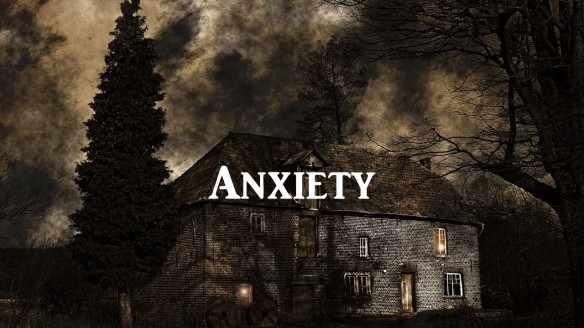
Anxiety.

Sunday Inspiration.     Post by David Joel Miller.

Anxiety provoking.

Anxiety.
Photo courtesy of Pixabay.com

Anxiety

“Man is not worried by real problems so much as by his imagined anxieties about real problems”

― Epictetus

“Our anxiety does not come from thinking about the future, but from wanting to control it.”

― Kahlil Gibran

“Anxiety’s like a rocking chair. It gives you something to do, but it doesn’t get you very far.”

― Jodi Picoult, Sing You Home

Wanted to share some inspirational quotes with you.  Today seemed like a good time to do this. If any of these quotes strike a chord with you, please share them.

Independence.

Sunday Inspiration.     Post by David Joel Miller.

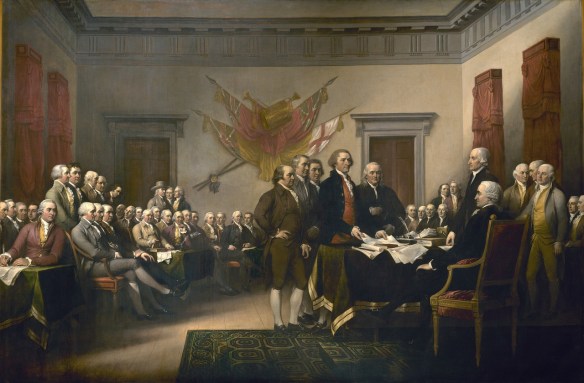
Declaration of independence.

Independence.
Photo courtesy of Pixabay.com

Independence.

“Independence is my happiness, and I view things as they are, without regard to place or person; my country is the world, and my religion is to do good.”

― Thomas Paine, Rights of Man

“To find yourself, think for yourself.”

― Socrates

“It is the first responsibility of every citizen to question authority.”

― Benjamin Franklin

“There is a stubbornness about me that never can bear to be frightened at the will of others. My courage always rises at every attempt to intimidate me.”

― Jane Austen, Pride and Prejudice

Wanted to share some inspirational quotes with you.  Today seemed like a good time to do this. If any of these quotes strike a chord with you, please share them.

Adventurous.

Sunday Inspiration.     Post by David Joel Miller.

Adventurous man

Adventurous.
Photo courtesy of Pixabay.com

Adventurous

“The purpose of life is to live it, to taste experience to the utmost, to reach out eagerly and without fear for newer and richer experience.”

― Eleanor Roosevelt

“The biggest adventure you can ever take is to live the life of your dreams.”

― Oprah Winfrey

“Life is a blank canvas, and you need to throw all the paint on it you can.”

― Danny Kaye

“Let us step into the night and pursue that flighty temptress, adventure.”

― J.K. Rowling, Harry Potter and the Half-Blood Prince

Wanted to share some inspirational quotes with you.  Today seemed like a good time to do this. If any of these quotes strike a chord with you, please share them.

Father.

Sunday Inspiration.     Post by David Joel Miller.

Fatherhood

Happy Father’s Day.
Photo courtesy of Pixabay.com

Father.

“We never get over our fathers, and we’re not required to. (Irish Proverb)”

― Martin Sheen, Along the Way: The Journey of a Father and Son

“My father taught me to work, but not to love it. I never did like to work, and I don’t deny it. I’d rather read, tell stories, crack jokes, talk, laugh — anything but work.”

― Abraham Lincoln

Wanted to share some inspirational quotes with you.  Today seemed like a good time to do this. If any of these quotes strike a chord with you, please share them.

Boisterous.

Sunday Inspiration.     Post by David Joel Miller.

Boisterous.

Boisterous.
Photo courtesy of Pixabay.com

Boisterous.

“Is love a tender thing? It is too rough, too rude, too boisterous, and it pricks like thorn.”

― William Shakespeare, Romeo and Juliet

“The boisterous sea of liberty is never without a wave. ”

― Thomas Jefferson

“Not to be slack and negligent; or loose, and wanton in thy actions; nor contentious, and troublesome in thy conversation; nor to rove and wander in thy fancies and imaginations. Not basely to contract thy soul; nor boisterously to sally out with it, or furiously to launch out as it were, nor ever to want employment.”

― Marcus Aurelius, Meditations

Wanted to share some inspirational quotes with you.  Today seemed like a good time to do this. If any of these quotes strike a chord with you, please share them.

How to tame and train emotions and feelings.

By David Joel Miller, MS, Licensed Therapist & Licensed Counselor.

Man with feelings

Managing feelings.
Photo courtesy of Pixabay.com

3 step process for making feelings a part of your recovery.

There was a time, back in the Victorian days when feelings were suspect and the goal was to stop feeling and to think logically. This approach has resulted in feelings and intuition getting a bad name.

If you have struggled with an emotional or mental illness, say depression or anxiety, it is hard to keep in mind that in smaller doses that anxiety or sadness could have been your friend. A little bit of anxiety can keep you safe in dangerous situations. But if that anxiety beast has gotten unruly, you need to get them back to being well-behaved.

People who have abused substances, taken drugs or drank to help them be less anxious will find their emotions have gotten out of control like a house full of unruly children when the parents are away. Using alcohol to sleep or to not feel leaves you exhausted the next day and beyond.

Feelings can tell you things, provide you with the information you need if only you are willing to listen to them. If you grew up around others that did not pay attention to feelings, yours or theirs, or pretended they did not have feelings, you may be at a disadvantage when it comes to managing your emotions.

Learning to manage your emotions, feel what you need to feel but not let your emotions take over complete control of you requires you to develop a better relationship with your feelings.

Here are the three basic steps to learning to make peace with your emotions

Step One – Recognize that you are feeling.

Many people are accustomed to ignoring their emotions. Whether you are recovering from depression, anxiety, substance abuse, or any other life problem the first step to integrating feelings into your new recovered life is to become aware that you are feeling something.

Our bodies hold on to emotional feelings even when the mind is trying to ignore them. If you say that someone is a pain in the neck, check your neck. If your stomach is upset, look inside to see if there is someone or something “making you sick to your stomach.”

These body sensations are your nervous system’s way of telling you that something is wrong. Remember that you have lots of nerve cells outside your brain. One estimate places the number of nerve cells outside that brain at over fifty percent. You have nerve cells throughout your body for many reasons. One of those reasons is to convey information, especially emotional information, to the brain.

Learn to recognize that you are feeling something. Look for where in the body that feeling is staying. What physical sensations do you feel? Does this rev you up or shut you down.

Step Two – Name that feeling.

When you do not have a word for something it is more difficult to think about that item. To learn to make emotions your friends you need to learn their names. There is a lot of difference between being sad and being angry. Learn to recognize what you feel when you feel it and then name that feeling.

When you first enter a new field you do not have the vocabulary to talk about that field. New on a job you may find the old-timers see and react to things you had not noticed. As you get more familiar with things you learn their names and you respond more readily.

For an example of this take a look at my difficulties in understanding what a friend was talking about when I knew nothing about her area of interest. In this example, I could not remember or talk about something because I did not know enough about it to recognize it when I saw it.

What purple glass? Memory and the expert effect

Step Three – Apply your feeling change tools.

Once you recognize that you are feeling something, are able to describe where in your body you are feeling it, and then are able to name that feeling, you are well on your way to learning how to manage that feeling.

There are all sorts of feeling management tools. Many people are required to attend an anger management class because they never learned to follow these steps. If you just suddenly find yourself furiously angry then you are at a loss to know what to do about that anger once you have it. But if you learn to recognize that anger is coming on and how it is affecting you, there are all kinds of tools you can use to avoid excess anger and to manage that anger once it arrives.

Tools that are used for anger management work, most of the time, when they are applied to other feelings. One of the early stage feeling management tools is the process I have described above. Learn to recognize that you have feelings, identify what that feeling is, and then decide how you will respond.

Other emotional regulation tools include cognitive tools, changing your thinking and behavioral tools, physical things you can do to manage emotions. For more on tools to manage feelings look at other blog posts here on counselorssoapbox.com and keep an eye out for my book, in progress, which is nearing completion.

Move your feelings from out of control to friends.

Staying connected with David Joel Miller

Seven David Joel Miller Books are available now!

My newest book is now available. It was my opportunity to try on a new genre. I’ve been working on this book for several years, but now seem like the right time to publish it.

Story Bureau.

Story Bureau is a thrilling Dystopian Post-Apocalyptic adventure in the Surviving the Apocalypse series.

Baldwin struggles to survive life in a post-apocalyptic world where the government controls everything.

As society collapses and his family gets plunged into poverty, Baldwin takes a job in the capital city, working for a government agency called the Story Bureau. He discovers the Story Bureau is not a benign news outlet but a sinister government plot to manipulate society.

Bumps on the Road of Life. Whether you struggle with anxiety, depression, low motivation, or addiction, you can recover. Bumps on the Road of Life is the story of how people get off track and how to get your life out of the ditch.

Dark Family Secrets: Doris wants to get her life back, but small-town prejudice could shatter her dreams.

Casino Robbery Arthur Mitchell escapes the trauma of watching his girlfriend die. But the killers know he’s a witness and want him dead.

Planned Accidents  The second Arthur Mitchell and Plutus mystery.

Letters from the Dead: The third in the Arthur Mitchell mystery series.

What would you do if you found a letter to a detective describing a crime and you knew the writer and detective were dead, and you could be next?

Sasquatch. Three things about us, you should know. One, we have seen the past. Two, we’re trapped there. Three, I don’t know if we’ll ever get back to our own time.

For these and my upcoming books; please visit my Author Page – David Joel Miller

Want the latest blog posts as they publish? Subscribe to this blog.

For videos, see: Counselorssoapbox YouTube Video Channel

How do the mentally ill feel? About feelings.

By David Joel Miller, MS, Licensed Therapist & Licensed Counselor.

Man with feelings

Managing feelings.
Photo courtesy of Pixabay.com

Can you describe how the mentally ill feel?

This question actually comes up, both in-person and as search terms. Despite the difficulty of answering such a general question, I will take a stab at this.

Speaking for any group of people is always problematic. I am an old white guy. So I should be able to tell you how old white guys feel right? Trying to speak for any group is beyond difficult. How old white guys feel would depend on whether that old white guy was a homeless veteran living alone under a bridge or a Wall Street executive who was paid millions for running a company last year that lost billions. I really can’t describe how all old white men might feel about anything.

But I will try to tell you how the mentally ill feel.

It might be easier to describe how the mentally ill do NOT feel, though that begs the question of how they do feel.

The mentally ill don’t feel happy. Occasionally they may feel mania. They may run without stopping and not need to sleep but even then they will probably tell you they are not really happy.

It is hard for positive emotions like happiness, contentment, and peace to co-exist with active symptoms of a mental illness.

One reason I feel so sure that I can describe the way the mentally ill feel is that they are so much like those of us who would like to think we are not suffering from a mental illness – not at this moment anyway.

In the course of any one year, 25 % of Americans will have symptoms of a mental illness so severe they should be diagnosed. Over half of all Americans will have at least one episode of a mental illness during their lifetime. So they will feel a lot like the rest of us – only more so.

The rest of the world has similar prevalences of mental illness. What you call it may vary from place to place. What symptoms people may exhibit may vary from culture to culture, but most any of us can tell when people are not happy and when they are suffering from dis-happiness.

Most people with a mental illness feel flooded, overwhelmed with negative emotions. When they are anxious they feel really, really anxious. When they are sad they are down in the bottom of the hole sad. Their depression does not go away when they watch a sitcom. Their night of dark feelings is really, really black.

It would be reassuring to think that somehow the mentally ill are different from the rest of us. If only they somehow have a different temperament or had done something so wrong they deserved their misery.  But the truth be told, bad things can happen to good people and we all are at risk to have an experience that overwhelms us.

Sure once they develop mental illness they may act differently from the way they did when they were well. They will smoke more and maybe drink and drug more. They may lose the ability to care for themselves or to show up for work.

But tell the truth, if tomorrow you were to lose your job and your home, if your family and friends turned their back on you – wouldn’t you feel depressed, anxious, and like giving up?

So for those of you who wonder how the mentally ill feel, take a look at how you feel when things go wrong, and then you will know how you might feel if one day you woke up and discovered you had contracted a mental illness.

Staying connected with David Joel Miller

Seven David Joel Miller Books are available now!

My newest book is now available. It was my opportunity to try on a new genre. I’ve been working on this book for several years, but now seem like the right time to publish it.

Story Bureau.

Story Bureau is a thrilling Dystopian Post-Apocalyptic adventure in the Surviving the Apocalypse series.

Baldwin struggles to survive life in a post-apocalyptic world where the government controls everything.

As society collapses and his family gets plunged into poverty, Baldwin takes a job in the capital city, working for a government agency called the Story Bureau. He discovers the Story Bureau is not a benign news outlet but a sinister government plot to manipulate society.

Bumps on the Road of Life. Whether you struggle with anxiety, depression, low motivation, or addiction, you can recover. Bumps on the Road of Life is the story of how people get off track and how to get your life out of the ditch.

Dark Family Secrets: Doris wants to get her life back, but small-town prejudice could shatter her dreams.

Casino Robbery Arthur Mitchell escapes the trauma of watching his girlfriend die. But the killers know he’s a witness and want him dead.

Planned Accidents  The second Arthur Mitchell and Plutus mystery.

Letters from the Dead: The third in the Arthur Mitchell mystery series.

What would you do if you found a letter to a detective describing a crime and you knew the writer and detective were dead, and you could be next?

Sasquatch. Three things about us, you should know. One, we have seen the past. Two, we’re trapped there. Three, I don’t know if we’ll ever get back to our own time.

For these and my upcoming books; please visit my Author Page – David Joel Miller

Want the latest blog posts as they publish? Subscribe to this blog.

For videos, see: Counselorssoapbox YouTube Video Channel
How many feelings do you feel? The feelings problem

By David Joel Miller, MS, Licensed Therapist & Licensed Counselor.

Man with feelings

Managing feelings.
Photo courtesy of Pixabay.com

Do you let yourself feel too much or too little?

Two types of feelings problems cause people distress.

Some people feel too much. Excesses of fear and sadness keep them from having the happy life they want. Other people have an insatiable appetite for pleasure. They overindulge, damage their relationships, and suffer the consequences. They act impulsively and then regret the result but they tell me they can’t stop themselves even when they try.

Other people tell me they can’t feel anything. They are numb, cut off from their emotions. They don’t know what they feel even when they are feeling it. The numbness robs them of the chance for happiness.

How many feelings are there?

The list of feeling words is immense. Psychologists have looked for ways to make this understandable and have constructed shorter lists of primary feelings. These lists typically include 7 to 11 basic feelings.

1. Joy

2. Interest

3. Surprise

4. Fear (anxiety)

5. Anger

6. Sadness

7. Disgust

All of these feelings have survival value at times. Joy and interest might stimulate us to find and eat food. Fear could help us avoid a man-eating animal. Not everyone experiences these feelings in the same way. We could lump the emotions of fear, anxiety, nervousness, scared, or uncomfortable together. Experience has shown me that teenagers will deny feeling any fear but may have a sizable list of things that make them nervous or uncomfortable.

Individual variation

Not everyone experiences the same event by feeling the same emotion. One person may see a tornado and experience fear, another sadness and a third may experience interest and becomes a storm chaser. Past experience, beliefs about the event, and genetics may all play a role in how we perceive an event.

Negative and Positive Emotions

It may be easier at times to think of feelings as either negative or positive. The seven feelings could be separated into positive and negative lists. Hundreds of other feeling words might be added to the lists as variations or shades of these feelings. We could also use certain words to describe combinations of feelings or the co-occurrence for two feelings at the same time.

Joy, Interest, and Surprise are frequently seen as positive, though too much interest in certain things gets diagnosed as a mental illness if it interferes with your life. Fear or anxiety, anger, sadness, and disgust would form the core negative feelings. Research clearly indicates that while positive feelings are relatives and negative feelings come from the same family there are perceived differences between the feelings on each list.

The gender gap

Men in counseling often report having only three feelings, good, bad, or pissed-off. Women often have very differentiated feelings pallets. Men say Red, Yellow, or Blue, maybe purple. Women talk about things being Wisteria, Fuchsia, Lilac, Plum, and so on. Women typically have more feeling words and they understand the labels differently than most men.

Sometimes this feelings situation is reversed and the woman may report mostly being “numb” or disconnected while the man wants her to be able to express more of her feelings.

We learn our feelings from others

There was a time when expressing feeling was not appropriate. People were expected to be gigantic mechanical creatures who never expressed anything. To have feelings was to give in to the flesh. So some generations grew up unable to express how they feel and experiencing regret if feelings ever leaked out.

Many men remain unable to express feelings appropriately. They “suck it up” and go forward even when it would have been appropriate to show some emotion. The result is that unable to express emotions men lose the ability to name what they are feeling and as a result of not being able to categorize feelings and learn appropriate responses they may do nothing until overwhelmed.

So the feelings that are kept bottled up and unrecognized come exploding out under anger or alcohol. These people, disconnected from their feelings, are forced to reconnect when in anger management class or marriage counseling.

When feelings can protect you

Some feelings are protective. That feeling in your gut that tells you this is dangerous, that feeling we sometimes call intuition is meant to protect you from harm. People who don’t feel anything lose the assistance of feelings that tell you this is something you should not do or that is something good you need to get in on. Courage is not the lack of fear, pretending this is not dangerous. It is the ability to fully feel and appraise the situation, but to take action even in the presence of a real danger.

Positive feelings can help create and expand friendships and working relationships. Negative feelings can warn you to avoid dysfunctional relationships and abusive situations. People who use feeling as sources of information lead happier and more productive lives.

Do you feel your feelings? Are feelings your friends or do they cause you problems?

Staying connected with David Joel Miller

Seven David Joel Miller Books are available now!

My newest book is now available. It was my opportunity to try on a new genre. I’ve been working on this book for several years, but now seem like the right time to publish it.

Story Bureau.

Story Bureau is a thrilling Dystopian Post-Apocalyptic adventure in the Surviving the Apocalypse series.

Baldwin struggles to survive life in a post-apocalyptic world where the government controls everything.

As society collapses and his family gets plunged into poverty, Baldwin takes a job in the capital city, working for a government agency called the Story Bureau. He discovers the Story Bureau is not a benign news outlet but a sinister government plot to manipulate society.

Bumps on the Road of Life. Whether you struggle with anxiety, depression, low motivation, or addiction, you can recover. Bumps on the Road of Life is the story of how people get off track and how to get your life out of the ditch.

Dark Family Secrets: Doris wants to get her life back, but small-town prejudice could shatter her dreams.

Casino Robbery Arthur Mitchell escapes the trauma of watching his girlfriend die. But the killers know he’s a witness and want him dead.

Planned Accidents  The second Arthur Mitchell and Plutus mystery.

Letters from the Dead: The third in the Arthur Mitchell mystery series.

What would you do if you found a letter to a detective describing a crime and you knew the writer and detective were dead, and you could be next?

Sasquatch. Three things about us, you should know. One, we have seen the past. Two, we’re trapped there. Three, I don’t know if we’ll ever get back to our own time.

For these and my upcoming books; please visit my Author Page – David Joel Miller

Want the latest blog posts as they publish? Subscribe to this blog.

For videos, see: Counselorssoapbox YouTube Video Channel
m.