
Lonely Fruit Flies get drunk

By David Joel Miller, MS, Licensed Therapist & Licensed Counselor.

Fruit fly

Lonely Fruit flies drink.
Photo courtesy of Pixabay.com

Lonely fruit flies get drunk.

Lonely fruit flies drink almost 50% more alcohol than fruit flies with mates. Maybe this should reassure us, maybe not. We have known for a long time that some other mammals will get drunk. Check the internet and you will find videos of drunken monkeys. So far the question was, do monkeys drink like humans, or do humans who drink act like monkeys? Maybe both?

There are reports also of elephants that raid villager’s beer and get drunk. This is the first time I have seen an account of drunken fruit flies. And this account gives us the reason for the fruit flies drinking.

Did we really need a study of fruit flies drinking? Does this sound like something we thought we should know without a study? I had to read it twice to see why they did this study. Then I started thinking they may be on to something. If lonely fruit flies drank more maybe it is not just us humans that would drink given the chance. Hang with me on this.

This study, done in San Francisco, where else, compared the drinking of two groups of fruit flies. Knowing that part of the world the way I do I am surprised that this experiment has not already been repeated using fraternity men. Maybe it has. Send in your comments if you know of a repeat of this experiment using some other animal.

Saying the fruit flies were lonely is, of course, my interpretation. They are really hard to interview and fruit flies rarely talk about their feelings. We have to guess from their actions how fruit flies are feeling, which may be another way in which fruit flies and male humans are alike.

One way in which fruit flies are unlike humans – sort of – is that female fruit flies who have mated once lose interest in mating again. So the researchers let the female fruit flies breed, presumably without the benefit of alcohol to make the male fruit flies look better.

Then they let some more male fruit flies have a go at the lady flies. The late-arriving male flies got turned down. This is where it starts to get interesting and makes some sense of why all the flies and the alcohol.

When the males who got to mate when offered the alcohol could take it or leave it. But the male fruit flies who got turned down drank a lot more.

The unmated male flies, I prefer to think of them as lonely, had much lower levels of one specific brain chemical. A similar chemical called Neuropeptide Y is found in humans. When humans are sad or depressed the levels of Neuropeptide Y drop.

The conclusion I draw from this research is that sadness, depression, and loneliness causes a physical craving for alcohol whether you are a human or a fruit fly.

Now that is no excuse for drinking, particularly excessive drinking. In humans, we know that sex alone is not enough to reduce the urge to drink. But what stands out most for me is that a lack of warm close relationships increases the risks of a negative emotion and that predisposes a human to substance abuse.

There you have it, get depressed, Neuropeptide Y drops, and you crave alcohol whether you are a man or fruit fly.

As for those lonely fruit flies, what should we do? Maybe start a charity to form fruit fly bowling leagues or quidditch tournaments?  Anyone know of a dating service for lonely fruit flies?

Till next time, keep working on your happy relationships.

Staying connected with David Joel Miller

Seven David Joel Miller Books are available now!

My newest book is now available. It was my opportunity to try on a new genre. I’ve been working on this book for several years, but now seem like the right time to publish it.

Story Bureau.

Story Bureau is a thrilling Dystopian Post-Apocalyptic adventure in the Surviving the Apocalypse series.

Baldwin struggles to survive life in a post-apocalyptic world where the government controls everything.

As society collapses and his family gets plunged into poverty, Baldwin takes a job in the capital city, working for a government agency called the Story Bureau. He discovers the Story Bureau is not a benign news outlet but a sinister government plot to manipulate society.

Bumps on the Road of Life. Whether you struggle with anxiety, depression, low motivation, or addiction, you can recover. Bumps on the Road of Life is the story of how people get off track and how to get your life out of the ditch.

Dark Family Secrets: Doris wants to get her life back, but small-town prejudice could shatter her dreams.

Casino Robbery Arthur Mitchell escapes the trauma of watching his girlfriend die. But the killers know he’s a witness and want him dead.

Planned Accidents  The second Arthur Mitchell and Plutus mystery.

Letters from the Dead: The third in the Arthur Mitchell mystery series.

What would you do if you found a letter to a detective describing a crime and you knew the writer and detective were dead, and you could be next?

Sasquatch. Three things about us, you should know. One, we have seen the past. Two, we’re trapped there. Three, I don’t know if we’ll ever get back to our own time.

For these and my upcoming books; please visit my Author Page – David Joel Miller

Want the latest blog posts as they publish? Subscribe to this blog.

For videos, see: Counselorssoapbox YouTube Video Channel

Bipolar Disorder Genetics Research Study- Come one come all

By David Joel Miller, MS, Licensed Therapist & Licensed Counselor.

Person with masks

Bipolar.
Photo courtesy of Pixabay.com

Here is another Bipolar research study that I thought was worth passing along.

This was announced last month but I just came across the post.  While it may not help anyone with their current symptoms these kinds of studies help us understand more about

This was announced last month but I just came across the post.  While it may not help anyone with their current symptoms these kinds of studies help us understand more about Bipolar disorder and other conditions that just look like bipolar but aren’t. Here is the full press announcement from the March 1, 2012, update from the NIMH partner’s email. Let me know what you think of these blog entries on Bipolar research programs. Are they helpful? Have you heard about this before? Feel free to leave a comment on the counselorssoapbox.com blog.

“Nationwide Recruitment: Bipolar Disorder Adult Research Study

Bipolar Disorder Genetics: A Collaborative Study

Individuals diagnosed with bipolar disorder may be eligible to participate in a research study at the NIH Clinical Center. The purpose of this study is to identify genes that may contribute to the development of bipolar disorder (manic depression), and related conditions. Bipolar disorder is a common and potentially life-threatening mood disorder. The tendency to develop bipolar disorder can be inherited, but this is poorly understood and probably involves multiple genes. This study will use genetic markers to map and identify genes that contribute to bipolar disorder.

Families and individuals who have the disorder are asked to contribute personal information and a blood sample to an anonymous national database. This information will aid scientists around the world who are working together to develop better treatments for this serious mood disorder.

To find out more information, please call 1-866-644-4363 or email kazubad@mail.nih.gov.

National Institute of Mental Health, National Institutes of Health, Department of Health and Human Services

For more information on research conducted by the National Institute of Mental Health in Bethesda, MD click here http://patientinfo.nimh.nih.gov.”

Staying connected with David Joel Miller

Seven David Joel Miller Books are available now!

My newest book is now available. It was my opportunity to try on a new genre. I’ve been working on this book for several years, but now seem like the right time to publish it.

Story Bureau.

Story Bureau is a thrilling Dystopian Post-Apocalyptic adventure in the Surviving the Apocalypse series.

Baldwin struggles to survive life in a post-apocalyptic world where the government controls everything.

As society collapses and his family gets plunged into poverty, Baldwin takes a job in the capital city, working for a government agency called the Story Bureau. He discovers the Story Bureau is not a benign news outlet but a sinister government plot to manipulate society.

Bumps on the Road of Life. Whether you struggle with anxiety, depression, low motivation, or addiction, you can recover. Bumps on the Road of Life is the story of how people get off track and how to get your life out of the ditch.

Dark Family Secrets: Doris wants to get her life back, but small-town prejudice could shatter her dreams.

Casino Robbery Arthur Mitchell escapes the trauma of watching his girlfriend die. But the killers know he’s a witness and want him dead.

Planned Accidents  The second Arthur Mitchell and Plutus mystery.

Letters from the Dead: The third in the Arthur Mitchell mystery series.

What would you do if you found a letter to a detective describing a crime and you knew the writer and detective were dead, and you could be next?

Sasquatch. Three things about us, you should know. One, we have seen the past. Two, we’re trapped there. Three, I don’t know if we’ll ever get back to our own time.

For these and my upcoming books; please visit my Author Page – David Joel Miller

Want the latest blog posts as they publish? Subscribe to this blog.

For videos, see: Counselorssoapbox YouTube Video Channel

Overcoming anxiety by computer

By David Joel Miller, MS, Licensed Therapist & Licensed Counselor.

Computer

Internet.
Photo courtesy of Pixabay.com

Treating anxiety by Computer.

There is an interesting new study on an experimental treatment for anxiety using an interactive computer program. The study, done in Israel and partially funded and conducted by U. S. researchers looked at treating teenagers for anxiety using a new computerized treatment. Anxiety disorders are the most common mental health diagnoses in America and approximately 25% of teens are diagnosed with an anxiety disorder at some point in their teenage years.

Cognitive Behavioral Therapy (CBT) is commonly used to treat anxiety disorders and has been shown to be especially successful at reducing anxiety symptoms. About 70% of the time CBT reduces or eliminates anxiety symptoms in children and teens. Unfortunately, CBT treatment is not available to all the teens that need it. Without therapy, the only alternatives are medications, which may have strong and permanent side effects or letting the child suffer untreated. Most adults who suffer from anxiety disorders first experienced the symptoms as children or teens but the symptoms when untreated or undertreated.

Why factors might explain why CBT helps only 70% of those who go for therapy? How can we explain that a computer program worked to treat anxiety disorders?

People with anxiety disorders unconsciously pay more attention to threatening things than non-anxious people. Paying attention to threats and having some anxiety is protective when you are in a dangerous situation. The problem for chronic anxiety sufferers is that they pay too much attention to threats in situations that are not that threatening. People with anxiety disorders have difficulty moving their focus from a potential threat to another non-threatening item.

Now this problem of focusing on the negative is not limited to anxiety provoking things. The same principle has turned out to be effective for treating chronic pain and depression. People with chronic pain are extra attuned to their pain. They tend to focus on the pain to the exclusion of everything else.

When people with chronic pain are taught to focus on other things, pleasant positive things and they learn techniques to shift their focus from the pain to something positive they report the pain is reduced or eliminated. When you are having fun you forget your pain if only for a moment. This ability to shift focus also may explain why laughter and jokes are also an effective treatment for reducing symptoms of many common mental health problems.

Reducing symptoms is not the same as a permanent cure. But not having anxiety or pain even for a while is a great thing. And the more the symptoms are reduced the more likely you will be able to live with your condition. Recovery from many conditions does not mean completely eliminating the problem. Recovery may mean for some people an improvement in their quality of life.

We have known that thinking has a huge impact on feelings for a very long time. People with a negative bias, they think everything about themselves, the world, and the future is bad, are more likely to be depressed.

So if you are anxious, depressed, or in a lot of pain and your current treatment is not helping, consider working on changing the things you focus on. Working with a good counselor or therapist can help you learn to shift focus. So can a good self-help book.  However, you learn the techniques you will need to practice shifting your focus from the negative problem-based view to the positive recovery and resiliency point of view. My thought is that the computer-based system helped people with excess anxiety because it included a lot of practice at changing their focus in a short period of time. Even without the computer program, the more you practice shifting your attention the better you can become about changing the way you look at things.

The full article on the computer based anxiety treatment experiment is available at the NIMH site.

http://www.nimh.nih.gov/science-news/2012/computer-based-treatment-eases-anxiety-symptoms-in-children.shtml

Try this experiment, try shifting the things you pay attention to and see if your anxiety, pain, or depression shrinks. If you do this experiment leave a comment on this blog and let the rest of us know how it worked out.

Staying connected with David Joel Miller

Seven David Joel Miller Books are available now!

My newest book is now available. It was my opportunity to try on a new genre. I’ve been working on this book for several years, but now seem like the right time to publish it.

Story Bureau.

Story Bureau is a thrilling Dystopian Post-Apocalyptic adventure in the Surviving the Apocalypse series.

Baldwin struggles to survive life in a post-apocalyptic world where the government controls everything.

As society collapses and his family gets plunged into poverty, Baldwin takes a job in the capital city, working for a government agency called the Story Bureau. He discovers the Story Bureau is not a benign news outlet but a sinister government plot to manipulate society.

Bumps on the Road of Life. Whether you struggle with anxiety, depression, low motivation, or addiction, you can recover. Bumps on the Road of Life is the story of how people get off track and how to get your life out of the ditch.

Dark Family Secrets: Doris wants to get her life back, but small-town prejudice could shatter her dreams.

Casino Robbery Arthur Mitchell escapes the trauma of watching his girlfriend die. But the killers know he’s a witness and want him dead.

Planned Accidents  The second Arthur Mitchell and Plutus mystery.

Letters from the Dead: The third in the Arthur Mitchell mystery series.

What would you do if you found a letter to a detective describing a crime and you knew the writer and detective were dead, and you could be next?

Sasquatch. Three things about us, you should know. One, we have seen the past. Two, we’re trapped there. Three, I don’t know if we’ll ever get back to our own time.

For these and my upcoming books; please visit my Author Page – David Joel Miller

Want the latest blog posts as they publish? Subscribe to this blog.

For videos, see: Counselorssoapbox YouTube Video Channel

LPCC exam is behind me!

Counseling questions

Counseling questions.
Photo courtesy of Pixabay.com

I passed! The LPCC (Licensed Professional Clinical Counselor) gap exam is behind me. Yes, I have been licensed as a Marriage and Family Therapist for some time, but becoming an LPCC has been on my “to-do list” ever since California began the process of licensing LPCC’s. So with one license why did I want another?

California is the last of the fifty states to license LPCC’s. Some states have other names for this specialty but the things we do, called scope of practice, are about the same. Social workers have been around for a long time, so have guidance counselors and psychiatrists. But the use of brief psychotherapy is a relatively new trend. Mostly this area began after WWII and really took off during the 1960s. To me, that seems like yesterday.

Professional counselors, in my opinion, are uniquely qualified to work on those immediate, day-to-day problems, like job loss, recovery from financial losses, and those other bumps on life’s road that can throw someone for a loop. I like being able to help someone decide what a happy life would look like for them and then develop a plan to create that life.

While doing all this happy life work, I need to remember that the relationship problems like partners and children are also among the things that can derail a life plan. Marriage and Family Therapists get to work on building good relationships with couples and families. That kind of relationship building and repair is important work also. So I am glad I took the LMFT training and have been privileged to work with so many families and children.  Being able to do both kinds of helping activities makes me really happy.

Thanks for letting me share about my exam pass. A few more weeks and the new license should be in my mailbox.

Sorry for the shortage of posts while I was studying for the exam. In the future, I want to write more about overcoming life’s challenges and designing the kind of life you want to live while maintaining a good set of relationships with the others in your life.

Staying connected with David Joel Miller

Seven David Joel Miller Books are available now!

My newest book is now available. It was my opportunity to try on a new genre. I’ve been working on this book for several years, but now seem like the right time to publish it.

Story Bureau.

Story Bureau is a thrilling Dystopian Post-Apocalyptic adventure in the Surviving the Apocalypse series.

Baldwin struggles to survive life in a post-apocalyptic world where the government controls everything.

As society collapses and his family gets plunged into poverty, Baldwin takes a job in the capital city, working for a government agency called the Story Bureau. He discovers the Story Bureau is not a benign news outlet but a sinister government plot to manipulate society.

Bumps on the Road of Life. Whether you struggle with anxiety, depression, low motivation, or addiction, you can recover. Bumps on the Road of Life is the story of how people get off track and how to get your life out of the ditch.

Dark Family Secrets: Doris wants to get her life back, but small-town prejudice could shatter her dreams.

Casino Robbery Arthur Mitchell escapes the trauma of watching his girlfriend die. But the killers know he’s a witness and want him dead.

Planned Accidents  The second Arthur Mitchell and Plutus mystery.

Letters from the Dead: The third in the Arthur Mitchell mystery series.

What would you do if you found a letter to a detective describing a crime and you knew the writer and detective were dead, and you could be next?

Sasquatch. Three things about us, you should know. One, we have seen the past. Two, we’re trapped there. Three, I don’t know if we’ll ever get back to our own time.

For these and my upcoming books; please visit my Author Page – David Joel Miller

Want the latest blog posts as they publish? Subscribe to this blog.

For videos, see: Counselorssoapbox YouTube Video Channel

Today was another “Mental Health First Aid” training

Counselorssoapbox.com

This is one of my favorite trainings to conduct. It runs two days, 12 hours full of information on what to do if you or someone you meet is experiencing a mental health issue.

Tonight’s post will be short. I hope to get a new blog post written tomorrow. If you are anywhere near Central California and are interested in this training contact me. There are a number of certified trainers and the full list of trainers is available from Mental Health First Aid USA. Below is a description of the training I had posted a while back. If you did not see that post here is the info. If you did see it – well some things may be worth repeating.

***********

Mental Health First Aid (MHFA) is a great new training. If you are not familiar with this training you should check it out. Designed for the non-professional, it teaches you how to react and how to be helpful if you encounter someone who is having a mental health crisis. Created in Australia the program has now come to the United States. The two-day, twelve-hour interactive class covers the major kinds of mental illnesses and how to help a friend, family member, or someone you might meet who is experiencing mental health problems. Sponsored by the Maryland Department of Health and Mental Hygiene, Missouri Department of Mental Health, and The National Council for Community Behavioral Healthcare there are now certified trainers throughout the United States.

Here in California’s central valley, there are over a hundred certified trainers. Certified trainers in Fresno have put on numerous trainings over the last year. I became so enthusiastic about this program that I took the training and became a certified trainer. So far I and a co-facilitator have completed three trainings (now at 5.) All of our trainings were enjoyable to do and well attended. In the coming year, we plan to offer the training at least three more times. We are currently looking for a larger room or a sponsoring agency. If you want more information on my trainings please email me or watch this blog for posts on upcoming trainings.

If you are not near Fresno, California, you can check the Mental Health First Aid USA website at http://www.mentalhealthfirstaid.org/cs/program_overview/ for a listing of courses in your area. The training comes with a detailed book for reference after the class. So whether we see you in one of our trainings here in Fresno, or you take it from another trainer, this is one class well worth taking.

Thanks to all of you who are reading this blog, subscribing, and passing it on.

Have a happy life. David Miller, LMFT, NCC

How to spot a bad therapist

By David Joel Miller, MS, Licensed Therapist & Licensed Counselor.

Therapist

Therapist.
Photo courtesy of Pixabay.com

What a therapist should not do

Spotting a bad one of anything is the hard part. It may be harder with therapists than with other professions because of the confidentiality requirement. We aren’t supposed to tell you who comes to see us as that would violate their privacy. That makes it hard for you to check references. But there are some ways you can spot people who have broken the rules, violated codes of ethics and laws, and generally not behaved in a way that would make me want anyone I know to go see them.

There are tell-tale signs that this person is not the counselor for you. It is not about the size or place of their office. There are some really great people who have their offices in poor parts of town. It is also not about the price they charge. We would all like to think that the person who charges more does so because they deserve it. That is not always true. And full-time people are no more reliable than part-timers when it comes to therapists. Many really good people work only part-time because they teach, have government jobs, or are semi-retired.

There are some things that should always make you suspicious if you see them. Here in California you can go to the Board of Behavioral Sciences website and check the status of anyone’s license. Many other states have license bureaus where you can check to see if the provider has ever had an action taken against their license. You need to be careful how you read the notations if the person’s intern number shows as “canceled’ which is probably a good thing. The intern number is canceled when they get a full unrestricted license. But if their license has ever been suspended or revoked you should check why.

Every month I get a magazine for therapists and in the middle, it has a list of all the professionals whose licenses have been suspended, revoked, etc. Here are the top things that therapists and counselors should not do but sometimes some of them do.

A therapist should never have sex with a client.

Does this sound odd? This is one of the top two reasons counselors lose their licenses. In California, we have a book that is titled “Professional Therapy Never Includes Sex.” We are supposed to keep that book with us and if a client ever says a past provider had a sexual relationship with them we give them that book. There is a fine if we don’t have the book. One reason that we are not supposed to get into romantic relationships with clients is that it is unfair to have them pour out their hearts to us and then use that information to get them into bed. When you go to a counselor you are looking for an independent person. If you have ever been or think you might be involved with them romantically that is not the professional for you. It is wise to keep friendships and therapy relationships separate also. Friends can’t always tell you the truth about things. Your therapist should.

You can’t help people if you need help.

Impaired therapists especially those who abuse alcohol and drugs are in no position to help anyone else. Now I believe in recovery. People with mental, emotional or substance abuse problems can recover, and recovered people can make excellent counselors. But no one can be fully helpful when they are impaired themselves. Some professions let people who are arrested for bad behavior go back to work right away. A professional counselor or therapist will be required to get help for themselves before they can return to work. Usually, there will be a waiting period before the start back to seeing clients and they may have to have a supervisor checking their work.

If you have bipolar disorder a professional who has the disorder also may be uniquely qualified to understand what you are going through and to help you. You just need to be sure they have found the solution to the problem and are functioning well themselves. You won’t always know this. Substance abuse counselors are much more likely to self-disclose that they are in recovery than mental health counselors. I am suggesting here that you interview the therapist as much as they should interview you. How comfortable do you feel that this person is the person to help you? Do, for sure give it and yourself a chance. It is not helpful to bounce from therapist to therapist. But if you get one of those gut feelings that this is not the person for you, I think you should listen to that feeling.

How much can you be honest with the person you owe money to?

No counselor should ever borrow money from a client. It is considered unethical and probably illegal most of the time. Run from anyone who suggests that and if the therapist talks about their money problems, this is a bad sign. In fact, any time you feel like part of your therapy session was spent on the counselor’s problem this is a bad sign.

They shouldn’t be in the business of lending money either. This is really bad. It makes you indebted to them and distorts the relationship. Counseling is all about the relationship. So anything that takes the focus off working with you on your problem and puts that focus on the counselor, be wary. This is not what is supposed to be going on here.

This also means that you need to pay as you go. Running up a big bill with your counselor makes them start thinking about the money you owe and not about helping you. If you find it hard to pay, discuss this with them, and work out a solution. Don’t just let it go.

Bosses and therapists don’t mix.

Don’t go to work for your therapist. Trading stuff for therapy is also risky as it sets up a situation for one of you to be unhappy. Most codes of ethics tell us that we should not have any other relationship with our clients that the professional one. There may be some distant relationships like living in the same town or shopping in the same grocery store, but close relationships with your counselor are always problematic.

This boss and therapist relationship is especially problematic if you work in a place that employs therapists. It is a bad idea to talk to the therapist who works in the office next to you over lunch. Do you really want everyone at work to know your marital problems? So if you need help pick someone outside your normal sphere of activity and plan to pay them and thereby keep the relationship strictly professional.

So there you have it, four rules to help you spot a counselor or therapist that is not right for you. In other posts, I have and will talk about the positive things to look for in picking a professional.

Some people think that any licensed person has been “checked out” somehow. Not exactly. They have met some minimum requirements but other professionals do not go to see them anonymously and check them out. So, should you run into a professional that is not behaving legally or ethically it is up to you to avoid that person.

Hope some of these thoughts are helpful. Till next time here is wishing you a happy life.

David Joel Miller, LMFT, LPCC

Staying connected with David Joel Miller

Seven David Joel Miller Books are available now!

My newest book is now available. It was my opportunity to try on a new genre. I’ve been working on this book for several years, but now seem like the right time to publish it.

Story Bureau.

Story Bureau is a thrilling Dystopian Post-Apocalyptic adventure in the Surviving the Apocalypse series.

Baldwin struggles to survive life in a post-apocalyptic world where the government controls everything.

As society collapses and his family gets plunged into poverty, Baldwin takes a job in the capital city, working for a government agency called the Story Bureau. He discovers the Story Bureau is not a benign news outlet but a sinister government plot to manipulate society.

Bumps on the Road of Life. Whether you struggle with anxiety, depression, low motivation, or addiction, you can recover. Bumps on the Road of Life is the story of how people get off track and how to get your life out of the ditch.

Dark Family Secrets: Doris wants to get her life back, but small-town prejudice could shatter her dreams.

Casino Robbery Arthur Mitchell escapes the trauma of watching his girlfriend die. But the killers know he’s a witness and want him dead.

Planned Accidents  The second Arthur Mitchell and Plutus mystery.

Letters from the Dead: The third in the Arthur Mitchell mystery series.

What would you do if you found a letter to a detective describing a crime and you knew the writer and detective were dead, and you could be next?

Sasquatch. Three things about us, you should know. One, we have seen the past. Two, we’re trapped there. Three, I don’t know if we’ll ever get back to our own time.

For these and my upcoming books; please visit my Author Page – David Joel Miller

Want the latest blog posts as they publish? Subscribe to this blog.

For videos, see: Counselorssoapbox YouTube Video Channel

5 Rules for picking the right therapist

By David Joel Miller, MS, Licensed Therapist & Licensed Counselor.

Therapist

Therapist.
Photo courtesy of Pixabay.com

5 Rules for picking the right therapist.

How do you choose a counselor?

What are the key things you should look for when choosing a therapist? How do you know if this person could help you? Let’s look at some suggestions for having a good experience in therapy.

Do you relate well?

The number one predictor of a therapist’s ability to be of help to you is – If you think they can help you they can. And conversely, if you get the feeling that this person will not be able to help you, then they probably will not be able to be helpful.

Whenever you enter a helping relationship look first and foremost for a person that you get a good feeling about. In the first session, you should be interviewing the counselor as much as they are interviewing you. See if this person “gets you” and if you feel comfortable disclosing things to them. If you feel the need to hold back and not tell them something you are off to a bad start. I see two extremes to this finding a fit problem the client who works for years with the same therapist and gets no better and the client who bounces from provider to provider and never stays in a relationship long enough to get any work done. You need to give the process time, but not forever.

Do you need a specialist? Does their training or specialty matter?

Some therapists list very specific areas of experience. Truth be told all counselors see people with the same sort of problems, mostly anger, depression, and anxiety. Couples who want a better marriage and schizophrenics who have few friends both need help with relationships. But there are some issues that call for a more specialized approach. Eating disorders, sexual issues, and developmental problems need special expertise. So does substance abuse in my opinion. If several therapists tell you they don’t see that type of client and give you referrals to call, pay special attention, they are telling you that your sort of problem does not call for a mental health general practitioner. If you are referred to the same name two or three times seriously consider this person.

How long do you want counseling to take?

Some schools of therapy believe in the long slow approach, working on basic childhood and personality issues.  They take a lot of time and can be expensive but can help you change the way you relate to the world. Some clients feel they need to see a therapist on a regular basis to continue to function well. Without their weekly visit to the therapist, these people may fall apart and end up unable to hold a job or end up back in the hospital again.

Other therapies believe in brief problem-solving approaches. Cognitive and behavioral approaches generally expect you to do work on yourself between sessions. They assign homework. Do you want to do your work in session or are you expecting a crash program that includes homework?

What is your reason for wanting therapy?

Are you facing a choice – should you get a divorce or stay together or which job should you take? Do you need the counselor to provide information or just listen? A good counselor will NOT tell you what to do. That makes you dependent on them for your life decisions. They should help you grow so you can make your own informed decisions.

Do you want to change something?  Give up drugs; learn to have a better relationship with your kid? Change requires a process if it is to be successful and if the change is to be maintained. A word of caution, be sure who you want to change. The therapist can’t change a person who is not in the room and who does not want to change. They can teach you new ways of relating to that person and if you change the way you act they may change also.

Are you confused and need some help in sorting it all out? Confusion issues may take a lot longer to work through. Are you prepared to spend that much time? There may be an underlying life issue, are you willing to take a look at that even if it involves pain or talking about something you want to forget?

Are you coming to counseling for you or for someone else?

If you are coming because your partner wants you to or because of a court order you need to be clear that you are doing this for someone else. Discuss how many sessions exactly the counselor will want you to come to before they will sign that court letter. Even if you are court or spouse ordered are you willing and open to change? If you do have to do this counseling for someone else I urge you to approach it as a chance to learn some new things and to grow and develop. If you only go to shut up the judge you are likely to make yourself miserable during the process if you are not willing to really do the process

Finances – the cost of therapy.

I have put this last for a good reason. People often say they can’t afford therapy. They complain about their pain and their life situation but they are not sure that it is worth spending money to have happiness. You should give this a lot of thought. If you spend a lot each week on entertainment, video games, or eating out but find you are still unhappy, would you spend as much to see a counselor as you spend on a beauty treatment or drugs and alcohol? How much might help getting your child to behave better be worth to you?

If you have insurance talk to your provider, what is covered, what requires out-of-pocket payment? Some companies require you to see a contracted provider from a list they provide and you probably will have a co-pay. They should give you several names to choose from. Sometimes insurance companies will let you pick a counselor, pay that counselor, and then submit the receipt for reimbursement. This may cost you a little more but it gives you lots more choices.  Some people chose to pay themselves because it puts them more in control of the process.

If you don’t have insurance carefully think about how much you might be able to pay and then look around to see what is available. There are low-cost clinics and providers who do sliding scale. I wrote in a previous post about other ways to get low-cost help when you really can’t afford to pay the fee.

Hope that you find this helpful. Best wishes on your journey to a happy life. David Miller. LMFT, LPCC.

For more on this subject see:

What to do if Therapy is not helping

How to Spot a Bad Therapist

Reasons Counselors and Therapists lose licenses 

Staying connected with David Joel Miller

Seven David Joel Miller Books are available now!

My newest book is now available. It was my opportunity to try on a new genre. I’ve been working on this book for several years, but now seem like the right time to publish it.

Story Bureau.

Story Bureau is a thrilling Dystopian Post-Apocalyptic adventure in the Surviving the Apocalypse series.

Baldwin struggles to survive life in a post-apocalyptic world where the government controls everything.

As society collapses and his family gets plunged into poverty, Baldwin takes a job in the capital city, working for a government agency called the Story Bureau. He discovers the Story Bureau is not a benign news outlet but a sinister government plot to manipulate society.

Bumps on the Road of Life. Whether you struggle with anxiety, depression, low motivation, or addiction, you can recover. Bumps on the Road of Life is the story of how people get off track and how to get your life out of the ditch.

Dark Family Secrets: Doris wants to get her life back, but small-town prejudice could shatter her dreams.

Casino Robbery Arthur Mitchell escapes the trauma of watching his girlfriend die. But the killers know he’s a witness and want him dead.

Planned Accidents  The second Arthur Mitchell and Plutus mystery.

Letters from the Dead: The third in the Arthur Mitchell mystery series.

What would you do if you found a letter to a detective describing a crime and you knew the writer and detective were dead, and you could be next?

Sasquatch. Three things about us, you should know. One, we have seen the past. Two, we’re trapped there. Three, I don’t know if we’ll ever get back to our own time.

For these and my upcoming books; please visit my Author Page – David Joel Miller

Want the latest blog posts as they publish? Subscribe to this blog.

For videos, see: Counselorssoapbox YouTube Video Channel

New Bipolar drug trial

Person with masks

Bipolar.
Photo courtesy of Pixabay.com

In past blog posts, I mentioned that one difference between people with Bipolar disorder and people with unipolar depression was the way that people with Bipolar Disorder sometimes react suddenly and dramatically to medications, especially anti-depressants. I came across this article on a new trial of drugs being conducted by the National Institute of Mental Health. Thought this might be of interest to some of you. But please folks, don’t try this at home. New drugs should only be tried after consulting with your current provider and medication should always be supervised by a medical professional. If any of you are involved in this trial or hear more about it let us know what you find out.

NATIONWIDE RECRUITMENT–BIPOLAR DISORDER RESEARCH STUDY: ANTIDEPRESSANT RAPID EFFECTS OF KETAMINE

Individuals who have been diagnosed with bipolar disorder may be able to participate in a trial designed to understand the causes of depression and rapid antidepressant response. Specifically, this study is testing whether ketamine, a drug that affects glutamate in the brain, will improve symptoms of depression within a matter of hours.

Individuals between 18 and 65 years of age who have been diagnosed with bipolar disorder and previously failed to respond to treatment may be eligible for an inpatient trial designed to bring about a rapid antidepressant effect. After completion of the study, the participant is transitioned back to a clinician in the community. In addition, all research participation is without cost and NIMH will cover all transportation costs from anywhere in the United States. Compensation is provided for study procedures. To find out more information, please call 1-877-MIND-NIH (1-877-646-3644) or email moodresearch@mail.nih.gov. For more information on research conducted by the National Institute of Mental Health in Bethesda, MD click here http://patientinfo.nimh.nih.gov.

The photo above is from Wikimedia and is not the drug they are talking about for the study. You will probably need to cut and paste the link above. Short post tonight but more is on the way. Until next time, have a happy life. David Miller, LMFT, NCC.

Finding happiness

By David Joel Miller, MS, Licensed Therapist & Licensed Counselor.

Happy faces

Happiness.
Photo courtesy of Pixabay.com

It is hard to find a thing if you don’t know what it looks like. People who are unhappy can find the pain anywhere but can’t find happiness. A happiness expert can find a happy thing a mile away. Which are you?

Why is it so hard to find happiness, financial security or so many of those other things clients who come to see me say they are looking for? There is a simple phenomenon, called the “expert effect,” which explains one reason it is so hard to find those things were are looking for in life. Let me tell you a story that illustrates a real-world example of “expert effect” that happened to me and then let’s look at how this phenomenon may be keeping you from getting the things you want, like happiness, out of life.

Once I had a friend who was very into antiques. We decided to go antique shopping together. We went from shop to shop and looked around. Several times as we left a store this friend would say to me something like “Did you see that Fenton Glass?” “They had some nice Murano glass in there, did you like it?” Each time I had to admit I had not noticed the glass piece my friend had asked about. This was very frustrating for me.

So over the next few weeks, I checked some books on collectible glass out of the library and read them. This was in the ancient days when people went to buildings called libraries to get books instead of reading books on their e-reader. After reading several of these books about the collectible glass I began to know some of the different kinds of glass that might be in antique and collectible stores.

A few weeks later this friend of mine and I ended up downtown for lunch and decided to check out a couple of antique stores. The same thing happened as last time, they commented on some glass pieces they had liked. Only this time my response was different. I had indeed seen the piece they mentioned and now I even had an opinion on the ones I liked and the ones that did not strike my fancy. I had become enough of an “expert” to at least recognize a piece of glass when I saw one. Please don’t email me with questions on collectible glass. The only thing I may be able to tell you is that piece looks like glass to me. But at least now I know glass when I see it, most of the time.

Now that I am a counselor I realize that for many of my clients this “expert effect” is what is holding them back. How can you find happiness if you don’t know what it looks like?

Lots of people think that if they get a new job or a larger house or say a new romantic partner then they will be happy. They come to see me when they get one or more of these things and then discover they are still not happy. So the first step in finding a happy life would be to find out what it looks like, for you and for others who seem to have a lot of it. See happiness is a feeling, not a thing. Many people know what things look like but they can’t tell a feeling from a piece of collectible glass.

This is a special problem for people in recovery, recovery from substance abuse, dysfunctional relationships, or other problems. To find recovery I believe that you need to get to know three things.

First, you need to really know what your problem looks like. Lots of substance abusers spend years trying to avoid looking at their problems. So what does the disease of addiction look like? How would you know a good relationship from a dysfunctional one? How would you really know if you were happy?

Second, you need to know what recovery looks like. Let me give you a hint here. Recovery is not a list of “things” that you will have. Recovery is not a cure or a cure-all, it is being restored to sanity or restored to a functioning life.

Lastly, you need to get to know yourself. What are you like when you are happy? What makes you sad? What do you like? I tell clients you will spend more time with yourself than with anyone else in your life and you need to really get to know you. You should be the world expert on you.

Have you begun your study of you? Have you started to study the truly happy life? Let me know if you have, and what you have learned about happiness.

Staying connected with David Joel Miller

Seven David Joel Miller Books are available now!

My newest book is now available. It was my opportunity to try on a new genre. I’ve been working on this book for several years, but now seem like the right time to publish it.

Story Bureau.

Story Bureau is a thrilling Dystopian Post-Apocalyptic adventure in the Surviving the Apocalypse series.

Baldwin struggles to survive life in a post-apocalyptic world where the government controls everything.

As society collapses and his family gets plunged into poverty, Baldwin takes a job in the capital city, working for a government agency called the Story Bureau. He discovers the Story Bureau is not a benign news outlet but a sinister government plot to manipulate society.

Bumps on the Road of Life. Whether you struggle with anxiety, depression, low motivation, or addiction, you can recover. Bumps on the Road of Life is the story of how people get off track and how to get your life out of the ditch.

Dark Family Secrets: Doris wants to get her life back, but small-town prejudice could shatter her dreams.

Casino Robbery Arthur Mitchell escapes the trauma of watching his girlfriend die. But the killers know he’s a witness and want him dead.

Planned Accidents  The second Arthur Mitchell and Plutus mystery.

Letters from the Dead: The third in the Arthur Mitchell mystery series.

What would you do if you found a letter to a detective describing a crime and you knew the writer and detective were dead, and you could be next?

Sasquatch. Three things about us, you should know. One, we have seen the past. Two, we’re trapped there. Three, I don’t know if we’ll ever get back to our own time.

For these and my upcoming books; please visit my Author Page – David Joel Miller

Want the latest blog posts as they publish? Subscribe to this blog.

For videos, see: Counselorssoapbox YouTube Video Channel
Two kinds of fear

By David Joel Miller, MS, Licensed Therapist & Licensed Counselor.

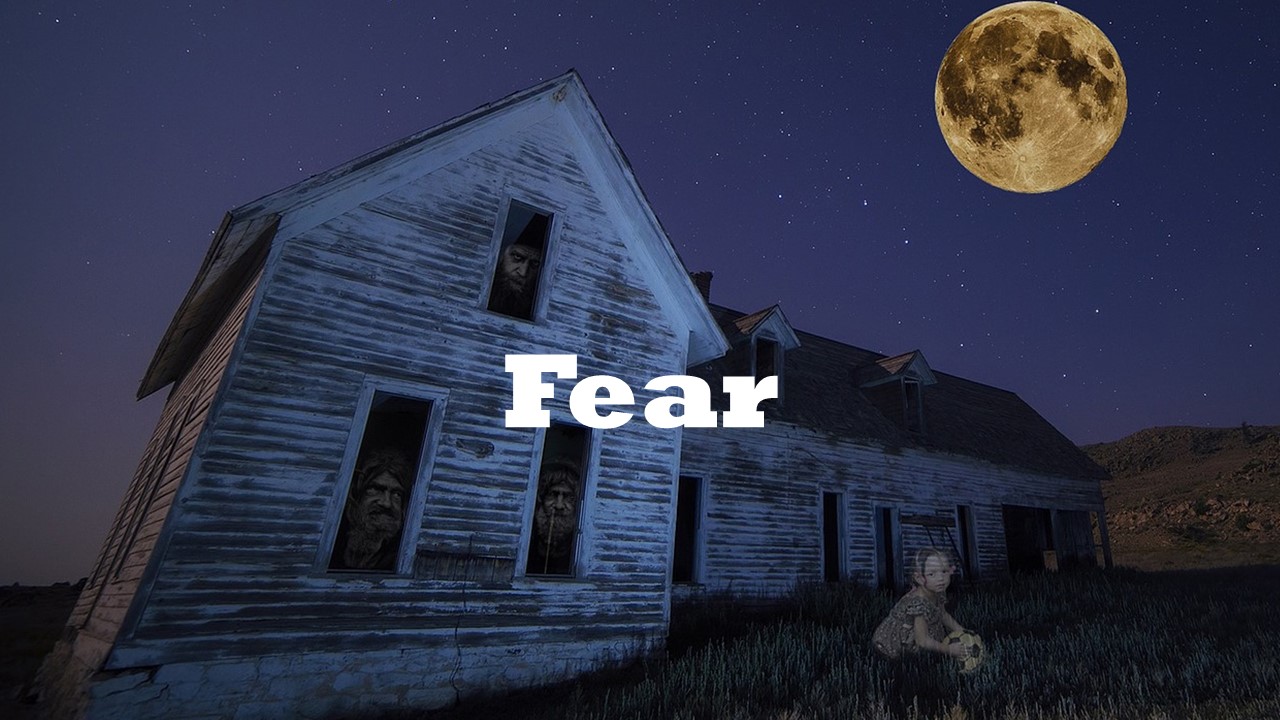
Fear.

Fear.
Photo courtesy of Pixabay.com

Underneath many of life’s problems is an ancient enemy – fear.

It is at the bottom of most negative emotions, the ones that infect our lives and undermine our happiness. Fear is at the bottom of anxiety, depression, and the problems of daily living that keep knocking us off the road to happiness. Whatever disguise fears are wearing, we each have our own special boogeyman, there seem to be two primary species of fear. This is not a new idea, I heard it a long time ago in a self-help meeting, but the more I have thought about it, the truer it seems to me.

We are usually either afraid of not getting something we want or afraid of losing something we have.

Most often we are afraid of not getting something we want. The fear that you will not get your needs or desires met is a powerful one. Unfortunately the more we have the more we need.

Think about stalkers here. They become obsessed with wanting someone, usually someone that is out of reach. I know there are stories about someone who pursued a romantic interest over a long time and much difficulty and in the end, the relationship happened. But once your intended romantic partner has gotten married, had children, and gotten a restraining order against you, it is time to give it up.

Some people try so hard for a particular job only to fall into a deep depression when it doesn’t come through. Wanting a career is wonderful. Pursuing your dream is great. But what will happen if that doesn’t pan out? You might be surprised at how many kids tell me they plan to go into major league sports. Most don’t make it. Some can’t make it and it ruins their whole life. What is really sad is when they become so fearful about failure that they self-sabotage and destroy their chances.

Ever hear the story of – well the name doesn’t matter – He was so sure his girlfriend was going to break up with him that he broke up with her first. Do you ever do that? Let your fear get control of you and destroy your chances before they began?

Therapists see some very sad cases of this fear. We see people who are not happy when alone, jump into a relationship because they are afraid that they will never be happy without a partner. Often they settle for a partner, any partner, and a relationship that is far short of what they wanted or deserved. Not surprisingly, to their counselor, they find that their partner is not happy either. Two unhappy people rarely make a happy relationship.

The second big cause of fear: We can be so in fear of losing something we have we forget to notice what we do have.

We old people have trouble keeping up. Two kids are sitting on a bench, each busily texting, neither one is speaking. I look over their shoulders. What could be so engrossing they don’t have time to talk? They are texting each other. I remember a time when my grandparents got a phone. Not everyone in the town had one. They felt lucky to be one of the first families to have one. I see a teen come into the psychiatric hospital, she cut her wrists, her parents had taken away her cell phone and she felt she had nothing to live for.

An old saying, only the rocks, and the hills are forever. Today with strip mining that may not be true. But we can get so into fear of losing something we miss out on the joy of having it. Remember in a hundred years not very many people, maybe no one will remember. For everything we have, we probably gave up something else that could have been.

Yes eventually that old car of yours, the one you saved to buy, it will break down. Keep it in the garage and never drive it and it will not get wrecked until your descendants take it out and drive it if it still runs then.

So have your fears controlled you? Do you fear you won’t get something you want and does that lead to anger, depression, or anxiety? Is that fear keeping you from trying?

Do you fear losing something so much that you can’t enjoy what you have? Is it time to challenge your fears? Don’t let fear keep you from having a happy life.

More on this is at 2 large reasons for your fear and Anxiety

Staying connected with David Joel Miller

Seven David Joel Miller Books are available now!

My newest book is now available. It was my opportunity to try on a new genre. I’ve been working on this book for several years, but now seem like the right time to publish it.

Story Bureau.

Story Bureau is a thrilling Dystopian Post-Apocalyptic adventure in the Surviving the Apocalypse series.

Baldwin struggles to survive life in a post-apocalyptic world where the government controls everything.

As society collapses and his family gets plunged into poverty, Baldwin takes a job in the capital city, working for a government agency called the Story Bureau. He discovers the Story Bureau is not a benign news outlet but a sinister government plot to manipulate society.

Bumps on the Road of Life. Whether you struggle with anxiety, depression, low motivation, or addiction, you can recover. Bumps on the Road of Life is the story of how people get off track and how to get your life out of the ditch.

Dark Family Secrets: Doris wants to get her life back, but small-town prejudice could shatter her dreams.

Casino Robbery Arthur Mitchell escapes the trauma of watching his girlfriend die. But the killers know he’s a witness and want him dead.

Planned Accidents  The second Arthur Mitchell and Plutus mystery.

Letters from the Dead: The third in the Arthur Mitchell mystery series.

What would you do if you found a letter to a detective describing a crime and you knew the writer and detective were dead, and you could be next?

Sasquatch. Three things about us, you should know. One, we have seen the past. Two, we’re trapped there. Three, I don’t know if we’ll ever get back to our own time.

For these and my upcoming books; please visit my Author Page – David Joel Miller

Want the latest blog posts as they publish? Subscribe to this blog.

For videos, see: Counselorssoapbox YouTube Video Channel