
Should you write a blog?

By David Joel Miller.
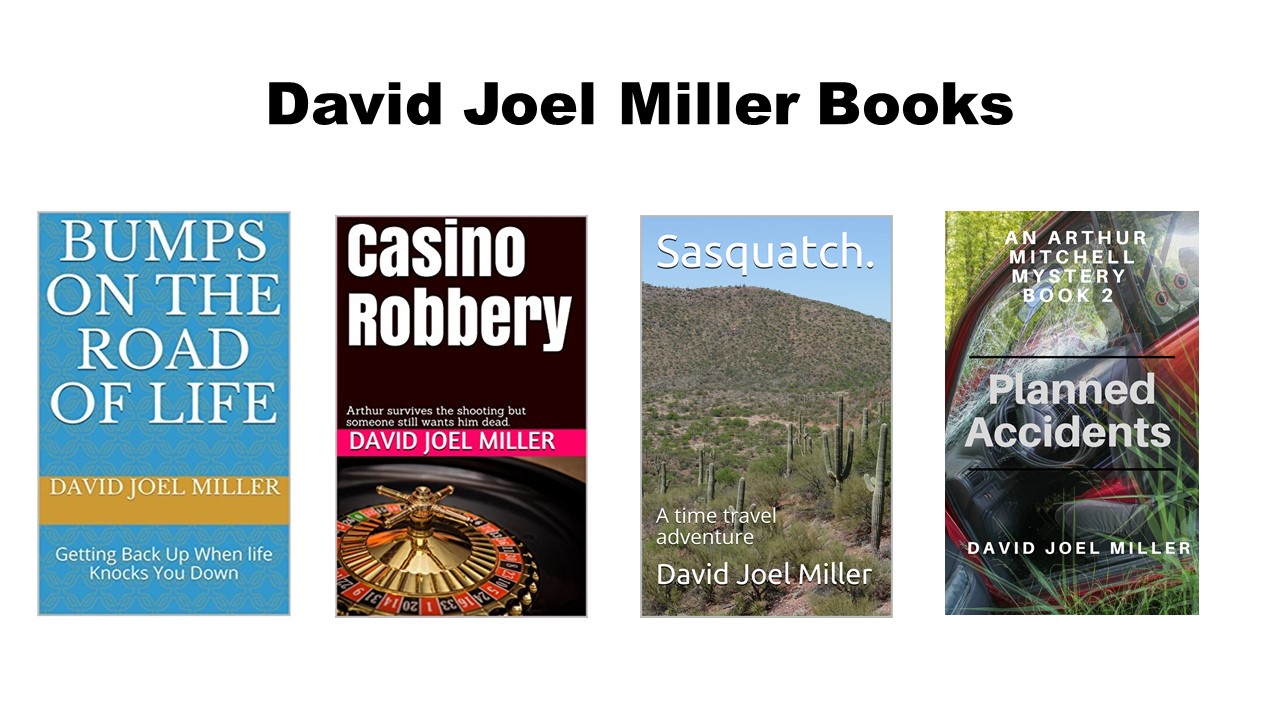
David Joel Miller Books

David Joel Miller Books

There are some reasons to write a blog and some reasons not to write one.

If you look around the Internet these days, you’ll find a lot of articles telling you that you should be writing a blog. I think every new, aspiring writer will be told they need a platform. Now platform does not automatically equal blog. But most of the articles about platforms start off by telling you to just create a website, and they usually followed that up by telling you that your website should include a blog.

There are also a lot of classes and trainings you can take on how to create a blog and how to be successful at blogging. These trainings run the gamut from short and free to some tremendously elaborate and expensive trainings. I have been writing a blog since May 2011. If I had known then, what I know now, I might never have started my blog (counselorssoapbox.com.) On the other hand, you should note I have more than two “mental hands,” so I am frequently in a divided mind. By two hands I mean “on the one hand I think x, and on the other hand, I think Y, unless it is Sunday when I may not be thinking at all.”

Now that I’ve been writing the blog for seven years I’m glad I’ve had the experience. Let me tell you a little bit about how I learned about blogs, got started blogging, and some of the things I have learned as a result.

So, what’s a blog?

In 2005, I was sitting in class waiting for the instructor to start his lecture. I probably should mention that I have gone to college off and on since 1966. I’ve gone, drop out, and returned several times. I’ve also changed majors so many times; I’ve lost count. Along the way, I finished an associate of science degree, a bachelor’s degree, and most recently a master’s degree. From my first day in college until I finally completed that master’s degree only took me 40 years. I say only half in jest that I have taken every class possible and the only way they would let me hang out on campus anymore is if I would teach a class.

So, in 2005 I am trying to finally finish that master’s degree that had eluded me for so long. That and I am trying to learn these new technologies and keep up with some students who are closer in age to my grandchild that to me. Several of the students in the class had mentioned blogs, so I finally asked one of them, “what precisely is a blog?”

The technical answer, so I am told, is that “blog” is a shortened expression for a “web log or weblog.” I suspect most of you youngsters out there know more about this than I do. The closest analogy I can come up with for those of the older persuasion is that a blog is a rough equivalent to what used to be called a newspaper column.

Most newspaper columns were topical. Some covered sports, some might be advice columns, and occasionally there was one that was a general-purpose column. Most blogs today are like that. Many have a specific topic, but the topic of some blogs are the life experiences of the blogger.

Counselorssoapbox.com launched in 2011.

After looking around the Internet a bit, I decided to write a blog. I had been working for a while as a drug and alcohol counselor and my last trip back to school had been for a master’s degree in marriage and family therapy. In California children’s therapy is included as part of the family therapy training. After working both as a counselor in the substance abuse field and as a marriage and family therapist, I’d seen a lot of people recover from some serious mental, emotional, and behavioral disorders. I developed a firm belief that people can recover from almost any life challenge. I won’t try to define recovery here.

One other consideration for my blog was how commonly I saw people who had both a mental illness and a substance use disorder. The official topic for the blog then became one counselor’s opinion about mental health, substance use disorders, co-occurring disorders, and the broader subject of how to have a happy life.

So, do I think you should write a blog?

For some people, the answer is yes. If you have a topic you feel strongly about, something that you are enthusiastic and passionate about, then writing a blog offers you an opportunity to tell people how you feel about your subject, and to share what you know about that topic.

If you’ve read or heard somewhere that to be a successful author, you need to have a platform you probably should pause a minute before starting a blog. Writing a blog takes a lot of work. To create any significant readership, you will put in a lot of hours. If you are blogging only to build your platform, there are several other ways to build your platform that may be easier or more productive.

If you’re writing mainly to express yourself, blogging probably isn’t for you. If the main thing you talk about in your blog is yourself, people will get tired of reading it. If you’re writing from a place of problems you’re likely to either run out of what to say or become so discouraged you give up. Occasionally I see a blogger who writes about their struggles with a specific mental illness but does so in a very informative and entertaining way. They can develop a following.

If the primary thing you’re talking about is you, most people will get tired of listening. If you are going to write about yourself, you should do it for you and not be disappointed if you have little or no readership.

Every year many new blogs start, most never attract enough readers to matter. Don’t write a blog expecting lots of people to follow you. Occasionally that happens, but it’s rare. If you do start a blog, do it because you strongly care about the topic, and be prepared to go on writing those blog posts year after year until eventually, you accumulate enough readers that what you say might make a difference.

I started my blog because I wanted an opportunity to talk about some things that mattered to me. Along the way, I learned a lot of lessons that prepared me to do a much better job of writing full-length books. The challenge has become to balance the time I spend on the blog with the time I need to finish my books in progress.

In the next few posts let’s talk about the mechanics of setting up a blog and creating content for it. After we walk through the lessons I learned from blogging then we will take up the subject of writing, publishing, and marketing a full-length book.

If you have questions about blogging or writing or suggestions for future posts, please contact me either by leaving a comment or by using the contact me form. I will try to get back to you as soon as I can. If it takes me a while to get back to you, it is probably because I’m currently working on actually doing the writing. Just know that as soon as an opportunity occurs, I’ll answer your question.

You’ll find more posts on this topic under – Writing.

Staying connected with David Joel Miller

Seven David Joel Miller Books are available now!

My newest book is now available. It was my opportunity to try on a new genre. I’ve been working on this book for several years, but now seem like the right time to publish it.

Story Bureau.

Story Bureau is a thrilling Dystopian Post-Apocalyptic adventure in the Surviving the Apocalypse series.

Baldwin struggles to survive life in a post-apocalyptic world where the government controls everything.

As society collapses and his family gets plunged into poverty, Baldwin takes a job in the capital city, working for a government agency called the Story Bureau. He discovers the Story Bureau is not a benign news outlet but a sinister government plot to manipulate society.

Bumps on the Road of Life. Whether you struggle with anxiety, depression, low motivation, or addiction, you can recover. Bumps on the Road of Life is the story of how people get off track and how to get your life out of the ditch.

Dark Family Secrets: Doris wants to get her life back, but small-town prejudice could shatter her dreams.

Casino Robbery Arthur Mitchell escapes the trauma of watching his girlfriend die. But the killers know he’s a witness and want him dead.

Planned Accidents  The second Arthur Mitchell and Plutus mystery.

Letters from the Dead: The third in the Arthur Mitchell mystery series.

What would you do if you found a letter to a detective describing a crime and you knew the writer and detective were dead, and you could be next?

Sasquatch. Three things about us, you should know. One, we have seen the past. Two, we’re trapped there. Three, I don’t know if we’ll ever get back to our own time.

For these and my upcoming books; please visit my Author Page – David Joel Miller

Want the latest blog posts as they publish? Subscribe to this blog.

For videos, see: Counselorssoapbox YouTube Video Channel

You want to write but what should you write?

By David Joel Miller.

David Joel Miller Books

David Joel Miller Books

What direction should your writing go?

There is a phenomenal amount of material on the Internet about writing. When I first started writing, I read a lot of that material. I still read about writing now, though I am more selective about what I read these days. Some useful content is available for free. Some of the most prominent writing material functions like a funnel, telling you that if you follow their methods, you will become a successful writer. Some of these classes run into thousands of dollars. I can’t tell you which classes work and which don’t. But I would suggest that before you spend a lot of money on trainings, you need to get clear on your goals for writing.

Becoming a best-selling author, making a lot of money involves a lot of hard work and an enormous amount of luck. Like classes or camps on how to play basketball, you can learn a lot, improve your game, but no one can guarantee you will make it to the big leagues.

What are the reasons you should write?

Probably the best reason to write is to express yourself. If you have a story to tell or a point of view you would like to share, writing is an excellent way to express yourself. Writing can also be an excellent way to become clear about what you think and feel. Counselors often encourage their clients to write, commonly called journaling, as a way of clarifying their thoughts.

Personally, one of the things I enjoy most in life is learning new things and then passing on what I have learned. Both teaching and writing are excellent ways to pass on the things that matter to you. Some writers do become famous, some make a lot of money, but both of those things are rare. If you’re planning to write for fame or money, there are other paths to your goal that are more likely to take you where you want to go.

Here are some writing possibilities and why you might choose them.

Journaling.

Recording your thoughts in a journal can be very useful. Over time you can see how your life, your thinking, and your feelings change. Journals are rarely meant to be read by others, at least not in the short-term. Private diaries have turned out to be valuable source material for historians. The great thing about a journal is that since it’s not meant for others to read you can feel free to express anything. Some people keep journals in written notebooks. Increasing journals are being written on computers and saved to electronic media. Writing your journal on a computer has the added advantage of being easy to password protect. Keeping your writings private avoids criticism from others. If you are high in anxiety or only want to escape the trolls on social media, consider writing in a journal.

Leaving comments on blogs and book reviews.

Some people exercise their creativity by writing book reviews. Authors who sell their books on e-platforms such as Amazon appreciate reviews. Your review may help someone else decide whether to purchase that book.

Leaving a comment on someone else’s blog tells them people are reading what they write. Your comments are your chance to share your opinion and your personal experiences. Many people create screen names so that they can comment and still preserve their confidentiality.

Writing a blog.

Some people begin their writing journey by publishing a blog. Writing a blog is extremely different from posting on social media. Just because you write does not mean anyone will read your posts. Creating a blog will require learning some technical skills. If you grew up texting, you might have an advantage over those of us who had to learn all these new technologies. To develop a blog with regular readers can involve some hard work, but seeing people reading your posts and leaving comments can be quite rewarding. I began my writing journey by creating the counselorssoapbox.com blog. In future posts, I’ll talk more about all the lessons I learned from publishing that blog.

Writing a nonfiction book.

If you have knowledge in a specific area or are willing to do the research required, you may decide to write a nonfiction book. Getting your book published by an established publisher can be a long and challenging process. Many people today self-publish their books. Print on demand has made it possible to create your own paperback book even if you sell only a few copies. Publishing a book, either through a legacy publisher for self-publishing, does not mean the book will sell or that you will make any money.

The process of publishing and marketing your book involves a lot of steps long after you’ve finished writing. I discovered I needed to learn many skills to get my finished nonfiction book from a completed manuscript into the marketplace. E-books have significantly increased the books available. Many authors today choose to self-publish their books in electronic formats. My self-help book Bumps on the Road of Life is available in both paperback and electronic editions. Eventually, I would like to tell you the story of how that book was created and how I continue to work on it. Hopefully, my experiences will help you write the book you were meant to write.

Writing fiction, short stories, and novels.

There’s always a demand for a good story. Many writers enjoy creating a tale. Some people publish these for free, and others try to make some money from their writing. It’s quite possible to write fiction stories under a pen name. The process of creating a novel is significantly different from the process involved in creating a nonfiction book. In Nonfiction, you need a good knowledge of the subject matter, and the ability to explain that information clearly. When writing fiction, you need to master the skills of creating interesting characters, a believable and intriguing plot with surprising twists, and a great many other storytelling skills. It’s not surprising to find that a successful novelist has written 10 or more practice novels before completing the story that was finally published.

Writing for pay.

Some people who have polished their skills at writing copy or editing write for other people. You might ghostwrite a book for someone else, or you could write copy to sell a product. Some people also use their skills to help other writers by editing, professional reviewing, and proofreading.

Other forms of communication.

Communicating today has expanded far beyond written materials. Some people produce videos, and others produce screenplays to be made into movies or TV shows. While the resulting product can be visual or auditory and visual, there is often script the formed the basis for the finished product. Audio “books” are a fascinating innovation, while they are neither written nor tangible physical books they fill the same function.

I hope this has sparked your interest. If so, please leave a comment. In future posts, we will talk more about my experiences along my writing journey. I have learned a lot along the way, some of it from painful mistakes, and I continue to learn. Stay tuned for more of the story of my writing journey.

You’ll find more posts on this topic under – Writing.

Staying connected with David Joel Miller

Seven David Joel Miller Books are available now!

My newest book is now available. It was my opportunity to try on a new genre. I’ve been working on this book for several years, but now seem like the right time to publish it.

Story Bureau.

Story Bureau is a thrilling Dystopian Post-Apocalyptic adventure in the Surviving the Apocalypse series.

Baldwin struggles to survive life in a post-apocalyptic world where the government controls everything.

As society collapses and his family gets plunged into poverty, Baldwin takes a job in the capital city, working for a government agency called the Story Bureau. He discovers the Story Bureau is not a benign news outlet but a sinister government plot to manipulate society.

Bumps on the Road of Life. Whether you struggle with anxiety, depression, low motivation, or addiction, you can recover. Bumps on the Road of Life is the story of how people get off track and how to get your life out of the ditch.

Dark Family Secrets: Doris wants to get her life back, but small-town prejudice could shatter her dreams.

Casino Robbery Arthur Mitchell escapes the trauma of watching his girlfriend die. But the killers know he’s a witness and want him dead.

Planned Accidents  The second Arthur Mitchell and Plutus mystery.

Letters from the Dead: The third in the Arthur Mitchell mystery series.

What would you do if you found a letter to a detective describing a crime and you knew the writer and detective were dead, and you could be next?

Sasquatch. Three things about us, you should know. One, we have seen the past. Two, we’re trapped there. Three, I don’t know if we’ll ever get back to our own time.

For these and my upcoming books; please visit my Author Page – David Joel Miller

Want the latest blog posts as they publish? Subscribe to this blog.

For videos, see: Counselorssoapbox YouTube Video Channel

From Wanting-to-Write to Published Author.

By David Joel Miller.

David Joel Miller Books

David Joel Miller Books

The journey from wanting to write to published author almost didn’t happen.

While having lunch the other day with a couple of colleagues they had a lot of questions for me about how I got from where I started to where I am today. Our conversation got me to thinking about all the experiences I’ve had learning, first to blog, then to write some books, and finally to see two of those books published. It’s been a long journey and one that almost didn’t happen.

I can’t say I have all the answers at this point, but I have learned a lot along my journey. One thing I discovered is that one of the best ways to consolidate knowledge, so you don’t forget it, is to try to teach it to someone else. Starting with this post I wanted to share with whoever might be interested in some of the things that I have learned along this journey that almost never happened.

Doing something I didn’t think was possible.

For a good part of my life, I didn’t think that writing something worth reading was a possibility for me. As an elementary school child, I wrote a poem that ended up in the school newspaper, and for many years afterward I thought about writing, but given all my struggles in English class, I didn’t think it was a possibility, not for me anyway.

The consensus back then was that to be a successful writer you need to have great handwriting, be skilled at typing, and especially you need to be a fabulous speller. Writing something that others would read necessitated you to be perfect with your grammar, and able to insert punctuation with perfect precision. While I was passable at public speaking when it came to written language, I had none of those required skills.

Being left-handed I learned to write less than legibly. Several people suggested that I should have become a doctor. While I couldn’t spell standard English or any other language for that matter, I was highly creative. Within a single paragraph, I could find at least 3 to 4 different ways to spell the same word.

For the record being creative with your spelling is not something I invented. If you read some of the books written in colonial times, you will find that back then, spelling was far from fixed. King James is reported to have said: “I never trust anyone who only knows one way to spell a word.” While I can’t be sure that quote is accurate, up until about 1999 I followed the practice of writing as little as possible and then with total disregard for spelling and punctuation.

And then the world started changing.

I’ll spare you the detailed stories of walking to and from school, uphill, both ways, in the snow, though before 1960 I lived in the Midwest and I did walk to school in the snow. The world in this millennium is for me, like moving to a foreign country and having to learn a new culture. To give you some perspective, as a child I visited my grandparents. There was no running water. There was an outhouse out by the back fence, and the kitchen sink was built over the well. Each time you use the pump you had to save a glass of water to prime the pump for the next use. The whole town had one phone line and if too many people picked up when the phone rang, you couldn’t here anymore.

Then came the second millennium.

For most of America’s history, almost everyone worked in agriculture. Back then something like 5 percent of the US population lived in big cities. By the 1900s people had started working in factories and retail stores. Only one of my four grandparents graduated from high school. Back then you didn’t need a diploma to get a job.

In the year 2000, more than half the country lived in big cities and to get even a low-paid job was likely to require more than a high school diploma. The pace of change began accelerating. By the year 2020, it’s probable that almost all jobs will require at least a 2-year college degree.

The other massive change that occurred since 2000 is the rapid acceleration in technology. Like an immigrant to the new digital technology world who was learning a new language, I had to learn how to log on to the computer. Today I spend the bulk of my day online navigating programs, and I take journeys everywhere across the world-wide-web.

Some 21st-century writing and technology experiences.

About 2000 I learned to use the computer at work. Shortly after that, we got our first home computer connected to the Internet by a dial-up modem. Remember those days? In the 20 years since I’ve had to replace computers and programs multiple times as programs and operating systems became outmoded. Today I have a desktop computer that I use for most of my writing and a laptop computer which can connect via Wi-Fi when I’m away from my home office.

I was shocked when some of my coworkers began to openly talk about using a “cell phone.” My understanding used to be that the only time people use a cell phone was when they made a call from the drunk tank using the payphone on the cell wall.

In 2005 I attended a conference (The Evolution of Psychotherapy) and encountered a shocking face-to-face encounter with the new technological universe. One of the speakers told us that if you wanted to work in some parts of the counseling field you needed to have a portable “cell phone.” I quickly purchased a flip phone.

I encounter a phone that is smarter than I am.

When my old flip phone gave up the ghost, I make the upgrade to a smartphone. Unfortunately, way too many people who know me “have my number.” They started sending me startling messages using a thing called “text messaging.” I am especially thankful to one of my interns who taught me how to open a text message and how to reply to it.

So, there you have some of the story about how I began the journey from being someone with a learning disability of written expression, unable to write a sentence containing correctly spelled words which were correctly punctuated, to someone who writes a reasonably well-read blog and has written and published two books.

It’s a glorious new age for writing and publishing.

In the past, if you wanted to be a writer you struggled for possibly decades. Most writers had day jobs and filled the evenings and weekends while struggling to learn their craft. In the early days, if you wanted something published, you had to come up with the cash to get it printed and then try to sell it yourself. There are still a few companies who will print your book for you if your sole goal is to be able to hold your book in your hand. But don’t expect much in the way of book sales.

The other approach to getting something you wrote published was to send it off to the “gatekeepers.” The used to be a lot of magazines that would pay small amounts for short stories. Then the publishing of books became concentrated in New York and a few other major cities. Authors had to work for years writing and submitting and hoping someone would like what they’ve done well enough to agree to publish their book.

Technology keeps moving forward.

The invention of the automobile resulted in the demise of the whole horse and buggy industry. Today’s technology, computers, word processing programs, spelling and grammar checkers along with e-books and on-demand printing has entirely altered the way the written word is produced and distributed.

For centuries, people who would learn to read and write have said they wanted to write a book. I know of several of my friends and relatives who always wanted to write a book. Most of them never did. A great many people had a manuscript tucked away in a drawer somewhere that was discarded when they died.

Today technology makes it possible for almost anyone to write something. Whether you can spell or punctuate you can still create an understandable sentence, paragraph, chapter, and book. Even if you can’t type, you can dictate. Personally, because of carpal tunnel syndrome, I’ve had to switch from typing to dictating. For better or worse the new technologies have made writing and publishing accessible to anyone willing to put in the effort, even if you’re not a digital native but an old dinosaur like me.

Possible, however, does not mean easy. In upcoming posts, I want to share some of the experiences I’ve had to reach this point in my writing experiences and some of the lessons I have learned along the way. Hope you’ll join me again for other blog posts on the topics of writing and publishing.

You’ll find more posts on this topic under – Writing.

Staying connected with David Joel Miller

Seven David Joel Miller Books are available now!

My newest book is now available. It was my opportunity to try on a new genre. I’ve been working on this book for several years, but now seem like the right time to publish it.

Story Bureau.

Story Bureau is a thrilling Dystopian Post-Apocalyptic adventure in the Surviving the Apocalypse series.

Baldwin struggles to survive life in a post-apocalyptic world where the government controls everything.

As society collapses and his family gets plunged into poverty, Baldwin takes a job in the capital city, working for a government agency called the Story Bureau. He discovers the Story Bureau is not a benign news outlet but a sinister government plot to manipulate society.

Bumps on the Road of Life. Whether you struggle with anxiety, depression, low motivation, or addiction, you can recover. Bumps on the Road of Life is the story of how people get off track and how to get your life out of the ditch.

Dark Family Secrets: Doris wants to get her life back, but small-town prejudice could shatter her dreams.

Casino Robbery Arthur Mitchell escapes the trauma of watching his girlfriend die. But the killers know he’s a witness and want him dead.

Planned Accidents  The second Arthur Mitchell and Plutus mystery.

Letters from the Dead: The third in the Arthur Mitchell mystery series.

What would you do if you found a letter to a detective describing a crime and you knew the writer and detective were dead, and you could be next?

Sasquatch. Three things about us, you should know. One, we have seen the past. Two, we’re trapped there. Three, I don’t know if we’ll ever get back to our own time.

For these and my upcoming books; please visit my Author Page – David Joel Miller

Want the latest blog posts as they publish? Subscribe to this blog.

For videos, see: Counselorssoapbox YouTube Video Channel

Don’t miss the Writing Wednesdays posts.

By David Joel Miller.

Man writing

Writing.
Photo courtesy of Pixabay.com

Writing Wednesdays.

Wanted to alert you to a new feature on counselorssoapbox.com. I was delighted to see how many people read yesterday’s post about my writing journey. Thank you, folks, for all the reads, likes, and follows.

For the next 8 to 10 weeks, there will be a post every Wednesday on some aspect of writing, blogging, and other things creative. After that, who knows? If you readers find these posts helpful I will see if I can keep the series going.

If this topic interests you, I encourage you to revisit the blog next Wednesday or better yet subscribe so you won’t miss an episode. Thanks again to everyone who reads the counselorssoapbox.com blog.

You’ll find more posts on this topic under – Writing.

Staying connected with David Joel Miller

Seven David Joel Miller Books are available now!

My newest book is now available. It was my opportunity to try on a new genre. I’ve been working on this book for several years, but now seem like the right time to publish it.

Story Bureau.

Story Bureau is a thrilling Dystopian Post-Apocalyptic adventure in the Surviving the Apocalypse series.

Baldwin struggles to survive life in a post-apocalyptic world where the government controls everything.

As society collapses and his family gets plunged into poverty, Baldwin takes a job in the capital city, working for a government agency called the Story Bureau. He discovers the Story Bureau is not a benign news outlet but a sinister government plot to manipulate society.

Bumps on the Road of Life. Whether you struggle with anxiety, depression, low motivation, or addiction, you can recover. Bumps on the Road of Life is the story of how people get off track and how to get your life out of the ditch.

Dark Family Secrets: Doris wants to get her life back, but small-town prejudice could shatter her dreams.

Casino Robbery Arthur Mitchell escapes the trauma of watching his girlfriend die. But the killers know he’s a witness and want him dead.

Planned Accidents  The second Arthur Mitchell and Plutus mystery.

Letters from the Dead: The third in the Arthur Mitchell mystery series.

What would you do if you found a letter to a detective describing a crime and you knew the writer and detective were dead, and you could be next?

Sasquatch. Three things about us, you should know. One, we have seen the past. Two, we’re trapped there. Three, I don’t know if we’ll ever get back to our own time.

For these and my upcoming books; please visit my Author Page – David Joel Miller

Want the latest blog posts as they publish? Subscribe to this blog.

For videos, see: Counselorssoapbox YouTube Video Channel

Have you always wanted to write?

By David Joel Miller.

David Joel Miller Books

David Joel Miller Books

What is holding you back from writing?

If you are one of those people, who has always wanted to write but has never written anything you are not alone. For years, decades, I wanted to write, thought about writing, read what others wrote, but never actually put any words down on paper. Maybe you are like that. I had a family member who always wanted to write a book. He passed away with that book still unwritten. I decided that wouldn’t happen to me. I hope if you’re one of those people who has always wanted to write you won’t be one of those people who wanted to write but never did. In this and some future blog posts, I’d like to share with you my writing journey and some suggestions if you decide to embark on a writing journey of your own. Forgive me for being a bit philosophical, to begin with.

What it means to write has changed in this millennium.

What it means to write has changed dramatically over time, so has who was allowed to write. Writing has evolved from a purely utilitarian purpose to something much more expressive. Writing was once used largely by people in business, keeping track of money and goods. Today we call this accounting. Writing’s other use was for recording religious and philosophical texts. When education was limited to the few, the rich and powerful, and those that served them, there were relatively few written materials and equally few who could read them.

Universal education is a relatively recent idea. There are still people in the United States who are illiterate, can’t read and write. Many of these people are in prisons, but that’s a topic for a different blog post. Over the last 100 years or so literacy has become widespread. The result of this increase in literacy has been the transformation of literature from a mystical activity understood only by relatively few, into an activity done by many simply for the pleasure of it.

Rules about writing keep changing.

If you read the writings from the 1600s and 1700s you will find a great deal of variation in the way they spelled words and punctuated sentences. Over the next 200 years, the rules of spelling and grammar became more fixed. Definitions of words became codified in the books we now call dictionaries. Rather than being the final authorities on words, dictionaries reflect the way words are being used, and the dictionaries keep changing.

With more rules about how one should write, writing, at least writing for others to read, became more rule-bound. Writers had to submit their books to publishers who decided what was worthy of being called literature. The process of writing and publishing a book excluded a lot of people who may have had good ideas or interesting stories to tell but were unable to get their writing approved by someone else.

If you struggled in school with spelling and grammar, writing something for another person to read may have been a traumatic experience. Having someone read what you wrote who completely ignored the ideas you expressed and picked out only the misspelled words and the missing commas, may have deterred you from ever expressing yourself against.

Technology has changed what it means to write.

Since the advent of computers, it has become much easier to put your words into a form that is easily understood. Computers can check your spelling, find grammatical errors, and even help you improve your writing. The process of seeing your errors highlighted in various colors can be extremely helpful in improving skills.

Speech to text programs has obliterated the line between the disciplines of public speaking and writing. A major portion of what used to be communicated by writing is now communicated through video. Expressing your ideas is more possible now than ever.

Technology has spawned many new ways of communicating ideas.

E-books allowed many more people to write and publish books. Books that would not have been accepted by a publisher can be self-published and reach a worldwide audience. Blogs have replaced people traveling the world delivering speeches by allowing ideas to be published once and then read by people all over planet Earth in various places at various times. Blog posts I wrote five years or more ago continue to be read today.

If you’ve ever wanted to write now is the time.

In upcoming posts, I’d like to share with you my journey of learning to write, creating the counselorssoapbox.com blog, writing, and publishing two books, with more to come. I won’t pretend I have all the answers, but I’d like to share what I have learned. If you would like to take a similar journey, I will try to be your tour guide. If you have questions, please send them along. Thanks for reading.

You’ll find more posts on this topic under – Writing.

Staying connected with David Joel Miller

Seven David Joel Miller Books are available now!

My newest book is now available. It was my opportunity to try on a new genre. I’ve been working on this book for several years, but now seem like the right time to publish it.

Story Bureau.

Story Bureau is a thrilling Dystopian Post-Apocalyptic adventure in the Surviving the Apocalypse series.

Baldwin struggles to survive life in a post-apocalyptic world where the government controls everything.

As society collapses and his family gets plunged into poverty, Baldwin takes a job in the capital city, working for a government agency called the Story Bureau. He discovers the Story Bureau is not a benign news outlet but a sinister government plot to manipulate society.

Bumps on the Road of Life. Whether you struggle with anxiety, depression, low motivation, or addiction, you can recover. Bumps on the Road of Life is the story of how people get off track and how to get your life out of the ditch.

Dark Family Secrets: Doris wants to get her life back, but small-town prejudice could shatter her dreams.

Casino Robbery Arthur Mitchell escapes the trauma of watching his girlfriend die. But the killers know he’s a witness and want him dead.

Planned Accidents  The second Arthur Mitchell and Plutus mystery.

Letters from the Dead: The third in the Arthur Mitchell mystery series.

What would you do if you found a letter to a detective describing a crime and you knew the writer and detective were dead, and you could be next?

Sasquatch. Three things about us, you should know. One, we have seen the past. Two, we’re trapped there. Three, I don’t know if we’ll ever get back to our own time.

For these and my upcoming books; please visit my Author Page – David Joel Miller

Want the latest blog posts as they publish? Subscribe to this blog.

For videos, see: Counselorssoapbox YouTube Video Channel