
National Novel Writing Month (NaNoWriMo) starts tomorrow.

By David Joel Miller, MS, Writer.

Man writing

Writing.
Photo courtesy of Pixabay.com

NaNoWriMo is a way to grow as an author.

The National Novel Writing Month is a mixture of competition and un-competition. During this month aspiring authors attempt to write an entire novel, a novel of at least 50,000 words, during the 30 days of November. That works out to 1667 words per day average. Each participant is competing with themselves to see if they can take an idea and turn it into a finished novel in 30 days. In the spirit of un-competition, anyone who completes their novel is considered a “winner.”

My experiences with NaNoWriMo.

I first heard about NaNoWriMo about 2010. The following year, 2011, I made my first attempt. That ill-fated attempt stalled somewhere around 5000 words. The remnants of that manuscript still reside in the ancient recesses of my computer’s hard drive. While that particular story has not yet emerged into the light of day the lessons learned put me on the path towards becoming a better writer.

For the next few years, life happened. Then in 2016, I took another try at completing a novel in the 30-day time span. This time I was able to complete the project. That book, initially with the working title “thrift store” took two more years to revise and edit before it was published in late 2017. That manuscript spurred by NaNoWriMo grew from the original 50,000 words to over 80,000 and the title shifted to Casino Robbery, my first published novel.

Because of that accomplishment, I pulled out another one of my partially finished novels, and earlier this year that manuscript now revised, edited, and retitled, ended up being published as my second novel “Sasquatch.”

In November of 2017 during NaNoWriMo, I started and finished a novel with the working title “Family Secrets.” Over the last year “Family Secrets” has been revised and edited several times. Sometime in the spring of 2019, I hope to publish that novel. It is possible that “Family Secrets” may be the first of my novels to make it through the entire process while retaining its original title.

How did I go about writing 50,000 words in one month?

One of the lessons NaNoWriMo has taught me was the importance of setting deadlines. I have many incomplete books, both fiction and nonfiction, stored away on the hard drive still not finished, some going back 20 years. None of them were ever completed because there was always a busy life and the next shining project getting in the way.

Once I learned to make meeting the deadline my highest priority, at least for that limited period, things started happening. This process has worked for me in writing the first draft, revising, and for finally pushing the publish button. I could have drawn each of these tasks out over more time but having a deadline on my calendar forced me to finish a project so that I could check that one off, and I would be ready to start on another project next month.

October is my time for preparation for NaNoWriMo.

I didn’t want to cheat myself out of the full experience of writing a novel in 30 days. Not that anyone else would’ve known if I had jumped the gun and started writing early, but I would’ve known. So, I don’t begin to write until November 1. What I do allow myself to do before that date is preparation.

The two books that were finished during NaNoWriMo had some similar features. I thought about the general idea, started making some notes, and selected a working title knowing that title might change. I try to prepare an outline, though it is never in any fine detail. As ideas come for events, scenes if you will, I digitally jot them down. As the scene list grows, I rearrange the order.

When I start to write its very likely new ideas will occur to me, and they will get inserted in my list of events wherever they fit. I’m also likely to find that some of the things I initially thought would be separate scenes all get used in a single chapter.

Another thing I try to have planned before November first is a list of the characters, their names, and a brief description of them. If I’m using a specific location, I may do a little research and write some notes on that location. None of this advanced preparation is firm. Once November 1 arrives, everything is subject to change.

So, what am I planning to write for NaNoWriMo this year?

This year’s novel has the working title “Planning Accidents.” It will be the second adventure for Arthur Mitchell, the protagonist from my first novel Casino Robbery. For the first time this year, I created a cover that I can use for the e-book edition of “Planning Accidents.”

If you’ve ever thought about writing a novel, then NaNoWriMo this November, might be just the encouragement you need to get that first draft written. I’d love to hear your thoughts and comments about writing. If you have questions for me, please send them along. I’ll get back to everyone just as quickly as possible, though as you can see for the next month, I am likely to be extremely busy.

Staying connected with David Joel Miller

Seven David Joel Miller Books are available now!

My newest book is now available. It was my opportunity to try on a new genre. I’ve been working on this book for several years, but now seem like the right time to publish it.

Story Bureau.

Story Bureau is a thrilling Dystopian Post-Apocalyptic adventure in the Surviving the Apocalypse series.

Baldwin struggles to survive life in a post-apocalyptic world where the government controls everything.

As society collapses and his family gets plunged into poverty, Baldwin takes a job in the capital city, working for a government agency called the Story Bureau. He discovers the Story Bureau is not a benign news outlet but a sinister government plot to manipulate society.

Bumps on the Road of Life. Whether you struggle with anxiety, depression, low motivation, or addiction, you can recover. Bumps on the Road of Life is the story of how people get off track and how to get your life out of the ditch.

Dark Family Secrets: Doris wants to get her life back, but small-town prejudice could shatter her dreams.

Casino Robbery Arthur Mitchell escapes the trauma of watching his girlfriend die. But the killers know he’s a witness and want him dead.

Planned Accidents  The second Arthur Mitchell and Plutus mystery.

Letters from the Dead: The third in the Arthur Mitchell mystery series.

What would you do if you found a letter to a detective describing a crime and you knew the writer and detective were dead, and you could be next?

Sasquatch. Three things about us, you should know. One, we have seen the past. Two, we’re trapped there. Three, I don’t know if we’ll ever get back to our own time.

For these and my upcoming books; please visit my Author Page – David Joel Miller

Want the latest blog posts as they publish? Subscribe to this blog.

For videos, see: Counselorssoapbox YouTube Video Channel

What is the counselor function of screening?

By David Joel Miller, MS, Licensed Therapist & Licensed Counselor.

What is

What is the counselor function of screening?
Photo courtesy of Pixabay.

Screening means two different things in drug counseling.

Drug counselors are often required to “screen” clients.

That doesn’t mean they’re looking for reasons to turn people away, but sometimes screening can result in someone not being admitted to the program.

During their career counselors will be called upon to do two very different types of screening.

Both types of screening can be done in mental health systems though I have never heard these things called screening except in substance abuse counseling.

Screening can be used to detect a problem.

Counselors sometimes use “screens” to detect a problem. In medical settings, they might screen for high blood pressure. Drug counselors sometimes set up informational booths or attend public events and ask people a series of questions designed to find out whether that person has a problem with drugs or alcohol.

These kinds of screenings are mostly informational. One common screening tool is the “CAGE” instrument. The CAGE is a series of four questions that can be asked to detect a problem with alcohol. This screen can be administered by the counselor or could be a checklist given the person to be screened. In this screen, a yes to any one of these four questions indicates that the person needs further assessment for a possible alcohol problem.

Because of screenings, people may be referred to their primary care doctor, self-help program, or professional drug treatment.

The second type of screening happens when a drug program admits someone.

People don’t usually show up at the cancer center wanting to try chemotherapy even though they don’t have cancer. People do sometimes turn out for a drug treatment program that doesn’t meet their needs. People who are homeless may try to get into a residential drug program even though they don’t have a drug problem because they need a place to stay and food to eat.

Sometimes a lawyer has told the client they need to get into counseling. Maybe they’re going to court for a DUI or domestic violence charges. They want to sign up for a program, so they have something to show the judge when they go to court. Now if they really have a drug problem that would be appropriate. But if they need an anger management program or domestic violence program, the drug counselor should not be signing them up for drug treatment.

During intake, the counselor will be asking questions to find out if this person has a substance use disorder. Some programs specialize in a particular type of treatment. Someone with an opiate or methamphetamine use disorder would not be appropriate for a drunk driving program.

Some programs are residential; some are outpatient. You don’t want to put someone with a full-time job into a residential treatment program they won’t be able to attend. A man would not be admitted to a women’s only program. If the client does not speak English and you have no staff speaking their language, you either must be able to provide an interpreter or referred them to a program that provides services in their language. You shouldn’t put an adult in a program for adolescents or a teenager in an all adult program.

During intake, the question the counselor is asking themselves is: “Is this client appropriate for our program? Do they have the problem we treat? Are they part of the “population” our program is designed to serve?

If you get no is to any of those questions you won’t be able to admit this client. That does not mean you merely turn them away. Another one of the counselor’s essential functions is to be able to do a thing we call “referrals and linkages” in which you help them access services your agency does not provide. More on that function in another post.

Is this person acceptable to your program?

There might be some reasons why, even though the person has the problem you treat, like drug addiction, and they are part of the population you serve, for example, if this client is a man and your program has groups specifically for men, you may still have to turn them away. Why might someone who is appropriate for your program not be acceptable?

Sometimes this is the question of finances. If you take a specific medical insurance, but the client doesn’t have that kind of insurance, you can’t accept them. If your program is funded by criminal justice, parole, or probation but this client was referred by their doctor for a medical problem you might not be able to accept them.

If your program treats women and children, you may not be able to admit the client with a history of convictions for rape or child molestation. A residential drug treatment program may have things in their rules or their insurance requirements that prohibit them from admitting a person with a history of convictions for arson. You must be careful not to create so many rules that you screen out all people in need of treatment, but there may be certain people that you will not be able to admit to your program.

The screening part of intake boils down to two questions.

  1. Is this client appropriate for the kind of treatment you offer?
  2. Is this client acceptable under the rules of your program or is there some reason you can’t admit them?

Treatment begins with your first contact with the client.

Sometimes clients call, and sometimes they come in person. From the moment they make the first contact, the whole course of treatment takes shape. This is why it’s crucial for the people at your front desk or who answer the phone to be knowledgeable about your program and to be engaging.

Screening could happen during that first contact even if it’s on the phone or it may take place at your first face-to-face meeting in the office. It’s imperative that if you can’t provide the needed services, you can give them a referral. You may have potential legal liability if someone calls and is suicidal and you don’t refer them for appropriate treatment.

Once the screening is completed, whether it happened on the phone or in person, the next step in the process of getting someone into treatment is the intake. In our next post let’s look at all that paperwork that needs to be done during intake.

For more on the drug counselor domains and the core functions see John W. Herdman’s book Global Criteria; the 12 Core Functions of the Substance Abuse Counselor,

Staying connected with David Joel Miller

Seven David Joel Miller Books are available now!

My newest book is now available. It was my opportunity to try on a new genre. I’ve been working on this book for several years, but now seem like the right time to publish it.

Story Bureau.

Story Bureau is a thrilling Dystopian Post-Apocalyptic adventure in the Surviving the Apocalypse series.

Baldwin struggles to survive life in a post-apocalyptic world where the government controls everything.

As society collapses and his family gets plunged into poverty, Baldwin takes a job in the capital city, working for a government agency called the Story Bureau. He discovers the Story Bureau is not a benign news outlet but a sinister government plot to manipulate society.

Bumps on the Road of Life. Whether you struggle with anxiety, depression, low motivation, or addiction, you can recover. Bumps on the Road of Life is the story of how people get off track and how to get your life out of the ditch.

Dark Family Secrets: Doris wants to get her life back, but small-town prejudice could shatter her dreams.

Casino Robbery Arthur Mitchell escapes the trauma of watching his girlfriend die. But the killers know he’s a witness and want him dead.

Planned Accidents  The second Arthur Mitchell and Plutus mystery.

Letters from the Dead: The third in the Arthur Mitchell mystery series.

What would you do if you found a letter to a detective describing a crime and you knew the writer and detective were dead, and you could be next?

Sasquatch. Three things about us, you should know. One, we have seen the past. Two, we’re trapped there. Three, I don’t know if we’ll ever get back to our own time.

For these and my upcoming books; please visit my Author Page – David Joel Miller

Want the latest blog posts as they publish? Subscribe to this blog.

For videos, see: Counselorssoapbox YouTube Video Channel
.

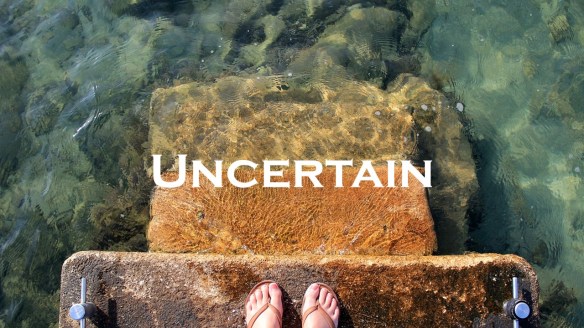
Uncertain.

Sunday Inspiration.     Post by David Joel Miller.

Uncertain.

Uncertain.
Photo courtesy of Pixabay.com

Uncertain.

“The good we secure for ourselves is precarious and uncertain until it is secured for all of us and incorporated into our common life.”

― Jane Addams

“The future is no more uncertain than the present.”

― Walt Whitman

“Fear is always triggered by creativity, because creativity asks you to enter into realms of uncertain outcome. This is nothing to be ashamed of. It is, however, something to be dealt with.”

― Elizabeth Gilbert, Big Magic: Creative Living Beyond Fear

Wanted to share some inspirational quotes with you.  Today seemed like a good time to do this. If any of these quotes strike a chord with you, please share them.

Look at these related posts for more on this topic and other feelings.

Emotions and Feelings.

Inspiration

Where do you get ideas for writing projects?

By David Joel Miller, MS, Writer.

Man writing

Writing.
Photo courtesy of Pixabay.com

Writing is work that starts with an idea.

Coming up with fresh ideas for writing projects can be a challenge, especially good ideas. I’ve come up with several strategies for identifying ideas. Some of the approaches work well for blog posts but not for novels. Other methods may be useful for writing a nonfiction book.

Not having a good idea for a writing project results in a whole lot of written words that don’t add up to anything worth reading. Start out with a boring idea, and you can write a million words and still not have a workable novel.

Writer’s block, in my book anyway, is a very different problem. Writer’s block characteristically happens when you have an idea, sit down and stare at the blank page, but you can’t find any words to say. I will save the topic of writer’s block for a subsequent post. Today some thoughts about how to get ideas in the first place. These are approaches I use, and if you have others, please leave a comment.

You can’t drink from an empty glass.

I’ve discovered that before I can write anything worth reading, I first need to fill my brain with ideas. I subscribe to more mailing lists that I can possibly read. As the newsletters come in, I sort them, unopened, into some file folders. Mental health material goes in one file folder. Articles about writing in another. Publishing and marketing have their own separate folders.

When I’m looking for ideas for blog posts, I will go to a file folder and start reading. For me, I find it useful to follow the clues. As I’m reading along an idea pops up. Usually, it’s something I realize I don’t know that much about or don’t have the information I would need to write a blog post. I record those ideas, especially search terms in a Word document titled, strangely enough, blog post ideas.

Once you have a topic go on a scavenger hunt.

Sometimes reading a stack of newsletters will trigger ideas worth a blog post or even a series. But more often what I come up with is a topic. This happened to me recently when I discovered several blog posts about burnout. Lots of people are dealing with burnout. Which raises the questions why so much burnout, and how do you prevent burnout?

Having the topic leads me to look for available resources. For a nonfiction topic like burnout I go to scientific journal articles, look at the research. Fortunately for me, I have a subscription to a scientific journal database. Before I had that subscription had to go to the University library and use their computers.

Next, I search that database. Frequently the search will return tens of thousands of articles. The ones at the beginning of the list are usually much more relevant than the ones in the last thousand. Typically, I read through the titles and descriptions of the first 100 articles, saving copies of the ones that look interesting to a flash drive for later reading.

Over the next few days, I’ll read articles, making notes as I go. I’ve learned if I’m not careful I get notes but can’t find the original source. As a result, I started keeping the notes in an electronic Word document beginning with the citation of the article followed by my notes.

Once I’ve read enough of the articles to feel I have a grasp of the subject I make up a list of possible titles for blog posts. Then I start writing. The good part of the system is I get a lot of ideas. The bad part is I have a lot of half-finished articles that never made it to the finish line.

Using this system, I often end up with not one post, but a series of posts on a topic which I scheduled to appear over several months.

Read lots of books in your subject area.

My office is full of books. The walls are lined with bookcases filled to overflowing. Sitting next to my chair is a stack of books I bought, saying I would read them someday, but never got to. When I’m short on ideas, I look through the pile, pick the book that seems most interesting, and start reading.

Often reading one book on the topic triggers other questions. I then go searching for other books on the same subject. Sometimes I go to the library in hopes they have a book I don’t. Online library catalogs to be especially helpful. For a novel I was writing I decided I needed some specific background information. A quick web search didn’t turn up the information I wanted. But my local library was able to get me a book from another library that provided a lot of background information for the historical period I was writing about. For me, one thing always seems to leave to another.

Nourish your curiosity.

Everything you encounter can trigger an idea for the next thing you’re going to write. Don’t passively consume experiences. Be curious. If you’re watching a TV show, ask yourself what else could have happened. Be interested in the places you go and the people you meet. Any of these situations may be just the idea you need for the next piece you’re going to write.

Make friends with your muse.

A lot of prospective writers seem to have a very conflicted relationship with their muse. When they don’t have an idea, they blame her, and they look very reluctant to go anywhere or do anything until she appears. When they can’t find an idea, they blame it on their muse and sit idly by waiting for her next visit.

My muse and I have a very odd relationship which I will tell you about in an upcoming blog post. Thanks for reading.

You’ll find more posts on this topic under – Writing.

Staying connected with David Joel Miller

Seven David Joel Miller Books are available now!

My newest book is now available. It was my opportunity to try on a new genre. I’ve been working on this book for several years, but now seem like the right time to publish it.

Story Bureau.

Story Bureau is a thrilling Dystopian Post-Apocalyptic adventure in the Surviving the Apocalypse series.

Baldwin struggles to survive life in a post-apocalyptic world where the government controls everything.

As society collapses and his family gets plunged into poverty, Baldwin takes a job in the capital city, working for a government agency called the Story Bureau. He discovers the Story Bureau is not a benign news outlet but a sinister government plot to manipulate society.

Bumps on the Road of Life. Whether you struggle with anxiety, depression, low motivation, or addiction, you can recover. Bumps on the Road of Life is the story of how people get off track and how to get your life out of the ditch.

Dark Family Secrets: Doris wants to get her life back, but small-town prejudice could shatter her dreams.

Casino Robbery Arthur Mitchell escapes the trauma of watching his girlfriend die. But the killers know he’s a witness and want him dead.

Planned Accidents  The second Arthur Mitchell and Plutus mystery.

Letters from the Dead: The third in the Arthur Mitchell mystery series.

What would you do if you found a letter to a detective describing a crime and you knew the writer and detective were dead, and you could be next?

Sasquatch. Three things about us, you should know. One, we have seen the past. Two, we’re trapped there. Three, I don’t know if we’ll ever get back to our own time.

For these and my upcoming books; please visit my Author Page – David Joel Miller

Want the latest blog posts as they publish? Subscribe to this blog.

For videos, see: Counselorssoapbox YouTube Video Channel

What do drug counselors do?

By David Joel Miller, MS, Licensed Therapist & Licensed Counselor.

Drugs

Drug counseling.
Photo courtesy of Pixabay.com

Drug counselors have many job duties besides talking to clients.

When you say counselor, most people envision a person who sits talking with the client. Many people who want to become counselors believe they would be good at it because friends have told them they’re good at giving advice. Professional counselors avoid giving advice. The stakes are just too high. It is the client’s life, and they need to make the decisions. What counselors may sometimes do is provide education, but that education needs to be objective not the counselor’s opinion.

Most drug counselors do not work in private practice but work for agencies. Because of this system, not every counselor does every one of these functions, but it is essential for them to know how to do each of these functions.

In the workplace, counselors perform many tasks other than counseling.

Peripheral tasks are probably true of all professions. There are lots of things that must be done by the professional beyond the function most people expect. One of those other things that the drug counselor needs to do is paperwork. The paperwork function, along with several other administrative tasks can take up a sizable chunk of the counselor’s day, but these other tasks need to be done to keep the program running so that it’s there when the client needs it.

There are different systems for classifying the drug counselor’s duties.

Defining what any profession does, and how they should do it, can be problematic. Many books have been written about how, in mental health counseling, the therapist or professional mental health counselor should do what they do. I have seen very few however which go into any detail about all the things they do each day other than counseling.

The what does the counselor do and how do they do it is especially problematic when it comes to drug counseling. Mental health counseling has its roots in medicine and psychology while substance use disorder counseling has its origins in self-help groups and recovery literature. As drug counseling has become more professional, it has become essential to define precisely what the job duties of the counselor may be or should be, in addition to the actual time spent “counseling” clients.

Here are the three primary sources in this area that I’m familiar with and have used in teaching substance abuse counseling classes. Along the way, there have been several workforce studies done that have informed these three sources.

John W. Herdman’s book Global Criteria; the 12 Core Functions of the Substance Abuse Counselor, first published in 1994 this book is now in its seventh edition just released in 2018. This book has been a standard text, especially among accredited programs, across the country as part of the introductory drug counseling training since it was first written.

Substance Abuse Mental Health Services Administration (SAMHSA) published TAP 21 Addiction Counseling Competencies: The Knowledge, Skills, and Attitudes of Professional Practice. This book was initially issued in 1998 and has been revised since. TAP21 has been incorporated into some of the tests used to license or certified drug counselors.

The International Certification and Reciprocity Consortium (ICRC.) The ICRC took all the various tasks a drug counselor might do and sorted them into four categories which they call performance domains.

While the three different systems use different labels, I see very little that is part of the tasks of the counselor that is not included in all three systems. So, what are the four domains that a drug counselor needs to know about to do their job?

Domain One: “Intake” or getting the client in the treatment.

This domain includes all the tasks that would be necessary to get the client to the point of the first counseling session. In Mental health treatment settings, some or all this work would be done by paraprofessionals or office staff. Some drug programs may have specialized intake counselors, but in many drug and alcohol counseling programs counselors would be doing this work themselves.

The intake domain would include such functions as screening, assessment, and engagement activities, as well as orienting the client to the program.

Domain Two: treatment planning, collaboration, and referral.

This domain includes developing a treatment plan, case management functions, referrals and linkages, and consultation.

Domain Three: counseling, both individual and group.

Most drug counseling is done in a group setting. These groups could include psychoeducational groups, “process” or discussion groups, feelings groups, or topical groups, often focused on the 12 steps or life skills.

There are many different theories and techniques for individual counseling.

Domain Four: professional, legal, and ethical responsibilities.

This domain includes the requirement to complete paperwork, meeting your legal responsibilities, and following the applicable code of ethics. Doing things professionally, legally, and ethically should be woven into everything the counselor does, but the counselor also needs to periodically review the decision-making model they’re using to be sure that they and the agency they work for are performing legally and ethically.

In future posts let’s look at the various tasks the drug counselor must do in each of these domains.

Staying connected with David Joel Miller

Seven David Joel Miller Books are available now!

My newest book is now available. It was my opportunity to try on a new genre. I’ve been working on this book for several years, but now seem like the right time to publish it.

Story Bureau.

Story Bureau is a thrilling Dystopian Post-Apocalyptic adventure in the Surviving the Apocalypse series.

Baldwin struggles to survive life in a post-apocalyptic world where the government controls everything.

As society collapses and his family gets plunged into poverty, Baldwin takes a job in the capital city, working for a government agency called the Story Bureau. He discovers the Story Bureau is not a benign news outlet but a sinister government plot to manipulate society.

Bumps on the Road of Life. Whether you struggle with anxiety, depression, low motivation, or addiction, you can recover. Bumps on the Road of Life is the story of how people get off track and how to get your life out of the ditch.

Dark Family Secrets: Doris wants to get her life back, but small-town prejudice could shatter her dreams.

Casino Robbery Arthur Mitchell escapes the trauma of watching his girlfriend die. But the killers know he’s a witness and want him dead.

Planned Accidents  The second Arthur Mitchell and Plutus mystery.

Letters from the Dead: The third in the Arthur Mitchell mystery series.

What would you do if you found a letter to a detective describing a crime and you knew the writer and detective were dead, and you could be next?

Sasquatch. Three things about us, you should know. One, we have seen the past. Two, we’re trapped there. Three, I don’t know if we’ll ever get back to our own time.

For these and my upcoming books; please visit my Author Page – David Joel Miller

Want the latest blog posts as they publish? Subscribe to this blog.

For videos, see: Counselorssoapbox YouTube Video Channel

Vanity.

Sunday Inspiration.     Post by David Joel Miller.

Vanity

Vanity.
Photo courtesy of Pixabay.com

Vanity.

“Vanity and pride are different things, though the words are often used synonymously. A person may be proud without being vain. Pride relates more to our opinion of ourselves, vanity to what we would have others think of us.”

― Jane Austen, Pride and Prejudice

“When dealing with people, remember you are not dealing with creatures of logic, but with creatures bristling with prejudice and motivated by pride and vanity.”

― Dale Carnegie, How to Win Friends and Influence People

“It is very often nothing but our own vanity that deceives us. Women fancy admiration means more than it does.

And men take care that they should.”

― Jane Austen, Pride and Prejudice

Wanted to share some inspirational quotes with you.  Today seemed like a good time to do this. If any of these quotes strike a chord with you, please share them.

Look at these related posts for more on this topic and other feelings.

Emotions and Feelings.

Inspiration

Narcissism

Why do you want to write?

By David Joel Miller, MS, writer.

Man writing

Writing.
Photo courtesy of Pixabay.com

It is essential to look at the reasons you want to write.

Lots of people say they would like to write, but from having that thought, to producing a finished piece of writing, can be a long and complicated process. For you to get a good start on this writing path, it is crucial that you get clear on why you want to write.

Some people can’t stop themselves from writing. Throughout their life they find themselves writing things down. Sometimes these people write in journals, diaries, or in this era they may be writing on social media or a blog. If you’re one of those people, keep writing. Your biggest challenge will be to figure out what to do with all those filled notebooks or computer files.

If you’re who has been telling yourself, you want to write, but nothing ever gets recorded, the first step is to get clear on why you’re doing this. Ask yourself if any of the reasons for writing below fit you.

You want to be famous.

A few, very few, writers become famous, most of them must wait until after their deaths to reach that celebrity status. Unless you’re a voracious reader, you probably will have trouble remembering the names of more than a few living writers. Stephen King and J. K. Rowling come to mind.

Ask yourself how many politicians you know by name? How many sports stars, movie stars or reality TV show actors do you recognize by name? If your primary goal is to become famous, you probably want to pick something whole lot easier than putting in the hours you will need to practice, to get even passably good at writing.

You want people to notice you.

Whether you’re an introvert or extrovert writing is primarily a solitary activity. If you crave social interaction, writing is not likely to get you there. You would get more attention from teaching a class to a room full of students then you’re ever likely to get from writing.

Much of the attention writers get is the negative kind. When you write, you create something in isolation and then release it into the world. To continue writing you need to develop a thick skin knowing that the more you do, the more likely you will be to get negative reviews and criticism.

You want to make money.

In almost every occupation there are a few outstanding successes, people who make phenomenal amounts of money. Don’t believe all the hype from the people selling classes on how to write and become rich. If you work extremely hard, you may be able to make a passable living from your writing, but to become an overnight success often takes years of practice.

To reach financial goals from your writing, you will need to work a day job to support yourself while you work at your night job creating your art for many years before your writing can pay off. In most salary surveys the average income writers earn from their writing is below the poverty level.

Don’t misunderstand my comments about how hard it is to make a living writing as meaning that you must starve for your art. Good artists can and do make a good living from their art. But to paraphrase a rock ‘n’ roll song, “it’s a long way to the top if you want to write.”

To express your creativity.

Writing is absolutely one way to express your creativity, but there are so many others. If your goal is to be creative, it may be worthwhile to explore some of the other mediums.

Writing, especially long-form writing, as in novels and nonfiction books, is still popular, but it’s having a hard time competing with the rapid growth in new media. There’s a lot of creativity these days going on in creating videos and programming video games. Writing involves creating with words, and you need to ask yourself how skilled you are in your use of words.

You express yourself best in words.

Some people express themselves with motion, dancing, or demonstrating. Other people are very good at expressing themselves visually. If you must describe a building to someone, would you prefer to draw them a diagram or do you want to offer to take them on a tour? The writer must be good at observing that building and then painting an alluring picture using their vocabulary.

You are passionate about something.

People who are passionate, believe in a cause, find that the way they spread their enthusiasm about ideas best is to write about them. Political movements often begin with a writer spreading an idea. If you have a consuming passion for your subject, whether that’s cooking, travel, or anything else, you may find the best way to share that love for your topic is to write about it. When you genuinely care about something you can’t help sharing your passion for your subject.

For me, the writing journey began because of my passionate belief that people with mental or emotional disorders, addiction, or alcoholism, could recover and have full, happy lives. My writing has expanded from writing nonfiction about recovery to also writing novels about protagonists coping with problems in their lives.

You have a story you need to tell.

At heart writers of fiction are storytellers. If you have a good story to tell the writing technique disappears beneath the story. The best nonfiction books use stories to illustrate the principles they’re describing.

If somewhere inside of you there’s a story pushing to find its way into the world, I don’t see how you could not write that story. The final form of the story may not be a book, it might be a video, movie, or a live stage play, but the starting point for all those story expressions is that script someone wrote describing the story and how it needs to be told.

Thanks for reading another one of my posts about things I’ve learned along this journey toward becoming a better writer. If you have ideas about other reasons to write, please leave a comment below. If you have a question for me, you can either included them in the comments section or send them to me via the “contact me” page. Thanks for allowing me to share with you some of the things I am learning about writing.

You’ll find more posts on this topic under – Writing.

Staying connected with David Joel Miller

Seven David Joel Miller Books are available now!

My newest book is now available. It was my opportunity to try on a new genre. I’ve been working on this book for several years, but now seem like the right time to publish it.

Story Bureau.

Story Bureau is a thrilling Dystopian Post-Apocalyptic adventure in the Surviving the Apocalypse series.

Baldwin struggles to survive life in a post-apocalyptic world where the government controls everything.

As society collapses and his family gets plunged into poverty, Baldwin takes a job in the capital city, working for a government agency called the Story Bureau. He discovers the Story Bureau is not a benign news outlet but a sinister government plot to manipulate society.

Bumps on the Road of Life. Whether you struggle with anxiety, depression, low motivation, or addiction, you can recover. Bumps on the Road of Life is the story of how people get off track and how to get your life out of the ditch.

Dark Family Secrets: Doris wants to get her life back, but small-town prejudice could shatter her dreams.

Casino Robbery Arthur Mitchell escapes the trauma of watching his girlfriend die. But the killers know he’s a witness and want him dead.

Planned Accidents  The second Arthur Mitchell and Plutus mystery.

Letters from the Dead: The third in the Arthur Mitchell mystery series.

What would you do if you found a letter to a detective describing a crime and you knew the writer and detective were dead, and you could be next?

Sasquatch. Three things about us, you should know. One, we have seen the past. Two, we’re trapped there. Three, I don’t know if we’ll ever get back to our own time.

For these and my upcoming books; please visit my Author Page – David Joel Miller

Want the latest blog posts as they publish? Subscribe to this blog.

For videos, see: Counselorssoapbox YouTube Video Channel

Do you want to be a drug counselor?

By David Joel Miller, MS, Licensed Therapist & Licensed Counselor.

Drugs

Drug Counseling. 
Photo courtesy of Pixabay.com

The need for qualified drug counselors continues to grow.

The growing opioid epidemic has highlighted the need for more drug treatment. So has the use of other drugs, methamphetamine, the so-called bath salts, and a whole host of new substances that continue to grow. The need for treatment among the older generation is at an all-time high as many baby boomers have continued to use their drug of choice into their retirement years. While the increasing problem with hard drugs gets a lot of media attention, we can’t forget that the two legal drugs, nicotine and alcohol remain huge killers. In medical settings, most of the patients have illnesses caused by or made worse by the use and abuse of alcohol and drugs.

There are several reasons why you might want to become a drug and alcohol counselor. For over ten years now I’ve taught classes in counseling those with substance use disorders. This week another class is starting. Over the next few weeks, I’d like to talk to you about some of the things drug counselors learn. Let’s begin today with reasons you might want to become a drug counselor and why your reason might help or hinder you in becoming a good drug counselor.

The field of drug counseling continues to evolve. The laws and regulations vary from place to place, and so do the names given to drug counselors. Counselors in this field are sometimes called substance abuse counselors, substance use disorder counselors, drug and alcohol counselors, or AOD counselors which stands for alcohol and other drug counselors.

This field used to separate alcoholics from drug addicts and provide two different kinds of treatment. Today it’s rare to find treatment programs where the two issues are disconnected. People with alcohol only problems usually end up in a drunk driver program or self-help groups such as AA. People with drug problems go to drug programs even though they often also have alcohol problems.

If you are in recovery, you may want to become a drug counselor.

Today’s substance abuse counseling programs mainly grew out of the alumni from drug programs and people who had attended 12 step groups. If you’re in recovery yourself, you may want to give back. The good part about this is that you probably have a lot of knowledge about the process of addiction. Many of my students are former alcoholics or addicts now in recovery. I tell the class, only half-joking, that many of you have done “extensive field research” on drugs and alcohol.

If you’re a recovering person, you probably know a lot about the 12 steps. While a lot of research is being done about what works and doesn’t work in the substance use disorder field, working the 12 steps and attending self-help groups continues to be a significant component of most recovery programs.

The downside to being a recovering person is that you may struggle with the academic, professional part of the curriculum. People in recovery who rushed too rapidly into becoming drug counselors put themselves at risk for relapse. For a recovering person to work in the treatment field, they need to not only know the disease of addiction, but they also need to understand the process of recovery. If you’re in early recovery give yourself plenty of time to get used to your new sobriety before beginning to work in the field, otherwise you can put yourself at risk of relapse.

You may have had a family member or friend with an addiction problem.

Many people come into the field because they lost a family member or close friend to the diseases of addiction. I’ve seen some very effective counselors who have not themselves been addicts but have grown up in a home with an addicted parent or partner. If you’ve lost a child to addiction, death, or incarceration, that can be an exceptionally strong motivation to work in the field.

The caution for family members is like the one for recovering people. Make sure you are fully recovered from your experiences of living with an addicted person. Don’t expect to work out your own problems by working with addicts. Living with an addicted person can cause severe emotional trauma. You need to be fully recovered from that trauma if you plan to do this kind of work. A number of my drug counseling students were family members of addicts. They pretty much all told me they benefited by taking the classes. Many however decided they needed to work on themselves rather than trying to fix themselves by fixing addicts.

You have discovered a lot of the people you work with have drug problems.

No matter where you work there’s a strong possibility that many of the people you see each day have a drug problem. One survey estimated that 80% of the people in prison were drunk or high in the 24 hours before the committed the crime that led to their incarceration. VA Hospital estimated half of their hospital beds on the results of patients whose condition was caused by or made worse by alcohol. People who work in the criminal justice system or the medical field need to know about addiction and recovery.

People who work in the welfare system need to be knowledgeable about drugs, alcohol, addiction, and recovery. Many people who are unemployed have substance use issues. Among the homeless population, one drug is almost universal. It’s probably not the drug you are thinking of, the drug of choice among the homeless – is tobacco.

If you’re working in education, you need to know about drugs, alcohol, and the problems they’re creating for your students. Surveys tell us that at the college level F students consume twice as much alcohol as A students. Many elementary school students begin experimenting with drugs and drinking around the third or fourth grade. They start by smoking their parent’s cigarettes or drinking their alcohol. With the shift towards legalized marijuana more and more elementary and middle school students are using marijuana. If you work with kids in any capacity part of what you should be doing will be drug prevention and early interventions.

You work in mental health and clients want to talk to you about drug problems.

There’s a substantial overlap between mental health issues and substance use disorders. If you work in a program or facility that treats mental health problems you’re seeing people with substance use disorders whether you know it or not. Please don’t say “I don’t want to work with those people.” You are. If you give off the attitude you don’t want to talk to them about their drug problems, their sex problems, or their gambling problems; they just won’t tell you the truth about those issues.

Roughly half the people with a diagnosed mental illness, abuse substances and many go on to develop substance use disorders. About 60% of the people with substance use disorders also have a mental illness. The area of working with clients with both problems, now called “dual diagnosis” used to be called “co-occurring disorders.” The most effective treatment for people with both disorders is to get them both treated at the same time and either at the same place or with two different providers who work together to coordinate care.

You would like to help “those people.”

If your motivation to become a drug counselor is because you feel sorry for people with a history of a substance use disorder, I’m going to suggest, please don’t become a drug counselor. You’re likely to come across as feeling superior and looking down on them. If you want to be helpful, work with them on their other needs, housing, meals, job training, or basic literacy. Leave the drug counseling to people who will put in the time to develop the needed skills.

Stay tuned for more posts on what drug counselors do on the job and how someone would go about becoming a drug counselor. If you have questions as I move through this series of posts, please leave a comment or use the “contact me” form. I will get back to you just as quickly as my schedule allows.

Staying connected with David Joel Miller

Seven David Joel Miller Books are available now!

My newest book is now available. It was my opportunity to try on a new genre. I’ve been working on this book for several years, but now seem like the right time to publish it.

Story Bureau.

Story Bureau is a thrilling Dystopian Post-Apocalyptic adventure in the Surviving the Apocalypse series.

Baldwin struggles to survive life in a post-apocalyptic world where the government controls everything.

As society collapses and his family gets plunged into poverty, Baldwin takes a job in the capital city, working for a government agency called the Story Bureau. He discovers the Story Bureau is not a benign news outlet but a sinister government plot to manipulate society.

Bumps on the Road of Life. Whether you struggle with anxiety, depression, low motivation, or addiction, you can recover. Bumps on the Road of Life is the story of how people get off track and how to get your life out of the ditch.

Dark Family Secrets: Doris wants to get her life back, but small-town prejudice could shatter her dreams.

Casino Robbery Arthur Mitchell escapes the trauma of watching his girlfriend die. But the killers know he’s a witness and want him dead.

Planned Accidents  The second Arthur Mitchell and Plutus mystery.

Letters from the Dead: The third in the Arthur Mitchell mystery series.

What would you do if you found a letter to a detective describing a crime and you knew the writer and detective were dead, and you could be next?

Sasquatch. Three things about us, you should know. One, we have seen the past. Two, we’re trapped there. Three, I don’t know if we’ll ever get back to our own time.

For these and my upcoming books; please visit my Author Page – David Joel Miller

Want the latest blog posts as they publish? Subscribe to this blog.

For videos, see: Counselorssoapbox YouTube Video Channel

Thoughtful.

Sunday Inspiration.     Post by David Joel Miller.

Thoughtful

Thoughtful.
Photo courtesy of Pixabay.com

Thoughtful.

“It is the mark of an educated mind to be able to entertain a thought without accepting it.”

― Aristotle, Metaphysics

“The world as we have created it is a process of our thinking. It cannot be changed without changing our thinking.”

― Albert Einstein

“You need to learn how to select your thoughts just the same way you select your clothes every day. This is a power you can cultivate. If you want to control things in your life so bad, work on the mind. That’s the only thing you should be trying to control.”

― Elizabeth Gilbert, Eat, Pray, Love

Wanted to share some inspirational quotes with you.  Today seemed like a good time to do this. If any of these quotes strike a chord with you, please share them.

Look at these related posts for more on this topic and other feelings.

Emotions and Feelings.

Inspiration

Do’s and don’ts for moving into your new blog.

By David Joel Miller, MS, Licensed Therapist & Licensed Counselor.

Man writing

Writing.
Photo courtesy of Pixabay.com

What should you do after you have your blog name and your theme?

In previous posts we talked about selecting a blog name, using a free web name or registering that name to yourself, and selecting a theme. If you elected to self-host, you had to learn a lot of technical stuff or hire someone to help you. So what steps you need to take next? A will base this on the steps I took using the wordpress.com site to host my blog.

Hang out a welcome sign.

Most blog themes provide a place for a picture at the top of your site. This picture can be changed, but I discovered it’s worth the effort to select a good picture. For my picture, I used some scenery with the words counselorssoapbox.com overlaid. Some bloggers include a picture of themselves or other artwork. Readers will see this picture over and over, and if you link to social media, this can end up being part of your “brand” another way that readers will identify you.

Create some pages.

For most bloggers the page people will first go to, often called a landing page, will be the page you will use for posting. It’s possible in some themes to use a different page as your landing page.

Other pages you might want to create would be an “about me” or an “about the author” page. On my blog, I also have a “contact me” page for readers to contact me directly rather than leaving a comment. If you have other static content, you can create a page for this. On my private practice website, which runs the same theme as my WordPress.com blog, I also have pages for frequently asked questions and local resources. Remember the more pages you create, the more work you are creating for yourself to maintain those pages.

I wouldn’t recommend creating too many pages for various topics. It’s much easier to sort posts by categories which allows readers to see all the posts you’ve written about a topic in one place.

Enable sharing on your blog.

If you have social media profiles, you can enable sharing so that your post, or at least the headline from it, will automatically be posted to your social media. On my blog, I find that in the menu on the left by clicking on settings, followed by clicking on sharing.

My posts are automatically shared on Twitter, Facebook, LinkedIn, Google+, and several other sites. I don’t find that these shares automatically result in people viewing my blog, but every little bit helps. Enabling sharing dramatically reduces the time it takes to get the word out about your blog on social media.

Create good headlines for your posts.

Good headlines encourage people to click on your post. Avoid getting too cute. The headline should include a word or words that tell the potential reader what the post is about. Writing headlines is an art. Look at the posts you read for ideas. What made you click on that post? What I found was no one formula for writing headlines works all the time. Don’t automatically use the first headline you think of. I keep a file folder for posts in progress. I start with a title, but by the time I am ready to post this article a better title often suggests itself. Up until you click post you can change the headline.

Learn to use the different heading styles.

I write my posts using Microsoft word. It’s tempting to try to make the piece look attractive by changing fonts and type sizes. Don’t do that. When you go to copy and paste the article you have written into your blog things can change. Learn to use the headings at the top of the page in word. When you go to paste it, typestyles can change but the level of heading, H1, H2, etc. will be preserved.

Headings are used by search engines to help find content that matches what the reader is looking for. Using subheadings correctly makes your post more searchable and may improve its performance on search engines.

Create your post.

Since I create most posts ahead of time, I copy and paste them from my Word document into the blog editor. You can type directly, but that increases the risk of making a mistake. Writing posts is a topic for another day.

Don’t use H1 in the body of your post.

The title of your post will automatically be rendered in the top, H1, setting. Unless your post is exceptionally long having too many H1 will be penalized by search engines. You can’t get more attention by putting everything in bold and caps. That comes across as shouting at your reader, use bold and caps sparingly. This is especially true of marking too many things with an H1 heading style. If you say too many things are important, the search engine will ignore you and rank your post lower or not at all.

Experiment with inserting pictures.

You will probably find this under media. Using one or a few pictures makes your post more interesting. Using too many or too large a picture can interfere with loading on some mobile devices. Increasingly readers are viewing blog posts on their cell phones rather than on computers with large screens.

One way to do your experimenting is to set the post you are working on to publish at a future date. The dashboard on my site is set to publish immediately. To the right of that is the word edit. When I click on that, I can set a post to publish at future date. Once I set that date, I don’t have to worry about accidentally publishing a post for the world to see that is not ready.

Search for pictures you would like to use on sites that offer images for free, licensed under a Creative Commons license. That will avoid copyright issues. Some sites will show you a few free pictures and then also show you pictures you need to pay to use. Most of the pictures I use come from Pixabay.com, and I have been pleased with the pictures. If I can’t find what I’m looking for there, especially for technical pictures, my second go-to site’s Wikimedia Commons.

I discovered pictures can take up a lot of space on my computer. For a while, I was storing them on a flash drive, but that got full. Recently I purchased an external hard drive which allows a lot more space for both pictures and backup files of the things I write.

Besides the blog and books, I write I also create PowerPoint presentations and videos to use in the classes I teach. By saving pictures licensed under Creative Commons, I can reuse those pictures.

When you go to “add media,” you will have the option to upload files or use your media library. Initially, you’ll have to upload everything. Some pictures, like the one I use for my writing posts or the one I use for some of the technical “what is” posts, I reuse repeatedly. Most of the posts need fresh pictures each time. Your media library allows you to find and reuse your pictures.

Once you have selected a picture make sure you go to the right, scroll down, and fill in all the boxes. You will need to insert a caption that will appear in your post. I always put the credit for where I got the picture directly after my title. You can also tell it to place the picture at the left of the text, to the right of the text, or in the middle. Once you click insert into post, it will automatically be placed into your post wherever you left your cursor.

Mark your post for categories and tags.

Categories allow you to lump a group of posts together. I have categories for various mental illnesses, substance abuse, writing, and so on. If you know which categories, you will be using, create them ahead of time. You can add new categories at any time.

Tags help search engines find your post. A brief tag like writing probably won’t rank very well and will not bring you many readers. A longer tag like “writing your first blog post” could potentially rank better and bring you more views.

Save your post.

Two possibilities here. You can click “save draft” with a plan to come back and work on this post more. If you feel reasonably happy with the post, you can click publish. If you set a future date, you can now go to your list of posts, click view, and see what it will look like when it finally publishes. If you’re not happy with the appearance, go back to your list of posts and click edit. This will allow you to make changes before the post finally appears.

Excuse the length of this post. Creating blog posts is a skill. There’s a lot more I could have said about this topic. But the important thing is to create your first blog post and learn from the experience. Best wishes on your blogging or other writing, wherever you are in the process. Be sure to leave comments or use the “contact me” form to send me questions. Likes and follows are always appreciated. See you next time as we continue our discussion about the journey of becoming a writer.

You’ll find more posts on this topic under – Writing.

Staying connected with David Joel Miller

Seven David Joel Miller Books are available now!

My newest book is now available. It was my opportunity to try on a new genre. I’ve been working on this book for several years, but now seem like the right time to publish it.

Story Bureau.

Story Bureau is a thrilling Dystopian Post-Apocalyptic adventure in the Surviving the Apocalypse series.

Baldwin struggles to survive life in a post-apocalyptic world where the government controls everything.

As society collapses and his family gets plunged into poverty, Baldwin takes a job in the capital city, working for a government agency called the Story Bureau. He discovers the Story Bureau is not a benign news outlet but a sinister government plot to manipulate society.

Bumps on the Road of Life. Whether you struggle with anxiety, depression, low motivation, or addiction, you can recover. Bumps on the Road of Life is the story of how people get off track and how to get your life out of the ditch.

Dark Family Secrets: Doris wants to get her life back, but small-town prejudice could shatter her dreams.

Casino Robbery Arthur Mitchell escapes the trauma of watching his girlfriend die. But the killers know he’s a witness and want him dead.

Planned Accidents  The second Arthur Mitchell and Plutus mystery.

Letters from the Dead: The third in the Arthur Mitchell mystery series.

What would you do if you found a letter to a detective describing a crime and you knew the writer and detective were dead, and you could be next?

Sasquatch. Three things about us, you should know. One, we have seen the past. Two, we’re trapped there. Three, I don’t know if we’ll ever get back to our own time.

For these and my upcoming books; please visit my Author Page – David Joel Miller

Want the latest blog posts as they publish? Subscribe to this blog.

For videos, see: Counselorssoapbox YouTube Video Channel