Unknown's avatar

About David Joel Miller

David Miller is a California Licensed Marriage and Family Therapist, Clinical Counselor, faculty member at a local college, certified trainer and writer.

Sasquatch, my third book is about to be published.

By David Joel Miller Writer, MS, Licensed Therapist & Licensed Counselor.

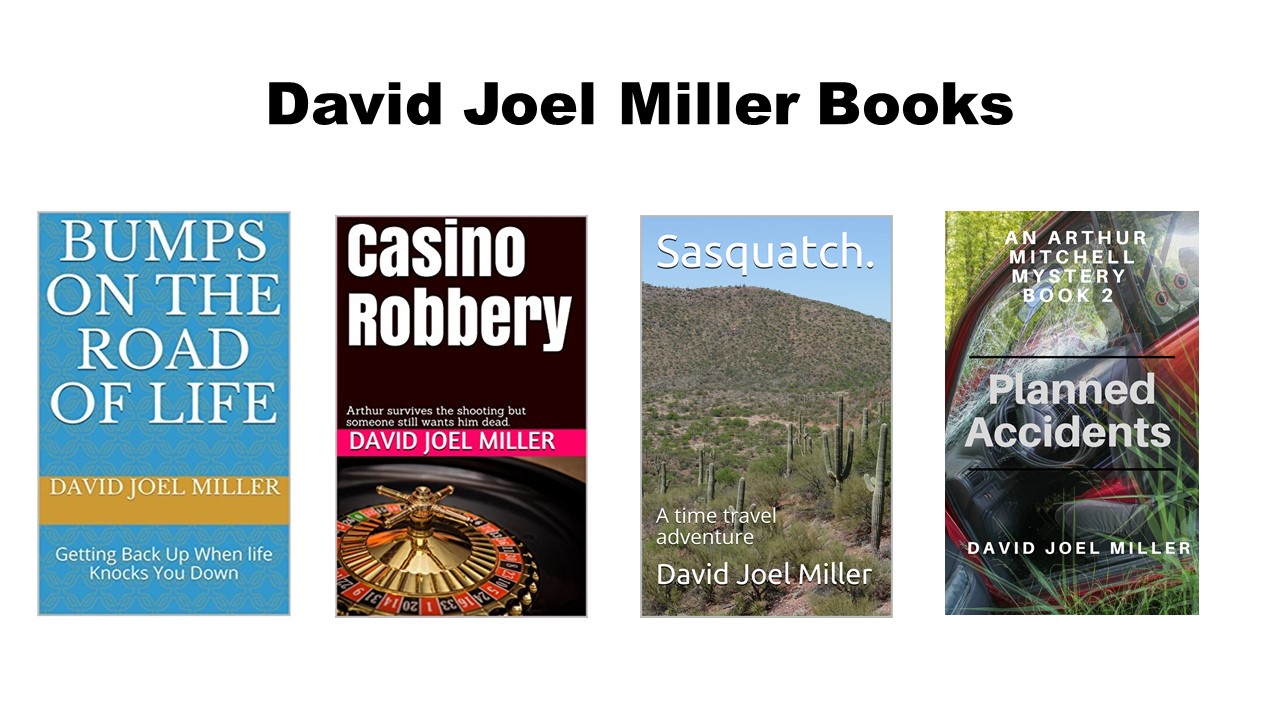
David Joel Miller Books

David Joel Miller Books

Wanted to share this with you. I’m a little excited about this. My third book, my second

Novel - Sasquach

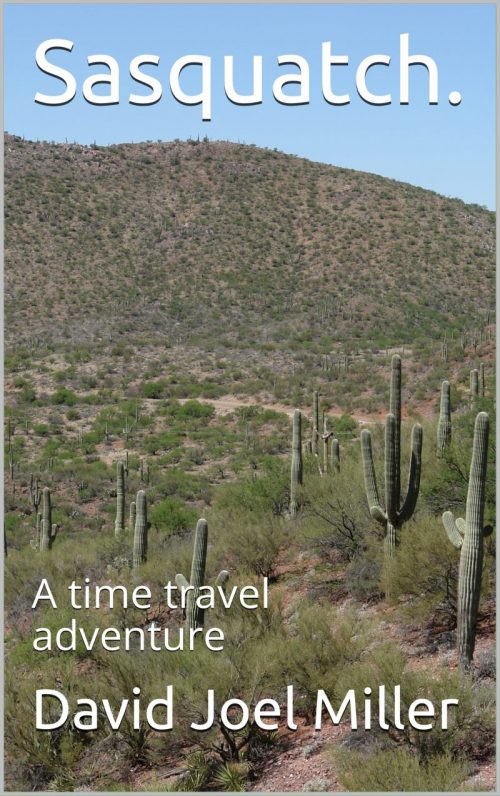
Sasquatch
3rd David Joel Miller Book

novel, Sasquatch, will be available starting this week.

This book is an idea been working on for about five years. The underlying theme is how you or I would cope if we were suddenly thrown into a situation without all our modern technology.

Sasquatch. Wandering through a hole in time, they encounter Sasquatch. Can they survive? The guests had come to Meditation Mountain to find themselves. Trapped in the Menhirs during a sudden desert storm, two guests move through a porthole in time and encounter long extinct monsters. They want to get back to their own time, but the Sasquatch intends to kill them.

I took a different approach with this book. My first two books were available exclusively on Amazon. If you been reading my Wednesday writing posts, I talked mostly about the lessons I learned from blogging. Stay tuned. Eventually, I would like to tell you the story of my journey from ideas to finished books. I’m still learning as I take that journey.

I decided to take my third book “wide,” which means it will be available in a number of e-book stores rather than being exclusive on Amazon. It’s not that I wasn’t happy with Amazon. I’ve been delighted with my experience in publishing my first two books on Amazon. I just decided this was an opportunity for me to grow and learn more about publishing on other platforms.

One of the reasons I decided to go wide was how many people outside the United States have been regular readers of counselorssoapbox.com. The last time I counted counselorssoapbox.com posts had been read it over 130 countries. In some of those countries, they often use booksellers other than Amazon. I wanted to make sure that wherever you are my books were available to you.

As of today, Sasquatch, as well as my first novel Casino Robbery, will be available on Amazon,

The book covers may be slightly different depending on the site from which you purchased the book. T

Tomorrow we will get back to the regular Mental Heath – Happy-Life post.

The reminders.

Things have changed since I first posted this so I updated the links below.

Staying connected with David Joel Miller

Seven David Joel Miller Books are available now!

My newest book is now available. It was my opportunity to try on a new genre. I’ve been working on this book for several years, but now seem like the right time to publish it.

Story Bureau.

Story Bureau is a thrilling Dystopian Post-Apocalyptic adventure in the Surviving the Apocalypse series.

Baldwin struggles to survive life in a post-apocalyptic world where the government controls everything.

As society collapses and his family gets plunged into poverty, Baldwin takes a job in the capital city, working for a government agency called the Story Bureau. He discovers the Story Bureau is not a benign news outlet but a sinister government plot to manipulate society.

Bumps on the Road of Life. Whether you struggle with anxiety, depression, low motivation, or addiction, you can recover. Bumps on the Road of Life is the story of how people get off track and how to get your life out of the ditch.

Dark Family Secrets: Doris wants to get her life back, but small-town prejudice could shatter her dreams.

Casino Robbery Arthur Mitchell escapes the trauma of watching his girlfriend die. But the killers know he’s a witness and want him dead.

Planned Accidents  The second Arthur Mitchell and Plutus mystery.

Letters from the Dead: The third in the Arthur Mitchell mystery series.

What would you do if you found a letter to a detective describing a crime and you knew the writer and detective were dead, and you could be next?

Sasquatch. Three things about us, you should know. One, we have seen the past. Two, we’re trapped there. Three, I don’t know if we’ll ever get back to our own time.

For these and my upcoming books; please visit my Author Page – David Joel Miller

Want the latest blog posts as they publish? Subscribe to this blog.

For videos, see: Counselorssoapbox YouTube Video Channel

Focus.

Sunday Inspiration.     Post by David Joel Miller.

Focus

Focus.
Photo courtesy of Pixabay.com

Focus.

“Lack of direction, not lack of time, is the problem. We all have twenty-four hour days.”

― Zig Ziglar

“Instead of focusing on how much you can accomplish, focus on how much you can absolutely love what you’re doing.”

― Leo Babauta

“Focusing is about saying No.”

― Steve Jobs

Wanted to share some inspirational quotes with you.  Today seemed like a good time to do this. If any of these quotes strike a chord with you, please share them.

Look at these related posts for more on this topic and other feelings.

Emotions and Feelings.

Inspiration

Your blog needs a personality.

By David Joel Miller, Writer.

David Joel Miller Books

David Joel Miller Books

What will be your blog’s voice or personality?

Writers spend a lot of time trying to develop their “voice.” That may or may not be the same thing as your own voice. Some lessons I learned in writing and publishing my first two books taught me that lesson. In the early stages of writing the books, I ask friends and colleagues to read the books. As an aside here, in the future, I think I will ask strangers to be the first readers and work with an editor next.

So, what did I learn about voice from the first readers of my books?

People who read my nonfiction book told me that it “sounds just like you.” My voice came through in the writing. I’ve done a lot of teaching and running groups and developed an individual style for public speaking. That’s not what happened when I had people read my first novel. Not only did they tell me that my protagonist did not sound like me, but they said the hero had a distinctive personality. One beta reader even told me that something they liked about the book was that each of the main characters sounded differently. I had succeeded, at least in a small way, in giving different characters different voices.

So, what does that have to do with creating a voice for your blog? One thing you will need to decide, plan on, is what will be the voice of your blog be like. It could sound like you, but it could also be a very distinct personality. But that I don’t mean that you should be phony, just think about the style in which the posts will be written.

If you are knowledgeable about a subject, you could write like a professor.

My blog does reflect my personality. At the college, they call me “Professor Miller.” The central theme of my life has been learning new things and teaching others. Writing with a “Professor” voice doesn’t mean lots of large words and long sentences littered with citations. I tend to believe the best teachers take a complicated subject and explain it in a simpler way.

If you decide to write in a “Professor” voice, you need to either be an authority on the subject or be willing to do a lot of research. While I’m licensed as a therapist and counselor, I still read a lot of research trying to learn new things and trying to be sure that I’m explaining things correctly. That’s what a professor does.

Your blog could have a “persuader” voice.

If there is a topic you feel strongly about you may try to convince others to agree with your point of view. That doesn’t mean you should use sleazy tactics or try to get over on anyone. Good persuaders provide people with information but also explain things in ways that overcome objections.

If you feel strongly about global warming, or pollution, or animal overpopulation, you could easily write a blog about any of those topics. The professor would be describing the science behind pollution and possible technologies to minimize its impact. The persuader would be trying to convince people to do something about that pollution, reduce usage, recycle, maybe even buy an electric, nonpolluting vehicle. You can write about any topic, but the voice you choose can result in a unique presentation.

Your blog’s personality might be the “entertainer.”

Some blogs teach some persuade, while others primarily entertain. The entertainer can teach or persuade, but they do it differently. The entertainer blog, rather than presenting hard facts or emotional reasons, will get there point across by telling stories that are enjoyable to listen to. Fiction frequently contains a theme or moral, illustrated by an interesting tale. Entertainer personalities are more likely to use humor or detailed descriptions of people and places than either the professor or the persuader personality.

There are many other voices you could explore for your blog.

There is a branch of psychology called positive psychology. One premise of this branch of psychology is that there has been too much emphasis on what’s wrong with people and not enough emphasis on the positive. It’s possible to create a blog that emphasizes one of those positive characteristics such as creativity, vitality, zest for living, kindness, gratitude, or spirituality. Deciding on your blog’s voice or voices can make it much easier to write your posts.

You’ll find more posts on this topic under – Writing.

Staying connected with David Joel Miller

Seven David Joel Miller Books are available now!

My newest book is now available. It was my opportunity to try on a new genre. I’ve been working on this book for several years, but now seem like the right time to publish it.

Story Bureau.

Story Bureau is a thrilling Dystopian Post-Apocalyptic adventure in the Surviving the Apocalypse series.

Baldwin struggles to survive life in a post-apocalyptic world where the government controls everything.

As society collapses and his family gets plunged into poverty, Baldwin takes a job in the capital city, working for a government agency called the Story Bureau. He discovers the Story Bureau is not a benign news outlet but a sinister government plot to manipulate society.

Bumps on the Road of Life. Whether you struggle with anxiety, depression, low motivation, or addiction, you can recover. Bumps on the Road of Life is the story of how people get off track and how to get your life out of the ditch.

Dark Family Secrets: Doris wants to get her life back, but small-town prejudice could shatter her dreams.

Casino Robbery Arthur Mitchell escapes the trauma of watching his girlfriend die. But the killers know he’s a witness and want him dead.

Planned Accidents  The second Arthur Mitchell and Plutus mystery.

Letters from the Dead: The third in the Arthur Mitchell mystery series.

What would you do if you found a letter to a detective describing a crime and you knew the writer and detective were dead, and you could be next?

Sasquatch. Three things about us, you should know. One, we have seen the past. Two, we’re trapped there. Three, I don’t know if we’ll ever get back to our own time.

For these and my upcoming books; please visit my Author Page – David Joel Miller

Want the latest blog posts as they publish? Subscribe to this blog.

For videos, see: Counselorssoapbox YouTube Video Channel

Obsessive-Compulsive and Related Disorders.

By David Joel Miller.

Obsessive-Compulsive Related Disorders.

Obsessive-Compulsive and Related Disorders.
Photo courtesy of Pixabay.com

Obsessive-compulsive is a label that is frequently misused. Most people, when they say they are obsessive-compulsive, mean that they have strong preferences for the way they want the thing to be done. In the mental health field, what we mean by Obsessive-Compulsive Related Disorders are a group of disorders which seriously interfere with a person’s relationships, their ability to work, cause them distress, or prevent them from engaging in other important activities.

A personal story about compulsions to illustrate this difference.

I have a preferred breakfast meal. It comes frozen and is relatively inexpensive. Each week when I do the grocery shopping, I buy enough for the following week. I tend to eat this meal every day. Should I end up traveling, or get behind schedule I’m open to eating something else.

Someone with OCD or a related disorder might feel that their failure to eat the required breakfast, could cause their day to be ruined. They might believe, even though they know it is illogical, that their failure to eat the required breakfast, in a specific order, could result in someone starving to death, or harm coming to a family member. These beliefs that their actions or inactions, can cause harm results in an overwhelming compulsion to perform actions.

I have used an extremely exaggerated example here, but I hope you can see the difference between an extremely strong preference and a compulsion. A compulsion is something you feel forced to do even when it makes no sense. It is as if the person with OCD is being controlled by an outside force.

Defining obsessions and compulsions.

Obsessions are persistent, unwanted, and intrusive thoughts, urges, or pictures that you can’t get out of your head. Compulsions are the things people feel required to do to reduce the tension caused by the obsessions. These behaviors are often done a specific number of times. Compulsions may involve inflexible rules which must be obeyed to prevent something bad happening. Some Obsessive-Compulsive Related Disorders involve self-injury, like hair pulling or skin picking, which continues despite efforts to reduce or stop the behavior.

Classifying Obsessive-Compulsive Related Disorders.

In the past, Obsessive-Compulsive Related Disorders were scattered throughout the diagnostic manual. Some of these disorders were in the chapter on anxiety; some were mixed in with impulse control disorders, others were under somatoform disorders. A few were not even recognized as mental illnesses in the past. In the most recent DSM-5, these issues were brought together in a single Obsessive-Compulsive and Related Disorders chapter.

Sometimes it’s hard for professionals to diagnose which disorder a person has. It is possible for one person to have several of the Obsessive-Compulsive Related Disorders. Many people with Obsessive-Compulsive Related Disorders also have anxiety disorders, trauma and stressor-related disorders, and some form of depression.

OCD leads the Obsessive-Compulsive Related Disorders parade.

Among the Obsessive-Compulsive Related Disorders, the best-known disorder is Obsessive-Compulsive Disorder, a serious mental health issue which is estimated to affect between 1% and 2% of the population worldwide.

Other Obsessive-Compulsive Related Disorders include Body Dysmorphic Disorder, Hoarding Disorder, Trichotillomania, (hair pulling), and excoriation (skin-picking). All of these disorders significantly interfere with people’s lives. Symptoms in these disorders recur, despite repeated efforts to control or stop the Obsessive-Compulsive Related Behaviors.

Substances and medications can cause, or induce, Obsessive-Compulsive Related Disorders. Some medical conditions can also cause obsessive-compulsive behaviors. In the DSM-5 they are also seven other conditions lumped together under the heading Other Specified Obsessive-Compulsive Disorders. One of those conditions is Obsessional Jealousy. This is one of the few times jealousy counts as a symptom of a mental health disorder. More on Obsessional Jealousy in a future post.

Treatment for Obsessive-Compulsive Related Disorders.

The primary treatment for Obsessive-Compulsive Disorder (OCD) is exposure and response prevention therapy. While exposure and response prevention therapy has some similarities to systematic desensitization, which is used to treat specific phobias, relatively few therapists are trained in exposure and response prevention therapy.

One resource you may want to consult is the WordPress blog ocdtalk.  http://ocdtalk.wordpress.com/

For more information on Obsessive-Compulsive and Related Disorders see:

Obsessive-Compulsive Related Disorders category

Obsessive-Compulsive Disorder (OCD)

Body Dysmorphic Disorder

Hoarding Disorder

Trichotillomania, (hair pulling)

Excoriation (skin-picking)

Obsessive-Compulsive Personality Disorder

David Joel Miller MS is a Licensed Marriage and Family Therapist (LMFT) and a Licensed Professional Clinical Counselor (LPCC.)  Mr. Miller provides supervision for beginning counselors and therapists and teaches at the local college in the Substance Abuse Counseling program.

Staying connected with David Joel Miller

Seven David Joel Miller Books are available now!

My newest book is now available. It was my opportunity to try on a new genre. I’ve been working on this book for several years, but now seem like the right time to publish it.

Story Bureau.

Story Bureau is a thrilling Dystopian Post-Apocalyptic adventure in the Surviving the Apocalypse series.

Baldwin struggles to survive life in a post-apocalyptic world where the government controls everything.

As society collapses and his family gets plunged into poverty, Baldwin takes a job in the capital city, working for a government agency called the Story Bureau. He discovers the Story Bureau is not a benign news outlet but a sinister government plot to manipulate society.

Bumps on the Road of Life. Whether you struggle with anxiety, depression, low motivation, or addiction, you can recover. Bumps on the Road of Life is the story of how people get off track and how to get your life out of the ditch.

Dark Family Secrets: Doris wants to get her life back, but small-town prejudice could shatter her dreams.

Casino Robbery Arthur Mitchell escapes the trauma of watching his girlfriend die. But the killers know he’s a witness and want him dead.

Planned Accidents  The second Arthur Mitchell and Plutus mystery.

Letters from the Dead: The third in the Arthur Mitchell mystery series.

What would you do if you found a letter to a detective describing a crime and you knew the writer and detective were dead, and you could be next?

Sasquatch. Three things about us, you should know. One, we have seen the past. Two, we’re trapped there. Three, I don’t know if we’ll ever get back to our own time.

For these and my upcoming books; please visit my Author Page – David Joel Miller

Want the latest blog posts as they publish? Subscribe to this blog.

For videos, see: Counselorssoapbox YouTube Video Channel

Education.

Sunday Inspiration.     Post by David Joel Miller.

Education.

Education.
Photo courtesy of Pixabay.com

Education.

“Education is the most powerful weapon which you can use to change the world.”

― Nelson Mandela

“Education is the ability to listen to almost anything without losing your temper or your self-confidence.”

― Robert Frost

“Do not train a child to learn by force or harshness; but direct them to it by what amuses their minds, so that you may be better able to discover with accuracy the peculiar bent of the genius of each.”

― Plato

Wanted to share some inspirational quotes with you.  Today seemed like a good time to do this. If any of these quotes strike a chord with you, please share them.

Look at these related posts for more on this topic and other feelings.

Emotions and Feelings.

Inspiration

The first step to a successful blog.

By David Joel Miller.

Man writing

Writing.
Photo courtesy of Pixabay.com

Don’t make the blog mistakes I did.

If you want your blog to be successful, there are some things you need to do before you publish your very first post. Spend some time planning. If you read a lot of blogs, you may know more than I did when I first started. Not knowing anything I leaped directly into the deep end and spent the first-year learning about the process. I’m not suggesting you fall into planning paralysis. There are some things you will only learn from doing. But as you think of your blog a little advanced planning can save you a lot of headaches later. What do you need to plan? Two things, content, and process.

Planning your blog’s content.

I think more beginning blogs fail due to faulty content plans than anything else. The mechanics you can learn as you go, though watching some tutorials and other blog posts, can save you a lot of time over trial and error experimentation. More about that later.

The first thing you need to think about is what is your blog going to be about?

A blog is not social media.

I’ve seen some bloggers who started out writing about themselves and what they do. So, there’s a post about the hamburger that had for lunch and how they took a walk around the block, and they’re going to the park, with their kids on Saturday. The only person who might read this would be your mother or a jealous ex-boyfriend. Most people won’t care what you’re doing unless you are already a phenomenal celebrity.

Can’t you write a blog about food?

Sure, you can. Don’t write that you ate a hamburger or show me a picture of the ice cream you had. Write a post about the Ethiopian restaurant you went to and how their food was different from what you’re used to eating. Write about the new Pakistani restaurant or the Indonesian one. Write about foods I’ve never experienced and restaurants I didn’t know existed, and I might be interested, particularly if I’m a foodie. Show me ways to eat healthily, save money on food, and that might interest me. In other words, it’s not about you, it’s about providing the reader content they would like to read.

Can’t you write about the places you go to?

Writing about your walk around the block is probably going to be boring unless you live in a very unusual neighborhood. Writing about your travel experiences, your week exploring London, and the week spent in Moscow, that might interest people. I’m not saying a blog about walking around the block is impossible. I’m saying the blog shouldn’t be about your routine of life. Writing about some of your observations, philosophizing about how your neighborhood reflects society today could be interesting. But it’s going to be a challenge.

It is your viewpoint that matters.

Almost everybody has children and parents or know someone who does. You need to ask yourself what makes your relationships different, what have you learned you can share with others. If your family is unusual, a blog about Raising Five Kids with Disabilities and Remaining Sane comes to mind, people may be interested. If you write about your struggles with raising a newborn, new parents might be interested.

If you or someone in your family is or has struggled with a challenge, you can write a blog about what you’re going through, the lessons you learned, and how you managed that issue. An excellent example of this approach is OCDtalk.

Could you write about your garden?

I think after one post, I would get tired of reading about, today I planted seeds, tomorrow I’m going to pull weeds. Tell me about ways to control insects organically, or a new variety of plant that you’re trying, and I might be interested if I was a gardener.

Planning your topic will help you avoid running out of things to write about.

The Internet is littered with dead blogs. They may have started out with massive content. I remember one blog that had huge posts filled with multiple illustrations. Unfortunately, I couldn’t figure out what the blog was about. After a few posts, the author disappeared. If they had a clearer idea what they were writing about and had written smaller posts over time, they might have developed a following.

The blog planning conclusion?

If you’re going to jump into the blogging ocean, spend some time thinking about where you’re going. Read a lot of blogs. Develop a list of posts you’d like to write. Practice your writing so that when you do lunch your blog, the whole process won’t be overwhelming. I hope what I’ve written here doesn’t deter you. I’m just telling you a little planning in the early stages will make the entire journey a lot more enjoyable and productive.

In addition to a topic for you to write about you’ll need to refine your personality and voice. Let’s look at that in next week’s post.

You’ll find more posts on this topic under – Writing.

Staying connected with David Joel Miller

Seven David Joel Miller Books are available now!

My newest book is now available. It was my opportunity to try on a new genre. I’ve been working on this book for several years, but now seem like the right time to publish it.

Story Bureau.

Story Bureau is a thrilling Dystopian Post-Apocalyptic adventure in the Surviving the Apocalypse series.

Baldwin struggles to survive life in a post-apocalyptic world where the government controls everything.

As society collapses and his family gets plunged into poverty, Baldwin takes a job in the capital city, working for a government agency called the Story Bureau. He discovers the Story Bureau is not a benign news outlet but a sinister government plot to manipulate society.

Bumps on the Road of Life. Whether you struggle with anxiety, depression, low motivation, or addiction, you can recover. Bumps on the Road of Life is the story of how people get off track and how to get your life out of the ditch.

Dark Family Secrets: Doris wants to get her life back, but small-town prejudice could shatter her dreams.

Casino Robbery Arthur Mitchell escapes the trauma of watching his girlfriend die. But the killers know he’s a witness and want him dead.

Planned Accidents  The second Arthur Mitchell and Plutus mystery.

Letters from the Dead: The third in the Arthur Mitchell mystery series.

What would you do if you found a letter to a detective describing a crime and you knew the writer and detective were dead, and you could be next?

Sasquatch. Three things about us, you should know. One, we have seen the past. Two, we’re trapped there. Three, I don’t know if we’ll ever get back to our own time.

For these and my upcoming books; please visit my Author Page – David Joel Miller

Want the latest blog posts as they publish? Subscribe to this blog.

For videos, see: Counselorssoapbox YouTube Video Channel

Work.

Sunday Inspiration.     Post by David Joel Miller.

Work.

Work.
Photo courtesy of Pixabay.com

Work.

“If you work really hard, and you’re kind, amazing things will happen.”

― Conan O’Brien

“Be steady and well-ordered in your life so that you can be fierce and original in your work.”

― Gustave Flaubert

“One, remember to look up at the stars and not down at your feet. Two, never give up work. Work gives you meaning and purpose and life is empty without it. Three, if you are lucky enough to find love, remember it is there and don’t throw it away.”

― Stephen Hawking

Wanted to share some inspirational quotes with you.  Today seemed like a good time to do this. If any of these quotes strike a chord with you, please share them.

Look at these related posts for more on this topic and other feelings.

Emotions and Feelings.

Inspiration

Should you write a blog?

By David Joel Miller.

David Joel Miller Books

David Joel Miller Books

There are some reasons to write a blog and some reasons not to write one.

If you look around the Internet these days, you’ll find a lot of articles telling you that you should be writing a blog. I think every new, aspiring writer will be told they need a platform. Now platform does not automatically equal blog. But most of the articles about platforms start off by telling you to just create a website, and they usually followed that up by telling you that your website should include a blog.

There are also a lot of classes and trainings you can take on how to create a blog and how to be successful at blogging. These trainings run the gamut from short and free to some tremendously elaborate and expensive trainings. I have been writing a blog since May 2011. If I had known then, what I know now, I might never have started my blog (counselorssoapbox.com.) On the other hand, you should note I have more than two “mental hands,” so I am frequently in a divided mind. By two hands I mean “on the one hand I think x, and on the other hand, I think Y, unless it is Sunday when I may not be thinking at all.”

Now that I’ve been writing the blog for seven years I’m glad I’ve had the experience. Let me tell you a little bit about how I learned about blogs, got started blogging, and some of the things I have learned as a result.

So, what’s a blog?

In 2005, I was sitting in class waiting for the instructor to start his lecture. I probably should mention that I have gone to college off and on since 1966. I’ve gone, drop out, and returned several times. I’ve also changed majors so many times; I’ve lost count. Along the way, I finished an associate of science degree, a bachelor’s degree, and most recently a master’s degree. From my first day in college until I finally completed that master’s degree only took me 40 years. I say only half in jest that I have taken every class possible and the only way they would let me hang out on campus anymore is if I would teach a class.

So, in 2005 I am trying to finally finish that master’s degree that had eluded me for so long. That and I am trying to learn these new technologies and keep up with some students who are closer in age to my grandchild that to me. Several of the students in the class had mentioned blogs, so I finally asked one of them, “what precisely is a blog?”

The technical answer, so I am told, is that “blog” is a shortened expression for a “web log or weblog.” I suspect most of you youngsters out there know more about this than I do. The closest analogy I can come up with for those of the older persuasion is that a blog is a rough equivalent to what used to be called a newspaper column.

Most newspaper columns were topical. Some covered sports, some might be advice columns, and occasionally there was one that was a general-purpose column. Most blogs today are like that. Many have a specific topic, but the topic of some blogs are the life experiences of the blogger.

Counselorssoapbox.com launched in 2011.

After looking around the Internet a bit, I decided to write a blog. I had been working for a while as a drug and alcohol counselor and my last trip back to school had been for a master’s degree in marriage and family therapy. In California children’s therapy is included as part of the family therapy training. After working both as a counselor in the substance abuse field and as a marriage and family therapist, I’d seen a lot of people recover from some serious mental, emotional, and behavioral disorders. I developed a firm belief that people can recover from almost any life challenge. I won’t try to define recovery here.

One other consideration for my blog was how commonly I saw people who had both a mental illness and a substance use disorder. The official topic for the blog then became one counselor’s opinion about mental health, substance use disorders, co-occurring disorders, and the broader subject of how to have a happy life.

So, do I think you should write a blog?

For some people, the answer is yes. If you have a topic you feel strongly about, something that you are enthusiastic and passionate about, then writing a blog offers you an opportunity to tell people how you feel about your subject, and to share what you know about that topic.

If you’ve read or heard somewhere that to be a successful author, you need to have a platform you probably should pause a minute before starting a blog. Writing a blog takes a lot of work. To create any significant readership, you will put in a lot of hours. If you are blogging only to build your platform, there are several other ways to build your platform that may be easier or more productive.

If you’re writing mainly to express yourself, blogging probably isn’t for you. If the main thing you talk about in your blog is yourself, people will get tired of reading it. If you’re writing from a place of problems you’re likely to either run out of what to say or become so discouraged you give up. Occasionally I see a blogger who writes about their struggles with a specific mental illness but does so in a very informative and entertaining way. They can develop a following.

If the primary thing you’re talking about is you, most people will get tired of listening. If you are going to write about yourself, you should do it for you and not be disappointed if you have little or no readership.

Every year many new blogs start, most never attract enough readers to matter. Don’t write a blog expecting lots of people to follow you. Occasionally that happens, but it’s rare. If you do start a blog, do it because you strongly care about the topic, and be prepared to go on writing those blog posts year after year until eventually, you accumulate enough readers that what you say might make a difference.

I started my blog because I wanted an opportunity to talk about some things that mattered to me. Along the way, I learned a lot of lessons that prepared me to do a much better job of writing full-length books. The challenge has become to balance the time I spend on the blog with the time I need to finish my books in progress.

In the next few posts let’s talk about the mechanics of setting up a blog and creating content for it. After we walk through the lessons I learned from blogging then we will take up the subject of writing, publishing, and marketing a full-length book.

If you have questions about blogging or writing or suggestions for future posts, please contact me either by leaving a comment or by using the contact me form. I will try to get back to you as soon as I can. If it takes me a while to get back to you, it is probably because I’m currently working on actually doing the writing. Just know that as soon as an opportunity occurs, I’ll answer your question.

You’ll find more posts on this topic under – Writing.

Staying connected with David Joel Miller

Seven David Joel Miller Books are available now!

My newest book is now available. It was my opportunity to try on a new genre. I’ve been working on this book for several years, but now seem like the right time to publish it.

Story Bureau.

Story Bureau is a thrilling Dystopian Post-Apocalyptic adventure in the Surviving the Apocalypse series.

Baldwin struggles to survive life in a post-apocalyptic world where the government controls everything.

As society collapses and his family gets plunged into poverty, Baldwin takes a job in the capital city, working for a government agency called the Story Bureau. He discovers the Story Bureau is not a benign news outlet but a sinister government plot to manipulate society.

Bumps on the Road of Life. Whether you struggle with anxiety, depression, low motivation, or addiction, you can recover. Bumps on the Road of Life is the story of how people get off track and how to get your life out of the ditch.

Dark Family Secrets: Doris wants to get her life back, but small-town prejudice could shatter her dreams.

Casino Robbery Arthur Mitchell escapes the trauma of watching his girlfriend die. But the killers know he’s a witness and want him dead.

Planned Accidents  The second Arthur Mitchell and Plutus mystery.

Letters from the Dead: The third in the Arthur Mitchell mystery series.

What would you do if you found a letter to a detective describing a crime and you knew the writer and detective were dead, and you could be next?

Sasquatch. Three things about us, you should know. One, we have seen the past. Two, we’re trapped there. Three, I don’t know if we’ll ever get back to our own time.

For these and my upcoming books; please visit my Author Page – David Joel Miller

Want the latest blog posts as they publish? Subscribe to this blog.

For videos, see: Counselorssoapbox YouTube Video Channel
What is trust?

By David Joel Miller, MS, Licensed Therapist & Licensed Counselor.

Word trust

Trust.
Photo courtesy of Pixabay

Do you have trust issues?

Many people report they have trust issues.

It is a common complaint among people who come for counseling.

Some people are shy or anxious, others have been hurt. It’s tempting to believe that not trusting protects you from pain.

Not trusting can also cause you loneliness and isolation. The challenge is learning when to trust and when to be wary and cautious.

The definition of trust.

The dictionary, or denotative meaning, of trust as a noun is a firm belief in the truth, reliability, ability, or strength of someone or something. Synonyms for trust include your faith, confidence, certainty, and belief. This definition puts trust into the realm of your opinion or feelings about how much you are willing, or able to put aside your doubts and accept something is true because you want it to be true. This subjective quality of truth leads to differences in trust between people.

The many kinds of trust.

There is more than one kind of trust, depending on the nature of the relationship. The qualities you look for in a trustworthy car will be different from what you look for in deciding to trust a person. Learning who to trust, when to trust, and how much to trust is a valuable life skill. Here are some of the varieties of trust.

Competence-based trust.

Sometimes you must rely on the skills of others. You want a doctor can trust. You look for a medical professional who went to a good school, has a good reputation, or is a specialist. If your car needs fixing you should be looking for a good mechanic. The trust you have in professional people is primarily a belief that they can do what you want them to and that they will do their job correctly.

Situational trust.

When you go into a bank, you trust the teller and hand them your money. You would not trust a stranger on the street with your money. You are more likely to trust people you have just met at work than people you’ve recently met socially. Students initially trust a teacher who tells them to go somewhere or do something far more than they would trust a stranger standing outside the building. Situational trust is based on the role the other person fills rather than any other information you have about the individual.

Caring trust, trusting that they won’t try to hurt you.

Most people grow up believing that their families care about them. The universal expectation is that parents should care about their children and that siblings should care about each other. As parents grow older, there is an expectation that their children will care about them. Extended family members are likely to care more about you than strangers.

Throughout life, most people develop friendships that are based on mutual caring and trust. These early life experiences create a mental blueprint for how we should trust others and expect to be trusted. Having an early life caregiver who was not consistent and reliable can result in trust issues in adulthood. Learning inappropriate relationships because early caregivers were abusive or neglectful are called attachment disorders and are a major source of adult trust issues.

Having a friend who you trusted violate the principle of caring trust makes it more difficult to form adult friendships.

Character-based trust.

Some people are easier to trust than others. Everything they do seems appropriate and consistent with what they say. People who are described as being of “good character” seem to be easier to trust. People we say have a good character I described as honest, loyal, and trustworthy. Many youth development programs are built on the idea that it is possible to teach children character values and that those who were good and well-behaved as children are likely to grow up to be trustworthy adults.

Character-based trust has become suspect in recent years. We hear on the news after someone has been arrested for a serious crime that the neighbors were surprised because “he always seemed like such a nice guy.” Despite adult skepticism that many people who appear honest and trustworthy just haven’t gotten caught yet, some people, because of their appearance and demeanor, give the outward appearance of warranting character-based trust.

More information on this topic appears in the category – trust.

David Joel Miller MS is a Licensed Marriage and Family Therapist (LMFT) and a Licensed Professional Clinical Counselor (LPCC.)  Mr. Miller provides supervision for beginning counselors and therapists and teaches at the local college in the Substance Abuse Counseling program.

Staying connected with David Joel Miller

Seven David Joel Miller Books are available now!

My newest book is now available. It was my opportunity to try on a new genre. I’ve been working on this book for several years, but now seem like the right time to publish it.

Story Bureau.

Story Bureau is a thrilling Dystopian Post-Apocalyptic adventure in the Surviving the Apocalypse series.

Baldwin struggles to survive life in a post-apocalyptic world where the government controls everything.

As society collapses and his family gets plunged into poverty, Baldwin takes a job in the capital city, working for a government agency called the Story Bureau. He discovers the Story Bureau is not a benign news outlet but a sinister government plot to manipulate society.

Bumps on the Road of Life. Whether you struggle with anxiety, depression, low motivation, or addiction, you can recover. Bumps on the Road of Life is the story of how people get off track and how to get your life out of the ditch.

Dark Family Secrets: Doris wants to get her life back, but small-town prejudice could shatter her dreams.

Casino Robbery Arthur Mitchell escapes the trauma of watching his girlfriend die. But the killers know he’s a witness and want him dead.

Planned Accidents  The second Arthur Mitchell and Plutus mystery.

Letters from the Dead: The third in the Arthur Mitchell mystery series.

What would you do if you found a letter to a detective describing a crime and you knew the writer and detective were dead, and you could be next?

Sasquatch. Three things about us, you should know. One, we have seen the past. Two, we’re trapped there. Three, I don’t know if we’ll ever get back to our own time.

For these and my upcoming books; please visit my Author Page – David Joel Miller

Want the latest blog posts as they publish? Subscribe to this blog.

For videos, see: Counselorssoapbox YouTube Video Channel
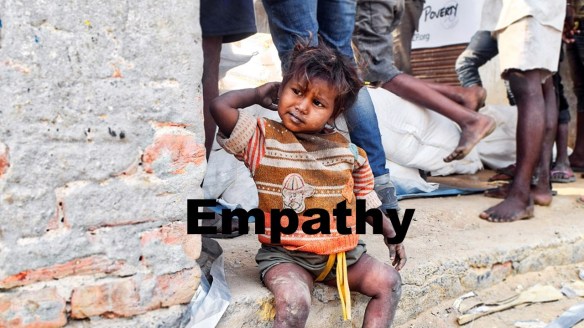
Empathy.

Sunday Inspiration.     Post by David Joel Miller.

Empathy.

Empathy.
Photo courtesy of Pixabay.com

Empathy.

“Self-absorption in all its forms kills empathy, let alone compassion. When we focus on ourselves, our world contracts as our problems and preoccupations loom large. But when we focus on others, our world expands. Our own problems drift to the periphery of the mind and so seem smaller, and we increase our capacity for connection – or compassionate action.”

― Daniel Goleman, Social Intelligence: The New Science of Human Relationships

“Whenever you are about to find fault with someone, ask yourself the following question: What fault of mine most nearly resembles the one I am about to criticize?”

― Marcus Aurelius, Meditations

“When people talk, listen completely. Most people never listen.”

― Ernest Hemingway

Wanted to share some inspirational quotes with you.  Today seemed like a good time to do this. If any of these quotes strike a chord with you, please share them.

Look at these related posts for more on this topic and other feelings.

Emotions and Feelings.

Inspiration