
Recovery defined

By David Joel Miller, MS, Licensed Therapist & Licensed Counselor.

Ball recovery

Recovery and Resiliency.
Photo courtesy of Pixabay.com

What exactly is recovery?

Should we describe someone as “In recovery,” “recovering” or recovered? What about resilience. Is it in any way related to recovery? This month SAMHSA (Substance Abuse and Mental Health Services Administration) suggested a working definition for recovery.

The word recovery is commonly used when talking about substance abuse. Recently mental health has tried to incorporate wellness and recovery language into mental health programs. But it has long been clear that not everyone agrees about what is meant by recovery.

Trying to define recovery has always been a challenge.  Not the dictionary definition, which is relatively straightforward but not simple. Some common dictionary definitions of recovery include 1 A return to health 2 Return to a normal state 3 Gaining back something that was lost. The hard part was to explain what recovery meant when related to the issues of mental health and substance abuse.

Many people describe themselves as recovering. By that they mean they are struggling with a chronic progressive disease like alcoholism or drug addiction. They do not believe you are ever cured of a chronic disease condition and continue to remind themselves that at any moment they could experience a recurrence if they were to relax their vigilance.

Some people prefer the term “in recovery.” They believe that recovery is not a passive thing that happens to them but something that requires their active participation. They need to climb on board the recovery train and move towards their goal.

Some old-time AA members describe themselves as “recovered” and they point to the title page to the book “Alcoholics Anonymous” which states that the book is “the story of how many thousands of men and women have recovered from Alcoholism.” They further point out the book say that “we are not cured” but “have recovered from a hopeless state of mind and body.”  The thought that anyone could ever be fully recovered scares other people. They point out that accepting being recovered might lead someone to become careless and think that there is not more work to do on themselves.

SAMHS has suggested the following as a working definition of recovery:

A process of change through which individuals improve their health and wellness, live a self-directed life, and strive to reach their full potential.

SAMHSA delineates four major dimensions that support a life in recovery, Health, Home, Purpose, and Community.

A resiliency researcher tried to explain the difference between recovery and resiliency as – Recovery is coming back from negative consequences and resiliency as the ability to continue to function despite traumas.

A short way to think of this might be – Recovery is the process of getting back to where you were, regaining your life and Resiliency is handling life on life’s terms.

Staying connected with David Joel Miller

Seven David Joel Miller Books are available now!

My newest book is now available. It was my opportunity to try on a new genre. I’ve been working on this book for several years, but now seem like the right time to publish it.

Story Bureau.

Story Bureau is a thrilling Dystopian Post-Apocalyptic adventure in the Surviving the Apocalypse series.

Baldwin struggles to survive life in a post-apocalyptic world where the government controls everything.

As society collapses and his family gets plunged into poverty, Baldwin takes a job in the capital city, working for a government agency called the Story Bureau. He discovers the Story Bureau is not a benign news outlet but a sinister government plot to manipulate society.

Bumps on the Road of Life. Whether you struggle with anxiety, depression, low motivation, or addiction, you can recover. Bumps on the Road of Life is the story of how people get off track and how to get your life out of the ditch.

Dark Family Secrets: Doris wants to get her life back, but small-town prejudice could shatter her dreams.

Casino Robbery Arthur Mitchell escapes the trauma of watching his girlfriend die. But the killers know he’s a witness and want him dead.

Planned Accidents  The second Arthur Mitchell and Plutus mystery.

Letters from the Dead: The third in the Arthur Mitchell mystery series.

What would you do if you found a letter to a detective describing a crime and you knew the writer and detective were dead, and you could be next?

Sasquatch. Three things about us, you should know. One, we have seen the past. Two, we’re trapped there. Three, I don’t know if we’ll ever get back to our own time.

For these and my upcoming books; please visit my Author Page – David Joel Miller

Want the latest blog posts as they publish? Subscribe to this blog.

For videos, see: Counselorssoapbox YouTube Video Channel

Depression Season – 8 Ways To Beat It.

By David Joel Miller, MS, Licensed Therapist & Licensed Counselor.

Depressed person

Depression.
Photo courtesy of Pixabay.com

Beat the depression season.

We are coming up on depression season. Did you know it has its own season? Like the rainy season or strawberry season, there is a definite season for depression, and it is fast approaching. While there are lots of reasons people might get depressed for the holidays there are things you can do to prevent or reduce depression this time of year so please stay tuned to the end for the solutions.

You have seen or will see shortly see lots of stuff about Seasonal Affective Disorder (SAD). A great many people suffer from a specific disorder which causes them to get depressed this time of year. Some people with SAD are OK during the winter but get depressed in the summer. A few unlucky ones get depressed summer and winter. These issues mainly have to do with changes in the hours of daylight and the weather. That’s not the only reason people will be getting depressed soon.

People with mood disorders, those who experience depression or bipolar disorder, are at extra risk to fall into depression this time of year.  There are all kinds of reasons for people with mood disorders to have episodes of depression and this time of year has. The season has lots of stressors that may trigger a bout of depression. Sure seasonal changes are one reason but as severe as they may be, loss of light and cold weather are not the only reason people fall into depression this time of year.

One reason for a winter depression season, which I believe is significant, is the increased occurrence of colds and flu. When someone is under the weather, they get grumpy and want to be left alone. When humans are sick we tend to push others away. This is especially true of children. We see a lot of kids that were essentially well-behaved most of the year but suddenly during the winter months they get into fights with their caregivers and end up in emergency psychiatric facilities. Often these emergency admissions, in kids and in adults, will begin sniffling and sneeze within hours if not minutes of admission. They got into conflicts and were unable to manage their emotions in part because they were fighting off an illness.

There are a lot of family get-togethers during the fall holiday season. Events like these cause stress. Even good events can be stressful. But how often has a holiday get together ended in arguments and fights? What was supposed to be a happy get together has turned into a depressing occurrence?

Some people become especially depressed during the holiday season for the opposite reason, they have little or no family. That is not the way we picture a holiday get together. On T. V and in the store ads holiday meals are a large group of people all laughing around a table full of tempting food. Imagine eating a bowl of Top Ramen by yourself for your holiday meal? I am getting bummed out just writing about this.

Increased consumption of alcohol and drugs in the wintertime also results in an increase in depression. People with mental illnesses are at increased risk to use drugs and alcohol to try to feel better. They also smoke the majority of the cigarettes consumed in America. Add a full ashtray and an empty bottle of booze to that bleak alone Christmas table and see how the picture looks now.

People with substance abuse problems, of course, get really depressed, at the holidays or any other time for that matter. Alcohol is a depressant, plain, and simple. Lots of us missed school the day they taught that. So the more you drink the more depressed you will probably get. Remember the twenty percent heaviest drinkers will drink eighty percent of the alcohol this holiday. They will also get arrested the most and they are fifty-five times more likely to attempt suicide when drunk.

People who do stimulants such as Methamphetamine will not be happy for Christmas either. Stimulant abuse does not make for happy people, just “wired” people. And when those drugs wear off and the user crashes, add them to the depressed.

So it does not much matter whether you have one problem, two problems, or many. It is not important which came first, the mood disorder or drug use. Lots of people are at risk for a bout of depression, from mild to severe, this holiday season.

So what can you do to avoid or reduce depression during the holidays?

A few simple steps, these are especially important if you know you are at risk.

1. Avoid alcohol and abusing drugs.

2. If you take meds stay on them and take them as prescribed. If you experience a severe episode of depression you may need to talk to your doctor or psychiatrist about your medication needs.

3. Spend as much time as possible in brightly lit places. A few hours a day of sunlight is great if possible. And definitely, avoid dark gloomy places.

4. If you have a spiritual or religious faith, practice it like your life depends on it. If you have severe depression your life just might depend on it.

5. Do not stay at home alone. Find places to go and people to be around. This is an area where alcoholics, drug addicts, and other recovering people just may have an advantage if they chose to use it. All across this country and beyond, twelve-step groups will have increased meetings during the holiday season. Many have potluck dinners. Some groups will hold Alco-thons and marathon meetings, around the clock 24 hours meetings of recovering people who encourage and support each other. For more information check your appropriate fellowship on-line or call the local central office.

6. Make use of your support system. Call someone you care about. Call someone who cares about you. If you have no support system – see point 5 above.

7. Plan to do something for someone else. Any minute you are thinking about someone else is a moment you are not worrying about yourself.

8. Don’t hesitate to call or seek professional help. They are lots of local helplines. Please use them. The time to look up those numbers, like the time to develop a support system, is before you need them.

Hope you all avoid the depression season and have the happy life you deserve.

Staying connected with David Joel Miller

Seven David Joel Miller Books are available now!

My newest book is now available. It was my opportunity to try on a new genre. I’ve been working on this book for several years, but now seem like the right time to publish it.

Story Bureau.

Story Bureau is a thrilling Dystopian Post-Apocalyptic adventure in the Surviving the Apocalypse series.

Baldwin struggles to survive life in a post-apocalyptic world where the government controls everything.

As society collapses and his family gets plunged into poverty, Baldwin takes a job in the capital city, working for a government agency called the Story Bureau. He discovers the Story Bureau is not a benign news outlet but a sinister government plot to manipulate society.

Bumps on the Road of Life. Whether you struggle with anxiety, depression, low motivation, or addiction, you can recover. Bumps on the Road of Life is the story of how people get off track and how to get your life out of the ditch.

Dark Family Secrets: Doris wants to get her life back, but small-town prejudice could shatter her dreams.

Casino Robbery Arthur Mitchell escapes the trauma of watching his girlfriend die. But the killers know he’s a witness and want him dead.

Planned Accidents  The second Arthur Mitchell and Plutus mystery.

Letters from the Dead: The third in the Arthur Mitchell mystery series.

What would you do if you found a letter to a detective describing a crime and you knew the writer and detective were dead, and you could be next?

Sasquatch. Three things about us, you should know. One, we have seen the past. Two, we’re trapped there. Three, I don’t know if we’ll ever get back to our own time.

For these and my upcoming books; please visit my Author Page – David Joel Miller

Want the latest blog posts as they publish? Subscribe to this blog.

For videos, see: Counselorssoapbox YouTube Video Channel

An extra post

By David Joel Miller, MS, Licensed Therapist & Licensed Counselor.

Found a really good post over at another blog and needed to pass it on.

The post was about the relationship between smoking, nicotine and mental health.

An interesting post and some good comments from consumers. Thought I would share this with you.

I left my comments over at James Claims blog so I will not repeat them here.

And just for the record, don’t get spoiled by all these extra posts, it may not happen again for a while, but then it just might.

The link is

http://jamesclaims.wordpress.com/2011/11/08/nicotine-may-help-bipolar-disorder-and-schizophrenia/

Mindfulness on a full brain

By David Joel Miller, MS, Licensed Therapist & Licensed Counselor.

Waterlily

Mindfulness and meditation.
Photo courtesy of Pixabay.com

What is all this mindfulness stuff?

And how can I possibly include that in with my cognitive behavior therapy?

Problem-solving in mental health as in life has always been pretty straightforward for me. If we are applying the wrong formula to a problem then we keep getting the wrong answer. Once we learn an improved formula all we need to do is turn the crank and out comes an answer.  Get a head change, a new way of seeing things and the problem changes from unsolvable to a manageable size. So we work on core schemas, automatic thoughts, irrational or dysfunctional beliefs. And we work on acceptance – radical acceptance. So the whole mindfulness thing troubled me—until-

There have been a lot of articles recently on mindfulness. Now I feel that this has its uses. Religious and spiritual practices have their place. And I am as much in favor of candles and herbal scents as the next person. All this has its time and place. And we know that if the client believes in something it will probably help. But do mindfulness techniques have a place in modern scientific, best practices, forms of treatment. Then I read some things that made me think.

Siegal has written and talked about mindfulness and recently I happened to read some things he had written on the subject. They made sense to me from a logical rational perspective.  Let me try to explain this as I get it and hope not to do too much violence to the science.

Scientists have discovered mirror neurons in the brain. Now if all they did was see someone else doing something and result in us knowing how to do the same thing that would be the end of it, one more way to learn stuff.  But these mirror neurons detect patterns that allow us to infer why someone is doing what they are doing. Learning these patterns makes our world a more secure and predictable place. This has a lot to do with understanding attachment theory.

If when we reach for more food at the table we get slapped – we learn to not reach but ask which may be a valuable learning experience for a young unsocialized child. But if the response varies depending on the amount of alcohol mom has consumed, what we may learn is the pattern that the world is a scary and inconsistent place. The pattern of asking may be adaptive and is quickly forgotten if we encounter a situation where it is not expected. The pattern of seeing the world as a frightening place is likely to last a lifetime.

So the mirror neurons help to explain how we learn basic core ways of relating to the world.

But there is more.

Mindfulness teaches the practice of paying attention to how we feel inside. As we come to recognize how we are feeling it becomes easier to recognize feelings in others. This is sometimes called the “expert” effect. If you are an expert on antiques you will spot them and probably will notice the cheap reproductions also. If you are not an antique expert you will see things you like or don’t like but lots of stuff will go unnoticed in the piles of other stuff. Same thing with feelings and empathy.

Seeing people express love will teach you the pattern of love.  But if the people you live with don’t show love or show it inconsistently then you may be unable to recognize the pattern and to replicate it. This does not mean that people whose early caregivers did not love them as much as they wanted will be unable to love. What it does mean is that it may be harder to recognize and express love in later life.

Lots of people in recovery, from drugs, alcohol, mental illness, or dysfunctional caregivers report they have difficulty with trust issues. Most came from situations where it was not safe to trust on a regular basis so they never learned the pattern.  Some recovering people have spent so much time being deceitful to cover up and continue their addiction they no longer recognize the truth when they hear it. Their mirror circuits have not had trust images to reflect back and incorporate into their catalog of patterns.

So how will mindfulness techniques help someone who has trust issues, attachment problems, or dysfunctional behaviors? How might these approaches help counselors in helping clients?

By becoming aware of our inner feelings and thoughts we can begin to dispute dysfunctional beliefs. We can learn new more functional patterns of meaning in life. We can recognize our feelings of anger, mistrust, and fear and test these feelings to see if they have a basis in reality. And we can learn from recognizing our own feelings to have empathy for others.

Counselors can especially benefit from mindfulness techniques by becoming better able to present an empathetic other who can participate in a corrective emotional experience with the client.

More to come as I research for that book I am writing on resilience.

Wishing you all the mindfulness you care to have. Hope to hear from some of you.

Staying connected with David Joel Miller

Seven David Joel Miller Books are available now!

My newest book is now available. It was my opportunity to try on a new genre. I’ve been working on this book for several years, but now seem like the right time to publish it.

Story Bureau.

Story Bureau is a thrilling Dystopian Post-Apocalyptic adventure in the Surviving the Apocalypse series.

Baldwin struggles to survive life in a post-apocalyptic world where the government controls everything.

As society collapses and his family gets plunged into poverty, Baldwin takes a job in the capital city, working for a government agency called the Story Bureau. He discovers the Story Bureau is not a benign news outlet but a sinister government plot to manipulate society.

Bumps on the Road of Life. Whether you struggle with anxiety, depression, low motivation, or addiction, you can recover. Bumps on the Road of Life is the story of how people get off track and how to get your life out of the ditch.

Dark Family Secrets: Doris wants to get her life back, but small-town prejudice could shatter her dreams.

Casino Robbery Arthur Mitchell escapes the trauma of watching his girlfriend die. But the killers know he’s a witness and want him dead.

Planned Accidents  The second Arthur Mitchell and Plutus mystery.

Letters from the Dead: The third in the Arthur Mitchell mystery series.

What would you do if you found a letter to a detective describing a crime and you knew the writer and detective were dead, and you could be next?

Sasquatch. Three things about us, you should know. One, we have seen the past. Two, we’re trapped there. Three, I don’t know if we’ll ever get back to our own time.

For these and my upcoming books; please visit my Author Page – David Joel Miller

Want the latest blog posts as they publish? Subscribe to this blog.

For videos, see: Counselorssoapbox YouTube Video Channel

Post Traumatic Stress Disorder – PTSD, and bouncing back from adversity

By David Joel Miller, MS, Licensed Therapist & Licensed Counselor.

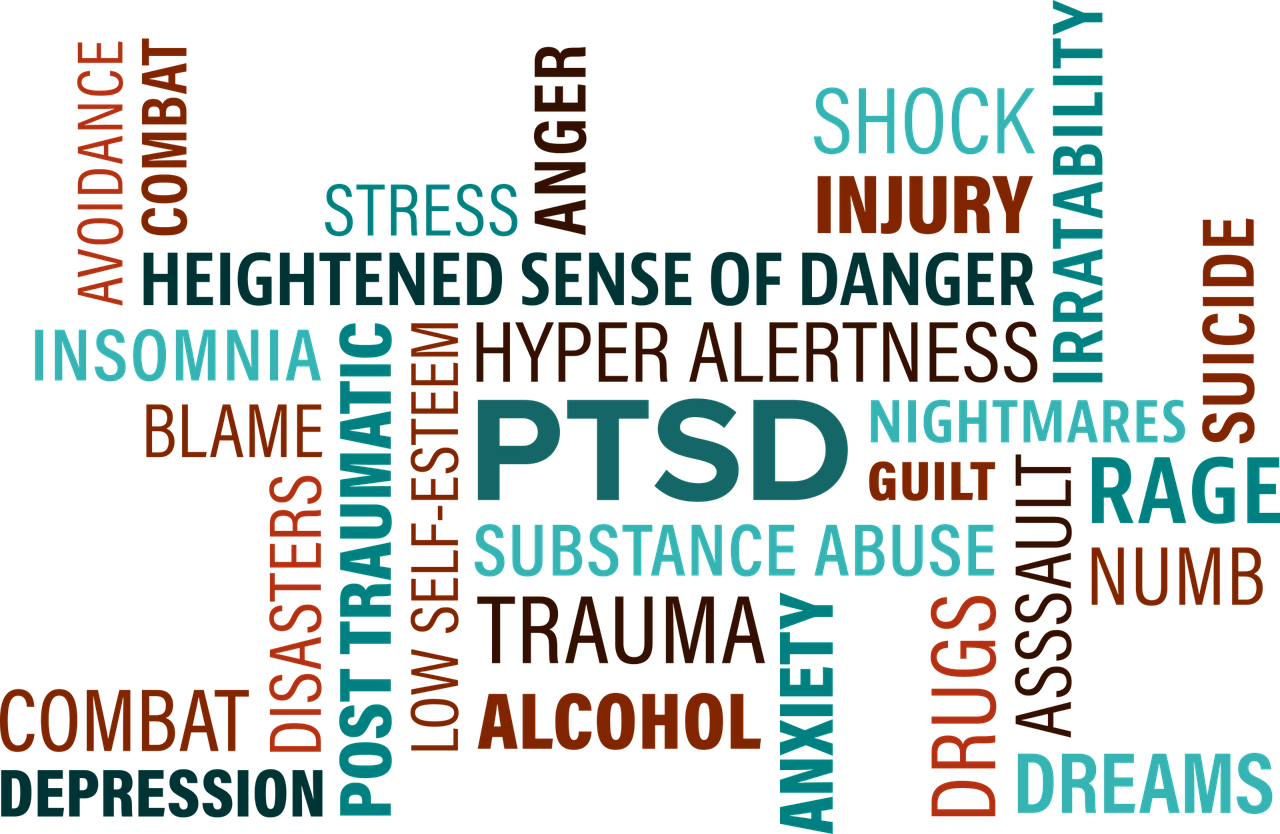
Words about PTSD

PTSD.
Photo courtesy of Pixabay.com

We have been hearing a lot more about PTSD these days.

The returning military is experiencing this problem in larger numbers than in the past. The military is not the only place we see PTSD. Children who have been abused, battered women and men, and people who have lived through traumas like hurricanes and tornadoes are also experiencing PTSD. The counseling profession, as well as society in general, is looking for solutions to this problem.

Recently at a convention for therapists and counselors, PTSD and the need to improve treatment was a major topic. I listened to the big-name people; the ones who have written books and given lectures, as they talked about how we should treat the disorder. Two of the biggest names in therapy did not agree on the best treatment. If they disagree, what is the person with PTSD to think? This made me start searching for answers.

Why do some people get PTSD and others do not experience it. In combat, let’s say ten men are in the same incident some get PTSD and some do not, why? Stix in a Scientific American article reported that of people who were traumatized by a single traumatic event, 90 % recovered from the trauma without therapy. So some people have concluded that PTSD is not a normal response to trauma. Maybe some form of resiliency is more common than PTSD. Maybe we have been doing it backward by studying the few who get PTSD instead of the many who bounce back from adversity.

We know from another study that kids who grow up in dysfunctional homes are more likely to suffer from PTSD, depression, and anxiety. From 50% to 67% of exposed kids develop some mental health issue, but the other one-third to one-half does not. Kids from this sort of background have repeated trauma and they have less social support. I wanted to know why some got PTSD and others did not.

There is a lot of research going on right now into the area of resilience. Some people seem to not develop PTSD when exposed to trauma. Others bounce back quickly. A few have lifelong problems. We need to know why these variations and how do we improve the ability to bounce back from adversity. A quick check of one journal database disclosed over 1400 articles about resiliency. I haven’t read them all yet but I will try to tell you the things I learn as I read them.

One thing seems clear from the articles I have read so far, and I am always comparing the research I read to what my clients tell me. Resilience, that ability to bounce back from adversity, is not something we are born with. Resilience can be learned and it can vary from situation to situation.

The subject is of such importance that I think there needs to be a book or books on how people can increase their resilience. So my plan at this stage is to share with you the things I learn and to add your comments and suggestions to what I find. In the process there just might be a book that needs writing. I will keep you posted on my efforts to write that book.

There are lots of writings on recovery, particularly from substance abuse or dependence, what it means to recover and be recovered. We are concluding that many people have both substance abuse disorders and mental health issues. It would be important to know how recovery is like resilience and how it is different, assuming these two terms do not describe the same thing.

One more thing I need to tell you about at this time. Some people experience a traumatic event and it changes their lives forever in a positive way. We call this Post Traumatic Growth (PTG). This intrigued me. Why and how is it that some people use a traumatic experience to transform their lives and grow into a stronger better person? We talk a lot about the way PTSD damages people but not much about the way in which it might inspire them. So I have been reading everything I can find on PTG. But I am also listening with new ears to the stories people tell about their life-changing experiences.

There is more to come on this subject so I hope you stay tuned for my postings and a possible book on Posttraumatic Stress Disorder (PTSD), Posttraumatic Growth (PTG), and the whole issue of how resilience is created and how you or someone you know can learn to bounce back from adversity.

For more information on Stress and PTSD see:

8 warning signs you have PTSD

Posttraumatic Growth (PTG) vs. Posttraumatic Stress Disorder

Acute Stress Disorder vs. PTSD 

Staying connected with David Joel Miller

Seven David Joel Miller Books are available now!

My newest book is now available. It was my opportunity to try on a new genre. I’ve been working on this book for several years, but now seem like the right time to publish it.

Story Bureau.

Story Bureau is a thrilling Dystopian Post-Apocalyptic adventure in the Surviving the Apocalypse series.

Baldwin struggles to survive life in a post-apocalyptic world where the government controls everything.

As society collapses and his family gets plunged into poverty, Baldwin takes a job in the capital city, working for a government agency called the Story Bureau. He discovers the Story Bureau is not a benign news outlet but a sinister government plot to manipulate society.

Bumps on the Road of Life. Whether you struggle with anxiety, depression, low motivation, or addiction, you can recover. Bumps on the Road of Life is the story of how people get off track and how to get your life out of the ditch.

Dark Family Secrets: Doris wants to get her life back, but small-town prejudice could shatter her dreams.

Casino Robbery Arthur Mitchell escapes the trauma of watching his girlfriend die. But the killers know he’s a witness and want him dead.

Planned Accidents  The second Arthur Mitchell and Plutus mystery.

Letters from the Dead: The third in the Arthur Mitchell mystery series.

What would you do if you found a letter to a detective describing a crime and you knew the writer and detective were dead, and you could be next?

Sasquatch. Three things about us, you should know. One, we have seen the past. Two, we’re trapped there. Three, I don’t know if we’ll ever get back to our own time.

For these and my upcoming books; please visit my Author Page – David Joel Miller

Want the latest blog posts as they publish? Subscribe to this blog.

For videos, see: Counselorssoapbox YouTube Video Channel

Am I a quart low on serotonin?

By David Joel Miller, MS, Licensed Therapist & Licensed Counselor.

Depressed person

Depression.
Photo courtesy of Pixabay.com

Low on Serotonin?

There has been a lot of talk about the way in which neurotransmitters affect the brain. Some of this has been helpful in understanding mental illness and some have not helped at all. On common expression has been that someone had a “chemical imbalance in the brain.” I wanted to talk about that and some other issues related to psychiatric medication in today’s blog. Please keep in mind that this is a highly simplified explanation. Remember I am a therapist and counselor, not a doctor so I need to find simple explanations for clients and myself without misleading them. If you have a background in biochemistry or research skip this blog now. If the doctor has told you to do or not do something please follow the doctor’s instructions or at the least talk with your doctor about these issues. The rest of you let me know if this helps explain things.

The expression chemical imbalance is a bit misleading. The frequent use of that expression has resulted in a lot of people coming in and asking to be tested to see if they have a chemical imbalance and if so what chemical do they need more of.  They get quite upset when we say that we can’t do that kind of test. Here are some of the problems with that approach.

Thoughts in my brain and yours also, are carried from one nerve (brain) cell to another by chemicals. So when I think something, anything, my brain sends out chemicals to carry that message. Once the thought has come and gone the chemicals are broken down and reused or disposed of. So as fast as I can think of something my brain chemistry is changing.

Now different brains may make, transport, and use chemicals at varying rates but we all use chemicals to move thoughts. This is why talk therapies like Cognitive Behavior Therapy can help to change someone’s thinking which results in a change in their brain chemistry. Now medication can also help and research seems to show that doing both medication and therapy for your problems can result in changes that are more rapid and longer lasting than either treatment alone.

Most everyone has heard of anti-depressants. So they think that if I am short on a brain chemical I should be able to take a pill, replace the missing chemical, and – presto – I am cured. Wish it was that simple. Let me give you one exaggerated example of how an antidepressant might work.  The most well known and widely prescribed antidepressants right now are ones called SSRI. SSRI stands for Selective Serotonin Reuptake Inhibitors. This has resulted in a lot of people thinking that the reason they are depressed is a shortage of Serotonin. Let me try to explain how this works. You will need to unpack your imagination for this one.

I once drove a car that had a leaky radiator. At the time money was tight, still is a lot of the time but that is another story. So I kept putting water in the radiator. This is sort of like the way my brain might try to keep putting serotonin into use. But as fast as I filled the radiator the water kept leaking out. So my engine overheated. When I get low on Serotonin my brain overheats (not really don’t get the thermometer to check for depression) and then I get depressed.

So every few miles I had to find a place to stop and put water in the radiator and still it didn’t last long, kept overheating.

So this friend of mine tells me there is this thing you can get at the auto store that stops the radiator from leaking. I get some, put it in the radiator and the leak slows down. A second dose and the radiator stops leaking altogether, well almost stopped but at that point, I only have to put water in the radiator once a week, not every day.  So it wasn’t the amount of that stop leak stuff that mattered. I didn’t need to fill the radiator up with it. It just helped me get more use out of the water I had already put in my radiator.

The SSRI works that way on our brains. It doesn’t put more serotonin in the brain but it slows down the leak so we get more miles or smiles out of the serotonin we already have.

Now, let’s say for illustration purposes here, I am bragging to my friend about what a great job that stops leak stuff did and he doesn’t believe me. So I do a demonstration. I get my trusty old shotgun out. Point it at the radiator and let it rip. Now the radiator starts to leak again. So out comes a can of stop up the radiator stuff and I pour it in. Only this time the stuff doesn’t work. The radiator keeps right on leaking.

This is exactly what happens to the brains of people who are on SSRIs or other antidepressants and then they drink alcohol. Alcohol, remember, is a depressant substance. Why we so rarely call it a drug is beyond me, given that it causes more problems with abuse, dependence, and suicide than all the other drugs. But that is just the way it is.

So the point of this story is that the problem for most people is not that the brain is low on serotonin but that the things we do to our brains use up the serotonin way to fast.  A good diet, plenty of sleep, avoiding drugs, and alcohol can all help you produce more serotonin. So can changing your thinking because happy thoughts release more neurotransmitters into the brain. But calling this problem a chemical imbalance shouldn’t take away the responsibility to get our thinking and our living fixed.

Staying connected with David Joel Miller

Seven David Joel Miller Books are available now!

My newest book is now available. It was my opportunity to try on a new genre. I’ve been working on this book for several years, but now seem like the right time to publish it.

Story Bureau.

Story Bureau is a thrilling Dystopian Post-Apocalyptic adventure in the Surviving the Apocalypse series.

Baldwin struggles to survive life in a post-apocalyptic world where the government controls everything.

As society collapses and his family gets plunged into poverty, Baldwin takes a job in the capital city, working for a government agency called the Story Bureau. He discovers the Story Bureau is not a benign news outlet but a sinister government plot to manipulate society.

Bumps on the Road of Life. Whether you struggle with anxiety, depression, low motivation, or addiction, you can recover. Bumps on the Road of Life is the story of how people get off track and how to get your life out of the ditch.

Dark Family Secrets: Doris wants to get her life back, but small-town prejudice could shatter her dreams.

Casino Robbery Arthur Mitchell escapes the trauma of watching his girlfriend die. But the killers know he’s a witness and want him dead.

Planned Accidents  The second Arthur Mitchell and Plutus mystery.

Letters from the Dead: The third in the Arthur Mitchell mystery series.

What would you do if you found a letter to a detective describing a crime and you knew the writer and detective were dead, and you could be next?

Sasquatch. Three things about us, you should know. One, we have seen the past. Two, we’re trapped there. Three, I don’t know if we’ll ever get back to our own time.

For these and my upcoming books; please visit my Author Page – David Joel Miller

Want the latest blog posts as they publish? Subscribe to this blog.

For videos, see: Counselorssoapbox YouTube Video Channel

Am I Bipolar?

By David Joel Miller, MS, Licensed Therapist & Licensed Counselor.

Person with masks

Bipolar.
Photo courtesy of Pixabay.com

Am I Bipolar?

Occasionally I get asked this question. More often the person asking the question is asking if their child, spouse, or friend is Bipolar. Almost no one ever asks me if they are depressed. Why the difference?

Most of us know when we are depressed. We know that we can be a little depressed and get over it naturally or we can get a lot depressed and need help. It is also easy to see that there is a difference between being a “little depressed” and suffering from Major Depressive Disorder which is the technical term we professionals use when we diagnose clinical depression that needs treatment.  We also have some other lesser degrees of depression we can diagnose like Dysthymic Disorder. Not so much with bipolar disorder.

Even my more liberal colleagues are uncomfortable with the idea that people could be “a little bit bipolar” even though all people have some of the characteristics of bipolar from time to time. It would be more comfortable to think that there are “those people” meaning the mentally ill – over there and then “us people” the normal ones over here. Forget for a moment that our friends and family may think we belong with the over-there folks. Why is it so hard to accept that most of the symptoms of mental illness are on a continuum from a few to a lot?

With depression, we all accept that if someone in your family dies – say, grandma, for instance, you should be sad. That is assuming, of course, you like grandma. If someone close to you dies we expect you to be sad, depressed even, we have a special name for that – Bereavement. But if five years later you are still stuck at home, too depressed to go to work because of this loss, then we think there is something excessive going on here and you will be diagnosed as depressed, probably diagnosed with Major Depressive disorder. So why don’t we do that with Bipolar disorder?

One caution is in order.  DO NOT ATTEMPT THIS AT HOME! Diagnosis is not a do-it-yourself project. This blog is meant to be informative and as you will see below most of this is not a matter of yes or no answers on a questionnaire. Some “clinical judgment” needs to be used, which is why even professionals sometimes need to consult with other professionals on close calls.

Let’s look at the criteria for Bipolar and see how someone might have all the signs or symptoms and still not qualify for the diagnosis. Some of you who read my earlier blog about Bipolar Disorder will remember that the main difference between depression and bipolar disorder is the occurrence, at least one time, of an episode of large mania or small mania (Hypomania.) I have simplified these descriptions so if you want the long-form, check the DSM.  After the 7 criteria will come the big stuff.

Here are the 7 criteria:

1. Inflated self-esteem or grandiosity.

So this sounds like an occupational disease. Wouldn’t all politicians, entertainers, and sports personalities fit this description? So thinking a lot of yourself could be good self-confidence or it could be grandiosity depending on whether you win or not. Certainly, people with bipolar disorder may be attracted to these kinds of occupations but not everyone in those fields should be diagnosed with bipolar disorder. As with all the other symptoms, this is not a yes or no answer, it is a matter of degree.

2. Decreased need for sleep.

Many people experience a night or two when they are doing something exciting and they get by on less than normal sleep for a day or two. As a society, we like people who get a lot done. But eventually, the novelty wears off and the need for sleep returns. Bipolar people have extended periods of high activities with a reduced need for sleep.  Parents with bipolar children report the child never slept that much. Though most parents don’t think their child sleeps enough when the kid keeps waking you up at night. So again the sleep issue is a matter of degree.

3. More talkative than usual or a pressure to keep talking.

Now we have all met people who talk a lot. And when you are with someone who has not seen you for a while you both may feel the need to say a lot. Some kids are so needy for attention that once the mouth opens they will talk nonstop. None of these things meet the criterion of it only happens occasionally. To really be bipolar disorder the person needs to have an out of control need to do these things.

4. Racing thoughts.

This is from the client’s point of view. They feel that even they are having difficulty keeping up with their own thoughts. Writers have this happen sometimes; the muse strikes and we have trouble getting it down on paper. That is not the same thing. Being a writer does not make you Bipolar. (We are not all bipolar are we?) These fast thoughts are also called flights of ideas, hard to stay on track when your ideas jump from subject to subject.

5. Distractibility.

This involves being pulled away easily or getting stuck on irrelevant things. Now, this is perilously close to ADHD. Kids with bipolar disorder are sometimes given an ADHD diagnosis the first time until the symptoms of bipolar disorder become clearer. More on ADHD at another time.

6. An increase in goal-directed behavior.

This is also a tricky one. If it means studying a lot and getting all “A’s” or making lots of money we may let this go. But if you are really good at having sex with lots of people or working so many hours you forget where you live – then you get diagnosed.

7. Excessive involvement in pleasurable activities that may cause you pain.

The official guide lists too much sex, buying sprees, sexual indiscretions, and foolish business investments. This leaves out gambling, substance abuse and some other impulse control problems.  What is a foolish business investment is also open to question. Should we dump the internet stock and invest in a sound carriage manufacturer’s stock? So see how some interpretation is needed?

Now all the above notwithstanding, for anything to be diagnosed – yes you heard me right – for anything to be diagnosed as a mental illness it must cause one of three things.

A. The problem keeps you from having or keeping a job. For kids, this includes going to school. In fancy-speak, we call this interfering with occupation functioning.

B. It keeps you from having good relationships with your friends or family this is called social functioning.

C. It causes you pain. So if the problem is causing you pain we are much more likely to think it is a mental or emotional disorder than if you and your friends are OK with your difference and you can keep a job.

More next time on some of these problematic diagnoses and on some other relationship issues that you have emailed me about.

Bye for now

David Miller, LMFT, LPCC

Bipolar doesn’t mean moody

By David Joel Miller, MS, Licensed Therapist & Licensed Counselor.

Person with masks

Bipolar.
Photo courtesy of Pixabay.com

Bipolar doesn’t mean moody.

Three psychiatric diagnoses (ADHD, Bipolar, and Schizophrenia) have left the scientific literature and taken up residency in the media and in everyday conversation. The problem with these usages is it devalues the term and pretty soon it is being misused more often than it is used correctly. Bipolar is one of those terms.

Kids report that their peers call them or others “Bipolar.” We hear about it on talk shows. Sometimes parents call their children or their partner Bipolar with no clear idea what the term means. Children are being diagnosed with bipolar disorder at younger and younger ages. Early diagnosis and treatment is a good thing; it may reduce a lifetime of suffering. Referring every kid in first grade who is irritable for a bipolar evaluation is probably not warranted.

Lots of parents want their child “tested” for bipolar disorder. I wish there was a simple test, say blood or urine that would detect the disorder. There may be physical signs or markers, but so far no one seems to be able to detect bipolar disorder other than by a psychological evaluation that involves descriptions of mood and behavior. When many parents want to know if their child is bipolar, what they really mean is the child is irritable or difficult and they need help.

People refer to others who are moody as Bipolar. Bipolar disorder does not mean moody! Some people are naturally moody others get moody when something upsets them. Lack of sleep makes most anyone moody and grouchy. Not everyone with sleep disturbances has bipolar disorder by any stretch of the imagination.

When we talk about bipolar disorder we are talking about a condition, not a person. A person may have bipolar disorder that does not make them “bipolar.”

So what is Bipolar – really? It used to be called Manic Depressive disorder. I see client questionnaires where they report they have family histories of both manic-depressive disorder and Bipolar. I won’t go into the politics behind the name change but it is important to note two things. Bipolar is a mood disorder so it is in the same “family” or chapter as Depression and other mood disorders. The second characteristic is that for the problem to be bipolar it must include Mania or its cousin Hypomania.

Update – In the DSM-5 they did away with the term “mood disorders.” More and more professionals are thinking that Bipolar and Major Depressive Disorder are for-sure two separate things. You may have periods of depression for a while before the mania but we need to be careful to separate the Bipolar from the Major depression.

So what is mania? I won’t repeat the whole DSM-4-TR criteria here if you want that please go to the source. But a couple of things that separate mania and therefore bipolar disorder are important. For some clients, this looks like someone on Meth – without the drugs. This is not a little bit thing that comes and goes. When it occurs the person is debilitated.

Mania involves a period of time where the client’s behavior is elevated, expansive, or irritable. In short, they are “off the hook” and this is not deliberate but uncontrollable. During this time frame, they have a bunch of behaviors that are far too excessive. The DSM lists 7 characteristics and the person should have the majority of these symptoms. Not sleeping and not needing to sleep is a red flag. They are up all night doing things and they don’t even feel tired. They are likely to show grandiosity and excessive self-esteem. They talk faster than those around them can listen and they think faster than they can talk. But the thoughts may make sense only to the person with bipolar disorder. They are likely to get “stuck” on things, too much work, buying sprees, excessive sexual activity, and other risk-taking activities.

Since mania is seductive, who wouldn’t like to be able to have fun twenty-four hours a day and not need to sleep, during manic episodes the client with bipolar may be strongly attracted to stimulant drugs like methamphetamine and cocaine. Alcohol abuse is also common which increases the crash when the manic episode ends. And it always ends.

Most people who truly have bipolar disorder are first diagnosed with depression. One indicator that makes me suspicious is when a depressed client takes an anti-depressant and recovers suddenly and now is “better than ever.” A manic episode is about to occur.

So far talking about Bipolar disorder, with its depressive and manic symptoms makes it sound like the person runs from manic (which is not happy by the way) to depressed. That’s not the whole story. Kay Redfield Jamison writes about what we might call mixed states. It is possible, probably more common than we might think, to have both mania and depression at the same time. Think of the shifting moods like a tire on your car. When it is parked we could mark one side of the tire and call that the back, the other would be the front. But once the tire starts to move you don’t drive on the front or the back but the whole tire. So the person with bipolar may experience a mixture of depression and mania at the same time.

Another feature of Bipolar disorder that separates it from moodiness and depression is the tendency for the elevated thinking to become first delusional and then it may progress to include hallucinations. So the person with bipolar disorder is not only thinking odd thoughts but is very irritated with others that they don’t “get them.”

Hope this explanation got you thinking about Bipolar disorder. If you would like more information, check out the Depression and Bipolar Support Alliance.

As always your comments are welcome. If you like this blog spread the word. If not let me know what might improve it. Till next time.

David Miller, LMFT, LPCC

Great New Training on Mental Health

Counselorssoapbox.com

Mental Health First Aid (MHFA) is a great new training. If you are not familiar with this training you should check it out. Designed for the non-professional, it teaches you how to react and how to be helpful if you encounter someone who is having a mental health crisis. Created in Australia the program has now come to the United States. The two-day, twelve-hour interactive class covers the major kinds of mental illnesses and how to help a friend, family member, or someone you might meet who is experiencing mental health problems. Sponsored by the Maryland Department of Health and Mental Hygiene, Missouri Department of Mental Health, and The National Council for Community Behavioral Healthcare there are now certified trainers throughout the United States.

Here in California’s central valley, there are over a hundred certified trainers. Certified trainers in Fresno have put on numerous trainings over the last year. I became so enthusiastic about this program that I took the training and became a certified trainer. So far I and a co-facilitator have completed three trainings. All of our trainings were enjoyable to do and well attended. In the coming year, we plan to offer the training at least three more times. We are currently looking for a larger room or a sponsoring agency. If you want more information on my trainings please email me or watch this blog for posts on upcoming trainings.

If you are not near Fresno you can check the Mental Health First Aid USA website at http://www.mentalhealthfirstaid.org/cs/program_overview/ for a listing of courses in your area. The training comes with a detailed book for reference after the class. So whether we see you in one of our trainings here in Fresno, or you take it from another trainer, this is one class well worth taking.

Thanks to all of you who are reading this blog, subscribing, and passing it on.

David Joel Miller, LMFT, LPCC

Staying connected with David Joel Miller

Seven David Joel Miller Books are available now!

My newest book is now available. It was my opportunity to try on a new genre. I’ve been working on this book for several years, but now seem like the right time to publish it.

Story Bureau.

Story Bureau is a thrilling Dystopian Post-Apocalyptic adventure in the Surviving the Apocalypse series.

Baldwin struggles to survive life in a post-apocalyptic world where the government controls everything.

As society collapses and his family gets plunged into poverty, Baldwin takes a job in the capital city, working for a government agency called the Story Bureau. He discovers the Story Bureau is not a benign news outlet but a sinister government plot to manipulate society.

Bumps on the Road of Life. Whether you struggle with anxiety, depression, low motivation, or addiction, you can recover. Bumps on the Road of Life is the story of how people get off track and how to get your life out of the ditch.

Dark Family Secrets: Doris wants to get her life back, but small-town prejudice could shatter her dreams.

Casino Robbery Arthur Mitchell escapes the trauma of watching his girlfriend die. But the killers know he’s a witness and want him dead.

Planned Accidents  The second Arthur Mitchell and Plutus mystery.

Letters from the Dead: The third in the Arthur Mitchell mystery series.

What would you do if you found a letter to a detective describing a crime and you knew the writer and detective were dead, and you could be next?

Sasquatch. Three things about us, you should know. One, we have seen the past. Two, we’re trapped there. Three, I don’t know if we’ll ever get back to our own time.

For these and my upcoming books; please visit my Author Page – David Joel Miller

Want the latest blog posts as they publish? Subscribe to this blog.

For videos, see: Counselorssoapbox YouTube Video Channel
Anxiety is like a cat!

By David Joel Miller, MS, Licensed Therapist & Licensed Counselor.

Stray cat

Feral cat.
Photo courtesy of Pixabay.com

Anxiety is like a cat!

What exactly is anxiety? And what is an anxiety disorder?

Well to some people it looks like a kitten.

And to others, it looks like a lion.

A little anxiety can feel like a small cat rubbing on your leg, a bit of an annoyance but nothing you can’t handle. It can push you to try harder. It is the stage fright that keys up the performer to go all out and give the performance of their life.

For others, Anxiety is the lion that keeps you off the stage of life. It is a terrifying disorder that tries to eat you alive.

Anxiety disorders are the most common emotional problem in America. In any one year, approximately one in five Americans will have an episode of anxiety that is severe enough to interfere with their everyday functioning, an episode so severe they should go for treatment.

Dictionaries define anxiety as a feeling, worry, nervousness, agitation, fear, or apprehension. The symptoms can interfere with every system in the body. Anxiety symptoms are often mistaken for physical illnesses and send millions of people repeatedly to the doctor looking for a physical cause of an emotional problem.

Now if you have a physical problem, by all means, see your doctor. But if the problem keeps changing, if the doctor can’t find anything wrong with you, then the problem may be emotional. That does not mean the problem is “all in your head” it is there, but it is everywhere in your body also, and there are treatments for anxiety.

Robert Sapolsky wrote a really cool book, called “Why Zebras Don’t Get Ulcers” which explains how your fears can essentially hijack your body and show up by making you sick. I highly recommend this book to counselors and therapists who want to understand anxiety and want to help people with this problem. But what if you or your child is suffering from anxiety. And I do mean SUFFERING? What if you just want to get your life back?

There are ways to turn the volume down on anxiety, shrink that cat down to a manageable size. I am not saying to get rid of anxiety altogether. If there is a real live lion chasing you, or a gang banger with a gun, some fear and anxiety is a good thing. Under those circumstances, anxiety might save your life. If your fears are keeping you from having a life, what then?

A good counselor or therapist can help you shrink those fears. There are self-help books that help also. A good counselor can help you learn and practice skills to stop anxiety in its tracks. The difficulty here is they will probably see you an hour a week, now you got 167 hours to go before your next appointment. What now? This is where a good self-help book can help, especially if you talk it over with a professional and practice the skills. A book is also helpful if you need to help a child get over their anxiety.

One book that I find helpful for managing anxiety is Tamar Chansky’s book “Freeing Your Child from Anxiety: Powerful, Practical Solutions to Overcome Your Child’s Fears, Worries, and Phobias.  She has lots of good techniques for reducing and controlling anxiety. She does some creative things like using a “Fear Extinguisher” and a “Fear Thermometer” as well as some of the standbys like creating incompatible emotion states by using humor or relaxation to reduce anxiety.

So is anger a problem for you? How do you reduce or control your anger? And if you are a counselor and work with clients with anxiety – What do you find the most effective approach?

There will be more on this topic to come, and please feel free to comment on this or any other topic in my blog. Till next week. David Joel Miller, LMFT, LPCC.

Staying connected with David Joel Miller

Seven David Joel Miller Books are available now!

My newest book is now available. It was my opportunity to try on a new genre. I’ve been working on this book for several years, but now seem like the right time to publish it.

Story Bureau.

Story Bureau is a thrilling Dystopian Post-Apocalyptic adventure in the Surviving the Apocalypse series.

Baldwin struggles to survive life in a post-apocalyptic world where the government controls everything.

As society collapses and his family gets plunged into poverty, Baldwin takes a job in the capital city, working for a government agency called the Story Bureau. He discovers the Story Bureau is not a benign news outlet but a sinister government plot to manipulate society.

Bumps on the Road of Life. Whether you struggle with anxiety, depression, low motivation, or addiction, you can recover. Bumps on the Road of Life is the story of how people get off track and how to get your life out of the ditch.

Dark Family Secrets: Doris wants to get her life back, but small-town prejudice could shatter her dreams.

Casino Robbery Arthur Mitchell escapes the trauma of watching his girlfriend die. But the killers know he’s a witness and want him dead.

Planned Accidents  The second Arthur Mitchell and Plutus mystery.

Letters from the Dead: The third in the Arthur Mitchell mystery series.

What would you do if you found a letter to a detective describing a crime and you knew the writer and detective were dead, and you could be next?

Sasquatch. Three things about us, you should know. One, we have seen the past. Two, we’re trapped there. Three, I don’t know if we’ll ever get back to our own time.

For these and my upcoming books; please visit my Author Page – David Joel Miller

Want the latest blog posts as they publish? Subscribe to this blog.

For videos, see: Counselorssoapbox YouTube Video Channel