

You need to have a time budget.

Time Budget
Photo courtesy of Pixabay.com

You need to have a time budget.

By David Joel Miller, MS, Licensed Therapist & Counselor.

How do you budget your time?

Most people are familiar with the concept of a financial budget, though far too few people actually have one either mentally or written down on paper. I hear a lot about keeping your life in balance, but just like money, you only have so much time to spend, and how you spend it determines the quality of your life.

If you woke up at 12:00 AM Sunday morning and lived until 12:00 PM that Saturday night, you would have lived for precisely 168 hours. Every week, we get exactly 168 hours. No one gets any more, and no one gets any less. The only exceptions to that would be the week you’re born and the week you die. But between those two guideposts, during each week, you get your allocation of hours, and how you spend those hours is up to you.

In achieving work-life balance, time is the crucial factor.

Recently, I have been hearing a lot about the issue of work-life balance. It’s a massive problem for many of my clients, some of whom are burning out because of high-stress, high-demand jobs. We thought we got past that issue when we created the forty-hour work week. In some parts of Europe, thirty-two-hour work weeks are typical. Not in the United States.

High-tech and professional jobs assign their professional people, people who work on salary, more work than they can possibly do in forty hours a week. It is the norm now for people to be assigned more work than could possibly be achieved in forty hours. People in many professions tell me that they routinely work sixty or even eighty-hour work weeks.

There’s no way that you can have other parts of your life be in balance when you spend half of your allotted hours each week on work. Especially when you spend time preparing for work, commuting to work, returning home from work, and trying to unwind after work.

Excessive work weeks are leading to physical health problems, relationship problems, and severe mental health issues.

There’s no such thing as making time for the things you want to do.

In order to create more time for family, you have to take that time away from something else. No matter how hard you search, you will never discover any additional time. One of the most important tools for trying to get your overall life in balance is to start by creating a written schedule for your week.

Look at when you get up and when you go to bed. Is there adequate time to actually sleep? Is your sleep so restricted that you must fall asleep the second your head hits the pillow and must be ready to run the second the alarm clock goes off? If so, of course, you’ll be stressed out, and eventually, you will be burned out.

There are two ways we demonstrate what is important to us.

No matter what you say about the importance of your relationship or your family, you won’t participate in these relationships if you don’t spend time with your partner or family. We can quickly tell what’s important to someone; we look at what they spend their time on and how they spend their money. And the two are not interchangeable. You can’t compensate for neglecting your children by working more hours and buying them more things. It takes time to maintain a relationship.

Lots of relationships fail at about the twenty-year mark.

With work and sleep being the two highest priorities, once you spend time with your children, there’s not much left for your primary relationship and even less time left for self-care, however, you define that. We see a lot of relationships that end about the time the oldest child leaves home, either for college or to start a family of their own. This is when couples often look at each other and say, “We have stayed together all these years for the children; is there any reason for us to stay together now?” If you don’t spend time together doing things and talking about stuff throughout your relationship, it’s hard to keep alive when you no longer have a common purpose.

Does David Joel Miller see clients for counseling and coaching?

Yes, I do. I can see private pay clients if they live in California, where I am licensed. If you’re interested in information about that, please email me or use the contact me form.

Staying in touch with David Joel Miller.

Want the latest blog posts as they are published? Subscribe to this blog.

For more information about my writing journey, my books, and other creative activities, please subscribe to my blog at davidjoelmillerwriter.com

Seven David Joel Miller Books are available on Amazon now! And more are on the way.

For more about my books, please visit my Amazon Author Page – David Joel Miller

For information about my work in mental health, substance abuse, and having a happy life, please check out https://counselorssoapbox.com

For videos, see: Counselorssoapbox YouTube Video Channel

Why I decided to give up making New Year’s resolutions.

New Year’s resolutions
Photo courtesy of Pixabay.com

Why I decided to give up making New Year’s resolutions.

By David Joel Miller, MS, Licensed Therapist & Counselor.

An alternative to New Year’s resolutions.

I’ve tried making New Year’s resolutions more than once. Most of those resolutions are forgotten by the second week in January. Every year, right around New Year’s, many people make New Year’s resolutions, most of which last only a few days. I found a much more effective tool to shape my life in the directions that I wanted to go.

I decided against making a bucket list.

I considered writing out a bucket list, but I concluded that that’s a very negative way to look at things. I don’t know about the rest of you, but for me, envisioning a list of things I have to get done before I die is just too much pressure. I have no intention of kicking the bucket anytime soon, but one never knows. The trouble with the bucket list is it’s too much like the way I used to use to-do lists.

Is your to-do list your friend or your enemy?

A bucket list is very much like that list of things I need to do each day. Those to-do lists were really beating me up. Every night before I went to bed, I would make a list of things I needed to do the next day. Why did I write to-do lists out each night just before bedtime? My plan was to empty my head so my brain could stop thinking about tomorrow and allow me to get some sleep tonight.

The following day, I would struggle all day to finish those ten or twelve things on the to-do list. If I was lucky, I accomplished at most two or three. That left me feeling more like a failure than like someone who accomplished a lot. I decided that instead of a list of things I needed to do tomorrow, I would create a list of things I wanted to do. Now, if I finish three things that I want to do each day, I feel good about my day, even if there are a whole lot more things left on the list. So how can I apply this process to the idea of a bucket list or, more importantly, to my scads of New Year’s resolutions, which never went anywhere?

Try creating a life list.

A few years back, I decided to create a life list. I read a lot, and I came across this idea somewhere. Can’t remember where. But I thought this was an idea I could apply to all those abandoned New Year’s resolutions.

I have a binder on my desk, which I use to organize my life. One section includes the counseling and coaching appointments I have each day. Another section consists of a calendar of blog posts and when they will be published. I try to stay up to date on that list, although in the last few years, through the pandemic and the aftermath, writing blog posts has had to take a much smaller priority.

One section in that binder is now devoted to my life list.

I set aside one section in my trusty old binder for my life list. Whenever I get an idea for something I want to do, I write it down there. Every time I do one of those things, I cross that off the list. It doesn’t matter whether the thing I want to do is a small one or a large one.

One day, I was watching a TV show, and they were talking about eating kiwifruit. It occurred to me that I’d never eaten a kiwi. So, I put it down on my list. The next time I went to the grocery store, I bought some kiwifruit and put it in the refrigerator to chill. The following day, I ate my kiwi. One thing I scratched off my life list having done something I wanted to do.

One of the advantages of having a life list is that it doesn’t matter whether the thing you want to do is small or large. Whether it’s eating a new food, writing a book, earning another college degree, or just taking a two-hour class, any goals I come up with get written down. Every time I complete one, I scratch it off.

Reaching these goals may require various processes. One thing I learned about making my life list was to keep the goals very small and specific. Writing a blog post about New Year’s resolutions is much easier than writing an entire book on setting and keeping those resolutions.

To be perfectly honest, the last time I reviewed that life list, I crossed a few things off the list that I hadn’t done. Just because I think I might want to do something doesn’t mean I have to do it. I can cross something off the list at any time. Changing my mind about something on the life list feels much better than saying I gave up on one of my New Year’s resolutions.

Shifting your thinking from a list of things you must make yourself do to a list of things you want to do makes it much easier to manage. What do you think of this idea? Are you ready to give up making resolutions you know you won’t keep and start doing more of the things you want to do?

Does David Joel Miller see clients for counseling and coaching?

Yes, I do. I can see private pay clients if they live in California, where I am licensed. If you’re interested in information about that, please email me or use the contact me form.

Staying in touch with David Joel Miller.

Want the latest blog posts as they are published? Subscribe to this blog.

For more information about my writing journey, my books, and other creative activities, please subscribe to my blog at davidjoelmillerwriter.com

Seven David Joel Miller Books are available on Amazon now! And more are on the way.

For more about my books, please visit my Amazon Author Page – David Joel Miller

For information about my work in mental health, substance abuse, and having a happy life, please check out counselorssoapbox.com

For videos, see: Counselorssoapbox YouTube Video Channel
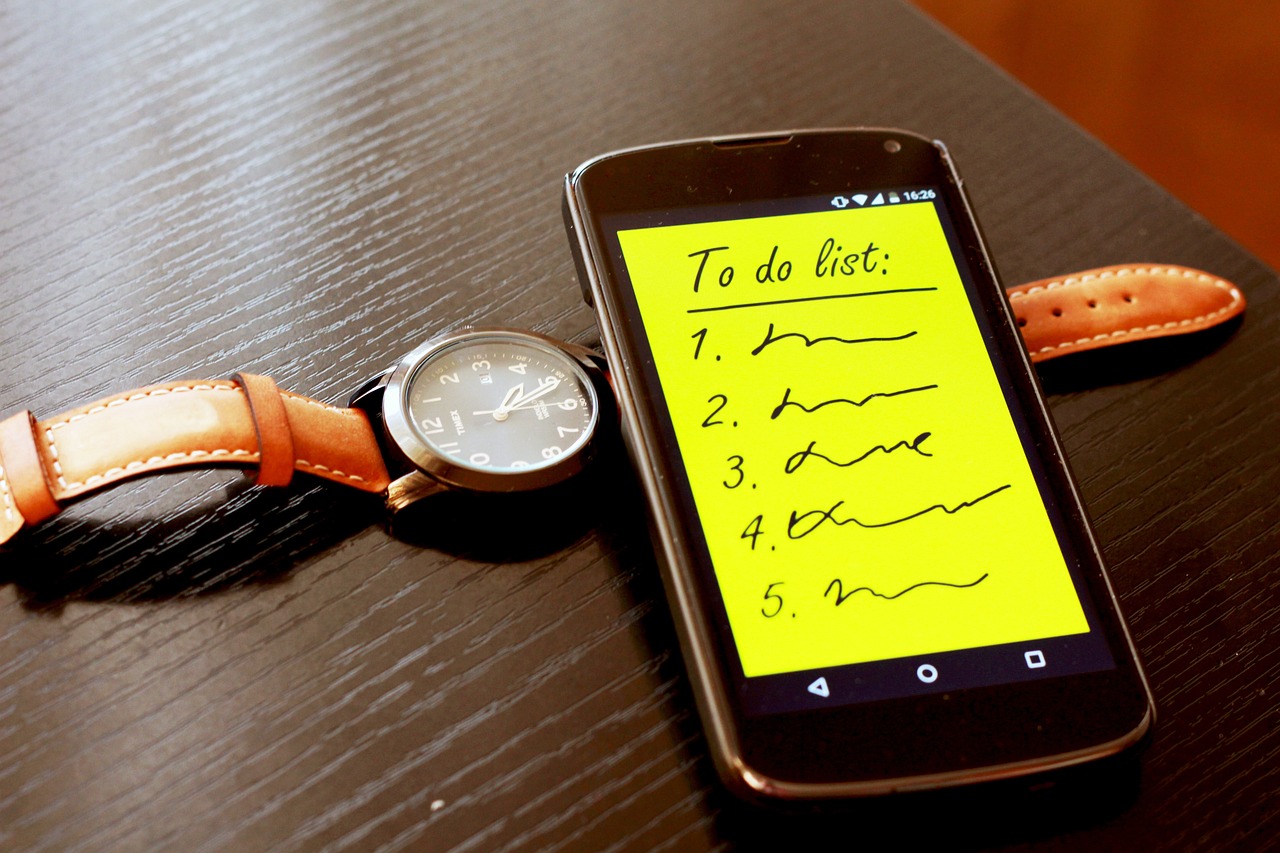
To-do lists cause anxiety and depression

Picture of a to-do list on a smartphone

Has your to-do list become your enemy.
Photo courtesy of Pixabay.

To-do lists cause anxiety and depression

By David Joel Miller, MS, Licensed Therapist & Counselor.

Is your to-do list getting you down?

I’ve been struggling with my to-do list for a long time. I probably should say to-do lists, plural. I do a lot of different things in a day. I spend my day teaching classes, doing supervision, and of course, as a licensed mental health professional, I see a lot of clients. To-do lists have become a big problem for me and almost everyone I know. I think I may have found a solution for this problem.

Rattling around in my brain all day are those ideas for creative things I would like to do. There’s a blog post, a YouTube video, and that novel I’m working on. There are also all those topics that pop into my head that I need to research because no matter how long you have been working with clients, someone will present with a new problem that you wish you knew more about.

Trying to remember six things I want to do when I’m done with this session fills my head up so much I can’t concentrate. As a result, I have learned to use a little pad that sits next to me on my desk as a sort of external hard drive.

Every time an idea pops into my head, I quickly write it on the pad, which means I don’t have to remember it. Then, when the list gets full, I tear off the sheet and toss it onto a pile on my desk. That pile has become the home of my to-do lists. Periodically I go through those notes and try to create one or two consolidated to-do lists. The sheer number of things waiting on those pages to be done used to be overwhelming.

The to-do list phobia syndrome.

My pile of to-do lists became so large that I started placing a book on top of them just so I didn’t have to look at them. I’ve learned from the work I’m doing with both counseling and coaching clients that I’m not the only one who struggles with massive to-do lists. Many of my clients tell me that the length of their to-do list is making them anxious, and at the end of the day, when they look at the items they have been able to complete and see how many remain, they become overwhelmed and depressed.

Does the sheer length of your to-do list make you feel like a failure? I do know, of course, that the reality is that many of those things on my to-do list don’t absolutely have to be done. I need to show up for my counseling appointments and my classes. I need to turn in my timesheets and do my billing if I want to get paid. But all those other things that I feel like I “must” or “should” be doing were making me anxious.

Before long, I think we will have to add a diagnosis for a new phenomenon I’m calling “to-do list phobia.”

Do you delete emails with the word “do” in the subject line?

Have you reached the point where as soon as you see the phrase in the subject line containing the word “do,” that email goes straight to the deleted email file? I had begun ignoring any communication which began with “I need you to do something for me” or “please do this as soon as possible.”

In fact, I was beginning to toss to-do lists of my own making directly into the recycle bin in the hopes that having written down the desire to do this at some point in the future would be enough to keep that thought from returning to my brain.

If you’ve reached the point where just looking at your to-do list, knowing that you have one, and seeing how little you have gotten done on it in the course of the day is leading to anxiety or depression, you have probably contracted a case of “to-do phobia syndrome.” By the way, that’s not an official diagnosis. Still, I see enough people obsessed with productivity and terrified by the undone things on their to-do lists that I think it’s helpful to look at the results of too many things on a to-do list as a productivity impairing syndrome.

How to make your to-do list your friend.

I have found one thing that seems to change my to-do lists from adversaries punishing me for my shortcomings into welcoming friends who encourage me to enjoy the things I do.

One reason I think to-do lists become the enemy for many people rather than helpful friends is that they view those lists as things they HAVE to do. That’s the way I had been looking at it. I get to my desk each morning and would find the list with ten or more things I HAD to do today. At the end of the day, looking back at the things I scratched off, I had finished maybe three out of the ten items. Thirty percent of the items completed feel more like a failure than a success.

Start making lists of things you WANT to do.

I stopped thinking about my to-do list as things I should do or must do and started looking at them as things I WANTED to do. Accomplishing three things that I wanted to do today feels pretty good. I know I won’t live forever. However, part of my life philosophy is that I try to keep moving forward rapidly enough to stay ahead of the Grim Reaper. It will never be possible for me to do all the things I want to do in this lifetime, but I’ve sure been able to do a lot of them.

What would it look like for you if you stopped beating yourself up with things you had to do and started looking forward to things that you wanted to do? If the things on your to-do list aren’t things you really want to do, maybe it’s time to re-examine the direction your life is going.

Does David Joel Miller see clients for counseling and coaching?

Yes, I do. I can see private pay clients if they live in California, where I am licensed. If you’re interested in information about that, please email me or use the contact me form.

Staying in touch with David Joel Miller.

Want the latest blog posts as they publish? Subscribe to this blog.

For more information about my writing journey, my books, and other creative activities, please subscribe to my blog at davidjoelmillerwriter.com

Seven David Joel Miller Books are available on Amazon now! And more are on the way.

For these and my upcoming books, please visit my Amazon Author Page – David Joel Miller

For information about my work in mental health, substance abuse, and having a happy life, please check out counselorssoapbox.com

For videos, see: Counselorssoapbox YouTube Video Channel

The benefits of asking more questions.

Counseling questions

Asking questions.
Photo courtesy of Pixabay.com

By David Joel Miller, MS, Licensed Therapist & Licensed Counselor.

You shouldn’t be afraid to ask questions.

Many people don’t like to ask questions for fear; it will make them seem dumb. There’s an old saying that the dumbest question is the one you don’t ask. Research on asking questions shows that you can receive a lot of benefits from asking more questions. Learning to ask thoughtful questions can improve your knowledge and your career. Asking questions can show that you’re interested in what others have to say. Here are some ways in which asking more questions might benefit you.

Asking questions improves emotional intelligence.

High emotional intelligence can be a beneficial skill, particularly if you’re in a job or a situation that requires a lot of interaction with other people. People with high emotional intelligence are better at recognizing what their friends and partners are feeling, and it improves their interpersonal relationships.

Very few people announce what they’re feeling. Many people have trouble identifying their own feelings. Learning to understand what those around you are feeling can prevent a lot of problems. Asking people how they feel about things helps you learn to recognize other’s feelings and your own.

If you don’t ask, you won’t know.

A lot of errors and misunderstandings could be eliminated if only people would ask more questions. The people you’re talking with generally won’t know how much you know about the topic. Too much explanation may come across as demeaning and insulting. Too little explanation creates misunderstandings. By asking informed questions, you tell your conversation partner what things they need to explain better.

Good questions build relationships.

Asking questions shows that you’re interested in the other person and help build good relationships. By asking questions about the other person, you give them the opening to tell you more about themselves and their thinking. Allowing others to open up and talk about themselves deepens your connection.

Asking questions increase learning.

One way to consolidate learning is to ask questions about the material you have just been presented. If you’re reading something, pause periodically to ask yourself questions about the material. If you find it difficult to answer those questions, you need to reread or study the material more. Asking and answering these questions helps you to reinforce that learning. Asking questions of someone who is knowledgeable about a subject may reveal information you would not have learned otherwise.

Use open-ended questions.

Open-ended questions, ones that can’t be answered with a yes or no, increase communication. Closed-ended questions of the yes or no variety reduce communication. Too many closed-ended questions can shut down communication entirely and may come across as interrogation. Try asking people to tell you more about the topic. Encourage your conversation partner to expand on what they’ve already said.

You need to balance asking and answering questions.

Most people like being asked questions, but if you only ask them and never answer them, they find it hard to trust you. Good communication flows in both directions. If you want people to trust you and you expect them to answer your questions, you need to be trustworthy, and you need to answer their questions.

For more on the value of the skill of asking more and better questions, see the article in the Harvard Business Review titled The Surprising Power of Questions.

Staying connected with David Joel Miller

Seven David Joel Miller Books are available now!

My newest book is now available. It was my opportunity to try on a new genre. I’ve been working on this book for several years, but now seem like the right time to publish it.

Story Bureau.

Story Bureau is a thrilling Dystopian Post-Apocalyptic adventure in the Surviving the Apocalypse series.

Baldwin struggles to survive life in a post-apocalyptic world where the government controls everything.

As society collapses and his family gets plunged into poverty, Baldwin takes a job in the capital city, working for a government agency called the Story Bureau. He discovers the Story Bureau is not a benign news outlet but a sinister government plot to manipulate society.

Bumps on the Road of Life. Whether you struggle with anxiety, depression, low motivation, or addiction, you can recover. Bumps on the Road of Life is the story of how people get off track and how to get your life out of the ditch.

Dark Family Secrets: Doris wants to get her life back, but small-town prejudice could shatter her dreams.

Casino Robbery Arthur Mitchell escapes the trauma of watching his girlfriend die. But the killers know he’s a witness and want him dead.

Planned Accidents  The second Arthur Mitchell and Plutus mystery.

Letters from the Dead: The third in the Arthur Mitchell mystery series.

What would you do if you found a letter to a detective describing a crime and you knew the writer and detective were dead, and you could be next?

Sasquatch. Three things about us, you should know. One, we have seen the past. Two, we’re trapped there. Three, I don’t know if we’ll ever get back to our own time.

For these and my upcoming books; please visit my Author Page – David Joel Miller

Want the latest blog posts as they publish? Subscribe to this blog.

For videos, see: Counselorssoapbox YouTube Video Channel
Stop being overwhelmed and get something done.

By David Joel Miller, MS, Licensed Therapist & Licensed Counselor.

Overwhelmed.
Photo courtesy of Pixabay.com

Do you feel overwhelmed and unproductive?

Has your life spun out of control? Are you hectic busy, but it feels like you never get anything done? With more options than ever before for things to do, everyone seems to be working harder and accomplishing less. Sometimes it looks like there isn’t enough time to stop and breathe. If you’re working harder but achieving less, here are some techniques to get your life under control and start accomplishing things.

To accomplish more focus on one task at a time.

The idea that people can multitask has turned out to be one of the dead-end streets on the road to productivity. It’s possible to learn to do two tasks simultaneously, but most people who try to multitask, spend so much of their day switching back-and-forth that they never really accomplish anything. Focus on one task you need to work on and allocate some time to doing it. When that time has been used on that task, close it up and put it to the side, take a break, and then move on to the next project. When you’re doing something, really do that activity. Be present with whatever it is you’re doing.

Allocate enough time for the things you are planning to do.

An overscheduled life leads to lots of things undone, half done, or never completed. People who overscheduled are frequently chronically late. Be realistic about how much time will actually be required for each task. If a job is too big to do in the available time, break that task into smaller segments, and work on them one at a time. This will give you the feeling of accomplishment in small doses and keep you moving toward your goal.

Improve focus by cutting off the distractions.

Whatever the task at hand, even if that task is having fun, give it your full attention. Life often intrudes on our plans, but the more you can do to insulate yourself from those distractions, the better. Try to have a place where people won’t interrupt you as you work on your task. Turn off the Internet apps, ignore the text messages, and entirely focus on the project you’re working on. A short period when you’re fully present can accomplish more than all day long when you’re distracted.

Win more by psyching yourself up.

Your ability to do something is significantly influenced by the attitude you take toward it. If you approach things as stressful, they will stress you out. People with an attitude called positive stress mindset approach new situations as opportunities. People with a negative stress mindset approach new situations as stressful.

Top performing athletes do not become stressed out because of the pressure of the big game; they see it as their opportunity to accomplish something. With every goal you’re working towards, look for the possibilities, not the stress.

Use positive self-talk to move forward.

People tell themselves they can’t, are telling the truth, and they rarely do. Tell yourself you can, and you’re a lot farther along the path. Our brains tend to believe the things we tell ourselves repeatedly. Avoid negative self-talk and handicapping. Don’t start making excuses for your failure before you’ve even started your project. You’ll get a lot more accomplished by being your own cheerleader then by letting your inner critic run the show.

Don’t tell yourself that this is impossible, or you can’t do it. Saying you can’t usually means you don’t want to. Get honest with yourself. Either you want to do it, or you don’t. If you do, then tell yourself you will get this done one way or another.

Just because you can doesn’t mean you should.

In this modern era, there are more movies to watch than there is lifetime to watch them. More new books are published every day than any one person could possibly read. Social media has become a maze that never ends. Trying frantically to stay current in any of these areas is overwhelming. Learn to limit yourself to consuming each of these diversions in moderation. Making more social media posts each day doesn’t make you more successful unless that’s your job, and they are paying you for posting. Avoid trying to do things only because all these distractions are there crying for your attention.

Learn to say no to make time for the yeses.

One of the largest sources of that overwhelmed feeling is taking on tasks that fill up your day, which you definitely don’t want to do. People who are overwhelmed often set their automatic response to requests as “yes, I’ll do that.” Frequently after they’ve said yes and had time to think about it, they wish they didn’t have to do what they just committed to. When approached to do things, learn to say no to the things you don’t want to do. When you’re unsure about where you’ll find the time to do something, tell people you’ll have to think about it and get back to them. A primary key to productivity is the things you cut out of your schedule in order to leave room for the important items.

Break the task into bite-size pieces.

Most great accomplishments aren’t something you can easily sit down and do it a few minutes. People who say they will write their book when they have the time seldom do. Books get written one page, one paragraph, at a time. For the big tasks, break them down into smaller components. Make sure you continue to allocate some dedicated time each day to work on that project.

Try adopting some of these methods and practicing them every day until they become habits and then enjoy your new, more productive life.

Staying connected with David Joel Miller

Seven David Joel Miller Books are available now!

My newest book is now available. It was my opportunity to try on a new genre. I’ve been working on this book for several years, but now seem like the right time to publish it.

Story Bureau.

Story Bureau is a thrilling Dystopian Post-Apocalyptic adventure in the Surviving the Apocalypse series.

Baldwin struggles to survive life in a post-apocalyptic world where the government controls everything.

As society collapses and his family gets plunged into poverty, Baldwin takes a job in the capital city, working for a government agency called the Story Bureau. He discovers the Story Bureau is not a benign news outlet but a sinister government plot to manipulate society.

Bumps on the Road of Life. Whether you struggle with anxiety, depression, low motivation, or addiction, you can recover. Bumps on the Road of Life is the story of how people get off track and how to get your life out of the ditch.

Dark Family Secrets: Doris wants to get her life back, but small-town prejudice could shatter her dreams.

Casino Robbery Arthur Mitchell escapes the trauma of watching his girlfriend die. But the killers know he’s a witness and want him dead.

Planned Accidents  The second Arthur Mitchell and Plutus mystery.

Letters from the Dead: The third in the Arthur Mitchell mystery series.

What would you do if you found a letter to a detective describing a crime and you knew the writer and detective were dead, and you could be next?

Sasquatch. Three things about us, you should know. One, we have seen the past. Two, we’re trapped there. Three, I don’t know if we’ll ever get back to our own time.

For these and my upcoming books; please visit my Author Page – David Joel Miller

Want the latest blog posts as they publish? Subscribe to this blog.

For videos, see: Counselorssoapbox YouTube Video Channel

Ways to perform well when you’re under pressure.

By David Joel Miller, MS, Licensed Therapist & Licensed Counselor.

Performing well under pressure.
Photo courtesy of Pixabay.com

How do you perform when you’re under pressure?

Are you one of those people who are at your best when under pressure? Or are you one of those people who choke when the pressure is on?

People who perform well under pressure have developed the right mindsets, attitudes, and skills. Challenges don’t derail them; they energize them. You too can learn to perform well under pressure. Here are some of the techniques that will help you do better when the pressure is on.

Giving yourself as much time as possible reduces the pressure.

Some people delude themselves into believing that the way to get something done is to wait until the last possible minute. They tell themselves that they perform better under pressure. Unfortunately, what many people do when the pressure is lower their standards. Students who wait until the night before the paper is due can get an essay written in a very short amount of time. They also often do poorly and then use the lack of time as an excuse. Start as soon as possible on any new project. That allows you to correct mistakes. Build some extra time in your plans for those tasks, which ended up taking longer than you expected.

Practice skills beforehand reduce the pressure.

When under pressure, humans tend to revert to their usual way of doing things. To be able to make use of skills you are learning, you need to over-practice those skills until they become automatic. The better prepared you are for the challenge, the less stressful it will be. If you have thoroughly practiced a necessary skill, your muscles will remember it and perform that task automatically.

Use positive affirmations to reduce stress.

Putting yourself down will damage your performance. People who believe in themselves do better. Positive affirmations shouldn’t be a matter of lying to yourself. Tell yourself you can do it, and you probably will be able to. Tell yourself this will be the best performance anyone has ever done, and your brain will know you’re lying and try to sabotage you. Positive affirmations are a way to psych yourself up and maximize your performance.

Developing a positive stress mindset improves performance.

Viewing the task ahead as stressful makes it more challenging to accomplish. Looking for opportunities to grow and develop improves your performance. People with a positive stress mindset are energized by opportunities rather than being exhausted by them.

Tell your inner critic to shut up.

The evidence from psychology tells us that self-criticism is rarely helpful. Everyone has an inner critic telling them they can’t do this, or they’re not good enough. Some people are so used to listening to the inner critic that they find daily life stressful. Other people have practiced ignoring that inner critic enough that they rarely hear the inner critic’s voice anymore. The time for evaluation of what you have done is after everything is over, not before. Don’t start making excuses before you even begin the project.

For more on this topic see this article.

Staying connected with David Joel Miller

Seven David Joel Miller Books are available now!

My newest book is now available. It was my opportunity to try on a new genre. I’ve been working on this book for several years, but now seem like the right time to publish it.

Story Bureau.

Story Bureau is a thrilling Dystopian Post-Apocalyptic adventure in the Surviving the Apocalypse series.

Baldwin struggles to survive life in a post-apocalyptic world where the government controls everything.

As society collapses and his family gets plunged into poverty, Baldwin takes a job in the capital city, working for a government agency called the Story Bureau. He discovers the Story Bureau is not a benign news outlet but a sinister government plot to manipulate society.

Bumps on the Road of Life. Whether you struggle with anxiety, depression, low motivation, or addiction, you can recover. Bumps on the Road of Life is the story of how people get off track and how to get your life out of the ditch.

Dark Family Secrets: Doris wants to get her life back, but small-town prejudice could shatter her dreams.

Casino Robbery Arthur Mitchell escapes the trauma of watching his girlfriend die. But the killers know he’s a witness and want him dead.

Planned Accidents  The second Arthur Mitchell and Plutus mystery.

Letters from the Dead: The third in the Arthur Mitchell mystery series.

What would you do if you found a letter to a detective describing a crime and you knew the writer and detective were dead, and you could be next?

Sasquatch. Three things about us, you should know. One, we have seen the past. Two, we’re trapped there. Three, I don’t know if we’ll ever get back to our own time.

For these and my upcoming books; please visit my Author Page – David Joel Miller

Want the latest blog posts as they publish? Subscribe to this blog.

For videos, see: Counselorssoapbox YouTube Video Channel
What is your stress mindset?

By David Joel Miller, MS, Licensed Therapist & Licensed Counselor.

Stressed

Feeling stressed out?
Photo courtesy of Pixabay.com

How stress affects you depends on your stress mindset.

When we say something is stressful, most people think of this as a bad thing. Some stress is harmful. But sometimes stress can be helpful. Research tells us that without stress hormones, you might have difficulty getting out of bed in the morning. Stress hormones can divert blood flow to muscles making you run faster. A little bit of stress can also improve your alertness and attention. How your stress affects you depends on your stress mindset.

We experience stress in two different situations. There’s the ongoing kind of stress that comes from a demanding job or challenging home situation. If you’re unemployed, that’s stressful. Stress can also be the result of a sudden need to perform well. Going for that big job interview, that can be significantly stressful also. Having an unexpected significant challenge, making a speech, finishing a project, or taking a big test can all be stressful.

What will happen to you when you’re faced with a challenge? Are you one of those people who fall apart under stress? Or are you the type of person that can rise to the occasion, for whom stress brings out the best in you? How stress will affect you is likely to be the result of the thing some psychologists describe as your stress mindset.

Do you have a negative stress mindset?

If you face stress with the belief that this is awful, harmful, and debilitating, you have a negative stress mindset. People with a negative stress mindset repeatedly experience stressful events as unpleasant, or debilitating. They worry about things in advance. A negative stress mindset makes it more difficult to cope with a challenging task.

People with a negative stress mindset often believe they do not have the resources necessary to cope with the stressor and experience the challenge as exhausting. If you expect things to be stressful, you will try to avoid them rather than trying something new which may be beneficial.

What’s a positive stress mindset?

People who see stress positively believe that it can improve their focus. They see challenges as opportunities to up their game. For them, stress increases their motivation. The challenging activity provides them a chance to learn and grow as well as to display their talents to others. As the pressure rises, their performance improves.

People who have a positive stress mindset, when faced with a difficult task, look for ways to cope with the challenge. They view this challenge as an opportunity for learning and growth. They are likely to come out of the experience energized regardless of the outcome.

People who believe in the potential positive outcomes from stress are less likely to be overwhelmed by difficult life circumstances.

How can you cope with pressure?

Developing a positive stress mindset can improve your ability to cope with pressure. Think of pressure as another form of exercise. Avoiding exercise results in you becoming weaker. Avoiding anything stressful reduces your ability to cope. Look for small things that you can do to challenge herself to develop better coping-skills when under stress.

Learn to interpret those butterflies in your stomach as excitement rather than thinking of them as a warning of danger. Preparing in advance for the possible stressful event can reduce that feeling of stress. A big test will be more stressful if you haven’t studied for the exam. Practicing needed skills until they are automatic will make you more confident in performance situations. But all that preparation will not help you if you interpret challenges with a negative stress mindset.

Look for the positive benefits of challenging situations.

Developing a positive stress mindset includes learning to view each new challenge as an opportunity to grow and improve. When faced with the unexpected situation, look for the potential positive outcomes. Ruminating about what could go wrong will make the event more stressful. Focusing on opportunities will reduce the feeling of stress.

To reduce stress, don’t listen to your inner critic.

Putting yourself down doesn’t improve your performance. Most of us have an inner critic telling us we are not good enough. Critics criticize. Those who accomplish things in life ignore their inner critic and move forward. If you expect to do poorly, your performance will sink to the level your brain expects.

For more on this topic see:     Stress or Productivity

Staying connected with David Joel Miller

Seven David Joel Miller Books are available now!

My newest book is now available. It was my opportunity to try on a new genre. I’ve been working on this book for several years, but now seem like the right time to publish it.

Story Bureau.

Story Bureau is a thrilling Dystopian Post-Apocalyptic adventure in the Surviving the Apocalypse series.

Baldwin struggles to survive life in a post-apocalyptic world where the government controls everything.

As society collapses and his family gets plunged into poverty, Baldwin takes a job in the capital city, working for a government agency called the Story Bureau. He discovers the Story Bureau is not a benign news outlet but a sinister government plot to manipulate society.

Bumps on the Road of Life. Whether you struggle with anxiety, depression, low motivation, or addiction, you can recover. Bumps on the Road of Life is the story of how people get off track and how to get your life out of the ditch.

Dark Family Secrets: Doris wants to get her life back, but small-town prejudice could shatter her dreams.

Casino Robbery Arthur Mitchell escapes the trauma of watching his girlfriend die. But the killers know he’s a witness and want him dead.

Planned Accidents  The second Arthur Mitchell and Plutus mystery.

Letters from the Dead: The third in the Arthur Mitchell mystery series.

What would you do if you found a letter to a detective describing a crime and you knew the writer and detective were dead, and you could be next?

Sasquatch. Three things about us, you should know. One, we have seen the past. Two, we’re trapped there. Three, I don’t know if we’ll ever get back to our own time.

For these and my upcoming books; please visit my Author Page – David Joel Miller

Want the latest blog posts as they publish? Subscribe to this blog.

For videos, see: Counselorssoapbox YouTube Video Channel

How to stop procrastination.

By David Joel Miller, MS, Licensed Therapist & Licensed Counselor.

Time running out

Procrastination.

To avoid procrastination do the hardest thing first.

Having an unpleasant chore hanging over your head creates a lot of stress. Doing things that are unpleasant now for a future benefit tends to get put off. Putting off that unpleasant chore and dealing with what is hanging over your head uses up a lot of energy. You’re only going to have so much willpower and when it’s gone nothing gets accomplished. By doing the hard thing first, you make the rest of your day that much easier. Completing a task you didn’t want to do, can give you a feeling of accomplishment and make you feel extra productive. With that one big thing off your list, you can breeze through several smaller chores.

Increase your productivity by creating a second morning.

If you’re one of those people who is most productive first thing in the day, but your productivity drops off as the day progresses, consider breaking your day into two segments. When you come back from lunch or shortly after that, revise your to-do list. Crossing off the things you’ve already completed will give you a sense of accomplishment. Begin the second part of your day by tackling the remaining “hardest to do” task.

If a new challenging project has cropped up, you can get it out of the way while you still have some energy rather than carrying it over until a tomorrow which may never arrive. This two-part day will leave you with primarily smaller, easier to do things to tackle at the end of your day when your energy is running low.

To defeat procrastination, break difficult projects into chunks.

When we are faced with large projects, they seem overwhelming. It’s natural to procrastinate when you’re overwhelmed. Breaking a large project into smaller parts allows you to whittle that project down to a manageable size. Tackle the overwhelming the same way you would eat an elephant, one bite at a time.

Do a time challenge to reduce procrastination.

Your day can slip by in those short 10-minute intervals between other things. When you have 10 or 15 minutes left before the next thing you need to do, or place you need to go, set a time challenge. Don’t tell yourself you don’t have enough time. Ask yourself how much of this project can I get done in these 10 or 15 minutes, I have available to work on my project.

Increase your focus by reducing your distractions.

Close your email browser. Turn off your cell phone. Close the door to your office if you can. When I’m writing, I wear a pair of headphones playing relaxing background music. This keeps me from being distracted by conversations and sounds in the environment. If you’re only going to have 10 minutes to work on something, give it your full attention.

Perfection is the enemy of productivity.

Trying to do everything perfectly can result in you getting nothing accomplished. The illusion that you need to write a perfect book has kept many a would-be writer from ever finishing their book. Some things only need to be good enough. Productive writers know that you must start by producing a messy, imperfect, first draft before they have something to revise and edit. Ask yourself just how perfect this project needs to be. Invest your time and energy into the important things rather than trying to do less critical tasks perfectly.

Don’t wait until you can make time to do something.

The idea that you can “make time” to do something you have been putting off is a mirage. There’s no way to make any more time. Each week consists of 168 hours. If you want to be financially stable, you need a money budget. If you’re going to be productive, you need to budget your time. You may be able to borrow money, but you can’t borrow time and pay it back next week. Create a time budget. Invest a little of your time each day into getting something accomplished, and at the end of the week, you can see how small investments of time compound.

Focus on what you can do, not what you can’t do.

Focusing on how much you must do and how hard it will be to do it uses up a lot of time that could be better spent working on the tasks at hand. Narrow your vision to the one thing on your to-do list. Get as much done on that thing as you can, using the time and resources you have. If you tell yourself, you can’t do something you won’t be able to do it. Tell yourself you can do it and watch what can happen.

Avoid procrastination by making a public commitment.

Announce your projects to the world. Tell a friend. Tell your family. Tell someone at work. Once you’ve announced that you are going to do something positive, peer pressure will increase your motivation to get it done. When we tell ourselves what we are going to do, it’s easy to lie to yourself. When you have told someone else what you plan to do, there’s an extra incentive to get it done.

Plan a project-marathon.

If you’re the type of person who works best in chunks, block off an afternoon, or a day, and challenge yourself to see how much you can get done when you work on one thing and only that one thing for a set period. I sign up each year for NaNoWriMo (the national novel writing month contest.) I commit to trying to write a 50,000-word novel during the 30 days of November. Having that self-imposed deadline has resulted in my finishing novels three years in a row. These novels are first drafts and need a lot of revision but participating in these writing marathons gets something accomplished.

Why do you procrastinate?

Most people procrastinate because they have too many things on their to-do list. Why you procrastinate is not as important as learning how to put an end to the procrastination monster. Learn to say no. Scratch some things off that to-do list. Make it a point to decide what’s important and do that first. Once you’ve simplified your to-do list, apply some of the anti-procrastination tips in this blog post, and watch your productivity sore.

Staying connected with David Joel Miller

Seven David Joel Miller Books are available now!

My newest book is now available. It was my opportunity to try on a new genre. I’ve been working on this book for several years, but now seem like the right time to publish it.

Story Bureau.

Story Bureau is a thrilling Dystopian Post-Apocalyptic adventure in the Surviving the Apocalypse series.

Baldwin struggles to survive life in a post-apocalyptic world where the government controls everything.

As society collapses and his family gets plunged into poverty, Baldwin takes a job in the capital city, working for a government agency called the Story Bureau. He discovers the Story Bureau is not a benign news outlet but a sinister government plot to manipulate society.

Bumps on the Road of Life. Whether you struggle with anxiety, depression, low motivation, or addiction, you can recover. Bumps on the Road of Life is the story of how people get off track and how to get your life out of the ditch.

Dark Family Secrets: Doris wants to get her life back, but small-town prejudice could shatter her dreams.

Casino Robbery Arthur Mitchell escapes the trauma of watching his girlfriend die. But the killers know he’s a witness and want him dead.

Planned Accidents  The second Arthur Mitchell and Plutus mystery.

Letters from the Dead: The third in the Arthur Mitchell mystery series.

What would you do if you found a letter to a detective describing a crime and you knew the writer and detective were dead, and you could be next?

Sasquatch. Three things about us, you should know. One, we have seen the past. Two, we’re trapped there. Three, I don’t know if we’ll ever get back to our own time.

For these and my upcoming books; please visit my Author Page – David Joel Miller

Want the latest blog posts as they publish? Subscribe to this blog.

For videos, see: Counselorssoapbox YouTube Video Channel
Motivation.

Motivation.

Motivation.
Photo courtesy of Pixabay.com

Motivation.

Sunday Inspiration.     Post by David Joel Miller.

“The way to get started is to quit talking and begin doing.”

― Walt Disney

“You can’t build a reputation on what you are going to do.”

― Henry Ford

“All men want, not something to do with, but something to do, or rather something to be.”

― Henry David Thoreau, Walden

“The foolish man seeks happiness in the distance. The wise grows it under his feet.”

― James Oppenheim

Wanted to share some inspirational quotes with you.  Today seemed like a good time to do this. There are an estimated 100,000 words in the English language that are feelings related. Some emotions are pleasant, and some are unpleasant, but all feelings can provide useful information. If any of these quotes strike a chord with you, please share them.

Look at these related posts for more on this topic and other feelings.

Emotions and Feelings.

Inspiration

Why you should plan on being late.

By David Joel Miller, MS, Licensed Therapist & Licensed Counselor.

Time to change.

Are you on time?
Photo courtesy of Pixabay.com

Should you make showing up late a habit?

Are you tired of being on time while others are often late? Wouldn’t you just love to be the one who walks in at the last moment, makes a grand entrance, and commands everyone else’s attention? If you’re one of those people who has wasted countless hours being on time or worse yet are always arriving early, so you are not the one disrupting things by arriving late, wouldn’t you be better off developing a habit of always arriving late? Here are some simple tips to make sure you’re always the last to arrive.

Always leave later than you think you should.

Wait to start getting ready until the last minute. Don’t include time for getting ready and travel in your plans. Leaving before the last moment is a total waste of time. Your time is absolutely more valuable than anyone else’s. If your appointment is at three, there is clearly no point in starting to get ready before 3. Why should you have to wait if someone else is late? By always waiting to get ready until the last minute, you can guarantee that you will not have to wait on anyone else. Your valuable time is better-spent binge-watching TV or posting on social media.

Allow less time to get there then you think it will take.

Punctual people estimate the drive will take 20 minutes, so they leave half an hour before the scheduled appointment. This process wastes valuable time you could use for your purposes. Make the most of every minute, leave 10 minutes before your meeting and drive as fast as possible to try to “make up for lost time.” Plan your schedule for ideal situations. It’s not your fault if you hit red lights or there’s traffic on the road.

Schedule more places to go each day than you can possibly reach.

If most of your appointments take an hour, schedule them 30 minutes apart. You know you can do eight things a day, so schedule 10 or 12. The places you don’t get to must not have been that important anyway. Better other people should wait for you that you should have to wait for anybody. If you don’t get to all the places you scheduled, it’s not your fault. You planned to do it, didn’t you?

Avoid creating schedules or writing anything down.

Creating schedules will just interfere with your spontaneity. Writing things down is restraining. If you make two appointments at the same time, don’t worry about it, show up to the appointment you feel like going to. Go to the other one some other time. You are important, right? As busy as you are, people will need to learn to make time for you when you get there.

Try to do everything in half the time others take.

Allow yourself half the required time for everything. Working at double or even triple speed will ensure that you have high productivity. So, what if you make a few additional mistakes? Accuracy is highly overrated. As busy and important as you are, people will simply have to accept that your way of doing things is the half-hearted fast way. People who don’t understand this need to learn to do it themselves.

Practice your excuses for being late.

Always have someone or something you can blame for your tardiness. It is not your fault. Blame whatever happens on the weather, your spouse, your kids, or your dog. Complain loudly about how hard it was to find this place and how you never come to this part of town.

Do your best to make people who have been waiting on you feel sorry for you. Encourage them all to take part of the blame.

Use your late arrival to prove how important you are.

When you come in at the last-minute, preferably after the event has already started, push your way past everyone to get to the front. Try to find a seat in front of others. As much as possible, complain loudly about how tough your day has been. Hold your head and moan about how unlucky you are. Use this late arrival is an opportunity to get people to feel sorry for you and to gather up the attention you deserve.

If after reading all these recommendations for planning on being late you still insist on being punctual and on time you might want to read this post on punctuality.

David Joel Miller MS is a Licensed Marriage and Family Therapist (LMFT) and a Licensed Professional Clinical Counselor (LPCC.)  Mr. Miller provides supervision for beginning counselors and therapists and teaches at the local college in the Substance Abuse Counseling program.

Staying connected with David Joel Miller

Seven David Joel Miller Books are available now!

My newest book is now available. It was my opportunity to try on a new genre. I’ve been working on this book for several years, but now seem like the right time to publish it.

Story Bureau.

Story Bureau is a thrilling Dystopian Post-Apocalyptic adventure in the Surviving the Apocalypse series.

Baldwin struggles to survive life in a post-apocalyptic world where the government controls everything.

As society collapses and his family gets plunged into poverty, Baldwin takes a job in the capital city, working for a government agency called the Story Bureau. He discovers the Story Bureau is not a benign news outlet but a sinister government plot to manipulate society.

Bumps on the Road of Life. Whether you struggle with anxiety, depression, low motivation, or addiction, you can recover. Bumps on the Road of Life is the story of how people get off track and how to get your life out of the ditch.

Dark Family Secrets: Doris wants to get her life back, but small-town prejudice could shatter her dreams.

Casino Robbery Arthur Mitchell escapes the trauma of watching his girlfriend die. But the killers know he’s a witness and want him dead.

Planned Accidents  The second Arthur Mitchell and Plutus mystery.

Letters from the Dead: The third in the Arthur Mitchell mystery series.

What would you do if you found a letter to a detective describing a crime and you knew the writer and detective were dead, and you could be next?

Sasquatch. Three things about us, you should know. One, we have seen the past. Two, we’re trapped there. Three, I don’t know if we’ll ever get back to our own time.

For these and my upcoming books; please visit my Author Page – David Joel Miller

Want the latest blog posts as they publish? Subscribe to this blog.

For videos, see: Counselorssoapbox YouTube Video Channel