
Stages of change part two – contemplation

By David Joel Miller, MS, Licensed Therapist & Licensed Counselor.

Change

Change.
Photo courtesy of Pixabay.com

Contemplation, thinking about your problem is the second stage of change.

Last time we began our discussion of the stages of change by describing how someone might be confronted with a situation where others think you have a problem, a need to change, even before we recognize that something is a problem. We called that stage of change Pre-contemplation.

Lots of people end up in the therapist’s office, court, child custody mediation, a Drunk driver program, or substance abuse treatment who never thought they had a problem. Sometimes they are sent with an ultimatum, do this treatment or else. Sometimes it is a spouse or a boss who says change or else. Sometimes it is too late and the or else has taken effect.

Often they resist thinking that they have a problem despite being required to go to some type of treatment. An interesting thing happens too many of these people, sooner or later. They see other people confronting their problems and those people’s lives are getting better. This is especially powerful in group settings where a group member gets a new job or relationship, someone gets to see their kids again or gets a license back, or someone loses a lot of weight.

Sometimes this mental change can occur after they read a book on solving a particular problem and they start to consider if they might need to change. Once the willingness to think about change occurs they have reached step two in the process of change model.

Step 2: Contemplation

In this stage, the person who is on the road to change is gathering information. That does not mean they agree they have a problem, they may, they may not, but they are open to looking at the facts. So let me continue my weight loss story from our last episode.

I get home and I ask my roommate “Have I gained any weight?” She giggles politely. Maybe it was more like a hysterical laugh. So I go looking for the scale that used to be in my bathroom. Not there. I check in the closet, under the bed, I find it on a top shelf in the garage. I weigh myself. That can’t be. I don’t weigh that much! Do I?  This scale must be broken, that’s why I put it in the garage right?

The next day at work I weigh myself on the certified scale. It gives me a bigger number than my garage scale. This can’t be right. I go to another department and try their scale. It gives me a bigger number yet. I go back to the first scale and reweigh myself. Now the truth hits me. I have put on weight. Not a little, but a lot. The weight gain is getting harder to deny.

Some people get this moment of truth when the judge sentences them. Some when their spouse leaves them or the family doesn’t want them around. For some people, it may be the DUI. Some people get to this realization the second or third time their parole officer sends them to a drug program. Maybe they realize it after the fiftieth job interview that does not result in a job. Could it be me? Do I lack the skills? Do I have a problem?

Whatever it takes eventually those who change get to this point. I am hoping that for you all you need is a little number on a scale. Whatever it is we both have a choice at this point. Change or go on the same course as before.

I could get off the scale at this point and just ignore or accept the fact I am now heavier, maybe even fat, or I can do something about it. I am no longer contemplating. But what will I do next?

Do you have any stories about the changes you have made? Want to share them? You can make a comment if you chose.

Check back next blog for the next installment about how people change.

Other posts on this topic can be found at Pre-contemplation, Contemplation, Preparation, Early Action, Late Action, Maintenance, relapse, recovery, triggers, support system, more on support systems, Resiliency

Staying connected with David Joel Miller

Seven David Joel Miller Books are available now!

My newest book is now available. It was my opportunity to try on a new genre. I’ve been working on this book for several years, but now seem like the right time to publish it.

Story Bureau.

Story Bureau is a thrilling Dystopian Post-Apocalyptic adventure in the Surviving the Apocalypse series.

Baldwin struggles to survive life in a post-apocalyptic world where the government controls everything.

As society collapses and his family gets plunged into poverty, Baldwin takes a job in the capital city, working for a government agency called the Story Bureau. He discovers the Story Bureau is not a benign news outlet but a sinister government plot to manipulate society.

Bumps on the Road of Life. Whether you struggle with anxiety, depression, low motivation, or addiction, you can recover. Bumps on the Road of Life is the story of how people get off track and how to get your life out of the ditch.

Dark Family Secrets: Doris wants to get her life back, but small-town prejudice could shatter her dreams.

Casino Robbery Arthur Mitchell escapes the trauma of watching his girlfriend die. But the killers know he’s a witness and want him dead.

Planned Accidents  The second Arthur Mitchell and Plutus mystery.

Letters from the Dead: The third in the Arthur Mitchell mystery series.

What would you do if you found a letter to a detective describing a crime and you knew the writer and detective were dead, and you could be next?

Sasquatch. Three things about us, you should know. One, we have seen the past. Two, we’re trapped there. Three, I don’t know if we’ll ever get back to our own time.

For these and my upcoming books; please visit my Author Page – David Joel Miller

Want the latest blog posts as they publish? Subscribe to this blog.

For videos, see: Counselorssoapbox YouTube Video Channel

.

Stages of Change or how do we change? Pre-Contemplation

By David Joel Miller, MS, Licensed Therapist & Licensed Counselor.

Change

Change.
Photo courtesy of Pixabay.com

Change.

In a previous blog, I wrote about New Year’s Resolutions and how to get out of them. Now occasionally someone argues with me on this and says – no – really – I do want to change. I like to hear that. We, counselors, and therapists are in the business of helping people to change. I like to think of this as the happy life business. Lots of what is here is written for counselors, but if you are interested in change for yourself or others, please read on and see how we think it is that people really change.

Most people who change are able to transform their life by a gradual process, not a one-time resolution. Now I know that there is such a thing as a religious or spiritual conversion and also that some people do make resolutions and as a result change. I would suggest that most of the time that conversion or resolution is part of a process of change. They may make a change of direction but the person needs to do some work on getting to the new behaviors they want.

Every year for New Year’s or other occasions millions of people make a resolution that they will change themselves. Some plan to lose weight, some want to stop smoking or give up drugs. Lots of things they might want to change. Come back a year later and most of them will still be the way they were when they made that resolution. But a few people will really have changed. Why is it that some people are able to carry through and make the change while most people can’t? What happened to the ones that succeeded? These questions resulted in some studies of how people change and at last three guys wrote a book on how all things get changed. The book was “Changing for Good” and the authors were Prochaska, Norcross, and DeClemente. As a result of this book and others, substance abuse counselors, and many therapists are taught the Stages of Change model and they use it to help clients understand how to change.

So here is an example I tell my classes of how someone might change.

One year I attend a reunion and I run into an old friend. He comments on how much weight I have gained since he saw me last. I tell him no, I weigh the same thing I did in High School, well almost, but I am not gaining weight. He shakes his head and changes the subject.

Later that evening I run into an old girlfriend. She tells me she almost didn’t recognize me. “You have gotten so BIG! She exclaims. She is just jealous I think. Look at that skinny little wimp she is with, bet he has an eating disorder or something. I am definitely not gained any weight. I do not have a problem. And even if I have gained a little weight, so what, why would I care, I have no plans to change me.

Later in the evening, someone else remarks about my weight. This suit does seem a little tight. The tight fit is what is making me look fat. Ever since I moved to the desert my clothes have been shrinking. Even the ones in the closet that I don’t wear seem smaller recently. Some of you are thinking here that I am in denial. Maybe so.  The stages of change model calls this Pre-contemplation.

Stage 1: Pre-Contemplation

At this point, I am not thinking about making a change. People around me see a problem but so far I don’t. Now you could argue with me at this point and insist I get on a diet and lose weight. Lots of spouses do that. But if I don’t yet see that I have a problem all your lecturing me about being in denial of my problem will only make me mad.

Substance abuse counselors in the old days used to spend a lot of time arguing with clients, trying to break down denial. So did weight loss and stop smoking professionals. And the result most of the time was that clients stopped listening. So the thing you might do if you were faced with someone who did not think he had a problem would be, provide them with information. If you are reading this and you are already thinking you might need to change something, then you are already past the first of the seven steps that lead to real lasting change.

Often people reach the point of needing to change because of some traumatic experience. Until something happens we don’t even think about the need for change. Lots of people are suddenly confronted with a problem, most try to find a way to avoid change. Divorces or breakups, job loss, forced career changes, arrests and incarceration, and even medical problems can all require people to consider the need for change in their life.

One client told me he did not have a problem. This is typical in pre-contemplation. He just likes to have fun. How can you argue with a fun-loving guy? His wife, soon to be ex, she thinks he has a problem. His last employer told him he had a problem. So did his parole agent and a judge or two. But he was sure he didn’t have a problem.

With any problem, it seems to be human nature to try to find a way to cope without having to change. So we go through all kinds of mental gymnastics to try to not have a problem. Addictions to drugs, alcohol, food, or other substance are especially prone to go unrecognized. Some people also spend lives in bad relationships, sometimes we call them co-dependent or enablers, sometimes they just say they love too much.

People also can become entangled in activities, the gamble till. There is no money left and then borrow or steal money to try to win it all back. Some people are addicted to the process of pulling the lever or turning cards. Other people are addicted to being in a relationship. They would rather be in a bad relationship than none at all. Sex can be an addiction also. Recently we are seeing a rash of problems caused by electronic media. People spend all their time and money on a pornography site, even when it starts to affect their health or their relationships. Some people become addicted to gaming or high adrenalin activities.

So how do you know if the thing you are involved in has moved from you just like to have fun to an out of control life? Counselors have three ways to decide if this is a problem or not.

1. Does it affect your job or income? Has this activity you like to do cause you to lose jobs or promotions? Does it get you in trouble at work? Has it negatively impacted your career? Then this might be a problem.

2. Has the activity you are doing interfered with your relationship with family and friends? Once you start losing friends this is a problem. Especially if you find you are making new friends who agree with you that you’re drinking or drugging is no problem and then they ask you to pay for their drug use. See an issue here?  If both your ex’s thought your fun activity was a problem that should give you a clue. And if your family starts avoiding you and doesn’t want you around anymore you may have a problem.

3. If what you have been doing is starting to bother you. If you feel sad all the time or experience guilt when you do that activity, then it just might be a problem. Professionals call this subjective distress. It is easy to see when it involves depression, anxiety, and loneliness.

One way to understand this is that if multiple people suggest to you that you have a problem, weight loss in this example, then maybe you should check it out and see what they are talking about. At that point, you are ready for the second step in the process of change.

Next time we will talk about our model’s second stage of change – Contemplation.

Other posts on this topic can be found at Pre-contemplation, Contemplation, Preparation, Early Action, Late Action, Maintenance, relapse, recovery, triggers, support system, more on support systems, Resiliency

Staying connected with David Joel Miller

Seven David Joel Miller Books are available now!

My newest book is now available. It was my opportunity to try on a new genre. I’ve been working on this book for several years, but now seem like the right time to publish it.

Story Bureau.

Story Bureau is a thrilling Dystopian Post-Apocalyptic adventure in the Surviving the Apocalypse series.

Baldwin struggles to survive life in a post-apocalyptic world where the government controls everything.

As society collapses and his family gets plunged into poverty, Baldwin takes a job in the capital city, working for a government agency called the Story Bureau. He discovers the Story Bureau is not a benign news outlet but a sinister government plot to manipulate society.

Bumps on the Road of Life. Whether you struggle with anxiety, depression, low motivation, or addiction, you can recover. Bumps on the Road of Life is the story of how people get off track and how to get your life out of the ditch.

Dark Family Secrets: Doris wants to get her life back, but small-town prejudice could shatter her dreams.

Casino Robbery Arthur Mitchell escapes the trauma of watching his girlfriend die. But the killers know he’s a witness and want him dead.

Planned Accidents  The second Arthur Mitchell and Plutus mystery.

Letters from the Dead: The third in the Arthur Mitchell mystery series.

What would you do if you found a letter to a detective describing a crime and you knew the writer and detective were dead, and you could be next?

Sasquatch. Three things about us, you should know. One, we have seen the past. Two, we’re trapped there. Three, I don’t know if we’ll ever get back to our own time.

For these and my upcoming books; please visit my Author Page – David Joel Miller

Want the latest blog posts as they publish? Subscribe to this blog.

For videos, see: Counselorssoapbox YouTube Video Channel

12 ways to Sabotage New Year’s resolutions

By David Joel Miller, MS, Licensed Therapist & Licensed Counselor.

the future

Living the Future
Photo courtesy of Pixabay.com

There are hundreds of articles out there about how to keep New Year’s resolutions. This isn’t one of them. This is about getting out of the ones you already made.

Lots of people make New Year’s resolutions, we feel we have to. But then the next morning we wish we had never said that. Here are some easy ways to make sure that your New Year’s resolution ends up in the dust and ensure that no one blames you for not living up to your promises.

1. Set huge impossible large goals. Despite not exercising for the last  60 years or so and having given up my photograph efforts in the late 1970s, this year I plan to make a film chronicling my success at winning twelve different gold medals in sports I had not previously played. Who could blame me for not keeping that one? The key here is to not plan to do anything, just plan to somehow have achieved the goal without effort.

2. Do not write down your goals or tell anyone. Writing things down leaves evidence. You might be tempted to look at your goals during the year. If you can’t remember what you planned to do how can it be your fault? Telling someone only expands the conspiracy. If you don’t tell, they won’t ask. People who blab their resolutions fell obliged to work on them.

3. Hang out with the losers. If you hang out with successful people you might emulate them. Want to avoid weight loss? Hang out at the donut shop or a buffet; better yet look up a donut buffet.

4. Resolve to change someone else. This is a favorite one that works every time. Plan to change your children or your spouse. Who could blame you if your family does not change? It was certainly your ex’s fault or maybe the fault of those rotten kids, wherever they are these days.

5. Embrace boredom. If it is fun don’t do it. Make resolutions to do boring, painful things not something you might actually get to like if you tried it. Nothing will squash a resolution faster than a good reason to avoid it in the first place.

6. Bet the farm on this one. If you are going to not do something, don’t do something big. Make your resolution so huge that your family might end up homeless if you did not carry through. Who could argue with you giving up your dream for the safety of your family? Doing a series of small things might actually be doable and then you would be stuck with a string of successes. Nothing ends your streak of failures like a small unsuspected success.

7. Test yourself constantly. This works well for alcoholics, who test themselves by buying alcohol and hanging out in bars. If your resolution had to do with food, go shopping and fill the house with your favorite foods. Then check the cupboard or the fridge often just to reassure yourself you have not eaten them – yet. Test yourself often enough you are sure to fail.

8. Don’t worry about being emotional. Watch sad movies and cry. Pick lots of fights. Argue with everyone you can. After an emotional day like that, you are sure to not have the energy needed to work on any stupid resolution. Happiness is incompatible with failure. Laughter can ruin a well thought out sorry-for-yourself binge. Stay moody.

9. Stop sleeping. Stay up all night every night and then sleep all day. Worry about your exercise plan, make a list of things you can’t buy. Lack of sleep will make you irrational but who can blame a half-crazed person for shopping online all night.

10. Give up all friends. Nothing so ensures your failure at resolutions as being totally isolated from all human contact. Quit your job, fight with your spouse till they leave, and hang up on your friends. People who are all alone should not be expected to be a success at anything, right?

11. Don’t eat. Being really eat-a-bear hungry can make you grouchy enough to not only stop trying but to be able to tell anyone still talking to you to put that resolution where the moonshine doesn’t- whatever.

12. If you tried before and failed don’t try again. Some people keep trying. If they keep that up they risk an eventual success. Smokers have an edge here. Most need to try to quit five to seven times so they get to talk about their try’s three or four times before giving up. Be careful though if you try too many times you might just end up making that change.

Well, I hope that this was helpful to all of you who are trying to avoid carrying through on your New Year’s resolutions. You could use this at other times of the year for any other change you are avoiding. Despite all my good advice some of you will try to make and keep New Year’s resolutions. Those of you who are successful will probably have passed through the series of steps we call “Stages of Change.” I see some of my former students smiling at that. They knew I couldn’t slip by mentioning the “Stages of Change.”

Spoiler alert – In a future blog I plan to write about how it is that people who attempt changes really do go about doing it successfully. Some of you are anticipating me and are inferring that real change rarely comes from one time resolutions and may involve a series of steps which we counselors like to term “Stages of Change.” If you prefer making resolutions and then not keeping them, avoid those blog posts.

Staying connected with David Joel Miller

Seven David Joel Miller Books are available now!

My newest book is now available. It was my opportunity to try on a new genre. I’ve been working on this book for several years, but now seem like the right time to publish it.

Story Bureau.

Story Bureau is a thrilling Dystopian Post-Apocalyptic adventure in the Surviving the Apocalypse series.

Baldwin struggles to survive life in a post-apocalyptic world where the government controls everything.

As society collapses and his family gets plunged into poverty, Baldwin takes a job in the capital city, working for a government agency called the Story Bureau. He discovers the Story Bureau is not a benign news outlet but a sinister government plot to manipulate society.

Bumps on the Road of Life. Whether you struggle with anxiety, depression, low motivation, or addiction, you can recover. Bumps on the Road of Life is the story of how people get off track and how to get your life out of the ditch.

Dark Family Secrets: Doris wants to get her life back, but small-town prejudice could shatter her dreams.

Casino Robbery Arthur Mitchell escapes the trauma of watching his girlfriend die. But the killers know he’s a witness and want him dead.

Planned Accidents  The second Arthur Mitchell and Plutus mystery.

Letters from the Dead: The third in the Arthur Mitchell mystery series.

What would you do if you found a letter to a detective describing a crime and you knew the writer and detective were dead, and you could be next?

Sasquatch. Three things about us, you should know. One, we have seen the past. Two, we’re trapped there. Three, I don’t know if we’ll ever get back to our own time.

For these and my upcoming books; please visit my Author Page – David Joel Miller

Want the latest blog posts as they publish? Subscribe to this blog.

For videos, see: Counselorssoapbox YouTube Video Channel

Recovery defined

By David Joel Miller, MS, Licensed Therapist & Licensed Counselor.

Ball recovery

Recovery and Resiliency.
Photo courtesy of Pixabay.com

What exactly is recovery?

Should we describe someone as “In recovery,” “recovering” or recovered? What about resilience. Is it in any way related to recovery? This month SAMHSA (Substance Abuse and Mental Health Services Administration) suggested a working definition for recovery.

The word recovery is commonly used when talking about substance abuse. Recently mental health has tried to incorporate wellness and recovery language into mental health programs. But it has long been clear that not everyone agrees about what is meant by recovery.

Trying to define recovery has always been a challenge.  Not the dictionary definition, which is relatively straightforward but not simple. Some common dictionary definitions of recovery include 1 A return to health 2 Return to a normal state 3 Gaining back something that was lost. The hard part was to explain what recovery meant when related to the issues of mental health and substance abuse.

Many people describe themselves as recovering. By that they mean they are struggling with a chronic progressive disease like alcoholism or drug addiction. They do not believe you are ever cured of a chronic disease condition and continue to remind themselves that at any moment they could experience a recurrence if they were to relax their vigilance.

Some people prefer the term “in recovery.” They believe that recovery is not a passive thing that happens to them but something that requires their active participation. They need to climb on board the recovery train and move towards their goal.

Some old-time AA members describe themselves as “recovered” and they point to the title page to the book “Alcoholics Anonymous” which states that the book is “the story of how many thousands of men and women have recovered from Alcoholism.” They further point out the book say that “we are not cured” but “have recovered from a hopeless state of mind and body.”  The thought that anyone could ever be fully recovered scares other people. They point out that accepting being recovered might lead someone to become careless and think that there is not more work to do on themselves.

SAMHS has suggested the following as a working definition of recovery:

A process of change through which individuals improve their health and wellness, live a self-directed life, and strive to reach their full potential.

SAMHSA delineates four major dimensions that support a life in recovery, Health, Home, Purpose, and Community.

A resiliency researcher tried to explain the difference between recovery and resiliency as – Recovery is coming back from negative consequences and resiliency as the ability to continue to function despite traumas.

A short way to think of this might be – Recovery is the process of getting back to where you were, regaining your life and Resiliency is handling life on life’s terms.

Staying connected with David Joel Miller

Seven David Joel Miller Books are available now!

My newest book is now available. It was my opportunity to try on a new genre. I’ve been working on this book for several years, but now seem like the right time to publish it.

Story Bureau.

Story Bureau is a thrilling Dystopian Post-Apocalyptic adventure in the Surviving the Apocalypse series.

Baldwin struggles to survive life in a post-apocalyptic world where the government controls everything.

As society collapses and his family gets plunged into poverty, Baldwin takes a job in the capital city, working for a government agency called the Story Bureau. He discovers the Story Bureau is not a benign news outlet but a sinister government plot to manipulate society.

Bumps on the Road of Life. Whether you struggle with anxiety, depression, low motivation, or addiction, you can recover. Bumps on the Road of Life is the story of how people get off track and how to get your life out of the ditch.

Dark Family Secrets: Doris wants to get her life back, but small-town prejudice could shatter her dreams.

Casino Robbery Arthur Mitchell escapes the trauma of watching his girlfriend die. But the killers know he’s a witness and want him dead.

Planned Accidents  The second Arthur Mitchell and Plutus mystery.

Letters from the Dead: The third in the Arthur Mitchell mystery series.

What would you do if you found a letter to a detective describing a crime and you knew the writer and detective were dead, and you could be next?

Sasquatch. Three things about us, you should know. One, we have seen the past. Two, we’re trapped there. Three, I don’t know if we’ll ever get back to our own time.

For these and my upcoming books; please visit my Author Page – David Joel Miller

Want the latest blog posts as they publish? Subscribe to this blog.

For videos, see: Counselorssoapbox YouTube Video Channel
Bullying, Families and Resiliency

By David Joel Miller, MS, Licensed Therapist & Licensed Counselor.

Crying child

Youth mental health.
Photo courtesy of Pixabay.com

Is there a relationship between Bullying, families, and resiliency?

At least one research study says yes. My task of reading all these research studies about resiliency and what makes some people bounce back from trauma quickly while other people are down for the count continues. This one study seems worth sharing. It is not extremely new (from 2010) but it was new to me so I thought I would pass it on.

The study by Bowes, Maughan, Caspi, Moffitt, and Arseneault, says yes there is a connection. They say three factors improve the resilience of children who are bullied. Now after reading as many studies as I have so far I take everything with a lot of salt. (Please don’t tell my nutritionist.) I am leery of studies that say that doing or not doing something will protect your child from harm. Parents sometimes do everything right and still, something bad happens, but this study does suggest some things that help reduce the impact of bullying on kids.

They found that being the victim of bullying in primary grades set the child up for both emotional and behavioral problems as well as increasing the risk of suicidal thoughts and actions and other self-harming behaviors. Victims of bullying, not surprisingly, have an increased risk and the younger they are when bullied the more the risk. At least that is the way I read this.

Some factors they found, well there is nothing you can do about it. Being poor adds to your risk. But then poverty adds to the risk of almost everything. In the early grades, girls seem to be more resilient than boys. That surprised me. High I. Q. protects kids from some risks and increases resiliency. Most efforts to increase your child’s I. Q. aren’t going to work, though appropriate effective education and counseling might help a little. Children with emotional or behavioral problems to start with were more affected by bullying. I take that as an indication that early interventions in childhood emotional and behavioral problems are better than the wait and see approach.

They suggest there is a difference in the factors that promote resiliency in the emotional area and those that increase resiliency in behavioral areas. Now here is the thing that was noteworthy for me. The family characteristic that was most helpful in promoting behavioral resiliency in boys was – the warmth of the mother. That is boys who knew their mother liked them were less affected by being the victim of bullying that boys whose mothers never treated them warmly. So much ladies, for worrying about spoiling your sons. Let them know they are loved and their behavior improves. At least it did in sons who were bullied.

The second thing that promoted resiliency in these kids was the warmth of their siblings. Even boys whose mothers were cold and uncaring did better when they had siblings that were warm and caring. Another good reason to promote siblings getting along.

The third factor, after maternal warmth and sibling warmth that protected kids who had been bullied and increased their resiliency, was a positive family atmosphere. So parents, while money, as in poverty, play a small part in reducing resiliency, the things you can’t buy, like maternal warmth, sibling warmth, and a positive family environment made the most difference.

Some issues with the study were that they left out the problem of girl’s behavioral resiliency. I think a lot of girls do act out behaviorally because they were teased and bullied. Usually, the girls do their acting out in ways that we don’t connect to being bullied, at least till they get to high school. The study started out talking about parental characteristics and then switched to maternal warmth. Didn’t we stop blaming the mothers a long time ago? And didn’t any of these kids have fathers? I don’t see much about the role of fathers in promoting resiliency. I continue to think that we underestimate the child’s need for a father or male role model, who takes an active part in a child’s life.

For those of you who are purists,’ the reference for this study is: Journal of Child Psychology and Psychiatry 51:7 (2010), pp 809–817.

So what do you think? Does maternal warmth matter? Should a father ever be warm to his children? And does anyone else out there have any suggestions for reducing the bullying and increasing the resiliency of kids who have been bullied?

Staying connected with David Joel Miller

Seven David Joel Miller Books are available now!

My newest book is now available. It was my opportunity to try on a new genre. I’ve been working on this book for several years, but now seem like the right time to publish it.

Story Bureau.

Story Bureau is a thrilling Dystopian Post-Apocalyptic adventure in the Surviving the Apocalypse series.

Baldwin struggles to survive life in a post-apocalyptic world where the government controls everything.

As society collapses and his family gets plunged into poverty, Baldwin takes a job in the capital city, working for a government agency called the Story Bureau. He discovers the Story Bureau is not a benign news outlet but a sinister government plot to manipulate society.

Bumps on the Road of Life. Whether you struggle with anxiety, depression, low motivation, or addiction, you can recover. Bumps on the Road of Life is the story of how people get off track and how to get your life out of the ditch.

Dark Family Secrets: Doris wants to get her life back, but small-town prejudice could shatter her dreams.

Casino Robbery Arthur Mitchell escapes the trauma of watching his girlfriend die. But the killers know he’s a witness and want him dead.

Planned Accidents  The second Arthur Mitchell and Plutus mystery.

Letters from the Dead: The third in the Arthur Mitchell mystery series.

What would you do if you found a letter to a detective describing a crime and you knew the writer and detective were dead, and you could be next?

Sasquatch. Three things about us, you should know. One, we have seen the past. Two, we’re trapped there. Three, I don’t know if we’ll ever get back to our own time.

For these and my upcoming books; please visit my Author Page – David Joel Miller

Want the latest blog posts as they publish? Subscribe to this blog.

For videos, see: Counselorssoapbox YouTube Video Channel
Teens, drugs and resiliency

By David Joel Miller, MS, Licensed Therapist & Licensed Counselor.

Teenagers.
Photo courtesy of Pixabay.com

Some new developments in the area of teens, drugs, and resiliency

Energy drinks:

These drinks have been involved in a large increase in hospital emergency room visits. Many young people and some adults think that energy drinks since they are sold in food and convenience stores are safe. Maybe they are in and of themselves but the way many people are using them is not safe. In a five-year period, hospital emergency room visits involving energy drinks have increased more than 1,000 % from just over 1100 to 13,000. The majority of these incidents, more than half, involved using energy drinks with drugs and alcohol. Males were more likely to mix energy drinks with illegal drugs and alcohol while females mixed them with prescription drugs.

A single can of the stronger energy drinks contains up to ten times as much caffeine and other stimulants than a caffeinated soda. People who consume energy drinks with alcohol are more likely to be involved in accidents as they do not feel impaired and over-estimate their abilities to drive or engage in other dangerous activities. The full report is available from SAMHSA, in the DAWN report (Drug Abuse Warning Network.)

New synthetic drugs.

In the race to create new drugs and the efforts to control or ban them, we are not sure who is winning. These products often sold as “bath salts” or incense but commonly abuse by younger consumers by smoking, continues to be a problem. Despite analog and similar laws that say that even if you paint the duck red it is still a duck, manufacturers are finding ways to make and market new synthetic drugs that are different enough to escape the net of banned substances.

Join Together, (join together at the partnership at drugfree.org.)  a great source of information on the latest drug trends, reports that 43 states have laws regulating synthetic drugs. Some laws list specific chemicals as illegal. The manufacturers of synthetic drugs keep changing to new chemicals, not on the list. Other localities have listed categories of chemicals as illegal. Under these laws, prosecution is more difficult as the chemical may have legitimate uses that are not related to drug abuse.

Occasionally one of these new synthetic drugs results in a rash of hospitalizations or even deaths. Often these incidents are confined to a small area or a particular supplier of the product. The risks here are real but the problem keeps changing.

Volunteering reduces teen drug use and increases resilience.

In a previous blog, I wrote about the role of sleep in reducing teen problem behaviors and increasing resilience. There is more.

Another simple low-cost prevention measure for reducing teen drug use and improving resilience has been found. Surprising how simple some of these ideas are. The report, again by Join Together staff, reported that kids who regularly volunteer to help others are less likely to use drugs and get into trouble. This sounds a little twelve stepish.

The study they reported about was conducted with rural teens. Rates of drug use among rural teens are rising rapidly. No folks you can’t protect your kids from drugs by moving to the country, and the country folk isn’t just drinking whiskey anymore.

The economy and government budget cuts have reduced or eliminated many after-school programs and activities for kids. There are almost always opportunities to volunteer to help others. Not only did volunteering to help others reduce rates of teen drug use, the results continued into their young adult years, possibly beyond.

Food is also a treatment for teen drug use and promotes resilience.

While I am on the subject, I recall a study that reported that teens that sat down around one of those old fashion dining room table things, no T. V. mind you, that is kids who regularly eat dinner with their parents, they have fewer drug problems, better grades, more resilience and so on.

The conclusion

The risks and dangers for kids continue to grow. We can’t always protect them, probably parents have always been less able to protect kids than the adults would have liked. What we are seeing are research studies that show what a lot of folks always knew. Plenty of sleep, regular family meals, being taught right from wrong, and volunteering to help others, all these things result in a teen who is less likely to take excessive risks and more likely to develop resilience and bounce back from adversity.

Till next time, I will keep working on that elusive book and writing this blog. Your comments are welcome. What do all of you think about adolescent drug use, risk, and resilience?

Staying connected with David Joel Miller

Seven David Joel Miller Books are available now!

My newest book is now available. It was my opportunity to try on a new genre. I’ve been working on this book for several years, but now seem like the right time to publish it.

Story Bureau.

Story Bureau is a thrilling Dystopian Post-Apocalyptic adventure in the Surviving the Apocalypse series.

Baldwin struggles to survive life in a post-apocalyptic world where the government controls everything.

As society collapses and his family gets plunged into poverty, Baldwin takes a job in the capital city, working for a government agency called the Story Bureau. He discovers the Story Bureau is not a benign news outlet but a sinister government plot to manipulate society.

Bumps on the Road of Life. Whether you struggle with anxiety, depression, low motivation, or addiction, you can recover. Bumps on the Road of Life is the story of how people get off track and how to get your life out of the ditch.

Dark Family Secrets: Doris wants to get her life back, but small-town prejudice could shatter her dreams.

Casino Robbery Arthur Mitchell escapes the trauma of watching his girlfriend die. But the killers know he’s a witness and want him dead.

Planned Accidents  The second Arthur Mitchell and Plutus mystery.

Letters from the Dead: The third in the Arthur Mitchell mystery series.

What would you do if you found a letter to a detective describing a crime and you knew the writer and detective were dead, and you could be next?

Sasquatch. Three things about us, you should know. One, we have seen the past. Two, we’re trapped there. Three, I don’t know if we’ll ever get back to our own time.

For these and my upcoming books; please visit my Author Page – David Joel Miller

Want the latest blog posts as they publish? Subscribe to this blog.

For videos, see: Counselorssoapbox YouTube Video Channel

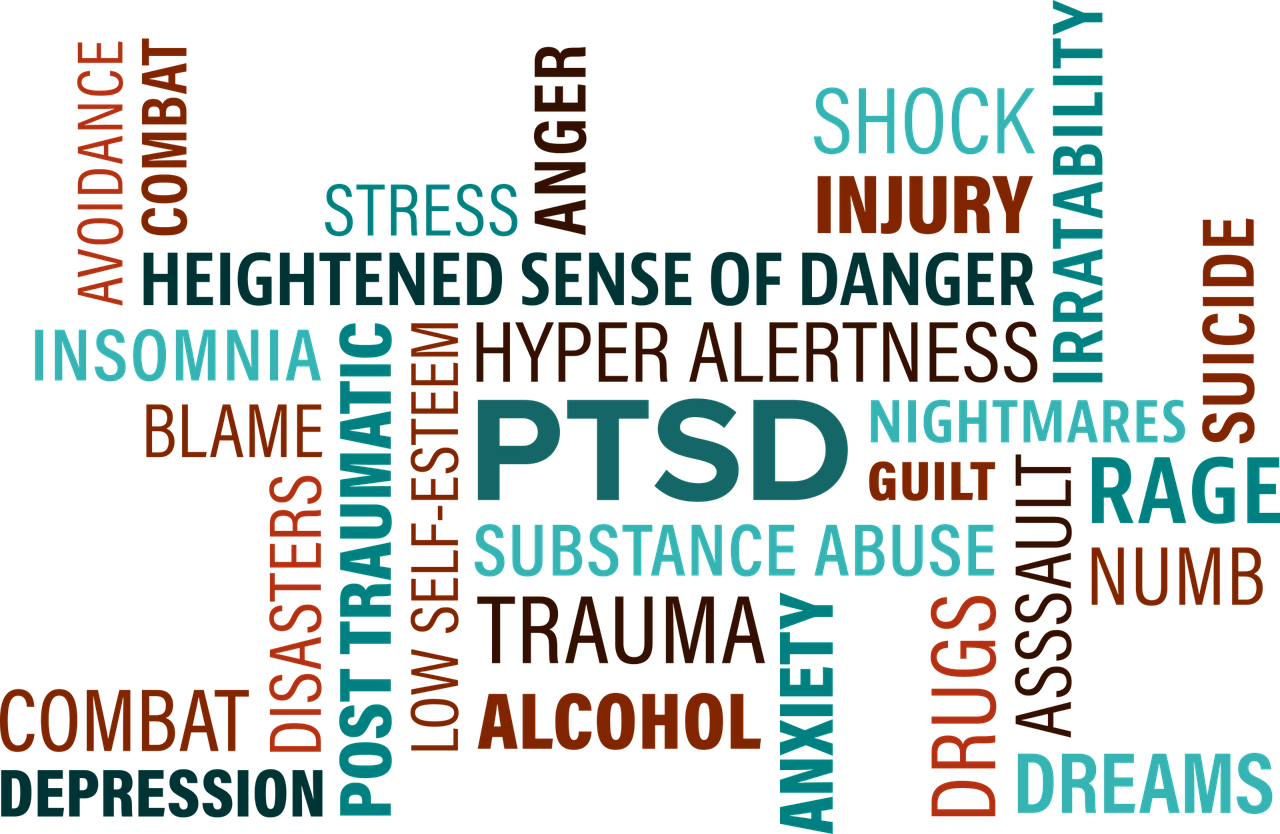
Post Traumatic Stress Disorder – PTSD, and bouncing back from adversity

By David Joel Miller, MS, Licensed Therapist & Licensed Counselor.

Words about PTSD

PTSD.
Photo courtesy of Pixabay.com

We have been hearing a lot more about PTSD these days.

The returning military is experiencing this problem in larger numbers than in the past. The military is not the only place we see PTSD. Children who have been abused, battered women and men, and people who have lived through traumas like hurricanes and tornadoes are also experiencing PTSD. The counseling profession, as well as society in general, is looking for solutions to this problem.

Recently at a convention for therapists and counselors, PTSD and the need to improve treatment was a major topic. I listened to the big-name people; the ones who have written books and given lectures, as they talked about how we should treat the disorder. Two of the biggest names in therapy did not agree on the best treatment. If they disagree, what is the person with PTSD to think? This made me start searching for answers.

Why do some people get PTSD and others do not experience it. In combat, let’s say ten men are in the same incident some get PTSD and some do not, why? Stix in a Scientific American article reported that of people who were traumatized by a single traumatic event, 90 % recovered from the trauma without therapy. So some people have concluded that PTSD is not a normal response to trauma. Maybe some form of resiliency is more common than PTSD. Maybe we have been doing it backward by studying the few who get PTSD instead of the many who bounce back from adversity.

We know from another study that kids who grow up in dysfunctional homes are more likely to suffer from PTSD, depression, and anxiety. From 50% to 67% of exposed kids develop some mental health issue, but the other one-third to one-half does not. Kids from this sort of background have repeated trauma and they have less social support. I wanted to know why some got PTSD and others did not.

There is a lot of research going on right now into the area of resilience. Some people seem to not develop PTSD when exposed to trauma. Others bounce back quickly. A few have lifelong problems. We need to know why these variations and how do we improve the ability to bounce back from adversity. A quick check of one journal database disclosed over 1400 articles about resiliency. I haven’t read them all yet but I will try to tell you the things I learn as I read them.

One thing seems clear from the articles I have read so far, and I am always comparing the research I read to what my clients tell me. Resilience, that ability to bounce back from adversity, is not something we are born with. Resilience can be learned and it can vary from situation to situation.

The subject is of such importance that I think there needs to be a book or books on how people can increase their resilience. So my plan at this stage is to share with you the things I learn and to add your comments and suggestions to what I find. In the process there just might be a book that needs writing. I will keep you posted on my efforts to write that book.

There are lots of writings on recovery, particularly from substance abuse or dependence, what it means to recover and be recovered. We are concluding that many people have both substance abuse disorders and mental health issues. It would be important to know how recovery is like resilience and how it is different, assuming these two terms do not describe the same thing.

One more thing I need to tell you about at this time. Some people experience a traumatic event and it changes their lives forever in a positive way. We call this Post Traumatic Growth (PTG). This intrigued me. Why and how is it that some people use a traumatic experience to transform their lives and grow into a stronger better person? We talk a lot about the way PTSD damages people but not much about the way in which it might inspire them. So I have been reading everything I can find on PTG. But I am also listening with new ears to the stories people tell about their life-changing experiences.

There is more to come on this subject so I hope you stay tuned for my postings and a possible book on Posttraumatic Stress Disorder (PTSD), Posttraumatic Growth (PTG), and the whole issue of how resilience is created and how you or someone you know can learn to bounce back from adversity.

For more information on Stress and PTSD see:

8 warning signs you have PTSD

Posttraumatic Growth (PTG) vs. Posttraumatic Stress Disorder

Acute Stress Disorder vs. PTSD 

Staying connected with David Joel Miller

Seven David Joel Miller Books are available now!

My newest book is now available. It was my opportunity to try on a new genre. I’ve been working on this book for several years, but now seem like the right time to publish it.

Story Bureau.

Story Bureau is a thrilling Dystopian Post-Apocalyptic adventure in the Surviving the Apocalypse series.

Baldwin struggles to survive life in a post-apocalyptic world where the government controls everything.

As society collapses and his family gets plunged into poverty, Baldwin takes a job in the capital city, working for a government agency called the Story Bureau. He discovers the Story Bureau is not a benign news outlet but a sinister government plot to manipulate society.

Bumps on the Road of Life. Whether you struggle with anxiety, depression, low motivation, or addiction, you can recover. Bumps on the Road of Life is the story of how people get off track and how to get your life out of the ditch.

Dark Family Secrets: Doris wants to get her life back, but small-town prejudice could shatter her dreams.

Casino Robbery Arthur Mitchell escapes the trauma of watching his girlfriend die. But the killers know he’s a witness and want him dead.

Planned Accidents  The second Arthur Mitchell and Plutus mystery.

Letters from the Dead: The third in the Arthur Mitchell mystery series.

What would you do if you found a letter to a detective describing a crime and you knew the writer and detective were dead, and you could be next?

Sasquatch. Three things about us, you should know. One, we have seen the past. Two, we’re trapped there. Three, I don’t know if we’ll ever get back to our own time.

For these and my upcoming books; please visit my Author Page – David Joel Miller

Want the latest blog posts as they publish? Subscribe to this blog.

For videos, see: Counselorssoapbox YouTube Video Channel