
What is Situational Memory?

By David Joel Miller, MS, Licensed Therapist & Licensed Counselor.

Memories.
Photo courtesy of pixabay.

Situational memory.

Situational memory sometimes called “Environmental context-dependent memory” refers to an ability to remember information when in one situation that you are unable to remember in another.

This condition is a lot like state-dependent learning but involves location rather than drug level in the bloodstream as the cause of difficulty in retrieving previously learned information. The existence of situational memory raises the question “Does situational memory influence recovery for those who have been in residential treatment or the hospital?”

Do rehab classes while someone is incarcerated result in knowledge they can use after release?  A simple example of the problem:

During the course of the week, I use several different computers in offices at varying locations. Sitting down at a particular computer workstation “cues” the memory for the password that is needed at that site. From one office I emailed myself a password-protected file that needed more work that night. Once home I found I was unable to remember the password.

The following day, back at the original location I was able to quickly open the file without hesitation despite the lack of anything in the room that contained or reminded me of the password. Simply moving from desk to desk cued my memory for the password.

In a classic example of this phenomenon, researchers found that students who were taught deep-sea diving skills in a classroom on dry land were unable to remember the skill once in the water (Godden, D.R.; Baddeley, 1975). To improve recall the skills needed to be learned under realistic conditions. The effect of context on memory has been one criticism of separating recovering people from their real work environment for treatment.

Do skills learned in rehab or hospitals continue to be remembered after return home?

Current practice is to include ongoing aftercare or relapse-prevention classes after the recovering person returns to the community. Situational memories may also affect those who suffer from PTSD.

Veterans who return to the scene of their service are likely to be “flooded” with returning memories. Watching a motion picture that includes events similar to these memories can also revive painful memories. Treatment for anxiety-based disorders which are triggered by re-exposure to places where a trauma occurred, especially obsessive-compulsive disorder, is likely to use an Exposure and Response Prevention method in which cues to the original memory are invoked while the person is supported in tolerating the distress this causes.

Situations, where we move from one location to another, can result in cases of situational memory or situational forgetting the “Doorway Effect.” Being cognitive misers we humans tend to save memory space by only retrieving knowledge in a situation where it is likely to be needed. Solutions to situational forgetting include over practice and rehearsal of skills and creating secondary memory assistance in the form of written lists or reminders placed where we will see the needed information when needed.

Many people in recovery display the serenity prayer or the twelve steps as a reminder to use their recovery skills in all situations.

It is not just the external situation that affects memory, the internal situation makes a difference also. Depressed people remember mostly negative depressing events. Laughing, smiling, and telling jokes, reduces the ability to access depressing memories. The neighborhood you are in when you are in your own head comes with a landscape full of memories. Since memory has situational components, avoiding the place in which you learned something can result in forgetting of the things learned there.

Recovering people are well-advised to avoid old people, places, and things. Anything that cues urges to use or to engage in other behavior that interferes with recovery can be reduced by substituting new positive cues for the old negative ones.

Staying connected with David Joel Miller

Seven David Joel Miller Books are available now!

My newest book is now available. It was my opportunity to try on a new genre. I’ve been working on this book for several years, but now seem like the right time to publish it.

Story Bureau.

Story Bureau is a thrilling Dystopian Post-Apocalyptic adventure in the Surviving the Apocalypse series.

Baldwin struggles to survive life in a post-apocalyptic world where the government controls everything.

As society collapses and his family gets plunged into poverty, Baldwin takes a job in the capital city, working for a government agency called the Story Bureau. He discovers the Story Bureau is not a benign news outlet but a sinister government plot to manipulate society.

Bumps on the Road of Life. Whether you struggle with anxiety, depression, low motivation, or addiction, you can recover. Bumps on the Road of Life is the story of how people get off track and how to get your life out of the ditch.

Dark Family Secrets: Doris wants to get her life back, but small-town prejudice could shatter her dreams.

Casino Robbery Arthur Mitchell escapes the trauma of watching his girlfriend die. But the killers know he’s a witness and want him dead.

Planned Accidents  The second Arthur Mitchell and Plutus mystery.

Letters from the Dead: The third in the Arthur Mitchell mystery series.

What would you do if you found a letter to a detective describing a crime and you knew the writer and detective were dead, and you could be next?

Sasquatch. Three things about us, you should know. One, we have seen the past. Two, we’re trapped there. Three, I don’t know if we’ll ever get back to our own time.

For these and my upcoming books; please visit my Author Page – David Joel Miller

Want the latest blog posts as they publish? Subscribe to this blog.

For videos, see: Counselorssoapbox YouTube Video Channel

How does Marijuana affect memory?

By David Joel Miller, MS, Licensed Therapist & Licensed Counselor.

Marijuana’s effect on memory.
Photo courtesy of Pixabay.com

Does Marijuana use result in State-Dependent Learning?

In a previous post, I wrote about the concept of State-Dependent Learning (SDL), how things learned while you have a drug in your bloodstream may be better remembered when you have that same drug in your body. Readers have asked if Marijuana use results in SDL and what other effects does marijuana have on memory?

If Marijuana causes state Dependent Learning then we should advise people who learn things while smoking Weed to also smoke weed while or shortly before needing to use that information.

Will smoking marijuana just before a test help students who smoke while studying remember the facts better for the test?

Clearly, a great many things, mood states, drugs in the system, even the general health of the individual can affect memory. Unbiased information about the precise effects of Marijuana on memory and learning has been difficult to find.

There are a number of reasons for the contradictory reports of health benefits and harms of Marijuana we read in the media. I have been reading the research since my last post on SDL and here are some of the things that I have found.

Marijuana is more like a stew than a vegetable.

Marijuana contains over 600 chemicals including 60 to 70 Cannabinoids (another article listed 116). Two of the Cannabinoids have some research data but a lot of the other chemicals are poorly understood and have little research. All of the possible combinations of these 600 chemicals create unlimited possibilities for effects. That is not the only reason we know so very little about the effects of marijuana on memory.

How does it work?

For a long time, we knew that marijuana was doing something, we just could not find any receptors for the Cannabinoids in the nervous system so we did not know exactly what Marijuana was doing to the nervous system. Starting in the late 1980s and the early 1990’s receptors for Cannabinoids were found. But there are multiple kinds of receptors and they are located in some parts of the body and not others.

Many of the nerve cells that make up our “brain” are not in the head. When you are hungry the nerve cells in your stomach tell your brain that the stomach wants food. The same thing happens with Cannabinoids. Many of the Cannabinoid receptors are located in places like the spleen and the tonsils. So marijuana might affect memory for pain in the throat differently than memory for the history test.

Worse yet as we study the various Cannabinoids they don’t all do the same things. The two most widely studied Cannabinoids delta-9-tetrahydrocannabinol (THC) and Cannabidiol (CBD) appear to do opposite things. THC seems to produce thinking distortions. The younger you start using THC the more likely you are to develop psychosis. CBD, however, has been proposed and tested as a treatment for psychosis.

One theory, on this contradiction, postulates that young marijuana plants have more CBD and less THC. As the plants mature they form more THC and the CBD is reduced. So if there is high THC, which is the cannabinoid that gets you high, then it has low medicinal properties. Plants with lots of CBD and that might be more medicinal don’t get you high. But most medical marijuana users want the kind that gets them high. What the other Cannabinoids are doing we are not really sure.

It depends on who makes the stew and how long you cook it.

One other problem with the research on Marijuana is that the concentrations of all the chemicals change depending on how Marijuana is grown and how it is processed or dried after harvest. Various studies on Marijuana may really be studies of all sorts of different chemicals, not just the Cannabinoid.

Recent research has tackled this problem by using pure synthetic Cannabinoids so when testing THC or CBD that is the only chemical being tested.

There are different types of memory and memory operations.

Short-term memory is info that is held in memory for a minute or less. Drugs, emotions even attention can interfere with the ability to take in information. Ever read something in a book and a second later realize you don’t remember what you read? This is a failure to encode information into short-term memory.

Marijuana, particularly THC, has been implicated in the failure to encode the information.

Working memory is information being processed. Some information can be distorted while in processing by the drugs in the system. Alcohol especially can make the drunken person think things are happening that in fact did not happen.

I have not found studies that suggest that marijuana (THC) is altering information processing but it is altering some other memory events.

Long-term memory is information held in storage.

The inability to find, access, and retrieve information is what State-Dependent Learning is all about. With SDL it is easier to retrieve previously stored information when the drug that was present during storage is again present.

Marijuana use has not been shown to affect memories formed prior to the use of Marijuana. It is not likely to help reduce PTSD symptoms or unpleasant memories of the past for more than a short time period.

So far no studies I have found indicate that THC improves the ability to locate the material that was previously stored.

Retrieval is the ability to find and pull up information.

If the information that you retrieve is inaccurate or incomplete this is a retrieval error.

THC appears to reduce the encoding of information so less gets into short-term memory and less is stored away.

THC is also reported to interfere with the retrieval of information.

Smoking marijuana while studying results in learning less. Smoking marijuana just before taking the test interferes with remembering what was learned.

Marijuana use (THC) does not create State-Dependent Learning and further use will not help recover memories of information learned while under the influence of marijuana.

There are plenty of people who smoke a lot of Marijuana and remember things just fine and there are people who do not smoke weed and have a poor memory, clearly smoking or not is not the whole answer.  But smoking weed has not been shown to improve memory or help retrieve previously learned information. It has been shown to interfere with the encoding and decoding of information.

Under the influence of THC, you will learn and remember less than you would without the weed.

Staying connected with David Joel Miller

Seven David Joel Miller Books are available now!

My newest book is now available. It was my opportunity to try on a new genre. I’ve been working on this book for several years, but now seem like the right time to publish it.

Story Bureau.

Story Bureau is a thrilling Dystopian Post-Apocalyptic adventure in the Surviving the Apocalypse series.

Baldwin struggles to survive life in a post-apocalyptic world where the government controls everything.

As society collapses and his family gets plunged into poverty, Baldwin takes a job in the capital city, working for a government agency called the Story Bureau. He discovers the Story Bureau is not a benign news outlet but a sinister government plot to manipulate society.

Bumps on the Road of Life. Whether you struggle with anxiety, depression, low motivation, or addiction, you can recover. Bumps on the Road of Life is the story of how people get off track and how to get your life out of the ditch.

Dark Family Secrets: Doris wants to get her life back, but small-town prejudice could shatter her dreams.

Casino Robbery Arthur Mitchell escapes the trauma of watching his girlfriend die. But the killers know he’s a witness and want him dead.

Planned Accidents  The second Arthur Mitchell and Plutus mystery.

Letters from the Dead: The third in the Arthur Mitchell mystery series.

What would you do if you found a letter to a detective describing a crime and you knew the writer and detective were dead, and you could be next?

Sasquatch. Three things about us, you should know. One, we have seen the past. Two, we’re trapped there. Three, I don’t know if we’ll ever get back to our own time.

For these and my upcoming books; please visit my Author Page – David Joel Miller

Want the latest blog posts as they publish? Subscribe to this blog.

For videos, see: Counselorssoapbox YouTube Video Channel
What is State Dependent Learning? Memory problems?

By David Joel Miller, MS, Licensed Therapist & Licensed Counselor.

Is it State-Dependent Learning or Forgetting?

State-dependent learning.
Picture courtesy of pixabay.

The way we feel emotionally and the things in our systems, drugs, medications, and general health all influence what we remember and what we forget. State-Dependent Learning is about times we remember and times we forget – the very same facts.

Say you go to a party or a bar after work and you have a few drinks. During the course of the evening, you talk to a lot of people. Let’s say for this example you have a lot of fun, it was a great time.

You have a few drinks but you are sure, positive, you are not drunk.

Next morning you look in your pocket or purse and there are a couple of business cards, only you can’t remember who these people are. Are they potential clients? Were you supposed to do something for them? Or did they try to sell you something? You just can’t remember. So you stick those cards back where they were and go about your day.

You are positive you were not that drunk, this is no alcoholic blackout. But it is frustrating anyway to not be able to remember why you have those business cards.

Later that day some of the people from your office are off to lunch, lunch with a client and you need to be there. So during this lunch, you have a drink or two. Suddenly you have a thought about those business cards in your pocket. So you pull them out and – yes now you remember the whole conversation and why you saved those cards.

You have just experienced State-Dependent Learning.

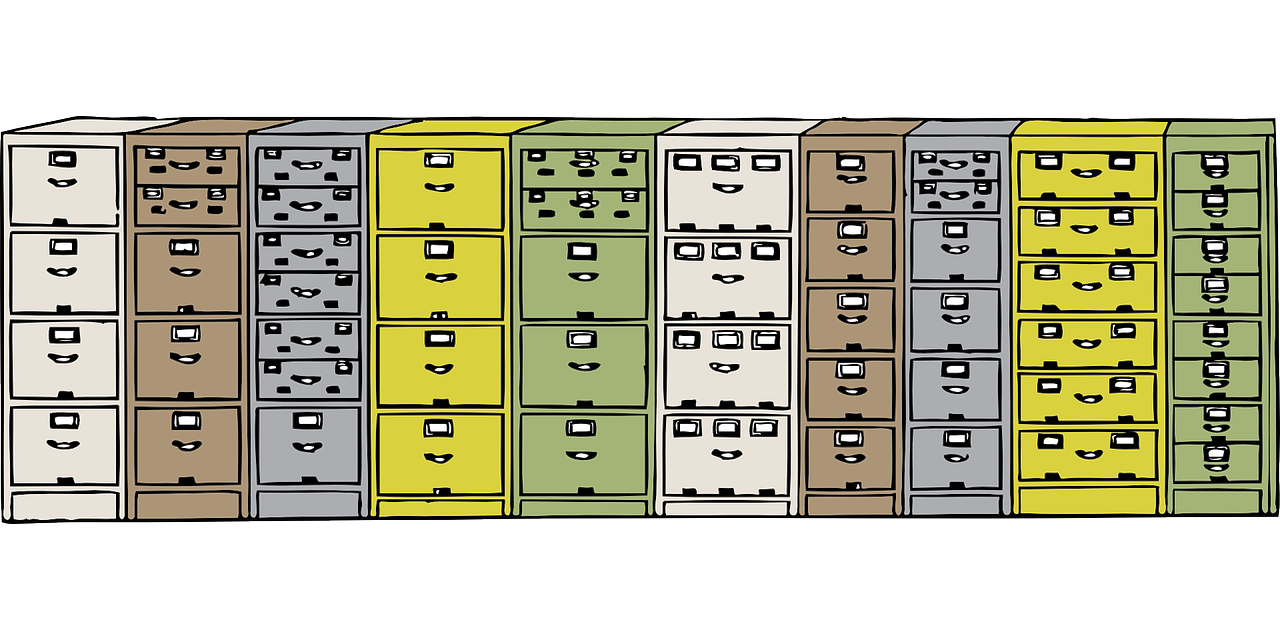
In State-Dependent Learning it is as if your brain uses different filing cabinets for information depending on how your system is functioning. With alcohol in your bloodstream, the brain files the information away in a “file needed when drinking” and locks it away. To get the file cabinet open and find that information you need the right key, in this case, alcohol, in your system to reopen the locked file cabinet.

Alcohol is not the only drug or medication that results in State-Dependent Learning and lost file keys are not the only problem that can happen when filing information or trying to retrieve it.

Memories can get lost or distorted when they are filed away. Sometimes, as with alcoholic blackouts, the info is misplaced before going into the file. In that case, the brain, on discovering the file is empty, makes something up. This is called Confabulation.

Problems can happen when the information is stored and some drugs affect storage. The info can also be hard to find if it is stored in the “high” cabinet and you look for it in the “feeling normal” file space.

The size and nature of the information also matter. Say you need to remember a long list of words. If the words are makes of cars, types of seafood, and tools sold in a hardware store, telling you those categories at the time we read the list to you will help you remember them. If the list is long, has words from many categories, and we don’t tell you the categories, the words will be harder to remember.

The brain has filing systems for category lists and for jumbled lists. Different drugs can affect different kinds of information storage and memory so the research can drive you nuts trying to figure out which drugs result in State-Dependent Learning all the time and which only cause State-Dependent Learning part of the time.

Alcohol appears to result in State-Dependent Learning and other memory problems a lot.

Students who use a lot of caffeine to stay awake all night and study for finals appear to have a similar problem. Things learned under the influence of stimulants are very dose-dependent. So if you take a little of the stimulant you may learn more, take too much and it may block memory retention at all.

Methamphetamine users not only don’t learn a lot but begin to lose previously learned material. This makes us wonder how much amphetamine is helpful and how much of an ADHD med you can take before it impairs memory.

So our student, who studies all night, using stimulants to stay awake, may find two problems facing them the next day. State-Dependent Learning may require them to have the same stimulant and amount of stimulant in their system as when they learned it. This will be more or less of a problem depending on the type of memory involved. Picking out the correct answer from a multiple-choice list will not be so much affected. Remembering a list of things that are not on the paper may be harder. So will recognizing the correct answer if the instructor uses a different word to describe the same concept.

The student may also find that the things they could remember easily when wide awake on the stimulant, those answers can’t be found now that the brain is looking in the I am “so-o-o” tired file cabinets. Your physical condition and mood can also affect learning and memory as can the context.

Frankly – no drug appears to improve your memory over a long time and using drugs or alcohol runs the risk of getting the facts you need, lost in a wrong file cabinet, and not available when you need them.

Other drugs and prescribed medications can also cause memory problems and or State-Dependent Learning. Watch for more on this topic to come.

Staying connected with David Joel Miller

Seven David Joel Miller Books are available now!

My newest book is now available. It was my opportunity to try on a new genre. I’ve been working on this book for several years, but now seem like the right time to publish it.

Story Bureau.

Story Bureau is a thrilling Dystopian Post-Apocalyptic adventure in the Surviving the Apocalypse series.

Baldwin struggles to survive life in a post-apocalyptic world where the government controls everything.

As society collapses and his family gets plunged into poverty, Baldwin takes a job in the capital city, working for a government agency called the Story Bureau. He discovers the Story Bureau is not a benign news outlet but a sinister government plot to manipulate society.

Bumps on the Road of Life. Whether you struggle with anxiety, depression, low motivation, or addiction, you can recover. Bumps on the Road of Life is the story of how people get off track and how to get your life out of the ditch.

Dark Family Secrets: Doris wants to get her life back, but small-town prejudice could shatter her dreams.

Casino Robbery Arthur Mitchell escapes the trauma of watching his girlfriend die. But the killers know he’s a witness and want him dead.

Planned Accidents  The second Arthur Mitchell and Plutus mystery.

Letters from the Dead: The third in the Arthur Mitchell mystery series.

What would you do if you found a letter to a detective describing a crime and you knew the writer and detective were dead, and you could be next?

Sasquatch. Three things about us, you should know. One, we have seen the past. Two, we’re trapped there. Three, I don’t know if we’ll ever get back to our own time.

For these and my upcoming books; please visit my Author Page – David Joel Miller

Want the latest blog posts as they publish? Subscribe to this blog.

For videos, see: Counselorssoapbox YouTube Video Channel