

Is Forgetting as you age a good thing? What is the blackboard effect?

Forgetting?
Photo courtesy of Pixabay.com

Is Forgetting as you age a good thing? What is the blackboard effect?

By David Joel Miller, MS, Licensed Therapist, Counselor, and Certified Life Coach.

It’s been common to dismiss the role of forgetting things as simply an unavoidable part of aging. But the more I think about it and read about it, the more I see an important benefit or reason why the ability to forget is a part of the human memory system. Not all forgetting is equal.

I’ve come to call this necessary forgetting the blackboard effect.

If you’re old enough to remember when we wrote on blackboards and later green boards, then you will recall that over time, the chalk built up on the blackboard. Eventually, the layer of chalk became so thick that when you wrote more information on that board, it was unreadable. Someone had to come through and wash those boards clean to allow new information to be written on the board.

Sometimes our brains need to erase old information to make room for the new. As we go through life, we learn the names of people. Later on, we tend to forget many of those early names. If each of us had to go through the entire list of names of everyone from each of our classes as we went through school, it would probably be late in the afternoon before we were able to recall the name of the person we were talking with.

One reason it gets harder for me, and other people in my age range, to learn new information is that it gets harder and harder to forget the old information. I first learned to do rudimentary programming using a RadioShack TRS 80 model 2 with eight-inch floppy diskettes. As I recall, the computer had 64 K of memory. We put more capacity into children’s toys that come free and fast-food lunches.

The problem here, however, is that whenever I encounter a problem with my current computer, I have to run through how did we do it when we had floppy diskettes, 8-inch diskettes, and then the five-inch and three-inch diskettes, and eventually the memory devices, flash cards, and expansion drives. When trying to do a new operation, my brain is cluttered with trying to forget all the steps that I’ve had to learn to do this operation on previous units with different hardware and software.

Forgetting may actually be the heart of wisdom.

We used to view older people as the source of wisdom. While the young hunters might remember the weather from last week and where they saw the deer yesterday, the elders remember all those dry years when the deer moved in One Direction towards wetter lands and more food, and how in the wet years they sought out different terrains.

Sometimes I wish I were better at forgetting.

Recently, I did some traveling to visit relatives. Some of it involved driving, and some involved flying. As a result, I had to use several rental cars. Now remember, I’ve been driving for 60 years. Probably more than that, but let’s not tell motor vehicles that part. As a result of all that driving, I’ve used a lot of different models of cars. I found it very difficult to adapt to some of the newer rental cars because they had features I didn’t know how to operate, and the controls I was used to were not located where they needed to be.

Even driving one rental car for a month and getting used to it did not prepare me for turning it in, and a few months later, I drove a different make and model, where the controls operated in another way. Trying to use the GPS and hitting the wrong button, suddenly having a video playing, and your directions disappearing, can be a very frustrating experience.

God, I wish I still had some of those old paper maps.

I find it very hard to navigate using GPS. For at least 50 plus years of my life and hundreds of years before that north was always at the top of the map. I’ve learned enough about the old ways to figure out where North and South, East and West, are by observing where the sun comes up in the morning and sets in the evening.

Suddenly, the GPS lady shows me a map in which, to go north, I have to drive from the top down or even from left to right. It leaves me very disoriented. Younger people are used to just following the arrow and letting the GPS tell them if they’re going in the right direction, but I do not like trying to go West by driving away from the sun in the afternoon.

It is not remembering or forgetting that’s the problem.

As we age, it is important to let go of some of the fine details and learn to look for the general patterns. Let’s leave the fine details for the specialist historians. What is important for functioning as you accumulate more trips around the sun is cognitive flexibility. It’s deciding what things you need to remember and letting all the other fine details go.

Computers and even artificial intelligence are excellent at retrieving facts and sources that have long ago escaped my memory. But for deciding where to go and what to do, and even more importantly, whom to do it with, I need to be able to remember the broad principles I learned about what I like and what is acceptable to me.

I seriously question a lot of contemporary wisdom that tries to see immense patterns out of one incident rather than the long course of history.

My conclusion?

Try to keep exercising your brain by thinking deeply and by thinking for yourself. Let the trivial things go, but remember you decide what is important to you and what little details are trivial. Focus on the positive, and you’ll get more of it. Spending all your time looking for Unhappiness and you will live a life full of disappointment.

Recommended Mental Health Books

David Miller at counselorssoapbox.com is an Amazon Affiliate and may receive a small Commission if you purchase a book or product using the link on this page. Using the link will not increase the cost to you.

Does David Joel Miller see clients for counseling and coaching?

Yes, I do. I can see private pay clients if they live in California, where I am licensed. If you’re interested in information about that, please email me or use the contact me form.

Recently, I began working with a telehealth company called Grow Therapy. If you’d like to make an appointment to work with me, contact them, and they can do the required paperwork and show you my available appointments. The link for making an appointment to talk with me is: David Joel Miller, LMFT, LPCC 

Life coaching clients must be working toward a specific problem-solving goal. Coaching is not appropriate if you have a diagnosable mental health problem. Also, life coaching is not covered by insurance. If you think life coaching for creativity or other life goals might be right for you, contact me directly.

Staying in touch with David Joel Miller.

Want the latest blog posts as they are published? Subscribe to this blog.

For more information about my writing journey, my books, and other creative activities, please subscribe to my blog at davidjoelmillerwriter.com

Seven David Joel Miller Books are available on Amazon now! And more are on the way.

For more about my books, please visit my Amazon Author Page – David Joel Miller

For information about my work in mental health, substance abuse, and having a happy life, please check out https://counselorssoapbox.com

For videos, see: Counselorssoapbox YouTube Video Channel

Does thought stopping work?

By David Joel Miller, MS, Licensed Therapist & Licensed Counselor.

Thought Stopping.

Thought Stopping.
Photo courtesy of Pixabay.com

What is thought stopping, and does it work?

Thought stopping is a common cognitive behavioral therapy technique. Some people, clients, and counselors alike report that thought stopping can be very helpful for reducing or avoiding rumination, catastrophizing, and other unwanted thoughts. Learning to stop unwanted thoughts can be helpful for reducing depression, anxiety, and recurrent thoughts of substance use. Others have reported that thought stopping was unhelpful and did not work. Why does thought stopping work for some people and not others?

Not thinking about something does not work.

There’s a big difference between trying not to think about something and getting your mind to stop going over and over the thought once you have it. The human brain doesn’t work well at preventing thoughts. Setting up a list of things to “not think about” does not prevent those thoughts from reentering your mind. That no-think list will keep your mind occupied looking for the very thoughts you are trying to avoid.

If you have had a history of negative thoughts, negative self-talk, or the kind of recurrent negative thinking that damages your self-esteem, you will find the thoughts recur whether you want them to or not. People in drug and alcohol recovery find that their default thought, no matter what happens, is likely to be I need or want a drink. Maybe I could do a little drug just this one time.

In a past post, I wrote about “don’t think about elephants.” What people find is that the effort to “not think about” anything keeps that thought right at the edge of consciousness, waiting for its chance to pop back into your current thinking. If you’re not sure about this, sit for a while and don’t think about something. You will find that every time you tell yourself to not think about it, the thought miraculously enters your mind.

Researchers have used both “white bears” and “red Volkswagen’s” in various combinations to study the effects of thought stopping. The studies are enlightening, but make it hard to set firm rules for when and how to use thought stopping. If you’re someone who has recurrent, unwanted thoughts, you need to practice and probably work with a professional to become proficient in using thought stopping to make your life more manageable. There are some other techniques you can learn that are probably more effective than thought stopping.

Thought stopping is most effective when used briefly in crisis situations. Telling yourself not to reach for that drink or drug can help in the moment. When your mind tries to take you into a dangerous neighborhood, telling it to “knock that off” may keep you out of trouble for the moment, but it won’t last for very long if you don’t change some of the things.

Suppressing unwanted thoughts requires cognitive effort. When you put a lot of effort into something, you get tired. Humans are cognitive misers and customarily revert to patterns that don’t require a lot of effort. Letting your guard down against unwanted thoughts can happen quite quickly.

Your mood impacts the effort needed to suppress unwanted thoughts. When you are depressed, it is harder to stop negative, painful thoughts. Being in a happy, optimistic mood makes it easier to suppress negative thoughts.

You need to remember some things and forget others.

Forgetting important things can be very frustrating. It can be equally upsetting if you find you can’t forget the painful past. Unwanted and intrusive memories are characteristic of several mental illnesses. People who have been victims of trauma, those with PTSD especially, wish they could forget. There are a lot of materials available to help people improve their memory, but far fewer to help people forget the painful, unhelpful memories. Changing your thinking techniques is one of those few tools that may be helpful in preventing unhelpful thoughts from taking over your consciousness.

Researchers have found that remembering feelings from the past can influence how we feel in the present. The more you think about an unhappy memory, the more depressed or anxious you may become right now. So, if telling yourself not to think about your ex just brings the sadness you experienced during the breakup into your mind, how do you prevent spending all your time thinking about the things you wish had not happened? Thought-changing methods may reduce the amount of time you spend caught in the downward spiral of unhelpful thinking.

Euphoric recall – thoughts that need to be stopped.

Some thoughts that seem positive at first glance turn out to be highly inaccurate and unhelpful. It’s common in addiction for people to suddenly experience thoughts of the good times they had when drinking or using. Remember that time you partied? What’s hard to remember is that you got into a fight at the party, took off in a hurry, and maybe got arrested for driving under the influence. The same thing happens when dysfunctional relationships end. You tend to remember the good times in the beginning and not the bad events later.

What is thought-stopping?

Thought stopping is the process of monitoring your thinking, detecting unhelpful or unwanted thoughts, and getting your mind off that thought and back onto something more helpful. It’s important to take active steps to prevent unwanted, intrusive thoughts from taking over control of your mind.

One way of thinking about thought stopping is a process of transforming automatic, unhelpful thoughts into cues to activate your thought-stopping and thought-transforming mental systems.

Thought stopping is a skill that needs to be learned and practiced.

“Recent research indicates that people control unwanted memories by stopping memory retrieval, using mechanisms similar to those used to stop reflexive motor responses” (Anderson, M., Levy, B., 2009). The article goes on to say that the control of unwanted thoughts and memories happens in the lateral prefrontal cortex, the executive function of the brain. If your brain has an effective CEO, he can control the activity in the hippocampus, the part of the brain that regulates the storage and retention of memories. Learning what to remember and what to forget is a skill you can develop.

As people grow and develop, they can become better at regulating which memories are prioritized for storage in which are slated for deletion. We would expect it to be harder for young people to forget the painful memories. Life events that alter your brain chemistry, such as trauma, depression, anxiety, or a substance use disorder, appear to reduce your control over memory storage and retrieval. For example, people who are addicted to methamphetamine had “lower grey matter intensity in the brain region associated with performance” on both thought stopping and the ability to look at past events in another way, a skill called reappraisal or reframing (Tang, D., Schmeichel, B., 2014)

Thought stopping shouldn’t be the only tool in your self-help toolbox.

So, not thinking about things often does not work. You can use thought stopping to interrupt the flow of an unhelpful thought. Anyone who’s tried to do mindfulness or meditation knows that as soon as you empty the mind, a mob of thoughts tries to reoccupy that emptiness. The more you practice, the better you can get at keeping unwelcome thoughts out of your head. In the short run, you may need some mental protection from other skills.

Practice becoming more optimistic. Learned to fill your mind with positive thoughts that can guard the space against the return of unhelpful thoughts. Distracting techniques, filling your mind with other helpful thoughts, appear to make thought stopping more effective.

Are there times you shouldn’t use thought stopping?

Turns out that there are times when thought stopping is not helpful. People who have experienced a loss in their life, the death of a loved one, may find that simply trying not to think about that death leaves unresolved grief, which they may need to deal with later. While going on with life may work temporarily, eventually you need to come to terms with the loss and find a way to make meaning out of that experience.

If you have a problem that needs to be solved, not thinking about it is likely to interfere with solving the problem or dealing with the consequences. Thought stopping is not effective when, eventually, you will have to solve the problem.

People who were on a diet and tried to simply not think about eating are at increased risk of binge eating when the thoughts of food return (Sarah L. Gaskell et al., 2001)

Thought stopping is a verbal technique that works best to correct unhelpful self-talk. Thought stopping is less effective when physical objects such as people, places, and things try to replace the unhelpful thoughts. For those objects, you need to avoid places where you’ll see them. It’s hard to avoid thinking about having another drink when you’re sitting in a bar.

Some additional cautions about thought stopping.

When trying to stop unwanted thoughts, people tend to look around the room. Be careful what you look at; the things you look at while trying to avoid thinking about something get paired with the original unwanted thoughts. You look around the room and see a particular lamp or picture, and the next time you look around the room, those objects are likely to bring back the unwanted thoughts.

When doing thought stopping, look at something positive and reinforcing. If you wear a religious symbol, look at that. Twelve-step groups often have quotes from the recovery literature and helpful sayings on the walls so that people who are trying to avoid thinking about their issues find it easier to shift from unwanted thoughts to helpful thoughts.

If you do have recurrences of unhelpful thoughts, don’t beat yourself up and create those thoughts as triggers for negative self-talk. Dismiss the unwanted thoughts as quickly as possible and shift your attention to helpful thoughts.

My take on thought stopping?

I think of thought stopping like being in the swimming pool and trying to hold that water polo ball under the surface. The harder you try to hold it under, the more it pops back. Eventually, you get too tired to keep holding it down. What you need to do with that ball of unwanted thoughts is toss it out of the pool of your life, or get out of the pool and move to a better environment.

In an upcoming post, I want to walk you through some techniques that should be more effective at helping you get rid of those unhelpful thoughts on a long-term basis than simply trying to “not think about it.”

David Joel Miller, MS, is a Licensed Marriage and Family Therapist (LMFT) and a Licensed Professional Clinical Counselor (LPCC)  Mr. Miller provides supervision for beginning counselors and therapists and teaches at the local college in the Substance Abuse Counseling program.

Recommended Mental Health Books

David Miller at counselorssoapbox.com is an Amazon Affiliate and may receive a small Commission if you purchase a book or product using the link on this page. Using the link will not increase the cost to you.

Staying connected with David Joel Miller

Seven David Joel Miller Books are available now!

My newest book is now available. It was my opportunity to try on a new genre. I’ve been working on this book for several years, but now seems like the right time to publish it.

Story Bureau.

Story Bureau is a thrilling Dystopian Post-Apocalyptic adventure in the Surviving the Apocalypse series.

Baldwin struggles to survive life in a post-apocalyptic world where the government controls everything.

As society collapses and his family gets plunged into poverty, Baldwin takes a job in the capital city, working for a government agency called the Story Bureau. He discovers the Story Bureau is not a benign news outlet but a sinister government plot to manipulate society.

Bumps on the Road of Life. Whether you struggle with anxiety, depression, low motivation, or addiction, you can recover. Bumps on the Road of Life is the story of how people get off track and how to get your life out of the ditch.

Dark Family Secrets: Doris wants to get her life back, but small-town prejudice could shatter her dreams.

Casino Robbery Arthur Mitchell escapes the trauma of watching his girlfriend die. But the killers know he’s a witness and want him dead.

Planned Accidents  The second Arthur Mitchell and Plutus mystery.

Letters from the Dead: The third in the Arthur Mitchell mystery series.

What would you do if you found a letter to a detective describing a crime and you knew the writer and detective were dead, and you could be next?

Sasquatch. Three things about us, you should know. One, we have seen the past. Two, we’re trapped there. Three, I don’t know if we’ll ever get back to our own time.

For these and my upcoming books; please visit my Author Page – David Joel Miller

Want the latest blog posts as they publish? Subscribe to this blog.

For videos, see: Counselorssoapbox YouTube Video Channel
What is State Dependent Learning? Memory problems?

By David Joel Miller, MS, Licensed Therapist & Licensed Counselor.

Is it State-Dependent Learning or Forgetting?

State-dependent learning.
Picture courtesy of pixabay.

The way we feel emotionally and the things in our systems, drugs, medications, and general health all influence what we remember and what we forget. State-Dependent Learning is about times we remember and times we forget – the very same facts.

Say you go to a party or a bar after work and you have a few drinks. During the course of the evening, you talk to a lot of people. Let’s say for this example you have a lot of fun, it was a great time.

You have a few drinks but you are sure, positive, you are not drunk.

Next morning you look in your pocket or purse and there are a couple of business cards, only you can’t remember who these people are. Are they potential clients? Were you supposed to do something for them? Or did they try to sell you something? You just can’t remember. So you stick those cards back where they were and go about your day.

You are positive you were not that drunk, this is no alcoholic blackout. But it is frustrating anyway to not be able to remember why you have those business cards.

Later that day some of the people from your office are off to lunch, lunch with a client and you need to be there. So during this lunch, you have a drink or two. Suddenly you have a thought about those business cards in your pocket. So you pull them out and – yes now you remember the whole conversation and why you saved those cards.

You have just experienced State-Dependent Learning.

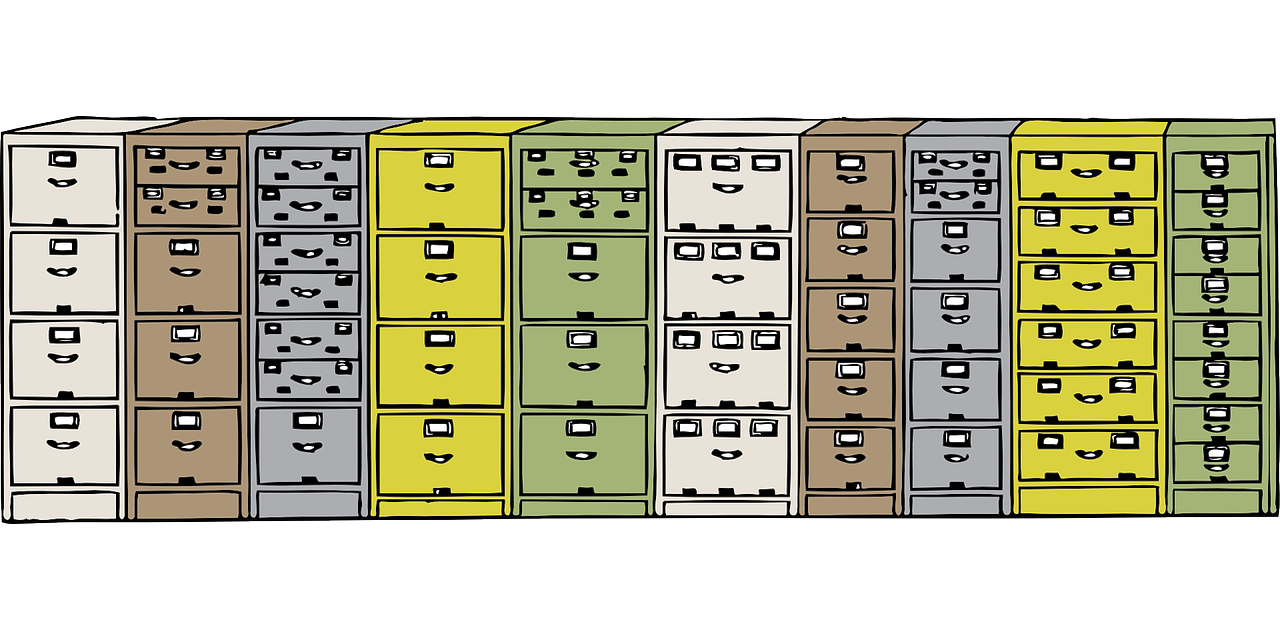
In State-Dependent Learning it is as if your brain uses different filing cabinets for information depending on how your system is functioning. With alcohol in your bloodstream, the brain files the information away in a “file needed when drinking” and locks it away. To get the file cabinet open and find that information you need the right key, in this case, alcohol, in your system to reopen the locked file cabinet.

Alcohol is not the only drug or medication that results in State-Dependent Learning and lost file keys are not the only problem that can happen when filing information or trying to retrieve it.

Memories can get lost or distorted when they are filed away. Sometimes, as with alcoholic blackouts, the info is misplaced before going into the file. In that case, the brain, on discovering the file is empty, makes something up. This is called Confabulation.

Problems can happen when the information is stored and some drugs affect storage. The info can also be hard to find if it is stored in the “high” cabinet and you look for it in the “feeling normal” file space.

The size and nature of the information also matter. Say you need to remember a long list of words. If the words are makes of cars, types of seafood, and tools sold in a hardware store, telling you those categories at the time we read the list to you will help you remember them. If the list is long, has words from many categories, and we don’t tell you the categories, the words will be harder to remember.

The brain has filing systems for category lists and for jumbled lists. Different drugs can affect different kinds of information storage and memory so the research can drive you nuts trying to figure out which drugs result in State-Dependent Learning all the time and which only cause State-Dependent Learning part of the time.

Alcohol appears to result in State-Dependent Learning and other memory problems a lot.

Students who use a lot of caffeine to stay awake all night and study for finals appear to have a similar problem. Things learned under the influence of stimulants are very dose-dependent. So if you take a little of the stimulant you may learn more, take too much and it may block memory retention at all.

Methamphetamine users not only don’t learn a lot but begin to lose previously learned material. This makes us wonder how much amphetamine is helpful and how much of an ADHD med you can take before it impairs memory.

So our student, who studies all night, using stimulants to stay awake, may find two problems facing them the next day. State-Dependent Learning may require them to have the same stimulant and amount of stimulant in their system as when they learned it. This will be more or less of a problem depending on the type of memory involved. Picking out the correct answer from a multiple-choice list will not be so much affected. Remembering a list of things that are not on the paper may be harder. So will recognizing the correct answer if the instructor uses a different word to describe the same concept.

The student may also find that the things they could remember easily when wide awake on the stimulant, those answers can’t be found now that the brain is looking in the I am “so-o-o” tired file cabinets. Your physical condition and mood can also affect learning and memory as can the context.

Frankly – no drug appears to improve your memory over a long time and using drugs or alcohol runs the risk of getting the facts you need, lost in a wrong file cabinet, and not available when you need them.

Other drugs and prescribed medications can also cause memory problems and or State-Dependent Learning. Watch for more on this topic to come.

Staying connected with David Joel Miller

Seven David Joel Miller Books are available now!

My newest book is now available. It was my opportunity to try on a new genre. I’ve been working on this book for several years, but now seem like the right time to publish it.

Story Bureau.

Story Bureau is a thrilling Dystopian Post-Apocalyptic adventure in the Surviving the Apocalypse series.

Baldwin struggles to survive life in a post-apocalyptic world where the government controls everything.

As society collapses and his family gets plunged into poverty, Baldwin takes a job in the capital city, working for a government agency called the Story Bureau. He discovers the Story Bureau is not a benign news outlet but a sinister government plot to manipulate society.

Bumps on the Road of Life. Whether you struggle with anxiety, depression, low motivation, or addiction, you can recover. Bumps on the Road of Life is the story of how people get off track and how to get your life out of the ditch.

Dark Family Secrets: Doris wants to get her life back, but small-town prejudice could shatter her dreams.

Casino Robbery Arthur Mitchell escapes the trauma of watching his girlfriend die. But the killers know he’s a witness and want him dead.

Planned Accidents  The second Arthur Mitchell and Plutus mystery.

Letters from the Dead: The third in the Arthur Mitchell mystery series.

What would you do if you found a letter to a detective describing a crime and you knew the writer and detective were dead, and you could be next?

Sasquatch. Three things about us, you should know. One, we have seen the past. Two, we’re trapped there. Three, I don’t know if we’ll ever get back to our own time.

For these and my upcoming books; please visit my Author Page – David Joel Miller

Want the latest blog posts as they publish? Subscribe to this blog.

For videos, see: Counselorssoapbox YouTube Video Channel