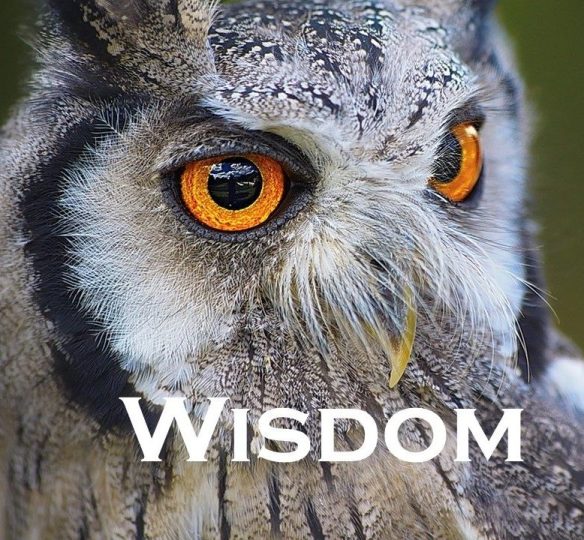
Is Forgetting as you age a good thing? What is the blackboard effect?

Forgetting?
Photo courtesy of Pixabay.com

Is Forgetting as you age a good thing? What is the blackboard effect?

By David Joel Miller, MS, Licensed Therapist, Counselor, and Certified Life Coach.

It’s been common to dismiss the role of forgetting things as simply an unavoidable part of aging. But the more I think about it and read about it, the more I see an important benefit or reason why the ability to forget is a part of the human memory system. Not all forgetting is equal.

I’ve come to call this necessary forgetting the blackboard effect.

If you’re old enough to remember when we wrote on blackboards and later green boards, then you will recall that over time, the chalk built up on the blackboard. Eventually, the layer of chalk became so thick that when you wrote more information on that board, it was unreadable. Someone had to come through and wash those boards clean to allow new information to be written on the board.

Sometimes our brains need to erase old information to make room for the new. As we go through life, we learn the names of people. Later on, we tend to forget many of those early names. If each of us had to go through the entire list of names of everyone from each of our classes as we went through school, it would probably be late in the afternoon before we were able to recall the name of the person we were talking with.

One reason it gets harder for me, and other people in my age range, to learn new information is that it gets harder and harder to forget the old information. I first learned to do rudimentary programming using a RadioShack TRS 80 model 2 with eight-inch floppy diskettes. As I recall, the computer had 64 K of memory. We put more capacity into children’s toys that come free and fast-food lunches.

The problem here, however, is that whenever I encounter a problem with my current computer, I have to run through how did we do it when we had floppy diskettes, 8-inch diskettes, and then the five-inch and three-inch diskettes, and eventually the memory devices, flash cards, and expansion drives. When trying to do a new operation, my brain is cluttered with trying to forget all the steps that I’ve had to learn to do this operation on previous units with different hardware and software.

Forgetting may actually be the heart of wisdom.

We used to view older people as the source of wisdom. While the young hunters might remember the weather from last week and where they saw the deer yesterday, the elders remember all those dry years when the deer moved in One Direction towards wetter lands and more food, and how in the wet years they sought out different terrains.

Sometimes I wish I were better at forgetting.

Recently, I did some traveling to visit relatives. Some of it involved driving, and some involved flying. As a result, I had to use several rental cars. Now remember, I’ve been driving for 60 years. Probably more than that, but let’s not tell motor vehicles that part. As a result of all that driving, I’ve used a lot of different models of cars. I found it very difficult to adapt to some of the newer rental cars because they had features I didn’t know how to operate, and the controls I was used to were not located where they needed to be.

Even driving one rental car for a month and getting used to it did not prepare me for turning it in, and a few months later, I drove a different make and model, where the controls operated in another way. Trying to use the GPS and hitting the wrong button, suddenly having a video playing, and your directions disappearing, can be a very frustrating experience.

God, I wish I still had some of those old paper maps.

I find it very hard to navigate using GPS. For at least 50 plus years of my life and hundreds of years before that north was always at the top of the map. I’ve learned enough about the old ways to figure out where North and South, East and West, are by observing where the sun comes up in the morning and sets in the evening.

Suddenly, the GPS lady shows me a map in which, to go north, I have to drive from the top down or even from left to right. It leaves me very disoriented. Younger people are used to just following the arrow and letting the GPS tell them if they’re going in the right direction, but I do not like trying to go West by driving away from the sun in the afternoon.

It is not remembering or forgetting that’s the problem.

As we age, it is important to let go of some of the fine details and learn to look for the general patterns. Let’s leave the fine details for the specialist historians. What is important for functioning as you accumulate more trips around the sun is cognitive flexibility. It’s deciding what things you need to remember and letting all the other fine details go.

Computers and even artificial intelligence are excellent at retrieving facts and sources that have long ago escaped my memory. But for deciding where to go and what to do, and even more importantly, whom to do it with, I need to be able to remember the broad principles I learned about what I like and what is acceptable to me.

I seriously question a lot of contemporary wisdom that tries to see immense patterns out of one incident rather than the long course of history.

My conclusion?

Try to keep exercising your brain by thinking deeply and by thinking for yourself. Let the trivial things go, but remember you decide what is important to you and what little details are trivial. Focus on the positive, and you’ll get more of it. Spending all your time looking for Unhappiness and you will live a life full of disappointment.

Recommended Mental Health Books

David Miller at counselorssoapbox.com is an Amazon Affiliate and may receive a small Commission if you purchase a book or product using the link on this page. Using the link will not increase the cost to you.

Does David Joel Miller see clients for counseling and coaching?

Yes, I do. I can see private pay clients if they live in California, where I am licensed. If you’re interested in information about that, please email me or use the contact me form.

Recently, I began working with a telehealth company called Grow Therapy. If you’d like to make an appointment to work with me, contact them, and they can do the required paperwork and show you my available appointments. The link for making an appointment to talk with me is: David Joel Miller, LMFT, LPCC 

Life coaching clients must be working toward a specific problem-solving goal. Coaching is not appropriate if you have a diagnosable mental health problem. Also, life coaching is not covered by insurance. If you think life coaching for creativity or other life goals might be right for you, contact me directly.

Staying in touch with David Joel Miller.

Want the latest blog posts as they are published? Subscribe to this blog.

For more information about my writing journey, my books, and other creative activities, please subscribe to my blog at davidjoelmillerwriter.com

Seven David Joel Miller Books are available on Amazon now! And more are on the way.

For more about my books, please visit my Amazon Author Page – David Joel Miller

For information about my work in mental health, substance abuse, and having a happy life, please check out https://counselorssoapbox.com

For videos, see: Counselorssoapbox YouTube Video Channel

Exploring Positive Psychology.

Positive Psychology. Photo courtesy of Pixabay.com.

By David Joel Miller, MS, Licensed Therapist & Licensed Counselor.

Taking a deeper look into positive psychology.

In last week’s post, I introduce the topic of Positive Psychology. In today’s post, let’s take a deeper look into the subject of Positive Psychology.

Wikipedia defines Positive Psychology as:

Positive psychology is the study of “positive subjective experience, positive individual traits, and positive institutions and promises to improve quality of life.” Positive psychology focuses on both individual and societal well-being.[1] It is a field of study that has been growing steadily throughout the years as individuals and researchers look for common ground on better well-being.[2]

Positive psychology emphasizes subjective well-being.

Many of the models of happiness emphasize pleasure or acquiring tangible goods. The happiness provided by pleasurable events fades quickly and requires a constant stream of pleasurable activities. The pleasure derived from buying things disappears almost instantly and can lead to overspending. Subjective well-being or having a satisfying life requires more than just temporary pleasures.

Positive psychology emphasizes contentment, life satisfaction, feelings of subjective well-being in addition to the ability to experience pleasure. Counselors who work from this perspective frequently believe that finding your meaning and purpose for life leads to an increase in subjective well-being. Having a good life can be described as “flourishing.”

Positive psychology emphasizes your strengths rather than your weaknesses.

Traditionally mental-health treats defects. For your treatment to be covered by your mental health insurance, your provider needs to assign you a diagnosis of what is wrong with you. While medication may help manage the symptoms of mental illness, no medication is known, which cures a mental illness.

The primary route of change for people with a mental health challenge is talk therapy, and several mental illnesses can be cured using talk therapy. There are many theories of what causes specific mental illnesses and how they are to be treated. One highly successful approach has been the positive psychology theory. Positive psychology looks to find your strengths and build on them. You don’t need to have a mental illness to benefit from the positive psychology approach.

Peterson and Seligman developed this classification system for identifying strengths and described it in their book Character Strengths and Virtues. The book describes twenty-four basic character strengths, which seem to be found and valued in varying degrees in all cultures. People may be high or low in any of these strengths. Positive psychology encourages people to make the most of their strengths while also improving those character strengths that may be underdeveloped. The twenty-four primary character strengths are clustered into six categories, which are described as “virtues.”

Character strengths and virtues are personality characteristics.

Many people think of character as a very limited set of values. People described as having “good character” may be described as honest, loyal, thrifty, and obedient. Characteristics such as creativity and curiosity are not usually cited as factors. In positive psychology, character strengths are personality characteristics that may prove beneficial to both the individual and society.

Six primary virtues are described by positive psychology.

The six primary virtues are wisdom, courage, humanity, justice, temperance, and transcendence. These are further subdivided into 24 character strengths.

Components of the virtue of wisdom.

Wisdom is subdivided into five strengths, creativity, curiosity, judgment, love of learning, and perspective.

The components of the virtue of courage.

Courage is subdivided into four components, bravery, perseverance, honesty, and zest.

The parts of the virtue of humanity.

Humanity is further subdivided into three character strengths, love, kindness, and social intelligence.

The virtue of justice.

The components of the virtue of justice are teamwork, fairness, and leadership.

The virtue of temperance.

Four character strengths make up the virtue of temperance. These are forgiveness, humility, prudence, and self-regulation.

The virtue of transcendence is related to religion and spirituality.

This virtue is subdivided into five character strengths, appreciation of beauty and excellence, gratitude, hope, humor, and spirituality.

Researchers have developed specific instruments to assess each of these character strengths and virtues. Because these strengths are described using words, there’s been some variation in the definitions individual researchers used for each character strength. In future blog posts, I want to talk to you about some of these character strengths, what I’ve learned from reading recent research on that strength, and how you might learn to make better use of your strengths to create a flourishing life full of well-being and happiness.

Staying connected with David Joel Miller

Seven David Joel Miller Books are available now!

My newest book is now available. It was my opportunity to try on a new genre. I’ve been working on this book for several years, but now seems like the right time to publish it.

Story Bureau.

Story Bureau is a thrilling Dystopian Post-Apocalyptic adventure in the Surviving the Apocalypse series.

Baldwin struggles to survive life in a post-apocalyptic world where the government controls everything.

As society collapses and his family gets plunged into poverty, Baldwin takes a job in the capital city, working for a government agency called the Story Bureau. He discovers the Story Bureau is not a benign news outlet but a sinister government plot to manipulate society.

Bumps on the Road of Life. Whether you struggle with anxiety, depression, low motivation, or addiction, you can recover. Bumps on the Road of Life is the story of how people get off track and how to get your life out of the ditch.

Dark Family Secrets: Doris wants to get her life back, but small-town prejudice could shatter her dreams.

Casino Robbery Arthur Mitchell escapes the trauma of watching his girlfriend die. But the killers know he’s a witness and want him dead.

Planned Accidents  The second Arthur Mitchell and Plutus mystery.

Letters from the Dead: The third in the Arthur Mitchell mystery series.

What would you do if you found a letter to a detective describing a crime and you knew the writer and detective were dead, and you could be next?

Sasquatch. Three things about us, you should know. One, we have seen the past. Two, we’re trapped there. Three, I don’t know if we’ll ever get back to our own time.

For these and my upcoming books; please visit my Author Page – David Joel Miller

Want the latest blog posts as they publish? Subscribe to this blog.

For videos, see: Counselorssoapbox YouTube Video Channel

Understanding.

Sunday Inspiration.     Post by David Joel Miller.

Understanding.

Understanding.
Photo courtesy of Pixabay.com

Understanding.

“If you can’t explain it to a six-year-old, you don’t understand it yourself.”

― Albert Einstein

“Understanding is the first step to acceptance, and only with acceptance can there be recovery.”

― J.K. Rowling, Harry Potter and the Goblet of Fire

“Everything that irritates us about others can lead us to an understanding of ourselves.”

― C.G. Jung

Wanted to share some inspirational quotes with you.  Today seemed like a good time to do this. If any of these quotes strike a chord with you, please share them.

Look at these related posts for more on this topic and other feelings.

Emotions and Feelings.

Inspiration

Wisdom.

Sunday Inspiration.     Post by David Joel Miller.

Wisdom.

Wisdom.
Photo courtesy of Pixabay.com

Wisdom.

“No one can make you feel inferior without your consent.”

― Eleanor Roosevelt, This is My Story

“Whenever you find yourself on the side of the majority, it is time to reform (or pause and reflect).”

― Mark Twain

“Knowing yourself is the beginning of all wisdom.”

― Aristotle

“The only true wisdom is in knowing you know nothing.”

― Socrates

It’s amazing the number of wonderful quotes about wisdom. With all these great quotes why does wisdom seem to be in such short supply these days?

Wanted to share some inspirational quotes with you.  Today seemed like a good time to do this. If any of these quotes strike a chord with you, please share them.

Look at these related posts for more on this topic and other feelings.

Emotions and Feelings.

Inspiration