Compassion.

Sunday Inspiration.          Post by David Joel Miller.

Compassion.

Compassion

Compassion.
Photo courtesy of Pixabay.com

“Be kind, for everyone you meet is fighting a harder battle.”

― Plato

“Compassion is the basis of morality.”

― Arthur Schopenhauer

“Love and compassion are necessities, not luxuries. Without them, humanity cannot survive.”

― Dalai Lama XIV, The Art of Happiness

Wanted to share some inspirational quotes with you.  Today seemed like a good time to do this. If any of these quotes strike a chord with you, please share them.

Increase your emotional intelligence.

By David Joel Miller, MS, Licensed Therapist & Licensed Counselor.

Man with feelings

Managing feelings.
Photo courtesy of Pixabay.com

Emotional intelligence is more important than you may think.

Most people are very familiar with the idea of IQ, the kind of intelligence that written tests can measure.  What gets overlooked often is the concept of emotional intelligence, the ability to understand what other people are thinking and feeling, and to react to them in a helpful appropriate way.

If you’ve ever wished that you were better at understanding other people, what they were thinking and feeling, then you may need to work on improving your emotional intelligence.  Emotional intelligence is not something people are automatically born with.  We learn to be more emotionally intelligent by watching others around us, observing how they react emotionally, and by practicing certain basic emotional intelligence skills.

If you would like to try to improve your emotional intelligence here a few simple ways that you may be able to expand and grow that essential skill.

Practice Self-Awareness, recognize you are feeling something.

Emotions, feelings anyway, has gotten a very bad reputation.  Increasingly we are discovering that feelings are not our enemies but are helpful to provide us with the information we need.  The Victorian era view that feelings were bad and to be suppressed, has been replaced by a modern vision that feelings can provide you with useful information.

That first step in making feelings your friends and becoming more emotionally intelligent is simply to recognize when you are feeling something.  Many people have spent so much time trying to avoid feeling anything that it comes as a shock that they need to pay more attention to what they’re feeling and why they are feeling that way.

Becoming emotionally literate.

It’s hard to talk about things if you don’t have words to describe them.  We humans use words and symbols to express and manipulate our thoughts.  Work on developing a larger feelings vocabulary.  If the only two feelings you recognize are good and bad, you have very few ways of feeling.  The more feeling words you recognize the more feelings you can identify.

Spend time and effort learning more feelings words for the times when you or others experience them.  Practice watching others then try to describe the feeling that they might be having at this precise moment.  One exercise we did back in graduate school was to turn the sound off on the TV and watch the people in the show while trying to identify what feelings they were having.

Use this practice of watching people and mentally identifying feelings in as many situations as possible.  With more feelings words and the ability to identify feelings when you see them you will increase your emotional intelligence.

Don’t let your emotions control you, distress tolerance, and cravings.

People who are high in emotional intelligence, learn to control their emotions rather than being controlled by those emotions.  The ability to tolerate negative emotions without reacting to them is sometimes referred to as distress tolerance.

It is important to learn that just because you feel feelings you do not have to give in to those feelings.  It is possible to feel badly and have nothing bad happened.  Cravings for many things come and go, the emotionally intelligent person learns that because they feel cravings they do not have to give in to them.

Learn to control and manage your emotions.

You should develop the ability to recognize that you are feeling something and have learned a vocabulary to identify what that feeling is, then you are in a position to manage your emotions.  Emotionally intelligent people think to themselves, what is this feeling I am feeling, and then they decide what they want to do with that feeling.

Make your feelings a source of motivation.

Feelings can either be your boss or your employees.  Rather than letting your feelings control you and determine what you are going to do, work on using your feelings as a source of motivation to help you do the things you want to do.

Anger can be a feeling that provokes people to do things that they later regret.  Emotionally intelligent people can use anger as energy to spur them to take action and change the situation.

Learn empathy, what are they feeling?

Empathy is a very useful emotional skill.  One way to develop more empathy is to focus on what other people are feeling.  The more you’re able to recognize what they’re feeling and perhaps why they are feeling it, the more you will know how to approach them in a useful and helpful manner.

Practice Social Skills.

Social skills required a great deal of practice.  Learning those kinds of skills have somehow fallen out of fashion in this millennium.  Practicing social skills requires putting some effort into meeting and interacting with other people.

The increasing use of technology and the trend towards homeschooling have both been forces which encourage people to relate to others indirectly rather than developing their social skills.  No matter where you find yourself or who you are with, use these interactions as opportunities to observe other people with good social skills, and to practice your own.

Follow these steps and you too may become someone with a high level of emotional intelligence.

Staying connected with David Joel Miller

Seven David Joel Miller Books are available now!

My newest book is now available. It was my opportunity to try on a new genre. I’ve been working on this book for several years, but now seem like the right time to publish it.

Story Bureau.

Story Bureau is a thrilling Dystopian Post-Apocalyptic adventure in the Surviving the Apocalypse series.

Baldwin struggles to survive life in a post-apocalyptic world where the government controls everything.

As society collapses and his family gets plunged into poverty, Baldwin takes a job in the capital city, working for a government agency called the Story Bureau. He discovers the Story Bureau is not a benign news outlet but a sinister government plot to manipulate society.

Bumps on the Road of Life. Whether you struggle with anxiety, depression, low motivation, or addiction, you can recover. Bumps on the Road of Life is the story of how people get off track and how to get your life out of the ditch.

Dark Family Secrets: Doris wants to get her life back, but small-town prejudice could shatter her dreams.

Casino Robbery Arthur Mitchell escapes the trauma of watching his girlfriend die. But the killers know he’s a witness and want him dead.

Planned Accidents  The second Arthur Mitchell and Plutus mystery.

Letters from the Dead: The third in the Arthur Mitchell mystery series.

What would you do if you found a letter to a detective describing a crime and you knew the writer and detective were dead, and you could be next?

Sasquatch. Three things about us, you should know. One, we have seen the past. Two, we’re trapped there. Three, I don’t know if we’ll ever get back to our own time.

For these and my upcoming books; please visit my Author Page – David Joel Miller

Want the latest blog posts as they publish? Subscribe to this blog.

For videos, see: Counselorssoapbox YouTube Video Channel

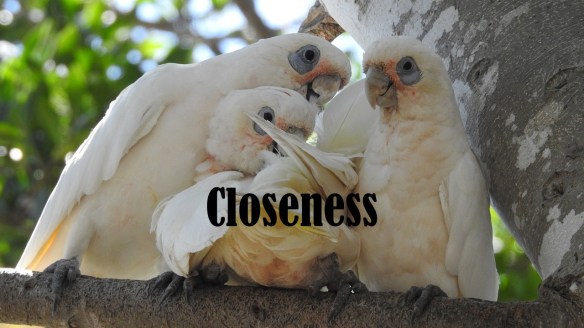
Closeness.

Sunday Inspiration.          Post by David Joel Miller.

Closeness.

Family Closeness.

Closeness.
Photo courtesy of Pixabay.com

“Closeness means you get hurt; closeness means letting down your defenses and letting people see the tender skin under the carapace.”

― Cathy Kelly, Never Too Late

I tried to put things in perspective but sometimes you’re just too close to it.

Cormac McCarthy

You can’t find any true closeness in Hollywood because everybody does the fake closeness so well.

Carrie Fisher

If your relationship with someone is based on your desire for them to change into something radically different, there’s no real closeness there, no real communication.

Patrick Califia

Wanted to share some inspirational quotes with you.  Today seemed like a good time to do this. If any of these quotes strike a chord with you, please share them.

Finding Our Values.

Sunday Inspiration.          Post by David Joel Miller.

Values.

Values

Values
New York City 1980’s
Photo courtesy of Pixabay.com

“It’s not hard to make decisions when you know what your values are.”

― Roy Disney

“We are not afraid to entrust the American people with unpleasant facts, foreign ideas, alien philosophies, and competitive values. For a nation that is afraid to let its people judge the truth and falsehood in an open market is a nation that is afraid of its people.”

[Remarks on the 20th Anniversary of the Voice of America; Department of Health, Education, and Welfare, February 26, 1962]”

― John F. Kennedy

“It is no measure of health to be well adjusted to a profoundly sick society.”

― Jiddu Krishnamurti

Wanted to share some inspirational quotes with you.  Today seemed like a good time to do this. If any of these quotes strike a chord with you, please share them.

What is an Adjustment Like Disorder? (F43.9)

By David Joel Miller, MS, Licensed Therapist & Licensed Counselor.

What is

What is an Adjustment Like Disorder? (F43.9)
Photo courtesy of Pixabay.

When is an adjustment disorder not an adjustment disorder?

Sometimes people have symptoms as a result of experiencing trauma or stress.

These difficulties are sufficiently severe that we think this person needs treatment but the exact group of symptoms they have doesn’t quite fit a listed disorder.

The new DSM – 5 solves this problem by creating another name for adjustment like disorders.

Other Specified Trauma- and Stressor-Related Disorders (F43.9)

This designation gives us five more ways to categorize problems of everyday living which were caused by stressors or trauma but do not quite neatly fit the defined adjustment disorders.  Below are the five reasons you might get an adjustment like disorder diagnosis.

1. You had a stressor but your problems did not begin until more than three months after the stressor.

2. The problems continue for more than six months even though the stressor has ended but your symptoms have not turned into another diagnosis.

3. You were having an “ataque de nervious.” This particular condition is listed in the back of the DSM – 5 under cultural concepts of distress. While not recognized in the United States as a mental disorder, this particular group of symptoms is widely recognized in Spanish-speaking countries.

4. Another cultural syndrome. There are a number of cultural syndromes that are recognized in a particular geographic or ethnic area.  The cultural syndromes are understood as an inability to cope with a particular stressor.

5. Persistent Complex Bereavement Disorder. This condition is listed in an appendix to the DSM under conditions for further study.  Since it didn’t make the list of official diagnoses, researchers needed a way to code it.  The result is this condition ended up here under adjustment like disorders.

I don’t think I’ve ever seen an adjustment like disorder listed in the person’s chart nor have I ever use this particular diagnosis myself.  But when I saw it was right there in the DSM-5 I just couldn’t resist letting you all know about this.  Maybe this illustrates how learning to diagnose mental illnesses is both an imprecise science and an area for continuing learning.

As with the other things we are calling a mental illness this adjustment like disorder needs to interfere with your ability to work or go to school, your relationships, your enjoyable activities or cause you personal distress. Otherwise, you may have the issues but you will not get the diagnoses if this is not causing you a problem. If the only time this happens is when you are under the influence of drugs or medicines or because of some other physical or medical problem this issue needs to be more severe than your situation would warrant. These other issues may need treating first, then if you still have symptoms you could get this diagnosis.

FYI These “What is” sometimes “What are” posts are my efforts to explain terms commonly used in Mental Health, Clinical Counseling, Substance Use Disorder Counseling, Psychology, Life Coaching, and related disciplines in a plain language way. Many are based on the new DSM-5; some of the older posts were based on the DSM-IV-TR, both published by the APA. For the more technical versions please consult the DSM or other appropriate references.

See Recommended Books.     More “What is” posts will be found at “What is.”

For more on this topic see Adjustment Disorders in the Trauma- and Stressor-Related Disorders category.

Staying connected with David Joel Miller

Seven David Joel Miller Books are available now!

My newest book is now available. It was my opportunity to try on a new genre. I’ve been working on this book for several years, but now seem like the right time to publish it.

Story Bureau.

Story Bureau is a thrilling Dystopian Post-Apocalyptic adventure in the Surviving the Apocalypse series.

Baldwin struggles to survive life in a post-apocalyptic world where the government controls everything.

As society collapses and his family gets plunged into poverty, Baldwin takes a job in the capital city, working for a government agency called the Story Bureau. He discovers the Story Bureau is not a benign news outlet but a sinister government plot to manipulate society.

Bumps on the Road of Life. Whether you struggle with anxiety, depression, low motivation, or addiction, you can recover. Bumps on the Road of Life is the story of how people get off track and how to get your life out of the ditch.

Dark Family Secrets: Doris wants to get her life back, but small-town prejudice could shatter her dreams.

Casino Robbery Arthur Mitchell escapes the trauma of watching his girlfriend die. But the killers know he’s a witness and want him dead.

Planned Accidents  The second Arthur Mitchell and Plutus mystery.

Letters from the Dead: The third in the Arthur Mitchell mystery series.

What would you do if you found a letter to a detective describing a crime and you knew the writer and detective were dead, and you could be next?

Sasquatch. Three things about us, you should know. One, we have seen the past. Two, we’re trapped there. Three, I don’t know if we’ll ever get back to our own time.

For these and my upcoming books; please visit my Author Page – David Joel Miller

Want the latest blog posts as they publish? Subscribe to this blog.

For videos, see: Counselorssoapbox YouTube Video Channel

Humor leads to happiness.

By David Joel Miller, MS, Licensed Therapist & Licensed Counselor.

Humor.

Humor.
Photo courtesy of Pixabay.com

Learn to laugh more and you will live more.

Humor is good for your mental health and it is good for relationships. There can be very real physical health benefits also. People without a sense of humor are hard to be around sometimes. Think about how being less serious, lightening up a little, might improve your mental wellness and make your life a better place to be. Below is a list of some of the benefits of developing a better sense of humor.

Being serious about your life goals and values is a good thing, but taking yourself too seriously along the way results in an unpleasant journey through life. You are easier to be around and get more done when you can see the lighter side of life.

When you laugh you become more likable.

Somber, over-serious people are hard to be around on a consistent basis. People who can laugh and enjoy themselves are easier to be around. They have more friends and others are more willing to help them out when times are difficult.

The happy, laughing person is a joy to be around and others will seek the funny person out. Help people to feel good about being around you and they will look for you.

Admit your mistakes and you become less sensitive to criticism.

Learn to take the things you do seriously but not take yourself so seriously. Being able to laugh at your foibles is a real asset in life. There is a place for some levity in every life. Share the joke with others and they share themselves with you.

Hiding your mistakes takes a lot of energy and effort. Being honest about your failings makes you more human. It is tiresome to be around someone who is never able to admit they made a mistake.

Happiness helps you see the good in things.

Being able to laugh at the funny side of life makes it easier to find the silver lining in those problematic parts of life. If everything in your life is deadly serious the joy flees. Even in the toughest of times being able to look on the lighter side of things can help see you through tough events.

Pain and misery will make sure you notice them, but happiness waits patiently for its turn to make an appearance in your life. To capture life’s pleasures you have to notice and encourage them.

Humor reduces conflicts.

Serious settings can heighten tensions. Develop the skill to relax and see the funny parts of life and you can defuse conflicts. When others laugh with you the tension drains away. It is harder to stay angry with someone you laugh with.

A sense of humor makes you more attractive.

Women prefer men with a sense of humor and men prefer women who laugh at their jokes. While humor is not as sure-fire as liquor in establishing relationships it does keep you out of jail and court a lot more.

Besides romantic relationships, funny friends are – well they are just more fun to be around. Being happy attracts other happy people. Being sad, you know that misery likes company, but only from other misery.

Humor is good medicine.

Laughter wakes up the body. It gets the blood flowing in a good way. Happiness is good for improving attention. That big laugh puts more oxygen into your body. The more you laugh the more oxygen. Laughter also releases endorphins in the brain which makes you feel good and can reduce the physical and emotional pains of life.

People with a good sense of humor have been reported to live longer. Even if that were questionable science, happy, laughing people enjoy the life they have more than unhappy ones.

Consider enriching your life by working on your laughter skills.

Staying connected with David Joel Miller

Seven David Joel Miller Books are available now!

My newest book is now available. It was my opportunity to try on a new genre. I’ve been working on this book for several years, but now seem like the right time to publish it.

Story Bureau.

Story Bureau is a thrilling Dystopian Post-Apocalyptic adventure in the Surviving the Apocalypse series.

Baldwin struggles to survive life in a post-apocalyptic world where the government controls everything.

As society collapses and his family gets plunged into poverty, Baldwin takes a job in the capital city, working for a government agency called the Story Bureau. He discovers the Story Bureau is not a benign news outlet but a sinister government plot to manipulate society.

Bumps on the Road of Life. Whether you struggle with anxiety, depression, low motivation, or addiction, you can recover. Bumps on the Road of Life is the story of how people get off track and how to get your life out of the ditch.

Dark Family Secrets: Doris wants to get her life back, but small-town prejudice could shatter her dreams.

Casino Robbery Arthur Mitchell escapes the trauma of watching his girlfriend die. But the killers know he’s a witness and want him dead.

Planned Accidents  The second Arthur Mitchell and Plutus mystery.

Letters from the Dead: The third in the Arthur Mitchell mystery series.

What would you do if you found a letter to a detective describing a crime and you knew the writer and detective were dead, and you could be next?

Sasquatch. Three things about us, you should know. One, we have seen the past. Two, we’re trapped there. Three, I don’t know if we’ll ever get back to our own time.

For these and my upcoming books; please visit my Author Page – David Joel Miller

Want the latest blog posts as they publish? Subscribe to this blog.

For videos, see: Counselorssoapbox YouTube Video Channel

Finding your direction.

Finding your direction.

Directions

Finding your direction.
Photo courtesy of Pixabay.com

“Study the past if you would define the future.”
― Confucius

“Lack of direction, not lack of time, is the problem. We all have twenty-four hour days.”

― Zig Ziglar

“It is a mistake to think that moving fast is the same as actually going somewhere.”

― Steve Goodier

Wanted to share some inspirational quotes with you.  Today seemed like a good time to do this. If any of these quotes strike a chord with you, please share them.

What is Post-Traumatic Stress Disorder PTSD?

By David Joel Miller, MS, Licensed Therapist & Licensed Counselor.

What is

What is Post-Traumatic Stress Disorder PTSD?
Photo courtesy of Pixabay.

Would you know PTSD if you experienced it?

PTSD is something that we hear a lot about, but most people have only a general idea what it involves.  PTSD was first recognized in returning military veterans. It has since been recognized in children who were abused, in cases of domestic violence, as the result of sexual assaults as well as the result of other traumas. While each case of PTSD is unique, they have many features in common.  Many people with PTSD may also have one or more other psychiatric disorders, some of which are likely the result of traumatic incidents. Below is a list of the features that professionals use to identify PTSD.

PTSD involves a specific trauma.

Something has happened or there was a high risk it would happen.  This trauma involved death, possible serious bodily injury, or a sexual assault. This event needs to happen to you or someone close to you, not just be something you saw on the television.  This event was either violent or sudden and unexpected.

Also included in the definition of a trauma below, are the effects which dealing with the incident has on first responders or other emergency personnel.

This traumatic event keeps forcing its way back into your life.

Part of PTSD symptoms are the recurrent memories of the event.  You may have nightmares about what happened or things connected to that event.  Some people with PTSD experience spacing out or dissociation.  You may also experience flashbacks and in these times it can feel like the event is happening again.

These recurrent intrusive memories are easily triggered.  Both internal triggers, thoughts and feelings, and external triggers, people, places, and things, may bring back the memory.

People with PTSD try to avoid reminders.

There are all kinds of ways to avoid being reminded of something that has happened. You may avoid going to certain places or events. People may turn to drugs, alcohol or other distractions.  They may try to avoid having feelings, or other thoughts about the incident.

Sometimes the brain does this job for you.  You may find that there are periods of time for which you have no memory. Some people describe this as having a blackout or amnesia.  They may avoid activities which are in any way connected to these unpleasant memories.

Behavior changes when you experience Post-Traumatic Stress Disorder.

People with this disorder often become irritable and angry.  They may become either self-destructive or reckless.  Part of this condition is having an exaggerated startle response.  In the aftermath of the trauma, people may develop poor concentration and impaired sleep.  Someone with PTSD may stop engaging in activities that used to be fun, they detach from others and may say that they just can’t feel happy.  These behavioral changes are also characteristic of depression, and the two disorders often occur together.

PTSD can cause cognitive changes.

In the aftermath of trauma, it is common for people to blame themselves.  They may tell themselves that if they hadn’t been there, or had been more careful, it would not have happened.  Negative thought patterns may develop.  People begin to feel bad about themselves, other people, and the future.  These cognitive changes can result in developing depression.

PTSD needs to last a while and not be something else.

This condition is expected to last more than a month after the stressor.  As with the other things we are calling a mental illness this needs to interfere with your ability to work or go to school, your relationships, your enjoyable activities or cause you personal distress. Otherwise, you may have the issues but you will not get the diagnosis. If the only time this happens is when you are under the influence of drugs or medicines or because of some other physical or medical problem we’re likely to think this is something other than PTSD.

FYI These “What is” sometimes “What are” posts are my efforts to explain terms commonly used in Mental Health, Clinical Counseling, Substance Use Disorder Counseling, Psychology, Life Coaching, and related disciplines in a plain language way. Many are based on the new DSM-5; some of the older posts were based on the DSM-IV-TR, both published by the APA. For the more technical versions please consult the DSM or other appropriate references.

For more on this topic see Trauma- and Stressor-Related Disorders. 

See Recommended Books.     More “What is” posts will be found at “What is.”

What is an Adjustment Like Disorder? (F43.9)

Staying connected with David Joel Miller

Seven David Joel Miller Books are available now!

My newest book is now available. It was my opportunity to try on a new genre. I’ve been working on this book for several years, but now seem like the right time to publish it.

Story Bureau.

Story Bureau is a thrilling Dystopian Post-Apocalyptic adventure in the Surviving the Apocalypse series.

Baldwin struggles to survive life in a post-apocalyptic world where the government controls everything.

As society collapses and his family gets plunged into poverty, Baldwin takes a job in the capital city, working for a government agency called the Story Bureau. He discovers the Story Bureau is not a benign news outlet but a sinister government plot to manipulate society.

Bumps on the Road of Life. Whether you struggle with anxiety, depression, low motivation, or addiction, you can recover. Bumps on the Road of Life is the story of how people get off track and how to get your life out of the ditch.

Dark Family Secrets: Doris wants to get her life back, but small-town prejudice could shatter her dreams.

Casino Robbery Arthur Mitchell escapes the trauma of watching his girlfriend die. But the killers know he’s a witness and want him dead.

Planned Accidents The second Arthur Mitchell and Plutus mystery.

Letters from the Dead: The third in the Arthur Mitchell mystery series.

What would you do if you found a letter to a detective describing a crime and you knew the writer and detective were dead, and you could be next?

Sasquatch. Three things about us, you should know. One, we have seen the past. Two, we’re trapped there. Three, I don’t know if we’ll ever get back to our own time.

For these and my upcoming books; please visit my Author Page – David Joel Miller

Want the latest blog posts as they publish? Subscribe to this blog.

For videos, see: Counselorssoapbox YouTube Video Channel
How to be more creative.

By David Joel Miller, MS, Licensed Therapist & Licensed Counselor.

Original

Creative.
Photo courtesy of Pixabay.com

How do you keep the creativity flowing?

If you work in a creative field, then you know how important it is to find ways to spark your creative flow. Every profession these days could use a little creativity if that person or firm wants to prosper and grow. Sometimes to create the life we want we need to be more creative in our homes and leisure as well.

So how do those super creative people do it? No, the answer is not drugs, nor is it working longer hours. More effort put into doing something the routine way will not result in creativity or new approaches. If you need some inspiration to spark that creative fire of yours, here are a few suggestions.

Look for inspiration in new places.

If you keep looking in the same place you keep seeing the same things. Two possible solutions, look in new places or look in the same place with a new vision. Travel exposes you to new surroundings and customs. It can give you a fresh perspective.  Visit a place you haven’t been to before or a place you haven’t been to recently.

Consider how someone from another occupation might look at the problem your working on.  Writers are encouraged to read other genres. A designer might look at natural history specimens to find inspiration.  A walk in nature can inspire other ways of looking at things.

If you continue to go to the same places, with the same people, you see the same things. Expose yourself to novelty to see the world with a new set of eyes.

Spend time with creative people.

Creative people in any discipline are on the lookout for new ideas and they are almost always willing to share. Some great ideas for innovation in business came from watching what was going on in other industries.

Artists in one medium can find inspiration by looking at the work of artists in other mediums.  A photograph can be an inspiration for a short story or setting for a novel. Getting out of your comfort zone and having new experiences can free up the mind from the same old way of seeing things and get that novel way of looking at the problem to come into focus.

Ask better questions.

Having a problem with a creative issue? Try asking other questions. How might a biologist approach this question? How would an accountant or lawyer see the creature you are creating? If you are not getting answers to questions requiring creativity ask different questions.

Work the process, put in the hours.

Some creative projects require you to get moving and do something. Writers with so-called “writer’s block” are well advised to write, write anything. That first effort may not even be worth saving but it will get you started working in the direction of the finished result.

Sometimes creativity includes experimenting with things that won’t work until you have eliminated all those possibilities. Approach each new attempt at creativity with the mindset that you will discover all you can in this process.

Take some breaks. Shift gears.

If you find yourself doing the same thing over and over and getting nowhere, try working on another project. Take some short breaks and do something else. While you are washing the dishes or emptying the refrigerator the solution to your who-did-it or how the murder needs to take place may pop into your brain as if by magic.

This taking the break is not an exception to the rule before putting in the hours. Taking short breaks to shift your thoughts is part of the putting in the effort process. Be careful here to avoid things that are just distractions and find ways to get your mind into neutral during these breaks.

Identify the things getting in your way.

Identify roadblocks to creativity. Are there distracting noises? Change locations.  What other things might be impeding your creativity?  Is your work area uncomfortable?  Consider what other supplies or equipment might help you improve your creativity.

Are you lacking the information you need to do the job you’re trying to do?  What other information might be helpful and how will you go about finding it?

Sometimes it’s as simple as your mind is occupied with something else you will need to do at another time.  Plan for when you will do these other activities or consider writing them down and making a list so you can free up space in your brain to get back to the task at hand.

Forget the rules and use what you have.

Rules about how things need to be done get in the way of being creative and inventing a new better way to do or make them.  The overly rigid about how things have to be done, what tools are needed, or how to use them can get in the way of creativity.

Try using new tools in new ways.

Often creativity comes from trying out new tools, ones you’ve never seen or used before.  Try to get out of your reaching mindset and use the tool you do have in new or different ways.  Tools and working your tools can be used in a great many ways beyond what we initially think.

Consider what new tools you might want to try or how you might want to use your existing tools in a new way.

Creativity is all about moving outside your comfort zone, seeing things in new ways while being willing to try new options.

Staying connected with David Joel Miller

Seven David Joel Miller Books are available now!

My newest book is now available. It was my opportunity to try on a new genre. I’ve been working on this book for several years, but now seem like the right time to publish it.

Story Bureau.

Story Bureau is a thrilling Dystopian Post-Apocalyptic adventure in the Surviving the Apocalypse series.

Baldwin struggles to survive life in a post-apocalyptic world where the government controls everything.

As society collapses and his family gets plunged into poverty, Baldwin takes a job in the capital city, working for a government agency called the Story Bureau. He discovers the Story Bureau is not a benign news outlet but a sinister government plot to manipulate society.

Bumps on the Road of Life. Whether you struggle with anxiety, depression, low motivation, or addiction, you can recover. Bumps on the Road of Life is the story of how people get off track and how to get your life out of the ditch.

Dark Family Secrets: Doris wants to get her life back, but small-town prejudice could shatter her dreams.

Casino Robbery Arthur Mitchell escapes the trauma of watching his girlfriend die. But the killers know he’s a witness and want him dead.

Planned Accidents  The second Arthur Mitchell and Plutus mystery.

Letters from the Dead: The third in the Arthur Mitchell mystery series.

What would you do if you found a letter to a detective describing a crime and you knew the writer and detective were dead, and you could be next?

Sasquatch. Three things about us, you should know. One, we have seen the past. Two, we’re trapped there. Three, I don’t know if we’ll ever get back to our own time.

For these and my upcoming books; please visit my Author Page – David Joel Miller

Want the latest blog posts as they publish? Subscribe to this blog.

For videos, see: Counselorssoapbox YouTube Video Channel

What are the six types of Adjustment Disorders?

By David Joel Miller, MS, Licensed Therapist & Licensed Counselor.

What is

What are the six types of Adjustment Disorders?
Photo courtesy of Pixabay.

Adjustment Disorders include six types or specifiers.

In another post, I wrote about adjustment disorders. You might want to take a look at that post.  You will find it in the trauma- and stressor-related disorders category. But to briefly recap, an adjustment disorder is a time when you experience stress and that amount of stress is more than you can handle.

The kind of things that you might find stressful, and how that stress might affect you, can vary a great deal from one person to another.  Adjustment Disorder can be very chameleon-like, changing from person to person and from time to time. As a result of this variation and in order to help find the correct treatment for each person, professionals use six different specifiers for various presentations of adjustment disorder.  Listed below are the six specifiers or sub-types of adjustment disorder that are listed in the new DSM – 5.

Adjustment Disorder with Depressed Mood (F43.21).

Sometimes in addition to having difficulty coping with a stressor, as a result of this life problem, people develop depression.  If this goes on long enough or is severe enough they might eventually get a diagnosis of Major Depressive Disorder.  But until that happens treatment will mainly focus on the stressor and the depression that stressor is causing.

Adjustment Disorder with Anxiety (F43.22).

Sometimes the primary symptom that people experience when they are going through stress is an increase in their anxiety.  If this increase in anxiety is related to a specific stressor, is more severe than we expect, or goes on too long, Adjustment Disorder with Anxiety is the likely problem.

Adjustment Disorder with both Depression and Anxiety (F43.23).

Anxiety and depression frequently happen to people at the same time.  If this stressor has produced both depression and anxiety, then this specifier should be added.

Adjustment Disorder with Conduct Problems (F43.24).

Sometimes the principle way we know that stress has affected somebody is that they begin to act in inappropriate ways.  This diagnosis with this specifier is most commonly seen in children who rather than show their symptoms as anxiety or depression, begin to act out.

Adjustment Disorder with Disturbance of Emotions and Conduct (F43.25).

When stress overcomes a person’s ability to cope, we may see changes both in their behavior and in their feelings.  This is often the case in children and adolescents but may also be seen in adults with poor emotional regulation.

Adjustment Disorder Unspecified (F43.20).

When the counselor knows that the problem the client has is caused by their reaction to stress but none of the other sub-types quite seem to fit, this category may be used.

As with the other things we are calling a mental illness this problem needs to interfere with your ability to work or go to school, your relationships, your enjoyable activities, or cause you personal distress. Otherwise, you may have the issues but you will not get the diagnoses if this is not causing you a problem. If the only time this happens is when you are under the influence of drugs or medicines or because of some other physical or medical problem, this problem needs to be more than your situation would warrant. These other issue needs treating first, then if you still have symptoms you could get this diagnosis.

FYI These “What is” sometimes “What are” posts are my efforts to explain terms commonly used in Mental Health, Clinical Counseling, Substance Use Disorder Counseling, Psychology, Life Coaching, and related disciplines in a plain language way. Many are based on the new DSM-5; some of the older posts were based on the DSM-IV-TR, both published by the APA. For the more technical versions please consult the DSM or other appropriate references.

Staying connected with David Joel Miller

Seven David Joel Miller Books are available now!

My newest book is now available. It was my opportunity to try on a new genre. I’ve been working on this book for several years, but now seem like the right time to publish it.

Story Bureau.

Story Bureau is a thrilling Dystopian Post-Apocalyptic adventure in the Surviving the Apocalypse series.

Baldwin struggles to survive life in a post-apocalyptic world where the government controls everything.

As society collapses and his family gets plunged into poverty, Baldwin takes a job in the capital city, working for a government agency called the Story Bureau. He discovers the Story Bureau is not a benign news outlet but a sinister government plot to manipulate society.

Bumps on the Road of Life. Whether you struggle with anxiety, depression, low motivation, or addiction, you can recover. Bumps on the Road of Life is the story of how people get off track and how to get your life out of the ditch.

Dark Family Secrets: Doris wants to get her life back, but small-town prejudice could shatter her dreams.

Casino Robbery Arthur Mitchell escapes the trauma of watching his girlfriend die. But the killers know he’s a witness and want him dead.

Planned Accidents  The second Arthur Mitchell and Plutus mystery.

Letters from the Dead: The third in the Arthur Mitchell mystery series.

What would you do if you found a letter to a detective describing a crime and you knew the writer and detective were dead, and you could be next?

Sasquatch. Three things about us, you should know. One, we have seen the past. Two, we’re trapped there. Three, I don’t know if we’ll ever get back to our own time.

For these and my upcoming books; please visit my Author Page – David Joel Miller

Want the latest blog posts as they publish? Subscribe to this blog.

For videos, see: Counselorssoapbox YouTube Video Channel