
Getting past the fear.

By David Joel Miller, MS, Licensed Therapist & Licensed Counselor.
What do you fear

Fear
Photo courtesy of Pixabay.com

Ways to overcome your fears and anxiety.

Fear and anxiety are terrible roommates. They can take over your life and make you miserable. Anxiety is like some nasty monster lurking about your life controlling your destiny. Fear is a bully whispering in your ear all manner of negativity. The more you try to ignore your fears, pacify them by avoiding all the scary things, the more they take over your life.

If you have decided that you are tired of letting your fears and anxieties control your life then now is the time to get this relationship with your fears under control. Like an annoying relative, you may not be able to cut your anxieties out of your life altogether, but you can set up some new rules and take back control of your life. Here are some ways to tame the anxiety monster.

Accept the fear, recognize it is in the room.

Hiding from your fears will not make them go away. Neither will trying to run away. You can’t get rid of fear by hiding. Drugs, alcohol, or other distracting behaviors will only make matters worse.

Take a good look at this fear. What does it look like? How is this interfering with your life? Consider how your life would be different if you listen to the fear less. You can’t work on a problem until you recognize it.

Name the fear – what are you really afraid of?

Think about this fear. What is it really? Fear of flying? Or is it fear of crashing? Flying happens way more than crashing. Fear of snakes? Or fear of being bitten by a snake? Maybe even fear of being bitten by a poisonous snake. Snakes are not really interested in biting you, not unless you look like a meal. They will run if they get the chance. They may even hiss or rattle to scare you away. The biting happens when you don’t recognize the snake for what it is and wants until after the bite.

What does your fear really want from you? Is this outcome something you will accept rather than live the life you want?

Some fears are protective and some are not.

If someone is shooting at you be afraid and take cover. Fear, in that case, is trying to protect you. But if you hear a car door slams down the block and your fear sends you running for cover, this fear is far bigger than the real danger.

Just because it scares you does not mean there is a danger.

Being afraid of your shadow is more than an expression. Many of our fears and anxieties in adult life are fears left over from childhood when we were smaller and more helpless. Reevaluate those fears. Are they valid today in the world you are living in?

You may need an objective opinion to evaluate the risk.

When you are frightened the whole world looks scary. It can help to talk about your fears with an objective person. Sometimes you know already that your fear is excessive. It may even be keeping you from having a life, talking to a professional can help you get past the fear.

Being perfect is not possible.

Are you afraid to make a mistake? Are you worried that others will judge you and think you are incapable? Not taking action will guarantee the result you fear. There are no perfect people. Everyone makes mistakes. No one hits a home run every time or wins every contest. Letting fear keep you out of the game will prevent what could have been. You will not get 100% of the jobs you do not apply for.

Don’t go around collecting other’s fears.

Fear, like misery, loves company. If you grew up in a fear-filled home or live with someone who is full of fear then you may have been infected by other’s fears. If you are struggling with other people’s fears, return that fear creature and get the refund of your life back.

What would be better if you did not have this fear?

When you stay focused on the fear you miss out on the other possibilities. Ask yourself what would be better if you did not have that fear. Act as if that fear was already gone and as you move towards the thing you used to fear you will see it shrink. Anxieties bully people, tell that bully no.

Avoid comparing up.

One way to keep anxiety a part of life is to constantly compare yourself to someone who has more than you. This “comparing up” results in a lot of depression and anxiety. You are not as famous as that person you saw on the awards show. You do not have 152,000 friends on social media like that other person. If you keep comparing up you will start feeling bad about yourself and magnify your fear of not measuring up.

Collect successes.

Most people ignore their successes and collect the memories of their shortfalls. This is precisely the wrong approach. Make sure that you recognize your life’s good times. Pick those happy memories up and hold onto them. If you do not save successes you will lose count of them and then your inventory will look like all you have ever had were failures.

Sneak up on the fear. Systematic desensitization.

You can conquer that fear or anxiety using a process called systematic desensitization. I have written elsewhere about this process. The trick here is to approach the fear as close as you can and then hold that position. If you begin to experience feeling the fear and yet nothing bad happens the fear will move away. Keep this up and you can stretch your comfort zone and reduce the circle that fear stays in. Eventful that fear will come to serve you not the other way around. Working with a professional on this process can pay great rewards.

Build a fear-busting team. Support system.

Fears are much scarier when you have to face them alone. One of the best ways to tackle life’s problems is to develop a good support system. You need to surround yourself with people who can stand with you when you face this fear down.

Which of these fear busting tools are you going to try?

Staying connected with David Joel Miller

Seven David Joel Miller Books are available now!

My newest book is now available. It was my opportunity to try on a new genre. I’ve been working on this book for several years, but now seem like the right time to publish it.

Story Bureau.

Story Bureau is a thrilling Dystopian Post-Apocalyptic adventure in the Surviving the Apocalypse series.

Baldwin struggles to survive life in a post-apocalyptic world where the government controls everything.

As society collapses and his family gets plunged into poverty, Baldwin takes a job in the capital city, working for a government agency called the Story Bureau. He discovers the Story Bureau is not a benign news outlet but a sinister government plot to manipulate society.

Bumps on the Road of Life. Whether you struggle with anxiety, depression, low motivation, or addiction, you can recover. Bumps on the Road of Life is the story of how people get off track and how to get your life out of the ditch.

Dark Family Secrets: Doris wants to get her life back, but small-town prejudice could shatter her dreams.

Casino Robbery Arthur Mitchell escapes the trauma of watching his girlfriend die. But the killers know he’s a witness and want him dead.

Planned Accidents  The second Arthur Mitchell and Plutus mystery.

Letters from the Dead: The third in the Arthur Mitchell mystery series.

What would you do if you found a letter to a detective describing a crime and you knew the writer and detective were dead, and you could be next?

Sasquatch. Three things about us, you should know. One, we have seen the past. Two, we’re trapped there. Three, I don’t know if we’ll ever get back to our own time.

For these and my upcoming books; please visit my Author Page – David Joel Miller

Want the latest blog posts as they publish? Subscribe to this blog.

For videos, see: Counselorssoapbox YouTube Video Channel
Dream On!

Sunday Inspiration    Post By David Joel Miller.

Dream On!

Dreams

Dream On!
Photo courtesy of Pixabay.com

“There is nothing like a dream to create the future.”

― Victor Hugo, Les Misérables

“It is a happiness to wonder; — it is a happiness to dream.”

― Edgar Allan Poe, Complete Stories and Poems of Edgar Allen Poe

“Nothing happens unless first a dream.”

― Carl Sandburg, The Complete Poems

Wanted to share some inspirational quotes with you.  Sunday seemed like a good time to do this. If any of these quotes strike a chord with you please share them.

What is the ACA?

By David Joel Miller, MS, Licensed Therapist & Licensed Counselor.

What is

What is an adult child of an alcoholic?
Photo courtesy of Pixabay.

How many ACA’s are there?

These initial things don’t always mean what we think. Different groups of people mean different things by the same set of initials and the same group or condition may get more than one shortened reference. Currently, we are struggling with a sudden shift in the meaning of ACA. I will give you some possible meanings for ACA in a moment.

Context matters.

There is a lot of research out there and more being published every day. Sometimes I think that I read way too much of that research. Is there a treatment for excessive research preoccupation?

The convention in research is that the first time a writer uses a term in their article they give the full name of the condition, theory, or test instrument they used followed by the abbreviation they will be using in parentheses. Thereafter they use only the abbreviation.

For example, older articles on Pervasive Developmental Delay used to read Pervasive Developmental Delay (PDD.) Thereafter the article would only talk about PDD. With the DSM-5, Pervasive Developmental Delay became a part of the Autism Spectrum Disorder (ASD.) There is now a new disorder Persistent Depressive Disorder (PDD.) Persistent Depressive Disorder is pretty much like the thing we used to call Dysthymia.

So if you see PDD in an article look back to the beginning of the article and see what the original term was that is being shortened to PDD.

So what is ACA?

In the mental health field, ACA has several meanings. Most likely these days ACA refers to the Affordable Care Act (ACA.) This is big here in America, right now, in that it expanded medical coverage to a lot more people. Unfortunately, this does not mean that everyone here in the U. S. has medical insurance. There are still a lot of poor people who do not have medical insurance. We still have a long way to go to get everyone health insurance.

This does not mean those uninsured people do not receive medical care. They still show up in hospital emergency rooms and get free care there. The difference is that without insurance there is no provision for who will pay for that care and so the public gets the bill. Sure if you have no insurance they mail you a bill, but if you are homeless you are not likely to pay that bill.

The result of this system is that the uninsured are discouraged from seeking care if they have anything at all until they are dying and then the rest of us get that bill. This presumably saves money by avoiding preventative care and only having publicly funded care after there is a serious medical emergency. I will step off my large soapbox now and resume my place on the smaller soapbox.

ACA means something special to Professional Counselors.

The American Counseling Association (ACA) is a major organization in the counseling field. Most professional counselors, clinical counselors, mental health counselors, and so on are members of the ACA (American Counseling Association.)

If you are a counselor you should be a member of the ACA and/ or its local affiliate. Here in California that would be CALPCC. Some people are members of both.

If you are a counselor that sees people with Behavioral Health coverage under the ACA (Affordable Care Act) you should especially be a member of the ACA (American Counseling Association.) I am still not sure why we call emotional and mental illnesses “Behavioral Health.”

ACA is also for people in recovery.

Adult Children of Alcoholics (ACA.)

American Council on Alcoholism (ACA.)    

Adult Children Anonymous (ACA.)

And that’s not all the ACA’s.

One internet source (http://www.acronymfinder.com/ACA.html) lists 241 different ACA’s. This includes groups in Australia, Austria, Alaska, and Arizona. They also list groups of Accountants, Actuaries, and other “A” occupations. Just reading that list has started to make my head hurt.

We will leave our discussion of ACA there.

FYI These “What is” sometimes “What are” posts are my efforts to explain terms commonly used in Mental Health, Clinical Counseling, Substance Use Disorder Counseling, Psychology, Life Coaching, and related disciplines in a plain language way. Many are based on the new DSM-5; some of the older posts were based on the DSM-IV-TR, both published by the APA. For the more technical versions please consult the DSM or other appropriate references.

Staying connected with David Joel Miller

Seven David Joel Miller Books are available now!

My newest book is now available. It was my opportunity to try on a new genre. I’ve been working on this book for several years, but now seem like the right time to publish it.

Story Bureau.

Story Bureau is a thrilling Dystopian Post-Apocalyptic adventure in the Surviving the Apocalypse series.

Baldwin struggles to survive life in a post-apocalyptic world where the government controls everything.

As society collapses and his family gets plunged into poverty, Baldwin takes a job in the capital city, working for a government agency called the Story Bureau. He discovers the Story Bureau is not a benign news outlet but a sinister government plot to manipulate society.

Bumps on the Road of Life. Whether you struggle with anxiety, depression, low motivation, or addiction, you can recover. Bumps on the Road of Life is the story of how people get off track and how to get your life out of the ditch.

Dark Family Secrets: Doris wants to get her life back, but small-town prejudice could shatter her dreams.

Casino Robbery Arthur Mitchell escapes the trauma of watching his girlfriend die. But the killers know he’s a witness and want him dead.

Planned Accidents  The second Arthur Mitchell and Plutus mystery.

Letters from the Dead: The third in the Arthur Mitchell mystery series.

What would you do if you found a letter to a detective describing a crime and you knew the writer and detective were dead, and you could be next?

Sasquatch. Three things about us, you should know. One, we have seen the past. Two, we’re trapped there. Three, I don’t know if we’ll ever get back to our own time.

For these and my upcoming books; please visit my Author Page – David Joel Miller

Want the latest blog posts as they publish? Subscribe to this blog.

For videos, see: Counselorssoapbox YouTube Video Channel

What is Route of Drug Administration?

By David Joel Miller, MS, Licensed Therapist & Licensed Counselor.

Drugs.

Drugs.
Photo courtesy of Pixabay.

How many ways can you get drugs into your body?

While many therapeutic drugs are intended to work at various locations throughout the body drugs of abuse primarily exert their influence by their effect on the nervous system and the brain in particular. For drugs to affect people’s thinking, feeling, and behavior, to result in the classic substance use syndromes, the drug needs to somehow enter the brain.

The effects of a particular drug on the body and the user are hugely affected by the way in which the drug is placed into the body. Below are the primary ways drugs, therapeutic and drugs of abuse, are placed into the body, and some brief thoughts about the way in which these routes of administration affect the drug using experience.

Oral, swallowing, drinking, or eating drugs.

In the older drug use literature, drug eating was used as a term for many oral usages.  Tonics, elixirs, and soothing syrups often contained Opioids and alcohol in a drinkable form. Many drugs are still commonly taken orally. Alcohol is probably the drug that has the largest oral consumption.

Oral use is generally the safest way to take a drug as a portion of the dose is neutralized by digestion in the stomach. The drug will then be largely absorbed from the intestine into the bloodstream and then make its way through the liver before reaching the brain.

Smoking (inhalation) of drugs is common.

Smoking cigarettes is probably the first thing that comes to mind when we say smoking unless you are involved in smoking something else. Smoking results in a rapid uptake of the drug. Those lungs have lots of capillaries that were designed to take in oxygen but can be used to get drugs into the body also.

Many other drugs can be smoked. Marijuana is a close second to cigarettes. It may well move into first place soon. People also smoke crack cocaine and some forms of methamphetamine are smoked. Even heroin can be smoked. The trouble with smoking most of these drugs is that a lot of the chemical is lost in the process.

The result is that many, but not all, who start off smoking a drug eventually graduate to the needle.

Smoking can result in addiction very quickly. One puff and the level in the blood jumps up. It goes from the lungs to the brain and you really feel the hit. But the level quickly drops and leaves the smoker, of whatever drug, craving another hit.

There are other ways to inhale. Anything that becomes a gas can be sucked into the lungs and then to the blood and brain. Inhalants, sniffing fumes of gas, solvents, or other volatile chemicals is a type of inhaling.

Some things can be turned into a vapor without the burning part. Think vaping here but also there are ways to vaporize alcohol and breathe it in. Not recommended for home use as vaporized alcohol is also flammable and setting yourself on fire is a serious side effect of any drug use.

Snorting or intranasal drug use.

Cocaine leaps to mind here but other drugs can be snorted including heroin. Tobacco started out that way with people using powdered tobacco snuff. Snorting tobacco does not appear to make it any less harmful to your health.

Three ways to inject drugs.

When we say inject most people think the stereotyped heroin addict hunting for a vein to put the drug in, but there are plenty of other drugs and ways to inject them. Some of these are largely medical use but many drugs with a medical use are at risk to be abused recreationally.

Intravenous (I. V.)

I. V. Drug use puts a large dose of drugs into the bloodstream very rapidly. Beyond the risk from the drug, this method increases the risk of infection from breaking the skin and from the use of dirty needles. Sharing needles happens from necessity but also it is a part of the culture of some drugs that are used IV. This is the most common method for injecting drugs of abuse.

Intramuscular (I. M.)

This gets the drug directly to a muscle group. It is used medically for a number of reasons. In drugs of abuse, this is most often the way Steroids are abused.

Subcutaneous (Sub Q.)

Sub Q. sometimes called skin popping involves putting the drug under the skin. The drug, in solution, dissolves slowly and enters the bloodstream a little at a time. This works in a medical setting if the drug is very irritating and might be thrown up or when the volume of the drug is large.

Sublingual.

Some meds can be made fast-dissolving or even given as liquids. This is helpful for patients who are too ill to swallow pills. It is also used for some drugs to be taken at home when the patient cannot use needles.

Sublingual is the way chewing tobacco gets the nicotine into the system. Chewing drugs was the way native populations used Cocaine and Khat before refining and stronger forms came about.

Transdermal.

A few drugs or preparations of drugs can be rubbed on the skin and will be absorbed. For medications that really irritate the stomach and would be thrown up this works well. It also can be used when a particular area needs drugs applied locally.

Other (suppository.)

Where ever there is a pink mucous membrane there is a place where drugs can be inserted into the body. Who discovered you can abuse drugs this way? Maybe we do not want to know that one.

That is my quick summary of the various ways people place drugs into their bodies. Some are valuable ways to medicate people with serious illnesses but they can all also be routes of administration of drugs of abuse.

FYI These “What is” sometimes “What are” posts are my efforts to explain terms commonly used in Mental Health, Clinical Counseling, Substance Use Disorder Counseling, Psychology, Life Coaching, and related disciplines in a plain language way. Many are based on the new DSM-5; some of the older posts were based on the DSM-IV-TR, both published by the APA. For the more technical versions please consult the DSM or other appropriate references.

Staying connected with David Joel Miller

Seven David Joel Miller Books are available now!

My newest book is now available. It was my opportunity to try on a new genre. I’ve been working on this book for several years, but now seem like the right time to publish it.

Story Bureau.

Story Bureau is a thrilling Dystopian Post-Apocalyptic adventure in the Surviving the Apocalypse series.

Baldwin struggles to survive life in a post-apocalyptic world where the government controls everything.

As society collapses and his family gets plunged into poverty, Baldwin takes a job in the capital city, working for a government agency called the Story Bureau. He discovers the Story Bureau is not a benign news outlet but a sinister government plot to manipulate society.

Bumps on the Road of Life. Whether you struggle with anxiety, depression, low motivation, or addiction, you can recover. Bumps on the Road of Life is the story of how people get off track and how to get your life out of the ditch.

Dark Family Secrets: Doris wants to get her life back, but small-town prejudice could shatter her dreams.

Casino Robbery Arthur Mitchell escapes the trauma of watching his girlfriend die. But the killers know he’s a witness and want him dead.

Planned Accidents  The second Arthur Mitchell and Plutus mystery.

Letters from the Dead: The third in the Arthur Mitchell mystery series.

What would you do if you found a letter to a detective describing a crime and you knew the writer and detective were dead, and you could be next?

Sasquatch. Three things about us, you should know. One, we have seen the past. Two, we’re trapped there. Three, I don’t know if we’ll ever get back to our own time.

For these and my upcoming books; please visit my Author Page – David Joel Miller

Want the latest blog posts as they publish? Subscribe to this blog.

For videos, see: Counselorssoapbox YouTube Video Channel
Do the mentality ill need to stay sick?

By David Joel Miller, MS, Licensed Therapist & Licensed Counselor.

Mental health care is caught in a bind.

Mental Health or Mental Illness

Mental Health or Mental Illness?
Photo courtesy of Pixabay.com

What are we to do about the mentally ill? Our systems of care are stuck on the very sharp points of a modern dilemma. Most of those care systems are set up to care for the sick. We assume that there are two kinds of people, the “normal” ones and the mentally ill ones. Despite all the evidence that across the lifespan the two groups are largely indistinguishable, our programs are primarily focused on, sometimes restricted to, treating the ill.

We have systems in place to treat the sick. Often these programs are poorly funded and access is limited to only the most severely impaired. Despite their inadequacies programs do exist. Unfortunately our systems of care aren’t always prepared for people getting well.

The traditional mental health treatment paradigm consists of identifying a problem that could respond to our available treatments. Give them meds, give them therapy, manage their lives for them. Sometimes the system expects to cure them, a few of them, and send them away.

Only we know that paradigm stopped working in physical health a long time ago. Most health problems, mental or physical, do not get cured. They are chronic. You don’t get cured of diabetes, you get your symptoms under control. Then if you are no longer critically ill we need to move you out of the treatment facility.

Mental health systems only treat the ill.

Despite much evidence that people with mental health and substance abuse disorders recover, we insist that if they are to continue to see the doctor they need to remain sick. If their current care does not meet “medical necessity:” then they are not eligible for services. Keeping someone well, supporting their wellness is just not in the program.

Once you “flip out” and try to kill yourself or others you are eligible for help. Until that time no services for you.

Preventive medicine has not yet reached mental health.

Repeated studies have demonstrated that for every one dollar we spend on substance use treatment we save seven dollars in incarcerations and criminal justice costs. But until you commit a crime and do your time you are not eligible for rehab.

Strength-based recovery works so no one pays for it.

Treatment plans begin with current symptoms. The assessment form may start off with a history of the present illness, not what life problems has this person had to overcome and what strengths have they been using so far.

The biased assumption of this approach is that there is somehow something wrong with this person. The possibility that life and its stressors have overwhelmed you rarely comes into play.

If you want treatment you need to stay chronically ill.

Generally, once the symptoms subside the client gets discharged. The recommendation is when you feel like killing yourself again, call us. What is missing is what can we do to help you get well. If you want help you need to stay sick. Get too healthy and your encouragement gets withdrawn.

The system perpetuates itself by encouraging people to think that they cannot and shouldn’t get better. Disability rather than being a temporary support has become an all-or-nothing program. Stay sick and we will help you. If you decide to get better you are on your own.

There are some exceptions To the stay-sick requirements.

I realize that there are some exceptions to this paradigm, that you need to be very, very mentally ill before you can get coverage for your mental health issues. Some non-profits try, a few governmental programs are designed to help people stay well and continue to have productive lives. But those few programs are the exceptions. They are constantly hampered because they need to find funding sources to pay for prevention and rehabilitation services. Most funding streams are only available to treat illness and to get help in these places you need to stay ill.

What is needed to improve mental health?

What is sorely needed in the mental health and the substance use disorder field is a seamless system of care. People need access to brief counseling when they are going through life’s difficulties before those problems derail their life.

We also need mental health systems that assume people will get better and can have a happy productive life. Those systems should be able to offer help and encouragement during the difficult times without requiring you to prove you are permanently mentally ill to qualify for treatment.

Most importantly, systems of care ought to emphasize helping people reach their own happy life goals rather than requiring them to stay sick if they want help. Episodic and preventative care needs to replace the current program of requiring people to prove they are seriously mentally ill and will promise to stay that way in order to receive help. Outcome measures need to focus less on how many severe symptoms you have and more on how you are progressing on having the best life possible.

Wellness and recovery needs to move from being a slogan to being a reality.

Staying connected with David Joel Miller

Seven David Joel Miller Books are available now!

My newest book is now available. It was my opportunity to try on a new genre. I’ve been working on this book for several years, but now seem like the right time to publish it.

Story Bureau.

Story Bureau is a thrilling Dystopian Post-Apocalyptic adventure in the Surviving the Apocalypse series.

Baldwin struggles to survive life in a post-apocalyptic world where the government controls everything.

As society collapses and his family gets plunged into poverty, Baldwin takes a job in the capital city, working for a government agency called the Story Bureau. He discovers the Story Bureau is not a benign news outlet but a sinister government plot to manipulate society.

Bumps on the Road of Life. Whether you struggle with anxiety, depression, low motivation, or addiction, you can recover. Bumps on the Road of Life is the story of how people get off track and how to get your life out of the ditch.

Dark Family Secrets: Doris wants to get her life back, but small-town prejudice could shatter her dreams.

Casino Robbery Arthur Mitchell escapes the trauma of watching his girlfriend die. But the killers know he’s a witness and want him dead.

Planned Accidents  The second Arthur Mitchell and Plutus mystery.

Letters from the Dead: The third in the Arthur Mitchell mystery series.

What would you do if you found a letter to a detective describing a crime and you knew the writer and detective were dead, and you could be next?

Sasquatch. Three things about us, you should know. One, we have seen the past. Two, we’re trapped there. Three, I don’t know if we’ll ever get back to our own time.

For these and my upcoming books; please visit my Author Page – David Joel Miller

Want the latest blog posts as they publish? Subscribe to this blog.

For videos, see: Counselorssoapbox YouTube Video Channel
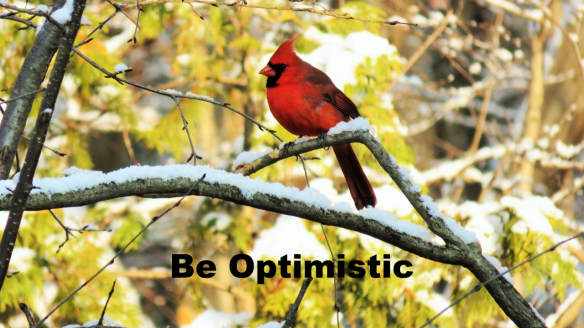
Be optimistic.

Sunday Inspiration    Post By David Joel Miller.

Optimism

Cardinal in winter.

Be Optimistic.
Photo courtesy of Pixabay.com

Be Optimistic.

“What day is it?”

It’s today,” squeaked Piglet.

My favorite day,” said Pooh.”

― A.A. Milne

“It’s snowing still,” said Eeyore gloomily.

“So it is.”

“And freezing.”

“Is it?”

“Yes,” said Eeyore. “However,” he said, brightening up a little, “we haven’t had an earthquake lately.”

― A.A. Milne

Wanted to share some inspirational quotes with you.  Sunday seemed like a good time to do this. If any of these quotes strike a chord with you please share them.

What is Antidepressant Discontinuation Syndrome?

By David Joel Miller, MS, Licensed Therapist & Licensed Counselor.

What is

What is Antidepressant Discontinuation Syndrome?
Photo courtesy of Pixabay.

Suddenly stopping antidepressant medications can be a problem.

Antidepressant Discontinuation Syndrome is one of those issues that may bring a person in to see a psychiatrist, medical doctor, or occasionally even a therapist which is not technically a mental illness but it can cause all sorts of problems. Disclaimer here, I am a therapist, not a medical doctor. I bring this topic up because clients have a way of wanting to talk with their counselor about symptoms and possibly letting you know this could happen to you will put you on the alert for when you need to have another conversation with your doctor.

Antidepressant Discontinuation Syndrome is a group of symptoms that result when there is a sharp decrease in dose or when someone is suddenly take off antidepressant medication. This can occur when someone thinks their depression is better and they decide to just stop taking their meds. Clients have also reported this problem when they lost insurance coverage or could not get a prescription filled in a timely manner.

The DSM (See APA DSM) describes this as occurring when someone has been taking an antidepressant for over a month, presumably this means they have built up some level of tolerance to this particular medication.

The symptoms caused by this sudden drop in the blood level of antidepressant medication can include thinking, feeling, and perceiving problems. This is described in technical language as Sensory, Somatic, or perception problems. Clients have described this as seeing flashes of light, feelings of Electric shock, nausea, or sensitivity to lights.

An increase in or the occurrence of acute anxiety, generalized anxiety or dread are also reported symptoms.

This underscores the concept that tolerance and withdrawal can occur with many medications including over the counter and prescribed medications. Tolerance and withdrawal are not restricted to illegal drugs or drugs of abuse. The major difference between withdrawal from prescribed drugs and withdrawal from drugs of abuse is the presence of cravings.  Clearly, many prescribed drugs can also result in cravings when you are withdrawing from them.

Most people who would be withdrawing from antidepressants would not be expected to feel cravings other than in the sense of having unpleasant feelings they wish would stop.

If these symptoms are caused by side effects while on a constant dose, or as the result of being under the influence of a substance of abuse or withdrawing from that substance then Antidepressant Discontinuation Syndrome should not be diagnosed.

Some substance abusers have tried to use antidepressants to reduce the crash from drug withdrawals. This is not what we are talking about when discussing Antidepressant Discontinuation Syndrome.

How significant the Antidepressant Discontinuation Syndrome will be, depends on a lot of factors. The higher the dosage you are on, the longer you have been taking the medication the more the risk of experiencing Antidepressant Discontinuation Syndrome. Most antidepressants can cause this condition.

Antidepressant Discontinuation Syndrome is not the same thing as side effects.

This syndrome is the result of changes in the dose which results in a sudden drop in the blood level. Side effects happen while taking the prescribed dose as prescribed. If you have any unpleasant or unexpected side effects call your doctor right away.

The Antidepressant Discontinuation Syndrome take away?

You should never suddenly stop taking a prescribed medication. If you want to get off your meds or reduce your dose talk with your doctor first. Some medication needs to be tapered off slowly over time. A further worry is that suddenly stopping a medication that has been working for you may result in it not working later if you need to restart your meds.

P.S. were you looking for a number for Antidepressant Discontinuation Syndrome?

Used to be 995.29

Now is T43.205 the first time, T43.205D if it happens more than once, and T43.205S if Antidepressant Discontinuation Syndrome causes another problem (sequelae.)

More “What is” posts will be found at What is.

Staying connected with David Joel Miller

Seven David Joel Miller Books are available now!

My newest book is now available. It was my opportunity to try on a new genre. I’ve been working on this book for several years, but now seem like the right time to publish it.

Story Bureau.

Story Bureau is a thrilling Dystopian Post-Apocalyptic adventure in the Surviving the Apocalypse series.

Baldwin struggles to survive life in a post-apocalyptic world where the government controls everything.

As society collapses and his family gets plunged into poverty, Baldwin takes a job in the capital city, working for a government agency called the Story Bureau. He discovers the Story Bureau is not a benign news outlet but a sinister government plot to manipulate society.

Bumps on the Road of Life. Whether you struggle with anxiety, depression, low motivation, or addiction, you can recover. Bumps on the Road of Life is the story of how people get off track and how to get your life out of the ditch.

Dark Family Secrets: Doris wants to get her life back, but small-town prejudice could shatter her dreams.

Casino Robbery Arthur Mitchell escapes the trauma of watching his girlfriend die. But the killers know he’s a witness and want him dead.

Planned Accidents  The second Arthur Mitchell and Plutus mystery.

Letters from the Dead: The third in the Arthur Mitchell mystery series.

What would you do if you found a letter to a detective describing a crime and you knew the writer and detective were dead, and you could be next?

Sasquatch. Three things about us, you should know. One, we have seen the past. Two, we’re trapped there. Three, I don’t know if we’ll ever get back to our own time.

For these and my upcoming books; please visit my Author Page – David Joel Miller

Want the latest blog posts as they publish? Subscribe to this blog.

For videos, see: Counselorssoapbox YouTube Video Channel
What are Substance-Related and Addictive Disorders?

By David Joel Miller, MS, Licensed Therapist & Licensed Counselor.

What is

What are Substance-Related and Addictive Disorders?
Photo courtesy of Pixabay.

New ways of seeing addiction, substance abuse, and related problems.

Substance-Related and Addictive Disorders forms one chapter in the DSM-5 and reflects some shifts in the way people are thinking about both substances and addiction. Keep in mind that the APA who writes the DSM are Psychiatrists, medical doctors, and they tend to see these issues from a medical perspective. Substance Abuse or addiction counseling grew up as a distant step-child from the medical community and the two are still not in agreement on many of these issues.

Counselors and talk Therapists are likely to emphasize the emotional and behavioral consequences of drug and alcohol use and other behavioral “addictions.” Doctors emphasize the physical issues. Psychiatrists straddle this line but their primary method of treatment is prescription while the counselors are using talk therapy, behavioral modification, and support groups.

The DSM-5 lists 10 “classes” of drugs.

Any effort at classification ends up being a bit problematic. The DSM-5 reduced the list of categories from the eleven we had in the DSM-IV-TR to ten. It notes that these classes are “not fully distinct.” They are listed in alphabetic order so Caffeine-Related Disorders comes after Alcohol-Related Disorders. For Substance Use Disorder treatment, counselors often use some very different ways of classifying a client’s substance use. More on that in other counselorssoapbox.com posts.

What are the problems the substance is causing?

Each substance listed in the DSM-5 has sections for about 4 more or less different issues that this substance may be causing. Let’s use Alcohol for ease of explanation.

Someone may develop an “alcohol use disorder” and be referred for treatment of their drinking. The issue the counselor will be treating will be the client’s risky pattern of drinking that may include DUI’s, DWI’s, arrests, family conflicts, loss of a job, or even physical problems. The principle issue from the counselor and the client’s point of view is the client’s inability to reduce or control their drinking, the presence of cravings, and their use even when they know it is causing problems.

Substances can hurt you even if you do not take them intentionally.

The DSM includes provisions for the medical practitioner to diagnose and code problems related to substances that a counselor is unlikely to treat. Lead poisoning is a serious medical problem, so are the side effects of prescribed medications. Neither of those is something the counselor is likely to treat.

What problems might a substance cause someone?

  1. A substance use disorder where their use is out of control or they have carvings.
  2. Intoxication, the effects that we see while they are under the influence.
  3. Withdrawal. Unusually withdrawal effects are the opposite of intoxication. Stimulants keep you awake and withdrawal from stimulants will involve being tired and sleeping a lot.
  4. Substance-induced disorders. These are medium to long-term changes that are the result of exposure to a substance that persists even after the drug has left the client’s system.

What are the 10 listed drugs?

  1. Alcohol
  2. Caffeine
  3. Cannabis (Primarily Marijuana)
  4. Hallucinogens
  5. Inhalants
  6. Opioids (Heroin and RX pills)
  7. Sedatives, Hypnotics, and Anxiolytics.
  8. Stimulants. (This combines Cocaine and Amphetamines, the DSM does not separate Meth from other amphetamines the way substance abuse treatment does.)
  9. Tobacco
  10. Other or Unknown Substance Use Disorder

Non-Substance-Related Disorders.

Towards the end of the Substance-Related and Addictive Disorders chapter, there is a section for “Non-Substance-Related Disorders. That section includes a single entry for Gambling Disorder.  In counseling work, we see things we may conceptualize as behavioral addictions, sexual and pornography addictions for example. These are not a part of the DSM-5 Non-Substance-Related Disorders section.

The Substance-Related and Addictive Disorders chapter shifts the focus.

We used to spend a lot of time arguing about the differences between addiction and substance abuse. People with a DUI would tell us they did not need treatment. Now the DSM largely drops these labels and if you have any problem with a substance that becomes a substance use disorder. We rate the use disorder as mild, moderate, and severe.

Remember that the Substance-Related and Addictive Disorders are listed in the “Diagnostic and Statistical Manual of Mental Disorders and these are largely considered treatable mental illnesses. The medical issues have other codes and are outside the scope of practice of a counselor, though we may need to help them adjust to the consequences of their medical issue. Watch for more posts on these other related issues.

As with the other things we are calling a mental illness these Substance-Related and Addictive Disorders need to interfere with your ability to work or go to school, your relationships, your enjoyable activities, or cause you personal distress. Otherwise, you may have the issues but you will not get the diagnoses if this is a preference, not a problem.

FYI These “What is” sometimes “What are” posts are my efforts to explain terms commonly used in Mental Health, Clinical Counseling, Substance Use Disorder Counseling, Psychology, Life Coaching, and related disciplines in a plain language way. Many are based on the new DSM-5; some of the older posts were based on the DSM-IV-TR, both published by the APA. For the more technical versions please consult the DSM or other appropriate references.

You might also want to check out these other counselorssoapbox posts.

Drug Use, Abuse, and Addiction

Staying connected with David Joel Miller

Seven David Joel Miller Books are available now!

My newest book is now available. It was my opportunity to try on a new genre. I’ve been working on this book for several years, but now seem like the right time to publish it.

Story Bureau.

Story Bureau is a thrilling Dystopian Post-Apocalyptic adventure in the Surviving the Apocalypse series.

Baldwin struggles to survive life in a post-apocalyptic world where the government controls everything.

As society collapses and his family gets plunged into poverty, Baldwin takes a job in the capital city, working for a government agency called the Story Bureau. He discovers the Story Bureau is not a benign news outlet but a sinister government plot to manipulate society.

Bumps on the Road of Life. Whether you struggle with anxiety, depression, low motivation, or addiction, you can recover. Bumps on the Road of Life is the story of how people get off track and how to get your life out of the ditch.

Dark Family Secrets: Doris wants to get her life back, but small-town prejudice could shatter her dreams.

Casino Robbery Arthur Mitchell escapes the trauma of watching his girlfriend die. But the killers know he’s a witness and want him dead.

Planned Accidents  The second Arthur Mitchell and Plutus mystery.

Letters from the Dead: The third in the Arthur Mitchell mystery series.

What would you do if you found a letter to a detective describing a crime and you knew the writer and detective were dead, and you could be next?

Sasquatch. Three things about us, you should know. One, we have seen the past. Two, we’re trapped there. Three, I don’t know if we’ll ever get back to our own time.

For these and my upcoming books; please visit my Author Page – David Joel Miller

Want the latest blog posts as they publish? Subscribe to this blog.

For videos, see: Counselorssoapbox YouTube Video Channel
How are drugs classified?

By David Joel Miller, MS, Licensed Therapist & Licensed Counselor.

Drugs.

How are drugs classified?
Photo courtesy of Pixabay.

What kinds of drugs are abused?

There are a whole lot of drugs that get abused and they are not all the ones you might recognize. Drugs are classified in a variety of ways. Which classification system you want to use is partially dependent on why you are classifying the drug. For our purpose in this post “drug” includes prescription medications, drugs of abuse, and things people give themselves to alter their sensory perception even if they are not always considered a drug. Here are some ways drugs can be classified.

Is this drug legal?

How law enforcement classifies and regulates drug use behavior impacts how we look at drugs in other contexts. The roots of the current 5 schedule system of drug classification for legal purposes are in the 1970 Controlled Substance act. Who can buy a drug; prescribe a drug and how this needs to be done, all fall under the legal classification system. Laws do not always fit neatly with the scientific evidence.  There are other posts, past and upcoming, about drug laws and regulations. You will find more drug info posts under Drug Use, Abuse, and Addiction.

Where does this drug come from?

Drugs can be plant or animal-based, synthetic as in manufactured in a lab, or semisynthetic, that is a plant-based drug that is modified in the lab.

Some people have tried to make the argument that plant-based drugs are “natural” therefore less dangerous than synthetic or man-made drugs. This is often used as an argument for the legalization of marijuana.

Some natural plant-based drugs are poisonous and can prove fatal even in very small doses. The Opioid’s come from one species of poppy plant but is very addicting and an overdose can be fatal. Other drugs like LSD-25 were originally isolated from plant material (a fungus growing on rye grain) but can easily be synthesized in the lab. Other life-saving drugs are completely synthetic. The plant vs. factory origin way of classifying drugs has not proved useful to my way of thinking.

What is this drug used for?

Is a drug an antidepressant or a blood pressure med? Many dissimilar chemicals may be used to treat the same condition. Drugs to treat ADHD can be stimulant drugs or there are non-stimulant alternatives. Pain relievers include aspirin and Opiates. Aspirin can be used to treat heart issues and Opiates can be listed as a drug of abuse. The same medication may help treat depression or be used to help you stop smoking. Classifying drugs by use is problematic at best especially when we are talking about drugs that may be abused.

What part of the body does this drug work on?

Heart med, blood med, or Liver med? Not all meds used to treat the heart do the same thing. Many drugs work on multiple parts of the body.  Drugs that are helpful in some places in the body eventually get broken down to be eliminated. A drug that is great for back pain may be harmful or even toxic to the kidney or liver where it needs to be removed from the body.

What is the chemical structure?

Some chemical structures have similar effects. There are a great many Barbiturates that are all similar in action. The contrary is that there are a great many compounds that end with “hydrochloride.” These can have extremely different properties.

What is its mechanism of action?

Drugs can be studied by how they do the things they do. Reuptake inhibitors stop the breakdown and recycling of neurotransmitters. While they may have similar mechanisms of action it matters which neurotransmitter they are prolonging.

What is its name?

Street names often describe the primary effects. Drugs can also be classified by chemical name, formula, or brand name.

Other possibilities for classifying drugs.

Uppers Downers and All Arounders.

Inaba in his book Uppers, Downers and All Arounders simplified drugs, particularly drugs of abuse, into three primary categories. Uppers mean drugs used for their stimulant properties. Downers are depressant drugs. All-Arounders are drugs that alter perception including hallucinogens and Deliriants.

People who abuse stimulant drugs may switch between cocaine and amphetamine depending on the price and availability but they like the stimulant feeling. Downers, those drugs used for their depressant characteristics, include Alcohol, Heroin, and other Opioids, and other central nervous system depressants.

The newest edition of his book also discusses some additional drugs that have mixed effects or do not fit neatly into the three group system but among drugs of abuse, the use of uppers and downers continues to be the largest part of what the substance use disorder treatment field treats.

Route of administration or method of use.

Inhalants can be any number of very dissimilar chemicals. Oral medications have in common only the way they enter the body as do injectable drugs.

You might also want to check out these other counselorssoapbox posts.

Drug Use, Abuse, and Addiction

More “What is” posts will be found at “What is.”

Staying connected with David Joel Miller

Seven David Joel Miller Books are available now!

My newest book is now available. It was my opportunity to try on a new genre. I’ve been working on this book for several years, but now seem like the right time to publish it.

Story Bureau.

Story Bureau is a thrilling Dystopian Post-Apocalyptic adventure in the Surviving the Apocalypse series.

Baldwin struggles to survive life in a post-apocalyptic world where the government controls everything.

As society collapses and his family gets plunged into poverty, Baldwin takes a job in the capital city, working for a government agency called the Story Bureau. He discovers the Story Bureau is not a benign news outlet but a sinister government plot to manipulate society.

Bumps on the Road of Life. Whether you struggle with anxiety, depression, low motivation, or addiction, you can recover. Bumps on the Road of Life is the story of how people get off track and how to get your life out of the ditch.

Dark Family Secrets: Doris wants to get her life back, but small-town prejudice could shatter her dreams.

Casino Robbery Arthur Mitchell escapes the trauma of watching his girlfriend die. But the killers know he’s a witness and want him dead.

Planned Accidents  The second Arthur Mitchell and Plutus mystery.

Letters from the Dead: The third in the Arthur Mitchell mystery series.

What would you do if you found a letter to a detective describing a crime and you knew the writer and detective were dead, and you could be next?

Sasquatch. Three things about us, you should know. One, we have seen the past. Two, we’re trapped there. Three, I don’t know if we’ll ever get back to our own time.

For these and my upcoming books; please visit my Author Page – David Joel Miller

Want the latest blog posts as they publish? Subscribe to this blog.

For videos, see: Counselorssoapbox YouTube Video Channel

7 Top self-improvement mistakes.

By David Joel Miller, MS, Licensed Therapist & Licensed Counselor.

Mistakes.
Photo courtesy of Pixabay.com

7 Top things to avoid in recovery and self-improvement programs.

Whether you are in recovery or just thinking that this would be a good time to make some changes in your life, it helps to develop a self-change plan that has a chance of working. Resolve and willpower will only take you so far. You will need to watch out for some self-change mistakes that doom your change project before it ever gets off the ground.  Here are some common beginner’s mistakes that may undermine your self-change program.

1. Losing hope reduces possibilities.

One of the hallmark characteristics of depression is feeling hopeless.  Nurture your hopes and dreams. By hope, I am not suggesting that pie in the sky thinking will get you where you want to be. What you do need is the belief that this goal you are pursuing is possible. Hold on to the hope that a better future is possible.

There will be setbacks, learn from them. Do not stay focused on what did not happen. Just because everything did not get done the first week does not mean that things will never happen. Have a well thought out plan for what you want to change and how you will do this self-improvement project and then stick to it. Believe that things can get better and work to make those positive events a reality.

2. Cultivating hope is a critical part of any change process.

Encourage and nurture hope in your life. Select friends and allies who have hope for you enough to share. Surround yourself with others that will encourage your hope. What you attend to you get more of, make sure that you are keeping your eyes on the end result and not down at the dirt along the way.

Change cannot be all negative and suffering. You need to build rewards and encouragement into your program to keep growing your hope and self-confidence.

3. Negative self-talk is a recovery barrier.

Tell yourself you can’t and you won’t, tell yourself that this thing is possible and you are already headed in the direction of self-improvement. What you tell yourself has a powerful impact on the successes of your efforts to change. Tell yourself that you can and you make it so.

Your brain holds onto self-talk and works overtime to make those things you are thinking about happen. Be sure you have given your unconscious thoughts the right goal to focus on. Do not ever call yourself names or beat yourself up for mistakes. Learn from missteps and keep moving forward.

4. Excuses keep you stuck– too old etc.

We can all find plenty of excuses for why we can’t do things. You can say you’re too old. Say it to yourself often enough and you make it so. Remember that old children’s story about the wee engine. Tell yourself you can and you are halfway there.

Setting low expectations and collecting alibis do not get things accomplished. Do not look for the reasons you can’t do something. Look insisted for the things that you can do and get those done.

For every excuse you use to avoid trying and failing, there are people who refused to think that way. Because they did not know they couldn’t do something they accomplished it.

5. Expecting results overnight will discourage you.

You have decided to get in shape. You start dieting and exercising, some of the time, and then when a week or two goes by, you are feeling tired and see no change in weight. It would be easy to give up and fall back on those old excuses. Change of any sort takes time and it takes rehearsal. Humans revert to their usual and customary ways of doing things. To make a change and have it stick you need to practice that new way of being long enough that it becomes your default setting.

To perfect a skill takes many long hours of dedicated work. It may also require working with a coach or adviser who can see the things you can improve on. Improvement comes in small increments. Have patience with yourself and the process, but always keep moving towards those goals.

6. Going too fast – overdoing things will undermine your efforts.

You decide you want to change yourself and change your life. You get a new job, go back to school, and start a new relationship, all in the same week. A common recovery mistake is to try to change everything all at once. Working on too many goals all at once results in none of them coming to be.

Prioritize, work on the important things first. Do those “must do’s” and check them off your list. Set goals for the steps along the way so you can see the progress, not the distance that still remains. Include time to savor the results of your efforts. As time passes you will be able to add more to your goals.

Having a list of accomplishments that you can reflect back on and feel pride can fuel your future change process.

7. Thinking that believing in yourself means being selfish.

You are far more likely to be affected by a case of self-doubt than by a case of too much confidence. Taking good care of yourself is not being selfish, neither is believing in yourself.

The winners always have self-confidence. That self-confidence does not come from bragging or expectations of successes without work. True self-confidence consists of setting challenges for yourself, acknowledging your progress, and then setting a new goal.

To build self-esteem do positive things and give yourself credit for what you have accomplished.

Staying connected with David Joel Miller

Seven David Joel Miller Books are available now!

My newest book is now available. It was my opportunity to try on a new genre. I’ve been working on this book for several years, but now seem like the right time to publish it.

Story Bureau.

Story Bureau is a thrilling Dystopian Post-Apocalyptic adventure in the Surviving the Apocalypse series.

Baldwin struggles to survive life in a post-apocalyptic world where the government controls everything.

As society collapses and his family gets plunged into poverty, Baldwin takes a job in the capital city, working for a government agency called the Story Bureau. He discovers the Story Bureau is not a benign news outlet but a sinister government plot to manipulate society.

Bumps on the Road of Life. Whether you struggle with anxiety, depression, low motivation, or addiction, you can recover. Bumps on the Road of Life is the story of how people get off track and how to get your life out of the ditch.

Dark Family Secrets: Doris wants to get her life back, but small-town prejudice could shatter her dreams.

Casino Robbery Arthur Mitchell escapes the trauma of watching his girlfriend die. But the killers know he’s a witness and want him dead.

Planned Accidents  The second Arthur Mitchell and Plutus mystery.

Letters from the Dead: The third in the Arthur Mitchell mystery series.

What would you do if you found a letter to a detective describing a crime and you knew the writer and detective were dead, and you could be next?

Sasquatch. Three things about us, you should know. One, we have seen the past. Two, we’re trapped there. Three, I don’t know if we’ll ever get back to our own time.

For these and my upcoming books; please visit my Author Page – David Joel Miller

Want the latest blog posts as they publish? Subscribe to this blog.

For videos, see: Counselorssoapbox YouTube Video Channel