Avoiding the Grim Reaper.

Avoiding the Grim Reaper
Photo courtesy of Pixabay.com

Avoiding the Grim Reaper.

By David Joel Miller, MS, Licensed Therapist & Counselor.

The Grim Reaper’s handiwork is everywhere.

Being one of those older people, I become increasingly conscious of the Grim Reaper and his handiwork. For those unfamiliar with this persona, the Grim Reaper is that long-standing picture of the ways of death stocks humankind just waiting for his opportunity to take one of us.

There was a time in history when the Grim Reaper frequently passed through the human village. I read that in the early eighteen hundreds in the American Midwest, as many as 30% of the people in a town might die every spring. We had a variety of names for the Grim Reaper’s tools. Sometimes, we would call it cholera, yellow fever, scarlet fever, or tuberculosis.

When I was a young person, the Grim Reaper frequently used the disease named polio, which left his victims unable to breathe until they finally died. I remember being among one of the very early groups to receive the polio vaccine, and gradually, this disease, like so many others, disappeared from the front pages of the news.

Gradually, the specter of the Grim Reaper’s nightly visit faded. Rather than a fear of diseases, we have come to fear wars, guns, gun violence, and those various diseases that were uncommon simply because humans had the good sense to die before reaching old age. In some parts of the world, this taker of life still uses wars and famine to reap his harvest.

Covid and other new evolving diseases have ripped the mask off the Grim Reaper.

Covid was definitely a shock to those of us who thought that modern medicine had largely tamed the area of infectious diseases, leaving the Grim Reaper to work only through the disorders of the elderly. Eventually, I expected that cancer, dementia, or some other disease of aging would get me. But if you were like me, you were totally unprepared for the onslaught of Covid and other new infectious diseases.

My strategies for keeping ahead of the Grim Reaper.

For most of my life, I simply ignored the Grim Reaper and lived my life as if Death would have difficulty finding me. I did take some simple precautions. I will describe here my choices and I am not trying to make a political statement about what I think others should do. Personally, I always wear my seatbelt when in the car. I get my vaccines. And when my doctor prescribed some medication for me, I attempt to take it as prescribed.

Beyond those simple precautions, as I have accumulated additional birthdays, I have begun to pay more attention to things I can do to maintain my physical health. Some of those supposed remedies have proven to be either allusive or ineffective.

One thing I have tried to do is to keep moving as much as possible. I think being active certainly keeps me out of the reach of the Grim Reaper for longer than sitting on the couch waiting for his visit. I recently underwent surgery for a problem I had neglected a great many years, and this forced me to take a further look at other things I might do to improve my health.

Walking appears to be mandatory for humans.

After my surgery, my doctor suggested that I should be walking at least 8000 steps a day. I believe that’s a reduction from the previous prescription of 10,000 steps per day. Initially, I thought this would be impossible, but I started with the modest goal of walking 4000 steps per day, which proved quite doable. Over time, I’ve increased that goal and am now routinely walking 4 miles per day, and on a good day, I may walk six or 7 miles.

Walking every day won’t keep me out of the Grim Reaper’s grip forever, but I’m going to make him work to catch up with me.

There is another significant benefit of walking.

I have read repeatedly, and I’ve told many clients my conclusion that walking outdoors, particularly where there are trees and greenery, improves your mental health. Walking outdoors for 15 to 20 minutes a day, five days or more per week, is just as effective at treating depression as taking some antidepressant medications.

Please, however, if you are currently on an antidepressant, don’t stop taking it and turn to walking. Antidepressant discontinuation syndrome, problems you will experience if you suddenly stop taking your medication, is a very real thing. Talk to your doctor before you stop any medication. However, I believe that in addition to medication, changes in behavior, such as walking and changes in thinking, which come from therapy, all work together to reduce depression and may also benefit many other mental health problems.

My attempt to lose weight was delusional.

Somewhere I had gotten the idea that I should lose weight. In fact, three doctors in a row had suggested that I needed to control my weight. Not that it was seriously out of control, but over the years, my weight gradually crept up from being a skinny person first to normal and then to being overweight. My past efforts to lose weight were ineffective, probably because I thought about it while sitting in my desk chair eating a package of cookies.

I somehow mistakenly thought that all this extra walking I had begun to do would miraculously result in weight loss. It didn’t. What it may well have done is convert some of the fat I had into muscles.

On a recent visit to the doctor, I told him I had tried losing weight but to no avail. His answer was that he no longer thought I should attempt to lose weight. I read now that older people, presumably those beyond retirement age, may actually be somewhat healthier if they are slightly above the BMI suggestions for normal weight.

It turns out that all people fall; some of them fall a lot, and a few extra pounds can be some padding. This is certainly no excuse if your blood sugar is out of control, but barring type II diabetes, I think a few extra pounds are not a problem for someone my age. Don’t take my word for this; however, make sure you consult with your personal physician.

Eating a healthy diet has proved to be more elusive.

I’m definitely not a nutritionist and hesitate to give you any advice in this area. I have learned, however, that becoming overly concerned about your diet in your past retirement life may be a mistake. Nutrition is a whole lot more complicated than switching to only eating vegetables. Balance in nutrition is just as important as it is in many other parts of our lives. Some of those foods we think of as unhealthy” when eaten in small amounts, may be beneficial for maintaining a balanced diet. My suggestion is not to go on a crash diet, trying to eat healthy and end up with nutritional deficiencies. Talk to your doctor or a nutritionist before you eliminate food from your diet that you have been eating for a long time.

So those are some of my thoughts and experiences now that I’ve reached a point in life where I am focusing more on trying to stay healthy and keep my life in balance. Comments are welcome. Hope you will continue to read this blog.

Does David Joel Miller see clients for counseling and coaching?

Yes, I do. I can see private pay clients if they live in California, where I am licensed. If you’re interested in information about that, please email me or use the contact me form.

Staying in touch with David Joel Miller.

Want the latest blog posts as they are published? Subscribe to this blog.

For more information about my writing journey, my books, and other creative activities, please subscribe to my blog at davidjoelmillerwriter.com

Seven David Joel Miller Books are available on Amazon now! And more are on the way.

For more about my books, please visit my Amazon Author Page – David Joel Miller

For information about my work in mental health, substance abuse, and having a happy life, please check out https://counselorssoapbox.com

For videos, see: Counselorssoapbox YouTube Video Channel
Marveling

Marveling
Photo courtesy of Pixabay.com

Marveling

Sunday Inspiration.     Post by David Joel Miller.

I am so thirsty for the marvelous that only the marvelous has power over me. Anything I can not transform into something marvelous, I let go.

― Anais Nin

“Instinct is a marvelous thing. It can neither be explained nor ignored.”

― Agatha Christie, The Mysterious Affair at Styles

“How marvelous books are, crossing worlds and centuries, defeating ignorance and, finally, cruel time itself.”

― Gore Vidal, Julian

“Keep reading. It’s one of the most marvelous adventures that anyone can have.”

― Lloyd Alexander

Wanted to share some inspirational quotes with you. Today seemed like a good time to do this. There are an estimated 100,000 words in the English language that are feelings related. Some emotions are pleasant, and some are unpleasant, but all feelings can provide useful information. I’ve also included some words related to strengths and values since the line between what we think and what we feel may vary from person to person. If any of these quotes strike a chord with you, please share them.

Look at these related posts for more on this topic and other feelings, strengths, and values.

Emotions and Feelings.                      Inspiration

Staying in touch with David Joel Miller.

For more information about my writing journey, my books, and other creative activities, please subscribe to my blog at davidjoelmillerwriter.com

Seven David Joel Miller Books are available on Amazon now! And more are on the way.

For these and my upcoming books, visit my Amazon Author Page – David Joel Miller

For information about my work in mental health, substance abuse, and having a happy life, Please check out counselorssoapbox.com

For videos, see: Counselorssoapbox YouTube Video Channel

How To Ensure Personal Growth in Difficult Times

How To Ensure Personal Growth in Difficult Times 

Photo via Pexels 

 When navigating the unpredictable terrain of life, one encounters various challenges that, while daunting, serve as invaluable catalysts for personal growth. The transformative power of adversity can be fertile ground for self-discovery and development. In this article, courtesy of CounselorsSoapbox, we’ll uncover how overcoming obstacles fortifies our resilience, enhances self-awareness, and shapes us into more adaptable, empathetic individuals. 

The Forge of Resilience 

Adversity, in its unwavering intensity, acts as a forge for resilience. Confronted with challenges that stretch the limits of our comfort zones, we are compelled to adapt, endure, and ultimately thrive. This process uncovers a wellspring of resilience within us, often lying dormant until provoked by life’s trials. As we navigate these hurdles, our capacity to rebound from setbacks grows exponentially, revealing a newfound strength and fortitude. 

Reflection and Self-Awareness 

In the midst of adversity, we find ourselves propelled into a state of introspection. This period of reflection urges us to examine our core values, beliefs, and motivations. Such self-awareness is pivotal for personal development, providing clarity on areas needing improvement. Armed with this knowledge, we set forth on a journey of self-improvement, charting a course towards personal fulfillment and growth. 

Refining Problem-Solving Skills 

Adversity presents complex, often unprecedented challenges that demand innovative and strategic solutions. Through the process of confronting and resolving these issues, we sharpen our problem-solving skills. This refined ability to devise effective solutions is invaluable, equipping us to navigate life’s intricate challenges with greater ease and confidence. 

The Growth of Empathy 

Enduring adversity enhances our capacity for empathy. Experiencing hardship firsthand deepens our understanding and compassion for others facing similar challenges. This expanded empathy enriches our connections, fostering stronger, more meaningful relationships and a sense of solidarity and understanding within our communities. 

Developing Healthy Coping Mechanisms 

Adversity necessitates the development of robust coping strategies. Learning to effectively manage stress, anxiety, and the emotional toll of challenges is critical for maintaining mental and emotional well-being. These improved coping mechanisms are essential life skills, aiding us in navigating both current and future adversities with greater resilience and poise. 

Cultivating Gratitude 

Navigating through adversity often illuminates aspects of our lives that we may have previously overlooked or taken for granted. This newfound perspective breeds a profound sense of gratitude, enriching our lives with a deeper appreciation for what we have. This attitude of gratitude enhances our overall happiness and well-being, offering a more positive outlook on life. 

Educational and Career Transformation 

Facing adverse circumstances like career stagnation or job loss can unexpectedly unveil opportunities for professional reinvention. Such challenges, while daunting, can be the impetus for pursuing further education, especially through adaptable online platforms, offering a much-needed pivot in one’s career path. You might study a particular field, or earn a degree in an area that will help you succeed in starting your own business, such as cybersecurity. When you’re ready to seek out a program, this one deserves a look. 

Re-evaluating Life’s Direction 

Adversity often serves as a wake-up call, prompting a thoughtful reassessment of our life goals and priorities. It encourages a shift in focus towards what truly matters, guiding us to realign our actions with our deepest aspirations and values. For instance, you might start a business, turning a beloved hobby into a successful venture. Just be sure to look for reliable, affordable technology that can help you along the way, such as cybersecurity tools and a project management platform. These will help you keep things running smoothly while saving you money. 

The journey through adversity is not merely about enduring challenges; it is about leveraging these experiences for profound personal growth and transformation. These trials shape us into more resilient, empathetic, and self-aware individuals. They inspire us to pursue new educational and career opportunities, hone our problem-solving skills, and develop healthier coping strategies. Embracing the lessons learned from adversity propels us toward success in various aspects of life, including entrepreneurial endeavors. With resilience, adaptability, and a growth mindset, we are well-equipped to navigate life’s challenges and continue our journey of personal development and achievement. 

CounselorsSoapbox is an informative and uplifting blog that offers tips on how to live your best life. Have a question? Reach out today. 

Guest post by Jennifer Scott.

Presidents’ Day

Presidents” Day Thoughts.       Post by David Joel Miller.

presidents-day

Presidents’ Day.

“To announce that there must be no criticism of the President, or that we are to stand by the President, right or wrong, is not only unpatriotic and servile but is morally treasonable to the American public.”

― Theodore Roosevelt

“We are not enemies, but friends. We must not be enemies. Though passion may have strained, it must not break our bonds of affection. The mystic chords of memory will swell when again touched, as surely they will be, by the better angels of our nature.”

― Abraham Lincoln

“A people that values its privileges above its principles soon loses both.”

― Dwight D. Eisenhower

Wanted to share some thoughts with you.  Today seemed like a good time to do this. If any of these quotes strike a chord with you, please share them.

Staying in touch with David Joel Miller.

For more information about my writing journey, my books, and other creative activities, please subscribe to my blog at davidjoelmillerwriter.com

Seven David Joel Miller Books are available on Amazon now! And more are on the way.

For these and my upcoming books, visit my Amazon Author Page – David Joel Miller

For information about my work in mental health, substance abuse, and having a happy life, Please check out counselorssoapbox.com

For videos, see: Counselorssoapbox YouTube Video Channel

Loyalty

Loyalty
Photo courtesy of Pixabay.com

Loyalty

Sunday Inspiration.     Post by David Joel Miller.

“What’s most important in a friendship? Tolerance and loyalty.”

― J.K. Rowling

“One of the things that makes me who I am is the loyalty I have to people I hold close to my heart.”

― Simone Elkeles, Perfect Chemistry

“Toto did not really care whether he was in Kansas or the Land of Oz so long as Dorothy was with him; but he knew the little girl was unhappy, and that made him unhappy too.”

― L. Frank Baum, The Wonderful Wizard of Oz

Wanted to share some inspirational quotes with you. Today seemed like a good time to do this. There are an estimated 100,000 words in the English language that are feelings related. Some emotions are pleasant, and some are unpleasant, but all feelings can provide useful information. I’ve also included some words related to strengths and values since the line between what we think and what we feel may vary from person to person. If any of these quotes strike a chord with you, please share them.

Look at these related posts for more on this topic and other feelings, strengths, and values.

Emotions and Feelings.                      Inspiration

Staying in touch with David Joel Miller.

For more information about my writing journey, my books, and other creative activities, please subscribe to my blog at davidjoelmillerwriter.com

Seven David Joel Miller Books are available on Amazon now! And more are on the way.

For these and my upcoming books, visit my Amazon Author Page – David Joel Miller

For information about my work in mental health, substance abuse, and having a happy life, Please check out counselorssoapbox.com

For videos, see: Counselorssoapbox YouTube Video Channel

Happy Valentine’s Day.

Valentine's Day

Happy Valentine’s Day.
Photo courtesy of Pixabay.com

Staying in touch with David Joel Miller.

For more information about my writing journey, my books, and other creative activities, please subscribe to my blog at davidjoelmillerwriter.com

Seven David Joel Miller Books are available on Amazon now! And more are on the way.

For these and my upcoming books, visit my Amazon Author Page – David Joel Miller

For information about my work in mental health, substance abuse, and having a happy life, Please check out counselorssoapbox.com

For videos, see: Counselorssoapbox YouTube Video Channel

Overcome sadness by collecting special moments.

Special Moment
Photo courtesy of Pixabay.com

Overcome sadness by collecting special moments.

By David Joel Miller, MS, Licensed Therapist & Counselor.

The human brain has a negativity bias.

The human brain has a preference for remembering the negative and forgetting the positive. Whether that’s by design or the result of experience through millions of years of evolution, I will leave it to others to decide. But I can see how this negativity bias could benefit human survival and how it is causing a lot of pain and suffering today. Let me try to illustrate this with a couple of hypothetical stories.

Please hang with me to the end of these parables when I explain how you can overcome negativity bias and become a happier, more positive person by collecting special moments.

The story of the red berries.

Imagine, if you can, being a human living in the forest or jungle before the advent of electricity, refrigerators, canned goods, or any practical way to store food through the winter. You might’ve figured out how to dry certain seeds, but drying berries was very impractical.

One day, you’re walking through the jungle and find some bushes covered with bright red berries. You try a few, and they are tasty. So, you eat as many as you can. Imagine the time before the Industrial Revolution and modern civilization when humans typically went hungry through most of the winter. Hence, the preference in earlier times was for women with a little meat on their bones who might survive the lean times and be able to care for the children.

As an aside here, I read somewhere once that the human brain has twenty-two circuits to tell us we are hungry. When hungry, we get headaches, our stomach growls, we may feel weak, and so on. As I remember it, we only have eight circuits, which feedback to tell the brain we have had enough to eat. Hence, humans tend to continue to gain weight whenever food is available and only lose it when there is famine. Not a terribly adaptive quality in this modern industrial era.

The following day, you are walking again through the hypothetical jungle again. There’s no need to remember what the berries looked like because while they were tasty, you ate them all, and there are no more to be had. Hence, we tend to forget many positive experiences which may be challenging to repeat.

But, in our hypothetical tale, let’s say that you became violently ill, threw up those berries, and almost died. Can you see now why you might, having had a negative experience, remember those berries for the rest of your life? This negativity bias carries over into many other human activities where we remember one unpleasant event but forget large numbers of positive events.

What color were the flowers?

I was working at an agency that saw many children. Often, their parents showed up wanting to know how the child was doing. I noticed a definite negativity bias on the part of the parents toward the whole process. But I wasn’t quite sure how to overcome that bias.

One day, on my way to work, I noticed as I walked in the front door that the landscapers had replaced flowers in front of the building with some new plants that were in bright bloom. I hurried in and got to work, knowing the first family would be there to see the child in minutes.

Partway into the conversation, I realized that these parents could tell me everything the child did wrong, as well as what the teacher and the professionals were doing wrong, but had difficulty describing anything about the situation that was good or right. And then it struck me. I suffered from that same negativity bias. I had seen those brightly colored flowers when I came to work that morning, but now caught up in the problems of the day, I couldn’t remember what those flowers looked like or what color they were.

During my lunch hour, I went outside and looked at those flowers again. I spent anywhere from thirty seconds to several minutes examining each one. I discovered that thirty seconds of looking at something positive was the bare minimum for me to remember it later. And the longer I looked at a particular flowering plant, the more likely I was to remember it hours, days, even years later.

The way you overcome negativity bias is to pay more attention to the positive.

Whenever something good happens in your life, spend some time consciously looking at it, staring at it, and committing it to memory. So many of life’s special moments go by unnoticed. Become a collector of those special moments, and the whole nature of your life will become more positive and filled with special moments.

This technique is especially useful with children and partners.

One simple rule of parenting is to always “catch your child doing something right.” The more you notice the positive things your child does and compliment them on it, the more likely they are to repeat that behavior. When children are doing something you don’t like, ignoring it whenever possible is likely to extinguish the behavior. It’s worth noticing that some children who will only get attention when they do something wrong behave badly more often simply to get that extra attention.

If you want a happy, more satisfying life full of contentment, become a collector of special moments. Consider writing them down. The more attention you pay to the positive in life, the more you will realize that positive things are happening all around you every day. If only you would collect that positivity and save it up against the next rainy day.

Does David Joel Miller see clients for counseling and coaching?

Yes, I do. I can see private pay clients if they live in California, where I am licensed. If you’re interested in information about that, please email me or use the contact me form.

Staying in touch with David Joel Miller.

Want the latest blog posts as they are published? Subscribe to this blog.

For more information about my writing journey, my books, and other creative activities, please subscribe to my blog at davidjoelmillerwriter.com

Seven David Joel Miller Books are available on Amazon now! And more are on the way.

For more about my books, please visit my Amazon Author Page – David Joel Miller

For information about my work in mental health, substance abuse, and having a happy life, please check out https://counselorssoapbox.com

Judgmental

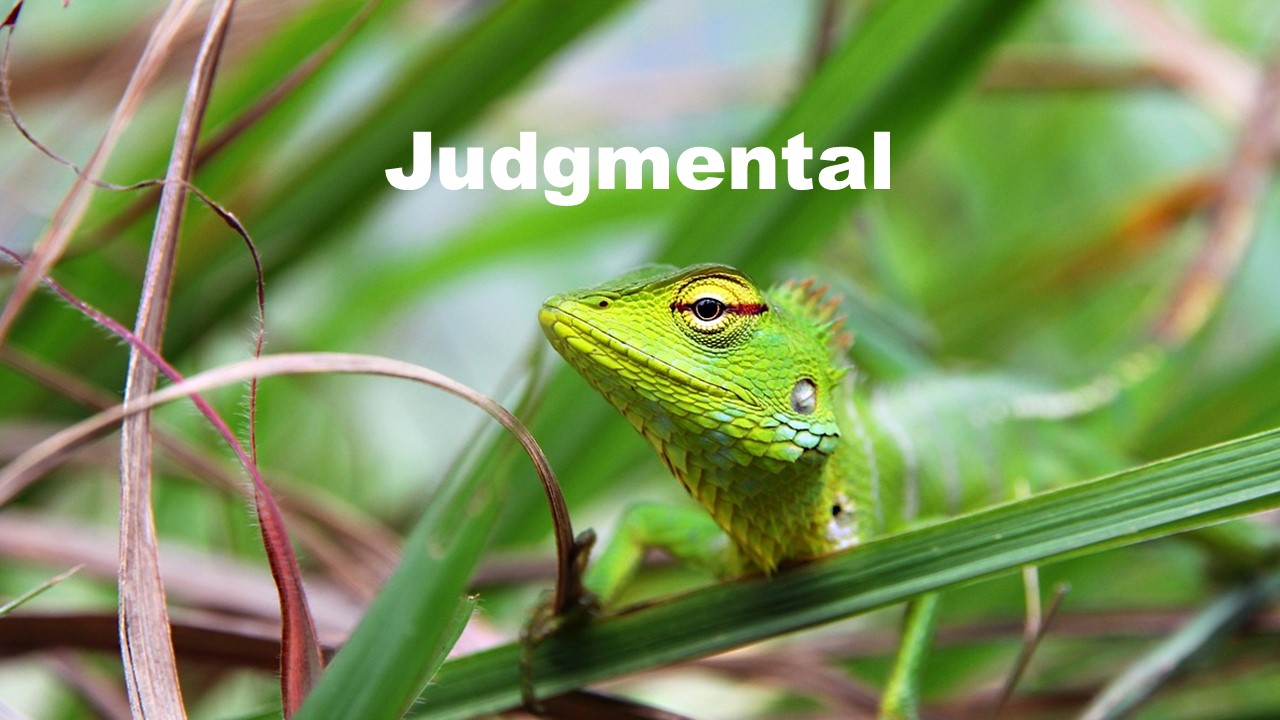
Judgmental
Photo courtesy of Pixabay.com

Judgmental

Sunday Inspiration.     Post by David Joel Miller.

“Love is the absence of judgment.”

― Dalai Lama XIV

“More smiling, less worrying. More compassion, less judgment. More blessed, less stressed. More love, less hate.”

― Roy T. Bennett, The Light in the Heart

“Be curious, not judgmental.”

― Walt Whitman

Wanted to share some inspirational quotes with you. Today seemed like a good time to do this. There are an estimated 100,000 words in the English language that are feelings related. Some emotions are pleasant, and some are unpleasant, but all feelings can provide useful information. I’ve also included some words related to strengths and values since the line between what we think and what we feel may vary from person to person. If any of these quotes strike a chord with you, please share them.

Look at these related posts for more on this topic and other feelings, strengths, and values.

Emotions and Feelings.                      Inspiration

Staying in touch with David Joel Miller.

For more information about my writing journey, my books, and other creative activities, please subscribe to my blog at davidjoelmillerwriter.com

Seven David Joel Miller Books are available on Amazon now! And more are on the way.

For these and my upcoming books, visit my Amazon Author Page – David Joel Miller

For information about my work in mental health, substance abuse, and having a happy life, Please check out counselorssoapbox.com

For videos, see: Counselorssoapbox YouTube Video Channel

Why you can’t find happiness

Road

Road to a happy life.
Photo courtesy of Pixabay.com

Why you can’t find happiness.

By David Joel Miller, MS, Licensed Therapist & Counselor.

Has happiness eluded you?

Trying to find happiness in modern-day America, and probably in all the industrial world, is the equivalent of looking for snow snakes and going into the forest to hunt Snipe. So many people equate happiness with pleasure that the coin of happiness has become severely tarnished.

In a country with such a high material standard of living, why are so many people chronically unhappy. We could argue that income distribution plays a role in this problem, but that’s not the point I’m pursuing. Not having enough money to pay for food and housing can undoubtedly lead to a less happy life. But I see people who are happy living in very modest settings.

I remember an old proverb that says that happiness is like a butterfly. You can chase it all over and never catch it. But if you sit quietly, the butterfly of happiness just might come and land on you. I think there’s a lot of wisdom in that idea. Pursuing happiness doesn’t get you closer to it. The best way to achieve happiness is to be happy as you go through your day-to-day activities. During the year 2024, I want to explore the idea that happiness can be within the reach of almost anyone if they know the techniques to find it. Happiness is about being, not about doing or having.

Why are so many middle-class and wealthy people chronically unhappy?

Pick up any tabloid at the grocery store, and you’ll find article after article about the woes and miseries of the rich and famous. While more money doesn’t make you unhappy, having wealth doesn’t seem to automatically guarantee happiness. Above a certain income level, the connection between money and happiness appears to be either negative or nonexistent.

Some people try to increase their happiness by spending. They get a sudden rush of excitement and pleasure when they buy something. That pleasure fades quickly. They’re not getting their joy out of having and using the item they purchased. To a chronic shopaholic, the pleasure ends as soon as the purchases are placed in the trunk of their car. I knew one chronic overspender who sold their car and never cleaned out the trunk. The purchaser found it full of impulse buys that had never made it into the overspender’s house.

Trying to buy your way into happiness results in lots of debt. The pleasure of the purchase fades quickly, but the pain of that credit card bill coming due each month goes on almost forever.

Fame doesn’t seem to bring happiness either.

I think we can all remember a great variety of famous people who lived unhappy lives and died unhappy deaths. If fame doesn’t bring happiness to those few who achieve it, how are the rest of us supposed to ever become happy?

I’ve told my students in the chemical dependency class that I think America needs a museum dedicated to famous debt junkies. The list of famous musicians, actors, and politicians who developed severe alcohol or drug use disorders goes on and on. Getting high leads to suffering, not happiness.

Perhaps we are chasing the wrong animal.

You don’t go deer hunting 20 miles off the California coast. And you can’t catch a shark in the middle of the Mojave Desert. You might find a skeleton there, but you won’t find a live fish of any significant size in the desert. The same is true of pursuing pleasure, thinking it will bring happiness.

When you ask most people about pursuing happiness, they think about the things that produce large rushes of adrenaline, dopamine, and serotonin. Ask most people about being happy, and they will think about having fun. The road to happiness is supposed to lead through all the hedonic pleasures. Want more happiness? Drink more liquor, do more drugs, have more sex, gamble at the casino, and take up thrill-seeking like riding roller coasters and jumping out of airplanes.

If money or fame brought happiness, why is it so many rich and famous people turn to drugs and alcohol seeking to find happiness and to ease their pain? I believe it’s because people mistake temporary pleasure for genuine happiness.

What should people look for when they’re seeking happiness?

The coin of happiness has two sides; one side looks bright and shiny, and people chase it, thinking they can buy happiness with that coin. But the other side of the coin of happiness doesn’t sparkle so brightly. The Greeks called the shiny path hedonics, the pursuit of hedonism. Those temporary bursts of pleasure fade quickly and leave the person less well-off than when they started.

The other path the Greeks called Eudaimonia or Eudemonics. It consists of all those calm, soothing experiences in life. The path to a long-term life of flourishing takes you by way of fields of satisfaction, lakes of contentment, the joys of doing for others, and the pleasure of self-improvement.

If you want to find this path, pay attention to the things that provide satisfaction, not the things you can never get enough of. Avoid temporary excitement and seek long-term contentment. Give up using others and, instead, look for ways to be of service to those around you.

If you take this path and create a flourishing life, you will find that the butterfly of happiness you couldn’t catch up with in the fast lane will come and sit on your shoulder as you bask in the rays of contentment and savor the joys of a life well lived.

Does David Joel Miller see clients for counseling and coaching?

Yes, I do. I can see private pay clients if they live in California, where I am licensed. If you’re interested in information about that, please email me or use the contact me form.

Staying in touch with David Joel Miller.

Want the latest blog posts as they are published? Subscribe to this blog.

For more information about my writing journey, my books, and other creative activities, please subscribe to my blog at davidjoelmillerwriter.com

Seven David Joel Miller Books are available on Amazon now! And more are on the way.

For more about my books, please visit my Amazon Author Page – David Joel Miller

For information about my work in mental health, substance abuse, and having a happy life, please check out https://counselorssoapbox.com

For videos, see: Counselorssoapbox YouTube Video Channel

Inhumane

Inhumane
Photo courtesy of Pixabay.com

Inhumane

Sunday Inspiration.     Post by David Joel Miller.

“It is inhumane, in my opinion, to force people who have a genuine medical need for coffee to wait in line behind people who apparently view it as some kind of recreational activity.”

― Dave Barry

“Of all the forms of inequality, injustice in health care is the most shocking and inhumane.”
― Martin Luther King Jr.

“Please try to remember that what they believe, as well as what they do and cause you to endure does not testify to your inferiority but to their inhumanity.”

― James Baldwin, The Fire Next Time

Wanted to share some inspirational quotes with you. Today seemed like a good time to do this. There are an estimated 100,000 words in the English language that are feelings related. Some emotions are pleasant, and some are unpleasant, but all feelings can provide useful information. I’ve also included some words related to strengths and values since the line between what we think and what we feel may vary from person to person. If any of these quotes strike a chord with you, please share them.

Look at these related posts for more on this topic and other feelings, strengths, and values.

Emotions and Feelings.                      Inspiration

Staying in touch with David Joel Miller.

For more information about my writing journey, my books, and other creative activities, please subscribe to my blog at davidjoelmillerwriter.com

Seven David Joel Miller Books are available on Amazon now! And more are on the way.

For these and my upcoming books, visit my Amazon Author Page – David Joel Miller

For information about my work in mental health, substance abuse, and having a happy life, Please check out counselorssoapbox.com

For videos, see: Counselorssoapbox YouTube Video Channel