
Preventing life’s regrets.

By David Joel Miller, MS, Licensed Therapist & Licensed Counselor.
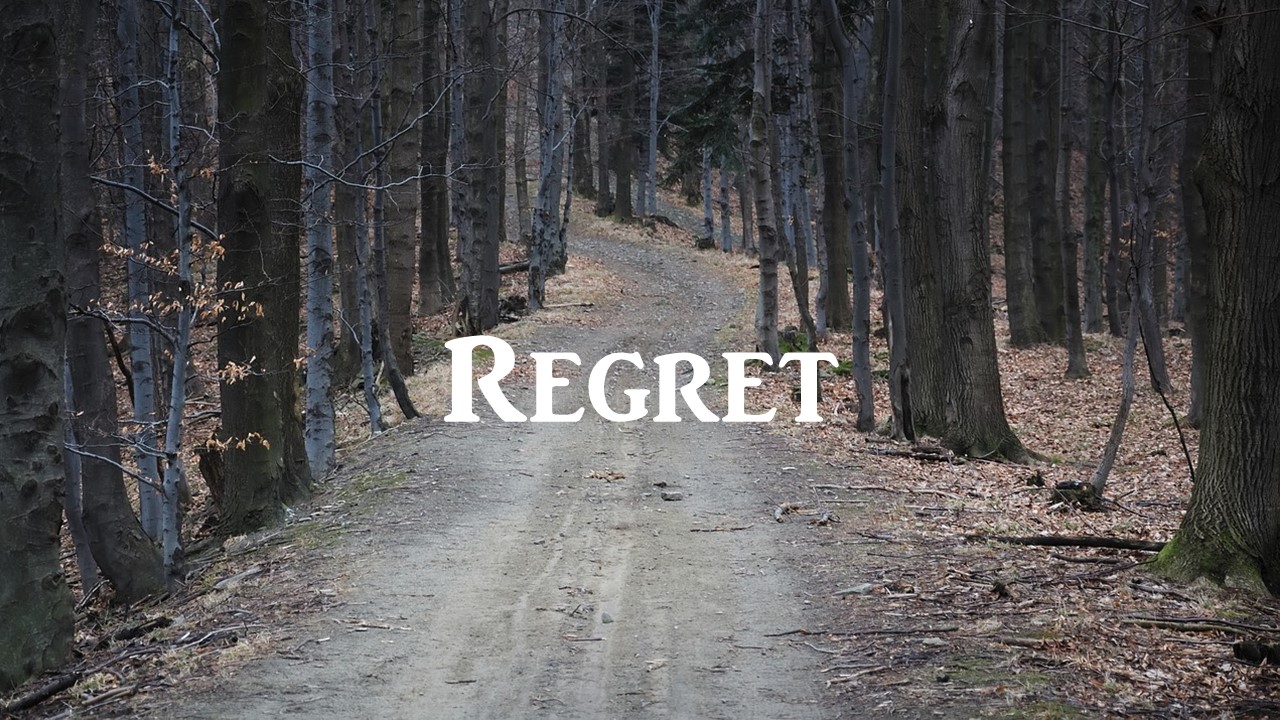
Regrets.

Regret.
Photo courtesy of Pixabay.com

How can you prevent accumulating painful regrets?

Are there any ways you can anticipate things you might regret and live your life in ways that would prevent having to recover from regrets?”

Here are some of the ways you can prevent a life filled with regrets and some thoughts about what to do when you discover your regrets.

Consider potential regrets before acting.

Most of the things people regret fall into one of 2 categories, things they did they wish they hadn’t and things that didn’t do they wish they had. Before taking any major action, ask yourself, will I regret this? If the answer is yes I will regret it, this course of action bears some more thought. A lot of the things people regret were those impulsive “spur of the moment” decisions. Often these are the result of jumping to conclusions or acting on impulse without considering the consequences.

Can this decision be undone?

Some decisions can easily be undone. You sign up for class and wish you hadn’t; you can drop that class if you do so quickly. Make a date with someone and get cold feet, you can cancel that date. For some things undoing that action may have a cost. But it’s often wiser to cancel that purchase and pay the fee, than to be stuck making payments on a car or house you don’t want, for years to come.

One of the major areas which can’t be undone is relationships. Once you’ve slept with someone, it is harder to break up. You can break up with a boyfriend or girlfriend, but your baby’s mother or father is forever. Once you’re married, with or without children, ending that marriage comes with both emotional and financial costs.

Delay your decision until you have more information.

Many of the decisions people regret having made were a result of not giving yourself enough time to think it over. In some places, buyers have a time period to void the sale of a major purchase. I don’t recommend you count on this. I think it’s a good idea to give buyers of expensive items time to check their purchase out and rescind the transaction is there something wrong with the item they bought. But don’t expect to return something just because you changed your mind. Once you have used something you can’t return it in the same new condition it was in when you bought it. There are lots of other actions in life, especially when it comes to relationships with other people, where you don’t have to act the moment the idea enters your head.

Think carefully about possible outcomes.

Regret often comes from the human tendency to think all your ideas are great ones when you first think them. Where possible, before you act on your inclinations, ask yourself what are the possible outcomes? Are any potential negative outcomes so severe that you’re not willing to take the chance? Regardless of how good or how exciting this possible action is if there’s a large chance it could result in death or ruin the rest of your life you must be realistic in evaluating the risks. Be careful of the natural human fallacy to believe that you’re lucky or smart and that only the good outcomes will happen to you.

Don’t waste time on the impossible. What alternatives are available to you?

Don’t make the mistake of choosing between an action and an impossibility. Sometimes you will be forced to pick the best of 2 bad options. Sometimes you’ll hesitate because your preferred choice turns out to be an impossibility. If you are choosing between 2 very likely, very good options, use some of the other decision-making rules coming up. But, if you don’t feel comfortable with any choice, make sure you have ruled out all the impossible choices.

Consider how you feel about possible outcomes.

Many people make the mistake of trying to be totally logical and rational about the choices. Choose with your head, and you will feel the regret in your heart. While your feelings shouldn’t rule you all the time, feelings do provide valuable information. If in your heart, this doesn’t feel right, you probably should not do it.

Search for other alternatives.

Before you decide something, ask yourself are there any other possible choices? A significant source of regrets are times people chose between 2 options, say picking A instead of B, neither of which were that good a choice. Where they went wrong was failing to think about some of the other letters of the alphabet that might have been better choices.

What would a good decision maker do in this situation?

When faced with a difficult decision think about the people you know. Who that you are aware of appears to be exceptionally good at making decisions? What would that person choose?

How does this decision relate to your life goals and values?

Don’t get distracted by things the promise short-term pleasure and excitement, the next bright shiny thing. You will make better decisions when you pause to think about what are your personal values?

Once you decide against an alternative stop looking for evidence to support it.

Seems to be a part of human nature to doubt yourself. There is a problem with the way the human brain works. It’s called confirmatory bias. If we want to do something all we are likely to see re other reasons in favor of it. Unfortunately, people who decided against an alternative keep going back to that thing they decided against and looking for other reasons to go ahead and do it anyway. Once you have decided no, it is probably best to stay with that decision. On the other side of the coin if you decided to do something and suddenly get some new information that makes that decision look like one you’ll regret, don’t disregard that new information.

Use an outside expert’s advice and feedback.

Sometimes we get hung up on our own thinking. Because we think something, it must be true. When the decision has huge consequences, costs a lot of money, or might get you stuck in a situation that would be hard to get out of, it pays to seek advice from an expert. If that expert is a counselor they probably won’t, and shouldn’t, tell you what to do. What they can do is help you sort out your conflicted feelings and provide you with information about what has happened to other clients faced with this decision. Sometimes it helps just to know you’re not the only one who has had trouble making this decision.

Weigh the consequences of not deciding.

If it’s a tough decision, you need to ask yourself, what will it cost me to put the decision off? Not responding to a lawsuit or a bill may make the situation worse. Just because it’s the “best price of the year” doesn’t mean you should decide to make that purchase today. It is quite possible that the difference between today’s “best price of the year” and next week’s “sale price” won’t be all that different. Don’t convince yourself that if you don’t get into a relationship with the person you’re out with now, you will never have another chance and you’ll be alone for the rest of your life. If you have doubts about relationships, it may save you a lot of pain to wait until you are sure.

For many people, life’s greatest regrets are the things they wanted to do but never did. Don’t live your life putting off getting the education you want. Reach for your dreams. Try out for that acting job. Write your book. Have you let fear keep you from deciding to do things that are especially important to you?

Talk your decision through with an empathetic person.

Besides professionals, most of us have close friends and family we can talk to about the decisions we are struggling with. Ask yourself who among them are empathetic and can understand the struggle you’re going through to make this decision. It can help to talk it out with an understanding person. Pick that person carefully. You don’t need somebody telling you what to do or putting you down for what you’re thinking.

Expect to have regrets; they are an unavoidable part of life.

Nobody gets through life without having some things that they regret. Accept that you must live life and you will never have all the information before the decision that you will have afterward. Everybody must make some decisions, and they will regret some of those. Expect those crystal balls to be cloudy and hard to see into.

If you have regrets, make repair efforts a priority.

As you move through life, you will accumulate some regrets. Where possible, try to make repairs. Forgive yourself for your mistakes. If you have regrets because you have harmed others, do your best to make your amends and make things right with them.

Learn from your mistakes, improve decision-making skills.

Make conscious decisions. Consider each decision you make in life another learning opportunity. Learn from your mistakes. Watch how others around you live and learn from their mistakes. Become aware of how you make your decisions and make them consciously. Most importantly learn from those things that you regret and try to stop making the same mistakes repeatedly.

Some additional posts about regrets:

Top 6 life regrets

Will you regret doing that?

Top regrets after the breakup.

Regret. 

David Joel Miller MS is a Licensed Marriage and Family Therapist (LMFT) and a Licensed Professional Clinical Counselor (LPCC.)  Mr. Miller provides supervision for beginning counselors and therapists and teaches at the local college in the Substance Abuse Counseling program.

Staying connected with David Joel Miller

Seven David Joel Miller Books are available now!

My newest book is now available. It was my opportunity to try on a new genre. I’ve been working on this book for several years, but now seem like the right time to publish it.

Story Bureau.

Story Bureau is a thrilling Dystopian Post-Apocalyptic adventure in the Surviving the Apocalypse series.

Baldwin struggles to survive life in a post-apocalyptic world where the government controls everything.

As society collapses and his family gets plunged into poverty, Baldwin takes a job in the capital city, working for a government agency called the Story Bureau. He discovers the Story Bureau is not a benign news outlet but a sinister government plot to manipulate society.

Bumps on the Road of Life. Whether you struggle with anxiety, depression, low motivation, or addiction, you can recover. Bumps on the Road of Life is the story of how people get off track and how to get your life out of the ditch.

Dark Family Secrets: Doris wants to get her life back, but small-town prejudice could shatter her dreams.

Casino Robbery Arthur Mitchell escapes the trauma of watching his girlfriend die. But the killers know he’s a witness and want him dead.

Planned Accidents  The second Arthur Mitchell and Plutus mystery.

Letters from the Dead: The third in the Arthur Mitchell mystery series.

What would you do if you found a letter to a detective describing a crime and you knew the writer and detective were dead, and you could be next?

Sasquatch. Three things about us, you should know. One, we have seen the past. Two, we’re trapped there. Three, I don’t know if we’ll ever get back to our own time.

For these and my upcoming books; please visit my Author Page – David Joel Miller

Want the latest blog posts as they publish? Subscribe to this blog.

For videos, see: Counselorssoapbox YouTube Video Channel

Top 6 life regrets

By David Joel Miller, MS, Licensed Therapist & Licensed Counselor.

Regrets.

Regret.
Photo courtesy of Pixabay.com

Will you regret your action or inaction?

Regrets are a common human problem. Some regrets, for some people, are relatively minor, others can cause you a great deal of pain and may require professional intervention. Both economists and psychologists study regret, and they come to very different conclusions about the nature and behavior of regrets. Economist study regrets you might have after making a major purchase, buyer’s remorse, or failing to make a purchase and then seeing that item increased dramatically in price. Most economic regrets fade with time. Emotional regrets, jumping into a relationship, or dropping out of school prematurely, are likely to become more painful as your life progresses.

Lifespan regrets happen when you look back at the past and wish something had happened or you wish that something that did happen had never occurred. Some regrets are a normal part of life others can be destructive of your mental and emotional health.

Troublesome regrets can lead to anxiety, depression, and lowered self-esteem. The most painful emotional regrets are about bad choices, things done and things undone. In the short-term, more people regret taking actions that turned out badly. Pessimists are more likely to accumulate regrets and to judge their action or inaction harshly.

Over the long-term, particularly as people grow older, for many people, their biggest regrets are the things they wish they had done, but their fears kept them from acting.

Unfortunately, sometimes regardless of what you decide, you will face regrets. If you choose to do something you may regret the outcome, and if you choose not to do it you may forever regret not taking action.

Regrets over life’s mistakes, the bad decisions, that involve action fade with time for most people. There are ways to correct or accept the results of many actions. People grow to love their children even when they regret the impulsive sex with an undesirable partner. It’s possible to end most bad relationships; you can break up or get a divorce. Remediating the effects of bad decisions can be painful, but they are possible. The regrets most likely to haunt you, as you grow older, are the regrets over your indecision and inaction.

Healthy regrets or Unhealthy regrets?

Regrets can affect you positively or negatively. Regrets when someone has died remind us of our relationship with that person and can be a normal part of grieving. Regrets can also spur you to change your behavior or move in a new direction. The primary difference between regrets and all other negative emotions is that we regret things about which we had choices. Without a possible choice, you may dislike the outcome, but you are unlikely to regret the choices you made.

Some regrets can be just the push you need to change your course of action. If you regret shopping at a store or eating in a restaurant, you can easily change that decision the next time. Self-blame and rumination fuel unhealthy regrets. Beating yourself up over past choices will lower your self-esteem. In regret, you feel that you have made a bad choice rather than that outside forces have caused something undesirable to happen.

What decisions cause the most long-term regrets?

You are most likely to regret the decisions you made when you had lots of choices (Roese, N., Summerville, A., 2015.) Some choices are irrevocable, like having a child because of impulsive sex. Another major source of regret is those things you always wanted to do, told yourself someday, but just never got around to. Are there things you’re doing now, or things you’ve left undone that will be major sources of regret in the future? Below is a list of the things people frequently report as major causes of regret compiled by adding together the results of multiple studies.

1. Not getting education causes regrets.

In study after study the top regret people report has to do with education. On average one-third of the people surveyed regretted not getting more education They regret not staying in school, not studying hard enough or not pursuing a degree in a subject that interested them. Conflicts between education and finances cause some of these regrets. People drop out of school and take a job because the current income is more attractive than the larger income staying in school might have resulted in.

Many other people regret being seduced by the prospect of making a lot of money in one field, and as a result, pursuing a degree in a field they did not enjoy. They commonly regret not pursuing a degree in an area for which they had a passion. It’s easy to let the cost of more education keep you from following your dream. Following an education in a field because your parents or others talk you into it can also be a huge source of regret. Getting your education in a highly paid field can be a great mistake if you have neither the aptitude nor the interest in that field.

In middle and late-life many people report their greatest life regret is not getting that degree in the subject they were most interested in. One reason, failure to get more education, is number 1 on the list of common regrets is the wide availability in the United States of additional or advanced education. Making the decision not to pursue education is not a one-time decision, but something people must continuously do.

In a survey of senior citizens, the number 1 regret of men was that they hadn’t gotten more education. The primary regret of women was similar; they wished they spent more time developing their mind or intellect (DeGenova MK, 1992.)

Researchers suggest the reason failing to get more education is the number 1 regret in America is because it is seen as the one thing an individual can do that greatly increases their opportunities in all the other life domains.

2. Career choice regrets.

Between 20 and 25 percent of all the people surveyed regretted their career choice. This regret is often linked to failure to get an advanced education or job-specific training. Starting out in life, you need to earn a living. For example, if your uncle owns a landscaping business, you might get a job working for him mowing lawns. After years of doing this kind of work, you may have severe regrets that you didn’t explore other possible career choices.

Other commonly reported regrets about career choices involved letting others talk you out of a career dream. If you always wanted to be an artist, dancer, or another performer, you may have let people talk you out of following your dream. Many people avoid aiming high. Later they regret not having made an effort to become a doctor, lawyer, or other respected professional.

3. Regrets about romantic decisions.

Surprisingly, given all the literature about love, and the number of divorces, only 15 percent of those surveyed reported ongoing regrets about their romantic decisions. One possible reason regrets in this area were less significant may be the frequency with which people can change romantic relationships. Young people were far more likely to express regrets about romantic decisions. Failure to ask someone out or to pursue a relationship with someone were reasons cited for regrets about romantic decisions.

4. Parenting choices can cause regrets.

Parenting choices were a source of regret for 10 percent of survey participants. In studies of the regrets of college students, they were more likely to regret choices involving friendships. As people age, regrets about social relationships become more focused on decisions having to do with children.

5. Self.

Just over 5 percent of people reported regrets in this area. People with regrets in this area are likely to show up in therapy or seek self-help materials to “find themselves.” Losing yourself in relationships and becoming alienated from your feelings can be sources of regrets in this area.

6. Regrets about leisure time activities.

Recreation and hobbies can contribute to good mental health. Surprisingly only about 2 ½ percent of people ever report regrets about their leisure time activities. When I have had clients mention regrets in this area, it usually involved working too much and giving up sports and hobbies that used to bring them joy.

Other areas of regret.

The literature on regret includes six other areas of life about which people sometimes express regret. While these areas can result in painful regrets, they all turned out to be less common than researchers had expected. The other areas of your life that might cause you regrets include finances, family, health, friends, spirituality, and community.

Decisions you are not likely to regret.

When the choice you make seems clearly superior to the alternative, you are less likely to regret that decision. If you fail several classes in your chosen major, you are less likely to regret giving up on that major. When there have been repeated problems in your relationship, breakups, cheating, or violent fights, you are more likely to regret staying in that relationship then leaving it.

Do you have life regrets? Which of those regrets are things from the past you need to accept that which are things in the present you need to change?

You find more about this topic under Regret.

David Joel Miller MS is a Licensed Marriage and Family Therapist (LMFT) and a Licensed Professional Clinical Counselor (LPCC.)  Mr. Miller provides supervision for beginning counselors and therapists and teaches at the local college in the Substance Abuse Counseling program.

Staying connected with David Joel Miller

Seven David Joel Miller Books are available now!

My newest book is now available. It was my opportunity to try on a new genre. I’ve been working on this book for several years, but now seem like the right time to publish it.

Story Bureau.

Story Bureau is a thrilling Dystopian Post-Apocalyptic adventure in the Surviving the Apocalypse series.

Baldwin struggles to survive life in a post-apocalyptic world where the government controls everything.

As society collapses and his family gets plunged into poverty, Baldwin takes a job in the capital city, working for a government agency called the Story Bureau. He discovers the Story Bureau is not a benign news outlet but a sinister government plot to manipulate society.

Bumps on the Road of Life. Whether you struggle with anxiety, depression, low motivation, or addiction, you can recover. Bumps on the Road of Life is the story of how people get off track and how to get your life out of the ditch.

Dark Family Secrets: Doris wants to get her life back, but small-town prejudice could shatter her dreams.

Casino Robbery Arthur Mitchell escapes the trauma of watching his girlfriend die. But the killers know he’s a witness and want him dead.

Planned Accidents  The second Arthur Mitchell and Plutus mystery.

Letters from the Dead: The third in the Arthur Mitchell mystery series.

What would you do if you found a letter to a detective describing a crime and you knew the writer and detective were dead, and you could be next?

Sasquatch. Three things about us, you should know. One, we have seen the past. Two, we’re trapped there. Three, I don’t know if we’ll ever get back to our own time.

For these and my upcoming books; please visit my Author Page – David Joel Miller

Want the latest blog posts as they publish? Subscribe to this blog.

For videos, see: Counselorssoapbox YouTube Video Channel

Why you can’t make up your mind – Decisions.

By David Joel Miller, MS, Licensed Therapist & Licensed Counselor.

Choice.

Choice.
Photo courtesy of Pixabay.com

Why is hard to make up your mind when you have multiple choices?

Choosing when you have multiple options can be difficult for several reasons.

There are two basic methods for making decisions, logical and emotional. As we saw in a previous post about Intuition neither way of making your choices is infallible.

Most choices are not clear-cut, all good or all bad. So we have to weigh the choices and then find some way of evaluating the good and the bad of each choice. When we get all done many of us fall back on our default mode to make our decision.

Not all choices are equal, so a fixed set of decision-making rules does not always work even though some people and some institutions adopt a systematic procedure for making those decisions. Below are some examples of choices

A good choice vs. a bad choice.

Which do you want ice cream or a beating? Ice cream good, beating bad, take the ice cream. Anyone having trouble making that decision?

Good vs. good.

At the party do you want cake or ice cream? This is a matter of preference, may take longer to decide but either is OK. It might be better if you could have both but that was not an option offered.

Good with the bad vs. bad with the good.

Your friend is having a party with cake ice cream and some champagne. You just went on a diet to get in shape for that reunion and you are trying to give up drinking. See friend and go off your diet?

You promised your workout friend that you would join her today at the gym. Last time you made an appointment she did not show.  Go to the gym and work out to lose the weight but risk her standing you up again?

Now add more good and bad.

There is this cute guy from work that may be at the party, so might your ex.

There is this other cute guy that you met at the gym but your ex’s new girlfriend is now working there.

The more pros and cons we add the more difficult it becomes to make a decision.

Remember that whether you try to choose rationally or emotionally you run into problems making that decision.

Rationally you never have all the info you would need. Who will show up where? You can’t know ahead of time and if you attribute probabilities to these events that still does not solve the problem.

Which would be worse? Running into your ex or his new girlfriend or both of them together?

One common approach to solving this dilemma is to take a piece of paper and draw a line down the middle put the reasons for choosing one in one column and the reasons for choice two in column 2.

Not much help is it. Is the risk of getting ice cream instead of cake more or less important than the risk of seeing your ex or his new girlfriend? Not all reasons are equal. We get into some calculus to solve this equation.

Worst of all by the time you get all the info you need and get the math done, the party is over and the gym has closed.

Also, choice decisions do not always s include all the alternatives. Make sure that the best choice is not left off your list. Also as with the cake or ice cream example, sometimes our action as in asking for both can alter the options available.

One last decision problem – time.

A dollar today is not equal to a dollar a year from now. Neither is exercising or eating cake. You could go to a party now and then exercise next week. A few weeks of that and you will not need your gym membership. You also will not be in top shape for the class reunion and that was the reason for your exercise and get a healthy program in the first place.

Sometimes you need to trust your gut.

This impossibility of getting enough info and then assigning probabilities and so on is why much of the time we humans use intuition. Based on past experiences and the degree of your preference you will choose one way or the other and then have to live the consequences.

One last factor you need to consider is the importance of your goal. You might do something distasteful for money. Say your boss asked you to go to a function and make a speech and your ex might be there. Would you do it to please him? Would you do it for $1.00 how about $1,000,000? The bigger the rewards the more you might choose one option over the other.

But what about the size of the negatives? If one choice might alter your life forever in a bad way would that affect your decision?

So these kinds of choices are very personal and reflect not just the pros and the cons or the chances one thing or the other will work out, they also reflect your personal goals and values.

Your goals and values shape your choices.

To make better choices on difficult decisions you really need to get to know yourself, your goals, and your values. Then pick what is best for you.

Any comments from out there? Have you had to make a difficult choice and how did you finally go about deciding.

Staying connected with David Joel Miller

Seven David Joel Miller Books are available now!

My newest book is now available. It was my opportunity to try on a new genre. I’ve been working on this book for several years, but now seem like the right time to publish it.

Story Bureau.

Story Bureau is a thrilling Dystopian Post-Apocalyptic adventure in the Surviving the Apocalypse series.

Baldwin struggles to survive life in a post-apocalyptic world where the government controls everything.

As society collapses and his family gets plunged into poverty, Baldwin takes a job in the capital city, working for a government agency called the Story Bureau. He discovers the Story Bureau is not a benign news outlet but a sinister government plot to manipulate society.

Bumps on the Road of Life. Whether you struggle with anxiety, depression, low motivation, or addiction, you can recover. Bumps on the Road of Life is the story of how people get off track and how to get your life out of the ditch.

Dark Family Secrets: Doris wants to get her life back, but small-town prejudice could shatter her dreams.

Casino Robbery Arthur Mitchell escapes the trauma of watching his girlfriend die. But the killers know he’s a witness and want him dead.

Planned Accidents  The second Arthur Mitchell and Plutus mystery.

Letters from the Dead: The third in the Arthur Mitchell mystery series.

What would you do if you found a letter to a detective describing a crime and you knew the writer and detective were dead, and you could be next?

Sasquatch. Three things about us, you should know. One, we have seen the past. Two, we’re trapped there. Three, I don’t know if we’ll ever get back to our own time.

For these and my upcoming books; please visit my Author Page – David Joel Miller

Want the latest blog posts as they publish? Subscribe to this blog.

For videos, see: Counselorssoapbox YouTube Video Channel

Has intuition gotten a bad name?

By David Joel Miller, MS, Licensed Therapist & Licensed Counselor.

Picking the right door.
Photo courtesy of Pixabay.com

People who use intuition correctly make better decisions.

In this modern scientific era, it has become conventional wisdom to dismiss intuition as nonsense and to insist that everyone thinks rationally – whatever rationally means. Recent research tells us that people who have developed their intuition make better decisions much of the time and that just relying on rational explanations does not get you the best answer all the time.

Top business executives and successful entrepreneurs use intuition to get ahead and stay ahead of their competitors.

Psychological tests and particularly the Myers-Brigs personality types distinguish two personality types. Those who decide “in a blink” and those who need time to think. One way of deciding is not necessarily better than the other and people who are able to use both methods do better at many tasks.

To understand the role of intuition in our lives we need to look first at what it is and then at how its proper use might help us have a better and happier life.

The dictionary definition, from an old paper dictionary, includes “To receive or assimilate knowledge by direct perception or comprehension.” This section on defining intuition is exceptionally long and includes a list of ways in which one might receive information: look at or upon, observe, regard, contemplate or consider, immediate perception.

The principal meaning of intuition is those things you know immediately by personal experience as opposed to thinking them based on some theory or second-hand knowledge.

While I may not trust that I get everything a see correctly, the essence of intuition is found in the old adage “seeing is believing.” Which explains why knowledge based on personal experiences including feelings can often be trusted more than the opinions of others including experts who have studied the subject but have no firsthand knowledge of the thing they are talking about.

Intuition, it would appear, is firsthand knowledge based on experiences not only in the head but in all the nerves in the body. We tend to believe that our brain is in our heads. More than half of those nerve cells that process information are outside the head. That feeling in your gut just might be telling you something your head needs to know. We experience these nerves outside our head as feelings or emotions and it turns out that this “felt-sense” is often more accurate than what we might be thinking.

What are some of the advantages of using intuition in making decisions and why might it beat out slow careful deliberation?

Using intuition has several features to recommend it.

1. It is easy, requires no effort to assemble data, analyze that data, and deliberate decisions.

2. It is often much faster than deliberative or logical decision-making. By the time you get the research done the market opportunity may be passed and your competitor may be in charge.

3. Using intuition does not require deliberation, committee meetings or extensive testing.

4. We are often more confident in the results of our intuitive decisions because they – just feel right.

Taking the slow deliberative approach does not eliminate mistakes as any marketing research director should be able to tell you. Here are the problems with doing market research to use as a basis for your decisions.

1. The information you will get is often not what you wanted.

2. If you get the facts you want they might not be the ones you need.

3. Fully researching things may take too much time and cost too much

4. Even when you get all the facts, can afford the cost, get the info you were looking for it still might not tell you what you need to do.

The trends in products may take years to develop and a new introduction by a competitor could change the whole market overnight while you are doing research. Try applying this research model to your personal life.

A personality test may tell you if you have things in common with a potential partner but it does not guarantee success in the relationship. Making that cute guy or gal take a 5-hour personality test may just blow the whole deal even before you get to the first date.

There are times in our lives, both personal and professional when we just might need to trust our instincts and use that old friend intuition.

Staying connected with David Joel Miller

Seven David Joel Miller Books are available now!

My newest book is now available. It was my opportunity to try on a new genre. I’ve been working on this book for several years, but now seem like the right time to publish it.

Story Bureau.

Story Bureau is a thrilling Dystopian Post-Apocalyptic adventure in the Surviving the Apocalypse series.

Baldwin struggles to survive life in a post-apocalyptic world where the government controls everything.

As society collapses and his family gets plunged into poverty, Baldwin takes a job in the capital city, working for a government agency called the Story Bureau. He discovers the Story Bureau is not a benign news outlet but a sinister government plot to manipulate society.

Bumps on the Road of Life. Whether you struggle with anxiety, depression, low motivation, or addiction, you can recover. Bumps on the Road of Life is the story of how people get off track and how to get your life out of the ditch.

Dark Family Secrets: Doris wants to get her life back, but small-town prejudice could shatter her dreams.

Casino Robbery Arthur Mitchell escapes the trauma of watching his girlfriend die. But the killers know he’s a witness and want him dead.

Planned Accidents  The second Arthur Mitchell and Plutus mystery.

Letters from the Dead: The third in the Arthur Mitchell mystery series.

What would you do if you found a letter to a detective describing a crime and you knew the writer and detective were dead, and you could be next?

Sasquatch. Three things about us, you should know. One, we have seen the past. Two, we’re trapped there. Three, I don’t know if we’ll ever get back to our own time.

For these and my upcoming books; please visit my Author Page – David Joel Miller

Want the latest blog posts as they publish? Subscribe to this blog.

For videos, see: Counselorssoapbox YouTube Video Channel

6 Reasons why you can’t make up your mind – Doubt and uncertainty fog memory

By David Joel Miller, MS, Licensed Therapist & Licensed Counselor.

Reasons why your indecision harms your memory.

Can’t make up your mind?
Photo courtesy of pixabay.

There are reasons why you may not be able to make up your mind. When there is an emotional storm going on in your mind it is difficult to make a clear choice. Here are 6 reasons why you may be having difficulty making up your mind and as a result are fogging up your memory.

1. You have to Choose and do not know which is the right choice.

Having to make a choice between two or more alternatives can be exhausting. If you have two potential jobs which one do you pick? Some of you are saying I would like to have to make that choice. Problem is that once you pick one the other is out.

This is especially a problem in relationships. Lots of men have a problem making a commitment. Once they pick one person to be with all the others start looking more attractive. You start second-guessing yourself and wondering if you made the right choice.

What people in this situation often do is try to avoid making a choice. That is also a choice. Some of the most life-changing decisions occur when we fail to make a choice and as a result, a whole world of possibilities closes to us.

If you don’t give the company who offered you that job a yes, they may proceed to offer that job to someone else. If you don’t go to a college you may forever wonder what would have happened if you had gone there.

You can only walk down one road at a time and no matter how fast you walk the outcomes change if you picked one thing and not the other.

There are three kinds of choices. Good and Good, Bad and Bad, and the worst kind Good-Bad verses Bad-Good. These are referred to in the language of psychology as approach-approach, avoidance-avoidance, and approach-avoidance choices.

Good-Good choices.

Pick between two dinners you like and no matter which one you pick it should be good. This decision does not get much thought. Either way is enjoyable and you get pleasure either way. Usually, over time we get our default pattern of making this choice. We either have one favorite meal we pick most of the time or you become someone who always looks for something new on the menu.

Fail to make this choice, say you can’t decide which person to marry, you may date a lot, but you don’t get to have the experience of watching children grow up as part of a family.

Bad-Bad choices.

Pick between two things both of which are bad and we try to pick the “lesser of two evils.” Most of us think of the elections every couple of years as this sort of choice. Most of the time there are things we don’t like about both candidates but we have to pick one or the other or let some idiot pick for us.

The good with the bad versus the bad with the good choices.

These can be tough choices. If you make either choice there may be some pleasure followed by paying some costs.

Choices between getting into drugs and alcohol fall into this category. There can be some fun and there can be some pain. The question is how much is good and when does the pain begin.

These approach-avoidance verses avoidance-approach choices may result in paralysis and failing to do anything as we have seen is also making a choice. Sometimes that choice is that the fear of being wrong keeps us from getting in on something good. Sometimes giving us some pleasure protects us from some pain. The problem is to figure out which is which.

Fail to make this choice, say you can’t decide which person to marry and you may date a lot but you don’t get to have the experience of spending your life with someone you love and who love you.

Pick the wrong person, have lots of exciting sex and you are stuck with a babies-parent that you don’t want to be around. Children’s parents are for life.

Balancing this “you need to make a decision” with the consequences of the decision in the short-term and the long-term can be challenging.

2. Confusion when you don’t know what your choices are.

A classic example of this is the high school senior picking a college and a major. Once you pick a college it gets harder to change that decision. No one has the time or energy to check out all the schools and often this decision, despite its life-changing consequences, is made with less than adequate information.

You can change your major more easily but plenty of people find after they graduated that there are few or no jobs for their major. Too many people make decisions on majors on very little information.

The worst outcome of this occurs when you get a degree and then find you don’t want to have to do that kind of work all day long.

3. None of the choices are what you want.

Sometimes this is called artificially limiting your choices. You pick between two schools the one you want and the one your parents want without looking to see if another one would have been better.

This also happens when people jump into a relationship with someone because they think no one will want them and if they pass up this one person who is showing an interest then they are destined to be alone.

4. Emotional contents buried in your decisions.

Some of us make decisions with our feelings when we should be making them with our heads. Just because something is scary does not make it dangerous. Also because something is safe and comfortable that does not mean it is the right choice.

Sometimes life is about stretching and trying on something new so that you can see who you can become given the opportunity.

Don’t settle for being less than you were meant to be because trying for something better will be scary.

5. Your heart is not in it.

If your heart is not in something, no matter how much you think this is the right decision you need to reconsider. If you can’t work up some enthusiasm when you begin on a life course then what will there be left when you get along the path?

6. It may not be time to chose yet.

One last problem with making choices. Sometimes we rush into making a decision when we don’t have the information we need, and the time is not yet ripe.

Think about this before making any decision with which you are uncomfortable.

Is this something you are afraid of or is it something you don’t need to decide just yet?

Did that confuse you totally or are you ready to make that life-changing decision?

Staying connected with David Joel Miller

Seven David Joel Miller Books are available now!

My newest book is now available. It was my opportunity to try on a new genre. I’ve been working on this book for several years, but now seem like the right time to publish it.

Story Bureau.

Story Bureau is a thrilling Dystopian Post-Apocalyptic adventure in the Surviving the Apocalypse series.

Baldwin struggles to survive life in a post-apocalyptic world where the government controls everything.

As society collapses and his family gets plunged into poverty, Baldwin takes a job in the capital city, working for a government agency called the Story Bureau. He discovers the Story Bureau is not a benign news outlet but a sinister government plot to manipulate society.

Bumps on the Road of Life. Whether you struggle with anxiety, depression, low motivation, or addiction, you can recover. Bumps on the Road of Life is the story of how people get off track and how to get your life out of the ditch.

Dark Family Secrets: Doris wants to get her life back, but small-town prejudice could shatter her dreams.

Casino Robbery Arthur Mitchell escapes the trauma of watching his girlfriend die. But the killers know he’s a witness and want him dead.

Planned Accidents  The second Arthur Mitchell and Plutus mystery.

Letters from the Dead: The third in the Arthur Mitchell mystery series.

What would you do if you found a letter to a detective describing a crime and you knew the writer and detective were dead, and you could be next?

Sasquatch. Three things about us, you should know. One, we have seen the past. Two, we’re trapped there. Three, I don’t know if we’ll ever get back to our own time.

For these and my upcoming books; please visit my Author Page – David Joel Miller

Want the latest blog posts as they publish? Subscribe to this blog.

For videos, see: Counselorssoapbox YouTube Video Channel