Put the head back on!

By David Joel Miller, MS, Licensed Therapist & Licensed Counselor.

Confused brain

Mental illness.
Photo courtesy of Pixabay.com

Mental illness versus physical illness.

For a very long time, physical health practitioners have ignored the connection between mental and physical illness. When someone suggested that the way in which we think can cause physical illness they have been disregarded, or worse. Traditional western medical practice has looked for the cause of physical illnesses everywhere but in our thoughts. That may be about to change.

As I write these words I am getting very nervous. The pictures in my head of cancer patients giving up their meds to participate in some sort of thought workshop scare me. I am not suggesting that some “psychic energy transfer” ought to replace conventional treatment.

But the research, good scientific research, by reputable researchers, keeps pointing to the connections between physical illness and mental illness. No less an authority than the Robert Wood Johnson Foundation has published a report on the subject.

Their conclusion is that the connection between mental health and physical illness is overwhelming and it has huge implications for the direction and cost of healthcare in the future.

Why?

Among those with a diagnosed mental illness in the U.S, almost 70% have a chronic long-term physical illness. That might not sound so significant until we notice that in any given year about 25% of the U. S. population has a mental illness. Their conclusion is clear. Those people with a mental illness are not just faking things. The problems are not just all in their heads. The mentally ill are much more likely to develop chronic long-term diseases. But that is only the beginning of the problem.

Almost a third of those people who have a chronic long-term physical illness develop a mental illness. The connection between physical and mental health and illness runs in both directions.

In typical scientific fashion they tell us so far we can’t be sure if mental illness causes physical illness or physical illness causes mental illness. There may even be a third thing that is causing both. What we do know for sure is that very often the two exist at the same time in the same person.

There is a circle or maybe a spiral of risk going on here.

A medical condition with a “high symptom burden” such as migraine headaches or back pain is a risk factor for, which means it is likely to lead to, depression. But the spiral does not end there. Depression is a high-risk factor for heart disease. See how mental illness and physical illness are intertwined?

There is a bigger societal problem in the making here. There are extremely high rates of “uninsurance” among the mentally ill. We also know that many people with chronic medical conditions may lose their coverage if they are unable to work.

Treatment for one problem can make the other worse. Medication for a psychiatric illness like depression or psychosis can result in weight gain making the person’s diabetes worse. Medications for many physical symptoms can make a person’s mental health conditions worse.

In the elderly, and these are the people where we would expect chronic physical conditions to be at their worse, we also have the problem of multiple meds. One hospital study found that among patients who are taking 8 or more meds there was a 100% chance two of these meds were interacting and producing unwanted results. In assessing for cognitive decline in the elderly, a therapist always wants the prescribing doctor to take another look and tell us if part of the problem might be the medications not the client’s loss of mental ability.

Now regardless of how you swing politically, the bottom line here is that those people with mental illness or chronic physical illnesses are at high risk to develop the other condition and then to be unable to work. One way or the other this group of people will end up in hospital emergency rooms and those who can’t pay – well those of us who are still working – we get to pay that bill. This will only get worse as time goes on.

I suppose we could just stop paying for those who are too sick or old to work and pay for their own medical care. It sounds like some are advocating that approach these days. I for one would not care to live in a society that was unwilling to provide care for those who are least able to care for themselves. I also have enough faith in my fellow Americans to think it will not come to that.

But there is another option and support for this option is growing not just in treating the uninsured but also in treating those with the best of insurance coverage. This other option which is growing in popularity is to integrate the treatment of physical and mental health.

Consumers who are less depressed take their heart meds more often and end up in the emergency room less. The reintegration of the two specialties is overdue.

We need to stop treating medical patients as headless bodies and but the head and the feelings back in the equation when it comes to treating the whole person.

Staying connected with David Joel Miller

Seven David Joel Miller Books are available now!

My newest book is now available. It was my opportunity to try on a new genre. I’ve been working on this book for several years, but now seem like the right time to publish it.

Story Bureau.

Story Bureau is a thrilling Dystopian Post-Apocalyptic adventure in the Surviving the Apocalypse series.

Baldwin struggles to survive life in a post-apocalyptic world where the government controls everything.

As society collapses and his family gets plunged into poverty, Baldwin takes a job in the capital city, working for a government agency called the Story Bureau. He discovers the Story Bureau is not a benign news outlet but a sinister government plot to manipulate society.

Bumps on the Road of Life. Whether you struggle with anxiety, depression, low motivation, or addiction, you can recover. Bumps on the Road of Life is the story of how people get off track and how to get your life out of the ditch.

Dark Family Secrets: Doris wants to get her life back, but small-town prejudice could shatter her dreams.

Casino Robbery Arthur Mitchell escapes the trauma of watching his girlfriend die. But the killers know he’s a witness and want him dead.

Planned Accidents  The second Arthur Mitchell and Plutus mystery.

Letters from the Dead: The third in the Arthur Mitchell mystery series.

What would you do if you found a letter to a detective describing a crime and you knew the writer and detective were dead, and you could be next?

Sasquatch. Three things about us, you should know. One, we have seen the past. Two, we’re trapped there. Three, I don’t know if we’ll ever get back to our own time.

For these and my upcoming books; please visit my Author Page – David Joel Miller

Want the latest blog posts as they publish? Subscribe to this blog.

For videos, see: Counselorssoapbox YouTube Video Channel

Sharing made me a new person – group therapy.

By David Joel Miller, MS, Licensed Therapist & Licensed Counselor.

Support group

Group.

Group therapy can be very helpful.

The group really helped me, sharing made me a new person. The client was trying to describe the way that being in group counseling had benefited them. I am a believer in group therapy. I have seen the things that happen when a group is on task and working. The clients can see it also.

There is a saying in groups that “we are only as sick as our secrets.” One powerful way in which groups can help people is to allow them to tell their stories in a supportive environment.  When it works it can be magic.

Twelve-step groups are self-help group’s not professional therapy. But in the addiction field, we quickly learned the value of being in a group that understood what you are going through and who were all supportive of your recovery. In mental health groups, we see the same results. People all sharing about their life struggles makes us feel more connected and less alone. Powerful things happen in peer support groups.

Some professionals are leery of groups. They have suggested to me that group counseling is a lesser sort. They tell me that “real therapy” takes place with one client and one therapist in the room. I try to avoid arguing. Then why do we do couples counseling and family counseling if it is best done in an individual session I ask? I try to listen politely to their answers.

Most of life is about relationships. We are wounded in our relationships and most often we are healed by a helping, supportive relationship. Sometimes that relationship is a counselor, sometimes it is a group.

Not all groups are safe places to tell your most painful life events. In therapy groups, it is up to the leader to make groups a safe place. In self-help groups, it can be riskier. We talk about confidentiality and anonymity but that is no guarantee that someone will not break the rules and repeat what another person said. The longer the group has been together the safer people feel but it is never without risks.

What I often see happen is that people try to keep things secret in group, that everyone else in the group knew already. When someone is arrested for a DUI it is in the paper but when they come to a group, they hint vaguely about a self-control problem and demand confidentiality.

More than once a client has told me something in a private session and then a few weeks later their courage now turned up a notch, they tell the whole group. In almost every case the result was that the group understood and supported them in their disclosure and the person, now having publicly admitted their defects of character, finds they have unburdened themselves and are no longer kept in pain by that secret.

Some of us have spent our whole life’s trying to hide our true selves from others. There is something very freeing about opening up and sharing about our total selves, warts and all. People who have to hide themselves from others not only cover up their flaws, they cover up their endearing qualities also.

Sharing who you really are can indeed make you a whole new person.

Staying connected with David Joel Miller

Seven David Joel Miller Books are available now!

My newest book is now available. It was my opportunity to try on a new genre. I’ve been working on this book for several years, but now seem like the right time to publish it.

Story Bureau.

Story Bureau is a thrilling Dystopian Post-Apocalyptic adventure in the Surviving the Apocalypse series.

Baldwin struggles to survive life in a post-apocalyptic world where the government controls everything.

As society collapses and his family gets plunged into poverty, Baldwin takes a job in the capital city, working for a government agency called the Story Bureau. He discovers the Story Bureau is not a benign news outlet but a sinister government plot to manipulate society.

Bumps on the Road of Life. Whether you struggle with anxiety, depression, low motivation, or addiction, you can recover. Bumps on the Road of Life is the story of how people get off track and how to get your life out of the ditch.

Dark Family Secrets: Doris wants to get her life back, but small-town prejudice could shatter her dreams.

Casino Robbery Arthur Mitchell escapes the trauma of watching his girlfriend die. But the killers know he’s a witness and want him dead.

Planned Accidents  The second Arthur Mitchell and Plutus mystery.

Letters from the Dead: The third in the Arthur Mitchell mystery series.

What would you do if you found a letter to a detective describing a crime and you knew the writer and detective were dead, and you could be next?

Sasquatch. Three things about us, you should know. One, we have seen the past. Two, we’re trapped there. Three, I don’t know if we’ll ever get back to our own time.

For these and my upcoming books; please visit my Author Page – David Joel Miller

Want the latest blog posts as they publish? Subscribe to this blog.

For videos, see: Counselorssoapbox YouTube Video Channel

Five Axes Diagnosis Esoterica

By David Joel Miller MS, Licensed Therapist & Licensed Counselor.

Medical record

Diagnosis.
Photo courtesy of Pixabay.com

Five Axes Diagnosis Esoterica.

Update

With the release of the DSM-5 using 5 axes may soon be a thing of the past.

Professionals will be looking for this information or most of it. We just won’t be separating it and reporting it this way. I left this post up for those who would like to see the way things used to be.

So in a previous post, we talked about some of the reasons clinicians might be reluctant to tell you about your diagnosis, how the diagnosis is based on the DSM-4 (soon to be the DSM-5) from the APA and how diagnosis are categories while people are on a continuum so sometimes people do not fit the diagnosis neatly. We left off with the ideas that there are 5 axis and that most people stop after knowing more or less their diagnosis on Axis one.

Axis One.

The DSM has over 400 diagnoses. Not just mental illnesses but all sorts of other problems that might take you in to see a counselor. They include mental illnesses, emotional and behavioral problems. This section covers about 750 pages of the DSM. My list below is VERY oversimplified

The major sections, not in order are things most of us have heard about:

1. Adjustment Disorders – life’s problems grown large.

2. Anxiety.

3. Mood disorders meaning Depression and Bipolar.

4. Psychosis, like Schizophrenia and Schizoaffective.

5. Disorders first seen in childhood – like ADHD, learning disorders, and Autism. (But NOT mental retardation!)

6. Sex, eating, and sleeping.

7. Substance abuse.

8. Dementia, physical stuff caused by emotions.

There is a section in the back where other codes, mostly the “V” codes are listed. “V” codes are largely about relationships like parent-child conflicts and partner conflicts. While counselors work in these areas many insurance plans to not pay to treat these things.

Axis Two.

The things we put on axis two are things that we used to think were untreatable – that is just the way you are stuff. This includes personality disorders and mental retardation, a strange mix. Both issues now have appropriate treatments.

Personality disorders are treated using therapies like DBT. Most women in prison are diagnosed with Borderline Personality Disorder. Sometimes in practice, the boundary between Borderline and Bipolar gets fuzzy.

Most men in prison get a diagnosis of Antisocial Personality Disorder. This is also generally treatable if the client wants to change.

Mental retardation can be treated using behavioral techniques as long as we have realistic expectations. The distinction between mental retardation and developmental delays can get fuzzy. Some people call all of these delays and avoid the politically sensitive issue of saying someone has mental retardation. It is also possible for someone with mental retardation to have an axis one problem like depression.

Axis Three

Did you know that medical conditions can cause symptoms that look like a mental illness? All good therapists like to have clients see a primary care doctor, specialists if needed, to make sure this the problem is not a brain tumor or hormone issue. Things like pregnancy, brain injury and poisoning all get confused with mental illness. In seniors, a lot of this dementia and cognitive decline is the result of the side effects of medications the senior is taking. Please, however, do not start or stop meds without talking with your doctor first. Ideally, your doctor and your therapist should be talking and on the same page if you have any medical conditions that may affect your mental state.

Axis Four – Psychosocial and environmental problems

Stressors for short. Not having friends or a family or having a poor relationship with them can cause lots of emotional problems. We also include people with social and educational problems. Being arrested or a victim of crime might get you an Axis Four diagnosis, as would not having medical care or living in poverty. We don’t always talk with clients about these issues as much as we should but these issues are at the core of client’s problems a lot of the time. Note that no matter how severe your unemployment problems are if you can’t qualify for an Axis One diagnosis like Depression you may have difficulty getting counseling for your employment or other problem.

If stressors are interacting with your mental health you might want to see a professional or clinician counselor who specializes in individual therapy centered on both these areas. In California, we call this specialty Licensed Professional Clinical Counselors (LPCC’s.)

Axis Five.

This is a summary scale. Imagine how hard it is, to sum up, a client’s whole life on a 0-100 scale. Imagine getting a pass-fail grade on your life. Imagine trying to grade someone’s life. Lots of other scales have been suggested for this. Insurance types like it because if your GAF number goes up it shows the therapy is working. This makes them happier about paying. Mostly we use this in making decisions about hospitalization or urgent care.

I don’t ever remember telling a client their GAF because it does not much matter unless there is something that needs doing right now and in that case, I want to talk about what it is we need to do now.

So there we have it in two brief posts a very simplified look at the process of diagnoses.

Staying connected with David Joel Miller

Seven David Joel Miller Books are available now!

My newest book is now available. It was my opportunity to try on a new genre. I’ve been working on this book for several years, but now seem like the right time to publish it.

Story Bureau.

Story Bureau is a thrilling Dystopian Post-Apocalyptic adventure in the Surviving the Apocalypse series.

Baldwin struggles to survive life in a post-apocalyptic world where the government controls everything.

As society collapses and his family gets plunged into poverty, Baldwin takes a job in the capital city, working for a government agency called the Story Bureau. He discovers the Story Bureau is not a benign news outlet but a sinister government plot to manipulate society.

Bumps on the Road of Life. Whether you struggle with anxiety, depression, low motivation, or addiction, you can recover. Bumps on the Road of Life is the story of how people get off track and how to get your life out of the ditch.

Dark Family Secrets: Doris wants to get her life back, but small-town prejudice could shatter her dreams.

Casino Robbery Arthur Mitchell escapes the trauma of watching his girlfriend die. But the killers know he’s a witness and want him dead.

Planned Accidents  The second Arthur Mitchell and Plutus mystery.

Letters from the Dead: The third in the Arthur Mitchell mystery series.

What would you do if you found a letter to a detective describing a crime and you knew the writer and detective were dead, and you could be next?

Sasquatch. Three things about us, you should know. One, we have seen the past. Two, we’re trapped there. Three, I don’t know if we’ll ever get back to our own time.

For these and my upcoming books; please visit my Author Page – David Joel Miller

Want the latest blog posts as they publish? Subscribe to this blog.

For videos, see: Counselorssoapbox YouTube Video Channel

New Counseling Website

New Counseling and Therapy Website

Update.

After trying this for a while, I discovered I didn’t have the time to write two blogs. I am still teaching and writing books, as well as producing a few videos for my YouTube channel. I do still see a few clients for counseling but these days this is all done by distance counseling methods. 

The new website for my counseling practice launched yesterday. Honest. This is no Joke. That I got this up and running is truly amazing, me, that old guy, who used to think that a “computer” was that guy in accounting, has my own therapist website. Mostly it is about information for my clients in private practice here in Fresno California. There is a page of “Frequently Asked Questions” about counseling and therapy that some of you may want to look at. Shortly there will also be a page of suggested resources. So check it out and let me know what you think.

I would never have gotten it done had it not been for the experience of using WordPress to do this blog. Don’t panic though. The counselorssoapbox.com blog will continue also. That’s it then.

Best of Blog Recap March 2012

Counselorssoapbox.com

By David Joel Miller, MS, Licensed Therapist & Licensed Counselor.

Here it is – The Best of Blog Recap for March 2012 –

Thanks so much! A big thanks to all of you that read this blog. This has been another great month at the counselorssoapbox.com blog thanks to all of you. Hope some of the things I have written have been helpful and thought-provoking. Feel free to comment and especially pass along the link to anyone you think might want to read this effort.

This month there were a few days with no post but when we reached the month end there were more posts than I had originally planned. We will see what the next month holds.

Here are the top read blog posts of the last month with the links.

1. Bipolar genetics research study.  

2. Trauma steals your sleep.  

3. More ways to mess up your mind.       

4. Why relationships fail – two large reasons.

The all-time top read posts were::

1. How does therapy help people? (still in first place!)

2. Do drugs cause mental illness?

3. How much should you tell a therapist?

4. Treatment for teen’s risky behavior.

Many of you have viewed the home page and “about the author” page also.

Thanks to all my readers new and old.

Next month we will explore some other topics and see what we come up with.

Till next time, David Miller, LMFT, (Soon to be LPCC licensed also)

Bury the past – put it in a box.

By David Joel Miller, MS, Licensed Therapist & Licensed Counselor.

Coffin

Bury the past, put it in a coffin.
Photo courtesy of pixabay.

Wish you could get rid of your past?

“Wish I could bury my past, ” the client said. “I would like to put it in a box and bury it.” We talked a while about that client’s pain, the history of trauma. We spoke of things that should have been in childhood and weren’t and of things that had happened, that shouldn’t have. We talked about the burden of carrying around the pain and how hard it was to put the pain down. I thought about the topic after the client left. How might I help them to bury that pain?

We grieve for people when they die. Sometimes we miss them. Sometimes we only grieve for what should have been. We have a ceremony, often with a casket, there is a viewing, a graveside service and then we get a period of time to mourn. Friends and family support us in this process but eventually we start to move on. We remember the departed. We may think that we will see them again, but we shouldn’t stay stuck in the past. Life goes on. Why can’t we do that for the pain and the trauma of the past?

Why is it so hard to let go of the past?

Sometimes we tell substance abusers to write a letter to their drug of choice. Addicts get closer to their drug of choice than their family or their friends.  Friends come and go. Crystal Meth or Sherry wine, she is always there. It is easy to remember the good times. Remember the time we took them to a party? The time they made us think that we were charming or witty? We forget the times they took us to jails and hospitals.

We tell people in substance abuse recovery to write a goodbye letter to their drug of choice. They write a Dear John letter to their addiction. Tell the drug you have to say goodbye. Get that drug out of your life. Some people burn that letter. Others flush it away. We perform a ritual to signify an end, a divorce from the old addiction, and the start of new relationships with yourself and with other humans.

What kind of ritual should we have to get rid of the pain and hurt? How does someone who was abused, molested or neglected, get an end to the hold that emotion holds over them?

There are cultures that have rituals for these sorts of things. Some religions have ceremonies to clean and rebirth. America has fewer rituals, more religions, less faith.

Would we really give up all the pain if that were a choice? Sometimes do we hold onto our suffering like some earned war wound, some badge of moral courage? What if instead of holding on to our suffering there was a simple ceremony we could perform? Would we do it? Would our friends support us in this?

When we get married there are often people to wish us well. When we get divorced there is a judge and a piece of paper. The paper says that thing we had hoped for has been dissolved. It has ceased to exist. Some people hide the change. Friends don’t give us a hug and wish us well on this new chapter in our journey.

How long do we need to hold on to the baggage we have accumulated? At the airport, they lose bags. We look for them for a while, file a claim, and head for our destination. We can replace a shirt or shoes. Why is it so hard to let go of the life baggage of pain and sadness?

Imagine if you will, packing your bag, fill it with the pain, the hurt and the trauma you wish had never happened. Drop that bag off at the airport or the bus station and send it off. How do you feel now? Do you miss your baggage? Do you feel free? Are you glad your pain is behind you?

What if that pain could be buried? Would you hold a funeral for all the things that are still holding you back? Would you be willing to but your past pain and suffering in a box and bury it?

Staying connected with David Joel Miller

Seven David Joel Miller Books are available now!

My newest book is now available. It was my opportunity to try on a new genre. I’ve been working on this book for several years, but now seem like the right time to publish it.

Story Bureau.

Story Bureau is a thrilling Dystopian Post-Apocalyptic adventure in the Surviving the Apocalypse series.

Baldwin struggles to survive life in a post-apocalyptic world where the government controls everything.

As society collapses and his family gets plunged into poverty, Baldwin takes a job in the capital city, working for a government agency called the Story Bureau. He discovers the Story Bureau is not a benign news outlet but a sinister government plot to manipulate society.

Bumps on the Road of Life. Whether you struggle with anxiety, depression, low motivation, or addiction, you can recover. Bumps on the Road of Life is the story of how people get off track and how to get your life out of the ditch.

Dark Family Secrets: Doris wants to get her life back, but small-town prejudice could shatter her dreams.

Casino Robbery Arthur Mitchell escapes the trauma of watching his girlfriend die. But the killers know he’s a witness and want him dead.

Planned Accidents  The second Arthur Mitchell and Plutus mystery.

Letters from the Dead: The third in the Arthur Mitchell mystery series.

What would you do if you found a letter to a detective describing a crime and you knew the writer and detective were dead, and you could be next?

Sasquatch. Three things about us, you should know. One, we have seen the past. Two, we’re trapped there. Three, I don’t know if we’ll ever get back to our own time.

For these and my upcoming books; please visit my Author Page – David Joel Miller

Want the latest blog posts as they publish? Subscribe to this blog.

For videos, see: Counselorssoapbox YouTube Video Channel

Getting your tools dirty.

By David Joel Miller, MS, Licensed Therapist & Licensed Counselor.

Assorted tools

Tools.

Your recovery tools.

What shape are your tools in? We all have our tools. Many men and some women like new shiny ones. Other people have craft tools or cooking tools. I was thinking a lot today about tools and how we use them.

Counselors talk with their clients about learning new tools, relationship tools, anger management tools, tools for sober living.

In school, they taught us the “tools” we would need to do our jobs once we graduated. When I teach classes for beginning counselors they learn not only the tools they will need to teach their clients but also the tools they will need to be good counselors.

So with all the tools out there why is this job of recovery so difficult? Why do people try things in life over and over and still they don’t seem to come out right? What is wrong with our tools?

Recently I moved. We had looked forward to the new place. It was larger and it was in a better neighborhood, besides it had a nice yard. In preparation for the move, I bought some new tools. They were so nice and shiny. I had a few old ones from the last place but a new home requires a few new tools. I put them on the workbench in the garage when we moved in. A brand new circular saw, a good shovel for planting in the yard, I had all the tools I thought I would need.

I was talking to a client today about tools. This is his – well let’s not say how many times he has been in a treatment program. I was talking to him about the tools he needed to stay clean and sober and the tools he would need to keep his mental illness at bay. Then it struck me. What tools could I offer him that he had not gotten at other programs before? That got me thinking about all those tools I had bought for the new house and what had happened to them.

A week after we moved in, maybe two, we bought a couple of bushes to go by the back fence. They were small bushes and the ground was damp. They didn’t need a very big hole. So rather than go to the garage for the new spade, I grabbed the old one that was leaning against the shed in the backyard. It worked OK so I saved a trip to the house to get the new one. To this day the new shovel has not been used.

I needed shelves but never got around to buying lumber. Some used metal ones were available at a place on my way home from work. I bought the used shelves. The new saw is still in the box.

I got busy and so instead of doing the yard work the way I had planned, I paid someone to mow the lawn. The net result? All those pretty, shiny, new tools are still sitting there in their original packaging, still unused.

As I talked with my client he explained what went wrong with his previous treatment programs. What had happened that he learned all those new tools but kept getting the same old result? He didn’t need more tools, he had plenty.

He looked at me and then he said – “I didn’t get my tools dirty.”

Then it struck me. We all have tools. We go to seminars, read self-help books, participate in counseling and therapy but we stay stuck in the same old pain and dysfunction. The reason so much learning does not change us?

Sometimes recovery is a messy business. It takes work and effort. We have to practice new skills. But between the learning and the practice – we forget to use those tools.

We forget to get our tools dirty.

For more on this see the posts on Stages of Change especially the Maintenance Step.

Staying connected with David Joel Miller

Seven David Joel Miller Books are available now!

My newest book is now available. It was my opportunity to try on a new genre. I’ve been working on this book for several years, but now seem like the right time to publish it.

Story Bureau.

Story Bureau is a thrilling Dystopian Post-Apocalyptic adventure in the Surviving the Apocalypse series.

Baldwin struggles to survive life in a post-apocalyptic world where the government controls everything.

As society collapses and his family gets plunged into poverty, Baldwin takes a job in the capital city, working for a government agency called the Story Bureau. He discovers the Story Bureau is not a benign news outlet but a sinister government plot to manipulate society.

Bumps on the Road of Life. Whether you struggle with anxiety, depression, low motivation, or addiction, you can recover. Bumps on the Road of Life is the story of how people get off track and how to get your life out of the ditch.

Dark Family Secrets: Doris wants to get her life back, but small-town prejudice could shatter her dreams.

Casino Robbery Arthur Mitchell escapes the trauma of watching his girlfriend die. But the killers know he’s a witness and want him dead.

Planned Accidents  The second Arthur Mitchell and Plutus mystery.

Letters from the Dead: The third in the Arthur Mitchell mystery series.

What would you do if you found a letter to a detective describing a crime and you knew the writer and detective were dead, and you could be next?

Sasquatch. Three things about us, you should know. One, we have seen the past. Two, we’re trapped there. Three, I don’t know if we’ll ever get back to our own time.

For these and my upcoming books; please visit my Author Page – David Joel Miller

Want the latest blog posts as they publish? Subscribe to this blog.

For videos, see: Counselorssoapbox YouTube Video Channel

Happy enough to make the bed?

By David Joel Miller, MS, Licensed Therapist & Licensed Counselor.

Happy faces

Happiness.
Photo courtesy of Pixabay.com

So how do you know when you are happy?

What things say for you “today I am doing well; today my recovery is on track?” It is most often not the big things, the jobs or relationships. It is easy to feel happy when something great, new, and novel happens. People, most of the time, get happy when something good happens. Not being able to take joy or pleasure out of something that used to make you happy is a sure sign of depression setting in.

Not being able to feel pleasure, professional counselors call that anhedonia is one of the things we look for in diagnosing depression. Happiness is about more than just not being clinically depressed. How do you tell if you are really happy deep down? If someone were visiting with you how would they know today was one of those happy days?

In interviews, I ask clients “What makes you happy.” They tell me not about big things, but mostly about little things, everyday things, that results in them feeling happy. Those things also reflect happiness. Most times it is those little things that are making them happy.

When someone is functioning well, when life is worth living, they take better care of themselves. One way we as outsiders looking in can tell if someone is happy is to look at how they care for themselves. We call these self-care habits “activities of daily life.” Someone who is able to do their “activities of daily life” is headed in a good direction. They are having a good day.

Someone who is unable to do those same activities, we worry about them.

So did you make your bed today? People who get up and make the bed may have a large head start on happiness compared to those who don’t. You need to decide for yourself if making your bed says “happy day” to you. But many people find that on the days they are able to make their bed, this says to them today will be a good day.

It goes farther than making the bed is a barometer for happiness. People tell me that when they get into a habit of doing things to care for themselves it becomes easier to keep up that habit.

Do you feel better or worse on days that you brush your teeth, fix your hair and put on your good clothes? Doing self-care even on days you don’t feel like it can improve your mood.

One client told me he and his partner used to go for walks every morning. He could judge the quality of their relationship by how often they walked. During periods of conflict, they just did not feel like going for the daily walk. If one of them was depressed they did not feel like a morning walk that day. The result was that their communication got worse, the depression increased and the happiness disappeared.

Once we discovered this connection between the morning walk and the feeling of happiness with the relationship, they made a commitment to walk together every morning whether they felt like it or not. They found that more walk time resulted in more and better communication and that created more happiness on both people’s part.

There is an old twelve step expression “fake it till you make it.” That expression is not about being dishonest or showing a false face to others. It is telling us that when we go through the actions of a happy person we become happy. The opposite can happen also. Isolate, avoid others and you become lonely and sad.

So what daily rituals tell you that you are on the right track? Will you commit to yourself to take better care of yourself? Try it for a week and tell us how your commitment to self-care affected your mood and your success.

Are you happy enough to make your bed today?

Staying connected with David Joel Miller

Seven David Joel Miller Books are available now!

My newest book is now available. It was my opportunity to try on a new genre. I’ve been working on this book for several years, but now seem like the right time to publish it.

Story Bureau.

Story Bureau is a thrilling Dystopian Post-Apocalyptic adventure in the Surviving the Apocalypse series.

Baldwin struggles to survive life in a post-apocalyptic world where the government controls everything.

As society collapses and his family gets plunged into poverty, Baldwin takes a job in the capital city, working for a government agency called the Story Bureau. He discovers the Story Bureau is not a benign news outlet but a sinister government plot to manipulate society.

Bumps on the Road of Life. Whether you struggle with anxiety, depression, low motivation, or addiction, you can recover. Bumps on the Road of Life is the story of how people get off track and how to get your life out of the ditch.

Dark Family Secrets: Doris wants to get her life back, but small-town prejudice could shatter her dreams.

Casino Robbery Arthur Mitchell escapes the trauma of watching his girlfriend die. But the killers know he’s a witness and want him dead.

Planned Accidents  The second Arthur Mitchell and Plutus mystery.

Letters from the Dead: The third in the Arthur Mitchell mystery series.

What would you do if you found a letter to a detective describing a crime and you knew the writer and detective were dead, and you could be next?

Sasquatch. Three things about us, you should know. One, we have seen the past. Two, we’re trapped there. Three, I don’t know if we’ll ever get back to our own time.

For these and my upcoming books; please visit my Author Page – David Joel Miller

Want the latest blog posts as they publish? Subscribe to this blog.

For videos, see: Counselorssoapbox YouTube Video Channel

What if your parents got it wrong?

By David Joel Miller, MS, Licensed Therapist & Licensed Counselor.

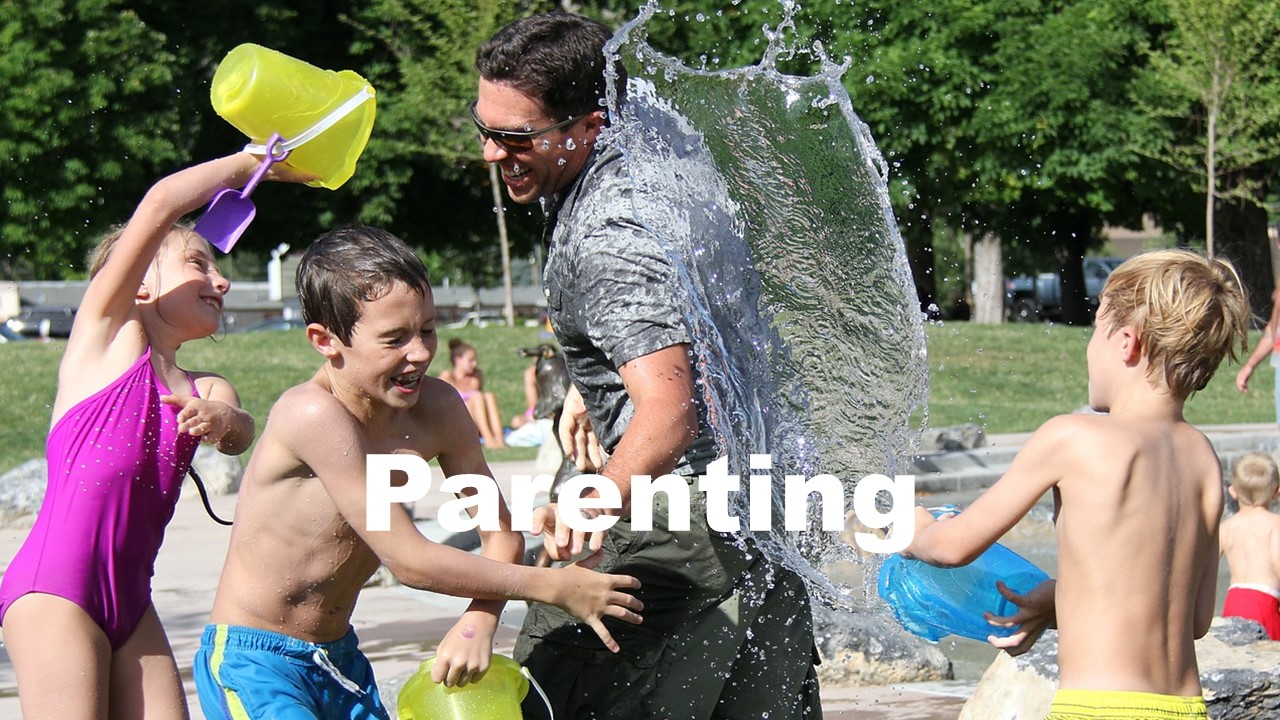
Parenting.

Parenting.
Photo courtesy of Pixabay.com

Humans have a significant design flaw.

If I had been the engineer working on the human design team I would have done it differently. Consider for a moment that we put our youngest most inexperienced humans in charge of keeping the species going. Wouldn’t you think we should have the oldest most experienced people in charge of bearing and raising the children? It is a wonder the human species survived.

Fertility is highest among the very young, teens and twenties. Neuroscience tells us that the frontal lobe of the brain is not fully formed until the mid-twenties. Couples get together, have children, and just about the time they get the process down and start to be credible parents they have passed the child-bearing prime and move to being grandparents. Wouldn’t it make more sense to have children late in life when you have the process of growing up figured out?

Most of the time young parents raise their kids exactly the way they were raised or exactly the opposite. So we keep repeating the same excess of behaviors that produced dysfunctional families.

We are told that if parents get it half right their kids will think they are great parents, but what do kids know? And clearly, way too many parents have children at a young age when they are unable to get even half the parent role right.

Did you ever get 100% on a test? Ten years later could you still get one hundred percent? I do pretty well on written tests most of the time. But I do not remember very many 100 %s. So If I only get part of what I am supposed to learn about being a parent and then only pass on half of that – well pretty soon the whole human tribe will be totally ignorant about child-rearing.

Consider the math, if we get it half right and then teach what we know and they get half of what we know and then they pass it on and the third person only gets half of that half we are now down to 12 ½%. Pretty soon at this rate, we are approaching zero. This is the learning curve we used to have on sex education when we avoided telling kids about that all together.

This is an especially large problem for children who grow up in dysfunctional families. Their parents did not know how to be good parents and these children when they become adults have so much trouble caring for themselves there is not much left to use in caring for offspring. But because of that trick of our genes, these uneducated adults reproduce first and then grow up second.

Now don’t get me wrong here – I am not pointing any fingers. I did the “experiment on the first one and see if I can figure this out” method of parenting, just like a lot of my generation.

A few hundred years back they had some mechanisms to reduce the number of children who were reproducing and the problems of young parents who had to learn their parenting skills while on the job of raising kids. First, they used to starve young people, feed the older workers first. And we had lots of childhood mortality. I am not suggesting that we should try this, just saying. Poor diets kept fertility low until people got older and reduced the number of really young people who were giving birth.

More importantly, than late-onset fertility and high death rates among children and young mothers was another factor called relatives. Not just grandparents but other more distant relatives. There was a time when everyone in a town knew each other and they were all connected. That was sometimes good when they supported the younger parents in being better parents and sometimes bad when a dysfunctional pattern, like child abuse or molestation, became common in a small community.

At this point, some of you readers will be saying aren’t people waiting longer to have children? Won’t that solve the problem?  Yes, some people are waiting until they are older to start families. That will help with the better parenting problem if and only if they had good teachers or if they have grown up and matured enough to have learned those how to be better parent lessons. Also, take note there are way too many cases of twelve and thirteen-year-old mothers and fathers. Sometimes these extra young people have help from older adults. In my state, that kind of help is called child sexual abuse and is both illegal and reportable. Not everywhere is it illegal though.

So what is the solution if your parents did not know how to be good enough parents or if you became a parent way too young? I suggest that it is never too late to take a parenting class or read a book on parenting. If you did not learn the lessons you should have learned from your parents you need to learn them and teach yourself first.

One first step in healing the pain of dysfunctional parenting is to learn what good parenting looks like and then to be a good nurturing parent for yourself. As you learn to care for yourself you will get better at caring for others.

Anyone know a good parenting book?

Staying connected with David Joel Miller

Two David Joel Miller Books are available now!

Bumps on the Road of Life. Whether you struggle with anxiety, depression, low motivation, or addiction, you can recover. Bumps on the Road of Life is the story of how people get off track and how to get your life out of the ditch.

Casino Robbery is a novel about a man with PTSD who must cope with his symptoms to solve a mystery and create a new life.

For these and my upcoming books; please visit my Amazon Author Page – David Joel Miller

Want the latest blog posts as they publish? Subscribe to this blog.

Want the latest on news from recoveryland, the field of counseling, my writing projects, speaking and teaching? Please sign up for my newsletter at – Newsletter. I promise not to share your email or to send you spam, and you can unsubscribe at any time.

For more about David Joel Miller and my work in the areas of mental health, substance abuse, and Co-occurring disorders see my Facebook author’s page, davidjoelmillerwriter. A list of books I have read and can recommend is over at Recommended Books. If you are in the Fresno California area, information about my private practice is at counselorfresno.com.

Health Improvement programs – what works what doesn’t

By David Joel Miller, MS, Licensed Therapist & Licensed Counselor.

Full ashtray

Smoking cigarettes.
Photo courtesy of Pixabay.com

Have you seen any shortage of weight loss programs?

Not from what I can see. Weight loss especially quick weight loss and get in shape fast programs are everywhere. In the vast literature of “self-improvement,” weight loss and fitness is king. Some programs work, at least a little. Many do not, especially in the long run.

SAMHSA recently looked at health improvement programs targeted towards the mentally ill. It is especially difficult for people on psychiatric meds to maintain or reduce their weight. Fitness is a goal that eludes many mentally ill. Psychiatric meds pack on the pounds or demolish the appetite and result in severe weight loss. There seems to be no middle ground.

So what worked and what did not?

Short-term improvement programs did not work!

The longer the program the better! We have all heard about quick weight loss programs. A very few really do take some weight off quickly in time for that reunion. The problem with quick weight loss programs is that the weight comes right back on a, d usually brings some of its friends. The net result – you weigh more after the crash diet than before.

For long-term permanent weight loss, even weight management to stabilize weight, six months was a minimum time. The longer the length of time in the program the more effective it was.

Wellness education by itself did not work!

Reading books and taking classes do not work unless coupled with a set of activates that produce the desired results. Having a guide or a partner who does the activities with you is much more effective than listening to a teacher tell you how to do something healthy and then having to do the activity on your own.

Diet alone rarely works.

Programs that include diet or improved nutrition were only effective when they also included an increase in activities. Conversely, an increase in activity is often offset when the increase in appetite which makes you hungry and you eat more. It takes both an increase in activity and a reduction in food intact to result in significant weight loss.

Interestingly though, people who increased their activity and exercised more had improved health even when they did not diet and lost no weight.

Conclusions about health improvement programs for the mentally ill.

While these are important ideas for everyone, they are especially important to those with mental illnesses. More than 42% of adults with serious mental illness are obese. Over 80 % of those with schizophrenia do not physically exercise despite the fact the anti-psychotics are notorious for causing weight gain. Research suggests that as little as a 5% weight loss improves health.

It is important to reiterate that more than half of all the cigarettes smoked in America are consumed by someone with a mental health or substance abuse disorder. There has been some research that suggests that nicotine is soothing to those with emotional problems. Anyone who has worked in the mental health field learns to identify the person with psychosis by the scent of tobacco even before they see the client. People with psychosis often are two and three packs per day smokers. Even if nicotine may have an effect on some of the brain’s receptors and make people with psychosis feel better I remain concerned about the poisonous effects of nicotine. Additionally, anything on fire is likely to cause damage to the body when sucked into the lungs.

A healthy lifestyle for someone with a mental illness should include not just weight loss but an improved activity level and other lifestyle changes that result in a healthier life. Those changes are more likely to be effective when the health improvement program includes others as active participants, continues over a long time frame, and involves exercise, diet, and improved lifestyle choices.

Staying connected with David Joel Miller

Seven David Joel Miller Books are available now!

My newest book is now available. It was my opportunity to try on a new genre. I’ve been working on this book for several years, but now seem like the right time to publish it.

Story Bureau.

Story Bureau is a thrilling Dystopian Post-Apocalyptic adventure in the Surviving the Apocalypse series.

Baldwin struggles to survive life in a post-apocalyptic world where the government controls everything.

As society collapses and his family gets plunged into poverty, Baldwin takes a job in the capital city, working for a government agency called the Story Bureau. He discovers the Story Bureau is not a benign news outlet but a sinister government plot to manipulate society.

Bumps on the Road of Life. Whether you struggle with anxiety, depression, low motivation, or addiction, you can recover. Bumps on the Road of Life is the story of how people get off track and how to get your life out of the ditch.

Dark Family Secrets: Doris wants to get her life back, but small-town prejudice could shatter her dreams.

Casino Robbery Arthur Mitchell escapes the trauma of watching his girlfriend die. But the killers know he’s a witness and want him dead.

Planned Accidents  The second Arthur Mitchell and Plutus mystery.

Letters from the Dead: The third in the Arthur Mitchell mystery series.

What would you do if you found a letter to a detective describing a crime and you knew the writer and detective were dead, and you could be next?

Sasquatch. Three things about us, you should know. One, we have seen the past. Two, we’re trapped there. Three, I don’t know if we’ll ever get back to our own time.

For these and my upcoming books; please visit my Author Page – David Joel Miller

Want the latest blog posts as they publish? Subscribe to this blog.

For videos, see: Counselorssoapbox YouTube Video Channel