
Being socially anxious may be a good thing.

Anxious woman

Social Anxiety
Photo courtesy of Pixabay.

Being socially anxious may be a good thing.

By David Joel Miller, MS, Licensed Therapist & Counselor.

Recently, many of the people I’ve been talking to report that they are suffering from social anxiety. They become so anxious that they are afraid to leave their house or be around others. Some of this may be a residual effect from what we were calling the Covid pandemic. But I think it goes deeper and has been around a lot longer than just our experience with the Covid virus.

Western culture emphasizes rugged individualism.

During my lifetime, there has been a lot of discussion about the value of being an individual, charting your own course, and being your own man or woman. There are certainly some advantages to individuality. I don’t think living in a world where all the songs sounded the same would be very enjoyable. Sometimes, it’s worthwhile to follow your own path and do your own thing, but I think there’s also something to be said in praise of the value of a certain level of conformity.

Social anxiety may well have started out as an evolutionary advantage.

Think about living in a preindustrial society with no modern weapons or houses. One person going out into the forest or jungle alone, even if they had a sharp stick, was at risk of being killed and eaten by a mountain lion or a tiger or bear. But a group of 10 men, all with spears, can fight off that predator. When you go hunting in a group, it’s better if they all like you. If you’re the one being attacked by the mountain lion, you don’t want the other saying, “I’m not going to risk my life for him!”

All societies have rules.

I hear many people saying that they shouldn’t have to follow certain rules, but I think they’re not conscious of how often they actually follow them and how offended they would be if others didn’t. Parents who are separated will tell me that the problem with their children is that when they visit their other parent, there are no rules. I find that hard to believe. The rules may be different in different places, but I think most people, children included, can learn that there are different rules in different settings.

Most people are pretty good about going in the bathroom to do their business. You don’t see people defecating and urinating next to their table at the restaurant. I think we all would agree that in most places, people don’t walk into stores without wearing clothing. The point here is that we all seem to, at some level, think certain rules should be understood without having to be posted and reiterated.

I get that many of these rules were learned early in childhood, but that’s what parents, the extended family, and your village or society are all for.

The need for social conformity is less than it was.

When you live in very small groups with other people, you have to follow the rules or risk their wrath. In this modern society, more and more people live alone, as childless couples, or with relatively few people in their homes. Aside from a few legal exceptions, what you do in the privacy of your own home is your business. But as soon as you leave that house, it’s a good idea not to offend too many people. Particularly the people who are called law enforcement.

So, how do you keep social anxiety in its proper place?

People need to develop social intelligence. Performers and politicians might refer to this as “reading the room.” Remember, there are certain fundamental rules; people won’t like you if you don’t follow them. An essential part of this skill is a characteristic we call emotional intelligence. If you spend some time learning and appreciating the variety of emotions people might be having, you’re more likely to interact with them in a positive way and less likely to provoke a conflict.

What’s the problem with social anxiety?

People with social anxiety go too far down the road of trying to please everyone rather than realizing what they need to do or the need to follow social conventions. You’re off base if you constantly worry about what others think of you and how they judge you. But you should ask yourself if you are doing the right or acceptable thing. Beyond that, whether other people like you or don’t like you, whether they think you’re wearing the correct brand of clothing or not, is probably none of your business.

Being different isn’t always safe.

Sometimes, being different sets you apart. Entertainers, celebrities, and influencers all want to be different and unique. But being too different can make other people anxious, and people who are high in anxiety or provoked can do some pretty dangerous things. While our society encourages people to be individuals, each one of those individuals should recognize that not everyone will like your brand of individuality. Social anxiety warns us that sometimes going against the crowd has its price.

How about you? Do you think of yourself as an individual? Are you highly in social anxiety and constantly worrying about what other people think about you? How do you balance your needs with the need to not provoke others? Let me know what you think about social anxiety’s disadvantages and benefits.

Does David Joel Miller see clients for counseling and coaching?

Yes, I do. I can see private pay clients if they live in California, where I am licensed. If you’re interested in information about that, please email me or use the contact me form.

Staying in touch with David Joel Miller.

Want the latest blog posts as they are published? Subscribe to this blog.

For more information about my writing journey, my books, and other creative activities, please subscribe to my blog at davidjoelmillerwriter.com

Seven David Joel Miller Books are available on Amazon now! And more are on the way.

For more about my books, please visit my Amazon Author Page – David Joel Miller

For information about my work in mental health, substance abuse, and having a happy life, please check out https://counselorssoapbox.com

For videos, see: Counselorssoapbox YouTube Video Channel
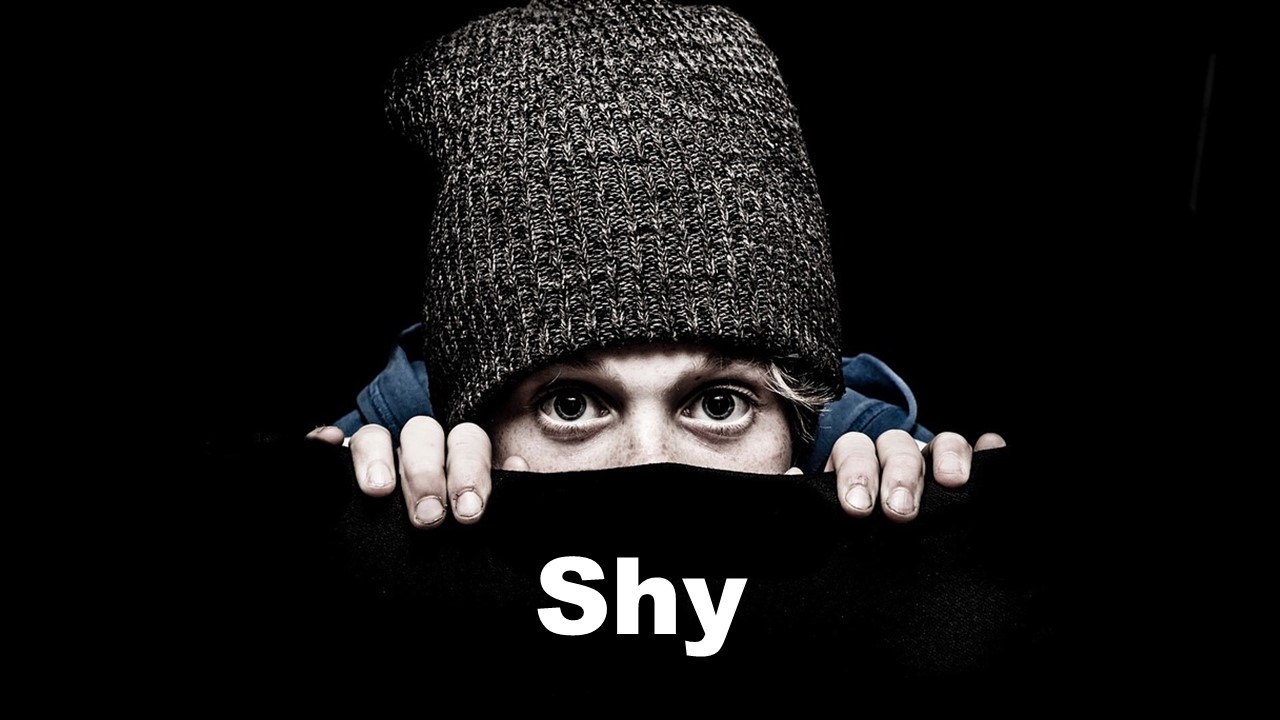
Ways to overcome shyness.

By David Joel Miller, MS, Licensed Therapist & Licensed Counselor.

Shy Person

Shyness.
Photo courtesy of Pixabay.com

Here are some suggestions to get past your shyness.

Shyness can keep you on the sidelines and out of life. Some people have been shy since early childhood and others are only shy in certain social situations. Whatever your personal issues with meeting or being around others these tips can help you get past that shyness and get into a fuller, richer life.

Some people have been shy since early childhood and others are only shy in certain social situations.

Whatever your personal issues with meeting or being around others these tips can help you get past that shyness and get into a fuller, richer life.

1. Positive self-talk – keep telling yourself you can.

Keep telling yourself that you can do this. Have a personal mantra or affirmation that helps you keep your fears at bay and maintains your focus on meeting others and making new friends. Repeat the self-affirmation silently to yourself. Concentration on your coping slogan takes your mind away from your fears.

Remember the children’s story about the train engine that kept saying it could. When you are repeating positive thoughts there is less room for self-doubt.

2. Slip into character.

Some performers, actors, musicians, and even public speakers, are shy people in their personal life. But when they get on stage they think of themselves as filling that role. When you think of yourself as a “rock star” there is no room for shyness.

Create a person for yourself. Become the leader of the group, the den mother, or some other role. When you realize that you are here to represent something it is easier to get into that role and be that outgoing extrovert. Pretend to be extroverted a few times and you will find yourself being transformed from shy to confident.

3. Take a friend along.

A friend is reassuring. You can introduce them and they introduce you. Having someone there as a cheerleader can give the confidence to tackle challenges you might otherwise find impossible.

Two people challenging their fears may be just the strength you have been needing to take that step towards being more outgoing.

4. Play to your strengths.

Engage in activities that make you feel comfortable. Do you like to garden? Join a garden society and you will have like-minded others to talk with. Like to read? Join a book club.

Make it a point to attend activities that you enjoy and feel good about engaging in.

5. Do your homework.

Going somewhere new? Try to learn something about the people you will be meeting and their interests. Attending a charity function? Look up the charity and see what they do and who the leaders of the group are.

Knowing a little about your host’s interest or the place you are going helps you feel more confident in conversation.

6. Ask lots of questions.

Feel embarrassed when talking about yourself? Ask the other people lots of questions about themselves. Most people are delighted to talk about themselves and if you give them the chance they will carry most of the conversation. Once the conversation ball starts to roll you can add value to the conversation as the chances present themselves.

7. Make technology your friend.

Stay connected in between face-to-face meetings by emailing or texting. With email, you get extra time to think about what you want to say and to proofread to get your message right.

Give yourself time to compose your reply. You are not required to engage in Ping-Pong emails.

8. Put your hand out and introduce yourself.

A simple Hi my name is — will go a long way towards breaking the ice. Be the first one to say hi and you will become the sought-after friend of others.

There are 8 short ideas to help you overcome your shyness in positive ways without having to resort to drugs, alcohol, or other negative behaviors. Which one of these suggestions will you try first?  Have you found other ways to overcome your shyness?

Staying connected with David Joel Miller

Seven David Joel Miller Books are available now!

My newest book is now available. It was my opportunity to try on a new genre. I’ve been working on this book for several years, but now seem like the right time to publish it.

Story Bureau.

Story Bureau is a thrilling Dystopian Post-Apocalyptic adventure in the Surviving the Apocalypse series.

Baldwin struggles to survive life in a post-apocalyptic world where the government controls everything.

As society collapses and his family gets plunged into poverty, Baldwin takes a job in the capital city, working for a government agency called the Story Bureau. He discovers the Story Bureau is not a benign news outlet but a sinister government plot to manipulate society.

Bumps on the Road of Life. Whether you struggle with anxiety, depression, low motivation, or addiction, you can recover. Bumps on the Road of Life is the story of how people get off track and how to get your life out of the ditch.

Dark Family Secrets: Doris wants to get her life back, but small-town prejudice could shatter her dreams.

Casino Robbery Arthur Mitchell escapes the trauma of watching his girlfriend die. But the killers know he’s a witness and want him dead.

Planned Accidents  The second Arthur Mitchell and Plutus mystery.

Letters from the Dead: The third in the Arthur Mitchell mystery series.

What would you do if you found a letter to a detective describing a crime and you knew the writer and detective were dead, and you could be next?

Sasquatch. Three things about us, you should know. One, we have seen the past. Two, we’re trapped there. Three, I don’t know if we’ll ever get back to our own time.

For these and my upcoming books; please visit my Author Page – David Joel Miller

Want the latest blog posts as they publish? Subscribe to this blog.

For videos, see: Counselorssoapbox YouTube Video Channel

Fear of Failure Prevents Success.

By David Joel Miller, MS, Licensed Therapist & Licensed Counselor.

Success or failure sign

Success or failure.
Photo courtesy of Pixabay.com

Fear of failure can paralyze you.

From an early age, humans learn to be afraid of failing. Fear of failing and its cousin fear of being evaluated by others has a survival value some of the time. People who are slow to jump in a flooding river or refrain from walking into a tiger’s cave may live longer. But in modern society, this tendency to avoid things we may fail at keeps us from trying things that could make us successful.

Fear of failure has been linked to Eating Disorders, Anxiety, Worry, and Depression. The fear of failing also causes some people to become antisocial, cheat, or use force. If success is so very important and failure is so unacceptable what might you be willing to do to avoid that failure and guarantee success?

Why does this Fear of Failure mechanism keep you from success?

Fear of failure triggers an automatic avoidance response. Avoid the problem you feel no pain. You also achieve no gain.

Fear of failure in this modern urban setting is more about avoiding shame than avoiding Tigers or falling off mountains. There is a strong connection for many among us between failing and feeling that we are failures. Fear of failure moves beyond being protective when you come to believe that if you try something and can’t accomplish it you are a failure as a person.

In this highly competitive world, some come to think that if you can’t be first place, world champion, then it is better to not try and set yourself up for failure and the accompanying shame. This fear of failure and the avoidance of effort cause you to avoid the activity and assure that you will forgo any possible successes.

Fear of failure affects us in three primary ways.

Fear of failure creates performance Anxiety.

Excessive fear of failure results in constant performance anxiety. By performance anxiety, I am not talking about activities in the bedroom, though that can happen also. Fear of failure prevents people from doing things that might be noticed at work, in school, on the playground, and in life.

The strongest fear known, worse than the fear of death, is public speaking. Most people would rather risk the tiger, swim the raging river than get up in front of an audience and talk about something.

Performance anxiety also affects athletes. Playing it safe does not win games or competitions. To win big you need to take big risks.  Coaches know you need the skills but you also need the heart to take those big risks and make those big plays.

Fear of failure magnify’s Social Anxiety

Fear of failure causes people to avoid social situations. Avoid the situation and the anxiety is reduced. Do this repeatedly and you become afraid to be around people. Avoidance behavior is self-reinforcing. At some point, you will become lonely and isolated. At this stage it is extremely difficult to engage in social activities and when you do you are likely to avoid anything that might be evaluated or bring you notice.

People with social anxiety become lonely even when in a crowd.

School Anxiety can be the result of fear of failure.

Think this is confined only to small children? Think again. Adults who attend a training will attempt to avoid answering questions, getting up in front of the group to talk, or any other activity that might result in their being evaluated.

People high in fear of failure find that their anxiety also interferes with their work life. It becomes fear of the workplace. Similar forms of fear of failure can interfere with many other roles in life and keep us from taking on an activity that might result in a possibility of success or failure. People who are high in Fear of Failure overvalue the cost of failure and underestimate the gains they might achieve from success.

There may be times when a dose of fear of failure is protective and keeps you from attempting things that could be harmful. Beginning swimmers should not attempt to swim the Atlantic Ocean. Most of the time the problem with our fear of failure is in the opposite direction. We have the volumes on our fear meter set way too high.

Is the knob on your fear of failure control turned up to the max?

In future posts, we will look at Fear of failure, what causes it, how it is holding us back, and how we could overcome those fears. Since the opinions and evaluations of others play such a large role in our fear of failure we need to look at the ways in which we are handling the evaluations of others.

We also need to look at the tricks we play on ourselves to avoid failing or thinking of ourselves as failures and how those tricks are holding us back.

We should look at how we evaluated ourselves and how we react when we are evaluated by others.  A classic example of this other evaluation and fear of failure is test anxiety. We will use test anxiety to examine how our fear of being evaluated by others is holding us back and how we might overcome that fear.

Here is wishing you a safe journey on your road to a happy life.

Staying connected with David Joel Miller

Seven David Joel Miller Books are available now!

My newest book is now available. It was my opportunity to try on a new genre. I’ve been working on this book for several years, but now seem like the right time to publish it.

Story Bureau.

Story Bureau is a thrilling Dystopian Post-Apocalyptic adventure in the Surviving the Apocalypse series.

Baldwin struggles to survive life in a post-apocalyptic world where the government controls everything.

As society collapses and his family gets plunged into poverty, Baldwin takes a job in the capital city, working for a government agency called the Story Bureau. He discovers the Story Bureau is not a benign news outlet but a sinister government plot to manipulate society.

Bumps on the Road of Life. Whether you struggle with anxiety, depression, low motivation, or addiction, you can recover. Bumps on the Road of Life is the story of how people get off track and how to get your life out of the ditch.

Dark Family Secrets: Doris wants to get her life back, but small-town prejudice could shatter her dreams.

Casino Robbery Arthur Mitchell escapes the trauma of watching his girlfriend die. But the killers know he’s a witness and want him dead.

Planned Accidents  The second Arthur Mitchell and Plutus mystery.

Letters from the Dead: The third in the Arthur Mitchell mystery series.

What would you do if you found a letter to a detective describing a crime and you knew the writer and detective were dead, and you could be next?

Sasquatch. Three things about us, you should know. One, we have seen the past. Two, we’re trapped there. Three, I don’t know if we’ll ever get back to our own time.

For these and my upcoming books; please visit my Author Page – David Joel Miller

Want the latest blog posts as they publish? Subscribe to this blog.

For videos, see: Counselorssoapbox YouTube Video Channel

.

Are creative people anti-social?

By David Joel Miller, MS, Licensed Therapist & Licensed Counselor.

Original

Creative.
Photo courtesy of Pixabay.com

Are highly creative people, writers, and artists, also anti-social?

Some occupations require lots of time working alone. Artists and writers, in particular, need to spend a lot of time by themselves. Do these occupations attract people who want to avoid people?

Is there a mental health problem or personality type that is over-represented in the creative fields?

From a counselor’s perspective, people who work alone or prefer to spend time by themselves are not anti-social. We reserve the label of anti-social as in Anti-social Personality Disorder for people who have no empathy for others. An anti-social person takes advantage of others because they don’t care. They are the ones who get the label of psychopath or sociopath.

People who prefer to avoid others may have some form of anxiety as in social phobia or they may have an attachment style that results in avoiding others but neither of those personality features involves harming others on purpose.

An avoidantly attached person does not expect others to meet their needs and seeks to get their needs met by solitary activities. A creative person might be avoidant and prefer to avoid all contact with people but that is likely to be rare. To be successful at a creative activity as an occupation they will need to go out and spend time marketing and promoting their efforts. Avoidant people are not likely to be willing to do that and are likely to believe that others will not like them anyway.

Someone with social phobia would like to be around others but because of fear, they are unable to be in situations that trigger their anxiety.

Anti-social personality, avoidant attachments, and high levels of anxiety are not conducive to the risk-taking the artistic person needs to genuinely create something novel.

But an artist and those of an artistic temperament are more likely to have one particular emotional issue. Many artists are moody.

One mental health issue does appear to be correlated with creative temperaments. Kay Redfield Jamison in her book “Touched with Fire” describes the connection between Bipolar disorder and creative endeavors. Those episodes of above-average energy and times when the person is “in the zone” fuel creativity. Uncontrolled these episodes can turn into manic or hypomanic episodes and result in the creative person losing control and engaging in risky dangerous behaviors.

There are plenty of stories of famous artistic and creative people who had periods of high energy sometimes coupled with risky behavior followed by periods of deep depression. The energetic periods may fuel creativity but in the full-on manic episodes, the person is no longer able to stay focused long enough to complete projects.

The artistic fields have had a disproportionate share of individuals with mood swings who became alcoholics, addicted, or suicidal. The really productive artists, in the long run, learn to manage their moods with or without help and they keep their emotions in bounds.

See also posts on Hyperthymic Temperament, Bipolar Disorder, and Mania.

Staying connected with David Joel Miller

Seven David Joel Miller Books are available now!

My newest book is now available. It was my opportunity to try on a new genre. I’ve been working on this book for several years, but now seem like the right time to publish it.

Story Bureau.

Story Bureau is a thrilling Dystopian Post-Apocalyptic adventure in the Surviving the Apocalypse series.

Baldwin struggles to survive life in a post-apocalyptic world where the government controls everything.

As society collapses and his family gets plunged into poverty, Baldwin takes a job in the capital city, working for a government agency called the Story Bureau. He discovers the Story Bureau is not a benign news outlet but a sinister government plot to manipulate society.

Bumps on the Road of Life. Whether you struggle with anxiety, depression, low motivation, or addiction, you can recover. Bumps on the Road of Life is the story of how people get off track and how to get your life out of the ditch.

Dark Family Secrets: Doris wants to get her life back, but small-town prejudice could shatter her dreams.

Casino Robbery Arthur Mitchell escapes the trauma of watching his girlfriend die. But the killers know he’s a witness and want him dead.

Planned Accidents  The second Arthur Mitchell and Plutus mystery.

Letters from the Dead: The third in the Arthur Mitchell mystery series.

What would you do if you found a letter to a detective describing a crime and you knew the writer and detective were dead, and you could be next?

Sasquatch. Three things about us, you should know. One, we have seen the past. Two, we’re trapped there. Three, I don’t know if we’ll ever get back to our own time.

For these and my upcoming books; please visit my Author Page – David Joel Miller

Want the latest blog posts as they publish? Subscribe to this blog.

For videos, see: Counselorssoapbox YouTube Video Channel