
Unhappy Relationships

By David Joel Miller, MS, Licensed Therapist & Licensed Counselor.

Couple not talking

Unhappy relationship.
Photo courtesy of Pixabay.com

The most important issues in our lives are our relationships.

Unhappy relationships bring more people to counseling and therapy than any other issue.  Relationship issues sent more people to psychiatric hospitals than all the other causes of emotional turmoil. That need for connection to other humans underlies all human activity. If having a good relationship is so important to a happy life, why is it such a difficult thing for us to do?

When we say relationship issues most people think first and sometimes only, about romantic, sexual relationships. Type a question about relationships into most any search engine and you will be taken forthwith to a dating site. As important as this relationship is to most of us, it is not the only or the most important relationship we might have. Many people rely on the romantic relationship and fail to develop another more important relationship – their connection with themselves.

Humans, like most vertebrates, begin life with our primary relationship being our relationship with our parents. Sometimes this is one parent sometimes two; sometimes the primary caregiver is a non-biological person. That first relationship sets the pattern for the rest of our relationships. We store a blueprint away in our brain and often we keep reproducing that first primary relationship in every human connection we have afterward. Just because that relationship is good or bad does not control the quality of all relationships afterward. We can learn new patterns of relating to others.

Our early years are spent developing relationships beyond that one close caregiver we are so dependant on. Children who have unreliable or impaired caregivers find it difficult to develop functional relationships with others in their lives. Their blueprints for life have smudges and missing lines where things they should have learned about relationships were left out. Sometimes the lines were drawn incorrectly such as when the primary caregiver abuses or neglects the child. In those situations, we may begin to think that things are normal and acceptable even when they are severely dysfunctional.

Even when the primary caregiver does a good job of meeting a child’s needs the person may get some of the lessons wrong. As a therapist I spend a lot of time helping people correct these blueprints, sort out the things they learned that are not so and we look for missing parts of that life blueprint, the lessons not learned.

Beyond the first lessons with that original caregiver, most of us learn by relating to others. The first five or so years are spent with close family, siblings, grandparents, aunts, uncles and other relations. Eventually, there will be relationships with non-relatives, friends, and neighbors.  Some of these relationships will be helpful, some will not.

During our school years, we might learn some lessons from teachers and other unrelated adults, most often we learn from peers. Those other kids our own age that were struggling to grow up and find their way in life taught us lessons even when they didn’t know the answers. Many of our likes and dislikes our habits and needs were formed at this stage. We rarely look back to examine the changes to the life blueprint during those years. Not until part of our structure collapses in divorce, addiction or a relationship failure do we have a reason to check our life blueprint.

The relationship most of us neglect is that one relationship which we should pay the most attention to – our relationship with ourselves. Wherever you go, whatever you do, you will be there. Do you like yourself? Would you want you for a best friend? Make friends with yourself. Spend time getting to know you. Learn to treat yourself the way you would want others to treat you. Become your own best friend.

So often when we are sad, depressed, or anxious we crave a good fulfilling relationship. Often we reach out for another human, thinking that if we just found that one person that could love us enough, then we would be healed. That seems to only work in fiction. Two sick people do not make for a healthy relationship. To have a healthy happy relationship you need two healthy people. So before you go looking for a partner to fill in the missing pieces of your soul consider first getting to know yourself and become your own best friend.

Having children for the sake of making you happy all too often results in short-term pleasure and long-term unhappiness. Sex and drugs are not a substitute for a happy inside. There are too many people who grew up in homes where their parent’s never learned to be happy and where they inherited the family blueprint for dysfunctional living, that constant search for something outside of yourself that will make you happy.

Before you begin your search for that one special person to fill your life, please work on the relationship with that one special person you already know – you.

Staying connected with David Joel Miller

Seven David Joel Miller Books are available now!

My newest book is now available. It was my opportunity to try on a new genre. I’ve been working on this book for several years, but now seem like the right time to publish it.

Story Bureau.

Story Bureau is a thrilling Dystopian Post-Apocalyptic adventure in the Surviving the Apocalypse series.

Baldwin struggles to survive life in a post-apocalyptic world where the government controls everything.

As society collapses and his family gets plunged into poverty, Baldwin takes a job in the capital city, working for a government agency called the Story Bureau. He discovers the Story Bureau is not a benign news outlet but a sinister government plot to manipulate society.

Bumps on the Road of Life. Whether you struggle with anxiety, depression, low motivation, or addiction, you can recover. Bumps on the Road of Life is the story of how people get off track and how to get your life out of the ditch.

Dark Family Secrets: Doris wants to get her life back, but small-town prejudice could shatter her dreams.

Casino Robbery Arthur Mitchell escapes the trauma of watching his girlfriend die. But the killers know he’s a witness and want him dead.

Planned Accidents  The second Arthur Mitchell and Plutus mystery.

Letters from the Dead: The third in the Arthur Mitchell mystery series.

What would you do if you found a letter to a detective describing a crime and you knew the writer and detective were dead, and you could be next?

Sasquatch. Three things about us, you should know. One, we have seen the past. Two, we’re trapped there. Three, I don’t know if we’ll ever get back to our own time.

For these and my upcoming books; please visit my Author Page – David Joel Miller

Want the latest blog posts as they publish? Subscribe to this blog.

For videos, see: Counselorssoapbox YouTube Video Channel

The ambulance at the corner

By David Joel Miller, MS, Licensed Therapist & Licensed Counselor.

Hospital emergency.

Ambulance.
Photo courtesy of Pixabay.

The ambulance at the corner.

There was an ambulance at the corner this morning. I almost missed it, but I had to stop for the light. I glanced over to see what they were doing. The light might change at any moment.

There was a homeless man I had seen at that corner before. The brick wall by the gas station shielded him from view. I saw his shopping cart on the sidewalk. The ambulance was parked just beyond. That nameless homeless person was motionless on his blanket, there on the sidewalk with the EMT’s all around.

There was a woman standing nearby holding the leash to her dog. She was staring at the homeless man, lying there so still. We don’t see a lot of homeless people in this part of town. Down on the south side, we see them, but not out north. Lately the homeless are coming farther north, or did he use to live here. Are people up north starting to be homeless also?

While I watched the paramedics rolled the man over. He didn’t seem to move. I wondered was he dead, was he unconscious? Maybe he was mentally ill. Most of the street people are mentally ill. Maybe he was a drug addict, lots of them are homeless. Maybe he was both mentally ill and homeless – or not.

A house near me is vacant. They lost it to foreclosure. This used to be a good neighborhood, middle class, and full of promise, now there are more for sale signs than residents. There are also lots of houses that sit empty, we all know they have been empty for a very long time, just the banks haven’t put the for sale signs, the “someone’s dreams died here” sign, on them yet.

Maybe that homeless man with the shopping cart was the man who used to live on the corner. His house went into foreclosure. Then his wife and kids left, gone to live with her parents. They said he drank a lot and then he was gone.

So I wondered who this unmoving man was by the corner. Why did he go to sleep on the sidewalk last night? Did he die of an overdose or of exposure? Was he just unconscious? They should try to revive him so he could – So he could what, come back to sleep behind the brick wall by the corner?

I have to hold on to hope. Somehow we will find a way to help those who are homeless, those who are addicted, those whose mental illness has taken them from family and friends.  But the hope seems fainter now, looking at that man lying on the sidewalk as I wonder what in his life went wrong.

It would be reassuring to think that being homeless and sleeping on the sidewalk only happens to bad people, people who deserve it. But I know from my own experiences that bad things sometimes happen to people who work hard and try their best. If only I could say he deserved his fate I might not feel so afraid and venerable.

Why do the homeless seem so old, so old and young? Living on the street ages you. I know that. And there are more seniors who can’t pay their bills now. Why didn’t someone help him?  But I know that there is less money now for any sort of help for people, less than we used to have. We needed the tax cuts for businesses to create jobs and now there is less money for people who don’t work.

Is all that stuff on my shopping list really that important? Do we really need more stuff? What does it say about me that I live in a society that appears to values things more than people? Did some abstract thing called a recession cause this or was it a bursting housing bubble that was the cause? Or did this happen because I and people like me stopped caring about other people? I wondered what I should do.

And then the light changed.

Staying connected with David Joel Miller

Seven David Joel Miller Books are available now!

My newest book is now available. It was my opportunity to try on a new genre. I’ve been working on this book for several years, but now seem like the right time to publish it.

Story Bureau.

Story Bureau is a thrilling Dystopian Post-Apocalyptic adventure in the Surviving the Apocalypse series.

Baldwin struggles to survive life in a post-apocalyptic world where the government controls everything.

As society collapses and his family gets plunged into poverty, Baldwin takes a job in the capital city, working for a government agency called the Story Bureau. He discovers the Story Bureau is not a benign news outlet but a sinister government plot to manipulate society.

Bumps on the Road of Life. Whether you struggle with anxiety, depression, low motivation, or addiction, you can recover. Bumps on the Road of Life is the story of how people get off track and how to get your life out of the ditch.

Dark Family Secrets: Doris wants to get her life back, but small-town prejudice could shatter her dreams.

Casino Robbery Arthur Mitchell escapes the trauma of watching his girlfriend die. But the killers know he’s a witness and want him dead.

Planned Accidents  The second Arthur Mitchell and Plutus mystery.

Letters from the Dead: The third in the Arthur Mitchell mystery series.

What would you do if you found a letter to a detective describing a crime and you knew the writer and detective were dead, and you could be next?

Sasquatch. Three things about us, you should know. One, we have seen the past. Two, we’re trapped there. Three, I don’t know if we’ll ever get back to our own time.

For these and my upcoming books; please visit my Author Page – David Joel Miller

Want the latest blog posts as they publish? Subscribe to this blog.

For videos, see: Counselorssoapbox YouTube Video Channel

Finding happiness or misery

Counselorssoapbox.com

By David Joel Miller, MS, Licensed Therapist & Licensed Counselor.

You get what you look for. Sounds simple, but this basic principle has a huge impact on how happy we are. Take two couples one happy and the other miserable – what is the difference?

Couple one, let’s call then Bob and Sue, for no particular reason. Bob complains that Sue nags him. She never likes the tie he wears. Nothing he ever does is good enough. Sue is sure that Bob doesn’t love her. He never wants to spend time with her. He is always too busy with his job and his studies for his night class to spend time with her. Sue says the only time Bob does things around the house is when she nags him, he always puts off taking the garbage out until the last possible moment. She has to keep at him because he will put off taking out the trash until bedtime if she doesn’t keep on him.

The couple next door, let’s call them Juan and Ann, again for no special reason. Juan says he is so happy in his relationship. Ann is always trying to be helpful. She wants him to be successful and look his best. She is so helpful; she even makes suggestions for which tie will make him look his best. Ann tells me she is so happy to be with Juan. He works so hard to provide for the family. He is even taking a night class to help improve their income. Juan is so helpful around the house, Ann says, sometimes she has to remind him because he is so busy, but he always gets the trash out before he goes to bed.

Now Bob and Sue are sure that their neighbors are very nosy, always minding other people’s business. When the family came to visit that old busybody across the street came over and demanded to know who was there. Sometimes that woman brings over food in an effort to get into the house and spy on them. They have had to tell the neighbors several times to mind their own business. This town is so hostile. The other day one of the people up the street followed Sue all over the grocery store.

Juan and Ann report they feel so safe in their neighborhood. They have a neighborhood watch. One time when Ann’s parents came for a visit, Mrs. Smith across the street came over to check who was going into their house. She almost called the police on Ann’s family. Mrs. Smith brought over a cake she had baked for the family to enjoy. Ann and Juan feel so safe knowing that the people on their street will keep an eye on their house when they are not home. It is such a friendly town. Last week they went shopping and ran into Mrs. Smith in the market. She was going one way and Ann was going the other, they must have run into her ten times that day. They had a good laugh that they just couldn’t stay away from each other.

Why is the experience of these two couples, who live just a few houses apart so different? One couple loves their town and their marriage and the other is miserable. Two important happy life principles are at work here. First, the happy couple has a happy positive belief about the way they are, the way the world is, and how the future will turn out. This illustrates the principle that beliefs about things, not the things themselves create our feelings. But no matter what you believe, life experiences will impact your beliefs and feelings. Both couples have a bias in their thinking.

We call this bias confirmatory bias. If you think your spouse is uncaring or lazy you will watch the things they do and pick out the things that confirm your belief as proof you were right. It is a natural human tendency to look for things that will make us right and to ignore or discard the things that might force us to change our minds.

Happy couples see things their partner does and interpret them as positive. Unhappy couples can find plenty of proof that their partner is unloving and uncaring. Now we know there are bad relationships and uncaring or dishonest people out there. But if you enter a relationship expecting your partner to make you happy they are likely to. If you go into a relationship with the expectation your partner will mistreat you then you will find lots of “proof” for that also.

Much of our news fits this pattern also. Two people hear the same economic report, one sees things in the report to say that the economy is improving; the other person sees things to prove that the economy is getting worse.  Political speeches and debates especially demonstrate this principle. If you are strongly in favor of a candidate you will think they made a great speech. If you dislike that same candidate you will find something in the speech to seize upon and “prove” that person is unfit for public office. If you are wrong about a candidate for office you can complain about them until the next election. If you live with someone it is a bigger problem.

Sometimes it pays to challenge those beliefs. Is your spouse really being uncaring or unloving or do you look for the faults and miss the positive things they really did do for you?

Staying connected with David Joel Miller

Seven David Joel Miller Books are available now!

My newest book is now available. It was my opportunity to try on a new genre. I’ve been working on this book for several years, but now seem like the right time to publish it.

Story Bureau.

Story Bureau is a thrilling Dystopian Post-Apocalyptic adventure in the Surviving the Apocalypse series.

Baldwin struggles to survive life in a post-apocalyptic world where the government controls everything.

As society collapses and his family gets plunged into poverty, Baldwin takes a job in the capital city, working for a government agency called the Story Bureau. He discovers the Story Bureau is not a benign news outlet but a sinister government plot to manipulate society.

Bumps on the Road of Life. Whether you struggle with anxiety, depression, low motivation, or addiction, you can recover. Bumps on the Road of Life is the story of how people get off track and how to get your life out of the ditch.

Dark Family Secrets: Doris wants to get her life back, but small-town prejudice could shatter her dreams.

Casino Robbery Arthur Mitchell escapes the trauma of watching his girlfriend die. But the killers know he’s a witness and want him dead.

Planned Accidents  The second Arthur Mitchell and Plutus mystery.

Letters from the Dead: The third in the Arthur Mitchell mystery series.

What would you do if you found a letter to a detective describing a crime and you knew the writer and detective were dead, and you could be next?

Sasquatch. Three things about us, you should know. One, we have seen the past. Two, we’re trapped there. Three, I don’t know if we’ll ever get back to our own time.

For these and my upcoming books; please visit my Author Page – David Joel Miller

Want the latest blog posts as they publish? Subscribe to this blog.

For videos, see: Counselorssoapbox YouTube Video Channel
Wall Street is crazy!

By David Joel Miller, MS, Licensed Therapist & Licensed Counselor.

Mental Health or Mental Illness

Mental Health or Mental Illness?
Photo courtesy of Pixabay.com

Have you noticed that Wall Street has gone crazy?

Not the prices or the up and down of the market, more the way they are talking. I used to think all the “loony tunes” were in Washington. Have they moved to Wall Street?

Have you noticed they keep stealing our words – depression, schizophrenia even bipolar have turned into market terms.

I noticed it the other day. I was looking for articles on Major Depressive Disorder. Every article I came up with was about the economy. Suddenly depression is about a slow economy and not about a mental illness. Who do they think they are fooling?

With the exception of the “Great Depression” of 1929 past economic slowdowns were not called depressions. Even that one got the term because of the widespread sadness in the country as a result of the economic slowdown.

I even got a nasty comment on my blog, which I did not approve thank you very much, from a broker who was upset that we called sadness – depression. He did not like the idea that people could be sad. Investments – yes. People – no.

I read about the “occupy movement.” I can understand why they might want to occupy some places. Anyone for occupying Hawaii? But really guys – why occupy Wall Street? Would you occupy a VD clinic? Aren’t you afraid of catching something while on Wall Street? Something for which there is no treatment?

Let me remind those financial types that business slowdowns used to be called “Commercial Revulsions.” Look it up on Wikipedia if you doubt me. The idea was that purchasers became repulsed by the goods offered for sale. If you have looked at some of the cheap, tacky stuff in your local “Walleye World Store” or the “Cheaper Than a Buck Place” you would know what I mean. Some of that stuff makes me sick. In fact, I got so “commercially revulsed” that I wanted to vomit.

After “Commercial Revulsion” some smart ad man went to calling these downturns “Panics” they had a whole bunch of “Panics” up until our financial leaders decided that having a biannual “Panic” might not be good for consumer confidence.

We called them recessions off and on but that designation got to be so watered down we were having annual rescissions every time some retailer did not make a profit projection. So this time around they decided to borrow some mental health terms to explain why so many people are out of work and sad. In therapy we call these problems “Adjustment Disorders,” so far Wall Street hasn’t stolen that name. They are not used to adjusting to anything that is not their way but give them time.

We also used to have lots of bubbles. Remember the South Sea Bubble? (See Wikipedia again.) I remember sales on Arizona swampland and Florida homesites that were underwater. Wait a minute did that just happen again? Is this a rerun? This time underwater means they owe more than the stuff is worth. Last time it meant there was seawater on your home site. Another way to fleece a –

They have also taken to calling some CEO’s and CFO’s schizophrenic because they can’t seem to make up their minds. There is more to schizophrenia than indecisiveness. There are auditory hallucinations and there are things we call negative symptoms. Come to think of it some of those Wall Street types must have been hearing voices all through the housing boom. And now they have started making me real negative. Still not sure they should get the diagnosis of schizophrenia though.

And when did bipolar get to mean moody? I wrote a post about that but still, some stock guy wants us to think that today’s up and down market price is a sign of bipolar.

Next week I expect to read about a stock with “Dissociative Identity Disorder” or a CEO who has an “attachment disorder.”

Could you Wall Street types leave our vocabulary alone?

Could it get any worse? I just e-searched for more depression articles. Our depression word has been hijacked by a group of meteorologists. There was a whole page of articles on “Tropical Depressions.” What is so sad about going to the tropics it would make a meteorologist depressed?

Until next time, safeguard your illness from theft and have the happiest life you can.

Staying connected with David Joel Miller

Seven David Joel Miller Books are available now!

My newest book is now available. It was my opportunity to try on a new genre. I’ve been working on this book for several years, but now seem like the right time to publish it.

Story Bureau.

Story Bureau is a thrilling Dystopian Post-Apocalyptic adventure in the Surviving the Apocalypse series.

Baldwin struggles to survive life in a post-apocalyptic world where the government controls everything.

As society collapses and his family gets plunged into poverty, Baldwin takes a job in the capital city, working for a government agency called the Story Bureau. He discovers the Story Bureau is not a benign news outlet but a sinister government plot to manipulate society.

Bumps on the Road of Life. Whether you struggle with anxiety, depression, low motivation, or addiction, you can recover. Bumps on the Road of Life is the story of how people get off track and how to get your life out of the ditch.

Dark Family Secrets: Doris wants to get her life back, but small-town prejudice could shatter her dreams.

Casino Robbery Arthur Mitchell escapes the trauma of watching his girlfriend die. But the killers know he’s a witness and want him dead.

Planned Accidents  The second Arthur Mitchell and Plutus mystery.

Letters from the Dead: The third in the Arthur Mitchell mystery series.

What would you do if you found a letter to a detective describing a crime and you knew the writer and detective were dead, and you could be next?

Sasquatch. Three things about us, you should know. One, we have seen the past. Two, we’re trapped there. Three, I don’t know if we’ll ever get back to our own time.

For these and my upcoming books; please visit my Author Page – David Joel Miller

Want the latest blog posts as they publish? Subscribe to this blog.

For videos, see: Counselorssoapbox YouTube Video Channel

.

Healthy relationships

By David Joel Miller, MS, Licensed Therapist & Licensed Counselor.

Couple

Relationship.
Photo courtesy of Pixabay.com

Searching for happiness.

Type into a search engine almost any term about happiness or relationships and you find a whole lot of links to dating sites right at the top. Those dot com places, you know the ones I mean, make it sound like the only relationship that matters is a romantic partner one, and if you don’t have one you are somehow incomplete and unhealthy.

Most of the articles on these sites are about how to attract a partner. How to do the right things say the right things and wear the right things to be desirable. The inference here is that if you just got someone to be your partner you would be happy. If selling sex wasn’t illegal in most places I think they would flat do that also. Some get awfully close to selling relationships. So with so many people hooking up for more or less time, why are so many people so unhappy? Is a romantic partner relationship really the only one that matters?

Why do so many people in unhappy marriages divorce and remarry, only to be unhappy again? Because they never learned that happiness was inside and unhappiness was everywhere. That does not mean that sometimes relationships need to end or that having had one bad relationship you should never try again. It does mean that you need to learn to be healthy and happy or you won’t be able to be in a healthy happy relationship. Two mentally unhealthy people do not make for a healthy relationship.

People with some pretty extreme disabilities can and do have great healthy relationships. Schizophrenics who have a supportive person living with them are about half as likely to end up back in the hospital. Just be sure you are together because you both can contribute to the relationship.

So where do you start to have a great relationship? I suggest first try getting to be your own best friend, which is not an excuse for self-centeredness. I often ask clients if they would want themselves as a friend. Clients with deep depression or lots of anxiety usually say no. In fact, I continue to be surprised by how many people would not want themselves for a best friend.

If you sell someone something you would not buy yourself we think you are a lot dishonest. So how could you possibly get someone to be your friend if you wouldn’t want to be a friend to that kind of person? Now please do not give up here and say it is hopeless. Lots of mothers bring in their children and want me to change them. People in unhappy relationships come in and want us to change their partner. How about doing the remodeling program on yourself first?

Can you believe there are people who have been married to not one but two or three alcoholics? After a lot of pain and suffering, they get out of their relationship. They decide to get back out there, they go out for a night on the town with some friends and they meet a new romantic interest. Then what happens? That person, the one they met in the bar, guess what? They turn out to be an alcoholic also.

Women who have been abused and men also, often find they get into a new relationship and that person is abusive. Why?

Because unless we take the time to look at ourselves we keep being attracted to the same dysfunctional types. If you keep hooking up with drug addicts, you either need to change whom you are attracted to or get yourself a drug addict with fifteen or twenty years clean and sober.

Think back to a time in your life you met a new friend. You wanted to know all about them. Didn’t you? Why is it that my clients can tell me all about their significant other and their kids and often their parents but they have no answers to questions about themselves?

Ever heard the saying that beauty is skin deep, but ugly goes all the way to the bone? Despite the fact that what is inside counts, far more than you may think, most people think that the way to be more attractive is to lose weight or change their look. Attractive people go through messy painful divorces also. Most women are surprised to find out that a happy smiling woman is a lot more attractive than an angry hostile one, regardless of their figure and their “look.”

Before I leave this topic, for now, I need to remind you that good relationships include the way in which you relate to your children, your parents, your boss, and sometimes even your ex.

The take away from this? Before you are likely to be happy in a romantic relationship you need to learn to be happy with yourself and then learn to be happy in those relationships with family and friends you already have. Only after you have learned to master these challenges are you likely to be successful at having a happy romantic relationship.

Staying connected with David Joel Miller

Seven David Joel Miller Books are available now!

My newest book is now available. It was my opportunity to try on a new genre. I’ve been working on this book for several years, but now seem like the right time to publish it.

Story Bureau.

Story Bureau is a thrilling Dystopian Post-Apocalyptic adventure in the Surviving the Apocalypse series.

Baldwin struggles to survive life in a post-apocalyptic world where the government controls everything.

As society collapses and his family gets plunged into poverty, Baldwin takes a job in the capital city, working for a government agency called the Story Bureau. He discovers the Story Bureau is not a benign news outlet but a sinister government plot to manipulate society.

Bumps on the Road of Life. Whether you struggle with anxiety, depression, low motivation, or addiction, you can recover. Bumps on the Road of Life is the story of how people get off track and how to get your life out of the ditch.

Dark Family Secrets: Doris wants to get her life back, but small-town prejudice could shatter her dreams.

Casino Robbery Arthur Mitchell escapes the trauma of watching his girlfriend die. But the killers know he’s a witness and want him dead.

Planned Accidents  The second Arthur Mitchell and Plutus mystery.

Letters from the Dead: The third in the Arthur Mitchell mystery series.

What would you do if you found a letter to a detective describing a crime and you knew the writer and detective were dead, and you could be next?

Sasquatch. Three things about us, you should know. One, we have seen the past. Two, we’re trapped there. Three, I don’t know if we’ll ever get back to our own time.

For these and my upcoming books; please visit my Author Page – David Joel Miller

Want the latest blog posts as they publish? Subscribe to this blog.

For videos, see: Counselorssoapbox YouTube Video Channel

Why does the doctor keep changing my meds?

By David Joel Miller, MS, Licensed Therapist & Licensed Counselor.

Drugs

Medications.
Photo courtesy of Pixabay.com

Why is med compliance important?

More than once in my career as a therapist I have been asked to talk with a client about a subject that professionals call “Medication compliance.” The doctor wants us to be sure that the client is taking the medication as prescribed. People respond differently to different medications. There are reasons why clients might not take meds as prescribed. There are excellent reasons why the doctor wants their patients to take meds as prescribed.

I can’t give you advice on meds or counseling here, this is a blog, not on-line treatment, but maybe I can provide some general information on the issue of meds and why the doctor might change them.

There are five principle steps I see doctors go through in the process of deciding what meds a client should take. I am sure doctors think about a lot more than these steps but let me walk you through this process. If this raises questions about your medication please talk with your healthcare provider.

This blog post is about med management from the professional’s viewpoint. Next time some thoughts about side effects and other reasons clients don’t take meds as prescribed.

A. The doctor needs to do a thorough initial assessment. Sometimes they ask questions that sound like they are irrelevant. The doctor has their reasons. They need to establish a working diagnosis. You wouldn’t want to be prescribed cancer treatment if you didn’t have cancer, would you? They also need to know what your symptoms are and their severity. You want them prescribing meds that have some chance of helping with your problems and they need to know what your problems are to be effective at this.

B. The doctor who prescribes your psych meds needs to know if you have any other health issues and they need to monitor you for other problems and side effects. More than half of all psychiatric meds are prescribed by primary care physicians who know your medical history. The more complicated situations are usually managed by specialized doctors called psychiatrists. They will probably want lab work before prescribing medication. If you have high blood pressure they may avoid a drug known to raise blood pressure. If you have type two diabetes your psychiatrist may avoid drugs known to raise blood sugar levels or cause weight gain. I say may, because sometimes your psychiatric symptoms may be so severe that the benefits of a med will outweigh the potential risks. If a doctor does this he will probably be monitoring the effects that drug has on you. Sometimes the doctor will order regular tests, such as blood tests, to make sure the drug is doing what it is supposed to do and is not causing other problems.

At this point, the doctor will “start” a patent on a med. This initial med may not be the final med you will end up on. The doctor may need to change your med. Some meds need to be started high and then they may be reduced. Other meds may have side effects that go away over time so the doctor might choose to start with a low dose and raise it over time.

So now you are on meds, the problem should be controlled and all is well, right? Probably not. A lot of clients report that at this point the doctor starts changing meds. Why? And what makes them make the changes they do? Most often the changing starts because the problem is not under control. Either the client reports the med is not working or there are other symptoms that are causing problems. So the doctor might do three things in this order.

1.  Increase the strength or dosage of the med the client is taking and or vary the time of day or number of doses. If the doctor feels the diagnosis is correct and that the med should be helping, the first option is usually to increase the dose. If there are side effects like being sleepy during the day or not sleeping at night the doctor may choose to have the client take the meds at a different time of day. Nightmares might be another reason to move the dose to the morning instead of the night. The doctor may try increasing the dose several times to see if more of the preferred med is going to work.

2. If one or several increases in dose don’t help the doctor may try switching meds. Many doctors have a preferred med. This may be one they studied in school or did research on. It also might be a med they have used a lot and gotten good results from. Since not everyone is the same sometimes this first choice med does not work or causes other problems so the doctor tries switching. After the med switch, they may have to increase the dose of the new med. They may need to repeat the switch and adjust the dose process several times to find one that works for this client. This is frustrating for the client. It might frustrate the doctor also. He wants to help the client and nothing seems to work. This might be the point where he asks the therapist to have a talk with the client and see if the client understands and is taking the med as prescribed. Let’s say the client understands, is willing and able to follow directions, but none of the meds have worked. What might a doctor do next?

3. The doctor might at this point decide to try several meds in combination. This is a tricky one. He needs to select multiple medications from all the ones available and adjust doses of multiple meds. This process may continue for a long time as new meds are added, doses are adjusted and some meds may be discontinued. After a while, a discontinued med might get added back if it looks like the client was better with that med than after it was discontinued. During the process of juggling multiple meds, it is very important that the client is following the directions, telling the doctor about any effects and side effects experienced and it is also important that the doctor is hearing what the client is telling the doctor about their med experience.

I hope that this blog post helps you understand some of the things a prescribing doctor might consider or do in the process of trying to find the med that will help their client.

You are welcome to post comments on your experiences with meds. Just remember that as a therapist, I can’t give you specific advice about meds or prescribe any.

Another time some thoughts on side effects and why clients aren’t always able to take meds as prescribed.

Staying connected with David Joel Miller

Seven David Joel Miller Books are available now!

My newest book is now available. It was my opportunity to try on a new genre. I’ve been working on this book for several years, but now seem like the right time to publish it.

Story Bureau.

Story Bureau is a thrilling Dystopian Post-Apocalyptic adventure in the Surviving the Apocalypse series.

Baldwin struggles to survive life in a post-apocalyptic world where the government controls everything.

As society collapses and his family gets plunged into poverty, Baldwin takes a job in the capital city, working for a government agency called the Story Bureau. He discovers the Story Bureau is not a benign news outlet but a sinister government plot to manipulate society.

Bumps on the Road of Life. Whether you struggle with anxiety, depression, low motivation, or addiction, you can recover. Bumps on the Road of Life is the story of how people get off track and how to get your life out of the ditch.

Dark Family Secrets: Doris wants to get her life back, but small-town prejudice could shatter her dreams.

Casino Robbery Arthur Mitchell escapes the trauma of watching his girlfriend die. But the killers know he’s a witness and want him dead.

Planned Accidents  The second Arthur Mitchell and Plutus mystery.

Letters from the Dead: The third in the Arthur Mitchell mystery series.

What would you do if you found a letter to a detective describing a crime and you knew the writer and detective were dead, and you could be next?

Sasquatch. Three things about us, you should know. One, we have seen the past. Two, we’re trapped there. Three, I don’t know if we’ll ever get back to our own time.

For these and my upcoming books; please visit my Author Page – David Joel Miller

Want the latest blog posts as they publish? Subscribe to this blog.

For videos, see: Counselorssoapbox YouTube Video Channel

Clear Values

By David Joel Miller, MS, Licensed Therapist & Licensed Counselor.

When you are struggling with life’s problems it is difficult to keep your priorities straight. People who have anxiety disorders find everything is so important they run from task to task with never a chance to rest. People with depression find any and all tasks overwhelming. Sometimes it is hard to take any action. Recovering people are often faced with the need to decide what is really important in their life. What things need to be kept and what things can be let go. We call this process “values clarification.”

“Values Clarification” is also an exercise that we sometimes run in group therapy. It goes something like this. Each member of the group is asked for two things that are important to them. We go around the group and everyone gets a chance to tell us about two things that are important in their life. I like to write this on a board or paper in front of the group as I go. Sometimes we get several things that seem almost the same and need to be lumped together. For example, one person may say my job and another says his career. I make a bigger category of employment.

These lists contain quite a variety of things. Some people nominate material items, a car, money, or a place to live. Other people list self-improvement things like education, sobriety, or achieving a life goal. Many people mention relationships, like with their wife, husband, or children. Some people include spiritual values like God or religion. And there are often nominations for global goods like peace, health, ending pollution, and saving endangered species.

Now I have found that the list I get varies a lot depending on the group involved in this exercise. People in a locked hospital because of psychosis are likely to mention basic needs of life, like food or a place to live. People in substance abuse treatment are more likely to mention things like sobriety and attending twelve-step meetings. They are also more likely to look at internal personal things as important like peace of mind and self-respect.

The next step in the process involves clarifying these values. Son and daughter might be combined to make children and so on. Each member of the group is then given three votes for items on our refined list. This requires them to vote for at least one thing they did not nominate. It also allows people to change their minds and vote for things that they did not think of before. In the process of voting a strange thing takes place.

The list has some items with a lot of votes and others with few or no votes. In almost every case I have ever done this, relationships, family, and friends rose to the top of the list. So did intangibles. Peace, happiness, sobriety, and security, which beat the heck out of money, cars, and pleasure most every time. In recovery, we find that the values we hold drive our actions. It is important to be clear about what really matters.

So if relationships and peace of mind are so important to us – why do so many people spend all their time and effort on making money and getting things?

What is important to you? What do you spend your time pursuing?  Care to comment and share what you value most?

Special thanks to Irene Aparicio, LCSW, an early supervisor in my career who taught me this exercise.

Till next time, David Joel Miller, LMFT, LPCC

Staying connected with David Joel Miller

Seven David Joel Miller Books are available now!

My newest book is now available. It was my opportunity to try on a new genre. I’ve been working on this book for several years, but now seem like the right time to publish it.

Story Bureau.

Story Bureau is a thrilling Dystopian Post-Apocalyptic adventure in the Surviving the Apocalypse series.

Baldwin struggles to survive life in a post-apocalyptic world where the government controls everything.

As society collapses and his family gets plunged into poverty, Baldwin takes a job in the capital city, working for a government agency called the Story Bureau. He discovers the Story Bureau is not a benign news outlet but a sinister government plot to manipulate society.

Bumps on the Road of Life. Whether you struggle with anxiety, depression, low motivation, or addiction, you can recover. Bumps on the Road of Life is the story of how people get off track and how to get your life out of the ditch.

Dark Family Secrets: Doris wants to get her life back, but small-town prejudice could shatter her dreams.

Casino Robbery Arthur Mitchell escapes the trauma of watching his girlfriend die. But the killers know he’s a witness and want him dead.

Planned Accidents  The second Arthur Mitchell and Plutus mystery.

Letters from the Dead: The third in the Arthur Mitchell mystery series.

What would you do if you found a letter to a detective describing a crime and you knew the writer and detective were dead, and you could be next?

Sasquatch. Three things about us, you should know. One, we have seen the past. Two, we’re trapped there. Three, I don’t know if we’ll ever get back to our own time.

For these and my upcoming books; please visit my Author Page – David Joel Miller

Want the latest blog posts as they publish? Subscribe to this blog.

For videos, see: Counselorssoapbox YouTube Video Channel

Stages of change – Late Action

By David Joel Miller, MS, Licensed Therapist & Licensed Counselor.

Change

Change.
Photo courtesy of Pixabay.com

Late Action – The change accelerates.

Last time we talked about how I might be full of enthusiasm as my self-improvement program gets going. In the weight loss example, I begin to exercise and maybe even get interested in nutrition and diet. Are deep-fried Twinkies a healthy diet? The diet guru says no. I eat low-fat and lots of greens. I hate greens but I eat them anyway. My efforts at change are taking shape and encouraged by my own persistence I may even expand my efforts.

On days when I can’t get to the gym, workdays, I start walking on my lunch hour. It is a mile around the park. If I walk fast I can make two trips and eat during my lunch period. I discover that if I bring a healthy lunch, a sandwich, and some low-fat yogurt, and I walk around the park fast, some days I lose weight. Even if I don’t actually lose weight, at least those days I do not gain any more. At this point, the intensity of my workouts is increasing. I am really getting into this.

In substance abuse recovery terms, the person involved may not only be attending meetings, but they also have a regular home group they go to every week, maybe even a fellowship they attend every night. Some people “get into service” meaning they make coffee, take out the trash, and so on. We get trainers, sponsors, and a support system. At this point, my change is beginning to be something I tell people about.

For people who have an emotional problem, like depression or anxiety, their recovery action might be seeing their therapist on a regular basis, improving self-care, or journaling. There is a huge connection between emotional issues and eating problems. One of the key issues a professional looks for in making a mental health diagnosis is changes in eating and sleep. Binge eating, overeating or not being able to eat, as well as sleeping too much or too little are all symptoms of problems. They can also be causes. More about that mind-body connection and the relationship between sleep, eating, and other life problems in a future blog.

So in late action, I am getting somewhere on my self-change program. Losing a few pounds, not drinking or drugging and I am no longer so depressed I don’t want to get out of bed. Everything should be going fine. Right?

Then what happens? Why do so many people successfully make a change only to return to the place they were before? Why do most weight loss programs, diet, and exercise, end in putting on more pounds than we lost? Why do so many people get a thirty-day sober chip only to drink again? And how is it that depression and anxiety return after a period of time?

I start wondering, am I fixed? Do I have to give up those quadruple thick burgers with the pound of fries? How long will I need to take these psych meds? Can’t I just have a donut or a glass of wine? What kind of wine goes best with donuts? My mind starts looking for ways out of the change process.

For substance abuse, we call this relapse. For depression or anxiety, we are starting to think in those terms also. For weight loss programs the part that we don’t like to talk about is why after losing twenty pounds, do I put it all back on and then some. Every time I have been on a diet I have needed to get new larger clothes.

This is the point where people start talking to us about maintenance plans.  You mean I can’t just crash diet off ten pounds and then I will be able to eat like other people? Can’t you AA folks just teach me to control my drinking? So my depression is gone. I will never feel that way again. Time to get back to the way things were before my self-improvement program. So next time let’s talk about putting the weight back on, the relapse, and the return of emotional problems.

Other posts on this topic can be found at Pre-contemplation, Contemplation, Preparation, Early Action, Late Action, Maintenance, relapse, recovery, triggers, support system, more on support systems, Resiliency

Staying connected with David Joel Miller

Seven David Joel Miller Books are available now!

My newest book is now available. It was my opportunity to try on a new genre. I’ve been working on this book for several years, but now seem like the right time to publish it.

Story Bureau.

Story Bureau is a thrilling Dystopian Post-Apocalyptic adventure in the Surviving the Apocalypse series.

Baldwin struggles to survive life in a post-apocalyptic world where the government controls everything.

As society collapses and his family gets plunged into poverty, Baldwin takes a job in the capital city, working for a government agency called the Story Bureau. He discovers the Story Bureau is not a benign news outlet but a sinister government plot to manipulate society.

Bumps on the Road of Life. Whether you struggle with anxiety, depression, low motivation, or addiction, you can recover. Bumps on the Road of Life is the story of how people get off track and how to get your life out of the ditch.

Dark Family Secrets: Doris wants to get her life back, but small-town prejudice could shatter her dreams.

Casino Robbery Arthur Mitchell escapes the trauma of watching his girlfriend die. But the killers know he’s a witness and want him dead.

Planned Accidents  The second Arthur Mitchell and Plutus mystery.

Letters from the Dead: The third in the Arthur Mitchell mystery series.

What would you do if you found a letter to a detective describing a crime and you knew the writer and detective were dead, and you could be next?

Sasquatch. Three things about us, you should know. One, we have seen the past. Two, we’re trapped there. Three, I don’t know if we’ll ever get back to our own time.

For these and my upcoming books; please visit my Author Page – David Joel Miller

Want the latest blog posts as they publish? Subscribe to this blog.

For videos, see: Counselorssoapbox YouTube Video Channel

Why your child won’t behave

By David Joel Miller, MS, Licensed Therapist & Licensed Counselor.

Sad child

Sad.
Photo courtesy of Pixabay.com

Your child misbehaves.

The number one complaint that brings parents and children to most child mental health clinics is the complaint “my kid won’t behave, won’t mind, won’t do what I tell him to, or some variation of this theme. This is so common a complaint that I am tempted to tell a lot of families “Of course he won’t mind you, he is a child and you are his parent.” But that doesn’t solve the problem, and parents, most of the time, want their children to mind.

The occasional parent who could care less if their child behaved – well those parents come in too, referred by the school or the police. The symptom checklist almost always includes things like lies, steals, argues with adults, hits, and so on. Usually, the parent wants us to find a way to get their child to behave. Sometimes they include in the symptoms “does not listen to adults, does not pay attention to what he is doing.” This could be ADHD, sometimes it is, but most of the time, the truth be told, the child is ignoring the adult. So what do most parents do about this situation and what should they do?

Children rarely grow out of bad behavior.

Lots of parents with poorly behaved preschoolers take the obvious path and do nothing. Their thinking is that the child will grow out of bad behavior. They often do grow out of it – the question is which way do they grow? Uncorrected, undisciplined, (read this as untrained not as unpunished) they grow out of it by turning into something worse, bossy disrespectful kids who tell the parents what to do. Why is it the universal nature of things for so many kids to grow disrespectful as they get older?

On simple reason for this issue is that growth in and of its self creates conflict.  The baby who can’t walk does not get into very many things, the toddler does. As children grow up they try out new things, sometimes parents like the things their child tries, but other times the child does something really dangerous or irritating. Now when the kid does something wrong there are a few ways this can go. The worst one is for the parent to do nothing, give the child the impression that whatever they do is OK with you and you could care less. If you don’t care about what your child does why should she?

Throughout the child’s life, maybe the parent’s also, the child always wants to do things they are not yet old enough or ready enough to do. Their urges are always way out in front of their skill level. Very young kids don’t get it when you tell them “don’t do that” you need to get up and make sure they stop doing that.

Your relationship with the child matters.

One important determinant of how well-behaved your child will be is how close you are to each other. In technical terms, we call this attachment. The time to start being close to your children is when they are very young. If you have a close relationship with your infant or toddler they are much more likely to want to obey and please you when they get older. Don’t worry about spoiling your child. Just because you show love and caring will not make your child spoiled. The better the parent-child relationship is the easier discipline will be.

Even if you and your child did not attach as closely as you might now wish don’t give up. One way to improve the parent-child bond is to play with your children. Some parents got the idea that playing was a time-waster that only children got to do. That is wrong. Some form of play and fun is good for humans regardless of age. Play is valuable, especially playing games with rules because it teaches the child the ability to learn rules. Rules change from game to game and they also change depending on where you are and your role in life. Kids who are good at learning new games appear to be good at learning to adapt to new situations.

Separating is natural.

Most kids will go through periods when they push their parents away. Sometimes they need to define who they are as a person separate from their parents. Other times they feel the need to align with friends and reduce their involvement with the parents. Don’t let these episodes of pushing you away be an end to your relationship. Try to stay connected and watch for a time when your child shows an interest in reconnecting.

Now some children are more resistant to discipline than others. Sometimes the parents do everything they can, play with their child, work on good attachment, praise them for successes, and still, there are discipline problems. At that point, parents turn to professionals and the professionals recommend some form of behavioral modification.

Many people misunderstand behavioral modification. They have only two tools, rewards and punishments. So there is a temptation for the rewards to turn into outright bribes. And the punishments get increasingly stringent, often to the point of abuse. Behavioral modification has lots of techniques beyond the stick and the carrot.

In future blog posts, we will talk more about modifying behavior, your child’s and your own. I also want to talk some more about recovery and resiliency. This brings us right up to the current moment.

Soon it will be New Year and lots of people will be making resolutions. How do you make resolutions you will be able to keep? How do you avoid making impossible to keep resolutions? Before we can talk about changing our children we need to talk about how we change ourselves. How does that process of change work? Stay tuned for more on changing to have a happy, resilient life.

Staying connected with David Joel Miller

Seven David Joel Miller Books are available now!

My newest book is now available. It was my opportunity to try on a new genre. I’ve been working on this book for several years, but now seem like the right time to publish it.

Story Bureau.

Story Bureau is a thrilling Dystopian Post-Apocalyptic adventure in the Surviving the Apocalypse series.

Baldwin struggles to survive life in a post-apocalyptic world where the government controls everything.

As society collapses and his family gets plunged into poverty, Baldwin takes a job in the capital city, working for a government agency called the Story Bureau. He discovers the Story Bureau is not a benign news outlet but a sinister government plot to manipulate society.

Bumps on the Road of Life. Whether you struggle with anxiety, depression, low motivation, or addiction, you can recover. Bumps on the Road of Life is the story of how people get off track and how to get your life out of the ditch.

Dark Family Secrets: Doris wants to get her life back, but small-town prejudice could shatter her dreams.

Casino Robbery Arthur Mitchell escapes the trauma of watching his girlfriend die. But the killers know he’s a witness and want him dead.

Planned Accidents  The second Arthur Mitchell and Plutus mystery.

Letters from the Dead: The third in the Arthur Mitchell mystery series.

What would you do if you found a letter to a detective describing a crime and you knew the writer and detective were dead, and you could be next?

Sasquatch. Three things about us, you should know. One, we have seen the past. Two, we’re trapped there. Three, I don’t know if we’ll ever get back to our own time.

For these and my upcoming books; please visit my Author Page – David Joel Miller

Want the latest blog posts as they publish? Subscribe to this blog.

For videos, see: Counselorssoapbox YouTube Video Channel
NO, NO, NO – Learning NO!

By David Joel Miller, MS, Licensed Therapist & Licensed Counselor.

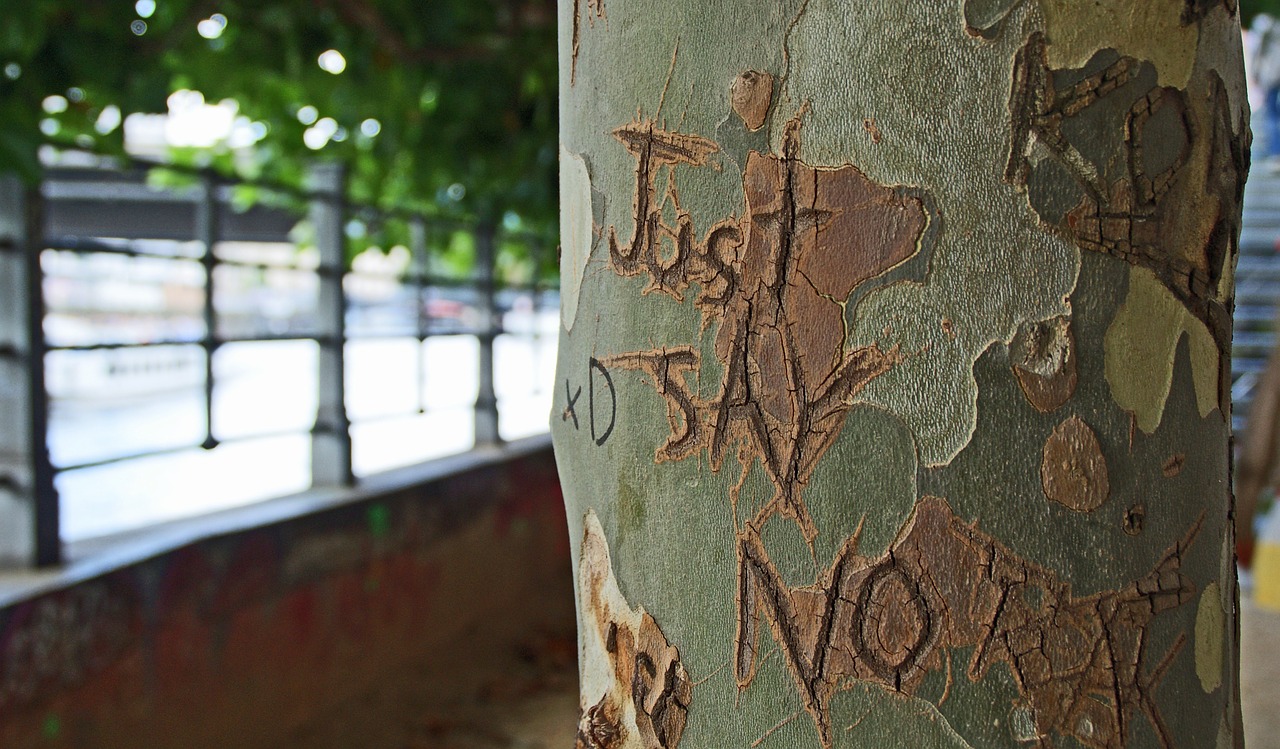
Tree with just say no

Just say no.

Saying No.

Despite its short size the word NO is one of the most difficult words in the English language to understand. Ask any school teacher and they would swear that most of their students had never heard the word before. Parents spend the first couple of years of their child’s life trying to teach the child the meaning of the word NO. Then they spend the next few decades wishing they had never taught the child that word. Aside from the obvious benefit of stopping a child’s unwanted behavior, are there any reasons a parent should ever teach their child NO? If they should teach the child this word, are there any rules to stop the child from practicing this new word on their parents?

Some parents avoid using the word – NO, altogether. This word is taboo in their house. You can spot their children in any mall in America. They seem to have heard that we are not supposed to say the “N” word anymore. Do you think people are getting confused by this? Some people seem to have no problem teaching their children the other N-word but they forget to teach them NO. There is nothing worse than an adult with a limited vocabulary. Make sure NO is in your child’s lexicon.

Parents are forewarned – you have to say NO to your child so they can say NO also. Parents don’t often like it when kids say NO to things the parents have told them to do. We expect them to say NO to negative things like drugs and dangerous friends later on in life. So yes, they need to know the NO word, and what it means. Please, parents, don’t leave this task to the child’s teacher. By then your child is in trouble, and they probably will find it much harder to learn NO in a jail cell than in your home.

So teach them the No word. But don’t stop there. They will need to practice using this word. At first, they will get this vocabulary lesson wrong. They will think the NO word means the parent shouldn’t do something or that they don’t have to do what parents said. Encourage them to say NO to themselves. “No, I shouldn’t do that.” Learning to say NO to themselves helps them establish self-control.  But learning NO won’t be enough.

You also need to teach your child YES. If everything they ask for or say is greeted with a NO they become negative people or worse yet they start ignoring you when you say NO. No is meaningless without YES. Just for the record very young kids develop parental deafness if you say NO too often. So expand the vocabulary lesson. Try “don’t do that,” “that is dangerous,” “stop” and other synonyms. And try other languages.

Now by other languages, we are not talking German or French, but you could try that if you want. Most parents, mothers, in particular, use nonverbal language. In mommy speak this is called “the look.” You can also communicate the same message using “the voice.” Rather than yelling ever louder, there is a limit to how loud you can go – try talking in a – slow – low tone of voice. Most kids quickly get the idea that “the voice” means they are about to get in deep trouble.

A well-connected child, one who got praised for pleasing their parents would rather get a spanking than “the look” or “the voice.” So much the better, you get your point across and save your hand and the visit from the child protective services folks.

On that subject, some parents substitute spankings for teaching their child the – NO word. This is not a good idea. What you teach your child is not the word and the idea of “NO” but the idea of “to get what you want hit.” A teenager can hit really hard, as parents who have mistakenly thought that hitting could change behavior have learned. Teach them the “NO” word.  It is less painful all around.

One caution about saying “NO,” too often or too loudly. This word is like a flashlight; use it a little and it sheds some light on the subject, leave it in use too long and it stops working. Use NO only when it is really needed and use substitutes often. Other options with young children are “it will make you sick” or “you will poke your eye out.”

Some behavior books like Sears and Sears in The Discipline Book relate all this teaching of NO to very young children. You would think that it would be harder to teach it to young kids and it should get easier as they get older. That would be so wrong. For some reason two and three-year-olds pick up the word NO quickly. By thirteen most kids have lost the ability to learn that word altogether. So start young but don’t give up. With older kids, you may need some other techniques to convince them NO means NO. Teenage girls especially need to learn this, otherwise, how will they be able to teach it to their boyfriends?

So here is hoping that your child will be a vocabulary expert, knowing and using the word “NO” and all its synonyms correctly. More to come on changing kid’s behavior, resiliency, and recovery.

Staying connected with David Joel Miller

Seven David Joel Miller Books are available now!

My newest book is now available. It was my opportunity to try on a new genre. I’ve been working on this book for several years, but now seem like the right time to publish it.

Story Bureau.

Story Bureau is a thrilling Dystopian Post-Apocalyptic adventure in the Surviving the Apocalypse series.

Baldwin struggles to survive life in a post-apocalyptic world where the government controls everything.

As society collapses and his family gets plunged into poverty, Baldwin takes a job in the capital city, working for a government agency called the Story Bureau. He discovers the Story Bureau is not a benign news outlet but a sinister government plot to manipulate society.

Bumps on the Road of Life. Whether you struggle with anxiety, depression, low motivation, or addiction, you can recover. Bumps on the Road of Life is the story of how people get off track and how to get your life out of the ditch.

Dark Family Secrets: Doris wants to get her life back, but small-town prejudice could shatter her dreams.

Casino Robbery Arthur Mitchell escapes the trauma of watching his girlfriend die. But the killers know he’s a witness and want him dead.

Planned Accidents  The second Arthur Mitchell and Plutus mystery.

Letters from the Dead: The third in the Arthur Mitchell mystery series.

What would you do if you found a letter to a detective describing a crime and you knew the writer and detective were dead, and you could be next?

Sasquatch. Three things about us, you should know. One, we have seen the past. Two, we’re trapped there. Three, I don’t know if we’ll ever get back to our own time.

For these and my upcoming books; please visit my Author Page – David Joel Miller

Want the latest blog posts as they publish? Subscribe to this blog.

For videos, see: Counselorssoapbox YouTube Video Channel