
What is Disruptive Mood Dysregulation Disorder?

By David Joel Miller, MS, Licensed Therapist & Licensed Counselor.

What is Disruptive Mood Dysregulation Disorder?
Photo courtesy of Pixabay.com

Maybe that child does not have Bipolar Disorder?

Disruptive Mood Dysregulation Disorder F34.8 was added to the new DSM-5 (Diagnostic and Statistical Manual of Mental Disorders) partially because way too many children were getting diagnoses of Bipolar Disorder. Most of these children grew up and never had an episode of mania or hypomania, the one thing that is required for a Bipolar Diagnosis.

The research supports the idea that a particular type of childhood depression was not getting the treatment it deserved. As a result, a lot of children were getting diagnoses they should not have had. Bipolar is only one of these possible incorrect diagnoses.

Some of the prominent symptoms of Disruptive Mood Dysregulation Disorder (DMDD) are temper tantrums and chronic irritability. These symptoms are quite different from the pressured uncontrollable behavior seen in Bipolar. DMDD has also been misdiagnosed as several other psychiatric disorders in the past.

One reason this has been getting noticed is that children who have a particular group of symptoms now recognized as DMDD rarely grow up to have Bipolar Disorder or behavioral disorders. What they develop as they grow are significant levels of depression and anxiety.

Disruptive Mood Dysregulation Disorder (DMDD) is similar to depression.

DMDD shares some characteristics with other forms of Depression. In both DMDD and the other depressions, there are mood issues, sadness, feeling empty, or being chronically irritable. These mood issues result in changes to the body, physical symptoms, as well as changes in thinking and behavior. The result is that the person with DMDD or depression can’t function well even when they want to. DMDD is now found in the DSM chapter on depression. For many with adult depression, their issues all started in childhood with DMDD.

What are the symptoms of Disruptive Mood Dysregulation Disorder (DMDD?)

Disruptive Mood Dysregulation Disorder (DMDD) results in temper tantrums.

Children with Disruptive Mood Dysregulation can’t respond to frustration appropriately. The result of this lack of frustration tolerance is frequent temper tantrums or outbursts. These outbursts may be expressed verbally, or behaviorally. The defining characteristic of these temper outbursts is that they are excessive for the child’s developmental stage.

Even when this child is not having temper tantrums they are almost always in an angry or irritable mood. This angry irritable mood should be something that others can readily see by observing the child.

Age of onset of Disruptive Mood Dysregulation Disorder (DMDD.)

DMDD is only diagnosed if the symptoms first appear between the age of 6 and 18. The expectation is that the symptoms of depression seen with DMDD are inconsistent with the person’s developmental level. This is an issue of not being able to regulate your emotions.

Before age six we expect young or school-age children to have difficulty regulating emotions and to react with sadness, irritability, or temper tantrums when frustrated. Young children may become frustrated and not able to exercise self-control no matter what the encouragement or punishment they receive.

Even if this disorder does not get recognized and diagnosed until later teen years the child must have had these symptoms before age ten. This separates DMDD from things that may be typical of adolescents during the teenage years.

Frequency and duration of Disruptive Mood Dysregulation Disorder (DMDD.)

On average, a child with DMDD should be having three or more episodes of mood dysregulation per week. This separates out the child who has occasional difficulties in response to a stressor from those who just can’t regulate emotions and are triggered more easily than they should be given their age.

These temper outbursts and mood dysregulation should go on most of the time for a year or more. This is no passing phase. Even if there are brief periods when the irritable angry mood is not present these periods of better mood should not last for more than three months.

Mood dysregulation happens in more than one place.

For us to think this child’s issue is a disorder we would expect the symptoms to appear in more than one setting, school, home, organized activates, and so forth. In at least one of these settings, probably more, the outbursts are expected to be severe.

If there is mania it is not Disruptive Mood Dysregulation Disorder (DMDD.)

For a small group of children, there will be symptoms of mania or hypomania. If that is present then yes Bipolar Disorder is more appropriate and they are likely to develop more severe bipolar symptoms over time. Early treatment for childhood Bipolar Disorder can reduce the severity and impact of the disease but only if we are getting the diagnosis correctly.

One other difference between Disruptive Mood Dysregulation Disorder (DMDD) and Bipolar is the way symptoms fluctuate. DMDD fluctuates in response to frustration. Bipolar symptoms come and go as a function of time.

Other Disruptive Mood Dysregulation Disorder (DMDD) issues.

DMDD has a lot of co-morbidity with other disorders. Children with DMDD are at increased risk of abusing a substance and developing a substance use disorder (SUD.) And yes, we see SUD in elementary school children.

Because girls tend to internalize problems, while boys externalize, there is likely to be a bias in the diagnosis of Disruptive Mood Dysregulation Disorder (DMDD.) Only time will tell if this turns out to be another label for young boys.

Symptoms of Disruptive Mood Dysregulation Disorder (DMDD) are likely to change as the child grows and matures. It will be interesting to see if children who receive the DMDD diagnosis go on to experience Major Depression or some other adult mental health issues. Hopefully, treatment for this disorder while the child is young can prevent lifelong problems.

As with the other things we are calling a mental illness DMDD needs to interfere with the child’s ability to go to school, their relationships, and enjoyable activities or cause them personal distress. Otherwise, they may have the issues but not get the diagnoses. If the only time this happens is when under the influence of drugs or medicines or because of some other physical or medical problem these symptoms need to be more than the situation would warrant. Other issues may need treating first, then if the child still has symptoms they could get this diagnosis.

FYI These “What is” sometimes “What are” posts are my efforts to explain terms commonly used in Mental Health, Clinical Counseling, Substance Use Disorder Counseling, Psychology, Life Coaching, and related disciplines in a plain language way. Many are based on the new DSM-5; some of the older posts were based on the DSM-IV-TR, both published by the APA. For the more technical versions please consult the DSM or other appropriate references.

Staying connected with David Joel Miller

Seven David Joel Miller Books are available now!

My newest book is now available. It was my opportunity to try on a new genre. I’ve been working on this book for several years, but now seem like the right time to publish it.

Story Bureau.

Story Bureau is a thrilling Dystopian Post-Apocalyptic adventure in the Surviving the Apocalypse series.

Baldwin struggles to survive life in a post-apocalyptic world where the government controls everything.

As society collapses and his family gets plunged into poverty, Baldwin takes a job in the capital city, working for a government agency called the Story Bureau. He discovers the Story Bureau is not a benign news outlet but a sinister government plot to manipulate society.

Bumps on the Road of Life. Whether you struggle with anxiety, depression, low motivation, or addiction, you can recover. Bumps on the Road of Life is the story of how people get off track and how to get your life out of the ditch.

Dark Family Secrets: Doris wants to get her life back, but small-town prejudice could shatter her dreams.

Casino Robbery Arthur Mitchell escapes the trauma of watching his girlfriend die. But the killers know he’s a witness and want him dead.

Planned Accidents  The second Arthur Mitchell and Plutus mystery.

Letters from the Dead: The third in the Arthur Mitchell mystery series.

What would you do if you found a letter to a detective describing a crime and you knew the writer and detective were dead, and you could be next?

Sasquatch. Three things about us, you should know. One, we have seen the past. Two, we’re trapped there. Three, I don’t know if we’ll ever get back to our own time.

For these and my upcoming books; please visit my Author Page – David Joel Miller

Want the latest blog posts as they publish? Subscribe to this blog.

For videos, see: Counselorssoapbox YouTube Video Channel
What are Bath Salts?

By David Joel Miller, MS, Licensed Therapist & Licensed Counselor.

New drugs

Bath salts.
Photo courtesy of Pixabay.com

How come people are abusing Bath Salts?

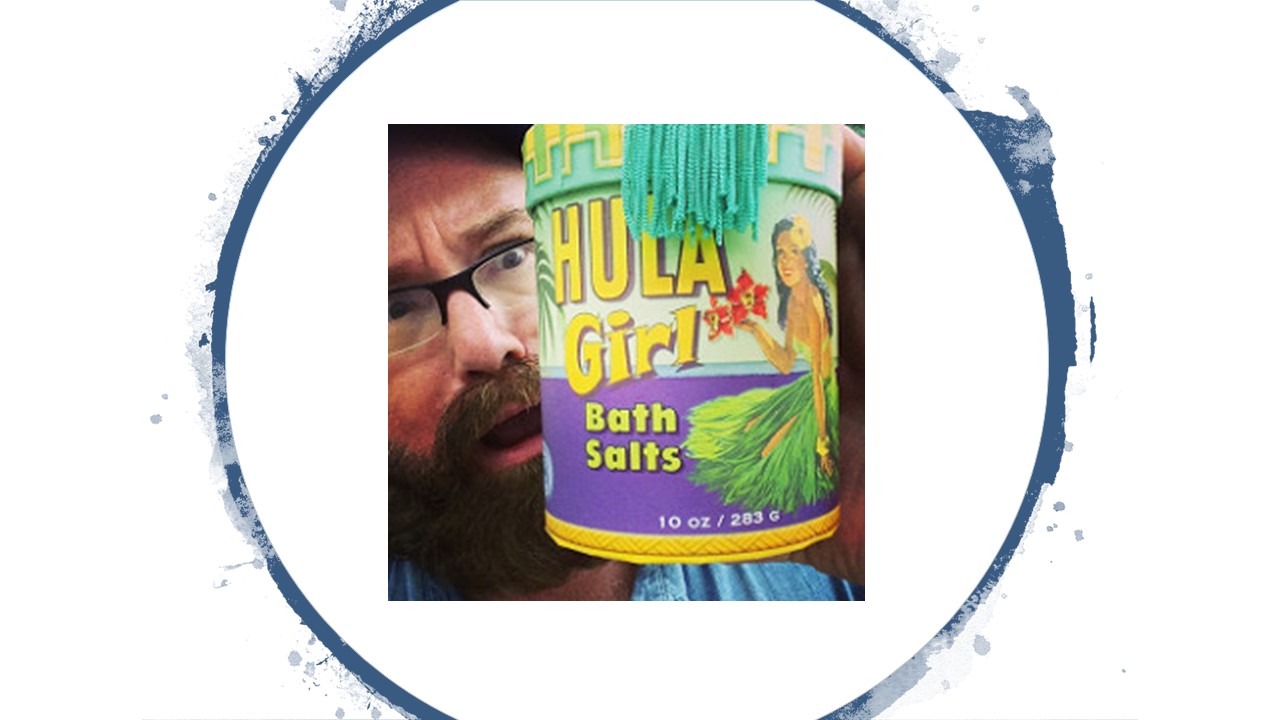
There is a growing tidal wave of use and abuse of Bath Salts. These are not the kind of Bath Salts you would ever put in water and soak in. Bath Salts are also sold under a number of other names including Plant Food, Water Pipe Cleaner as well as a host of brand and product names.

These products made use of a loophole in the laws of the U. S. and other countries, which exempted chemicals from regulation as drugs if they were “Not for Human Consumption.” These drugs were imported without restriction because of being labeled for uses other than human consumption. Here in the U. S. they were then repackaged in small amounts and sold in small stores. While labeled “not for human consumption” it has always been clear that users were buying these packages to consume them.

The primary ingredients in many of these products are amphetamine-like chemicals in the Cathinone Family. Cathinones are synthetic versions of a drug originally found in the Khat plant from north-eastern Africa. Before becoming popular as drugs of abuse these drugs were primarily used to kill insects hence the name “plant food.” The name “bath salts” is reported to come from the way these drugs are often packaged to look like bath salts.

Bath Salts can be consumed by snorting, swallowing, smoking, or injecting. Other possible routes of administration are sure to be attempted.

The use of Bath Salts has resulted in a significant number of admissions to hospital emergency rooms. Symptoms of Bath Salt intoxication include a number of serious symptoms including agitation, violent behaviors, heart palpitations, and psychotic symptoms. There are reports of these symptoms, particularity psychosis, lasting long after the drugs have been metabolized. At high doses, these drugs can be fatal.

The Synthetic Drug Abuse Act of 2012 was intended to reduce the problems with Bath Salts. Some particular ingredients have been made illegal. Unfortunately, this is a very large family of synthetic chemicals and many have never been tested. As fast as one chemical has been tested, found to be harmful to humans and banned, other chemicals have been substituted.

More and more synthetic chemicals are being sold and experimented with by drug users. The line between Bath Salts, Synthetic Cannabinoids, and other research chemicals has become fuzzy. New formulations are appearing so rapidly they are now being referred to as NPS (New Psychoactive Substances.) Expect Bath Salts of new formulations and other synthetics to become an increasing problem.

For more on these topics see:    Drug Use, Abuse and Addiction     Recovery      What is

Terms and their meaning can differ with the profession using them. The literature from the Rehab or AOD (Alcohol and Other Drug) field may be very different from that in the mental health field. There is still a large gap between recovery programs and AOD professionals and the terms and descriptions used in the DSM.

FYI These “What is” sometimes “What are” posts are my efforts to explain terms commonly used in Mental Health, Clinical Counseling, Substance Use Disorder Counseling, Psychology, Life Coaching, and related disciplines in a plain language way. Many are based on the new DSM-5; some of the older posts were based on the DSM-IV-TR, both published by the APA. For the more technical versions please consult the DSM or other appropriate references.

Staying connected with David Joel Miller

Seven David Joel Miller Books are available now!

My newest book is now available. It was my opportunity to try on a new genre. I’ve been working on this book for several years, but now seem like the right time to publish it.

Story Bureau.

Story Bureau is a thrilling Dystopian Post-Apocalyptic adventure in the Surviving the Apocalypse series.

Baldwin struggles to survive life in a post-apocalyptic world where the government controls everything.

As society collapses and his family gets plunged into poverty, Baldwin takes a job in the capital city, working for a government agency called the Story Bureau. He discovers the Story Bureau is not a benign news outlet but a sinister government plot to manipulate society.

Bumps on the Road of Life. Whether you struggle with anxiety, depression, low motivation, or addiction, you can recover. Bumps on the Road of Life is the story of how people get off track and how to get your life out of the ditch.

Dark Family Secrets: Doris wants to get her life back, but small-town prejudice could shatter her dreams.

Casino Robbery Arthur Mitchell escapes the trauma of watching his girlfriend die. But the killers know he’s a witness and want him dead.

Planned Accidents  The second Arthur Mitchell and Plutus mystery.

Letters from the Dead: The third in the Arthur Mitchell mystery series.

What would you do if you found a letter to a detective describing a crime and you knew the writer and detective were dead, and you could be next?

Sasquatch. Three things about us, you should know. One, we have seen the past. Two, we’re trapped there. Three, I don’t know if we’ll ever get back to our own time.

For these and my upcoming books; please visit my Author Page – David Joel Miller

Want the latest blog posts as they publish? Subscribe to this blog.

For videos, see: Counselorssoapbox YouTube Video Channel

What is Sleep Walking?

By David Joel Miller, MS, Licensed Therapist & Licensed Counselor.

Sleep Walking.
Photo courtesy of Pixabay.com

Can people really do all that stuff while asleep?

Turns out that people can do a number of things while mostly asleep. Sleep Walking (Was DSM-IV 307.46 Now DSM-5 F51.3) and Sleep Terrors (DSM-IV 307.47 now DSM-5 F51.4)) use to be considered separate disorders. In the New DSM-5, they have been combined into one category, Non-Rapid Eye Movement Sleep Arousal Disorders. Despite now being one disorder with subtypes they get coded with two different numbers. (DSM is a registered trademark of the APA.) In the new lists, ICD-9, ICD-10, and oh my ICD-11, these numbers may all keep changing, sorry about that.

The Sleep Walking part also covers some other behaviors that can take place while the person is mostly asleep. It is also possible to engage in Sleep Eating and Sleep Sex. Sex while mostly asleep has also been called sexsomnia. Sleep Eating and Sleep Sex are specifiers added to the Sleep Walking diagnosis. These specifiers do not get their own numbers.

For someone to get this diagnosis these things must happen repeatedly not just occasionally.

And yes these things are considered real diseases not just excuses for things people do that may bother others.

Sleepwalking along with sleep eating and sleep sex are all things people do early in the sleep cycle before REM sleep, hence the name Non-Rapid Eye Movement Sleep Arousal Disorders.

One characteristic of Sleepwalkers is the blank look on their faces. Other clues that this person is not awake and is functioning on autopilot are the difficulty you will have in waking the sleepwalker up.

There was a belief that you should never wake someone up who was sleepwalking. I see no evidence that this is particularly harmful other than the sudden jolt that comes from waking up in a place other than where you went to bed. On the other hand as hard as it is to wake sleepwalkers most of us will elect to just lead them back to bed and try to get them in the correct posture for sleep.

Sleepwalkers are also unresponsive to efforts to communicate with them. You can talk to them all you want but they just keep wandering around. Picture the actors you see in those zombie movies and you have a close approximation to the characteristic sleep-walker.

These episodes of sleepwalking happening in Non-REM sleep come without memories. This is described as having an “amnesia” for the events that happened during the sleepwalking.

The full diagnostic criteria are in the DSM-5. As with most other disorders, this one does not get used if the cause of this event is drugs or medications or if it seems to be caused by some other medical or psychological condition.

Sleep Walking Disorder is separate from Nightmares for several reasons. Nightmares and Bad dreams happen later in the sleep cycle predominantly during REM sleep. People remember what happened during nightmares and bad dreams. Nightmares often are connected to real-life events as in PTSD. Sleepwalking just happens out of nowhere.

FYI These “What is” sometimes “What are” posts are my efforts to explain terms commonly used in Mental Health, Clinical Counseling, Substance Use Disorder Counseling, Psychology, Life Coaching, and related disciplines in a plain language way. Many are based on the new DSM-5, some of the older posts were based on the DSM-IV-TR, both published by the APA. For the more technical versions please consult the DSM or other appropriate references.

You might want to take a look at other posts on Sleep   Dreams and Nightmares

More “What is” posts will be found at What is.

Staying connected with David Joel Miller

Seven David Joel Miller Books are available now!

My newest book is now available. It was my opportunity to try on a new genre. I’ve been working on this book for several years, but now seem like the right time to publish it.

Story Bureau.

Story Bureau is a thrilling Dystopian Post-Apocalyptic adventure in the Surviving the Apocalypse series.

Baldwin struggles to survive life in a post-apocalyptic world where the government controls everything.

As society collapses and his family gets plunged into poverty, Baldwin takes a job in the capital city, working for a government agency called the Story Bureau. He discovers the Story Bureau is not a benign news outlet but a sinister government plot to manipulate society.

Bumps on the Road of Life. Whether you struggle with anxiety, depression, low motivation, or addiction, you can recover. Bumps on the Road of Life is the story of how people get off track and how to get your life out of the ditch.

Dark Family Secrets: Doris wants to get her life back, but small-town prejudice could shatter her dreams.

Casino Robbery Arthur Mitchell escapes the trauma of watching his girlfriend die. But the killers know he’s a witness and want him dead.

Planned Accidents  The second Arthur Mitchell and Plutus mystery.

Letters from the Dead: The third in the Arthur Mitchell mystery series.

What would you do if you found a letter to a detective describing a crime and you knew the writer and detective were dead, and you could be next?

Sasquatch. Three things about us, you should know. One, we have seen the past. Two, we’re trapped there. Three, I don’t know if we’ll ever get back to our own time.

For these and my upcoming books; please visit my Author Page – David Joel Miller

Want the latest blog posts as they publish? Subscribe to this blog.

For videos, see: Counselorssoapbox YouTube Video Channel

What is Binge Drinking?

By David Joel Miller, MS, Licensed Therapist & Licensed Counselor.

Drinking

Binge drinking.
Photo courtesy of Pixabay.com

Binge drinking is a huge problem.

Some people have one drink after dinner each night. Other people save them up and have all seven on Friday night. Drinking seven drinks on Friday night is not the equivalent of one drink a day. The negative consequences, psychically, mentally, and legally, increase rapidly as the blood alcohol content rises on any one drinking occasion, a practice called binge drinking.

Binge drinking is defined as having five or more drinks on one drinking occasion for a man. For a woman, because of her reduced metabolism of alcohol in the stomach, four drinks on one occasion is considered binge drinking. That one “drinking occasion” could be over a short period of time, like drinking shots, or it might entail a more measure drinking like doing in most of a six-pack over the course of the afternoon.

Lots of people resisted the idea that they could be an “alcoholic” because they did not drink every day. The newer way of thinking about this is that it is not what you drink or how often you drink but what happens when you drink that defines an alcohol use disorder. If when you drink you end up drunk or you drink excessively, then you have an alcohol use disorder.

If you only drink occasionally, but when you do drink you consume a lot, you are a binge drinker and at risk for a great many alcohol-related problems.

Binge drinking alcohol is associated with increased drug use.

Among drinkers between 12 and 25, those whose typical pattern was to binge drink when they drank, they were also much more likely to use multiple other drugs. This pattern of drug use, called Poly-Substance use, is extra risky and correlates with a lot of complications physically, mentally, and legally.

Patterns of drinking can obscure the magnitude of alcohol use problems.

In treatment programs, there has been a tendency to separate drug users from the people who have legal consequences because they drove drunk. Rarely is a drunk driving case a driving problem despite all our efforts to treat DUI’s as if the problem was the driving after drinking.

There are a lot of misconceptions about who drinks, how often they drink, and how much the average American drinks. Half of all Americans have not had a drink in the last month. Ten percent of our population consumes half of all the alcohol. Those who binge drink can hide the existence of an alcohol use disorder for a long time by concentrating that drinking in occasional drinking binges.

Medical problems from Binge drinking.

Binging as well as daily high levels of alcohol consumption are associated with a large number of physical health problems. While one drink a day has been touted as good for everyone but fetuses and potentially pregnant women. Unfortunately the more you drink the more the risks of illness.

Alcohol consumption is associated with an increased risk of cancers, heart disease, problems of the digestive system, a variety of liver maladies, pancreatitis, and the list goes on and on.

Binge Drinking and Fetal Alcohol Spectrum Disorder.

Current thinking is that any amount of drinking on the part of a pregnant woman can affect the fetus. Binge drinking is particularly risky for women who are or may become pregnant. One challenging aspect of this problem is that women frequently do not know they are pregnant until after some period of time has passed. Women who binge drink are at increased risk to drink heavily, engage in risky sexual behaviors, and then find out that they became pregnant during that period of heavy drinking.

Mental Health overlooks a lot of alcohol and drug-related problems.

Those who work in the substance use disorder field see a lot of connections between substance use and mental, emotional, and behavioral disorders. Those who focus specifically on physical or mental health issues are less likely to notice those substance use disorders, especially something like binge drinking.

In drug treatment, those who only use occasionally and even then rarely get into trouble, are at high risk of developing problems eventually if when they use they binge. A small amount of alcohol consumption increases the risk of having problems with depression. Binge drinking even one time a year can result in DUI’s or other legal issues. Even occasional polysubstance abuse can result in life-altering consequences.

If you binge drink there is help available.

If when you drink you binge, or you find you are drinking and using more than intended consider getting help, talking with a professional, before your partying becomes a life-altering or ending event.

For more on these topics see:  Drug Use, Abuse and Addiction    Recovery   What is 

Terms and their meaning can differ with the profession using them. The literature from the Rehab or AOD (Alcohol and Other Drug) field may be very different from that in the mental health field. There is still a large gap between recovery programs and AOD professionals and the terms and descriptions used in the DSM.

FYI These “What is” sometimes “What are” posts are my efforts to explain terms commonly used in Mental Health, Clinical Counseling, Substance Use Disorder Counseling, Psychology, Life Coaching, and related disciplines in a plain language way. Many are based on the new DSM-5; some of the older posts were based on the DSM-IV-TR, both published by the APA. For the more technical versions please consult the DSM or other appropriate references.

Staying connected with David Joel Miller

Seven David Joel Miller Books are available now!

My newest book is now available. It was my opportunity to try on a new genre. I’ve been working on this book for several years, but now seem like the right time to publish it.

Story Bureau.

Story Bureau is a thrilling Dystopian Post-Apocalyptic adventure in the Surviving the Apocalypse series.

Baldwin struggles to survive life in a post-apocalyptic world where the government controls everything.

As society collapses and his family gets plunged into poverty, Baldwin takes a job in the capital city, working for a government agency called the Story Bureau. He discovers the Story Bureau is not a benign news outlet but a sinister government plot to manipulate society.

Bumps on the Road of Life. Whether you struggle with anxiety, depression, low motivation, or addiction, you can recover. Bumps on the Road of Life is the story of how people get off track and how to get your life out of the ditch.

Dark Family Secrets: Doris wants to get her life back, but small-town prejudice could shatter her dreams.

Casino Robbery Arthur Mitchell escapes the trauma of watching his girlfriend die. But the killers know he’s a witness and want him dead.

Planned Accidents  The second Arthur Mitchell and Plutus mystery.

Letters from the Dead: The third in the Arthur Mitchell mystery series.

What would you do if you found a letter to a detective describing a crime and you knew the writer and detective were dead, and you could be next?

Sasquatch. Three things about us, you should know. One, we have seen the past. Two, we’re trapped there. Three, I don’t know if we’ll ever get back to our own time.

For these and my upcoming books; please visit my Author Page – David Joel Miller

Want the latest blog posts as they publish? Subscribe to this blog.

For videos, see: Counselorssoapbox YouTube Video Channel

What is Acute Stress Disorder?

By David Joel Miller, MS, Licensed Therapist & Licensed Counselor.

What is

What is Acute Stress Disorder?
Photo courtesy of Pixabay.

Stress can knock you down and leave you in the mud.

Most people have heard of the granddaddy of all the Trauma- and Stressor-Related Disorders, Posttraumatic Stress Disorder, far fewer people have heard of the smaller member of this family, Acute Stress Disorder.

Acute Stress Disorder is a condition in which something bad happens and it knocks you for a loop but eventually, it goes away. We do not want to make the normal problems of living into a mental disorder so we only begin counting things as possible disorders when the stressor is still affecting your life at least 3 days after the incident.

A great many people experience some stressor which does not end up becoming PTSD. If you are still having symptoms a month after the event we start thinking this may become long-term and then you get the designation of Posttraumatic Stress Disorder.

We want to keep normal life events out of this equation, so expected events like having an elderly person in your family die an expected death do not count as a trauma disorder, either Acute Stress Disorder or Posttraumatic Stress Disorder.

The full text of the DSM-5 includes a detailed description of how to recognize Acute Stress Disorder but here is a short description of the condition.

Four conditions need to be met for this trauma to be Acute Stress Disorder.

  1. You get exposed to something that could kill or seriously injure you or someone close to you.
  2. It happens in the real world. Movies, TV, or your imagination does not count.
  3. This is unexpected.
  4. You can’t escape the results of this experience. You re-experience the events in more ways than one. Think of people who investigate child abuse or first responders at shootings or those who recover body parts in the war zone in addition to those who were the direct victim.

This experiencing and re-experiencing causes you problems.

The DSM-5 lists 14 symptoms. I will not repeat them all here. For the full text see the DSM-5. These 14 symptoms are clustered in 5 categories. To get Acute Stress Disorder you need to have at least 9 of the 14 symptoms but they can be from any category.

1.The experience keeps coming back.

You may have nightmares, intrusive thoughts, flashbacks, spacing out and this may be triggered by either internal thoughts or external triggers.

2. This experience bums you out.

Basically, you get into and stay in a really negative mood.

3.The trauma spaces you out.

You may get overwhelmed and just “bounce” mentally. In more clinical language we would call this dissociation.

4.The result of the experience is it keeps you away from things.

You may find yourself avoiding people, places, or things that remind you of the trauma. Some people do not like to be alone or they may use drugs and alcohol to knock themselves out rather than just falling asleep.

5.You are on edge and stay that way.

This could come out as poor sleep, being irritable or angry all the time, be losing your ability to concentrate, or being easily triggered by any little thing. People in this condition are always on high alert for something that might go wrong. The door slams down the block and those with Acute Stress Disorder will jump at a sound others will not notice.

As with the other things we are calling a mental illness, this needs to interfere with your ability to work or go to school, your relationships, your enjoyable activities, or cause you personal distress. Otherwise, you may have the issues but you will not get the diagnoses if this is a preference, not a problem. If the only time this happens is when you are under the influence of drugs or medicines or because of some other physical or medical problem this problem needs to be more than your situation would warrant. These other issues need treating first, then if you still have symptoms you could get this diagnosis.

FYI These “What is” sometimes “What are” posts are my efforts to explain terms commonly used in Mental Health, Clinical Counseling, Substance Use Disorder Counseling, Psychology, Life Coaching, and related disciplines in a plain language way. Many are based on the new DSM-5; some of the older posts were based on the DSM-IV-TR, both published by the APA. For the more technical versions please consult the DSM or other appropriate references.

Staying connected with David Joel Miller

Seven David Joel Miller Books are available now!

My newest book is now available. It was my opportunity to try on a new genre. I’ve been working on this book for several years, but now seem like the right time to publish it.

Story Bureau.

Story Bureau is a thrilling Dystopian Post-Apocalyptic adventure in the Surviving the Apocalypse series.

Baldwin struggles to survive life in a post-apocalyptic world where the government controls everything.

As society collapses and his family gets plunged into poverty, Baldwin takes a job in the capital city, working for a government agency called the Story Bureau. He discovers the Story Bureau is not a benign news outlet but a sinister government plot to manipulate society.

Bumps on the Road of Life. Whether you struggle with anxiety, depression, low motivation, or addiction, you can recover. Bumps on the Road of Life is the story of how people get off track and how to get your life out of the ditch.

Dark Family Secrets: Doris wants to get her life back, but small-town prejudice could shatter her dreams.

Casino Robbery Arthur Mitchell escapes the trauma of watching his girlfriend die. But the killers know he’s a witness and want him dead.

Planned Accidents  The second Arthur Mitchell and Plutus mystery.

Letters from the Dead: The third in the Arthur Mitchell mystery series.

What would you do if you found a letter to a detective describing a crime and you knew the writer and detective were dead, and you could be next?

Sasquatch. Three things about us, you should know. One, we have seen the past. Two, we’re trapped there. Three, I don’t know if we’ll ever get back to our own time.

For these and my upcoming books; please visit my Author Page – David Joel Miller

Want the latest blog posts as they publish? Subscribe to this blog.

For videos, see: Counselorssoapbox YouTube Video Channel
What is “Conditions for Further Study?”

By David Joel Miller, MS, Licensed Therapist & Licensed Counselor.

What is

What is?
Photo courtesy of pixabay.

Are there more mental illnesses than we know about?

“Conditions for Further Study” is a chapter in the DSM-5 which describes some possible mental illnesses that have not yet gotten full official recognition. These are not something a clinician can diagnose or one which insurance companies will pay to treat, not by these descriptions anyway.

You would think that by now we would have identified every possible mental, emotional or behavioral disorder, and come up with sure-fire treatments for each of them. Unfortunately, it doesn’t work that way.

Periodically a new disease comes along. It wasn’t all that long ago that no one had ever heard of AIDS or even HIV. The same thing, sort of, is happening in mental health. Researchers would like to be sure that when they tell you about the characteristics of and the treatment for a mental illness that everyone who was a subject in the research had the same disease.

Clinicians know that not everyone who has the same “diagnostic label” has the same symptoms. So you get a group of people who supposedly all have the same thing, say PTSD, and then you give them tests and assessments. For some things, personality characteristics like say introversion and extraversion, people will be on a continuum.

For other things like Posttraumatic Stress Disorder there will be clusters of people who all have similar symptoms and then clusters of other people who have different symptoms.

Lumpers and splitters.

Some people want only a few categories, like dogs and cats. The trouble with this is that Poodles are very different from Rottweilers. The house cat sitting on my desk is nowhere near like a Lion. So while we want to be specific about a mental, emotional or behavioral disorder someone might have, we also want to avoid creating several billion mental illness descriptions, one for each person.

Researchers and clinicians who notice these different clusters may become convinced that there are differences in symptoms that should be categorized as separate illnesses. For example, not all PTSD is alike. The PTSD that results from combat may show different features than the PTSD we see in battered women or abused children. Currently, they may all get a diagnosis of PTSD but there are different treatment approaches. Some clinicians have taken to referring to the form of PTSD that is the result of repeated abuse as “complex trauma” even though this is not officially a DSM diagnosis.

Are behavioral disorders a mental illness?

We see some similarities between drug and alcohol use disorders and some behaviors. Children and adolescents get some behavioral disorder diagnoses, things I sometimes refer to as “bad kid” diagnosis. But in adults not much in the way of behavior currently, meets the criteria for a mental illness.

So far the only behavior that has gotten included in the Substance-Related and Addictive Disorders chapter is Gambling. Other behaviors, internet usage, compulsive gaming and pornography all have features that look like the loss of impulse control seen in Gambling.

Some of the major things that counselors treat are not diagnoses.

Anger is a huge reason for referrals to therapy, yet anger currently is not a specific diagnosis. While anger may be the reason for referral, currently it is seen as a symptom of some other problem, not a specific diagnosis. Despite the common practice of court-ordered Anger Management classes, Anger is not a diagnosis.

Suicidal behavior is not an official mental illness either.

Same problem with non-suicidal self-injury sometimes called cutting. Currently, the only place this fits is under Borderline Personality Disorder where it may be a symptom. This seems problematic. Does adding Non-Suicidal self-injury inflate the number of people with a diagnosis of Borderline Personality Disorder? Can you have one without the other? Shouldn’t someone who is thinking about killing themselves qualify for a diagnosis for that reason alone?

Disorders of special populations.

Several group-specific problems may be the focus of treatment but so far are not recognized as mental illnesses. This is a particularly acute problem for the treatment of military personnel. Moral Injury is a situation in which you are required to do something that violates your sense of right and wrong. In civilian life, you may find ways to avoid this dilemma but in the military, there are few choices. Sometimes to do one good thing, following orders, you have to do something else that troubles your conscience.

Military sexual trauma is another non-DSM issue. In combat, you count on your comrades to keep you safe. Being raped by someone in your unit is a very traumatic incident. Having to continue to have good relationships with your abuser in order to stay alive is a tough situation.

Certainly, there are other problems, cultural or situational, that have not yet reached official disorder status but that require more research.

Do Conditions for further study make it to become a full diagnosis?

In each edition of the DSM, there are a number of proposed new diagnoses. Most do not make it as a separate mental illness. After much research, they may get lumped in with existing disorders. Many of these proposed new disorders have long specific names. My observation is that the fewer words in the name the more likely it will get its own place in the DSM. Binge Eating Disorder made it. I have my doubts that Neurobiological Disorder Associated with Prenatal Alcohol Exposure will make it unless it gets a short name.  (More on Fetal Alcohol Exposure Problems is coming up in future posts.)

Currently, there are 8 “Conditions for Further Study” listed in the DSM-5. The DSM-IV-TR had 16, most of which disappeared in this revision.

What are those Conditions for Further Study in the DSM-5?

  1. Attenuated Psychosis Syndrome.
  2. Depressive Episodes with Short-Duration Hypomania
  3. Persistent Complex Bereavement.
  4. Caffeine Use Disorder.
  5. Internet Gaming Disorder.
  6. Neurobiological Disorder Associated with Prenatal Alcohol Exposure.
  7. Suicidal Behavior Disorder.
  8. Non-Suicidal Self-Injury.

FYI These “What is” sometimes “What are” posts are my efforts to explain terms commonly used in Mental Health, Clinical Counseling, Substance Use Disorder Counseling, Psychology, Life Coaching, and related disciplines in a plain language way. Many are based on the new DSM-5; some of the older posts were based on the DSM-IV-TR, both published by the APA. For the more technical versions please consult the DSM or other appropriate references.

Staying connected with David Joel Miller

Seven David Joel Miller Books are available now!

My newest book is now available. It was my opportunity to try on a new genre. I’ve been working on this book for several years, but now seem like the right time to publish it.

Story Bureau.

Story Bureau is a thrilling Dystopian Post-Apocalyptic adventure in the Surviving the Apocalypse series.

Baldwin struggles to survive life in a post-apocalyptic world where the government controls everything.

As society collapses and his family gets plunged into poverty, Baldwin takes a job in the capital city, working for a government agency called the Story Bureau. He discovers the Story Bureau is not a benign news outlet but a sinister government plot to manipulate society.

Bumps on the Road of Life. Whether you struggle with anxiety, depression, low motivation, or addiction, you can recover. Bumps on the Road of Life is the story of how people get off track and how to get your life out of the ditch.

Dark Family Secrets: Doris wants to get her life back, but small-town prejudice could shatter her dreams.

Casino Robbery Arthur Mitchell escapes the trauma of watching his girlfriend die. But the killers know he’s a witness and want him dead.

Planned Accidents  The second Arthur Mitchell and Plutus mystery.

Letters from the Dead: The third in the Arthur Mitchell mystery series.

What would you do if you found a letter to a detective describing a crime and you knew the writer and detective were dead, and you could be next?

Sasquatch. Three things about us, you should know. One, we have seen the past. Two, we’re trapped there. Three, I don’t know if we’ll ever get back to our own time.

For these and my upcoming books; please visit my Author Page – David Joel Miller

Want the latest blog posts as they publish? Subscribe to this blog.

For videos, see: Counselorssoapbox YouTube Video Channel

What is an Alcohol Use Disorder?

By David Joel Miller, MS, Licensed Therapist & Licensed Counselor.

Liquor

Alcoholic beverages.
Photo courtesy of Pixabay.com

How is Alcohol Use Disorder different from Alcoholism?

Used to be a time when doctors treated medical issues, Therapists treated mental illness, Social services treated poverty-related issues, and – well – no one exactly wanted to do anything with drug addicts and alcoholics. Times are changing.

Turns out that no matter where you are and who you work with there is a good chance that people around you are being affected by chemicals, alcohol in particular, long before they reach the “alcoholic” or “Chemically Dependent” stage.

In Drug and Alcohol counseling we used to spend a lot of time debating what made you an alcoholic or addict. Turns out the lines are fuzzy. One estimate is that 90% of alcoholics have full-time jobs. Some people do not drink that often. Half the adult U. S. population did not drink in the last thirty days.

Even if you only drink once a year, say for New Year, if you have gotten into fights while drinking, gotten DUI’s several times, then your only drink once a year is not of much import. If when you drink, bad things happen, then you have an Alcohol Use Disorder. The DSM uses the expression “Problematic Pattern of Alcohol Use.”

What we discovered was that it was not so much what you drink or when you drink that matters when it comes to Alcohol Use Disorders, it is what happens when you drink that is significant.

The Symptoms of Alcohol Use Disorder.

The new DSM-5 has switched to the use of the term “Alcohol Use Disorder” to indicate someone whose use of alcohol is causing them problems whether they are “Alcoholic” or not and lists 11 criteria for Alcohol Use being a problem. Here is my plain language version of those Criteria.

  1. Once you start drinking you drink more than you planned on and/ or keep drinking longer than planned.
  2. You keep trying to cut down on your drinking. In other Alcoholism texts, this is also described as efforts to control your drinking or to quit drinking. See, people do not try to cut down, control, or quit drinking unless it is a problem.
  3. Drinking eats up a lot of your time.
  4. You have cravings for alcohol when you are not drinking.
  5. Drinking gets in the way of work, school, home life, or recreation. A real Alcoholic cuts out this other stuff so they can concentrate on their drinking.
  6. You know that when you drink bad stuff happens but you keep drinking anyway.
  7. You start cutting out other parts of your life to spend more time drinking.
  8. You try to get away with drinking even when you know it makes the situation dangerous.
  9. You keep drinking even though you now realize it is causing you problems.
  10. Your body starts building up tolerance. (See post “What is Tolerance” in the “What is” section.)
  11. You experience “withdrawal” when you stop drinking and the blood alcohol level starts dropping. (See post “What is Withdrawal” in the “What is” section.)

These problems with Alcohol can come in mild, moderate or severe. Mild Alcohol Use Disorder would have 2-3 of these symptoms, Moderate has 4-5 symptoms and severe has 6 or more.

If you or someone you know is exhibiting these symptoms think about treatment and or self-help groups. The sooner Alcohol Use Disorder gets treated the better the life prognosis. While sooner is better it is never too late to get treatment for an alcohol use disorder as long as you are alive.

Terms and their meaning can differ with the profession using them. The literature from the Rehab or AOD (Alcohol and Other Drug) field may be very different from that in the mental health field. There is still a large gap between recovery programs, AOD professionals, and the terms and descriptions used in the DSM.

FYI These “What is” sometimes “What are” posts are my efforts to explain terms commonly used in Mental Health, Clinical Counseling, Substance Use Disorder Counseling, Psychology, Life Coaching, and related disciplines in a plain language way. Many are based on the new DSM-5; some of the older posts were based on the DSM-IV-TR, both published by the APA. For the more technical versions please consult the DSM or other appropriate references.

Staying connected with David Joel Miller

Seven David Joel Miller Books are available now!

My newest book is now available. It was my opportunity to try on a new genre. I’ve been working on this book for several years, but now seem like the right time to publish it.

Story Bureau.

Story Bureau is a thrilling Dystopian Post-Apocalyptic adventure in the Surviving the Apocalypse series.

Baldwin struggles to survive life in a post-apocalyptic world where the government controls everything.

As society collapses and his family gets plunged into poverty, Baldwin takes a job in the capital city, working for a government agency called the Story Bureau. He discovers the Story Bureau is not a benign news outlet but a sinister government plot to manipulate society.

Bumps on the Road of Life. Whether you struggle with anxiety, depression, low motivation, or addiction, you can recover. Bumps on the Road of Life is the story of how people get off track and how to get your life out of the ditch.

Dark Family Secrets: Doris wants to get her life back, but small-town prejudice could shatter her dreams.

Casino Robbery Arthur Mitchell escapes the trauma of watching his girlfriend die. But the killers know he’s a witness and want him dead.

Planned Accidents  The second Arthur Mitchell and Plutus mystery.

Letters from the Dead: The third in the Arthur Mitchell mystery series.

What would you do if you found a letter to a detective describing a crime and you knew the writer and detective were dead, and you could be next?

Sasquatch. Three things about us, you should know. One, we have seen the past. Two, we’re trapped there. Three, I don’t know if we’ll ever get back to our own time.

For these and my upcoming books; please visit my Author Page – David Joel Miller

Want the latest blog posts as they publish? Subscribe to this blog.

For videos, see: Counselorssoapbox YouTube Video Channel
What is a Specific Phobia?

By David Joel Miller, MS, Licensed Therapist & Licensed Counselor.

What is

What is a Specific Phobia?
Photo courtesy of Pixabay.

There are lots of things you might be afraid of.

Most Specific Phobias are easy to recognize when you see them. If you have one of these fears you may even wonder how this could get called a mental illness. The key, as far as diagnosing them goes, is that people with a specific phobia are far more afraid of the thing, object, or situation than the real danger might objectively warrant. But if you experience this particular fear there is no such thing as being objective about it.

About twenty-eight to thirty million Americans are believed to suffer from a specific phobia. This number may be low as some people can arrange their life to avoid ever having to experience the thing that scares them. If your job never requires flying that phobia may not come up.

Adults can tell you that this or that scares them. Children usually exhibit their fear through their behavior. The child may cry, scream, have a tantrum, freeze up, or be clingy. For all age groups we expect this very specific fear or phobia to have lasted for a while, customarily six months or more. This particular “thing” almost always triggers the same fear.

The list of things that get diagnosed using the DSM is lengthy and even this list is likely not totally inclusive. See Coding below for the new improved ICD-10 list.

Coding Specific Phobia.

Specific phobia used to all be coded in the DSM-4 as 300.29 now in the DSM-5 with the ICD-10 numbers the “objects” which could be things, animals, or situations, all get classified. Here is the list

F40.218 Animals as in snakes, mice, etc.

F40.228 Nature, storms, water, heights, etc.

F40.230 Medical, blood

F40.231 Medical, injections

F40.232 Medical, other procedures

F40.233 Injuries

F40.248 Situations, enclosed spaces, elevators, planes, etc.

F40.298 Other stuff, choking, vomiting, in children – cartoon characters or loud noises

Yes, it is possible for someone to have more than one specific phobia. If you do, the profession should list all the codes and “objects” that cause you significant anxiety. In clinician jargon, this is “stacking up” or listing multiple diagnoses. Specific phobia also often coexists with other disorders such as Depression, Anxiety, and OCD. There are rules in the DSM to tell clinicians, which disorder to diagnose, when to diagnose several disorders, and when to only diagnose one.

Seventy-five percent of those with Specific Phobia are afraid of more than one thing. The majority of all those with Specific Phobia have 3 or more fears that merit diagnoses. Typically these fears get stronger the closer you get to the thing that triggers your phobia. Just thinking about it can be a trigger. For example, people who need to fly but have a specific phobia of flying will begin to get anxious in the days before the flight every time they think about having to fly.

The treatment of choice for Specific phobias is systematic desensitization.

For some with specific phobia, the symptoms can be every bit as severe as those who experience panic attacks or panic disorder. See the “What is” posts on both of these for more on these topics.

FYI These “What is” sometimes “What are” posts are my efforts to explain terms commonly used in Mental Health, Clinical Counseling, Substance Use Disorder Counseling, Psychology, Life Coaching, and related disciplines in a plain language way. Many are based on the new DSM-5, some of the older posts were based on the DSM-IV-TR, both published by the APA. For the more technical versions please consult the DSM or other appropriate references.

Staying connected with David Joel Miller

Seven David Joel Miller Books are available now!

My newest book is now available. It was my opportunity to try on a new genre. I’ve been working on this book for several years, but now seem like the right time to publish it.

Story Bureau.

Story Bureau is a thrilling Dystopian Post-Apocalyptic adventure in the Surviving the Apocalypse series.

Baldwin struggles to survive life in a post-apocalyptic world where the government controls everything.

As society collapses and his family gets plunged into poverty, Baldwin takes a job in the capital city, working for a government agency called the Story Bureau. He discovers the Story Bureau is not a benign news outlet but a sinister government plot to manipulate society.

Bumps on the Road of Life. Whether you struggle with anxiety, depression, low motivation, or addiction, you can recover. Bumps on the Road of Life is the story of how people get off track and how to get your life out of the ditch.

Dark Family Secrets: Doris wants to get her life back, but small-town prejudice could shatter her dreams.

Casino Robbery Arthur Mitchell escapes the trauma of watching his girlfriend die. But the killers know he’s a witness and want him dead.

Planned Accidents  The second Arthur Mitchell and Plutus mystery.

Letters from the Dead: The third in the Arthur Mitchell mystery series.

What would you do if you found a letter to a detective describing a crime and you knew the writer and detective were dead, and you could be next?

Sasquatch. Three things about us, you should know. One, we have seen the past. Two, we’re trapped there. Three, I don’t know if we’ll ever get back to our own time.

For these and my upcoming books; please visit my Author Page – David Joel Miller

Want the latest blog posts as they publish? Subscribe to this blog.

For videos, see: Counselorssoapbox YouTube Video Channel

com.

What is Drug Withdrawal?

By David Joel Miller, MS, Licensed Therapist & Licensed Counselor.

Drugs.

Drugs.
Photo courtesy of Pixabay.

You’re more likely to have a drug withdrawal than you might think.

When people think of drug withdrawal the picture they see is the one of classic heroin withdrawal. Someone coming off heroin or other opiates does some “kicking” both drug wise and legs-wise. They also have diarrhea and “goosebumps.” Because opiates are pain relievers during withdrawals people can experience high levels of pain.

That dramatic type of withdrawal is not the only kind you might have. Each drug you might take can have some effects when the level in your body, principally in your bloodstream, begins to drop.

Drug Withdrawal Defined.

Drug withdrawal is an identifiable illness or syndrome that happens when someone stops taking a drug or reduces the amount they are using significantly. The symptoms begin when the level of a drug in the blood drops. Withdrawal symptoms can vary in severity and each drug has its own pattern of withdrawal symptoms. An alternative name for withdrawal is Abstinence Syndrome.

In the early stages of drug use, withdrawal symptoms may be minimal and go unnoticed. Once the body has adjusted to having that drug present and made adaptations the symptoms become more pronounced. Symptoms may not be entirely physical. For some drugs the primary withdrawal symptoms are psychological.

Withdrawal symptoms make it harder to stop using drugs.

The more severe the withdrawal symptoms the more likely the user is to pick that drug back up to reduce those symptoms. A withdrawal symptom of drugs taken to reduce anxiety, prescribed or self-medicated ones, is an increase in anxiety. People who smoke marijuana to reduce anxiety report that the anxiety gets really bad after they discontinue smoking it. This results in a return to marijuana use.

Getting rid of withdrawal symptoms is a strong motivator to resume drug use again.

The DSM-5 lists withdrawal effects for eight of the eleven classes of substances.

I find it interesting that some drugs such as Inhalants and Hallucinogens have no withdrawal symptoms specified. We also have only one diagnosis and F code for the group of drugs, Sedative, Hypnotic or Anxiolytic Drugs. Withdrawal from these drugs can be different with different drugs. Stimulant Withdrawal is separated and has one code for Cocaine and another for Amphetamines and other stimulants. These DSM-5 codes are a rough sketch. For the full details consult the DSM-5 text. Also, note that there are well-defined withdrawal criteria for Cannabis (Marijuana) and Caffeine.

Alcohol Withdrawal (F10.239 or F10.232)

Caffeine Withdrawal (F15.93)

Cannabis (Marijuana) Withdrawal (F12.288)

Opioid Withdrawal (F11.23)

Sedative, Hypnotic or Anxiolytic Withdrawal (F13.239, F13.232)

Stimulant Withdrawal

Amphetamine or other stimulant (F15.23)

Cocaine Withdrawal (F14.23)

Tobacco Withdrawal (F17.203)

Other (or Unknown) Substance Withdrawal (F19.239)

For more on drugs and recovery see:

Drug Use, Abuse, and Addiction      Recovery

Terms and their meaning can differ with the profession using them. The literature from the Rehab or AOD (Alcohol and Other Drug) field may be very different from that in the mental health field. There is still a large gap between recovery programs, AOD professionals and the terms and descriptions used in the DSM.

FYI These “What is” sometimes “What are” posts are my efforts to explain terms commonly used in Mental Health, Clinical Counseling, Substance Use Disorder Counseling, Psychology, Life Coaching, and related disciplines in a plain language way. Many are based on the new DSM-5; some of the older posts were based on the DSM-IV-TR, both published by the APA. For the more technical versions please consult the DSM or other appropriate references.

Staying connected with David Joel Miller

Seven David Joel Miller Books are available now!

My newest book is now available. It was my opportunity to try on a new genre. I’ve been working on this book for several years, but now seem like the right time to publish it.

Story Bureau.

Story Bureau is a thrilling Dystopian Post-Apocalyptic adventure in the Surviving the Apocalypse series.

Baldwin struggles to survive life in a post-apocalyptic world where the government controls everything.

As society collapses and his family gets plunged into poverty, Baldwin takes a job in the capital city, working for a government agency called the Story Bureau. He discovers the Story Bureau is not a benign news outlet but a sinister government plot to manipulate society.

Bumps on the Road of Life. Whether you struggle with anxiety, depression, low motivation, or addiction, you can recover. Bumps on the Road of Life is the story of how people get off track and how to get your life out of the ditch.

Dark Family Secrets: Doris wants to get her life back, but small-town prejudice could shatter her dreams.

Casino Robbery Arthur Mitchell escapes the trauma of watching his girlfriend die. But the killers know he’s a witness and want him dead.

Planned Accidents  The second Arthur Mitchell and Plutus mystery.

Letters from the Dead: The third in the Arthur Mitchell mystery series.

What would you do if you found a letter to a detective describing a crime and you knew the writer and detective were dead, and you could be next?

Sasquatch. Three things about us, you should know. One, we have seen the past. Two, we’re trapped there. Three, I don’t know if we’ll ever get back to our own time.

For these and my upcoming books; please visit my Author Page – David Joel Miller

Want the latest blog posts as they publish? Subscribe to this blog.

For videos, see: Counselorssoapbox YouTube Video Channel