Pick your grandmas wisely – their life affects your feelings

By David Joel Miller, MS, Licensed Therapist & Licensed Counselor.
Grandma’s DNA may be affecting you.
Photo courtesy of Pixabay.com

What happened to grandma is affecting your life today.

Not just grandma but great-grandma has an effect on your feelings, even if you never met them, or so we are told. The more we learn about genetics and environment the more complicated it all gets.

We used to think that genes were genes and experiences; well that was what happened to you.  There has been a lot of research on which causes what. Do genes cause addiction and mental illness or do experiences sometimes described as the environment?

We have started to think that genes and experiences are both factors, risk factors for developing an addiction or mental illness. A risk factor does not mean you get the disorder, but it increases your susceptibility. We thought that genes and experiences were separate things.

What if grandma’s experiences became part of her genes?

For a long time, we thought that was not possible, now there is evidence that this may be what has and is happening.

Genes were seen as the blueprint for the way your body and your nervous system would develop. There might be variations, pigmentation for instance; one color was dominant and the other recessive so you get one-half of your genetic material from each parent. Two dominant genes or one dominant and one recessive and you still look like you have the dominant color. Two recessives and you win the different color prize. (In Humans most colors, eyes, hair etc. are the result of multiple genes so it is also more complicated than just dominant and recessive.)

We know environment can affect genes. No matter what your genes say if your grandmother grew up in a time of famine her growth was stunted. We see this in recent immigrants here in the U. S. Grandma is short but her children get more food both before and after birth and they are taller.

So after two or three generations, this family should all be reaching full height. Why then does succeeding generations keep getting taller?

Could grandma’s experience of living through starvation also alter her genes so that for a number of generations her children grow up shorter? Eventually, as time progresses that gene could change back to the full stature that was a potential in the genes but eventually that should stop.

That may not be what is happening genetically.

We were looking at genes as if they were blueprints. Not enough lumber and the house gets built smaller but the blueprints still call for a full-size house. Bringing in more lumber and the next house should match the blueprint. But what if that lack of lumber resulted in a change in the blueprint?

A new field of research, one name for this is Epigenetics, looks at how the way a gene gets expressed, the house is built, in my example, based on the experiences of the parents.

Epigenetics tells us that genes are not constant. They can turn on and off.  So that gene for black hair, that shuts off at some point and the gene begins to produce gray or even white hair. Same person, same genetics, but different hair color.

Research in mice, this is just  beginning to be replicated in human studies, found that in addition to genes and DNA there are other chemicals that can hook onto the gene and then when that gene gets reproduced the add-on gets copied also.

One of these add-ons is a methyl group. So if grandma was traumatized, raped or lived through a violent war. Her DNA could have picked up some extra molecules that shut off those outgoing genes. The result would be that as a result of grandma’s experiences your DNA is changed.

Remember that methyl stuck on is not adding to or changing your DNA, it is preventing some of that DNA from expressing itself. Depending on which part of your DNA it is stuck to, this could be a good thing or a bad thing.

Say your great-grandmother dies when your grandmother was very young. Great-grandfather tried but he was just not able to be affectionate the way great-grandmother would have been. The result is grandma had trouble feeling affection towards your mother.  You mother with a non-affectionate mother would find it hard to show a lot of affection to you.

Some women report that they have difficulty feeling love or nurturing towards their children. Yes they could have learned this but even when they were adopted by a loving adoptive mom these women may as a result of their extra methyl group hooked onto their DNA find it hard to nurture their children.

Now if this concept holds up through more research this may explain how ancestor’s experiences have altered the way our DNA develops and the resulting impact on our mental and emotional health.

My takeaway from this is that while this may explain some things about why we are the way we are this also means that if we learn new things if we have positive experiences our children and grandchildren can be affected by their genes in a very different way. This suggests to me that we need to spend a lot more time on treatment for depressed or anxious children before they have children of their own if we want to have an impact on mental health.

There is a lot of research going on now on mutations in genes. There are a lot more mutations going on than previously thought. But even if a particular mutation increases the risk of a mental illness, what if some early life experiences could counteract that gene and produce a different emotional result?

Let’s hope that it will be possible to help more people as time goes along. For more on this subject check out the article in Discovery Magazine for May 13, 2013, titled “Grandmas Experiences Leave a Mark on Your Genes. 

Staying connected with David Joel Miller

Seven David Joel Miller Books are available now!

My newest book is now available. It was my opportunity to try on a new genre. I’ve been working on this book for several years, but now seem like the right time to publish it.

Story Bureau.

Story Bureau is a thrilling Dystopian Post-Apocalyptic adventure in the Surviving the Apocalypse series.

Baldwin struggles to survive life in a post-apocalyptic world where the government controls everything.

As society collapses and his family gets plunged into poverty, Baldwin takes a job in the capital city, working for a government agency called the Story Bureau. He discovers the Story Bureau is not a benign news outlet but a sinister government plot to manipulate society.

Bumps on the Road of Life. Whether you struggle with anxiety, depression, low motivation, or addiction, you can recover. Bumps on the Road of Life is the story of how people get off track and how to get your life out of the ditch.

Dark Family Secrets: Doris wants to get her life back, but small-town prejudice could shatter her dreams.

Casino Robbery Arthur Mitchell escapes the trauma of watching his girlfriend die. But the killers know he’s a witness and want him dead.

Planned Accidents  The second Arthur Mitchell and Plutus mystery.

Letters from the Dead: The third in the Arthur Mitchell mystery series.

What would you do if you found a letter to a detective describing a crime and you knew the writer and detective were dead, and you could be next?

Sasquatch. Three things about us, you should know. One, we have seen the past. Two, we’re trapped there. Three, I don’t know if we’ll ever get back to our own time.

For these and my upcoming books; please visit my Author Page – David Joel Miller

Want the latest blog posts as they publish? Subscribe to this blog.

For videos, see: Counselorssoapbox YouTube Video Channel

How is youth mental health treatment different from adults?

By David Joel Miller, MS, Licensed Therapist & Licensed Counselor.

Crying child

Youth mental health.
Photo courtesy of Pixabay.com

What are the differences between youth and adult mental health treatment?

There are differences in the way a counselor might work with a child and how they might work with an adult. How to “treat” a mental health problem is a complicated subject. It needs several books to fully describe this, but let me focus here on just a few things that may influence how a professional might try to help with an emotional problem in a child.

The way a counselor works with clients is sometimes referred to as our “theoretical orientation.” How I see your issue determines how I might try to help you. I can’t speak for therapists of other theoretical orientations but I would describe my approach as largely Cognitive Behavioral Therapy, that with a dash of learning theory and occasionally a pinch of narrative therapy.

This stuff is largely “skills-based.” I figure that the client is trying the best they can but that there are things they may not know and if they knew them they could do better. I could try to tell them, sometimes that works but mostly they need some help it trying on new behaviors and seeing what works for them and what does not.

Lots of people have “stories” they tell themselves about them. By story I do not mean that this is either true or false, it just is the way that person explains themselves and their life.

That story might sound like “I am such a loser.” Or “I can’t do anything right.” Kids get one thing wrong and they may start saying that they are a failure. See how having a single story that describes you rather than the thing you were not able to do could color your life experiences?

So adults have more experiences in life and may have more ways of thinking of new stories for their life than a younger person. What I am saying is that I would try as much as possible to tailor my approach to the individual, not some specific category or label.

In career counseling, the approach would be very different in working with a person who had worked at lots of jobs and was just downsized than it might be with a client who was very young and had never had a job.

What are some considerations in creating a treatment for a specific client?

Age is only a small part of the picture.

I would want to know in addition to the client’s age something’s about their abilities and their life experiences. Age, I.Q, and developmental stages are all in the mix. So might things like learning disabilities, intellectual disabilities, and other developmental issues.

The approach for someone who has a form of Autism Spectrum Disorder might be different from a younger person who had a less severe challenge. The key, for me, is really getting to know the person and match my efforts to them rather than memorize a particular formula for a given age, I.Q. or disorder.  Here are some things a therapist might do as the child moves through the lifespan and becomes a young adult, a mature adult, and evenly an older adult.

1. Activities build relationships.

With adults, it is often possible to sit down and have a talk with them. The younger the child, the more the anxiety or the more “inside themselves” they are the more we need to work on forming a relationship.

One way to create that relationship is to do things with the client. (Yes even with a five-year-old I think of this person as a “client.”) How would I have wanted to be approached when I was that age? If I can’t remember ever being that age, I take a guess at what that might have been.

So the counselor might play a game, not to waste time but to get the client to feel comfortable. Even with very adult clients, I find they will say more about their lives when we are doing something than when they are sitting in a chair and I am cross-examining them.

2. Pictures versus words in therapy.

Very young people and some adults are better at seeing than describing, they just do not have the words to tell me their story. I ask them to draw me a picture. A rainbow tells me one thing and a tornado-like creature in black and red tells a very different story.

3. Skills training is important.

You need to practice skills if you want them to be there when you need them. Adults practice golf swings. Younger people may need to practice introducing themselves, making friends, and sharing appropriately. A whole lot of people tell me right up front they have an “anger management problem” they do not seem to understand that managing anger is a skill like most other things in life and you can learn that skill.

The younger or more impaired the person the more they need help in learning appropriate skills.

4. Involvement of your support system makes a difference.

With children or youths, I like to know the involvement of the support system. The more people on your side the better your chances. Some people have a parent or caregiver that can help the client through things. Other young clients have no one on their side.

Sometimes I am working on helping the caregiver to learn to help the youth and other times I am helping the client learn how to cope with their less-than-perfect caregiver.

There are a whole lot of specialized treatments for all sorts of mental, emotional, and behavioral problems that a child may experience. This post has not even begun to look at all those possibilities but I hope it has given you some small idea of the ways in which a professional counselor might be able to help a child or their caregiver through a child’s emotional problems.

If you work with children consider taking the Youth Mental Health First Aid training when it is offered in your area.

Staying connected with David Joel Miller

Seven David Joel Miller Books are available now!

My newest book is now available. It was my opportunity to try on a new genre. I’ve been working on this book for several years, but now seem like the right time to publish it.

Story Bureau.

Story Bureau is a thrilling Dystopian Post-Apocalyptic adventure in the Surviving the Apocalypse series.

Baldwin struggles to survive life in a post-apocalyptic world where the government controls everything.

As society collapses and his family gets plunged into poverty, Baldwin takes a job in the capital city, working for a government agency called the Story Bureau. He discovers the Story Bureau is not a benign news outlet but a sinister government plot to manipulate society.

Bumps on the Road of Life. Whether you struggle with anxiety, depression, low motivation, or addiction, you can recover. Bumps on the Road of Life is the story of how people get off track and how to get your life out of the ditch.

Dark Family Secrets: Doris wants to get her life back, but small-town prejudice could shatter her dreams.

Casino Robbery Arthur Mitchell escapes the trauma of watching his girlfriend die. But the killers know he’s a witness and want him dead.

Planned Accidents  The second Arthur Mitchell and Plutus mystery.

Letters from the Dead: The third in the Arthur Mitchell mystery series.

What would you do if you found a letter to a detective describing a crime and you knew the writer and detective were dead, and you could be next?

Sasquatch. Three things about us, you should know. One, we have seen the past. Two, we’re trapped there. Three, I don’t know if we’ll ever get back to our own time.

For these and my upcoming books; please visit my Author Page – David Joel Miller

Want the latest blog posts as they publish? Subscribe to this blog.

For videos, see: Counselorssoapbox YouTube Video Channel
Are the mental health problems in children different?

By David Joel Miller, MS, Licensed Therapist & Licensed Counselor.

Crying child

Youth mental health.
Photo courtesy of Pixabay.com

Age impacts mental health.

A reader asked “You keep mentioning children in your posts, how are their problems like or different from adult mental illness?

There are some differences between the issues children have and adults, but my experiences tell me that there are a lot of similarities.

We used to have a separate section for “Disorders usually first diagnosed in Infancy, Childhood, and Adolescence, in the DSM-4. In the DSM-5 those disorders get moved around. One problem with the old approach was that many clinicians missed the “Usually” part. We tended to think of these problems as something children get and adult problems as something only adults got.

That just is not so.

Some of these early-onset problems get missed or continue to plague people throughout their lives. Stress-related issues are a good example of this. Reactive Attachment Disorder may be easy to see in a small child but the after-effects can result in a bunch of problems that in adults we usually call by other names.

Just like the child develops, the mental health problems of that child may develop and change with time.

Also, it is very possible for children to develop problems that we used to think were only the providence of adults. Remember that “Happy childhood” myth. There must have been a few people with happy childhoods but there were a lot of people who did not get their ration of that one.

So children can and do suffer from depression, anxiety, stress, trauma, and a host of other adult looking problems.

We currently believe, I think for good reason, that the earlier in life we recognize some of these problems and treat them the better the chance that the person will not grow up to have a severe emotional disorder. That treatment, by the way, need not be medication or prolonged therapy.

Lots of other things can help these children. Anger Management and Parenting classes for unprepared parents also help. So do supportive environments like quality preschool or even grandparents or other supportive adults.

A disclaimer here – my perspective on working with children may be a bit different from other clinicians. My work with children has been largely in crisis settings, these kids were brought in because they said they were suicidal or they were way out of control. The other groups of children I worked with were substance abusing or those brought in for an assessment because someone believed this child has a serious emotional problem or a serious mental illness.

My experiences were with a group of children that may be more seriously affected by society’s problems. As a result, some childhood problems were probably not represented and others were way over-represented.

The problems that bring children to the attention of professionals change as they get older. The 3-year-old who is not talking is a way different problem than a 17-year-old girl who has been abusing drugs and is now suicidal because she found out she is pregnant by her 24-year-old boyfriend.

Both may have been the victims of abuse or neglect, so these very different “symptoms” may stem from the same or similar roots.

As a child gets older the way we should be assessing and the way we treat this “child’s” issues should get more and more like the way we treat adults. Mental health has had problems here for years as I see it. Some clinicians continue to treat adult clients as if they were mentally retarded or little kids.

One day you are 17 and you get the “now little girl” treatment and the next day you are 18 and you get the “grow up” lecture.

One other thing to consider when talking about the difference between adults and youth mental health issues is how to tell the difference between normal adolescent issues and those problems that could be the beginnings of a serious mental health issue. Just being a teen is, in and of itself, not a diagnosis.

Recently I attended a training to get certified as a Youth Mental Health First Aid trainer. I can’t begin to cover all that info here. If the issue of how to recognize mental health problems in young people interests you, you might want to check out that training.

The question about how the treatment approaches may differ between a young person with a disorder and a person who has accumulated more years, presumably an adult, that topic needs a whole other post.

Till next time, David Miller, LMFT, LPCC

Staying connected with David Joel Miller

Seven David Joel Miller Books are available now!

My newest book is now available. It was my opportunity to try on a new genre. I’ve been working on this book for several years, but now seem like the right time to publish it.

Story Bureau.

Story Bureau is a thrilling Dystopian Post-Apocalyptic adventure in the Surviving the Apocalypse series.

Baldwin struggles to survive life in a post-apocalyptic world where the government controls everything.

As society collapses and his family gets plunged into poverty, Baldwin takes a job in the capital city, working for a government agency called the Story Bureau. He discovers the Story Bureau is not a benign news outlet but a sinister government plot to manipulate society.

Bumps on the Road of Life. Whether you struggle with anxiety, depression, low motivation, or addiction, you can recover. Bumps on the Road of Life is the story of how people get off track and how to get your life out of the ditch.

Dark Family Secrets: Doris wants to get her life back, but small-town prejudice could shatter her dreams.

Casino Robbery Arthur Mitchell escapes the trauma of watching his girlfriend die. But the killers know he’s a witness and want him dead.

Planned Accidents  The second Arthur Mitchell and Plutus mystery.

Letters from the Dead: The third in the Arthur Mitchell mystery series.

What would you do if you found a letter to a detective describing a crime and you knew the writer and detective were dead, and you could be next?

Sasquatch. Three things about us, you should know. One, we have seen the past. Two, we’re trapped there. Three, I don’t know if we’ll ever get back to our own time.

For these and my upcoming books; please visit my Author Page – David Joel Miller

Want the latest blog posts as they publish? Subscribe to this blog.

For videos, see: Counselorssoapbox YouTube Video Channel
Why do so many substance users have mental illnesses?

By David Joel Miller, MS, Licensed Therapist & Licensed Counselor.

Drugs.

Drugs.
Photo courtesy of Pixabay.

Why are co-occurring disorders so common?

We used to talk about addiction and think there were just a handful of people with that problem; we blamed them for their disorder. We now know that long before someone becomes addicted they can have serious problems in their relationships with substances. We now are talking about substance use disorders.

We talked for a long time about the “seriously and persistently mentally ill” as if they were somehow different from us. We now know that mental illness is on a continuum. Those emotional problems, depression, anxiety, stress-related issues, can overwhelm anyone.

Is it really that common to have both problems?  Why do we say now that co-occurring disorders are an expectation, not an exception?”

So far in my career as a therapist, I have worked with substance abusers. I have worked in locked psychiatric hospitals with those on an involuntary hold for wanting to kill themselves or others. I have also been able to work with adolescents in crisis.

In every one of these settings, the number of clients who had both issues was large. Why do the two problems so often exist in the same person? Here are some of the reasons that both disorders so often co-exist in the same person.

1. Two issues, substance use disorders, and a mental or emotional illness are relatively common in our society.

Far short of addiction there are plenty of people who attend DUI School, lose days of work, or get into arguments with their spouses as a direct result of substance misuse.

Most families have one or more person in them who has been so depressed or so anxious that they missed work or stopped participating in family and social activities.

2. Having a mental or emotional problem increases the risk of using and abusing substances.

People who are depressed or anxious often start drinking. At first, this works but over time the alcohol makes them more depressed and when it wears off they become more anxious.

The result of using substances to manage your emotions is that over time you need more and more and eventually, you develop a substance use problem.

Many people in substance abuse treatment will report emotional problems including being the victim of abuse or neglect before they developed the substance abuse problems.

The seriously mentally ill find the effects of smoking very soothing. They become heavy smokers. This increases the risk that they will develop health problems, end up homeless, and that their lifespan will be cut short.

3. Using or abusing substances increases the risk of developing a Mental illness.

Alcohol is a depressant. Not everyone who drinks becomes clinically depressed but some people do. The more you drink the more depressed you become. The more depressed you get the more you drink. This can be a rapid downward spiral.

There are connections between many other abused substances and developing mental illnesses. Stimulants increase the risk of psychosis and can increase sexual behaviors. The younger you are when you begin to smoke Marijuana the more likely you are to develop certain mental health issues.

I am not trying to take sides here on the “medical marijuana” debate, but note that smoking anything, dried lettuce or incense included, is bad for the lungs. There is also a developing body of research that says that CBD is better for medicinal use and THC is not. If you are smoking marijuana to “get high” you are at risk to develop problems with its use no matter what story you are telling others. (I think I wrote some posts on that one, note to self-see if those articles got posted.)

4. Substance abuse issues or mental and emotional problems results in a lifestyle where it becomes hard to get your basic needs met.

Both groups have an increased risk of homelessness. They are both at risk to become alienated from family and friends.

You have to do what you have to do.

The result of these lifestyle changes is that the substance abuser is likely to become depressed, anxious, or to be abused. The mentally ill person, to cope with their isolation or homelessness, may turn to alcohol or drugs to cope.

What you go through with either problem increases the risk that you will develop the other disorder.

5. There are emotional consequences to entering recovery.

The substance abuser often gets closer to their drug of choice than to others in their life. When they stop using or abusing they have to go through a grieving process that can be just as severe as a divorce or death in the family.

Users have told me that “women come and go but crystal is always there for me.” People let me down but (fill in the name of liquor here) is always waiting for me. Losing this one support can be a major obstacle in creating a new life.

People in recovery very much need a new support system.

The conclusion?

Having either a substance use disorder, or a mental-emotional problem, increase the risk of having the other. It is easy to get locked in a pattern when no one is supporting your recovery and your environment is supporting you staying sick. Change can be difficult but change – recovery is very much worth the effort.

Staying connected with David Joel Miller

Seven David Joel Miller Books are available now!

My newest book is now available. It was my opportunity to try on a new genre. I’ve been working on this book for several years, but now seem like the right time to publish it.

Story Bureau.

Story Bureau is a thrilling Dystopian Post-Apocalyptic adventure in the Surviving the Apocalypse series.

Baldwin struggles to survive life in a post-apocalyptic world where the government controls everything.

As society collapses and his family gets plunged into poverty, Baldwin takes a job in the capital city, working for a government agency called the Story Bureau. He discovers the Story Bureau is not a benign news outlet but a sinister government plot to manipulate society.

Bumps on the Road of Life. Whether you struggle with anxiety, depression, low motivation, or addiction, you can recover. Bumps on the Road of Life is the story of how people get off track and how to get your life out of the ditch.

Dark Family Secrets: Doris wants to get her life back, but small-town prejudice could shatter her dreams.

Casino Robbery Arthur Mitchell escapes the trauma of watching his girlfriend die. But the killers know he’s a witness and want him dead.

Planned Accidents  The second Arthur Mitchell and Plutus mystery.

Letters from the Dead: The third in the Arthur Mitchell mystery series.

What would you do if you found a letter to a detective describing a crime and you knew the writer and detective were dead, and you could be next?

Sasquatch. Three things about us, you should know. One, we have seen the past. Two, we’re trapped there. Three, I don’t know if we’ll ever get back to our own time.

For these and my upcoming books; please visit my Author Page – David Joel Miller

Want the latest blog posts as they publish? Subscribe to this blog.

For videos, see: Counselorssoapbox YouTube Video Channel

Alcohol hangover or emotional hangover?

By David Joel Miller, MS, Licensed Therapist & Licensed Counselor.

Inebriated people.

Alcoholism.
Photo courtesy of Pixabay.

Why are you reading this post? Hangover?

This is New Year’s Day and you are reading blog posts? Why?

If you are reading this on the day it was published, then it is time for you to take another look at your life. Don’t get me wrong, I really appreciate my readers and am glad you are reading this whenever that happens to be.

Some of you are just sitting around and waiting for the games. There are enough sporting events on the television on this day to produce a self-induced coma.

Some of you had that dazed look and the splitting head when you got up today. Is that a hangover? Are you looking for hangover cures?

How much did you drink last night? What if you didn’t drink and have that hangover anyway?

If the problem is too much to drink last night I have a solution. Check all those other blogs for hangover cures, try a few and then come back and read my posts for the next week or so. By then your hangover will be gone – assuming you do not drink again.

See the most effective treatment for alcoholic hangovers is time – time, rest, and water to be precise. You could also try preventing hangovers, which is easier than curing them.

How do you prevent hangovers?

Do not drink to excess. Better yet do not drink at all. If you are the kind of person who does not like the feeling of being drunk then have one and let it go at that. But if you are the kind of person for whom one is a warm-up for the rest of the bottle or case then the only solution may just be that you do not drink in the first place.

Emotional hangovers.

Some of you feel like you have hangovers only you did not drink any alcohol. That is a similar but different problem. That is likely to be an emotional hangover. See an excess of negative emotions can result in some of those same or similar symptoms as the alcoholic fueled hangover.

If you did not sleep because you were passed out unconscious that is the alcohol, but if you were up all night and did not sleep because of worry, anxiety, or depression then that is an emotional hangover.

When drinking people forget to take care of themselves, they do not eat or drink non-alcoholic fluids in a healthy manner. People who have an emotional issue also neglect self-care and they experience those same worn out, tired and hung-over symptoms all without the alcohol.

Put the two together and you have a potentially life-threatening combination. Drinking while depressed is a recipe for self-harm.

Anger is a huge cause of emotional hangovers.

Anger is also an emotion that can take you places you wish you had not gone. Have you or someone you know ever become so angry they “lose control.” The next day was there a lot of emotional residue, the I-can’t-believe-I-said-the-whole-thing feeling?

Now if you drank too much last night or any other night, the solution seems clear, cut down or cut out the alcohol.

If you are having emotional hangovers isn’t the same solution possible?

If you have emotional hangovers, cut down or cut out the anger, reduce the level of depression or anxiety, and learn to manage your emotions in healthier ways.

I hear some of you saying I try but it is hard to change those emotions. Then for you, just like for the alcoholic it is time to make some far-reaching changes. If you have tried to control your emotions but they leave you with an emotional hangover then it is time to seek help.

Whether it is drugs, alcohol, anger, or any other emotional or mental health problem there is help available. That is unless you like the feeling of having a hangover.

Isn’t it time you reached out for help?

Over this year, here on counselorssoapbox.com, we will be looking at the ways in which you might finally make some life changes, No resolutions – just results. Are you ready for a change?

Staying connected with David Joel Miller

Seven David Joel Miller Books are available now!

My newest book is now available. It was my opportunity to try on a new genre. I’ve been working on this book for several years, but now seem like the right time to publish it.

Story Bureau.

Story Bureau is a thrilling Dystopian Post-Apocalyptic adventure in the Surviving the Apocalypse series.

Baldwin struggles to survive life in a post-apocalyptic world where the government controls everything.

As society collapses and his family gets plunged into poverty, Baldwin takes a job in the capital city, working for a government agency called the Story Bureau. He discovers the Story Bureau is not a benign news outlet but a sinister government plot to manipulate society.

Bumps on the Road of Life. Whether you struggle with anxiety, depression, low motivation, or addiction, you can recover. Bumps on the Road of Life is the story of how people get off track and how to get your life out of the ditch.

Dark Family Secrets: Doris wants to get her life back, but small-town prejudice could shatter her dreams.

Casino Robbery Arthur Mitchell escapes the trauma of watching his girlfriend die. But the killers know he’s a witness and want him dead.

Planned Accidents  The second Arthur Mitchell and Plutus mystery.

Letters from the Dead: The third in the Arthur Mitchell mystery series.

What would you do if you found a letter to a detective describing a crime and you knew the writer and detective were dead, and you could be next?

Sasquatch. Three things about us, you should know. One, we have seen the past. Two, we’re trapped there. Three, I don’t know if we’ll ever get back to our own time.

For these and my upcoming books; please visit my Author Page – David Joel Miller

Want the latest blog posts as they publish? Subscribe to this blog.

For videos, see: Counselorssoapbox YouTube Video Channel
Youth Mental Health First Aid – ALGEE imposter

Counselorssoapbox.com

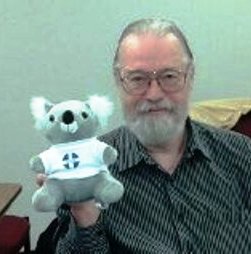
Really? Do I look that much like ALGEE?

By David Joel Miller.

Algee Look Alike

Algee Look-Alike

Just back from a Youth Mental Health First Aid Training. One of the other trainers took this picture and tried to assert that somehow I look like a relative of ALGEE. Really? Do I look that much like a koala bear?

For those of you not familiar with Algee or Mental Health First Aid (MHFA) let me catch you up.

Mental Health First Aid is this cool program that started in Australia and is now available in America. It is sponsored by the National Council for Community Behavioral Healthcare.

MHFA

MHFA

The goal of the program is to teach as many people as possible to recognize when someone is having a mental health problem. You can also learn some skills to be helpful and to get this person the help they need.

The program is not designed for professionals; after all, by the time someone gets to us, we already know they have problems. MHFA is designed to be used just like Medical First Aid in being helpful when there are no professionals around or until you can get help for the person experiencing mental health issues.

The training runs 8 information-packed hours and is conducted by certified trainers all over America and in many other countries as well. I have been an MHFA trainer in the Adult course for a number of years.

Youth Mental Health First Aid is not meant to be a training for young people but rather a course for adults who work with young people. The goal is to help adults who work with or around young people to better recognize and respond to emerging problems in the hope that early detection and assistance efforts may help prevent some mental health issues and may help to reduce the severity of others.

The Mental Health First Aid website has a list of certified trainers and scheduled upcoming trainings. Check there for possible trainings in your area. You are also welcome to contact me about trainings, I may be doing in the future.

While Algee and I may have some superficial resemblances I do not believe that we are in any way related. We are however both interested in helping to reduce the stigma around mental illness and to help people to cope with all of life’s problems.

How about you? Are you interested in becoming a Mental Health First Aider?

Staying connected with David Joel Miller

Seven David Joel Miller Books are available now!

My newest book is now available. It was my opportunity to try on a new genre. I’ve been working on this book for several years, but now seem like the right time to publish it.

Story Bureau.

Story Bureau is a thrilling Dystopian Post-Apocalyptic adventure in the Surviving the Apocalypse series.

Baldwin struggles to survive life in a post-apocalyptic world where the government controls everything.

As society collapses and his family gets plunged into poverty, Baldwin takes a job in the capital city, working for a government agency called the Story Bureau. He discovers the Story Bureau is not a benign news outlet but a sinister government plot to manipulate society.

Bumps on the Road of Life. Whether you struggle with anxiety, depression, low motivation, or addiction, you can recover. Bumps on the Road of Life is the story of how people get off track and how to get your life out of the ditch.

Dark Family Secrets: Doris wants to get her life back, but small-town prejudice could shatter her dreams.

Casino Robbery Arthur Mitchell escapes the trauma of watching his girlfriend die. But the killers know he’s a witness and want him dead.

Planned Accidents  The second Arthur Mitchell and Plutus mystery.

Letters from the Dead: The third in the Arthur Mitchell mystery series.

What would you do if you found a letter to a detective describing a crime and you knew the writer and detective were dead, and you could be next?

Sasquatch. Three things about us, you should know. One, we have seen the past. Two, we’re trapped there. Three, I don’t know if we’ll ever get back to our own time.

For these and my upcoming books; please visit my Author Page – David Joel Miller

Want the latest blog posts as they publish? Subscribe to this blog.

For videos, see: Counselorssoapbox YouTube Video Channel

Winter Blues (SAD) Prevention and Treatment

By David Joel Miller, MS, Licensed Therapist & Licensed Counselor.

Winter

Winter.
Photo courtesy of Pixabay.com

Treatments for Winter Blues.

For some people, the Winter Blues is a mild transitory issue. You miss someone who is not there or you wish something were other than it is. But for some people, this becomes a severe emotional problem.

The Winter Blues sometimes is called Seasonal Affective Disorder or more precisely it is Major Depressive Disorder with seasonal features, a diagnosable mental illness.

There are a handful of treatments and the one that is right for you should be chosen in consultation with your doctor, psychiatrist, or therapist. Each treatment has its advantages and its limitations.

Light therapy for seasonal affective disorder.

One group of theories about winter blues has its cause as a reduction in the amount of sunlight that occurs during the winter. More light, so the thought goes, and you should be less depressed. The cause could be just the amount of light but it can also be changes in the way your body reacts to the light level so some people are way more sensitive to changes in light levels, light intensity, and the amount of sleep they get.

Just leaving on a few lights in the early morning or evening may help a few people but most light therapy involves special lights of high intensity which are close in color and intensity to normal daylight.

The drawbacks to light therapy, above and beyond the cost of special lights, are that to be effective you may need to devote a lot of time on a very regular basis to sitting in these lights. Most often this is done first thing in the morning.

If this works for you, and remember it does not work for everyone, the results will fade in 3 to 5 days if you stop sitting under the lights. Once you start light therapy plan on continuing it until the winter season is over.

Medication seasonal depression.

Some people react well and quickly to antidepressants. Not everyone gets the same benefits from the same meds. You need to work with your doctor on this and start early, take the meds as prescribed and keep them up until any chance of a relapse of your depression is passed.

Therapy can reduce seasonal depression.

People with seasonal features to their depression, Winter Blues, in particular, are prone to the same sort of thinking errors that people with other kinds of depression experience. Therapy to correct negative or unhelpful thinking can reduce Seasonal Affective Disorder.

Self-care reduces the impact of seasonal affective disorder.

More exercise, better diet, and being around a positive support system can help you avoid or reduce the symptoms of the Winter Blues. Relapse from this condition, like recovery from most issues, requires a program of relapse prevention that includes management of internal triggers like sleep, hunger, and emotions as well as management of your contact with outside things such as people and places. Work on staying healthy and being around healthy supportive people.

Combination Therapy

Any or all of the treatments above can be combined. Medication is most often combined with therapy and self-care. Having a strong support system is especially important if you experience Winter Blues.

If you are sad, down, or depressed this Holiday season, whether it is because of Winter Blues or some other reason, please take good care of yourself and reach out for help when you need it.

For more about SAD and the risk factors involved take a look at the post

Sad – Risk factors. 

Staying connected with David Joel Miller

Seven David Joel Miller Books are available now!

My newest book is now available. It was my opportunity to try on a new genre. I’ve been working on this book for several years, but now seem like the right time to publish it.

Story Bureau.

Story Bureau is a thrilling Dystopian Post-Apocalyptic adventure in the Surviving the Apocalypse series.

Baldwin struggles to survive life in a post-apocalyptic world where the government controls everything.

As society collapses and his family gets plunged into poverty, Baldwin takes a job in the capital city, working for a government agency called the Story Bureau. He discovers the Story Bureau is not a benign news outlet but a sinister government plot to manipulate society.

Bumps on the Road of Life. Whether you struggle with anxiety, depression, low motivation, or addiction, you can recover. Bumps on the Road of Life is the story of how people get off track and how to get your life out of the ditch.

Dark Family Secrets: Doris wants to get her life back, but small-town prejudice could shatter her dreams.

Casino Robbery Arthur Mitchell escapes the trauma of watching his girlfriend die. But the killers know he’s a witness and want him dead.

Planned Accidents  The second Arthur Mitchell and Plutus mystery.

Letters from the Dead: The third in the Arthur Mitchell mystery series.

What would you do if you found a letter to a detective describing a crime and you knew the writer and detective were dead, and you could be next?

Sasquatch. Three things about us, you should know. One, we have seen the past. Two, we’re trapped there. Three, I don’t know if we’ll ever get back to our own time.

For these and my upcoming books; please visit my Author Page – David Joel Miller

Want the latest blog posts as they publish? Subscribe to this blog.

For videos, see: Counselorssoapbox YouTube Video Channel
Questions and comments – let me get back to you on that

By David Joel Miller, Licensed Therapist, and Licensed Counselor.

Counseling questions

Counseling questions.
Photo courtesy of Pixabay.com

You have questions – you left comments.

Sorry about not getting to answer all those great questions. You, readers, have sent in a number of comments and questions, some on one site and some on another.  All those comments and questions deserve a decent response. I am finding that this time of year with finals, a three-day training, preparing for the next semester, and the general hecticness of the season, there has just not been time to get back to all of you as I had wished.

So I hope you will keep reading the posts as they are scheduled to appear and know that I will get back to your questions and comments as soon as I possibly can.

You should know that most of the posts on counselorssoapbox.com are written ahead of time and then scheduled to appear at a later date.

There have been lots of new developments in therapyland and in recoveryland also. I have been reading some new research and the way we see substance abuse, mental illness and recovery are all about to change.

Over the next year, I want to talk about all of these items and give the questions and comments the replies they deserve.

Here are just some of the things that remain on my to-write-about list.

1.  How treatment and recovery might apply to children and adolescents. Over my time working in the recovery field I have seen a lot of youngsters that need and deserve help. Working with adults I see issues that are clearly the result of childhood mental illness or substance abuse that went untreated.

2. The role of the internet and modern technology in mental health and recovery. I see both harms and help from these new technologies. We should talk about what might be helpful in treating and preventing emotional and substance abuse issues and what internet features may be promoting recovery.

3. The changing role and status of LPCC’s in delivering mental health and substance abuse treatment in California.

4. Affairs: This is not a new topic but it is a large, possibly the largest, reason couples come to see me in private practice. People have strong feelings about this. With more than half of all marriages ending in divorce and more than half of all people reporting they have had affairs we need to look at this issue and how you might recover from an affair – yours or your partners.

5. New developments in brain science. The last year has resulted in some intriguing new knowledge of the brain and how it works. This research has suggested some new ways that mental and emotional illnesses, as well as substance use disorders, can be treated. Not all of this new knowledge points to using more medication to treat problems. Research continues to point to the value of talk therapies in treating emotional issues.  While I am neither a medical doctor nor a researcher, as a counselor, therapist, and writer, I find these developments worth commenting on.

6. The major role of stress, adjustment, and dissociation in emotional problems. PTSD, complex trauma, and a host of other problems have received less attention than they require. We need to talk more about how stress affects people, how to manage stress, and how to heal from past stressful experiences.

One goal for the counselorssoapbox.com blog this year was to write and post 350 new articles. With those already scheduled to appear before the year-end, it is clear that we will reach this goal. This will bring the total of articles posted on counselorssoapbox.com to over 700 posts.

This coming year looks to be a busy one. I will be teaching more classes than last year, doing more trainings, and plan to get back to work on that book or books. Readers have asked questions about, change, recovery, resiliency, and how to create a happy life, which needs much longer discussions than a blog post. The books in progress will be a way to offer my views on those topics.

Thanks to all the readers, new and longtime, of counselorssoapbox.com.  Keep those questions and comments coming; it encourages me to keep writing.

Staying connected with David Joel Miller

Seven David Joel Miller Books are available now!

My newest book is now available. It was my opportunity to try on a new genre. I’ve been working on this book for several years, but now seem like the right time to publish it.

Story Bureau.

Story Bureau is a thrilling Dystopian Post-Apocalyptic adventure in the Surviving the Apocalypse series.

Baldwin struggles to survive life in a post-apocalyptic world where the government controls everything.

As society collapses and his family gets plunged into poverty, Baldwin takes a job in the capital city, working for a government agency called the Story Bureau. He discovers the Story Bureau is not a benign news outlet but a sinister government plot to manipulate society.

Bumps on the Road of Life. Whether you struggle with anxiety, depression, low motivation, or addiction, you can recover. Bumps on the Road of Life is the story of how people get off track and how to get your life out of the ditch.

Dark Family Secrets: Doris wants to get her life back, but small-town prejudice could shatter her dreams.

Casino Robbery Arthur Mitchell escapes the trauma of watching his girlfriend die. But the killers know he’s a witness and want him dead.

Planned Accidents  The second Arthur Mitchell and Plutus mystery.

Letters from the Dead: The third in the Arthur Mitchell mystery series.

What would you do if you found a letter to a detective describing a crime and you knew the writer and detective were dead, and you could be next?

Sasquatch. Three things about us, you should know. One, we have seen the past. Two, we’re trapped there. Three, I don’t know if we’ll ever get back to our own time.

For these and my upcoming books; please visit my Author Page – David Joel Miller

Want the latest blog posts as they publish? Subscribe to this blog.

For videos, see: Counselorssoapbox YouTube Video Channel

8 Ways to make the holiday emotionally safe

By David Joel Miller, MS, Licensed Therapist & Licensed Counselor.

Fall scene

Happy Holidays

Plan now to safeguard yourself in recovery.

The holidays can be stressful times. Recovery, from anxiety, trauma, alcohol or drugs is a precious thing and it takes a lot of work to reach for a recovered life. Keep your recovery and yourself safe this Holiday season by using these tips.

It is easy to get caught up in the “shoulds” and the “musts” and forget to look for the things that will be most helpful to you and your recovery.

Here are some helpful hints for getting through this time of year with your recovery unscathed.

1. Practice saying NO!

There can be a lot of pressure to do and say things that are not good for you. Work on setting healthy boundaries. Tell people no if they try to get you to do things that may be stressful and bad for your recovery.

Learn to tell yourself no also. There is always the temptation to overdo, run about too much, visit too many places, and try to do too much to make this a perfect holiday. Nothing will make the holidays perfect if your recovery unravels.

2. Too much of a good thing is a bad thing.

Even happy times can be stressful. This is especially true if you are recovering from depression, anxiety, or substance abuse. Do not let the good times wear you out and leave you vulnerable to relapse into your particular issue.

Happiness is not a sprint to get to the cookie jar first. A happy life is a long journey of relaxed enjoyment. Trying to put too much pleasure on your plate one day may leave you unable to do the things that might make you happy the next and beyond.

3. Avoid people and places that would undermine your recovery.

Some family is not healthy. Just because they are relatives does not mean you owe it to them to put yourself at risk. Avoid family members who may undermine your mental health. Take a supportive person with you if you will encounter negative people and be prepared to cut your visit short if the stress gets to you or you begin to be overtired.

4. Take exceptional care of yourself.

Get plenty of sleep. Lack of sleep one night can set up the downward spiral that will result in being too emotional wrung out to get up the next day. Overtired can lead to using substances to try to keep going. Cut your sleep short and you are setting yourself up for a relapse.

Drink plenty of water. This reduces the effects of other unhealthy exposures. Being very thirsty sets problem drinkers up to drink alcohol and places people with mental illnesses at risk to drink more than they planned.

Eat healthy food. Avoid excess sugar and take in those calories in moderation. It is a whole lot easier to pass up a few unhealthy treats than it will be to get back in shape in the New Year.

5. Make getting better job one.

Nothing is more important than your recovery. If you have started practices that are furthering your recovery do not put them aside over the holiday season.

Go to the gym, do your journaling, call supportive people. Keep up with your spiritual practice. Prayer and meditation are not tools that should be kept in the drawer this time of year. If you practice mindfulness and meditation make this a do first action.

6. Go for the safe choice first.

Avoid doing things that you “might” be able to handle. Avoid things that are risky and go always for the safe choice first.

Alcoholics should not drop by the bar just to say hi. Do not call people you know will be upsetting.

7. Reach out for help.

Call your support system. If you are a member of a particular fellowship make sure meetings are on your to-do list. Attend religious services if you find this supportive of your recovery.

Every recovering person needs a list of people who are supportive. Make those calls to other recovering people. Sometimes you will find that they needed to hear from you even more than you need to talk with them.

8. Do not push yourself.

Be kind and gentle with yourself. Do not overdo. Do not pile more and more on your plate and expect to get through the holiday season with your recovery intact.

Taking good care of yourself is not being selfish. Be the kind of friend you need. Be your own best friend.

Which of these things do you plan to do? What other techniques have you found that help keeps you safe and in recovery over the holidays?

Staying connected with David Joel Miller

Seven David Joel Miller Books are available now!

My newest book is now available. It was my opportunity to try on a new genre. I’ve been working on this book for several years, but now seem like the right time to publish it.

Story Bureau.

Story Bureau is a thrilling Dystopian Post-Apocalyptic adventure in the Surviving the Apocalypse series.

Baldwin struggles to survive life in a post-apocalyptic world where the government controls everything.

As society collapses and his family gets plunged into poverty, Baldwin takes a job in the capital city, working for a government agency called the Story Bureau. He discovers the Story Bureau is not a benign news outlet but a sinister government plot to manipulate society.

Bumps on the Road of Life. Whether you struggle with anxiety, depression, low motivation, or addiction, you can recover. Bumps on the Road of Life is the story of how people get off track and how to get your life out of the ditch.

Dark Family Secrets: Doris wants to get her life back, but small-town prejudice could shatter her dreams.

Casino Robbery Arthur Mitchell escapes the trauma of watching his girlfriend die. But the killers know he’s a witness and want him dead.

Planned Accidents  The second Arthur Mitchell and Plutus mystery.

Letters from the Dead: The third in the Arthur Mitchell mystery series.

What would you do if you found a letter to a detective describing a crime and you knew the writer and detective were dead, and you could be next?

Sasquatch. Three things about us, you should know. One, we have seen the past. Two, we’re trapped there. Three, I don’t know if we’ll ever get back to our own time.

For these and my upcoming books; please visit my Author Page – David Joel Miller

Want the latest blog posts as they publish? Subscribe to this blog.

For videos, see: Counselorssoapbox YouTube Video Channel

Reactive Attachment Disorder is now a Trauma and Stressor-Related Disorder

By David Joel Miller, MS, Licensed Therapist & Licensed Counselor.

Words about PTSD

Stress and Trauma. 
Photo courtesy of Pixabay.com

Reactive Attainment is related to Stress and Trauma but how?

We know children can be affected by reactive attachments but now we are wondering if it might underlie some problems of adults. We know what happens to you growing up can shape and affect you for the rest of your life, how much might reactive attachment disorder be contributing to adult mental health issues?

Reactive Attachment Disorder (RAD) used to be a problem relegated to a special section on childhood issues; it has been moved to the Stress and Trauma section of the new DSM-5. Two things to consider – the way in which this childhood problem may be affecting adults and how might this be another case of how much is it affecting adults rather than a simple yes or no question.

Reactive Attachment is a serious problem for very young children as any Child Protective services worker will tell you. We have a fairly good idea of what causes it and some methods of treating it but the long-term consequences seem to get lost when the child reaches the school years and beyond.

Working with adults I see some of these characteristics from time to time. I do not want to minimize the problem in children nor do I think every adult problem should get blamed on childhood experiences. Just the same there are these tendencies we see in adults and I can’t help wondering how many of those adult problems had their roots in childhood experiences.

First the 7 criteria for Reactive Attachment Disorder (very roughly paraphrased from the DSM-5) and along the way some thoughts on how other adult issues may be like this one and may be different from RAD. For the full, precise set of characteristics and diagnostic criteria see the DSM-5.

1. The child is always or almost always is inhibited and withdrawn. They do not go to adults for comfort and when the adult tries they do not appear to be comforted.

2. Low or no social interaction with others, and does not look happy or like they are enjoying themselves. Lots of sadness, irritability, and fear for no good reason.

3. The child has been neglected and did not get their needs met by adults in their life. Parents could not or did not meet the child’s needs or the child moved from caregiver to caregiver so much no pattern of care got off the ground. Group settings with too few adults per child can also cause this.

4. We think the lack of care caused the problem. (This can be the tricky one as we may not know what this person’s care was like way back when.)

5. This is not Autism or something like autism (The DSM lists ways to tell these apart.)

6. This started before age 5.

7. The child is developmentally at least 9 months old.

Now if you got all that you should have a picture of what this neglected (maybe also abused) child might look like. This kid could be a very difficult child to raise. The just sit there and look at you.

Most kids we expect to be cute. Give them a toy to play with and they smile. Hug them and they hug you back. Not the child with RAD. This kid cries for no reason and does not stop when you hold them. They never smile and they are always irritable. They jump at the slightest sound and then refuse your touch when you try to comfort them. Getting the picture?

Now the criteria wants us to see and know all this before 5 years and know that the neglect (or abuse) caused this.

What would this child look like in ten or twenty years as they grow up and for some reason first appear in the mental health system?

What might these symptoms look like if it was not an all or nothing situation? Say the parents worked all the time and the child had to fend for themselves. They moved around a lot and had no friends or close family members?

As this person ages, they might live in various group homes. The caregiver would keep changing. They would develop trust issues. They might believe that you can’t rely on others because they will leave you.

In the teen years, this child might, still angry, irritable, anxious, act out, and get in trouble. These would be the children that blow foster home placements or move from group home to group home. Even if they lived with some family member, grandma or aunt, they would never really get close to that person and eventually, they would “hook up with” a member of the opposite sex and have some more little ones.

Not able to feel cared for they might not be able to care for their own children and they might abuse or neglect the next generation.

While Reactive attachment is an extreme case I think by now you might see how low caregiver contact, abuse, neglect, or frequent changes in living situations could produce some of these characteristics to a greater or lesser degree as the child grows to adulthood.

Not knowing or feeling loved is at the core of these problems.

We may well have been underestimating the effects of lifespan issues in our evaluation of adult mental and emotional issues.

People can and do recover from almost all forms of mental and emotional disorders, but recovery from Reactive Attachment Disorder is a difficult process.

Staying connected with David Joel Miller

Seven David Joel Miller Books are available now!

My newest book is now available. It was my opportunity to try on a new genre. I’ve been working on this book for several years, but now seem like the right time to publish it.

Story Bureau.

Story Bureau is a thrilling Dystopian Post-Apocalyptic adventure in the Surviving the Apocalypse series.

Baldwin struggles to survive life in a post-apocalyptic world where the government controls everything.

As society collapses and his family gets plunged into poverty, Baldwin takes a job in the capital city, working for a government agency called the Story Bureau. He discovers the Story Bureau is not a benign news outlet but a sinister government plot to manipulate society.

Bumps on the Road of Life. Whether you struggle with anxiety, depression, low motivation, or addiction, you can recover. Bumps on the Road of Life is the story of how people get off track and how to get your life out of the ditch.

Dark Family Secrets: Doris wants to get her life back, but small-town prejudice could shatter her dreams.

Casino Robbery Arthur Mitchell escapes the trauma of watching his girlfriend die. But the killers know he’s a witness and want him dead.

Planned Accidents  The second Arthur Mitchell and Plutus mystery.

Letters from the Dead: The third in the Arthur Mitchell mystery series.

What would you do if you found a letter to a detective describing a crime and you knew the writer and detective were dead, and you could be next?

Sasquatch. Three things about us, you should know. One, we have seen the past. Two, we’re trapped there. Three, I don’t know if we’ll ever get back to our own time.

For these and my upcoming books; please visit my Author Page – David Joel Miller

Want the latest blog posts as they publish? Subscribe to this blog.

For videos, see: Counselorssoapbox YouTube Video Channel