
Should your therapist tell you what to do?

By David Joel Miller, MS, Licensed Therapist & Licensed Counselor.

Therapist

Therapist.
Photo courtesy of Pixabay.com

Do therapists and counselors tell people what to do?

Most counselors and therapists will tell you that they do not, under any circumstances, tell clients what to do. Frankly, I think many of my colleagues are fooling themselves more than they are fooling their clients when they say that they do not tell clients what to do.

There are good reasons to tell someone to do things and there are also good reasons to not tell people what to do. This is especially true in something as close and confidential as the counseling relationship.

Clients have told me that they get very upset with their therapists either because the therapist keeps telling them to do something that is inconsistent with their goals and beliefs or because they ask the therapist what they should do and did not get an answer.

There are three questions to examine here. Why do therapists avoid telling clients what to do? Why after saying they would never do this do they then go ahead and try to influence the client’s behavior in more subtle ways, and lastly why counselors can and should tell clients what to do.

Two reasons why the therapist should avoid telling the client what to do.

The goal of counseling is to help clients learn to solve their own problems. Telling clients what to do “fosters dependence” meaning if we make the decisions for you then you do not learn to make them for yourself.

Rather than telling you what to do the counselor should be helping you learn about yourself, what are your values and goals, and then learn how to make the choices that are right for you, not the ones that are good for the therapist.

Second, it is your life, not ours. I do not want to tell someone to get married or divorced and then have to take the blame for things that turn out badly. We are not fortune tellers and do not know what the future holds. You need to pick the outcome that is best for you. While we may have opinions, they are our opinions.

How therapists try to tell you what to do anyway.

Therapists and counselors have opinions, often strong opinions about things. We see certain things as bad for you and other things as good. Not all professionals agree on which is which.

Some marriage therapists refer to themselves as “Gorilla divorce busters.” They believe that all marriages should be saved. So if you go to them for help, no matter how badly you feel in this relationship expect this professional to try to talk you into working on the relationship and out of getting a divorce.

Some therapists take a pro one gender stance. Lots of times this is a pro-feminist stance. They seem to always align with the woman. The message is the man is the problem, get rid of that guy and things will be better.

Personally, over time my position on these gender issues has changed. Most of the time it is neither person’s fault, and if they get divorced they will each be back with a new partner. Pick a partner and you pick a set of problems. So I encourage them to learn the skills they need for a good relationship and practice this with their current partner first.

I also recognize that sometimes even if both people change, the damage they did to each other may mean that they just can’t be together.

Personally, I have worked with so many people who have a substance use disorder that I tend to think most people need to give the drugs or alcohol up. If the couple has most of their fights while drinking I tend to think we need to talk about Alcohol abuse. If the client says they do not want to quit, I go with that. But next week when they get drunk and hit each other again I may ask about that drinking thing again.

I can think of a bunch of other issues that turn up in counseling that might prompt a counselor who has strong opinions to try to influence their client even after that professional says they never tell their clients what to do. Abortion, Homosexuality, and other sexual behaviors all may evoke that behavior in the therapist.

When should a counselor tell a client what to do?

I think, and I may well be in the minority on this, that there are times the counselor may need to tell the client what to do. I usually do this more in the way of providing information or making suggestions, but the point is clear that I think this is what the client should do.

When might a counselor do that? Mostly when I have some information that the client needs and the client does not have that information, some of this borders on social work. I do not do that but I do clinical counseling and there are similarities.

If the client does not have a job, I might do some testing, talk about their job history, and which was their favorite job, and then I might suggest some careers that would be good for the client. I might also suggest some websites to visit and some ways to revise their resume.

If the client is homeless I might suggest some places to go for housing. I might also revisit the drinking problems and suggest that if they stay sober their housing opportunities increase.

When doing Cognitive Behavioral therapy I may give homework. We sometimes call this “conducting behavioral experiments.” I ask the client to do something and then in the next session we talk about how that went. If they did not do the experiment we talk about what got in the way of doing this exercise.

Most of this “advice-giving” is done when the client is trying to adjust to a change in their life and they just do not know where to go or what to do. This “telling” also works best when it is done in the form of suggestions and the client is free to do or not do these things. Either way, I am willing to keep seeing the client and together we work on finding the solution to their problems that work best for them.

Staying connected with David Joel Miller

Seven David Joel Miller Books are available now!

My newest book is now available. It was my opportunity to try on a new genre. I’ve been working on this book for several years, but now seem like the right time to publish it.

Story Bureau.

Story Bureau is a thrilling Dystopian Post-Apocalyptic adventure in the Surviving the Apocalypse series.

Baldwin struggles to survive life in a post-apocalyptic world where the government controls everything.

As society collapses and his family gets plunged into poverty, Baldwin takes a job in the capital city, working for a government agency called the Story Bureau. He discovers the Story Bureau is not a benign news outlet but a sinister government plot to manipulate society.

Bumps on the Road of Life. Whether you struggle with anxiety, depression, low motivation, or addiction, you can recover. Bumps on the Road of Life is the story of how people get off track and how to get your life out of the ditch.

Dark Family Secrets: Doris wants to get her life back, but small-town prejudice could shatter her dreams.

Casino Robbery Arthur Mitchell escapes the trauma of watching his girlfriend die. But the killers know he’s a witness and want him dead.

Planned Accidents  The second Arthur Mitchell and Plutus mystery.

Letters from the Dead: The third in the Arthur Mitchell mystery series.

What would you do if you found a letter to a detective describing a crime and you knew the writer and detective were dead, and you could be next?

Sasquatch. Three things about us, you should know. One, we have seen the past. Two, we’re trapped there. Three, I don’t know if we’ll ever get back to our own time.

For these and my upcoming books; please visit my Author Page – David Joel Miller

Want the latest blog posts as they publish? Subscribe to this blog.

For videos, see: Counselorssoapbox YouTube Video Channel

What will you have to do if you go to an A.A. meeting?

By David Joel Miller, MS, Licensed Therapist & Licensed Counselor.

AA big book

Alcoholics Anonymous big book.

A. A. etiquette, Does and Don’ts.

You need to go to an Alcoholics Anonymous meeting, maybe you have decided you have a drinking problem, or maybe the judge or probation has told you that you will have to attend a certain number of meetings. Most rehab programs will require meeting attendance also.

What should you expect the first time you go? What will they ask you to do and say? What should you not do? Are they going to grill you about your private business?

When I teach Substance abuse counseling I encourage students who are not regular attendees of A. A. meetings to go to a meeting and have that experience of walking through the door the first time.

Here are some of the things that you might experience that first time at A. A.

For this description, I will assume that you have checked a schedule and are attending an “open” meeting so you will not be asked to qualify as an Alcoholic. I will describe a “typical” meeting, though things may happen differently in various areas and meetings are free to set up their own procedures as long as those procedures do not violate the 12 steps or the 12 traditions.

A. A. Members practice a policy called Anonymity. This is different from what counselors observe when we say most things we talk about in counseling are “confidential.”

When you introduce yourself, in order to protect your “anonymity” you will introduce yourself as let’s say “Mark A.” You are not expected to use your last name. You could use a middle name, an alias, or any name you chose. No one is going to check your I. D.

Just remember if you introduce yourself by an alias or a nickname that it will be embarrassing later when you know these people to have to say – oh and by the way my name is really Bob.

There may be a sign-in sheet that goes around. This is to help the secretary or meeting chair know who to call on. These sheets are not kept and are not used to prove you were there. They are destroyed after the meeting is over. You do not need to sign in if you chose not to.

If you have a “court card” or another document that you need to be signed to prove you are there get there before the meeting starts and give that paper to the person conduction the meeting. This person is customarily called the “secretary.

I will talk more about court cards in an upcoming post.

If this is a book study people will take turns reading. They may go around the table or the Secretary may call for volunteers or may call on people. If you do not feel like reading it is fine to just tell them you pass.

During the discussion part of the meeting or if this is an all discussion meeting, then anytime, you may get called on. Either by the name you signed in with or by something abstract like – “how about the man in the blue shirt over there, would you like to share?”

If you do not want to share it is perfectly permissible to say something to the effect of “I just want to listen.” At that point, the secretary or chairman will move on to someone else.

You will never be required to talk or answer questions, though some members may be interested in you and at breaks, before or after the meeting, they will come up to you and introduce themselves. At that point, they may ask you a question about yourself as a way of starting a conversation.

It is acceptable to just say you wanted to see what happens at an A. A. meeting or to ask the person who introduced themselves to tell you about their experiences in A. A.

At some point in the meeting, they will practice the “seventh tradition.”

This means that they will pass a basket and people put in what they can. If you are a member (want to stop drinking) put something in if you can.

A. A. does not accept money from outside sources so the money put in the basket pays for the room and the coffee. If there is food, someone bought it and donated it.

If you decide to share, talk about your problems with alcohol and staying sober. If you have other problems or issues, you may mention them in passing but stick to the topic which is mostly staying sober.

A. A. members understand that the people who come to meetings may well have many problems. There are now over 200 twelve-step groups patterned after A. A. Not all of those groups have meetings all over all the time the way A. A. does, so people may turn up at an A. A. meeting who do not think they have a problem with alcohol.

Most of those people who come in thinking that their main problem is something other than alcohol say depression or anxiety, may be surprised as they listen to learn how much their alcohol consumption is impacting those other problems.

Beyond those simple things, sit back and listen. Hang around after the meeting and talk to the people who are there. You just might make some new clean and sober friends and discover that going to meetings is something you enjoy doing rather than something forced on you by the court or a rehab program.

Next time let’s talk about “Carrying a Court card.”

The posts I write about AA are from my perspective as a therapist and clinical counselor and do not necessarily reflect the views of AA World Services. For more on AA and their program of recovery check out the “AA Big Book” titled Alcoholics Anonymous at the links below or contact AA World Services at their website.

The Big Book of Alcoholics Anonymous

The classic text on Alcoholism, recovery this is the book that started off the whole 12 step phenomenon.

Alcoholics Anonymous from The Anonymous Press

One of the Kindle editions – At 99 cents this is such a bargain. This edition needed a separate listing. No Kindle reader? No Problem, if you have a computer you can download a free Kindle reader.

http://www.aa.org

Staying connected with David Joel Miller

Seven David Joel Miller Books are available now!

My newest book is now available. It was my opportunity to try on a new genre. I’ve been working on this book for several years, but now seem like the right time to publish it.

Story Bureau.

Story Bureau is a thrilling Dystopian Post-Apocalyptic adventure in the Surviving the Apocalypse series.

Baldwin struggles to survive life in a post-apocalyptic world where the government controls everything.

As society collapses and his family gets plunged into poverty, Baldwin takes a job in the capital city, working for a government agency called the Story Bureau. He discovers the Story Bureau is not a benign news outlet but a sinister government plot to manipulate society.

Bumps on the Road of Life. Whether you struggle with anxiety, depression, low motivation, or addiction, you can recover. Bumps on the Road of Life is the story of how people get off track and how to get your life out of the ditch.

Dark Family Secrets: Doris wants to get her life back, but small-town prejudice could shatter her dreams.

Casino Robbery Arthur Mitchell escapes the trauma of watching his girlfriend die. But the killers know he’s a witness and want him dead.

Planned Accidents  The second Arthur Mitchell and Plutus mystery.

Letters from the Dead: The third in the Arthur Mitchell mystery series.

What would you do if you found a letter to a detective describing a crime and you knew the writer and detective were dead, and you could be next?

Sasquatch. Three things about us, you should know. One, we have seen the past. Two, we’re trapped there. Three, I don’t know if we’ll ever get back to our own time.

For these and my upcoming books; please visit my Author Page – David Joel Miller

Want the latest blog posts as they publish? Subscribe to this blog.

For videos, see: Counselorssoapbox YouTube Video Channel

Will the therapist say I am crazy and lock me up?

By David Joel Miller, MS, Licensed Therapist & Licensed Counselor.

Psychiatric hospital.
Photo courtesy of pixabay.

Being locked up is a fear of some people coming to therapy.

The chances of this happening are very close to zero. The fact that you came in on your own means this is highly unlikely for many reasons.

This idea of the upset person who gets “put away” in a mental hospital, usually called an insane asylum, makes for great T. V or a good novel, but in real life that does not happen, at least not very much and particularly not here in the United States.

Here are the reasons why you are not going to get locked up just for going to see a counselor.

Professionals just do not think of mental illness that way anymore.

The old notion was that there were two kinds of people, normal and crazy. If that were true we would need to lock everyone up because I do not see any normal people in my world. Some people may be more normal or less normal than others, normal being a statistical concept. Being different does not make you crazy.

Mental illness is not the same thing as being crazy.

Mental illness is on a continuum, people get unwell, then they get sick, then they move back in the other direction as they recover. Most people have times in their life when they are anxious or depressed. If someone is shooting at you please get anxious. If a family member dies, I hope you get sad. Do not let that anxiety or depression control you for the rest of your life.

People we call mentally ill get stuck at that “too sad” or “too anxious” and do not seem to get back to a better place without help.

There is a big argument about why. Watch for an upcoming post on the causes of mental illness as I see them.

The therapist expects you to have some problems, so no they are not likely to think you are over the edge just because you came for a little emotional help.

There are only three special reasons you can be confined to a psychiatric hospital against your will.

Holds for involuntary psychiatric hospitalization in this area are only written if the client is a danger to themselves, a danger to others or they are so disabled they can’t feed themselves or clothe themselves. Being poor, or homeless, does not count. I hand you a cookie and you eat it, I offer you a sweater and you put it on, you pass this test.

If you say you are planning to kill yourself then you may be detained until those thoughts pass and you recant that thought. Professionals are suspicious if you were saying you would kill yourself to the police just a few minutes ago and now you are saying that you won’t.

Saying you have thoughts, usually will not get it. You need to also have a plan for when and how you will do it or a history of attempts or some other reason for the official placing you on an involuntary hold to believe this is something you might do.

Being under the influence of drugs or alcohol is a risk factor. People who binge drink or are drunk are 55 times more likely to attempt suicide than sober people. So if when drunk you say you are going to kill yourself and the police are called you may end up in a psychiatric hospital for a very short stay.

Say you are planning to kill someone else, say you also have a gun and you may end up in a hospital or a jail for a while longer. Even then the law just does not let the police or the psych hospital keep people who might someday hurt someone else all that long.

Once the person sobers up or changes their mind, the chances are that they will have to be released even if the police still think that this person may in the future hurt someone.

While this lets some people out who may harm others it also keeps a lot of people from being locked up just because they scare someone else.

The psych hospitals are pretty full and they charge a lot of money.

The hospitals do not want to keep anyone there one minute longer than they have too. The days of years in an asylum are over and gone. Most stays now are a week or less. Stays beyond 30 days are rare.

In crisis units, the stay around here is most often less than a day.

Yes, I know the involuntary hold says 72 hours, but in practice, not many people stay that long. That 72 hours or 3 days is a maximum, not a for-sure.

Most of the complaints I hear are that people were discharged from the hospital before they felt ready, not that they were kept too long.

As soon as someone appears able to cope with life they get let out even if they will need meds or therapy to be able to cope in the future.

Counselors, in most places, are not authorized to write involuntary holds.

Even if a counselor works for the government and writes holds in their day job, they are not able to write them in their private practice. So unless your treating professional is a psychiatrist with treating privileges at the hospital there is a low chance they have that little card that lets them write holds, especially one that would let them write the hold in their private office.

What could happen is if you said you were going to kill yourself or others and you convinced the therapist that you were serious about this, he or she might call the police and get you detained until you change your mind.

There you have it. The things that bring most people to counseling are miles away from the things that might get you locked up in a psych hospital. Stop worrying about this and go get the help you need before you have to live your life in the place of unhappiness.

Staying connected with David Joel Miller

Seven David Joel Miller Books are available now!

My newest book is now available. It was my opportunity to try on a new genre. I’ve been working on this book for several years, but now seem like the right time to publish it.

Story Bureau.

Story Bureau is a thrilling Dystopian Post-Apocalyptic adventure in the Surviving the Apocalypse series.

Baldwin struggles to survive life in a post-apocalyptic world where the government controls everything.

As society collapses and his family gets plunged into poverty, Baldwin takes a job in the capital city, working for a government agency called the Story Bureau. He discovers the Story Bureau is not a benign news outlet but a sinister government plot to manipulate society.

Bumps on the Road of Life. Whether you struggle with anxiety, depression, low motivation, or addiction, you can recover. Bumps on the Road of Life is the story of how people get off track and how to get your life out of the ditch.

Dark Family Secrets: Doris wants to get her life back, but small-town prejudice could shatter her dreams.

Casino Robbery Arthur Mitchell escapes the trauma of watching his girlfriend die. But the killers know he’s a witness and want him dead.

Planned Accidents  The second Arthur Mitchell and Plutus mystery.

Letters from the Dead: The third in the Arthur Mitchell mystery series.

What would you do if you found a letter to a detective describing a crime and you knew the writer and detective were dead, and you could be next?

Sasquatch. Three things about us, you should know. One, we have seen the past. Two, we’re trapped there. Three, I don’t know if we’ll ever get back to our own time.

For these and my upcoming books; please visit my Author Page – David Joel Miller

Want the latest blog posts as they publish? Subscribe to this blog.

For videos, see: Counselorssoapbox YouTube Video Channel

A stone can take away worry?

By David Joel Miller, MS, Licensed Therapist & Licensed Counselor.

Polished stones.
Picture courtesy of pixabay.

Can a worry stone help?

One of the oldest of human traits is the interest we have in picking up little bits of our environment. From the days in the caves, humans have been attracted to bits of nature, shiny stones, seashells and the like.

Many people carry small bits of stones in their pocket as good luck pieces, talismans, amulets or a relief from anxiety or worry.

In this modern era, we tend to dismiss these little bits of nature as irrelevant, unscientific or no more than a part of the placebo effect.

The truth is that those who own and carry these objects, many of them, swear that they are helpful in managing their anxiety. I am reluctant to dismiss anything that works, knowing that much of what we humans believe works because we chose to believe it.

There are plenty of legends about how a particular stone may be helpful in managing an emotion. Some of those stones continue to this day as part of our symbolic heritage. It is intriguing how many “rational, scientific” people have some small item tucked away in a pocket that they rub when uncomfortable.

Diamonds are given for engagements rings. Their unusual hardness and rarity were thought to bring good luck to the relationship. Their expense was thought to encourage the man to hold on to this bride rather than lose such an expensive object.

Amethysts were thought to help prevent drunkenness. Those who carry one and reach for it when they feel the urge to drink report that as long as you keep rubbing the stone you won’t pick up the drink.

Some people take great comfort in small objects that remind them of their faith or religious devotion. Many a person has rubbed the plating off a cross or worn out a set of prayer beads. The cross or the beads, of course, are not usually thought of as the source of the help, but they are a way of reminding yourself of your spiritual connection.

There are books full of the lore of minerals and stones. Each particular variety is seen as a symbol of an emotion and a way of centering oneself.

There are commercially prepared “worry stones,” complete with a hollowed out portion ready to fit the finger with which you rub.

Many other people opt for carrying a small shiny polished stone available from many rock and mineral shops or gift stores.

Other people collect some stone or shell from the places they travel. (Be careful not to take things that are protected on reservations or national parks.)

Do you have some small object, stone or jewelry piece that you rub in times of stress and does it help you discharge that emotion?

Staying connected with David Joel Miller

Seven David Joel Miller Books are available now!

My newest book is now available. It was my opportunity to try on a new genre. I’ve been working on this book for several years, but now seem like the right time to publish it.

Story Bureau.

Story Bureau is a thrilling Dystopian Post-Apocalyptic adventure in the Surviving the Apocalypse series.

Baldwin struggles to survive life in a post-apocalyptic world where the government controls everything.

As society collapses and his family gets plunged into poverty, Baldwin takes a job in the capital city, working for a government agency called the Story Bureau. He discovers the Story Bureau is not a benign news outlet but a sinister government plot to manipulate society.

Bumps on the Road of Life. Whether you struggle with anxiety, depression, low motivation, or addiction, you can recover. Bumps on the Road of Life is the story of how people get off track and how to get your life out of the ditch.

Dark Family Secrets: Doris wants to get her life back, but small-town prejudice could shatter her dreams.

Casino Robbery Arthur Mitchell escapes the trauma of watching his girlfriend die. But the killers know he’s a witness and want him dead.

Planned Accidents  The second Arthur Mitchell and Plutus mystery.

Letters from the Dead: The third in the Arthur Mitchell mystery series.

What would you do if you found a letter to a detective describing a crime and you knew the writer and detective were dead, and you could be next?

Sasquatch. Three things about us, you should know. One, we have seen the past. Two, we’re trapped there. Three, I don’t know if we’ll ever get back to our own time.

For these and my upcoming books; please visit my Author Page – David Joel Miller

Want the latest blog posts as they publish? Subscribe to this blog.

For videos, see: Counselorssoapbox YouTube Video Channel
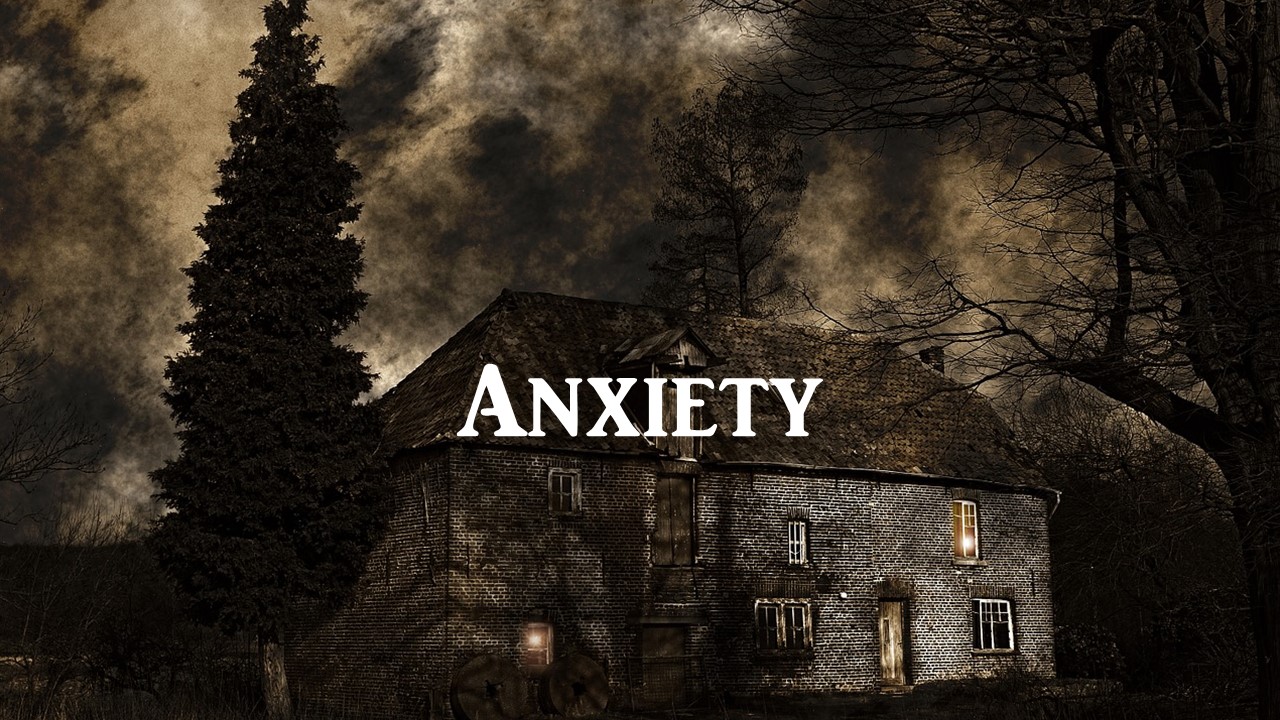
Systematic desensitization – conquering fear.

By David Joel Miller, MS, Licensed Therapist & Licensed Counselor.

Anxiety provoking.

Fear and Anxiety.
Photo courtesy of Pixabay.com

Anxiety can be a stubborn foe.

It is tempting to avoid the things you fear and to find ways to numb those unpleasant feelings. Some people use alcohol or sleeping pills other people use avoidance. But eventually, you have to face that fear or be taken prisoner by your fear.

You can’t get over something you don’t face. Sometimes the only way out of a burning building is through the door that is on fire. To begin with, we won’t ask you to walk through the flames, just to look at the door and see how your fear that it might be on fire on the other side is keeping you a prisoner in that room.

Systematic desensitization reduces the impact of fears.

One way of domesticating the anxiety monster is a technique called systematic desensitization. This is an especially effective technique for taming fears or anxiety when those anxieties are a fear of one very specific thing.

Some of these item fears are so specific we name them Specific Phobias. Meaning you are deathly afraid of one particular thing even if you are never around that thing.

Some of these specific phobias are so terrifying to the people with that particular specific phobia that I can’t even write the word out or they would stop reading. So let’s start with an exaggerated and somewhat humors example of how this specific desensitization could work.

Say there is this person that is deathly afraid of crackers. (The little packaged edible kind.)

If you know who I am talking about here please do not let on. That person’s family laughed at him.  But try as he would he just could not bear to eat at a table where there were crackers. Eventually, this got so bad that I – I mean he – could not eat with his family when they were having soup for fear there would be crackers present.

This fear became progressively worse. Soon eating out was impossible because there might be crackers all around. Eventually, even commercials for crackers or the mention of the word might provoke a panic attack. Something needed to be done.

The cure for cracker or saltine phobia? Systematic desensitization.

So off to the therapist this sufferer from cracker phobia went. Here are the steps in recovery from cracker phobia.

First, you need to be willing to talk about this fear and develop a scale of fear. Something like if we just talk about that fear I – I mean he – had by referring to this as the fear of “You know what.” That would be a 1 on the fear scale.

Actually using the name “Cracker” that scored a two. To see a picture of some crackers in a magazine that would rate a fear factor of 4. Entering at a restaurant where there might or might not be crackers present, that was a 5. Seeing actual crackers, that would be a 6, and witnessing someone eat one that would rank an 8. To have to physically touch a cracker that would rank a 9. To personally eat a cracker that would rate a 10.

Now having developed our scale we would begin to work our way up the scale all the while with the therapist reassuring the client.

Along the way, the therapist might teach the client some relaxation techniques, deep breathing, and so on. The theory here is that you can’t really feel two contradictory feelings at the same time. The more you concentrate on your relaxation the more likely you are for the fear, or anxiety if you prefer, to subside.

So over time, the exposure to the dreaded crackers becomes more and more frequent and closer, all the while practicing the relaxation skills.

At the end of treatment, the goal would be for the client to actually open a package of crackers and to eat one while the counselor watched.

Now neither I nor anyone I know has really suffered from a cracker phobia. This cracker fear has been a long time joke in the family. But I hope this has demonstrated how a counselor could help a client overcome a specific phobia that may sound funny to the client’s family and friends but has been causing the client some very real distress.

What are some of the specific phobias that this method is known to work on? Well the number one fear in America, more severe than the fear of death, is the fear of public speaking. Also up there on the list are phobias to snakes and spiders.

Fear of snakes is no big thing for most city dwellers, but if you needed to live and work outdoors this could be a trial. If you worked at the zoo in the reptile house, a fear of snakes could cost you your job.

So whatever your fear or specific phobia there are treatments to help you turn that anxiety or fear control back down to a manageable setting.

Similar to systematic desensitization, at least in my book, is the use of exposure and response prevention. People with Obsessive-Compulsive Disorder (OCD) develop rituals or routines that they feel the need to perform to reduce the anxiety. If we can expose the person to the thing that they fear and prevent the ritual, then over time the fear diminishes. Combine some relaxation techniques with the exposure and response prevention and you move close to the systematic desensitization approach.

Best wishes on taming those pesky excessive anxiety and fear monsters.

Staying connected with David Joel Miller

Seven David Joel Miller Books are available now!

My newest book is now available. It was my opportunity to try on a new genre. I’ve been working on this book for several years, but now seem like the right time to publish it.

Story Bureau.

Story Bureau is a thrilling Dystopian Post-Apocalyptic adventure in the Surviving the Apocalypse series.

Baldwin struggles to survive life in a post-apocalyptic world where the government controls everything.

As society collapses and his family gets plunged into poverty, Baldwin takes a job in the capital city, working for a government agency called the Story Bureau. He discovers the Story Bureau is not a benign news outlet but a sinister government plot to manipulate society.

Bumps on the Road of Life. Whether you struggle with anxiety, depression, low motivation, or addiction, you can recover. Bumps on the Road of Life is the story of how people get off track and how to get your life out of the ditch.

Dark Family Secrets: Doris wants to get her life back, but small-town prejudice could shatter her dreams.

Casino Robbery Arthur Mitchell escapes the trauma of watching his girlfriend die. But the killers know he’s a witness and want him dead.

Planned Accidents  The second Arthur Mitchell and Plutus mystery.

Letters from the Dead: The third in the Arthur Mitchell mystery series.

What would you do if you found a letter to a detective describing a crime and you knew the writer and detective were dead, and you could be next?

Sasquatch. Three things about us, you should know. One, we have seen the past. Two, we’re trapped there. Three, I don’t know if we’ll ever get back to our own time.

For these and my upcoming books; please visit my Author Page – David Joel Miller

Want the latest blog posts as they publish? Subscribe to this blog.

For videos, see: Counselorssoapbox YouTube Video Channel
Why AA? Reasons therapists recommend you go to AA.

By David Joel Miller, MS, Licensed Therapist & Licensed Counselor.

AA big book

Alcoholics Anonymous big book.

Why do professionals send you to A.A?

Therapists and Counselors treat people with all sorts of serious and persistent mental illnesses so why do they recommend that clients with a drinking problem attend AA meetings?

It turns out that attending meetings provides a lot of benefits that a single therapy session each week can’t provide. In substance abuse treatment programs the standard treatment, after you are over the most immediate problems connected to your drinking or drugging, consists of recommending that clients attend twelve-step meetings.

Here are some of the reasons why professionals recommend A.A.

The 12 steps include a focused system of change.

Embedded in the “working” of steps are the elements of problem identification, change steps, and a program of maintenance. While a therapist may help you work on one problem, depression, or anxiety, the steps are a way of changing your thinking about life and all your problems.

Some people’s only problem is drinking too much, they just quit and are fine. Many others find that once they stop, all the problems they had before they drank are back in force. It takes more than putting the bottle down to stay sober.

Attending meetings helps creates a new set of friends that are clean and sober.

One critical issue in recovery is relapse triggers; hanging out with your old drinking or drugging friends results in a high risk of relapse. Finding friends that do not drink and use requires a change. The more sober friends you make the more support you will have in staying sober.

Seeing others who have changed is very encouraging.

When your therapist tells you that people can change and do recover, you may say yes some people do, but what about me? When you attend meetings and hear the stories of those who have turned their lives around it becomes easy to believe you can do this, especially with the help of people who have themselves recovered.

The longer you stay connected to therapeutic recovery the better the chances.

Continuing to stay in treatment for up to two years has been shown to create better results. Most therapy programs will not cover or include two years of aftercare. A.A. while not professional treatment is a free or very low-cost way to continue to have “booster shots” of recovery for as long as you need them.

Sometimes when I work with mental health clients, I find myself wishing this client had a drinking problem also, and then I could give them a referral to A.A.

There is a serious shortage of self-help, peer recovery groups for those with mental health issues. The few that do exist are often modeled after the 12 step system.

Therapists and counselors do not customarily work the steps with clients. That is something we encourage them to do at the 12 step meeting. What we should do is a process called 12 step facilitation, in which we explain A.A. or other self-help groups, how they work, what the steps are, and encourage people to participate in the meetings.

The posts I write about A.A. or other self-help groups are from my perspective as a therapist and clinical counselor and do not necessarily reflect the views of AA World Services. For more on AA and their program of recovery check out the “AA Big Book” titled Alcoholics Anonymous at the links below or contact AA World Services at their website.

The Big Book of Alcoholics Anonymous

The classic text on Alcoholism, recovery this is the book that started off the whole 12 step phenomenon.

Alcoholics Anonymous from The Anonymous Press

One of the Kindle editions – At 99 cents this is such a bargain. This edition needed a separate listing. No Kindle reader? No Problem, if you have a computer you can download a free Kindle reader.

Staying connected with David Joel Miller

Seven David Joel Miller Books are available now!

My newest book is now available. It was my opportunity to try on a new genre. I’ve been working on this book for several years, but now seem like the right time to publish it.

Story Bureau.

Story Bureau is a thrilling Dystopian Post-Apocalyptic adventure in the Surviving the Apocalypse series.

Baldwin struggles to survive life in a post-apocalyptic world where the government controls everything.

As society collapses and his family gets plunged into poverty, Baldwin takes a job in the capital city, working for a government agency called the Story Bureau. He discovers the Story Bureau is not a benign news outlet but a sinister government plot to manipulate society.

Bumps on the Road of Life. Whether you struggle with anxiety, depression, low motivation, or addiction, you can recover. Bumps on the Road of Life is the story of how people get off track and how to get your life out of the ditch.

Dark Family Secrets: Doris wants to get her life back, but small-town prejudice could shatter her dreams.

Casino Robbery Arthur Mitchell escapes the trauma of watching his girlfriend die. But the killers know he’s a witness and want him dead.

Planned Accidents  The second Arthur Mitchell and Plutus mystery.

Letters from the Dead: The third in the Arthur Mitchell mystery series.

What would you do if you found a letter to a detective describing a crime and you knew the writer and detective were dead, and you could be next?

Sasquatch. Three things about us, you should know. One, we have seen the past. Two, we’re trapped there. Three, I don’t know if we’ll ever get back to our own time.

For these and my upcoming books; please visit my Author Page – David Joel Miller

Want the latest blog posts as they publish? Subscribe to this blog.

For videos, see: Counselorssoapbox YouTube Video Channel

,

Why apologies can make things worse

By David Joel Miller, MS, Licensed Therapist & Licensed Counselor.

Apology – I’m sorry.
Photo courtesy of Pixabay.com

Sometimes an apology makes things worse.

Do you feel you need to apologize?

People in recovery often feel they need to make apologies to others. Occasionally they do need to make them, but much of the time people in early recovery find that trying to apologize makes things worse rather than better.

People who have been drinking and drugging have done some things they should not have done. People in recovery from other mental illnesses often have been unable to do things they should have done. In both cases, it is natural to want to repair the relationship and to think that an apology is in order.

The expectation of many recovering people is that making an apology should mean that the other person forgives them and then everything is all right. They want the relationship to be a good one, even when it never was good, to begin with.

Apologies frequently do not produce the result you expect.

The person to whom you think you owe that apology, they may well still be holding resentment towards you. Your saying you are sorry may not be followed by an “I forgive you and everything is now fine” response from them. Some people need to hang on to their resentments to protect themselves from being hurt again.

What oft-times happens is that the other person takes this opportunity to let you have it. They tell you in most certain terms how badly you harmed them and how mad they continue to be. They may want you to feel their pain by hurting you back, they may just need to be heard and as a result, can’t hear you.

At this point, the recovering person, now surprised that the other person is not accepting their apology, becomes upset, angry and a new fight begins. The effort to repair the relationship breach has resulted in a new conflict and this has happened well along in your efforts to stay clean sober or otherwise recover.

What went wrong with your apology?

Most of the people in a recovering person’s life have heard it all before. You have said you were sorry and then you did it again. Or for some, they have said they would do things and then because of their illness were not able to do those things. The others in your life felt let down if not downright lied to.

If you really would like to repair the damage from the past and mend relationships and apologizing might make things worse – what should you do?

Don’t apologize – take action.

Rather than apologizing you need to do something. Take action and show that person rather than telling them how you are different. Talk is cheap but action speaks so loudly words get drowned out.

Make amends.

The idea of amends comes from 12 step groups. The principle is that rather than saying you are sorry but doing nothing, you need to do things to set the relationship right. If you were not able to do things in your relationship in the past begin as soon as you are able to meet those role expectations.

If you never were able to clean up after yourself, begin as much as you can to pick up and put away the things you use.

Do not get carried away and set yourself up for failure. Do not try to wash every dirty item in the house on the first day. But do gradually begin to take the steps you need to do to be of service to the others in your life.

If you treated others poorly, were over critical, or always angry, try to be happy, helpful, and pleasant to be around.

Over time the changes others see in your will speak volumes about the kind of person you are becoming in recovery and this may be a better apology than any words you could say.

Staying connected with David Joel Miller

Seven David Joel Miller Books are available now!

My newest book is now available. It was my opportunity to try on a new genre. I’ve been working on this book for several years, but now seem like the right time to publish it.

Story Bureau.

Story Bureau is a thrilling Dystopian Post-Apocalyptic adventure in the Surviving the Apocalypse series.

Baldwin struggles to survive life in a post-apocalyptic world where the government controls everything.

As society collapses and his family gets plunged into poverty, Baldwin takes a job in the capital city, working for a government agency called the Story Bureau. He discovers the Story Bureau is not a benign news outlet but a sinister government plot to manipulate society.

Bumps on the Road of Life. Whether you struggle with anxiety, depression, low motivation, or addiction, you can recover. Bumps on the Road of Life is the story of how people get off track and how to get your life out of the ditch.

Dark Family Secrets: Doris wants to get her life back, but small-town prejudice could shatter her dreams.

Casino Robbery Arthur Mitchell escapes the trauma of watching his girlfriend die. But the killers know he’s a witness and want him dead.

Planned Accidents  The second Arthur Mitchell and Plutus mystery.

Letters from the Dead: The third in the Arthur Mitchell mystery series.

What would you do if you found a letter to a detective describing a crime and you knew the writer and detective were dead, and you could be next?

Sasquatch. Three things about us, you should know. One, we have seen the past. Two, we’re trapped there. Three, I don’t know if we’ll ever get back to our own time.

For these and my upcoming books; please visit my Author Page – David Joel Miller

Want the latest blog posts as they publish? Subscribe to this blog.

For videos, see: Counselorssoapbox YouTube Video Channel

Why you should judge a book by its cover

By David Joel Miller, MS, Licensed Therapist & Licensed Counselor.

Books.
Photo courtesy of pixabay.

Ever heard the old saw “Never judge a book by its cover? Turns out that most of the time we should be judging books by their covers.

Let’s start by considering two literal books, both presumably about economics and how to respond to economic problems.

Book one is titled “How to make money in a bad economy.” The author’s name is “A working girl” and the cover depicts an attractive woman in a negligee holding a large fanned wad of cash.

Book two is titled “The history of recessions, depressions, panics, and commercial revulsion’s in the United States from 1640 to 2008, including the role of government’ policy in precipitating financial collapses.”  This second book is written by a well-known economist from a prestigious eastern school. It comes with a very plain cover with the title, author’s name and credentials, and not much else.

Which book should you pick? Do you really need to open the book and read the first few chapters to figure this one out?

If you wanted a steamy sex book, by all means, pick the first book. But if you are trying to figure out a way to plan your financial future you might be better off with book two.

Turns out that there are plenty of times when we should, in fact, judge a book and a whole lot of other things by their cover, so to speak.

You don’t always get the chance to think it over.

Humans are inherently cognitive misers. We only have so much brain space and if we squander that capacity thinking over things that do not require careful thought we will have nothing left to think about trivial things like what to eat and where to live. Think too much about every decision and you will have trouble getting out of bed in the morning.

Now it is possible that these titles are misleading and that one or both do not live up to the promise made by the cover. If you really want to be sure you might open the book and read the first page or two but by then you should have figured out if this is the book for you.

Turns out that there are a lot of other life decisions where the first impression is the right one.

Yes, first impressions can be wrong, but most of the time we form those first impressions based on past experiences, and as a result, we find it easy to make choices that have a high probability of pleasing us.

Too much time spent thinking things over and checking every possibility to avoid a mistake can result in paralysis and indecision.

One other factor to consider is the costs of either failing to make a decision or making a bad decision.

If you are a college professor who teaches economics, you may well go ahead and buy both. Spending more money may be within your budget. But if you are having trouble paying your bills you may read a few pages of both and then decide to pass on both.

This does not negate the principle that sometimes there are plenty of good reasons to judge a book by its cover.

One last thought. In doing that judging you need to look at what the thing is, not how it looks. I have bought a lot of used books in my time. Some had torn or dirty covers some had no dust jacket at all. Still, I could generally tell from the apparent characteristics, the title, the author, and so on, whether this book had merit.

I think this value of judging books by their cover applies to a lot of other life decisions.

But what about judging people by their looks. By this, I do not mean race, but their dress and self-care. Should you judge a person by their outward appearance?

More on the pros and cons of judging by appearance and why we are all likely to do things that way when we are unsure will be coming up in a future post on counselors soapbox.com.

Staying connected with David Joel Miller

Seven David Joel Miller Books are available now!

My newest book is now available. It was my opportunity to try on a new genre. I’ve been working on this book for several years, but now seem like the right time to publish it.

Story Bureau.

Story Bureau is a thrilling Dystopian Post-Apocalyptic adventure in the Surviving the Apocalypse series.

Baldwin struggles to survive life in a post-apocalyptic world where the government controls everything.

As society collapses and his family gets plunged into poverty, Baldwin takes a job in the capital city, working for a government agency called the Story Bureau. He discovers the Story Bureau is not a benign news outlet but a sinister government plot to manipulate society.

Bumps on the Road of Life. Whether you struggle with anxiety, depression, low motivation, or addiction, you can recover. Bumps on the Road of Life is the story of how people get off track and how to get your life out of the ditch.

Dark Family Secrets: Doris wants to get her life back, but small-town prejudice could shatter her dreams.

Casino Robbery Arthur Mitchell escapes the trauma of watching his girlfriend die. But the killers know he’s a witness and want him dead.

Planned Accidents  The second Arthur Mitchell and Plutus mystery.

Letters from the Dead: The third in the Arthur Mitchell mystery series.

What would you do if you found a letter to a detective describing a crime and you knew the writer and detective were dead, and you could be next?

Sasquatch. Three things about us, you should know. One, we have seen the past. Two, we’re trapped there. Three, I don’t know if we’ll ever get back to our own time.

For these and my upcoming books; please visit my Author Page – David Joel Miller

Want the latest blog posts as they publish? Subscribe to this blog.

For videos, see: Counselorssoapbox YouTube Video Channel

Will four beers get you drunk?

Gallery

This gallery contains 1 photo.

By David Joel Miller, MS, Licensed Therapist & Licensed Counselor. Are lite beers less intoxicating? Yes, four beers can get you “drunk.” And it does not matter if they are lite beers or not. The brand and the nature of … Continue reading

Should you vent? The dangers of venting

By David Joel Miller, MS, Licensed Therapist & Licensed Counselor.

Should you vent?
By David Joel Miller, MS, Licensed Therapist & Licensed Counselor.

Do you need to vent?

Have you ever felt you just needed to vent?  Have you been around others who vented all over you? Sometimes it feels good to let it all out, to tell that person what you think. It is not so much fun if you are in the path of someone venting.

Have you been around others who vented all over you? Sometimes it feels good to let it all out, to tell that person what you think. It is not so much fun if you are in the path of someone venting.

Sometimes it feels good to let it all out, to tell that person what you think.

It is not so much fun if you are in the path of someone venting.

Keep in mind, there are a whole lot of problems that result from venting.

When people talk about “Venting” they are almost universally talking about expressing negative emotions. Even when people act out on supposed positive emotions there can be violence. Venting as a way to celebrate your team’s victory can end you up in jail if you act out.

When people talk about venting they are not talking about the slow letting off of pressure like when the teapot starts to whistle. Most people, when they vent look more like a stick of dynamite going off than a little steam from the teapot’s spout.

Here are some reasons that venting may make things worse rather than better.

Rehearsal for violence.

There was a time when we had couples in therapy hit each other with those sponge rubber bats and yell at each other to “get it out.” Some therapists discovered that after venting in therapy those same couples went home and then the next time they argued they started hitting each other for real, with solid bats.

Venting can increase your sensitivity to anger and violence. You are in effect practicing getting worked up and acting out.

Yelling, screaming, and jumping around does not serve to get a football team calmed down before a match, it gets them worked up and they go out there and become more aggressive. We will leave the issue of whether watching violence increases your propensity for violence alone for now. What is clear to me is that practicing aggression makes you more aggressive not less.

Venting increases your anger or other negative emotions.

Once you are extremely angry it is hard to control that anger. The most effective solution is to learn to not get upset in the first place. As hard as that sounds to do, once you get the idea that you can choose whether to get angry or not, avoiding anger is much more effective than venting once you get there.

The idea behind venting is that you are not in control of yourself, once you get angry you need to let it out and it is OK to subject others to your release of anger.

Anger management classes teach us that it is not what someone has done to us that creates our anger, it is our beliefs about that other person’s actions. Quite often the reason they did that thing which upset you was not the reason you think.

This does not imply you just need to take things. You have choices in your responses. The problem with venting is that we almost always go overboard and become excessively expressive of our anger.

The result is that after venting you end up regretting how far you went. You may even vent and then apologize. Once you have to apologize or get bailed out of jail, you have lost all the advantages of releasing that anger. You are now in a weaker and more helpless condition after venting than before.

Venting does not make you a stronger person. It leaves you making amends for the things you have done while venting.

Venting Damages relationships.

Even if you can vent and discharge those unpleasant emotions, that does not help the person you vented at. Often venting involves saying and doing things that may be hurtful to others. You vent, you feel better but the person you cussed out or hit may harbor a grudge forever.

Venting with a partner can damage a relationship beyond repair.

One reason venting is so attractive to so many people is the human tendency to store up complaints, sometimes called Gunny Sacking, and then let the other person have the whole load of our wrath all at once. This is an unhealthy way to deal with ongoing problems.

So before you let yourself vent consider other ways to handle those negative emotions or to prevent upsetting yourself in the first place.

Additional posts on this topic are under feelings and emotions, related topics are listed in the categories list to the right.

Related articles

Staying connected with David Joel Miller

Seven David Joel Miller Books are available now!

My newest book is now available. It was my opportunity to try on a new genre. I’ve been working on this book for several years, but now seem like the right time to publish it.

Story Bureau.

Story Bureau is a thrilling Dystopian Post-Apocalyptic adventure in the Surviving the Apocalypse series.

Baldwin struggles to survive life in a post-apocalyptic world where the government controls everything.

As society collapses and his family gets plunged into poverty, Baldwin takes a job in the capital city, working for a government agency called the Story Bureau. He discovers the Story Bureau is not a benign news outlet but a sinister government plot to manipulate society.

Bumps on the Road of Life. Whether you struggle with anxiety, depression, low motivation, or addiction, you can recover. Bumps on the Road of Life is the story of how people get off track and how to get your life out of the ditch.

Dark Family Secrets: Doris wants to get her life back, but small-town prejudice could shatter her dreams.

Casino Robbery Arthur Mitchell escapes the trauma of watching his girlfriend die. But the killers know he’s a witness and want him dead.

Planned Accidents  The second Arthur Mitchell and Plutus mystery.

Letters from the Dead: The third in the Arthur Mitchell mystery series.

What would you do if you found a letter to a detective describing a crime and you knew the writer and detective were dead, and you could be next?

Sasquatch. Three things about us, you should know. One, we have seen the past. Two, we’re trapped there. Three, I don’t know if we’ll ever get back to our own time.

For these and my upcoming books; please visit my Author Page – David Joel Miller

Want the latest blog posts as they publish? Subscribe to this blog.

For videos, see: Counselorssoapbox YouTube Video Channel