
Are you satisfied with your life?

Are you satisfied with your life?
Photo courtesy of Pixabay.com

Are you satisfied with your life?

By David Joel Miller, MS, Licensed Therapist & Counselor.

Among the people I talk with daily, an almost universal characteristic is that they are unhappy with their lives. I realize some of that may be skewed because I work as a counselor and mental health therapist. When I’m not doing those things, I also work with a very limited number of clients, trying to coach them on creating a plan for life and achieving the goals they would like to achieve.

But if you’re one of those many people who aren’t happy with the life you’re living, now might be a good time to look at where you’re at and figure out how you’ll get where you want to be. For most people, life is a road trip to unexpected places, relationships, and events. But it’s a lot easier to get to the destination you’re headed for if you have a roadmap. The map doesn’t have to control your journey, but it can sure keep you from making wrong turns.

Consider creating a personal mission statement.

Successful businesses and many successful people start by creating a mission statement for themselves. I like the book “Start with Why,” in which Simon Sinek details the differences between businesses that began with a mission and purpose, their own specific why, and those that started with the how.

The how would be, “We’ll get to be the biggest by selling things cheaper.” Most of the time, businesses that take that approach discover they have zero profit margins and eventually begin to lose money as their competitors lower their prices to meet the new company’s low prices.

Companies with a mission statement detailing their “Why” do much better. If your goal is to make a product that is so inexpensive that anyone with a low income could afford to buy it and that your product would meet one of their basic needs, you have a great chance of being successful. Companies who envision simplifying technology so that market segments who have never used their product can quickly master it likewise know their why, which takes them a long way.

A personal mission statement guides your life journey.

Having a mission statement for your life keeps you on track. Your mission statement identifies the direction you’re going and how you’ll know when you’ve arrived at your destination. One way to help distill your many thoughts into a personal mission statement is to begin by writing your own obituary. What would you like people to say about you when you are gone.

How do you create a personal mission statement?

In this blog post, I will give you a brief overview of what you should consider in writing a personal mission statement and the process you might go through. In future blog posts, I’ll try to elaborate on these ideas. This process can take more or less time, depending on your objectives. If your life’s going well now, but you’re not accomplishing your goals as rapidly as you would like, you probably need to put in some detailed planning time. If you’re in the middle of a crisis, you’ll take some shortcuts and then come back and fill in the details as your life stabilizes.

Creating a personal mission statement is not a short-term process, but it is something you can do in bits and pieces and something you should continue to add to as you live your life. The things that will inform your mission statement are who you are and who you want to be.

Who you are involves taking a personal inventory. What are your good points, and what are your weaknesses. Self-appraisal points you in the direction of self-improvement. Who you want to be involves getting clear on your goals for life. Let’s look at a series of steps you can take to develop self-knowledge, get clear on your long-term goals, translate those long-term goals into short-term goals, and then develop action steps to take you and these directions.

You need to write your mission plan down.

Many people sit and think about their problems and the goals they would like to accomplish. Those great plans roll around in their head, but they never become concrete and actionable. Writing them down makes those things you have been thinking about real. Almost every self-help book I’ve read, and believe me, I’ve read a great many, include exercises where you write down the answers to the questions you’re asking yourself.

It’s also more effective if you have someone in your support system that you can talk with about this journey. Sometimes, that can be a friend, and sometimes that will be a professional. Be careful that your support system is large enough so that you don’t have to go to one person for everything. Trying to wade through all your problems and all your ambitions can overwhelm any one person.

For long-term plans, it helps to have an accountability partner, someone you tell about your plans and whom you will have to report to on how you are doing. Without this accountability partner, abandoning plans in the early stages is easy. Here are the steps we will discuss in more detail in upcoming blog posts.

Start your planning by getting to know yourself.

Self-knowledge is the key to any self-improvement or change process. Think about what is important to you. Is it money? Are you looking for success? Or are relationships more important to you?

Do you have traumatic or painful experiences? Part of your mission in life may be to heal from those traumas and avoid passing them down to another generation.

Do you have particular beliefs and principles? Any plan for accomplishing things must be consistent with your religious and spiritual beliefs and your value system. Spend some time thinking about what your core priorities are.

Identify your Strengths and Passions.

I relied on the viacharacter.org character strengths assessment when writing my mission statement. It turned out that creating a life that was consistent with my top five core strengths was a lot more satisfying than trying to be someone I wasn’t. I described that process in more detail in an earlier blog post.

Pay special attention to the times when your actions take you into the Flow State. When doing something meaningful and enjoyable, you will tend to lose all sense of time. If you work at something you love doing, you can enjoy yourself for the rest of your life, and they will pay you to do it.

Think about your many and varied relationships.

In developing a life plan, you will need to balance what you want with maintaining relationships with others. Think about what you want in the way of a romantic relationship and how you want to relate to your children. Consider whether you want to be the kind of boss or coworker that others respect. The end of your life will get very lonely if you reach your goals by sacrificing your relationships with friends and family.

Does David Joel Miller see clients for counseling and coaching?

Yes, I do. I can see private pay clients if they live in California, where I am licensed. If you’re interested in information about that, please email me or use the contact me form.

Staying in touch with David Joel Miller.

Want the latest blog posts as they are published? Subscribe to this blog.

For more information about my writing journey, my books, and other creative activities, please subscribe to my blog at davidjoelmillerwriter.com

Seven David Joel Miller Books are available on Amazon now! And more are on the way.

For more about my books, please visit my Amazon Author Page – David Joel Miller

For information about my work in mental health, substance abuse, and having a happy life, please check out https://counselorssoapbox.com

For videos, see: Counselorssoapbox YouTube Video Channel

Keeping your life in balance

stay in balance

Keeping your life in balance.
Photo courtesy of Pixabay.com

Keeping your life in balance

By David Joel Miller, MS, Licensed Therapist & Counselor.

There’s more to a balanced life than your work-life balance.

I read and hear a lot about people struggling to maintain a work-life balance. I know it’s getting increasingly difficult to have both. But when we look deeper, there’s a lot more that needs balancing than just work and personal life.

When I first started out in counseling, we were taught a model of a balanced life that is sometimes called the grapefruit or the pie of life. There are also scads of whole-person models. What they all have in common is the idea that your life is divided into segments or activities, and since the total number of hours each week is fixed, time or resources added to one segment must be taken away from another part of your life.

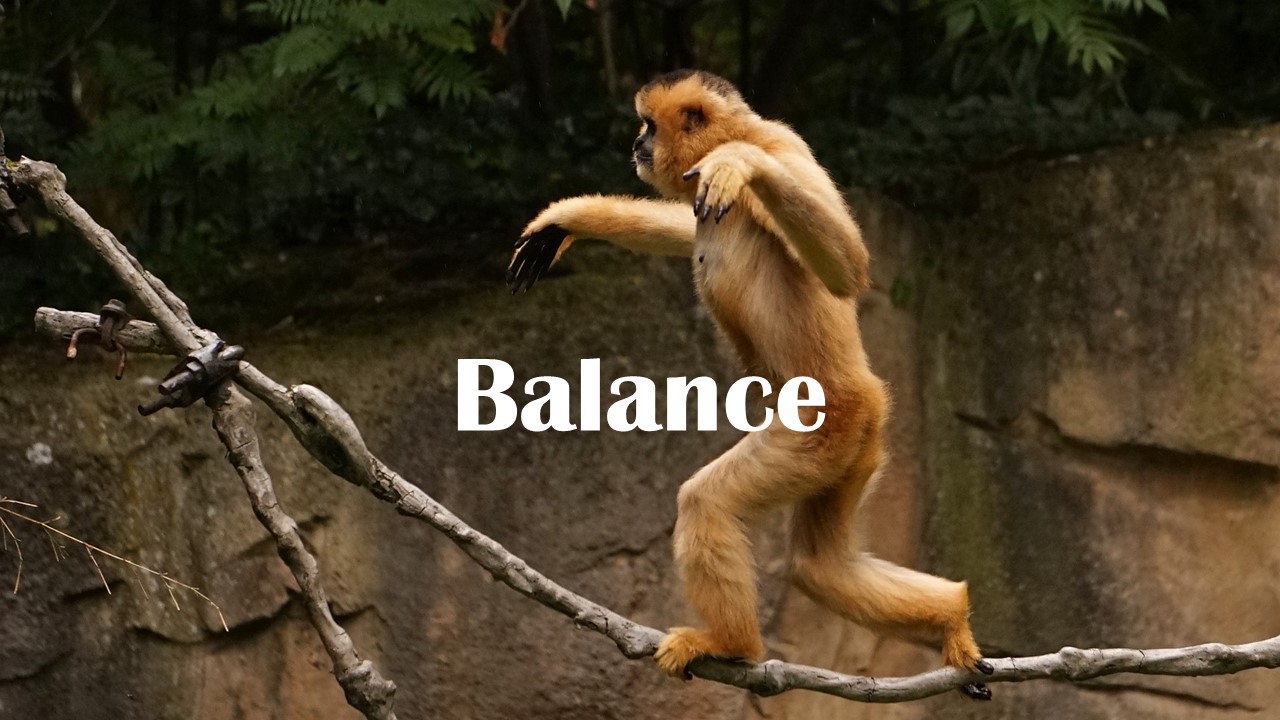
I think of this like those antique bicycles that had a limited number of spokes on the front wheel. You have probably seen pictures of bicycles with one huge front wheel and two smaller back wheels. If some of those spokes are longer than others, then you have a very bumpy ride. Life is like that. If one part of your life gets too much emphasis, all the other parts shrink, and your life becomes extremely unpleasant.

Here are some of the segments of your life that may need attention if you are to achieve a good life balance.

Financial relationships.

This includes work and your other sources of income, as well as how you relate to money. Some people are spenders, some are savers, and some manage their money. If you have a lot of debt, you may feel that money is managing you.

Work or other sources of income.

Most people either have a job or a partner who has a job. The idea that most people would prefer to be on welfare seems untrue to me. If you’ve ever needed public assistance, you might’ve found that the paperwork and the time you spend waiting for workers is more challenging than showing up for a job if you can find it.

Social relationships.

This segment of your pie of life includes family, friends, and your close sexual and romantic relationships. The topic of intimate relationships is too complicated to go into much detail here. The short part of this is that your relationships probably need more attention than they are getting.

Physical health.

Getting and staying healthy is a lifelong challenge. Diet, exercise, and medical care are all factors in how well you maintain your physical body. Having a chronic illness or disability affects every other part of your life.

Mental health.

How we measure and evaluate mental health has become increasingly complicated. There are over 400 recognized mental illnesses and 400 more “conditions for further study.” But those recognized conditions don’t begin to encompass all of the problems of living that so many people face each day.

Your emotional life.

Beyond the problem of mental health and mental illness are those emotional conditions that are not formal diagnoses of a mental illness but are significant challenges for many people. Anger is a common emotional issue that destroys families and friendships. Loneliness has recently been recognized as a problem that affects both mental and physical health. The impact of loneliness on physical health is as significant as smoking fifteen cigarettes a day.

Religious or spiritual life aspects.

A lot of the popular accounts of religion are oversimplified to the point of being misleading. It’s easy to classify countries as either Christian or Muslim, but there’s ample evidence that Sunnis fight Shiites and Protestants have had wars with Catholics. Because of the almost infinite range of denominations and sects, it’s hard to understand the role religion may play in our society. Increasingly, we see people who say that they are spiritual but not religious. Regardless of how we classify all these things, it’s clear that humans need to believe there is something beyond our species that matters. Having some kind of connection to a higher power is an ingredient in a flourishing life.

The need for self-actualization.

Humans seem to inherently feel a drive or need for such things as creativity, meaning and purpose in their lives, mastery, knowledge, learning, and some level of control over their lives. These self-actualization values often get overlooked in the quest for the basics. When you’re struggling to find food, clothing, and shelter, it’s easy to forget that anything else might matter.

But we see plenty of cases in the world where people will do without food and water and work in adverse conditions through pain and suffering because they believe in a cause or value that they find more important than their own lives.

Does David Joel Miller see clients for counseling and coaching?

Yes, I do. I can see private pay clients if they live in California, where I am licensed. If you’re interested in information about that, please email me or use the contact me form.

Staying in touch with David Joel Miller.

Want the latest blog posts as they are published? Subscribe to this blog.

For more information about my writing journey, my books, and other creative activities, please subscribe to my blog at davidjoelmillerwriter.com

Seven David Joel Miller Books are available on Amazon now! And more are on the way.

For more about my books, please visit my Amazon Author Page – David Joel Miller

For information about my work in mental health, substance abuse, and having a happy life, please check out https://counselorssoapbox.com

For videos, see: Counselorssoapbox YouTube Video Channel
Overcome sadness by collecting special moments.

Special Moment
Photo courtesy of Pixabay.com

Overcome sadness by collecting special moments.

By David Joel Miller, MS, Licensed Therapist & Counselor.

The human brain has a negativity bias.

The human brain has a preference for remembering the negative and forgetting the positive. Whether that’s by design or the result of experience through millions of years of evolution, I will leave it to others to decide. But I can see how this negativity bias could benefit human survival and how it is causing a lot of pain and suffering today. Let me try to illustrate this with a couple of hypothetical stories.

Please hang with me to the end of these parables when I explain how you can overcome negativity bias and become a happier, more positive person by collecting special moments.

The story of the red berries.

Imagine, if you can, being a human living in the forest or jungle before the advent of electricity, refrigerators, canned goods, or any practical way to store food through the winter. You might’ve figured out how to dry certain seeds, but drying berries was very impractical.

One day, you’re walking through the jungle and find some bushes covered with bright red berries. You try a few, and they are tasty. So, you eat as many as you can. Imagine the time before the Industrial Revolution and modern civilization when humans typically went hungry through most of the winter. Hence, the preference in earlier times was for women with a little meat on their bones who might survive the lean times and be able to care for the children.

As an aside here, I read somewhere once that the human brain has twenty-two circuits to tell us we are hungry. When hungry, we get headaches, our stomach growls, we may feel weak, and so on. As I remember it, we only have eight circuits, which feedback to tell the brain we have had enough to eat. Hence, humans tend to continue to gain weight whenever food is available and only lose it when there is famine. Not a terribly adaptive quality in this modern industrial era.

The following day, you are walking again through the hypothetical jungle again. There’s no need to remember what the berries looked like because while they were tasty, you ate them all, and there are no more to be had. Hence, we tend to forget many positive experiences which may be challenging to repeat.

But, in our hypothetical tale, let’s say that you became violently ill, threw up those berries, and almost died. Can you see now why you might, having had a negative experience, remember those berries for the rest of your life? This negativity bias carries over into many other human activities where we remember one unpleasant event but forget large numbers of positive events.

What color were the flowers?

I was working at an agency that saw many children. Often, their parents showed up wanting to know how the child was doing. I noticed a definite negativity bias on the part of the parents toward the whole process. But I wasn’t quite sure how to overcome that bias.

One day, on my way to work, I noticed as I walked in the front door that the landscapers had replaced flowers in front of the building with some new plants that were in bright bloom. I hurried in and got to work, knowing the first family would be there to see the child in minutes.

Partway into the conversation, I realized that these parents could tell me everything the child did wrong, as well as what the teacher and the professionals were doing wrong, but had difficulty describing anything about the situation that was good or right. And then it struck me. I suffered from that same negativity bias. I had seen those brightly colored flowers when I came to work that morning, but now caught up in the problems of the day, I couldn’t remember what those flowers looked like or what color they were.

During my lunch hour, I went outside and looked at those flowers again. I spent anywhere from thirty seconds to several minutes examining each one. I discovered that thirty seconds of looking at something positive was the bare minimum for me to remember it later. And the longer I looked at a particular flowering plant, the more likely I was to remember it hours, days, even years later.

The way you overcome negativity bias is to pay more attention to the positive.

Whenever something good happens in your life, spend some time consciously looking at it, staring at it, and committing it to memory. So many of life’s special moments go by unnoticed. Become a collector of those special moments, and the whole nature of your life will become more positive and filled with special moments.

This technique is especially useful with children and partners.

One simple rule of parenting is to always “catch your child doing something right.” The more you notice the positive things your child does and compliment them on it, the more likely they are to repeat that behavior. When children are doing something you don’t like, ignoring it whenever possible is likely to extinguish the behavior. It’s worth noticing that some children who will only get attention when they do something wrong behave badly more often simply to get that extra attention.

If you want a happy, more satisfying life full of contentment, become a collector of special moments. Consider writing them down. The more attention you pay to the positive in life, the more you will realize that positive things are happening all around you every day. If only you would collect that positivity and save it up against the next rainy day.

Does David Joel Miller see clients for counseling and coaching?

Yes, I do. I can see private pay clients if they live in California, where I am licensed. If you’re interested in information about that, please email me or use the contact me form.

Staying in touch with David Joel Miller.

Want the latest blog posts as they are published? Subscribe to this blog.

For more information about my writing journey, my books, and other creative activities, please subscribe to my blog at davidjoelmillerwriter.com

Seven David Joel Miller Books are available on Amazon now! And more are on the way.

For more about my books, please visit my Amazon Author Page – David Joel Miller

For information about my work in mental health, substance abuse, and having a happy life, please check out https://counselorssoapbox.com

Why you can’t find happiness

Road

Road to a happy life.
Photo courtesy of Pixabay.com

Why you can’t find happiness.

By David Joel Miller, MS, Licensed Therapist & Counselor.

Has happiness eluded you?

Trying to find happiness in modern-day America, and probably in all the industrial world, is the equivalent of looking for snow snakes and going into the forest to hunt Snipe. So many people equate happiness with pleasure that the coin of happiness has become severely tarnished.

In a country with such a high material standard of living, why are so many people chronically unhappy. We could argue that income distribution plays a role in this problem, but that’s not the point I’m pursuing. Not having enough money to pay for food and housing can undoubtedly lead to a less happy life. But I see people who are happy living in very modest settings.

I remember an old proverb that says that happiness is like a butterfly. You can chase it all over and never catch it. But if you sit quietly, the butterfly of happiness just might come and land on you. I think there’s a lot of wisdom in that idea. Pursuing happiness doesn’t get you closer to it. The best way to achieve happiness is to be happy as you go through your day-to-day activities. During the year 2024, I want to explore the idea that happiness can be within the reach of almost anyone if they know the techniques to find it. Happiness is about being, not about doing or having.

Why are so many middle-class and wealthy people chronically unhappy?

Pick up any tabloid at the grocery store, and you’ll find article after article about the woes and miseries of the rich and famous. While more money doesn’t make you unhappy, having wealth doesn’t seem to automatically guarantee happiness. Above a certain income level, the connection between money and happiness appears to be either negative or nonexistent.

Some people try to increase their happiness by spending. They get a sudden rush of excitement and pleasure when they buy something. That pleasure fades quickly. They’re not getting their joy out of having and using the item they purchased. To a chronic shopaholic, the pleasure ends as soon as the purchases are placed in the trunk of their car. I knew one chronic overspender who sold their car and never cleaned out the trunk. The purchaser found it full of impulse buys that had never made it into the overspender’s house.

Trying to buy your way into happiness results in lots of debt. The pleasure of the purchase fades quickly, but the pain of that credit card bill coming due each month goes on almost forever.

Fame doesn’t seem to bring happiness either.

I think we can all remember a great variety of famous people who lived unhappy lives and died unhappy deaths. If fame doesn’t bring happiness to those few who achieve it, how are the rest of us supposed to ever become happy?

I’ve told my students in the chemical dependency class that I think America needs a museum dedicated to famous debt junkies. The list of famous musicians, actors, and politicians who developed severe alcohol or drug use disorders goes on and on. Getting high leads to suffering, not happiness.

Perhaps we are chasing the wrong animal.

You don’t go deer hunting 20 miles off the California coast. And you can’t catch a shark in the middle of the Mojave Desert. You might find a skeleton there, but you won’t find a live fish of any significant size in the desert. The same is true of pursuing pleasure, thinking it will bring happiness.

When you ask most people about pursuing happiness, they think about the things that produce large rushes of adrenaline, dopamine, and serotonin. Ask most people about being happy, and they will think about having fun. The road to happiness is supposed to lead through all the hedonic pleasures. Want more happiness? Drink more liquor, do more drugs, have more sex, gamble at the casino, and take up thrill-seeking like riding roller coasters and jumping out of airplanes.

If money or fame brought happiness, why is it so many rich and famous people turn to drugs and alcohol seeking to find happiness and to ease their pain? I believe it’s because people mistake temporary pleasure for genuine happiness.

What should people look for when they’re seeking happiness?

The coin of happiness has two sides; one side looks bright and shiny, and people chase it, thinking they can buy happiness with that coin. But the other side of the coin of happiness doesn’t sparkle so brightly. The Greeks called the shiny path hedonics, the pursuit of hedonism. Those temporary bursts of pleasure fade quickly and leave the person less well-off than when they started.

The other path the Greeks called Eudaimonia or Eudemonics. It consists of all those calm, soothing experiences in life. The path to a long-term life of flourishing takes you by way of fields of satisfaction, lakes of contentment, the joys of doing for others, and the pleasure of self-improvement.

If you want to find this path, pay attention to the things that provide satisfaction, not the things you can never get enough of. Avoid temporary excitement and seek long-term contentment. Give up using others and, instead, look for ways to be of service to those around you.

If you take this path and create a flourishing life, you will find that the butterfly of happiness you couldn’t catch up with in the fast lane will come and sit on your shoulder as you bask in the rays of contentment and savor the joys of a life well lived.

Does David Joel Miller see clients for counseling and coaching?

Yes, I do. I can see private pay clients if they live in California, where I am licensed. If you’re interested in information about that, please email me or use the contact me form.

Staying in touch with David Joel Miller.

Want the latest blog posts as they are published? Subscribe to this blog.

For more information about my writing journey, my books, and other creative activities, please subscribe to my blog at davidjoelmillerwriter.com

Seven David Joel Miller Books are available on Amazon now! And more are on the way.

For more about my books, please visit my Amazon Author Page – David Joel Miller

For information about my work in mental health, substance abuse, and having a happy life, please check out https://counselorssoapbox.com

For videos, see: Counselorssoapbox YouTube Video Channel

Creating the life you want.

Changing your life

Time for a life change?
Photo courtesy of Pixabay.com

Creating the life you want.

By David Joel Miller, MS, Licensed Therapist & Counselor.

Are you satisfied with the life you have?

Among the people I talk with daily, an almost universal characteristic is that they are unhappy with their lives. I realize some of that may be skewed because I work as a counselor and mental health therapist. When I’m not doing those things, I also work with a very limited number of clients, trying to coach them on creating a plan for life and achieving the goals they would like to achieve. You don’t have to be mentally ill to want more out of life than what you have now.

If you’re one of those many people who aren’t happy with the life you’re living, now might be a good time to look at where you are and figure out how you’ll get where you want to be. For most people, life is a road trip to unexpected places, relationships, and events. But it’s a lot easier to get to the destination you’re headed for if you have a roadmap. The map doesn’t have to control your journey, but it can sure keep you from making wrong turns.

Start by figuring out who you are and where you are.

On any journey, and life is absolutely a journey, it is helpful to start by knowing where you are and where you want to be. Even if, so far, you have been living your life as one long road trip, taking what comes along, it’s never too late to take stock of where you are and figure out where you want to be.

It’s helpful to take an inventory of your life. Make sure you balance the inventory by looking at the good and the bad. It may be hard to notice the good parts when life is challenging. In twelve-step recovery, taking an inventory is a formal part of the process. But as any successful business person knows, taking inventory needs to be done again periodically.

Your life consists of many segments or parts. I read a lot about work-life balance, but there are many other aspects of your life that need to be in balance also. In a future post, we will examine those various segments of your life and how achieving a better balance between the various aspects of your life and the roles you perform can lead to a more satisfactory life and better mental health.

Who you are has been changing as you’ve lived your life.

In the process of living, you have probably accumulated a lot of life experiences, both good and bad. When life is good, we tend to ignore the problems. But if your life has not you down, at this point, the only thing you may be able to see is the ground you’re lying on.

Don’t fall into the trap of believing that a flourishing, contented, satisfying life is outside your reach because life has brought you to where you are. Some people would call this a happy life, but the definition of what that happy life should look like varies so much that I will save the discussion of what a happy life is and what it can be for a future post.

As much as you can hold onto the idea that maybe, just possibly, life can get better. My experience tells me that for everyone I’ve worked with and known, it has been possible to make their life better. What that better might be for you is something you’ll need to think about, plan for, and begin taking action towards. We’ll talk about all these steps in future blog posts.

Start your journey to a better life by getting to know yourself.

Begin by looking at who you are now. Looking back over your shoulder at the past to see how past experiences and choices have made you who you are is something you may have to do a little at a time. Planning for the future that comes later. The best starting point is wherever you are right now.

For some people, their experiences in the past are so painful they can only deal with one layer at a time. I think of this as “peeling the onion.” You take off a tiny little layer of past experiences, and if it becomes too painful, you cry for a while. When you’ve healed from that experience, you may be able to take further steps.

Sometimes, this process of cleaning up the wreckage of your past, the things people have done to you, and the things you have done to others requires working with a counselor or therapist. Sometimes, it happens in twelve-step groups by talking with your sponsor and working the steps. Some people can make significant self-change by reading blog posts like this one and self-help books.

Because the project seems overwhelming, don’t let that keep you from starting this journey. One rule I hold onto personally and professionally is “better is better.” Another saying that fits this situation is “progress, not perfection.”

Self-knowledge is the key to any self-improvement or change process. Think about what is important to you. Is it money? Are you looking for success? Or are relationships more important to you?

Do you have particular beliefs and principles? Any plan for accomplishing things must be consistent with your religious and spiritual beliefs and your value system. Spend some time thinking about what your core priorities are.

I’m suggesting that you spend some time on yourself. Study yourself and find out who you are. Like any good student, you will learn better if you take notes. If possible, write down your notes by hand in a journal or other safe place.

Does David Joel Miller see clients for counseling and coaching?

Yes, I do. I can see private pay clients if they live in California, where I am licensed. If you’re interested in information about that, please email me or use the contact me form.

Staying in touch with David Joel Miller.

Want the latest blog posts as they are published? Subscribe to this blog.

For more information about my writing journey, my books, and other creative activities, please subscribe to my blog at davidjoelmillerwriter.com

Seven David Joel Miller Books are available on Amazon now! And more are on the way.

For more about my books, please visit my Amazon Author Page – David Joel Miller

For information about my work in mental health, substance abuse, and having a happy life, please check out https://counselorssoapbox.com

For videos, see: Counselorssoapbox YouTube Video Channel

What gives your life meaning and purpose?

What gives your life meaning and purpose?

Meaning and Purpose.
Photo courtesy of Pixabay.com

What gives your life meaning and purpose?

By David Joel Miller, MS, Licensed Therapist & Counselor.

Have you found your life’s meaning and purpose?

Knowing why you are living life the way you have been is often more important than learning how to live that life. Discovering your life’s meaning and purpose is a challenging task. Having a meaning and purpose for your life is one of the principal components of creating a satisfying, flourishing life. Some people would call this a happy life, and in the future blog post, I want to explore the components of creating a happy life.

In his hierarchy of needs, Maslow places meaning and purpose, along with mastery, at the highest apex of his list, in a category he calls self-actualization. Many people spend their lives struggling to meet the basic physiological needs for food, water, air, and shelter. In this era of high material possessions, there are still people who struggle to meet these basic needs. But once those needs are fulfilled, people’s attention turns to the more abstract needs. Chief among those abstract needs are meaning, purpose, and mastery.

In his book Man’s Search for Meaning, Victor Frankel described what he learned about struggle and the meaning of life while a prisoner in a concentration camp. One of the lessons he learned is that if you have a “why for your living,” you can survive almost any how.

In my counseling and therapy practice, many clients come to me with issues of anxiety and depression. Some come to talk about jobs and relationships. Others come to counseling because they struggle with substance use and abuse. They can usually tell me that what they have been doing hasn’t been making them happy. What most people can’t tell me is what gives their life meaning and purpose. If the life you’re living has no purpose, how can you achieve more than fleeting, temporary happiness?

The search for meaning and purpose in life requires a conscious effort. Once you find the thing that makes your life worth living, whatever challenges you face become far less daunting. Clients often ask me how they should go about finding their meaning and purpose. I can suggest a lot of homework and processes to find your meaning and purpose, but identifying the one thing that might give your life meaning and purpose is often a matter of serendipity. You will never find what you’re looking for unless you’re out looking for it, and then, if you’re lucky, you may discover something that makes all the struggles of life worthwhile.

The first question to answer is, “Who are you?”

Now, by “who are you?” I don’t mean your name, the job you do, or the home you live in. In defining who you are, it’s important to look at much more than your surface characteristics. In the course of your lifetime, you will spend more time with yourself than with any other person.

Wherever you go, when you wake up in the morning, you will be there. It’s essential that you develop a good relationship with yourself. Come to know everything there is to know about that person you call you.

Remember that who you are is likely to change across your lifespan. I know from personal experience that the David Joel Miller of 2024 is nothing like the David Joel Miller of 2000 or the David Joel Miller of 1960.

Here’s a list of some things you may want to explore.

  1. Your values.

By values, I don’t mean things like honesty, bravery, and thriftiness. Those abstract qualities that we used to attribute to good character or good breeding. Those kinds of character values are fleeting and often appear in one situation and not another. What I’m talking about when I say your values is much more concrete.

Think about what things really matter to you. Is it money and physical possessions? Are your relationships your priority, and if so, which relationships? How important are your spiritual and political views?

  1. Your personality.

When I say personality, I’m talking about your likes and dislikes. Think about your preferences. In the midst of winter, would you rather be inside curled up with a good book or outside playing in the snow? Do you like the crowd and excitement, or would you prefer a quiet walk alone in the woods?

Clinical and research psychologists spend a lot of time studying personality and giving personality tests and inventories. Enough has been written about personality to fill a good-sized library. Mental health professionals rarely diagnose personality problems unless it has a severe impact on someone’s functioning.

You will find more articles I’ve written about personality in the category labeled aptly enough “Personality.”

  1. Your goals.

You’re going to be you for a long time, and learning a little bit about setting and achieving goals will benefit you greatly. There are several excellent books and some trainings on how to set and accomplish goals. Time permitting, I’ll try to help out here by writing a few posts about goals. Feel free to leave any questions about goals in the comments or use the contact me form.

  1. Your roles in life.

Everyone plays a variety of roles in life. You wouldn’t be reading this if you hadn’t been someone’s son or daughter. In your lifetime, you may also play the role of mother or father and eventually a grandmother or grandfather. You are also likely to play the role of a partner and a friend. Then, again, you may not play any of those roles. Your occupation is possibly a role you will fulfill. Some people fill the roles of leaders, and others are followers.

In a day, a person may play various roles at home, at work, in their spiritual life, and in their leisure time. Think about which of those roles adds to your life’s meaning and purpose. One of these roles may be your life’s defining meaning and purpose, but then again, it’s possible that all these roles simply aid in your pursuit of some other meaning and purpose.

  1. Your aspirations.

When you think about aspirations, it’s crucial to distinguish between what you want to do and who you want to be. One exercise that counselors sometimes use to help people define their aspirations in life is to ask them to write their obituary the way they would like it to appear in the newspaper after they die. Trying to sum up your entire life in a paragraph can bring your many aspirations and goals into sharp focus.

  1. Who are your heroes, and who has been influential in your life?

Role models and heroes often lay down the path we follow throughout our lives. Think carefully about who influences you. I’ve heard it said that we become the average of the five people we spend the most time with. Spending time doesn’t have to be a matter of physical presence. What people, living and dead, real or fictional, do you spend a lot of time thinking about? Trying to emulate their lives may be one of the things that gives your life meaning and purpose. Remember that bracelet, WWJD?

I hope some of these ideas have gotten you started on the journey of self-exploration and discovering what gives your life meaning and purpose.

If 2024 turns out the way I’m hoping it will, I plan to write more posts about each of these areas of personal exploration.

Does David Joel Miller see clients for counseling and coaching?

Yes, I do. I can see private pay clients if they live in California, where I am licensed. If you’re interested in information about that, please email me or use the contact me form.

Staying in touch with David Joel Miller.

Want the latest blog posts as they are published? Subscribe to this blog.

For more information about my writing journey, my books, and other creative activities, please subscribe to my blog at davidjoelmillerwriter.com

Seven David Joel Miller Books are available on Amazon now! And more are on the way.

For more about my books, please visit my Amazon Author Page – David Joel Miller

For information about my work in mental health, substance abuse, and having a happy life, please check out counselorssoapbox.com

For videos, see: Counselorssoapbox YouTube Video Channel

Have you seen the unseen other?

Ghost

Unseen other.
Photo courtesy of Pixabay.com

Have you seen the unseen other?

By David Joel Miller, MS, Licensed Therapist & Counselor.

Have you ever felt the presence of someone you couldn’t see?

I’ve recently came across an interesting podcast from the British psychological society about just this topic. Dr. Jon Sutton, editor of The Psychologist magazine, talks to Dr. Ben Alderson-Day, an Associate Professor at Durham University who has written a book about this kind of experience.

Experiencing the feeling that there was someone close by that you could not see is a relatively common phenomenon. This kind of experience has been described a lot by people who are in conditions of sensory deprivation. Skiing through a blinding snowstorm requires using senses other than vision to navigate. People who dive in darkened caves may experience things beyond the range of human sight.

We’re pretty confident that just because I don’t see a person hiding in the darkness in the alley doesn’t mean they’re not there. But how do we explain the times when I sense someone there who later jumps out at me?

Lack of perception doesn’t equal lack of existence.

When the idea of germs was first presented, people laughed at the possibility of tiny creatures we couldn’t see. Now that we have microscopes, a whole new universe of possibilities is visible. We also know that X-rays can pass through the body totally unnoticed. Just because I can’t see them doesn’t mean X-rays don’t exist.

In the early days of psychology and psychological research, a lot of attention was paid to the boundary between what we can perceive via the senses and what we might experience in the subconscious or unconscious realm.

Not everyone who looks at a painting or landscape sees the same details. Perceiving something others don’t experience doesn’t necessarily mean you have a mental disorder. Is it possible that some people perceive phenomena not readily available to our senses?

Altered perception, including hallucinations, doesn’t equal psychosis.

In the early part of my career, I worked in a locked psychiatric facility. In learning to diagnose, we had to pay a lot of attention to the differences between relatively normal perception and something that might indicate psychosis. Not everyone who sees something hears something, smell something, and so on has a diagnosable mental illness.

For most of these iffy experiences, we can come up with plausible explanations.

It’s common for people to believe that they hear someone calling their name, but when they look, no one is there. We dismissed this with the explanation that when the brain hears sounds, it can’t identify it makes them into a familiar word, and nothing is more familiar than your own name.

Should all religious experiences be dismissed as examples of psychosis?

There’s an exception in the diagnostic manual for hearing and seeing things in the context of a religious experience that we generally ignore. If you’re a Catholic and believe you have seen the Virgin Mary or some other Saint, That shouldn’t count towards a diagnosis of psychosis. But if Mary tells you to go to Walmart, fill up your shopping cart, and it’s all free, we believe that is moved from a religious experience into a delusion.

Should you ever trust your gut?

There’s a lot of good evidence that you should trust your gut. When you meet a new person, if you get an uneasy feeling, you probably should walk away. Plenty of advice tells you that you should trust your “felt sense” or intuition. There’s a lot of literature devoted to the idea that you can develop your intuition. Highly creative people, both in the arts and the sciences, often credit their advances to intuition. Since we can’t readily see intuition, it’s easy to be skeptical. But if you’ve ever had an experience where you’ve trusted your intuition, and you turned out to be right, you have to wonder if that was more than just a chance coincidence.

It’s important to get to know yourself, and one model of personality that’s often used is the Myers-Briggs personality inventory. Intuition is one of the personality characteristics that’s been widely studied. I don’t think anybody would believe that people who are high in intuition are inherently mentally ill.

Is there a difference between intuition and psychic abilities?

As much as modern psychology has endorsed the idea of intuition, its role in creating personality, and its value in making decisions, it’s equally likely that modern science will laugh at the existence of psychic abilities. Of course, not everybody defines intuition or psychic abilities in the same way. People who were high in intuition as very young children and have gone on to develop that as a part of their personality are very likely to think of themselves as having some sort of psychic abilities.

Why my sudden interest in intuition and psychic abilities?

Currently, I’m working on writing a series of books featuring Nancy Nusbaum, a character from one of my published novels. Nancy majored in journalism in college, but the only field placement she could find was writing articles for the Paranormal News. As part of her job, Nancy must investigate unusual, potentially paranormal events. Her series of adventures, vaguely reminiscent of the X-Files, will allow me to explore this area of what is normal, what is paranormal, and the distinction between intuition and psychic abilities.

Stay tuned for some blog posts about personality factors and getting to know yourself. If you’d like to read more about my fiction writing career and hear about the release of Nancy Nusbaum novels, check out my writing blog davidjoelmillerwriter.com

Does David Joel Miller see clients for counseling and coaching?

Yes, I do. I can see private pay clients if they live in California, where I am licensed. If you’re interested in information about that, please email me or use the contact me form.

Staying in touch with David Joel Miller.

Want the latest blog posts as they publish? Subscribe to this blog.

For more information about my writing journey, my books, and other creative activities, please subscribe to my blog at davidjoelmillerwriter.com

Seven David Joel Miller Books are available on Amazon now! And more are on the way.

For more about my books, please visit my Amazon Author Page – David Joel Miller

For information about my work in mental health, substance abuse, and having a happy life, please check out counselorssoapbox.com

For videos, see: Counselorssoapbox YouTube Video Channel
The four coordinates of self-discovery

Self

Self-Discovery
Photo courtesy of Pixabay.com

The four coordinates of self-discovery.

By David Joel Miller, MS, Licensed Therapist & Counselor.

Your journey of self-discovery requires a map.

You will spend more time during your life with yourself than with any other person. So it makes sense to spend some of that time exploring yourself, who you are, and what life experiences made you think, feel, and behave the way you do.

One aspect of the self is your personality. It’s important to explore your personality and the life events that may have influenced your development of a sense of self. But the self is not an island. It’s more like a river that is constantly flowing downstream until it finally reaches the sea of destiny.

As you take the journey of self-exploration, there are four cardinal influences, like the four directions found on a map. These four factors influence how your personality develops from early childhood until late adulthood. Examining these factors can help show you where you are and what direction you should go in your effort at self-exploration.

Your relationships shape you.

Relationships are systemic influences. They will affect every other part of your life. The process of getting into and of leaving relationships changes you. By relationships here, I’m not restricting myself to your primary sexual relationship.

For good or bad, we have relationships with everyone we interact with. One of the most challenging relationships you’ll ever have to navigate will be your relationship with your exes. Romantic partners may come and go, but baby’s Mamas and daddies are forever. Even after you end a relationship, that time you spent with that other person leaves its mark on you.

One part of self-examination is to look at the relationships you’ve had, the friendships, the romantic relationships, and the people you met you decided you were better off without. Examine those relationships. Why were you attracted to this person? Was there a reason why you selected them for a friend? Or for a lover? Who you spend your time with and why tells you a lot about yourself.

Those bright shiny objects, meaning, purpose, and mastery.

Just like our attraction to people, we all have objects and activities that grab our attention. One of the most important things to discover about yourself is what gives your life meaning and purpose. Those important characteristics may be grand items like saving the planet are there might be many more personal ones like a collection of photographs of all the places on the planet you have visited.

One crucial human need that is often overlooked is the quest for mastery. Mastering something, no matter what it is, adds to your self-worth. When was the last time you took up a new hobby or practiced a new skill? Think about taking a class just for fun or picking up a new hobby.

Consider also what motivates you.

To understand what drives you get clear on your values. Be very careful about the mountains you choose to climb. A common calamity in life is getting to the top of whatever mountain you decided to climb and realizing you have been climbing the wrong peak.

More time and effort may result in more money in the bank, but it won’t be very satisfying if what you valued the most was the relationships with your partner and your children.

Significant life events can reshape your personality.

Who we are is massively impacted by the times we live in. Growing up during the Great Depression produced a very different group of people than those who grew up during World War Two. Even two people who lived through the same period in history may have experienced it in very different ways.

Consider whether you were in college during the Vietnam War or whether you joined the army and experienced that conflict firsthand. How is your life been altered because your parent or grandparent lived through one of these significant events?

The many aspects of the self.

One exercise I suggest to clients in my therapy practice is to write their autobiography. Start with the very first memory you have in life. Often this will be a picture from the time before you had the words to remember a story. Next, you should think about various events in your life you can reexamine them. Did something someone said to you in elementary school change your opinion of yourself?

As your work on your life review, examine the many roles you’ve played and how they have shaped who you are today. Many of the things that you do today automatically are the result of habits you developed early in life. Do you want to keep those habits? Would your life be better if you created a new habit to replace one of the old habits that are no longer working for you?

Look for one of those lists of 50 questions to ask someone on a first date. Go through the list and see how you would answer each of those questions. Charting where you are now and how you’ve gotten here can help you set a new direction for whichever way you want your life to go in the future.

Does David Joel Miller see clients for counseling and coaching?

Yes, I do. I can see private pay clients if they live in California, where I am licensed. If you’re interested in information about that, please email me or use the contact me form.

Staying in touch with David Joel Miller.

Want the latest blog posts as they publish? Subscribe to this blog.

For more information about my writing journey, my books, and other creative activities, please subscribe to my blog at davidjoelmillerwriter.com

Seven David Joel Miller Books are available on Amazon now! And more are on the way.

For more about my books, please visit my Amazon Author Page – David Joel Miller

For information about my work in mental health, substance abuse, and having a happy life, please check out counselorssoapbox.com

For videos, see: Counselorssoapbox YouTube Video Channel

To-do lists cause anxiety and depression

Picture of a to-do list on a smartphone

Has your to-do list become your enemy.
Photo courtesy of Pixabay.

To-do lists cause anxiety and depression

By David Joel Miller, MS, Licensed Therapist & Counselor.

Is your to-do list getting you down?

I’ve been struggling with my to-do list for a long time. I probably should say to-do lists, plural. I do a lot of different things in a day. I spend my day teaching classes, doing supervision, and of course, as a licensed mental health professional, I see a lot of clients. To-do lists have become a big problem for me and almost everyone I know. I think I may have found a solution for this problem.

Rattling around in my brain all day are those ideas for creative things I would like to do. There’s a blog post, a YouTube video, and that novel I’m working on. There are also all those topics that pop into my head that I need to research because no matter how long you have been working with clients, someone will present with a new problem that you wish you knew more about.

Trying to remember six things I want to do when I’m done with this session fills my head up so much I can’t concentrate. As a result, I have learned to use a little pad that sits next to me on my desk as a sort of external hard drive.

Every time an idea pops into my head, I quickly write it on the pad, which means I don’t have to remember it. Then, when the list gets full, I tear off the sheet and toss it onto a pile on my desk. That pile has become the home of my to-do lists. Periodically I go through those notes and try to create one or two consolidated to-do lists. The sheer number of things waiting on those pages to be done used to be overwhelming.

The to-do list phobia syndrome.

My pile of to-do lists became so large that I started placing a book on top of them just so I didn’t have to look at them. I’ve learned from the work I’m doing with both counseling and coaching clients that I’m not the only one who struggles with massive to-do lists. Many of my clients tell me that the length of their to-do list is making them anxious, and at the end of the day, when they look at the items they have been able to complete and see how many remain, they become overwhelmed and depressed.

Does the sheer length of your to-do list make you feel like a failure? I do know, of course, that the reality is that many of those things on my to-do list don’t absolutely have to be done. I need to show up for my counseling appointments and my classes. I need to turn in my timesheets and do my billing if I want to get paid. But all those other things that I feel like I “must” or “should” be doing were making me anxious.

Before long, I think we will have to add a diagnosis for a new phenomenon I’m calling “to-do list phobia.”

Do you delete emails with the word “do” in the subject line?

Have you reached the point where as soon as you see the phrase in the subject line containing the word “do,” that email goes straight to the deleted email file? I had begun ignoring any communication which began with “I need you to do something for me” or “please do this as soon as possible.”

In fact, I was beginning to toss to-do lists of my own making directly into the recycle bin in the hopes that having written down the desire to do this at some point in the future would be enough to keep that thought from returning to my brain.

If you’ve reached the point where just looking at your to-do list, knowing that you have one, and seeing how little you have gotten done on it in the course of the day is leading to anxiety or depression, you have probably contracted a case of “to-do phobia syndrome.” By the way, that’s not an official diagnosis. Still, I see enough people obsessed with productivity and terrified by the undone things on their to-do lists that I think it’s helpful to look at the results of too many things on a to-do list as a productivity impairing syndrome.

How to make your to-do list your friend.

I have found one thing that seems to change my to-do lists from adversaries punishing me for my shortcomings into welcoming friends who encourage me to enjoy the things I do.

One reason I think to-do lists become the enemy for many people rather than helpful friends is that they view those lists as things they HAVE to do. That’s the way I had been looking at it. I get to my desk each morning and would find the list with ten or more things I HAD to do today. At the end of the day, looking back at the things I scratched off, I had finished maybe three out of the ten items. Thirty percent of the items completed feel more like a failure than a success.

Start making lists of things you WANT to do.

I stopped thinking about my to-do list as things I should do or must do and started looking at them as things I WANTED to do. Accomplishing three things that I wanted to do today feels pretty good. I know I won’t live forever. However, part of my life philosophy is that I try to keep moving forward rapidly enough to stay ahead of the Grim Reaper. It will never be possible for me to do all the things I want to do in this lifetime, but I’ve sure been able to do a lot of them.

What would it look like for you if you stopped beating yourself up with things you had to do and started looking forward to things that you wanted to do? If the things on your to-do list aren’t things you really want to do, maybe it’s time to re-examine the direction your life is going.

Does David Joel Miller see clients for counseling and coaching?

Yes, I do. I can see private pay clients if they live in California, where I am licensed. If you’re interested in information about that, please email me or use the contact me form.

Staying in touch with David Joel Miller.

Want the latest blog posts as they publish? Subscribe to this blog.

For more information about my writing journey, my books, and other creative activities, please subscribe to my blog at davidjoelmillerwriter.com

Seven David Joel Miller Books are available on Amazon now! And more are on the way.

For these and my upcoming books, please visit my Amazon Author Page – David Joel Miller

For information about my work in mental health, substance abuse, and having a happy life, please check out counselorssoapbox.com

For videos, see: Counselorssoapbox YouTube Video Channel

Did Maslow get it wrong, or did we?


Maslow’s pyramid?
Courtesy of Wikimedia Commons

Did Maslow get it wrong, or did we?

By David Joel Miller, MS, Licensed Therapist & Counselor.

Does Maslow’s hierarchy of needs make sense today?

If you took a class in beginning psychology, you probably were taught about Maslow’s hierarchy of needs. It’s been a long time since I took that class, and I’m not sure if I remember what we were taught accurately, but I am starting to question some of the basic principles as I remember them. Some of the books I’ve been reading recently have made me think maybe that way of looking at things isn’t the final authority.

I first encountered these ideas back in the 1960s. When I went to college, I wasn’t sure what a major was, let alone what I should major in. My experiences as a professor at the local community college since 2008 have led me to believe that fuzzy majors continue to be a problem today.

I took some psychology and some sociology classes in my first year at the community college. Seems like everybody was a psychology major at some point in that decade. Psychology seemed to offer so much promise for helping you decide what the correct choices to make were. Unfortunately, classical psychology was primarily based on research on rats and female college sophomores. That research didn’t actually help most people figure out how to solve their problems. Or how to avoid mental illnesses that counselors and therapists are trained to treat.

Remember that Maslow wrote about a hierarchy of needs during World War II and directly after. His ideas and how psychology professors interpreted them were heavily influenced by their life experiences. Many of our teachers in school in the 1960s had lived through the Great Depression and then World War II. Some of my teachers can home from Europe or Asia and then went to school on the G.I. Bill. Those who taught us had to live through some pretty grim times.

We were taught that physiological needs come first.

Considering what Maslow and those who taught us his hierarchy of needs had lived through, the idea that meeting their physiological needs should come first and that people wouldn’t pay attention to those other “higher” needs would come later makes sense. There may be some reasons to question this notion.

Now I’m not saying that things are any less challenging today, at least for some people. I just think that the challenges the majority of Americans face are different. People who had to live with the possibility of imminent death or who went without food, shelter, or basic necessities of life were affected both physically and mentally by those struggles.

Many parents and grandparents, possibly great-grandparents of people reading this blog, concluded that what mattered in life was a secure job with a good enough paycheck that you would always have food to eat, clothes to wear, and a house to live in. If meeting your physiological and safety needs is what matters, why are there so many people who are depressed, anxious, and about to give up hope?

Is there a shortage of food, water, and shelter today?

Despite the phenomenal creation of wealth since World War II and our emphasis on having the latest technology at our fingertips, the truth is that there are still a lot of people in American society who worry about where their next meal will come from and whether their children will receive adequate healthcare. Our welfare programs and government subsidies provide some relief from the harsh realities, but we still have our homeless, our underfed, and those who can’t get reliable medical care.

From that perspective, Maslow’s hierarchy of needs makes some sense.

The way I understand his theory is that humans have certain basic needs. We need air to breathe, preferably healthy, unpolluted air. The human body needs food and water, but given the chance, most humans consume unhealthy food and water. The hierarchy of needs tells us that we need sleep, but more than one productivity guru tells us we can sleep less and produce more as if more were beneficial.

So how come highly paid tech people have so much anxiety and depression?

Meeting your physiological and safety needs does not result in happy people. Many people with a lot of material possessions are saying that life is meaningless and the money they are earning isn’t meeting their emotional needs.

Without meaning, purpose, and a sense of mastery, the rest doesn’t matter.

What I hear repeatedly from clients is if they are depression, anxiety, and other mental health challenges rarely come from a lack of food, water, or even adequate housing. Instead, what’s missing and so many people’s lives is a sense that their life has meaning.

Victor Frankel described this in his book Man’s Search for Meaning. His experience in the concentration camp convinced him that having meaning and purpose in your life was far more important than food, clothing, or other physical necessities. People who had a sense of purpose survived camps despite horrific conditions.

Today in a land that’s richer than probably any in the history of the world, we still have a lot of people who can’t find anything that gives their life meaning and purpose. When you’re overweight, more food won’t help. It’s very easy to be lonely in a house with dozens of bedrooms.

How come people are willing to trade sleep for video game time?

The primary benefit derived from playing video games is a sense of mastery. As we move farther and farther into an economy where work is disconnected from physical objects is harder to experience mastery. The inherent thing that video games can give people is a chance to master an environment, albeit an artificial one. In the videogame, every time you achieve mastery, you level up and have new challenges to face.

Maybe it’s not the physiological and safety needs that are the foundation of the human hierarchy of needs. People short of food and safety can find abstract principles they’re willing to fight and die for. People with lots of physical possessions may think of suicide and self-harm because they lack meaning, purpose, and a sense of mastery.

I’ve come to think that those things we learned as being necessary only after the baser needs were met are, in fact, the foundation needs that we all are looking for.

Maslow’s hierarchy of needs was not a pyramid.

Just as a by the way. When we say Maslow, most people think of Maslow’s hierarchy of needs as a pyramid. I came across an article about Maslow’s pyramid, which tells us that Maslow didn’t write about his hierarchy of needs as a pyramid. Nowhere that we have been able to find in his writing does that pyramid diagram appear. Where that came from, we can’t be sure.

But I think teaching Maslow’s hierarchy of needs as if it were a pyramid makes those abstract principles seem far less important and places too much emphasis on the needs of the body rather than the emotional needs of the person.

Does David Joel Miller see clients for counseling and coaching?

Yes, I do. I can see private pay clients if they live in California, where I am licensed. If you’re interested in information about that, please email me or use the contact me form.

Staying in touch with David Joel Miller.

Want the latest blog posts as they publish? Subscribe to this blog.

For more information about my writing journey, my books, and other creative activities, please subscribe to my blog at davidjoelmillerwriter.com

Seven David Joel Miller Books are available on Amazon now! And more are on the way.

For these and my upcoming books, please visit my Amazon Author Page – David Joel Miller

For information about my work in mental health, substance abuse, and having a happy life, please check out counselorssoapbox.com

For videos, see: Counselorssoapbox YouTube Video Channel