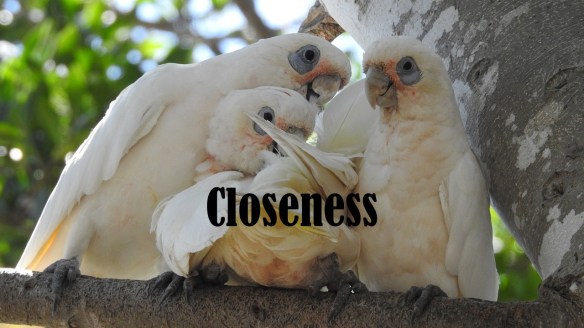
Affection.

Sunday Inspiration.   Post By David Joel Miller.

Affection.

Affectionate

Affection.
Photo courtesy of Pixabay.com

“Any time is the right time to love someone.”

“You don’t have to be perfect to be loved.”

“Love holds things together.”

Wanted to share some inspirational quotes with you.  Today seemed like a good time to do this. If any of these quotes strike a chord with you please share them.

How to spot a good person.

By David Joel Miller, MS, Licensed Therapist & Licensed Counselor.

Helping others

Helping others.
Photo courtesy of pixabay

Are you a good person? Can you spot a good person when you see one?

Do you think you are a good person?

Do you think you are a good person? Most people think they are, but how do others see you? Want to feel better about yourself, work at becoming a better person. “Are you a good person?” is not a yes and no question. Everyone has areas of their life that could be better. These issues could be called “defects of character.” I like to think of these areas as “improvement opportunities.”

Developing goodness is a lifelong task. Some people are too needy to make the effort.  If you want better self-esteem you need to work on becoming a better person. How do you exercise that goodness muscle? By hanging out with good people! Below are some of the ways you might spot a good person. Do you do these things? Do the people in your life have these characteristics?

Good people treat other people well even when there is nothing in it for them.

Make a habit of treating others better than simply the way you would like to be treated. That approach is trading favors mentality. You do for me and I do for you. Truly good people do the right thing because it is the thing. They chose to do good even when there is nothing in it for them.

Good people are not judgmental.

Because someone is different from you does not make them less-than. Good people accept others regardless of their looks, their language, or their past.

Good people still form opinions of others based on what others do, but not because of who others are.

Being non-judgmental does not mean having no standards. Doing whatever you want when it impacts others is not always OK. You should evaluate people by their actions. But that non-judgmental stance includes the belief that people can change and that having made mistakes does not make someone a “bad person.” Even really good people sometimes do bad things and vice versa.

Good people respect other’s property and time. Punctuality.

A truly good person respects and cares about your property as much or more than they care for their own. They do not take things that are not theirs and they ask before borrowing. Just because they need something does not justify their taking what is not theirs.

Good people also respect your time. They consider your time just as valuable as theirs. They are not habitually late. People who feel that other’s time does not matter do not have anyone but themselves in mind.

Good people also do not repeatedly violate your time, possessions, and rights and then try to excuse those transgressions with apologies. Once is an accident but recurring disrespect cannot be made right by continually apologizing for the same action.

Good people genuinely care about others.

For good people, others are something of value regardless of their state or credentials. For the good person other people are not objects to be used to get what they want but individuals who have worth because they are them.

Good people do not restrict their caring and concern to others like them or to those in positions to return the favor.

Good people are positive.

A good person can find the good in any person or situation. They see the potential, not the defects. They motivate others by their leadership not by playing to their fears. Beware of those who instinctively can find the flaws in anyone but themselves.

Good people are helpful.

Good people delight in being of service to others. They do not think only of what is in it for them because they know that being helpful will bring them joy. It is not kindness when you do for others expecting something in return. A good person knows that doing good things is its own reward.

Good people see things from other’s points of view.

Good people are not stuck in needing to be right and to convince others of their point of view. They are willing to see things from other’s perspectives.  They are not dogmatic but open to seeing how it is that others form opinions different from theirs.

Everything is not always about them.

Good people can step outside what is best for themselves and honestly want what is best for others. They can find ways to get their needs met while allowing others to do likewise.

Good people are real. Genuine.

A good person does not have to be fake. They do not need to hide their true selves and do not fear others really getting to know them. They like themselves well enough to be able to be who they are with everyone. Good people do not feel the need to be fake in order to get others to like them because they have mastered the art of liking themselves.

Good people are interested in others.

Curiosity and a desire to understand drive the truly good person. They strive to understand others not to find ways to make themselves superior.

For Good people, communication is a two-way street.

Ever met someone, say hello, and then wait as they talk nonstop about themselves? Can you think of someone who evades every opportunity to share of themselves and seems motivated to “pump” you for info?

People who only talk or those who pry without being willing to reciprocate are both motivated to get more than they receive in a conversation.

For the good person, a conversation is an exchange between equals.

Good people do not always have to be right.

Good people may believe strongly but they can admit when they are wrong. A good person can acknowledge when others were right and can give credit where credit belongs.

Are you “Good people?”

Staying connected with David Joel Miller

Seven David Joel Miller Books are available now!

My newest book is now available. It was my opportunity to try on a new genre. I’ve been working on this book for several years, but now seem like the right time to publish it.

Story Bureau.

Story Bureau is a thrilling Dystopian Post-Apocalyptic adventure in the Surviving the Apocalypse series.

Baldwin struggles to survive life in a post-apocalyptic world where the government controls everything.

As society collapses and his family gets plunged into poverty, Baldwin takes a job in the capital city, working for a government agency called the Story Bureau. He discovers the Story Bureau is not a benign news outlet but a sinister government plot to manipulate society.

Bumps on the Road of Life. Whether you struggle with anxiety, depression, low motivation, or addiction, you can recover. Bumps on the Road of Life is the story of how people get off track and how to get your life out of the ditch.

Dark Family Secrets: Doris wants to get her life back, but small-town prejudice could shatter her dreams.

Casino Robbery Arthur Mitchell escapes the trauma of watching his girlfriend die. But the killers know he’s a witness and want him dead.

Planned Accidents  The second Arthur Mitchell and Plutus mystery.

Letters from the Dead: The third in the Arthur Mitchell mystery series.

What would you do if you found a letter to a detective describing a crime and you knew the writer and detective were dead, and you could be next?

Sasquatch. Three things about us, you should know. One, we have seen the past. Two, we’re trapped there. Three, I don’t know if we’ll ever get back to our own time.

For these and my upcoming books; please visit my Author Page – David Joel Miller

Want the latest blog posts as they publish? Subscribe to this blog.

For videos, see: Counselorssoapbox YouTube Video Channel

Appreciation.

Sunday Inspiration.   Post By David Joel Miller.

Appreciation.

Appreciation

Appreciation.
Photo courtesy of Pixabay.com

“I’m glad they didn’t build a wall along the Eastern Seaboard to keep my ancestors out.”


“In prison, I fell in love with my country. I had loved her before then, but like most young people, my affection was little more than a simple appreciation for the comforts and privileges most Americans enjoyed and took for granted. It wasn’t until I had lost America for a time that I realized how much I loved her. ”

― John McCain, Faith of My Fathers: A Family Memoir

“Appreciation is a wonderful thing. It makes what is excellent in others belong to us as well.”

― Voltaire

“Be thankful for what you have; you’ll end up having more. If you concentrate on what you don’t have, you will never, ever have enough”

― Oprah Winfrey

Wanted to share some inspirational quotes with you.  Today seemed like a good time to do this. If any of these quotes strike a chord with you please share them.

Too hard on yourself?

By David Joel Miller, MS, Licensed Therapist & Licensed Counselor.

Low Self-esteem

Low Self-esteem.
Photo courtesy of Pixabay.com

Being kind to yourself is hard to do.

Are you harder on yourself than other people are?  Do you find it difficult to be nice to yourself?  Some people think that the way to make themselves a better person is to push themselves unmercifully.  If you’re one of those people who has difficulty being kind to yourself, you may be beating yourself up again and again.  There’s no evidence that beating yourself up is a way to motivate yourself to do better.  Continued harsh self-criticism can lead to depression and giving up.  How many of these self-critical habits do you have?

14 Ways you are beating yourself up again.

1. Can’t ever forgive your mistakes.

Everyone makes mistakes.  Making mistakes is required for humans to learn.  If all you do is keep track of the score, this list of mistakes you made can lead to discouragement.  Learning to forgive your mistakes and move on is part of being a healthy, happy, human.

2. Nothing you do is ever good enough.

If you have come to believe that nothing you do is ever good enough, you are undermining your own life.  Being constantly negative about yourself lowers your self-esteem and your ability to accomplish anything in the future.

3. Criticism hurts like a deep wound.

If you allow criticism, yours or others, to live on after it is first given, you create deep wounds.  If you continue to hold on to criticism you’ve taken on the role of abuser.  Stop the self-abuse, accept yourself as you are, and move on.

4. You can’t accept compliments.

Not being able to accept compliments sets you up for poor self-esteem.  If you find it difficult to accept compliments take a look at why.  Declining compliments is not a form of modesty.  Learn to accept people’s compliments whether you can understand them or not.  When you get a compliment, rather than saying that was no big deal, learn to just say thank you.

5. You are constantly hoping for other’s approval.

People who constantly need other’s approval become dependent on that outside source of acceptance.  Learn to give yourself approval for things well done and to accept when they are less than well done.  The person whose approval should really matter to you is yourself.

6. You are afraid to let others see your flaws.

Not being able to let others see your flaws keeps people at a distance.  In close, honest, relationships you should feel comfortable enough to let other people see you as you really are.  If you feel you need to hide your flaws, take a look at the people around you and at yourself.  Good friends will accept you the way you are.  Feeling good about yourself begins with you excepting yourself the way you are.

7. You punish yourself before others can.

If you find that you are routinely punishing yourself for mistakes, you are being far too hard on yourself.  Punishment is only one-half of discipline.  Too much punishment becomes abuse.  Stop beating yourself up and learn to take care of yourself.

8. You need to fix everyone else. You are responsible for making them happy.

Your feelings are your feelings.  Other people’s feelings are their feelings.  You can try all you want but you can’t make somebody else feel happy.  If you find that you are constantly trying to fix everyone else, you are taking on responsibility for things that are not your job.  Allow other people to be responsible for their feelings.  Take responsibility for how you feel.

9. You try to be perfect so one flaw is a failure.

One very unhelpful thought is that you need to be perfect.  This all or nothing, black and white type thinking can be very damaging to your mental health.  Work on becoming more realistic.  No one is ever perfect.  Requiring yourself to make no mistakes is an unrealistic and impossible goal.  Take credit for the things you do well and correctly.  Accept that sometimes you make mistakes and move on.

10. You expect more from yourself than you expect from others.

If you consistently expect more from yourself than you expect from others, you have an unrealistic view of both yourself and them.  Learn to cut yourself some slack.  Accept that other people can do things also.  Stop trying to take responsibility for things that are out of your control.

11. You apologize even when it is not your fault.

A sure sign of being far too hard on yourself it is the need to apologize even when you are not at fault.  Apologize when you have a reason to apologize.  Do not apologize for things that are out of your control or other people’s errors.

12. You can’t ever accept help – even when you really need it.

The inability to accept help is another way in which many people are far too hard on themselves.  Learn to help others when they need it and accept help when you are in need.

13. You are afraid of disappointing anyone ever.

How others feel is their responsibility.  Sometimes you have to make choices.  You can’t do everything for everybody without completely giving away yourself.  Doing good self-care and keeping your life in balance means sometimes people will be disappointed.  Let them learn to deal with disappointment.

14. Your life is filled with regrets.

If you did it, then it wasn’t good enough, and if you didn’t do it, you should have. Every life has some requests.  Keep yours to a minimum.  You did what you did, and didn’t do what you didn’t do.  Accept what happened.  Your life, good and bad, has made you who you are.  Stop holding onto the regrets and move on.

Staying connected with David Joel Miller

Seven David Joel Miller Books are available now!

My newest book is now available. It was my opportunity to try on a new genre. I’ve been working on this book for several years, but now seem like the right time to publish it.

Story Bureau.

Story Bureau is a thrilling Dystopian Post-Apocalyptic adventure in the Surviving the Apocalypse series.

Baldwin struggles to survive life in a post-apocalyptic world where the government controls everything.

As society collapses and his family gets plunged into poverty, Baldwin takes a job in the capital city, working for a government agency called the Story Bureau. He discovers the Story Bureau is not a benign news outlet but a sinister government plot to manipulate society.

Bumps on the Road of Life. Whether you struggle with anxiety, depression, low motivation, or addiction, you can recover. Bumps on the Road of Life is the story of how people get off track and how to get your life out of the ditch.

Dark Family Secrets: Doris wants to get her life back, but small-town prejudice could shatter her dreams.

Casino Robbery Arthur Mitchell escapes the trauma of watching his girlfriend die. But the killers know he’s a witness and want him dead.

Planned Accidents  The second Arthur Mitchell and Plutus mystery.

Letters from the Dead: The third in the Arthur Mitchell mystery series.

What would you do if you found a letter to a detective describing a crime and you knew the writer and detective were dead, and you could be next?

Sasquatch. Three things about us, you should know. One, we have seen the past. Two, we’re trapped there. Three, I don’t know if we’ll ever get back to our own time.

For these and my upcoming books; please visit my Author Page – David Joel Miller

Want the latest blog posts as they publish? Subscribe to this blog.

For videos, see: Counselorssoapbox YouTube Video Channel

Adventure

Sunday Inspiration.   Post By David Joel Miller.

Adventure

Finding Adventure

Adventure.
Photo courtesy of Pixabay.com

“The purpose of life is to live it, to taste experience to the utmost, to reach out eagerly and without fear for newer and richer experience.”

― Eleanor Roosevelt

“The biggest adventure you can ever take is to live the life of your dreams.”

― Oprah Winfrey

“No, no! The adventures first, explanations take such a dreadful time.”

― Lewis Carroll, Alice’s Adventures in Wonderland & Through the Looking-Glass

Wanted to share some inspirational quotes with you.  Today seemed like a good time to do this. If any of these quotes strike a chord with you please share them.

What is Amotivational Syndrome?

By David Joel Miller, MS, Licensed Therapist & Licensed Counselor.

Unmotivated.
Photo courtesy of Pixabay.com

Have you lost your drive or your desire to do something?

Amotivational Syndrome is often connected with the smoking of marijuana.  This is something quite different from what we see in depression.  In depression, people lose the desire to do things they use to make them happy.  We call that loss of pleasure anhedonia.

In Amotivational Syndrome people seem to spend more time looking inward and contemplating things and less time actively doing them.  This syndrome was originally recognized in younger, marijuana smokers who were heavier daily users.

Does marijuana smoking cause a loss of motivation?

Things that are, or were, associated with Amotivational Syndrome include the development of apathy and loss of ambition.  Heavy smokers just seem to become indifferent and stop caring about anything except smoking.  They seem to have fewer goals and decreased effectiveness.  Problems with attention and concentration have also been attributed to heavy marijuana smoking and Amotivational Syndrome.

Many of these characteristics are seen in daily, heavy, marijuana smokers.  What is unclear is whether marijuana smoking causes this cluster of symptoms or whether those people who are low in motivation like to smoke marijuana.  At one point it was commonly accepted that some marijuana smokers are likely to suffer from Amotivational Syndrome.

Not all marijuana smokers are low in motivation.

Because of the many famous, popular people, who have been reported to be regular marijuana smokers, the connection between smoking marijuana and low motivation has come into question. It is unclear how common this condition is, or even if this is a valid syndrome.  Amotivational Syndrome has not been reported in countries other than the United States.  There’s some question whether Amotivational Syndrome is, in fact, a cultural rather than a mental condition.

Animals on marijuana don’t lose motivation.

Laboratory studies of both humans and animals have not found evidence of the Amotivational Syndrome for those using marijuana.  Amotivational Syndrome or loss of goals and direction has been found in many groups of young people who are not using marijuana on a regular basis.  This has led some writers to conclude that Amotivational Syndrome is a personality characteristic rather than the result of smoking marijuana.  It may be that those people with low motivation are attracted to using marijuana and other intoxicating substances.

One other possibility that has been suggested is that those people who are under the influence of drugs and alcohol or other substances may have low motivations to do anything while under the influence.  What we may be seeing in those people who were described as having Amotivational Syndrome may, in fact, be the effects of intoxication and withdrawal from marijuana or other substances.

As with the other things we are calling a mental illness or symptoms of a mental illness Amotivational Syndrome would need to interfere with your ability to work or go to school, your relationships, your enjoyable activities, or cause you personal distress for it to be the focus of clinical attention. Otherwise, while you may have lost some motivation you will not be identified as someone needing clinical assistance.  If the only time you have low motivation is when you are under the influence of marijuana or another drug this would be diagnosed as drug intoxication.

For more on this and related topics see the other posts on counselorssoapbox.com under        Drug Use, Abuse, and Addiction

FYI These “What is” sometimes “What are” posts are my efforts to explain terms commonly used in Mental Health, Clinical Counseling, Substance Use Disorder Counseling, Psychology, Life Coaching, and related disciplines in a plain language way. Many are based on the new DSM-5; some of the older posts were based on the DSM-IV-TR, both published by the APA. For the more technical versions please consult the DSM or other appropriate references.

Staying connected with David Joel Miller

Seven David Joel Miller Books are available now!

My newest book is now available. It was my opportunity to try on a new genre. I’ve been working on this book for several years, but now seem like the right time to publish it.

Story Bureau.

Story Bureau is a thrilling Dystopian Post-Apocalyptic adventure in the Surviving the Apocalypse series.

Baldwin struggles to survive life in a post-apocalyptic world where the government controls everything.

As society collapses and his family gets plunged into poverty, Baldwin takes a job in the capital city, working for a government agency called the Story Bureau. He discovers the Story Bureau is not a benign news outlet but a sinister government plot to manipulate society.

Bumps on the Road of Life. Whether you struggle with anxiety, depression, low motivation, or addiction, you can recover. Bumps on the Road of Life is the story of how people get off track and how to get your life out of the ditch.

Dark Family Secrets: Doris wants to get her life back, but small-town prejudice could shatter her dreams.

Casino Robbery Arthur Mitchell escapes the trauma of watching his girlfriend die. But the killers know he’s a witness and want him dead.

Planned Accidents  The second Arthur Mitchell and Plutus mystery.

Letters from the Dead: The third in the Arthur Mitchell mystery series.

What would you do if you found a letter to a detective describing a crime and you knew the writer and detective were dead, and you could be next?

Sasquatch. Three things about us, you should know. One, we have seen the past. Two, we’re trapped there. Three, I don’t know if we’ll ever get back to our own time.

For these and my upcoming books; please visit my Author Page – David Joel Miller

Want the latest blog posts as they publish? Subscribe to this blog.

For videos, see: Counselorssoapbox YouTube Video Channel

Abundance.

Sunday Inspiration.   Post By David Joel Miller.

Abundance

Having Abundance

Abundance.
Photo courtesy of Pixabay.com

“It is giving not receiving that creates an abundant life.”

“If you have love you have it all.”

“Abundance is receiving what you need not getting everything you want.”

Wanted to share some inspirational quotes with you.  Today seemed like a good time to do this. If any of these quotes strike a chord with you please share them.

Things that will make you anxious.

By David Joel Miller, MS, Licensed Therapist & Licensed Counselor.

Anxiety provoking.

Anxiety.
Photo courtesy of Pixabay.com

How many of these things make you anxious?

If you are high in anxiety and your life is full of stress, some of the things you have surrounding you may be adding to the tension and pressure you are struggling with. Take an inventory of these worry-producing factors and see which ones are part of your life. Consider cutting back on or eliminating things that are fueling your anxiety and stress and see if your life does not become far more pleasant.

Unsupportive relationships increase anxiety.

Having people in your life who like, respect, and support you as a person and friend can be protective when it comes to anxiety and stress. Having to spend a lot of time around those who are uncooperative wears you out and leads to that stressed-out feeling. Consider taking a look at your relationships and decide which ones add to your well-being and which ones need to be curtailed.

Judgmental people surrounding you increase anxiety.

People who are constantly judging you rather than accepting you are guaranteed to increase your anxiety. If you keep getting the message that you do not measure up to others standards, take a look at yourself. Improve what you can and distance yourself from those you will never be able to please no matter what.

Having to constantly be on guard to do and say just the right thing is exhausting. Having people in your life who can accept the real you lets you relax and recharge.

Not getting enough sleep results in anxious days and stressed out nights.

Do not start thinking that sleep is time wasted. Those hours asleep each night help your brain clear the mental wreckage from the day before. Your brain burns a lot of calories each day and that mental exercise creates waste. You need some sleep for the brain to repair.

Chronically sleep-deprived people become grouchy, have difficulty thinking, getting along with others, and begin to make mistakes. When thinking is hard you can easily become overwhelmed and anxious. Increase your sleep to reduce your anxiety and fears.

Your diet is emotionally burning you out.

Poor diet results in trying to run your body on less than adequate fuel. Make sure you get enough to eat. Look to improve your diet in small ways. You do not need to become a healthy diet fascist to learn to eat better.

A healthy balanced diet needs to include plenty of water and less in the way of sugar. Look for ways to make small sustainable changes that help you have the energy to cope with life. When you feel healthy you can better cope with stress.

If exercise has become a spectator sport anxiety increases.

Make sure your body is capable of responding when the challenge comes. Get up and move around. Sever that connection between fear and moving. Dance, walk, play to keep the body used to beneficial movement. Not being fit increases the stress when you do have to move for a reason.

Forgetting to breathe expands anxiety.

When the body is deprived of oxygen it sends out distress messages. Most people only breathe deeply when they are already in a panic. Learn to control your breathing rather than letting anxiety take your breath to unknown places.

Having a job, not a life purpose stresses you out.

If you do your work with a purpose it rewards you twice, once when you enjoy what you do and again when they pay you for having done what gives you pleasure. People who have to endure the workday become progressively more worn out.

Seek out work that gives your life meaning. Look for something you can feel proud you do. Make your daily occupation a means to an end not the end of your existence.

Living to meet other’s expectations increases anxiety.

If you are mostly motivated by trying to please others you will find it difficult to please yourself. Do each daily task as if you were the boss and do it well enough that you would be happy with an employee that worked this hard.

Being on the lookout for what could go wrong magnifies anxiety.

Do you spend most of your day looking for what might go wrong? If you are on the constant lookout for problems you will find them. In that process, you may miss the possible solutions and the happy moments between the problems.

All you do is work, too many miles without downtime adds to anxiety.

If life becomes a grind then it will grind you down. Some people love what they do and it energizes them but other people work to exhaustion and spend their off time worrying about work and teetering on collapse.

You spend more time in the past and the future than in now.

The more time you spend visiting the past and the future the more anxious or depressed you may become. People who anticipate the future with dread, looking for what might go wrong, grow more anxiety than accomplishments.

Ruminating about things, not let things go increases anxiety.

Rumination is that habit humans have of just not being ready to let anything go. You worry you obsess and then you worry some more. If most of your thoughts are about things that need worry, your life has been taken over by the anxiety monster and you are doing his bidding.

Taking things way too seriously grows anxiety.

Is everything in your life deadly serious? Do you need to be right about everything? Then you have lost your perspective and are ripe to be absorbed in your anxiety. In terms of humans history, not much that happens in most of our lives will matter next week let alone next year. But your effort into the things that will really matter.

For more on this topic see:      Anxiety

Staying connected with David Joel Miller

Seven David Joel Miller Books are available now!

My newest book is now available. It was my opportunity to try on a new genre. I’ve been working on this book for several years, but now seem like the right time to publish it.

Story Bureau.

Story Bureau is a thrilling Dystopian Post-Apocalyptic adventure in the Surviving the Apocalypse series.

Baldwin struggles to survive life in a post-apocalyptic world where the government controls everything.

As society collapses and his family gets plunged into poverty, Baldwin takes a job in the capital city, working for a government agency called the Story Bureau. He discovers the Story Bureau is not a benign news outlet but a sinister government plot to manipulate society.

Bumps on the Road of Life. Whether you struggle with anxiety, depression, low motivation, or addiction, you can recover. Bumps on the Road of Life is the story of how people get off track and how to get your life out of the ditch.

Dark Family Secrets: Doris wants to get her life back, but small-town prejudice could shatter her dreams.

Casino Robbery Arthur Mitchell escapes the trauma of watching his girlfriend die. But the killers know he’s a witness and want him dead.

Planned Accidents  The second Arthur Mitchell and Plutus mystery.

Letters from the Dead: The third in the Arthur Mitchell mystery series.

What would you do if you found a letter to a detective describing a crime and you knew the writer and detective were dead, and you could be next?

Sasquatch. Three things about us, you should know. One, we have seen the past. Two, we’re trapped there. Three, I don’t know if we’ll ever get back to our own time.

For these and my upcoming books; please visit my Author Page – David Joel Miller

Want the latest blog posts as they publish? Subscribe to this blog.

For videos, see: Counselorssoapbox YouTube Video Channel
Happy Mother’s Day

Mothers day

Happy Mother’s Day

mom is like icecreamHope you are all having a Happy Mothers Day.


Today needed a couple of extra pictures.


animal mom

animal mom

We can’t forget all the animal moms who are showing how basic the need for mothers love is.

All Photos courtesy of Pixabay.com

Wanted to share some inspirational thoughts with you.  Today seemed like a good time to do this. If any of these quotes strike a chord with you please share them.

Persistent Depressive Disorder – PDD (F34.1)

By David Joel Miller, MS, Licensed Therapist & Licensed Counselor.

What is

What is Persistent Depressive Disorder?
Photo courtesy of pixabay.

What if you don’t ever remember being happy?

Persistent Depressive Disorder – PDD (F34.1) is new to the DSM-5. The DSM is the book professionals use to identify mental illnesses. This diagnosis is the result of merging Dysthymia and another group of symptoms which was being researched as Chronic Major Depression. Some other variations on the depressive theme were being called Minor Depressive Disorder, which did not get recognized as such but kind of fits here.

While we may label these conditions as chronic or minor, there is nothing minor about them if you are someone who has this condition?

The defining characteristic of Persistent Depressive Disorder – PDD, is a pervasive sadness that just won’t go away. People who have this condition are always sad or unhappy. They may describe themselves as “always down” or having the blues. While this can cause a lot of impairment, people who have PDD come to think of their chronic sadness as “Just the way I am.”

It is estimated that about two percent of the U. S. population has PDD. Many people with PDD also experience a substance use disorder. There is also an overlap between PDD and Cluster B and Cluster C personality disorders, both of which, to my way of thinking, may have their roots in negative childhood experiences.

Persistent Depressive Disorder (PDD) is more disabling than Major Depressive Disorder.

PDD has been identified on brain scans and seems to affect at least four separate brain regions. PDD is long-lasting, at least two years, often more. During this time someone with PDD may also experience an episode of Major Depressive Disorder. While the major depressive episode may come and go the PDD often remains relatively constant. Because of this constant feature, people with PDD may not be able to ever feel really happy and their functioning, day-to-day, is more impacted than those with Major Depressive Disorder only.

Persistent Depressive Disorder (PDD) is chameleon-like.

Chronic unending depression has a lot of variations. This disorder can exhibit itself a great many ways. As a result, there are eighteen separate specifiers that can and should be added after the F43.1 These specifiers are not exclusive, so one person may also get several specifiers added to the Persistent Depressive Disorder (PDD) diagnosis.

Specifiers include with:

Anxious distress – anxiety commonly co-occurs with depression.

Mixed features

Melancholy features

Atypical features

Mood-congruent psychotic features

Mood-incongruent psychotic features

Peripartum features

In partial remission

In full remission

Early onset – before 21

Late onset – at or after age 21

Pure dysthymia syndrome

Persistent major depressive episode

Intermittent major depressive episode, currently with MDD

Intermittent major depressive episode, currently without MDD

Mild

Moderate

Severe

The symptoms of Persistent Depressive Disorder.

To qualify for PDD a person should have the following symptoms:

  1. Felt depressed or down, or had others see them this way, most of the day, most days, over a two-year period.
  2. Had at least two of the following six symptoms. These symptoms should be caused by emotions not by dieting or working long hours, etc.
  3. Change in appetite either up or down.
  4. Changes in sleep either too much or too little.
  5. Felt low in energy or fatigued a lot.
  6. Low self-esteem.
  7. Difficulty deciding things or poor concentration.
  8. Hopeless.
  9. Most of the usual exclusions. This has to be causing problems with work, school, relationships, should interfere with important activities or upset the client. It should not overlap Bipolar Disorder or Psychotic Disorder but may overlap Major Depressive Disorder. These symptoms should not be the result of medical or substance use issues.
  10. These symptoms have been constant and not gone away for two months or more over the required two-year period.

Be careful with the PDD label.

Calling Persistent Depressive Disorder by the label PDD could be problematic. In the past, we had another PDD – Pervasive Developmental Delay which is now recognized as a part of the Autism Spectrum. Persistent Depressive Disorder – PDD is about depression and has nothing to do with Autism. Be careful in reading articles that if they use the label PDD you know which of these two they are talking about. From here on I will call Persistent Depressive Disorder – PDD.

As with the other things we are calling a mental illness this needs to interfere with your ability to work or go to school, your relationships, your enjoyable activities, or cause you personal distress. Otherwise, you may have the issues but you will not get the diagnoses if this is a personal characteristic, not a problem. If the only time this happens is when you are under the influence of drugs or medicines or because of some other physical or medical problem these symptoms need to be more than your situation would warrant. These other issues may need treating first, then if you still have symptoms you could get this diagnosis.

FYI These “What is” sometimes “What are” posts are my efforts to explain terms commonly used in Mental Health, Clinical Counseling, Substance Use Disorder Counseling, Psychology, Life Coaching, and related disciplines in a plain language way. Many are based on the new DSM-5; some of the older posts were based on the DSM-IV-TR, both published by the APA. For the more technical versions please consult the DSM or other appropriate references.

More “What is” posts will be found at “What is.”  and Depression  

Staying connected with David Joel Miller

Seven David Joel Miller Books are available now!

My newest book is now available. It was my opportunity to try on a new genre. I’ve been working on this book for several years, but now seem like the right time to publish it.

Story Bureau.

Story Bureau is a thrilling Dystopian Post-Apocalyptic adventure in the Surviving the Apocalypse series.

Baldwin struggles to survive life in a post-apocalyptic world where the government controls everything.

As society collapses and his family gets plunged into poverty, Baldwin takes a job in the capital city, working for a government agency called the Story Bureau. He discovers the Story Bureau is not a benign news outlet but a sinister government plot to manipulate society.

Bumps on the Road of Life. Whether you struggle with anxiety, depression, low motivation, or addiction, you can recover. Bumps on the Road of Life is the story of how people get off track and how to get your life out of the ditch.

Dark Family Secrets: Doris wants to get her life back, but small-town prejudice could shatter her dreams.

Casino Robbery Arthur Mitchell escapes the trauma of watching his girlfriend die. But the killers know he’s a witness and want him dead.

Planned Accidents  The second Arthur Mitchell and Plutus mystery.

Letters from the Dead: The third in the Arthur Mitchell mystery series.

What would you do if you found a letter to a detective describing a crime and you knew the writer and detective were dead, and you could be next?

Sasquatch. Three things about us, you should know. One, we have seen the past. Two, we’re trapped there. Three, I don’t know if we’ll ever get back to our own time.

For these and my upcoming books; please visit my Author Page – David Joel Miller

Want the latest blog posts as they publish? Subscribe to this blog.

For videos, see: Counselorssoapbox YouTube Video Channel