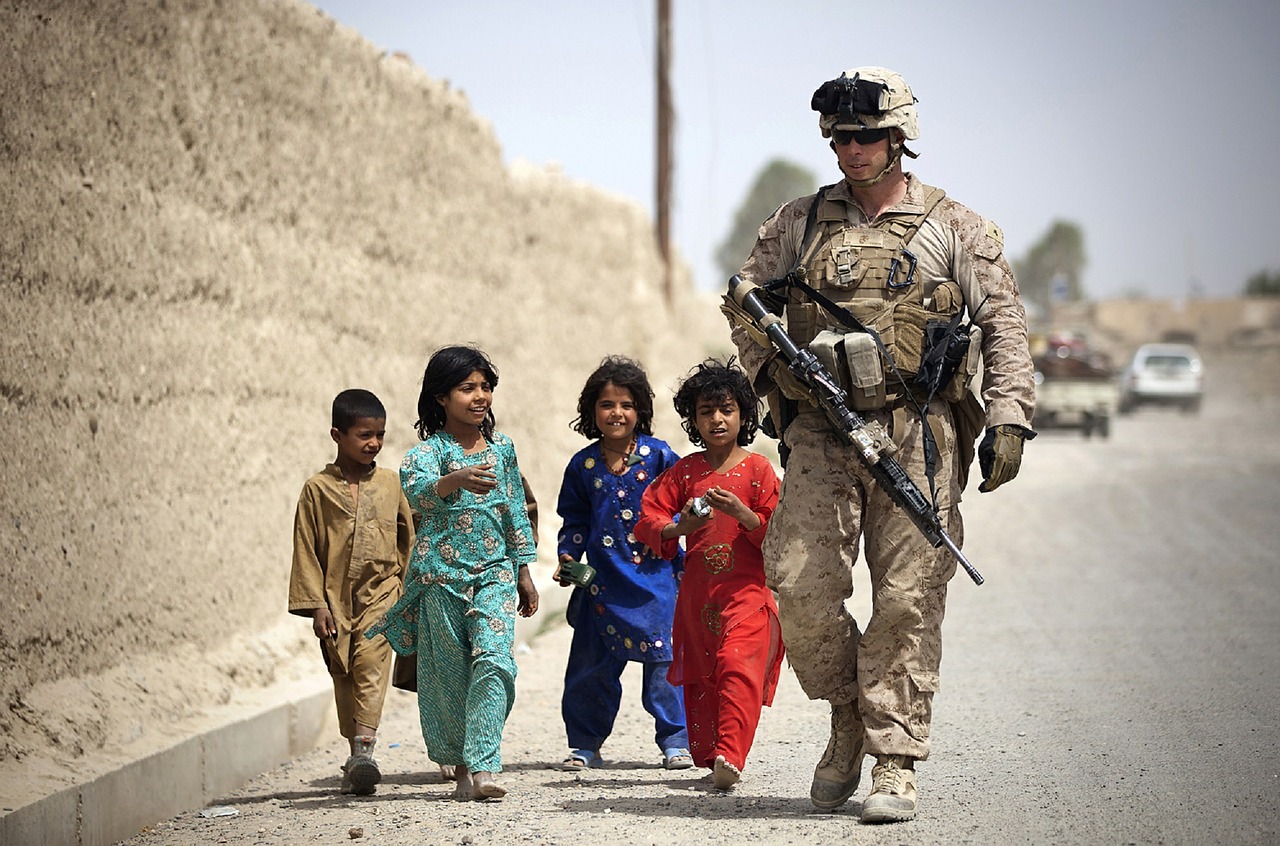
Anticipation.

Anticipation.

Sunday Inspiration.     Post by David Joel Miller.

Anticipation

Anticipation.
Photo courtesy of Pixabay.com

Anticipation

“The idea of waiting for something makes it more exciting”

― Andy Warhol

“… We need the sweet pain of anticipation to tell us we are really alive.”

― Albert Camus

Pleasure is found first in anticipation, later in memory.”

― Julian Barnes, Flaubert’s Parrot

Wanted to share some inspirational quotes with you.  Today seemed like a good time to do this. There are an estimated 100,000 words in the English language that are feelings related. Some emotions are pleasant, and some are unpleasant, but all feelings can provide useful information. If any of these quotes strike a chord with you, please share them.

Look at these related posts for more on this topic and other feelings.

Emotions and Feelings.

Inspiration

Where do you buy your e-books?

By David Joel Miller, MS, Writer.

Man writing

Writing.
Photo courtesy of Pixabay.com

The Internet is sure changing writing and e-books.

I live in the United States of America, California to be more exact. I’ve noticed that a lot of Americans seem to be very ethnocentric. It would be easy to forget that not everyone, everywhere, has the same experiences that you have.

California, the part of America I live in, is ethnically diverse. But California’s ethnic diversity is nothing compared to the diversity on the Internet. Because I write in English it would be tempting to believe that most of my readers lived in the United States, or maybe the United States plus one or two other English-speaking countries. I know it’s possible to translate web pages automatically, but I still suspect most of my blog readers are reading counselorssoapbox.com in English.

The diversity of my readers continues to amaze me. Thanks to all of you in the over 130 countries who have read counselorssoapbox.com. Thank you to all the people in the UK, Canada, Australia, and New Zealand who have read this blog on a regular basis since the very beginning.

Recently I’ve noticed a measurable increase in the number of posts read by people from China, Hong Kong, Nigeria, India, and Germany. From the stats, I can’t tell if these are a few people in each country who read every post I write, or if there are one or two posts that were read many times in these countries. I suspect it’s a mixture of regular readers and a few posts that resonated with readers in a specific country. Either way, I wanted to let you know I appreciate readers wherever you may live. Sorry if I didn’t mention your country, but to mention all of you would resemble the roll call of the UN.

So that brings me back to my question. Where you buy your e-books?

In the US Amazon is undoubtedly the largest seller of e-books. Amazon has certainly done an excellent job for me, and I continue to enjoy publishing my books on Amazon. I can tell from the stats I see on Amazon that they sell my books not only in the US but also in the UK and several other English-speaking countries. As good a job as Amazon does in the US and the UK; I suspect that they are not likely to be the primary bookseller in all those 130 other countries.

Recently I took two of my books, the novels, Casino Robbery and Sasquatch “wide.” Which means those books are now available on several other platforms.

To celebrate the addition of these other distributors one of my books Sasquatch is currently available free on each of the new e-book distributors platforms.

Using e-book aggregators.

To make those books available on all those other platforms, and to reach more of the countries in which I have blog readers, I’ve used two aggregators, who do the work of making the books available on various platforms.

The first aggregator I tried was Drafts2Digital, who makes my books available on Kobo, Apple iBooks, and Barnes & Noble

The second book aggregator I have used is PublishDrive who distributes my books to Google Play Books and some smaller European distributors.

Through these two aggregators, my books are also available on several other platforms.

My book Sasquatch will not be free forever.

So, if you get books from any of these other e-book distributors, you might want to grab a free copy of Sasquatch while it’s still available. If you do read one of my books, I would really appreciate you leaving an honest review. Reviews help me evaluate the job I’m doing of writing books my readers would like to read. Reviews also help others decide if they want that book.

If you read e-books, please leave a comment below and let me know where you get the books you read. Till next time, thanks for reading.

Staying connected with David Joel Miller

Seven David Joel Miller Books are available now!

My newest book is now available. It was my opportunity to try on a new genre. I’ve been working on this book for several years, but now seem like the right time to publish it.

Story Bureau.

Story Bureau is a thrilling Dystopian Post-Apocalyptic adventure in the Surviving the Apocalypse series.

Baldwin struggles to survive life in a post-apocalyptic world where the government controls everything.

As society collapses and his family gets plunged into poverty, Baldwin takes a job in the capital city, working for a government agency called the Story Bureau. He discovers the Story Bureau is not a benign news outlet but a sinister government plot to manipulate society.

Bumps on the Road of Life. Whether you struggle with anxiety, depression, low motivation, or addiction, you can recover. Bumps on the Road of Life is the story of how people get off track and how to get your life out of the ditch.

Dark Family Secrets: Doris wants to get her life back, but small-town prejudice could shatter her dreams.

Casino Robbery Arthur Mitchell escapes the trauma of watching his girlfriend die. But the killers know he’s a witness and want him dead.

Planned Accidents  The second Arthur Mitchell and Plutus mystery.

Letters from the Dead: The third in the Arthur Mitchell mystery series.

What would you do if you found a letter to a detective describing a crime and you knew the writer and detective were dead, and you could be next?

Sasquatch. Three things about us, you should know. One, we have seen the past. Two, we’re trapped there. Three, I don’t know if we’ll ever get back to our own time.

For these and my upcoming books; please visit my Author Page – David Joel Miller

Want the latest blog posts as they publish? Subscribe to this blog.

For videos, see: Counselorssoapbox YouTube Video Channel

Make this a great year.

New Year 2019

Happy New Year.
Photo courtesy of Pixabay.com

Alcohol Changes Your Blood.

By David Joel Miller, MS, Licensed Therapist & Licensed Counselor.

Liquor

Alcoholic beverages.
Photo courtesy of Pixabay.com

Alcohol can affect your body in a great many ways.

Alcohol is so much a part of our society that we tend to take it for granted. That can be a costly mistake. The World Health Organization recently reported that one in every 20 deaths each year was attributable to problems caused or made worse by alcohol consumption. VA hospitals said that more than half of their hospital beds were occupied by people with issues connected to alcohol use.

Many people are poorly informed about alcohol and the problems it can cause. It’s easy to believe that alcohol-related issues only happen to alcoholics or people who frequently get drunk. Even small amounts of alcohol can make medical issues worse.

Alcohol affects your blood in several ways.

Alcohol is highly water-soluble, meaning it mixes readily with your blood. Blood flows throughout your body reaching every cell. Consumption of alcohol may interfere with some of the vital functions of your hematological or blood system.

Alcohol can contribute to anemia in several ways.

Alcohol contributes to anemia by interfering with the production of red blood cells. Alcohol in the bloodstream interferes with the healthy nutrition needed to produce red blood cells. One of the breakdown products of alcohol metabolism, acetaldehyde, is believed to interfere with the ability to utilize iron, an essential part of red blood cells ability to distribute oxygen throughout the body.

Alcohol can result in defective red blood cells.

Many people are familiar with the way doses of alcohol can result in infants born with fetal alcohol syndrome. Alcohol, and its breakdown products, poison and deform growing cells. Deformed red blood cells can’t do their job. Some alcoholic beverages contain lead or other heavy metals further damaging blood cells.

Alcohol damages white blood cells.

White blood cells are an essential part of your immune system, your body’s defense against infection. Chronic alcohol use affects white cells. Just how much alcohol, spread out over how what amount of time, it takes to damage white blood cells is hard to estimate.

Once white cells are damaged or destroyed, they can no longer fight infections. Alcohol consumption increases the risk of severe infections, especially in the respiratory tract. Alcohol reduces the effectiveness of white cells both by reducing their number and interfering with their ability to adhere to bacteria. When you drink, your white cells get intoxicated and can’t do their job.

Alcohol damages platelets and increases bleeding.

Platelets are an important part of your blood clotting system. As alcohol consumption increases, the likelihood of developing bleeding problems increases. People with severe alcohol use disorders are likely to bleed in the intestinal tract, these gums, the nose, and many other places. Heavy drinkers are likely to bruise easily. Alcohol interferes with the production of platelets.

Alcohol interferes with the liver’s metabolism disrupting blood clotting factors.

Alcohol the bloodstream interferes with the production of blood clotting factors. Not only can it reduce the ability for the blood to clot where needed, but it can also result in clots forming where they shouldn’t be created.

Alcohol damages the immune system in several ways.

The body has two separate immune systems alcohol interferes with the functioning of both. Excessive alcohol consumption has been found to increase both the severity and the progression of HIV/AIDS.

Much of the damage alcohol does to the hematological system is reversible with abstinence. The primary connection between alcohol and its effect on the hematological system is because of alcohol’s impact on the liver. Heavy Alcohol consumption is well-known to cause cirrhosis of the liver. But alcohol consumption is connected to four separate liver ailments. Some of these liver impairments can be by as little as one or two binge drinking episodes.

Once alcohol consumption has damaged the liver damage to other systems in the body may not be reversible.

Who’s most likely to have alcohol caused hematological problems?

Not everyone who consumes alcohol will develop permanent damage to the body. Two groups are at exceptionally high risk. 20% of the US population consumes 80% of all the alcohol drunk in America, these heavy drinkers are highly likely to develop alcohol-related issues as they age and the liver function declines.

The second high-risk group for alcohol-related problems is those people who may not drink on a regular basis but when they do drink and up intoxicated. The damage alcohol does to the body on anyone drinking occasion is related to how high the blood alcohol content goes on that occasion. In addition to the well-known problems connected to getting drunk, like DUI’s and violence, binge drinking can also result in damage to the body and an increased risk of being infected if you are exposed to bacteria or viruses.

Want to know more?

Many of the students in my substance abuse counseling classes are surprised at the many ways alcohol can affect the body, emotions, relationships, and society. If you’re interested in more information on this topic you might want to take a look at the book we use for that class; Loosening the Grip. A Handbook of Alcohol Information, 11th edition, Jean Kinney, MSW.

Staying connected with David Joel Miller

Seven David Joel Miller Books are available now!

My newest book is now available. It was my opportunity to try on a new genre. I’ve been working on this book for several years, but now seem like the right time to publish it.

Story Bureau.

Story Bureau is a thrilling Dystopian Post-Apocalyptic adventure in the Surviving the Apocalypse series.

Baldwin struggles to survive life in a post-apocalyptic world where the government controls everything.

As society collapses and his family gets plunged into poverty, Baldwin takes a job in the capital city, working for a government agency called the Story Bureau. He discovers the Story Bureau is not a benign news outlet but a sinister government plot to manipulate society.

Bumps on the Road of Life. Whether you struggle with anxiety, depression, low motivation, or addiction, you can recover. Bumps on the Road of Life is the story of how people get off track and how to get your life out of the ditch.

Dark Family Secrets: Doris wants to get her life back, but small-town prejudice could shatter her dreams.

Casino Robbery Arthur Mitchell escapes the trauma of watching his girlfriend die. But the killers know he’s a witness and want him dead.

Planned Accidents  The second Arthur Mitchell and Plutus mystery.

Letters from the Dead: The third in the Arthur Mitchell mystery series.

What would you do if you found a letter to a detective describing a crime and you knew the writer and detective were dead, and you could be next?

Sasquatch. Three things about us, you should know. One, we have seen the past. Two, we’re trapped there. Three, I don’t know if we’ll ever get back to our own time.

For these and my upcoming books; please visit my Author Page – David Joel Miller

Want the latest blog posts as they publish? Subscribe to this blog.

For videos, see: Counselorssoapbox YouTube Video Channel

Fun.

Sunday Inspiration.     Post by David Joel Miller.

Fun

Fun.
Photo courtesy of Pixabay.com

Fun.

“It’s kind of fun to do the impossible.”

― Walt Disney Company

“If you’re not having fun, you’re doing something wrong.”

― Groucho Marx

“Today was good. Today was fun. Tomorrow is another one.”

― Dr. Seuss

“I have never been convinced there’s anything inherently wrong in having fun.”

― George Plimpton

Wanted to share some inspirational quotes with you.  Today seemed like a good time to do this. If any of these quotes strike a chord with you, please share them.

Look at these related posts for more on this topic and other feelings.

Emotions and Feelings.

Inspiration

Self-publishing requires many hats.

Self-publishing requires many hats.

Man writing

Writing.
Photo courtesy of Pixabay.com

By David Joel Miller.

Self-publishers must fill many roles.
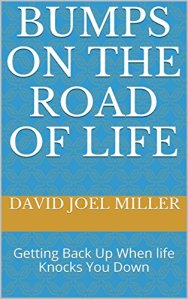
Bumps on the Road of Life.

Bumps on the Road of Life.
By David Joel Miller

Self-published authors need many hats. Even if you pay someone to do some of these functions; you still need to spend time on that role. I continue to feel like I’m just at the beginning of my self-publishing career, but when I look back over my shoulder and see how far I have come, it’s incredible.

My first blog post was in May 2011. I continue to learn about blogging. The transition from blogger to published author has been a steep uphill climb. My first book, Bumps on the Road of Life, a nonfiction book about recovery when life knocks you down, was published in late October 2017. Bumps was followed a week later by my first novel Casino Robbery. My second novel, Sasquatch Attacks, was released in September 2018.

Through this process have learned a great many things but I have many things yet to learn. To be successful as an indie author, however you define success, requires learning and practicing a great many skills. Here are some of the skills I’ve been working on developing.

Self-published, indie authors, must become researchers.
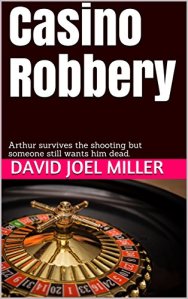
Photo of Casino Robbery book

Casino Robbery.

Writing a nonfiction book requires a lot of research. I thought there would be less research needed when I started writing fiction. I have learned that if I didn’t do the research before I began to write, I was likely to have to stop in the middle of writing and do that research.

Whatever you put in your book you need to describe accurately. I have had to research locations for my settings, weather patterns, clothing, and a great many other details. I’m tempted to write a fantasy novel set somewhere in my imagination. But a preliminary outline for my fantasy already tells me I will need to spend a lot of time creating this world in minute detail, so I don’t have my characters doing things that aren’t consistent with that setting.

I continue to learn about how to research effectively and plan to write another blog post about the lessons I’ve learned about how to be an effective researcher.

Self-publishers need to be creative authors.
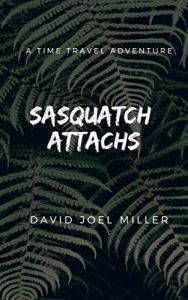
Sasquatch Attacks - cover On Amazon

Sasquatch Attacks – cover
On Amazon

You would think making things up, that would be easy. Lots of people lie every day. Creating fictional characters doing fictional actions turns out to be harder than I had imagined. My creative process continues to change. I started primarily by imagining my protagonists, putting them in a setting, and then creating obstacles for them to overcome.

For me, this process of “writing into the dark” involved a lot of stopping and starting. I get my character to a setting, and then I must describe the location. Next, I set my protagonist to interact with other people. But who are these people?

Over the last year, I’ve written several additional novels which I hope to get published in 2019. I found that the most creative part for me now is writing the outline. For each chapter I plan to write, I think about where the action will take place, who will be there, and what the action will be. As I work my way through the outline ideas for other possibilities pop into my head. This requires going back and inserting the helper who will come to the protagonist aid in chapter 12 into earlier sections, so the reader won’t be surprised when this character appears.

Independent authors need to be extreme editor’s.
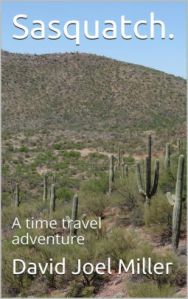
Sasquatch - cover On other platforms

Sasquatch – cover
On other platforms

I continue to learn about the process of editing. Editing is a lot more than running the manuscript through spellcheck and Grammarly, as valuable as those tools are. Editing also involves looking for the things that been left out and cutting out the unnecessary, boring parts. One challenge I encounter, when editing, is balancing the need for correct grammar with establishing authentic voices for my characters and the narrator.

You may decide that you need to hire an editor. I read a lot of self-published books, and some of them are so full of typos and errors that it makes them hard to read. Paying an editor to weed out all those typos can be expensive. Whether you elect to pay an editor or do the editing yourself the more errors you find and correct the better the final product will be.

Indie authors are also their own publishers.

The publishing function includes several tasks starting with formatting the manuscript for submission. The requirements for an e-book are enormously different from those from a paperback. E-books can contain links while the paperback edition requires complete information, including the URL.

In publishing your book, you need to decide whether to go exclusively with Amazon or “publish wide” so that your books will be available on other platforms such as Kobo, Barnes & Noble, Google Play, Apple iBooks, and so on. If you “publish wide” you will need multiple formatted manuscripts. You can’t include links to your books on one platform in a manuscript published on another platform.

My nonfiction book is currently available exclusively on Amazon. The two novels I published wide. One of those novels has sold predominantly on Amazon, while the other novel has sold almost entirely on the other platforms. I learned a lot of lessons by attempting to publish wide. The decision to publish exclusively on Amazon, or to go wide on other platforms is a complicated one. That decision requires a full blog post all on its own.

Self-published authors need covers for their books.

Many indie authors pay someone to design their covers. A good cover can help sell your book. I feel like I’m just in the “kindergarten” of learning book cover design. I have used Amazon’s cover creator and found it very helpful. I’ve also tried designing my own covers. Creating a good cover is a lot harder than it looks. I continue to learn about creating covers.

Indie authors need to be their own Promotions and Publicist person.

Wouldn’t it be wonderful once having written your book and uploaded it to a platform, if that book suddenly started selling? With so many books on the market, the challenge is to make your book discoverable. Promoting sales of your book is an ongoing challenge.

There’s a short description of some of the various skills I’ve been learning in my process of writing and publishing my own books. I’m sure I have a great deal more to learn. If you have questions for me about my writing and publishing journey feel free to ask.

Part of the promotion process is getting reviews for your book. Securing more reviews for the books I have published is one of the things on my “to do” list. Honest reviews help other people decide whether to purchase a book. If you have read one of my books and have not yet left a review, I would appreciate one.

You’ll find more posts on this topic under – Writing.

Staying connected with David Joel Miller

Seven David Joel Miller Books are available now!

My newest book is now available. It was my opportunity to try on a new genre. I’ve been working on this book for several years, but now seem like the right time to publish it.

Story Bureau.

Story Bureau is a thrilling Dystopian Post-Apocalyptic adventure in the Surviving the Apocalypse series.

Baldwin struggles to survive life in a post-apocalyptic world where the government controls everything.

As society collapses and his family gets plunged into poverty, Baldwin takes a job in the capital city, working for a government agency called the Story Bureau. He discovers the Story Bureau is not a benign news outlet but a sinister government plot to manipulate society.

Bumps on the Road of Life. Whether you struggle with anxiety, depression, low motivation, or addiction, you can recover. Bumps on the Road of Life is the story of how people get off track and how to get your life out of the ditch.

Dark Family Secrets: Doris wants to get her life back, but small-town prejudice could shatter her dreams.

Casino Robbery Arthur Mitchell escapes the trauma of watching his girlfriend die. But the killers know he’s a witness and want him dead.

Planned Accidents  The second Arthur Mitchell and Plutus mystery.

Letters from the Dead: The third in the Arthur Mitchell mystery series.

What would you do if you found a letter to a detective describing a crime and you knew the writer and detective were dead, and you could be next?

Sasquatch. Three things about us, you should know. One, we have seen the past. Two, we’re trapped there. Three, I don’t know if we’ll ever get back to our own time.

For these and my upcoming books; please visit my Author Page – David Joel Miller

Want the latest blog posts as they publish? Subscribe to this blog.

For videos, see: Counselorssoapbox YouTube Video Channel

Happy Holidays.

Fall scene

Happy Holidays

Christmas is almost here. Take the time to enjoy the season.

Winter.

Sunday Inspiration.     Post by David Joel Miller.

Winter

Winter.
Photo courtesy of Pixabay.com

Winter.

“Winter is on my head, but eternal spring is in my heart.”

― Victor Hugo

“My old grandmother always used to say, Summer friends will melt away like summer snows, but winter friends are friends forever.”

― George R.R. Martin, A Feast for Crows

“And then her heart changed, or at least she understood it; and the winter passed, and the sun shone upon her.”

― J.R.R. Tolkien, The Return of the King

“If we had no winter, the spring would not be so pleasant: if we did not sometimes taste of adversity, prosperity would not be so welcome.” [Meditations Divine and Moral]”

― Anne Bradstreet, The Works of Anne Bradstreet

Wanted to share some inspirational quotes with you.  Today seemed like a good time to do this. If any of these quotes strike a chord with you, please share them.

Look at these related posts for more on this topic and other feelings.

Emotions and Feelings.

Inspiration

How do you create character names?

By David Joel Miller, MS, Writer.

Man writing

Writing.
Photo courtesy of Pixabay.com

Creating effective character names can be a challenge.

I struggle with the process of naming the characters in my novels. Because of those struggles, I have discovered a few tricks. Like most every aspiring writer, I was a reader first. Recently I’ve been doing a great deal of reading out loud to my family. In doing all this reading, I discovered that the way some authors name their characters create problems. First, let me tell you the things I try to avoid doing when naming characters and my solutions to these problems. At the end of this post, I will list a few resources that I use to create character names.

Don’t use character names that will confuse your readers.

I get very frustrated when I’m reading a book, and there is a group of characters who appear in a scene who all have exceedingly similar names. It’s very unclear to read about Betty, Barbara, Becky, and Bethany who meet a group of men named Daniel, Danny, Doug, and David. It takes the reader a while to get characters straight in their head. I try to avoid having two characters in the same novel whose names start with the same letter. When working on a novel I keep an alphabetical list of the characters, and I avoid multiple names which begin with the same letter.

Recently, during November, I began a first draft of a new novel scheduled to be published in the spring, which I’m titling “Planned Accidents.” This book will be episode two of the Arthur Mitchell Mysteries. Book one was Casino Robbery. I quickly discovered I had created two characters both named Howard, one in each book. Howard number two had to be renamed so that I don’t confuse readers who have read book one. I’m now convinced that I need to maintain a master list of characters for all the novels in a given series.

Avoid names that are gender-confused.

Some names can either a male or a female. I’ve noticed a disturbing trend among some authors to use nicknames that shorten the character’s name. The protagonist’s name is Rhonda, but on the next page, people are talking about Ron. Ron is dating Dan though I can’t tell from the context if Dan is short for Daniel or Daniela.

Avoid names that readily call up a particular image.

Watch out for creating a bridge playing protagonist named Donald and then having to write a paragraph in which Donald bids both trumps and no trumps. Calling a boy wizard Harry Porter is a terrible idea. While it may feel like a shortcut to use a name that readily conjures up the image you’re looking for, using these kinds of names create inauthentic, cardboard characters.

Avoid names that sound too much like a real person.

Whenever I write a villain for a novel, after creating their name, I do a quick web search. I don’t know that I’ll catch every problem, but I don’t want to write an evil villain and accidentally use the name of a candidate who is currently running for political office. I also avoid names that are too close to recognizable historical figures or sports figures.

Avoid racial and ethnic stereotypes.

Have you’ve ever picked up a spy novel and noticed that all the characters have either German or Russian names? Do all the stories about organized crime appear to be filled with Italian surnames?

Avoid names that are hard to pronounce.

In this millennium a great many people are doing their “reading” by listening to audiobooks. I discovered from my family’s nightly reading aloud session, that some names look great on the page, easy to recognize. But it’s very frustrating to keep encountering words that are difficult to pronounce. I think writers should consider what their character’s names will sound like when spoken aloud when choosing those names.

So, what are the solutions to all these naming problems?

  1. Maintain a master list of characters for your novel or series and don’t repeat similar-sounding names.
  2. I often create the name first and then write the description and biography of that person. If you’ve already cast the character, it can be challenging to find the name that fits them.
  3. If you create a new name, do a web search to make sure you haven’t selected the name of a prominent person in some other country. Also, avoid creating names that have a negative meaning in some language you are not familiar with.

To create names, I use several sources.

Behind the name is helpful for finding first names. You can look at lists by gender, ethnic origin, or merely browse the complete list, looking for a name that appeals to you. I’m currently working on an outline for a fantasy book, my first try at writing fantasy because the characters will have connections with medieval Europe I’m looking at various Old English and Scandinavian names for my characters.

For last names, I use a related website Surnames; behind the name.

Another useful resource comes from the census department. You can look at the top first names by the decade of birth. Here’s the link to the list of the top names from the 1880s.

Sometimes I mashed names up.

In the past, surnames were often created by taking the father’s first name and adding an ending. I created unique new names for some of my characters, by taking the first name from one ethnicity and combining it with an ending from a different nationality. Back in the 1970s a lot of parents were creating unique names for their children by altering the spelling or combining two first names. I do the same thing for some of my character’s last names.

Any other ideas on how to create the perfect name for a fictional character?

Staying connected with David Joel Miller

Seven David Joel Miller Books are available now!

My newest book is now available. It was my opportunity to try on a new genre. I’ve been working on this book for several years, but now seem like the right time to publish it.

Story Bureau.

Story Bureau is a thrilling Dystopian Post-Apocalyptic adventure in the Surviving the Apocalypse series.

Baldwin struggles to survive life in a post-apocalyptic world where the government controls everything.

As society collapses and his family gets plunged into poverty, Baldwin takes a job in the capital city, working for a government agency called the Story Bureau. He discovers the Story Bureau is not a benign news outlet but a sinister government plot to manipulate society.

Bumps on the Road of Life. Whether you struggle with anxiety, depression, low motivation, or addiction, you can recover. Bumps on the Road of Life is the story of how people get off track and how to get your life out of the ditch.

Dark Family Secrets: Doris wants to get her life back, but small-town prejudice could shatter her dreams.

Casino Robbery Arthur Mitchell escapes the trauma of watching his girlfriend die. But the killers know he’s a witness and want him dead.

Planned Accidents  The second Arthur Mitchell and Plutus mystery.

Letters from the Dead: The third in the Arthur Mitchell mystery series.

What would you do if you found a letter to a detective describing a crime and you knew the writer and detective were dead, and you could be next?

Sasquatch. Three things about us, you should know. One, we have seen the past. Two, we’re trapped there. Three, I don’t know if we’ll ever get back to our own time.

For these and my upcoming books; please visit my Author Page – David Joel Miller

Want the latest blog posts as they publish? Subscribe to this blog.

For videos, see: Counselorssoapbox YouTube Video Channel
The difference in mental health services for youth and adults.

By David Joel Miller, MS, Licensed Therapist & Licensed Counselor.

Children

Children’s mental health.
Photo courtesy of Pixabay.com

One size does not fit all.

When it comes to mental health services what’s needed and what’s actually provided can vary tremendously. Treatment for each client should be individualized.

Therapy for children needs to be appropriate for both their age and their developmental stage. There are also some differences in the way the counselor or therapist may need to approach treatment. In selecting a therapist, it’s important to find someone with both the training and experience required to work with the person receiving services. Here are some of the differences between mental health services for youth and adults.

The therapist needs to speak the same “language” as the child.

Children don’t have the vocabulary to describe feelings. Children often express themselves by actions rather than words. For very young children therapy is best done through speaking the language of “play.” How a child expresses themselves through action will change as they age.

What’s appropriate for a baby to say at age six months will be very different from what they should be saying at five years. The same is true of their behaviors and the way in which they play.

The therapist needs to consider “who is the client?”

Children are usually referred to therapy because an adult has either recognized the problem or is afraid the child may develop a problem. The counselor must consider whether the reason this child is in therapy is that the child is doing something an adult doesn’t want them to do or because they aren’t doing something the adult wants them to do.

More than one female single parent has brought their male offspring in for counseling because they did not want that child to “be just like their father.” In these cases, often the father was either physically abusive, drug-addicted, or engaged in criminal activity. Unfortunately, being told repeatedly that you are “just like your father” can be extremely damaging to the child’s development.

A similar problem happens when male parents are raising female children and, in their effort, to prevent their daughters developing sexuality, they continually accuse the daughter of promiscuity “just like your mother.”

In cases like these, where a parent is projecting their own issues and negative life experiences on to their children, the counselor tries to help the child develop the skills to make their own healthy choices. Frequently, what needs to happen is for the parent to get into therapy for their issues and for help in becoming a more effective parent.

The counselor will at most see the child for an hour a week, while the parent will provide the care for that child for 167 other hours each week.

Lifespan development issues are important.

If a child isn’t hitting their developmental milestones, walking, talking, learning schoolwork, and appropriate behavior on time, this warrants a referral to medical or mental health professionals. Unfortunately, many parents have unrealistic expectations for their child. Parents often push their children to do things that they are not developmentally ready for. I’ve had parents request that their child be assessed for ADHD because the child was getting B grades instead of straight A’s.

Children may be afraid to tell the truth.

While the child is often the one identified as having the problem, it’s entirely possible the problem is with the home situation. Children who grow up in a home where parents have frequent violent fights may be awake all night. When they go to school, they can’t concentrate because of their lack of sleep and their fears about what is going on at home while they’re at school. If they witnessed domestic violence, they might learn to use hitting as a way to get what they want.

While the child is referred for assessment for attention problems the real issue may lie with the parents. Children are afraid to report problems at home for fear that their parents will punish them or that they may be taken away from their parents.

Many children are taught not to talk to strangers and to never talk about families “business” outside the family. Children from lower socioeconomic status homes may be embarrassed. Children may have been instructed not to talk about parents who are engaged in illegal activity, or they may be reluctant to talk about having a parent or caregiver who is incarcerated.

Many problems are not identified until the child gets older.

I see many files for teenagers in which they were treated in the early grades for developmental issues. Later they were treated for attention deficits. In middle school and high school, they may have been treated for bad behavior. It’s not until late high school or college that some of these clients are diagnosed with severe depression.

It’s important that anyone working with children not write off poor attention and behavioral problems as a result of “bad child” diagnoses. A specialist in child developmental issues should be looking for serious mental health issues such as anxiety disorders and depression.

Children may need help in developing life skills.

Counselors working the children must be careful not to think that it’s the child who has the problem. Sometimes what the child needs are the skills to cope with a dysfunctional family and a challenging world. Social skills are tough for some children to develop. The majority of adults who develop anxiety disorders had the symptoms by the end of middle school.

Counselors may need to normalize the challenges of growing up. Most children go through a stage of feeling insecure and worrying about whether they measure up. Helping the young client through the transition periods can reduce or possibly even prevent the development of anxiety disorders, eating disorders, and other mental health problems that are the result of judging themselves in overly negative ways.

These are some of the major differences between working with children and adults. The techniques and materials the counselor uses are also likely to be different. Please feel free to leave additional questions or comments.

Staying connected with David Joel Miller

Seven David Joel Miller Books are available now!

My newest book is now available. It was my opportunity to try on a new genre. I’ve been working on this book for several years, but now seem like the right time to publish it.

Story Bureau.

Story Bureau is a thrilling Dystopian Post-Apocalyptic adventure in the Surviving the Apocalypse series.

Baldwin struggles to survive life in a post-apocalyptic world where the government controls everything.

As society collapses and his family gets plunged into poverty, Baldwin takes a job in the capital city, working for a government agency called the Story Bureau. He discovers the Story Bureau is not a benign news outlet but a sinister government plot to manipulate society.

Bumps on the Road of Life. Whether you struggle with anxiety, depression, low motivation, or addiction, you can recover. Bumps on the Road of Life is the story of how people get off track and how to get your life out of the ditch.

Dark Family Secrets: Doris wants to get her life back, but small-town prejudice could shatter her dreams.

Casino Robbery Arthur Mitchell escapes the trauma of watching his girlfriend die. But the killers know he’s a witness and want him dead.

Planned Accidents  The second Arthur Mitchell and Plutus mystery.

Letters from the Dead: The third in the Arthur Mitchell mystery series.

What would you do if you found a letter to a detective describing a crime and you knew the writer and detective were dead, and you could be next?

Sasquatch. Three things about us, you should know. One, we have seen the past. Two, we’re trapped there. Three, I don’t know if we’ll ever get back to our own time.

For these and my upcoming books; please visit my Author Page – David Joel Miller

Want the latest blog posts as they publish? Subscribe to this blog.

For videos, see: Counselorssoapbox YouTube Video Channel