
What if your loved one refuses treatment?

By David Joel Miller, MS, Licensed Therapist & Licensed Counselor.

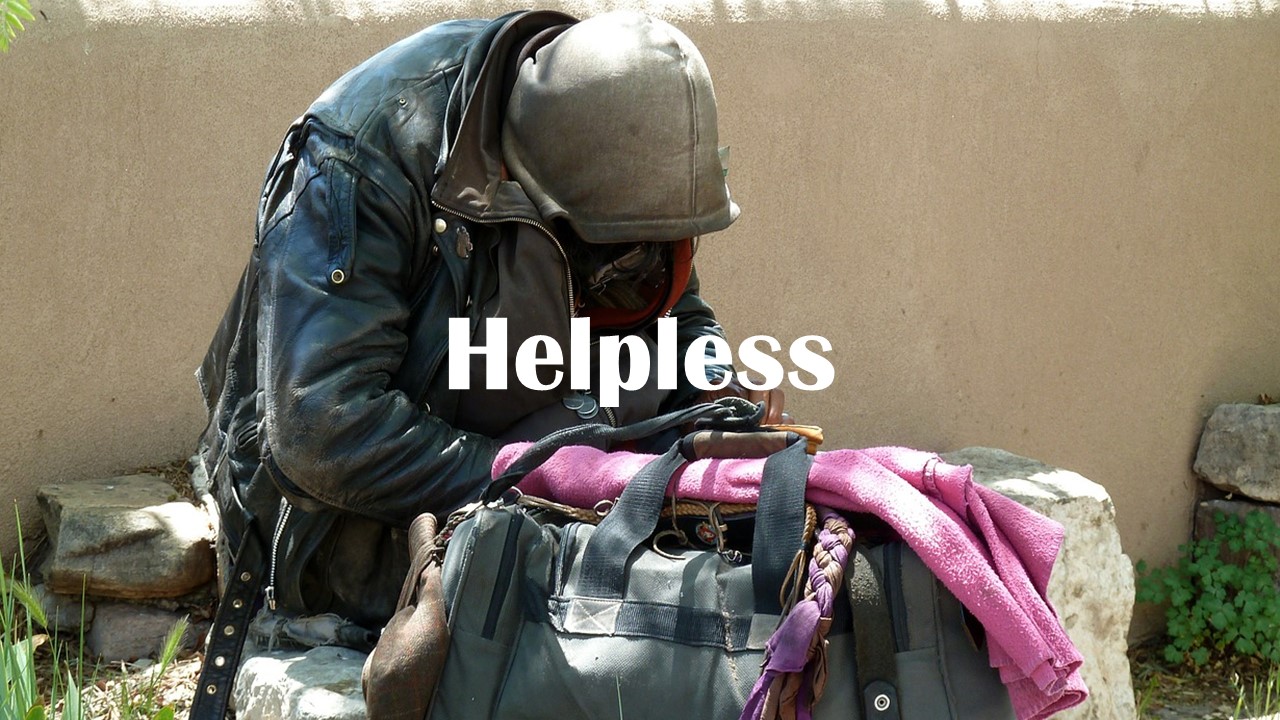
Helpless person

Helpless.
Photo courtesy of Pixabay.com

What do you do when they get mad at you for suggesting they get help?

It is not unusual for people with a serious mental illness to refuse treatment. They don’t want to admit they need help, they are embarrassed or they don’t think that anything can help them. Sometimes people don’t want to give up their problems even when others around them see the need for them to change.

People with Bipolar Disorder may be especially resistant to getting treatment. They like the way the mania or hypomania makes them feel. When they slip into depression they may be more receptive but the second the depression lifts and the mania returns they are prone to stop taking their meds. This is very difficult for those around them.

People with a drug or alcohol problem are also resistant to change. They like the mood change their chemical friend creates and are unlikely to think the problem is the drug. They will blame others, make excuses, and offer plenty of reasons why they don’t have a problem. The harder you press them to change the angrier they will get.

Other additions, gambling, sex, and pornography are also more likely to be seen as a problem by those around the addict. So what does the family member do?

Unless the person with the addiction or the mental illness wants to change there is little those around them can do to make them change. The ill person needs to decide that this issue is causing them a problem and for a very long time they will insist that the problem is all those other people around them who don’t understand them.

If the person with the problem does not want help I highly recommend that the family member who wants them to change needs to get counseling for themselves. Continuing to insist that someone change to make you happy make us wonder who the mentally ill person is.  Ask yourself a few questions.

If this person never changes one bit will I be happy in this relationship?

Most people who have a mental illness or an addiction will not change until they find that they can no longer go on acting the way they have been. As long as a family member or friend stays in their life, helping them out and caring for them, they are unlikely to admit they have a problem. If you love them you may have to let them go, only to find when they have lost everything and finally get into recovery they may want to be with someone new who has not been through all the pain with them.

Staying with them means you will need to be prepared for whatever ride you end up taking. They may get arrested, become violent; leave you for their addiction or another person. They may think, at least for a while, that you are the reason they drink, do drugs, or are “stressed out.”

Can I accept that this is just the way things are?

Some family members conclude that they would rather put up with an ill family member and stay in the relationship even if the ill person never goes for treatment. Others will conclude they can’t take living with an alcoholic, drug addict, or bipolar person who is unwilling to get help. The choice is not a black or white one; these life choices are very personal. Just don’t fool yourself into thinking that if you stay around long enough and try hard enough your love will change them.

Consider also how far into this relationship are you?

If you have several children together that is one situation. If you have no children do you want to raise a child or children while the impaired person continues to act this way? Is it fair to put a child through this?

Too many people think they can change the partner, that a child will make the relationship better and that the other person will suddenly snap out of it and assume responsibilities when they have to. Occasionally that happens but not very often.

When the ill person will not come for therapy then the rest of the family needs to come to talk through their options and for help in coping with an ill family member.

Photo credit: Wikipedia

Staying connected with David Joel Miller

Seven David Joel Miller Books are available now!

My newest book is now available. It was my opportunity to try on a new genre. I’ve been working on this book for several years, but now seem like the right time to publish it.

Story Bureau.

Story Bureau is a thrilling Dystopian Post-Apocalyptic adventure in the Surviving the Apocalypse series.

Baldwin struggles to survive life in a post-apocalyptic world where the government controls everything.

As society collapses and his family gets plunged into poverty, Baldwin takes a job in the capital city, working for a government agency called the Story Bureau. He discovers the Story Bureau is not a benign news outlet but a sinister government plot to manipulate society.

Bumps on the Road of Life. Whether you struggle with anxiety, depression, low motivation, or addiction, you can recover. Bumps on the Road of Life is the story of how people get off track and how to get your life out of the ditch.

Dark Family Secrets: Doris wants to get her life back, but small-town prejudice could shatter her dreams.

Casino Robbery Arthur Mitchell escapes the trauma of watching his girlfriend die. But the killers know he’s a witness and want him dead.

Planned Accidents  The second Arthur Mitchell and Plutus mystery.

Letters from the Dead: The third in the Arthur Mitchell mystery series.

What would you do if you found a letter to a detective describing a crime and you knew the writer and detective were dead, and you could be next?

Sasquatch. Three things about us, you should know. One, we have seen the past. Two, we’re trapped there. Three, I don’t know if we’ll ever get back to our own time.

For these and my upcoming books; please visit my Author Page – David Joel Miller

Want the latest blog posts as they publish? Subscribe to this blog.

For videos, see: Counselorssoapbox YouTube Video Channel

Have another helping of stress. Stress can be good for you.

By David Joel Miller, MS, Licensed Therapist & Licensed Counselor.

Stressed out

Stressed.
Photo courtesy of Pixabay.com

You might need more stress in your diet.

Recently one of my esteemed colleagues wrote a post on the need to avoid stress. I am not sure he is right about that. We have been told so often that we need to avoid stress, that a lot of people are avoiding anything that might be stressful and the result is that they are very low in productivity and lower yet in self-esteem.

More stress in your diet just might be what the doctor ordered.

If your doctor tells you that you are now overweight and you need to lose some weight, he does not prescribe reducing the physical stress in your life. He does not tell you to go home, put your feet up, and avoid anything that might put a stress load on your system.

What the doctor does suggest is that your exercise put a manageable level of stress on your muscles. As you become stronger you increase the level of stress you place on your muscles. The key here is not reducing or avoiding stress but learning how to manage your stress so that it is a growth opportunity rather than being at a breaking point level.

Clients have told me that their work “stresses them out.” Their conclusion is that they should avoid working to reduce the stress. What they fail to recognize often, is that not working will result in a substantial reduction in income. Losing your house to foreclosure, being homeless or even the task of living the rest of your life on the small amount of income available to welfare recipients is a lot more stressful than learning to not stress yourself out over your work.

Writers typically get stressed every time they look at a blank page. We call this writer’s block. You don’t overcome that kind of stress by avoiding the stress of writing and giving up on your dream. You reduce the stress by writing, writing anything to fill up that space, and then you edit and revise until hopefully a piece worth reading comes to life.

Most things in our life do not “stress us out” though we would all like to blame our level of negative emotions on some outside force that is producing “stress.” Most of the time we stress ourselves out by ruminating on the thing we would like to avoid until it grows to gigantic proportions. Casey Truffo described this in one of her webinars as “gnawing on the thing that is eating you.”

Should we by some accident find ourselves without stress one morning, why there are plenty of things we could choose to worry about? Start by worrying that you have forgotten to worry about something important. Get really into fear, fear of losing something, fear of not getting what you want. Create so much stress over what might happen that you are unable to do anything.

The stress reaction is our body and our mind’s way of gearing up for a challenging situation. The difficulty here is that so many people can turn up the stress, but don’t know how to turn it back down when the occasion for the stress is over.

Stress hormones are supposed to be temporary events. Some crisis occurs, we need to respond and our body helps out here by pushing out adrenaline and other hormones, we are ready to fight, flee or fight. The problem with humans is that most of us have forgotten how to turn the stress hormones off. Three months later we are still telling anyone who will listen how that incident “stressed us out’ and in the process, we are able to relieve the stress.

Have you ever met someone who was highly productive and seems to thrive on stress? Have you wondered what their secret was?

The thing they have found is how to keep the stress external and maintain their responses internally. They have learned to turn stress to their advantage by using that stress to turn their performance up another notch.

The difference between people who use stress to their advantage and those who are defeated by stress is not in the stress. It is in our attitude to the stress.

The secret is to stop running from the stress monster and to turn towards him and kick his tail.

There are dangers in life that we all should avoid. Most of the things that stress us out every day are not those overwhelming life-threatening kinds of stress. The worst kinds of stress are those times when we upset ourselves over things that are outside our control.

Learn to control your stress, learn mindfulness, breathing control or embrace radical acceptance but don’t try to avoid stress by running from it.

Staying connected with David Joel Miller

Six David Joel Miller Books are available now!

Dark Family Secrets: Some family secrets can be deadly.

What if your family secrets put you in danger?

Letters from the Dead The third in the Arthur Mitchell mystery series.

What would you do if you found a letter to a detective describing a crime and you knew the writer and detective were dead?

Casino Robbery is a novel about a man with PTSD who must cope with his symptoms to solve a mystery and create a new life.

Planned Accidents  The second Arthur Mitchell and Plutus mystery.

SasquatchWandering through a hole in time, they encounter Sasquatch. Can they survive?

Bumps on the Road of Life. Whether you struggle with anxiety, depression, low motivation, or addiction, you can recover. Bumps on the Road of Life is the story of how people get off track and how to get your life out of the ditch.

For these and my upcoming books; please visit my Author Page – David Joel Miller

Books are now available on Amazon.

Want the latest blog posts as they publish? Subscribe to this blog.

For videos see: Counselorssoapbox YouTube Video Channel

Want the latest on news from recoveryland, the field of counseling, my writing projects, speaking, and teaching? Please sign up for my newsletter at – Newsletter. I promise not to share your email or to send you spam, and you can unsubscribe at any time.

For more about David Joel Miller and my work in the areas of mental health, substance abuse, and Co-occurring disorders see my Facebook author’s page, davidjoelmillerwriter.

Where does the Bipolar spectrum begin and end?

By David Joel Miller, MS, Licensed Therapist & Licensed Counselor.

Person with masks

Bipolar.
Photo courtesy of Pixabay.com

Thoughts on Bipolar spectrum.

My understanding of Bipolar Disorders, like many other “mental illnesses” has changed over the time I have been involved with this field. Not all professionals agree on some of these things so it is only fair I tell you some of my biases first.

When I first learned the technical part of diagnosis we had to study the diagnostic manual (the DSM.) The assumption here is that a really good clinician can distinguish between those with a mental illness and those without and further that those with a mental illness are in some specific way different from the normal ones.

Neither of those assumptions is necessarily true.

In school, it was really important to learn to distinguish the niceties of the diagnosis. I spent a lot of time on things like the differences between Schizophreniform disorder, Schizophrenia, and Schizoaffective disorder. This is very important in school and in taking your exams for licensure. In the real world, it is not so important. Both the meds and the talk therapy are likely to be the same for all of these.

Some of our view of the “Bipolar disorder spectrum” is distorted by the need to rule people in or out and to state which things are normal and which are diagnosable. The ruler you use can alter the results. Our venerable rule books on diagnosis in the mental health field fluctuate between the categorical approach, putting people into pre-sized boxes, and the continuum approach where we line them up from well to sick. Here are my beliefs on this.

1. There are NOT two groups, the “normal” and the “mentally ill.”

With some medical disorders, you either have it or don’t. Mental illness is not like that.

We are coming to recognize that there are not two distinct groups, the well and the unwell, but in fact, there is a continuum between being well and unwell. Something bad happens to you, then you should be sad or anxious. All of us have some days we feel better and other days that we feel less well.

Most of the things we count as symptoms are in fact normal human behaviors. It is just that the unwell person has more symptoms or more severe symptoms than the less unwell person. When the symptoms add up to enough to make a diagnosis is largely a judgment call.

People do not move directly from a healthy weight directly to obese. The move comes on slowly one ounce at a time. The same thing happens with mood disorders. It is not just the number of symptoms but also the severity of symptoms that cause a professional to assign a diagnosis. Two different professionals and you may get two different diagnoses even in research studies using “strict diagnostic criteria.”

2. Counting symptoms is not an exact science.

Each mental health disorder has a list of symptoms that are believed to make up the disorder. The client needs to have some number of symptoms to get the disorder. Say a disorder requires the majority of the list of symptoms, 7 of 13 possible symptoms, look at all the ways we could add this up. The mathematicians among us will recognize this as a factorial problem, the number of outcomes of 13 things taken 7 at a time. Email me if you do the math and get a number. Take my word for it the number of combinations is huge.

So as the clinician talks to you he considers, do you have enough characteristics of a symptom to count that one? Then he adds them all up and if you get enough you win the diagnosis.

Lots of judgment calls in this process.

So what about the spectrum of bipolar disorders?

I think this is a long spectrum and a lot of it does not deserve a diagnosis. The most severe cases can and should be diagnosed because if you have that many symptoms you need help.

Are birds Bipolar? Are other animals? I think they are a little. Every spring the days get longer, there is more daylight and they are awake more. They become interested in the opposite sex. Here in the northern hemisphere birds start looking for mates by Valentine’s day in February and by Easter, they have bred, created nests, and are hatching out chicks. People do this same thing.

We humans, tend to fall in love in the spring and marry in the summer. It takes a little longer for the children, but not that much longer.

There is also a seasonal decline in activities for all animals in the winter. Bears eat all they can and then go sleep for the winter. In humans, we call this atypical depression. So some change from active, even hypomanic behavior occurs naturally with the seasons. These mood changes are normal human behavior.

We probably should not give every teenager a Bipolar diagnosis, though most of the time their parents are sure that their preoccupation with sex and their moodiness should qualify.

People who have diagnosable Bipolar disorder do not really have different symptoms. What they have is a difference in the severity of symptoms. They also have different outcomes.

With all spectrum disorders, we should not make our decision based on the presence or absence of symptoms, which alone is not enough. The key factor is what effect do those symptoms have on the person.

If the increased interest in sex during the manic or hypomanic phase damages their relationships, gets them fired for sexual harassment of causes other disruptions in their work and relationships then they get the diagnosis. Also if the symptoms of the mood swings become unmanageable and they upset the person with those symptoms, then they should be treated.

So yes there is a spectrum of Bipolar-like symptoms from almost unnoticeable to debilitating severe. The thing we professionals should be looking at is not our judgment of the severity of the symptoms, but how are these symptoms, these problems in living life, affecting the client.

If the problems interfere with having a happy life then it has become severe enough we need to give it a diagnostic label and begin treatment.

Personally, I think there are a lot of people with less severe mood swings than what would be diagnosed as a Bipolar spectrum disorder that would benefit from some counseling. But as long as they can maintain the choice is up to the client.

Thanks to reader Dr. Charan Singh Jilowa for suggesting this topic. For more on this topic check the list of posts to the right or the post list on Bipolar disorder and mania.

Staying connected with David Joel Miller

Seven David Joel Miller Books are available now!

My newest book is now available. It was my opportunity to try on a new genre. I’ve been working on this book for several years, but now seem like the right time to publish it.

Story Bureau.

Story Bureau is a thrilling Dystopian Post-Apocalyptic adventure in the Surviving the Apocalypse series.

Baldwin struggles to survive life in a post-apocalyptic world where the government controls everything.

As society collapses and his family gets plunged into poverty, Baldwin takes a job in the capital city, working for a government agency called the Story Bureau. He discovers the Story Bureau is not a benign news outlet but a sinister government plot to manipulate society.

Bumps on the Road of Life. Whether you struggle with anxiety, depression, low motivation, or addiction, you can recover. Bumps on the Road of Life is the story of how people get off track and how to get your life out of the ditch.

Dark Family Secrets: Doris wants to get her life back, but small-town prejudice could shatter her dreams.

Casino Robbery Arthur Mitchell escapes the trauma of watching his girlfriend die. But the killers know he’s a witness and want him dead.

Planned Accidents  The second Arthur Mitchell and Plutus mystery.

Letters from the Dead: The third in the Arthur Mitchell mystery series.

What would you do if you found a letter to a detective describing a crime and you knew the writer and detective were dead, and you could be next?

Sasquatch. Three things about us, you should know. One, we have seen the past. Two, we’re trapped there. Three, I don’t know if we’ll ever get back to our own time.

For these and my upcoming books; please visit my Author Page – David Joel Miller

Want the latest blog posts as they publish? Subscribe to this blog.

For videos, see: Counselorssoapbox YouTube Video Channel
How do the mentally ill feel? About feelings.

By David Joel Miller, MS, Licensed Therapist & Licensed Counselor.

Man with feelings

Managing feelings.
Photo courtesy of Pixabay.com

Can you describe how the mentally ill feel?

This question actually comes up, both in-person and as search terms. Despite the difficulty of answering such a general question, I will take a stab at this.

Speaking for any group of people is always problematic. I am an old white guy. So I should be able to tell you how old white guys feel right? Trying to speak for any group is beyond difficult. How old white guys feel would depend on whether that old white guy was a homeless veteran living alone under a bridge or a Wall Street executive who was paid millions for running a company last year that lost billions. I really can’t describe how all old white men might feel about anything.

But I will try to tell you how the mentally ill feel.

It might be easier to describe how the mentally ill do NOT feel, though that begs the question of how they do feel.

The mentally ill don’t feel happy. Occasionally they may feel mania. They may run without stopping and not need to sleep but even then they will probably tell you they are not really happy.

It is hard for positive emotions like happiness, contentment, and peace to co-exist with active symptoms of a mental illness.

One reason I feel so sure that I can describe the way the mentally ill feel is that they are so much like those of us who would like to think we are not suffering from a mental illness – not at this moment anyway.

In the course of any one year, 25 % of Americans will have symptoms of a mental illness so severe they should be diagnosed. Over half of all Americans will have at least one episode of a mental illness during their lifetime. So they will feel a lot like the rest of us – only more so.

The rest of the world has similar prevalences of mental illness. What you call it may vary from place to place. What symptoms people may exhibit may vary from culture to culture, but most any of us can tell when people are not happy and when they are suffering from dis-happiness.

Most people with a mental illness feel flooded, overwhelmed with negative emotions. When they are anxious they feel really, really anxious. When they are sad they are down in the bottom of the hole sad. Their depression does not go away when they watch a sitcom. Their night of dark feelings is really, really black.

It would be reassuring to think that somehow the mentally ill are different from the rest of us. If only they somehow have a different temperament or had done something so wrong they deserved their misery.  But the truth be told, bad things can happen to good people and we all are at risk to have an experience that overwhelms us.

Sure once they develop mental illness they may act differently from the way they did when they were well. They will smoke more and maybe drink and drug more. They may lose the ability to care for themselves or to show up for work.

But tell the truth, if tomorrow you were to lose your job and your home, if your family and friends turned their back on you – wouldn’t you feel depressed, anxious, and like giving up?

So for those of you who wonder how the mentally ill feel, take a look at how you feel when things go wrong, and then you will know how you might feel if one day you woke up and discovered you had contracted a mental illness.

Staying connected with David Joel Miller

Seven David Joel Miller Books are available now!

My newest book is now available. It was my opportunity to try on a new genre. I’ve been working on this book for several years, but now seem like the right time to publish it.

Story Bureau.

Story Bureau is a thrilling Dystopian Post-Apocalyptic adventure in the Surviving the Apocalypse series.

Baldwin struggles to survive life in a post-apocalyptic world where the government controls everything.

As society collapses and his family gets plunged into poverty, Baldwin takes a job in the capital city, working for a government agency called the Story Bureau. He discovers the Story Bureau is not a benign news outlet but a sinister government plot to manipulate society.

Bumps on the Road of Life. Whether you struggle with anxiety, depression, low motivation, or addiction, you can recover. Bumps on the Road of Life is the story of how people get off track and how to get your life out of the ditch.

Dark Family Secrets: Doris wants to get her life back, but small-town prejudice could shatter her dreams.

Casino Robbery Arthur Mitchell escapes the trauma of watching his girlfriend die. But the killers know he’s a witness and want him dead.

Planned Accidents  The second Arthur Mitchell and Plutus mystery.

Letters from the Dead: The third in the Arthur Mitchell mystery series.

What would you do if you found a letter to a detective describing a crime and you knew the writer and detective were dead, and you could be next?

Sasquatch. Three things about us, you should know. One, we have seen the past. Two, we’re trapped there. Three, I don’t know if we’ll ever get back to our own time.

For these and my upcoming books; please visit my Author Page – David Joel Miller

Want the latest blog posts as they publish? Subscribe to this blog.

For videos, see: Counselorssoapbox YouTube Video Channel

Do addict, mentally ill labels help or hurt?

By David Joel Miller, MS, Licensed Therapist & Licensed Counselor.

Mental Health or Mental Illness

Mental Health or Mental Illness?
Photo courtesy of Pixabay.com

Do most people accept labels like “addict” or “mentally ill?”

The use of labels to identify clients keeps coming up. Does having a label, a name, for your problem help you find answers, or does it stigmatize you?

The recovery movement often uses labels, usually self-applied to define the nature of their issue. Saying you are an Alcoholic helps you to understand the problem and what you need to do to overcome it. In this case, if you are really an alcoholic you should not drink.

In A.A. they don’t give out the labels. They present information and let people decide for themselves if the designation fits. This approach has a lot to recommend it.

Some people feel that giving out labels can be a barrier to recovery. If you say you are an addict then, of course, you will use drugs, the use of the label could be interpreted as a reason to stay in your problem rather than move towards a solution.

Personally, if I have a cough it makes a lot of difference to me whether I have an allergy or tuberculosis. I am frankly a lot suspicious of a doctor who wants me to take medication for my cough but does not want to tell me what is wrong with me for fear of labeling me.

People are not defined by their disorders. We should not refer to them as “the schizophrenic” or the “depressive.” We know that there are times the person with schizophrenia or another psychosis may not be experiencing symptoms or the symptoms may be milder. This sometimes is referred to as periods of lucidity. People with depression can get better.

Most people, in my experience, embrace these labels. They help define the challenge the person is facing. It is reassuring to know that you have a treatable disorder rather than to think that you are crazy or that there is something so wrong with you and there is no hope. What most people find is that there are lots of other people who are struggling with the same illness.

As a professional, I feel I owe it to a client to tell them what I think they are struggling with. Knowing the problem can suggest solutions. I don’t find it useful to argue with clients overdiagnosis. Whenever possible we start by working on the things the client thinks are problems for them. Help them find a job and the depression just may go away.

Sometimes people put too much trust in a diagnosis. What if the person who gave you that one was wrong? Learn to use that information, their view of what you are struggling with, and go from there.

Now if you have been given medication, I recommend you take it as prescribed. If it is not working or you are experiencing side effects, talk with the prescribing doctor before you make a sudden change, and please do not take a med only on the days you think you need it, unless the doctor prescribed it to be used that way.

Feel free to add other helpful things, like therapy, meditation, and a strong support system to your medication. Medication can only take you so far. Working on your recovery includes learning and practicing the skills you will need to maintain that recovery.

So as far as diagnosis or labels go, if they help your recovery, use them. If your label is getting in the way of your recovery don’t worry about what it is called and focus on your recovery skills.

My view – for most people labeling the problem is helpful, labeling yourself is not. You are, after all, much more than any one problem you may be struggling with.

For more on this whole label-diagnosis thing see also the posts on:

What is wrong with me?

5 Axis diagnosis esoterica

Is it a medical problem or a mental health problem?

Staying connected with David Joel Miller

Seven David Joel Miller Books are available now!

My newest book is now available. It was my opportunity to try on a new genre. I’ve been working on this book for several years, but now seem like the right time to publish it.

Story Bureau.

Story Bureau is a thrilling Dystopian Post-Apocalyptic adventure in the Surviving the Apocalypse series.

Baldwin struggles to survive life in a post-apocalyptic world where the government controls everything.

As society collapses and his family gets plunged into poverty, Baldwin takes a job in the capital city, working for a government agency called the Story Bureau. He discovers the Story Bureau is not a benign news outlet but a sinister government plot to manipulate society.

Bumps on the Road of Life. Whether you struggle with anxiety, depression, low motivation, or addiction, you can recover. Bumps on the Road of Life is the story of how people get off track and how to get your life out of the ditch.

Dark Family Secrets: Doris wants to get her life back, but small-town prejudice could shatter her dreams.

Casino Robbery Arthur Mitchell escapes the trauma of watching his girlfriend die. But the killers know he’s a witness and want him dead.

Planned Accidents  The second Arthur Mitchell and Plutus mystery.

Letters from the Dead: The third in the Arthur Mitchell mystery series.

What would you do if you found a letter to a detective describing a crime and you knew the writer and detective were dead, and you could be next?

Sasquatch. Three things about us, you should know. One, we have seen the past. Two, we’re trapped there. Three, I don’t know if we’ll ever get back to our own time.

For these and my upcoming books; please visit my Author Page – David Joel Miller

Want the latest blog posts as they publish? Subscribe to this blog.

For videos, see: Counselorssoapbox YouTube Video Channel

.

What is Passive-Aggressive Personality?

By David Joel Miller, MS, Licensed Therapist & Licensed Counselor.

Couple fighting by not fighting

Passive-aggressive.
Photo courtesy of Pixabay.com

Are you stuck with a passive-aggressive?

Passive-Aggressive Personality is another one of those things that may be hard to define but you know it when we see it. The Passive-Aggressive Person (PA) doesn’t say much, but they sabotage everyone else. They can be especially annoying if you are confined with one in close quarters, at home, or at work. PA’s are responsible for a lot of organization’s failure to meet goals. They create a lot of family pain.

The PA may smile and nod their head yes, but their behavior says “No! No! No!” Their way of disagreeing is indirect. Sometimes defined as “obstructionist” they seem especially skilled at snatching misery from the jaws of success. Their favorite weapon is inaction.

PA people are known for their hostility, unexpressed hostility which leaks out by getting even with others through “not doing.” They are frequently late and forgetful, resulting in not getting things done that they were expected to do. When you look back at the record you may find they never said they would do it, they just didn’t say no when you asked them.

This failure to express themselves, particularly about emotions results in a lot of misunderstandings. When confronted with the discrepancy between what everyone else thought they would do and what they, in fact, did not do, the PA is likely to deny they ever agreed to do that, assert they forgot, or all too often give the confronter the “cold shoulder” and say nothing.

PA is considered more a trait or a personality characteristic than a mental illness. It is not officially a DSM diagnosis, though it has moved in and out of the list of Personality Disorders over time. As a personality trait, PA can vary from a few rare occurrences to a characteristic pattern that someone uses most all the time.

Most people with PA traits often report “trust issues” but so do lots of people without PA traits. We think that developing PA characteristics is related to growing up in a home that was non-affirming or where it was not OK to express emotions. In this sense, it is like the “Attachment Disorders.”  They have learned to avoid criticism by avoiding action. They are good at excessive procrastination and other forms of learned helplessness. They go along with things but make sure that the project fails by withholding effort at a critical time.

In addition to highly critical parents, the PA person is also likely to have had painful disappointments in life. They have reduced their expectations for themselves and others to avoid disappointment. Setting low sights reduces disappointments. They become so afraid of being told no they stop asking.

People with strong PA traits will fear competition and avoid situations where they will be judged at the same time they avoid dependency. They tend to keep their distance from others and are especially hard to get to know. They often express the feeling that they are unable to please anyone no matter what they do. Others feel that they can’t depend on the person with the PA traits.

Lacking truly close relationships, someone with a lot of PA traits creates a lot of chaos, makes excuses for failure to meet other’s expectations, and chronically takes the victim stance. Rather than direct disagreement they use obstructionism and sabotage to undermine those they resent. Their sabotage is of the indirect “failing to do anything” in the face of an urgent need form.

A key characteristic of the PA person is a lack of assertiveness. Unable to directly confront others they use indirect methods to accomplish their aims.

In the workplace, PA’s can be hard to spot and can rise to the top ranks since they always seem to agree with superiors despite failing to meet goals. They always have excuses for why the goals were not attainable. Management does not always value the worker who openly disagrees even when their productivity is high. Working with someone with PA traits destroys teamwork.

In the home, people with PA traits can be hard to live with and often under function. We know from system theory that when one person in a family under functions another is likely to over function, the result is a dance that is hard to change.

The family member who is PA will be hypersensitive to criticism especially when they have let others down and may resort to telling the rest of the family that their expectations are unreasonable. The result is that the rest of the family takes on the PA person’s responsibilities.

Staying connected with David Joel Miller

Seven David Joel Miller Books are available now!

My newest book is now available. It was my opportunity to try on a new genre. I’ve been working on this book for several years, but now seem like the right time to publish it.

Story Bureau.

Story Bureau is a thrilling Dystopian Post-Apocalyptic adventure in the Surviving the Apocalypse series.

Baldwin struggles to survive life in a post-apocalyptic world where the government controls everything.

As society collapses and his family gets plunged into poverty, Baldwin takes a job in the capital city, working for a government agency called the Story Bureau. He discovers the Story Bureau is not a benign news outlet but a sinister government plot to manipulate society.

Bumps on the Road of Life. Whether you struggle with anxiety, depression, low motivation, or addiction, you can recover. Bumps on the Road of Life is the story of how people get off track and how to get your life out of the ditch.

Dark Family Secrets: Doris wants to get her life back, but small-town prejudice could shatter her dreams.

Casino Robbery Arthur Mitchell escapes the trauma of watching his girlfriend die. But the killers know he’s a witness and want him dead.

Planned Accidents  The second Arthur Mitchell and Plutus mystery.

Letters from the Dead: The third in the Arthur Mitchell mystery series.

What would you do if you found a letter to a detective describing a crime and you knew the writer and detective were dead, and you could be next?

Sasquatch. Three things about us, you should know. One, we have seen the past. Two, we’re trapped there. Three, I don’t know if we’ll ever get back to our own time.

For these and my upcoming books; please visit my Author Page – David Joel Miller

Want the latest blog posts as they publish? Subscribe to this blog.

For videos, see: Counselorssoapbox YouTube Video Channel

Is your inner child missing?

By David Joel Miller, MS, Licensed Therapist & Licensed Counselor.

Child walking with adult

Inner child.
Picture courtesy of pixabay

What would happen if you were able to find your inner child?

Most of us have some hurt and pain from things that happened when we were young. Some people have deep wounds and traumas, others have regrets and disappointments. Much has been written about working on your inner child issues. Some of us are looking to find that little child in us that needs loving and nurturing. Why is this process so hard?

Behaviorally oriented therapists and mindfulness practitioners might both agree there really is no inner child in us, though they conclude this for very different reasons. There is that sad, anxious wounded, and immature part in many of us, which seems to say that there was something missing in our childhood, something we long for and need to be complete. Why can’t we find that inner child and give them a hug or a swift kick in the pants and solve this problem?

Behaviorists might tell us that there really is no inner child. Yes, I know that if you x-ray me there is no little creature lurking in there. They tell me that all I have are those memories of what it was like when I was a child. Not very accurate memories, I am told, as I was really young and got those facts wrong. That explains things sometimes, for a while.

Then something reminds me of that thing that happened that Christmas when I was 5 or the hurt from middle school and suddenly that little child part in me wants to cry.

Scientists assert that sometimes just trying to look at things changes them. Try to photograph a subatomic particle, start to measure it and you might change it. Looking for things alters them. I know that turning on the light in that old warehouse, the one full of cockroaches, results in them all scurrying for hiding places. The more light you shine in there the harder the roaches are to find.

Is my inner child like that? Does looking for him somehow change him?

The mindfulness people remind me there really is no “me.” No-self they call it. There are lots of past selves and hopefully some future selves but right now the only me is the one I perceive and I know that this me will certainly change. The me of 1970 is not the me from 1990 and so on. Why is it so hard to let go of the notion that there is this one immutable me and become open to getting to know all the possible “me’s”?

So that friend from elementary school, she doesn’t exist anymore. Her place has been taken by a senior citizen with the same name and some of the same memories, but not the same body. My child is an adult now and my cat; she is not the same cat from way back when.

So while looking for an inner child may be tempting, it may be a whole lot more productive to spend some time getting to know the person you are today before another day passes and you find you are changing again.

Staying connected with David Joel Miller

Seven David Joel Miller Books are available now!

My newest book is now available. It was my opportunity to try on a new genre. I’ve been working on this book for several years, but now seem like the right time to publish it.

Story Bureau.

Story Bureau is a thrilling Dystopian Post-Apocalyptic adventure in the Surviving the Apocalypse series.

Baldwin struggles to survive life in a post-apocalyptic world where the government controls everything.

As society collapses and his family gets plunged into poverty, Baldwin takes a job in the capital city, working for a government agency called the Story Bureau. He discovers the Story Bureau is not a benign news outlet but a sinister government plot to manipulate society.

Bumps on the Road of Life. Whether you struggle with anxiety, depression, low motivation, or addiction, you can recover. Bumps on the Road of Life is the story of how people get off track and how to get your life out of the ditch.

Dark Family Secrets: Doris wants to get her life back, but small-town prejudice could shatter her dreams.

Casino Robbery Arthur Mitchell escapes the trauma of watching his girlfriend die. But the killers know he’s a witness and want him dead.

Planned Accidents  The second Arthur Mitchell and Plutus mystery.

Letters from the Dead: The third in the Arthur Mitchell mystery series.

What would you do if you found a letter to a detective describing a crime and you knew the writer and detective were dead, and you could be next?

Sasquatch. Three things about us, you should know. One, we have seen the past. Two, we’re trapped there. Three, I don’t know if we’ll ever get back to our own time.

For these and my upcoming books; please visit my Author Page – David Joel Miller

Want the latest blog posts as they publish? Subscribe to this blog.

For videos, see: Counselorssoapbox YouTube Video Channel
Why do those with a low IQ act so immature?

Intelligence.
Photo courtesy of pixabay.

By David Joel Miller, MS, Licensed Therapist & Licensed Counselor.

Shouldn’t people with low IQ’s act more maturely?

Morning Question #27

That immaturity is actually a part of how intelligence was first measured. People’s chronological age does not always match their mental age.

The original idea was to measure their mental age and compare that to their chronological age. People who thought like a younger person were given a low IQ score.

IQ tests have been refined over the years and we know that IQ is in fact made up of many different factors. Some people are good at math and some are better with words. Since a lot of IQ tests consist of words on paper they are biased in favor of those who know more words.

Someone who has lived ten years should be in the 5th grade and should act like they were 10. But if they have a low IQ score, they score mentally like a 5-year-old and they should know what a 5-year-old knows, they probably will act like a 5-year-old also.

People also have something which is called emotional intelligence. Someone can be 30, score highly on an IQ test, and still act and feel emotionally like they are a teen. We all know people who act like that.

Someone who has not yet learned the lessons necessary to think like a 30-year-old would also presumably act less mature emotionally than their chronological age.

There are standard development tasks that are customarily learned at a particular age. Failure to learn those tasks will affect the person’s mental and emotional behavior until learned.

Moral reasoning is also learned over time. We do not expect preschoolers to understand the difference between right and wrong in the same way adults should understand these differences. Unfortunately, right now it is hard to tell some politicians from preschoolers but that is another subject.

One place we do great damage to children and those with a low IQ is to expect them to act and behave like a much older person. It is easy to see that a small child cannot carry a heavy object until they grow up. It is harder to understand that a child can’t understand how to be more mature until they, in fact, become more mature and that takes time.

Yelling at a child to grow up and act their age does not, in fact, make them older or more emotionally mature. Pressuring young children to do things beyond their ability can do long-term damage to their emotions. We may need to set high expectations sometimes to motivate people but we should not punish them when our expectations turn out to be unrealistic.

The rub comes in most severely in the mentally challenged. Most of us can see that a child of five cannot play NFL football; they are not physically mature enough. But when it comes to the developmentally delayed it is harder to understand that while their bodies may look mature their understanding is still immature.

We should expect an emotionally immature person to act in an immature way and not upset ourselves when they can’t meet our unrealistic expectations.

So what do you think? Any comments on emotional maturity?

Staying connected with David Joel Miller

Seven David Joel Miller Books are available now!

My newest book is now available. It was my opportunity to try on a new genre. I’ve been working on this book for several years, but now seem like the right time to publish it.

Story Bureau.

Story Bureau is a thrilling Dystopian Post-Apocalyptic adventure in the Surviving the Apocalypse series.

Baldwin struggles to survive life in a post-apocalyptic world where the government controls everything.

As society collapses and his family gets plunged into poverty, Baldwin takes a job in the capital city, working for a government agency called the Story Bureau. He discovers the Story Bureau is not a benign news outlet but a sinister government plot to manipulate society.

Bumps on the Road of Life. Whether you struggle with anxiety, depression, low motivation, or addiction, you can recover. Bumps on the Road of Life is the story of how people get off track and how to get your life out of the ditch.

Dark Family Secrets: Doris wants to get her life back, but small-town prejudice could shatter her dreams.

Casino Robbery Arthur Mitchell escapes the trauma of watching his girlfriend die. But the killers know he’s a witness and want him dead.

Planned Accidents  The second Arthur Mitchell and Plutus mystery.

Letters from the Dead: The third in the Arthur Mitchell mystery series.

What would you do if you found a letter to a detective describing a crime and you knew the writer and detective were dead, and you could be next?

Sasquatch. Three things about us, you should know. One, we have seen the past. Two, we’re trapped there. Three, I don’t know if we’ll ever get back to our own time.

For these and my upcoming books; please visit my Author Page – David Joel Miller

Want the latest blog posts as they publish? Subscribe to this blog.

For videos, see: Counselorssoapbox YouTube Video Channel

What causes an eating disorder relapse?

By David Joel Miller, MS, Licensed Therapist & Licensed Counselor.

Food

Food.
Photo courtesy of Pixabay.com

Can we predict who will have an eating disorder relapse?

People who work in the recovery field are struggling to figure out how relapses on mental health issues are like and how they are different from relapses involving substance abuse.

Eating disorders are a strong example of that difference.

With substance abuse, most authorities think any return to using or drinking constitutes a relapse. Some authors have tried to differentiate a “Lapse,” a single case of starting to pick up followed by a decision not to return to active use, from a relapse.

Most recovering people are uncomfortable with the idea that any case of picking up can be excused. Rule one for their recovery is “Don’t pick up.” Still, if you do relapse the sooner the return to recovery behaviors the better the chances.

With eating disorders we understand everyone needs to eat, many of us may worry about our weight and sometimes do something excessive to control that weight. To be a relapse on an eating disorder we think we need to see not just one incident but a return to the overall pattern of bad relationships with food.

That part of an eating disorder relapse is similar to relapse to other disorders. The relapse begins before picking up or purging behaviors. It begins with changes in thinking and failure to maintain your recovery.

Four key factors appear to predict who will have an eating disorder relapse (Per McFarlane et al 2008.) These factors may have an application for other mental health challenges.

1. How bad was the eating disorder before treatment?

The more severely affected the person was the more it will take to change those behaviors. People who have been starving, binging, or purging or even overeating for decades do not become cured overnight.

They may make significant progress in a short period of time but they will need a lot more time to consolidate those improvements if they have had the disease for a long time and the symptoms have gotten severe.

2. Higher level of eating disorder symptoms at end of treatment.

This makes intuitive sense. Someone still running a fever is at more risk than someone whose temperature has returned to normal to relapse into a physical health crisis.

The more the urges and cravings, the harder it will be to continue on the path to recovery and not lapse back into old behaviors.

Sometimes professionals are in too much of a rush to fix people and we may send them out of treatment before they are ready. With eating disorder symptoms the more there are and the larger the symptoms are the more the risk of relapse.

Pressure from managed care systems to cut costs is one source of the rush but there are others. Patients want to get this over with and get home. They often think they were cured when the professional known the symptoms are not even all gone yet.

3. Slow response to treatment predicts an eating disorder relapse.

Clients who enter a 28-day program need to hit the ground running. There is no time to waste. Unfortunately many are still not sure they want to change or that they really have a problem. In drug treatment, it is not unusual for clients to avoid treatment for the first thirty days. Somewhere along the way, they see others getting better and they want that result for themselves.

Eating disorder clients who do not start to make progress until three weeks into treatment will not be better, regardless of what that scale says, at the end of the 30 days.

Clients who are slow to respond to treatment need longer to consolidate gains and they are at a higher risk of relapse which means they need more support as the treatment frequency decreases.

4. Higher weight-related self-evaluation predicts relapse.

When your idea of your self-worth is based on an outward characteristic, like weight, it is hard to give up any control over your eating no matter how slight the risk.

This whole area of self-evaluation is a cause of a lot of mental illness and just plain unhappiness. Learn to like yourself for who and what you are inside and anyone who only likes you for your outward appearance is not worth your time.

Selling people things is big business. Sell people on the need to have and eat certain foods, sell them on the joys of eating large and high-calorie foods, make extra fat a standard menu item on fast food menus and you will make money. Then when we get done selling you high-calorie food we tell you it is your fault that you have gained weight.

Don’t buy the yo-yo. Learn to eat healthy in the first place but accept that no one keeps that elementary school figure without giving up a lot of life.

There is a whole lot more inside you than what will show on the scale. The secret to happiness is in keeping your life in balance, not in winning the prize for self-deprivation.

People who think their self-worth is all about their weight will never get happy. Get happy first and you will like yourself regardless of your weight.

Staying connected with David Joel Miller

Seven David Joel Miller Books are available now!

My newest book is now available. It was my opportunity to try on a new genre. I’ve been working on this book for several years, but now seem like the right time to publish it.

Story Bureau.

Story Bureau is a thrilling Dystopian Post-Apocalyptic adventure in the Surviving the Apocalypse series.

Baldwin struggles to survive life in a post-apocalyptic world where the government controls everything.

As society collapses and his family gets plunged into poverty, Baldwin takes a job in the capital city, working for a government agency called the Story Bureau. He discovers the Story Bureau is not a benign news outlet but a sinister government plot to manipulate society.

Bumps on the Road of Life. Whether you struggle with anxiety, depression, low motivation, or addiction, you can recover. Bumps on the Road of Life is the story of how people get off track and how to get your life out of the ditch.

Dark Family Secrets: Doris wants to get her life back, but small-town prejudice could shatter her dreams.

Casino Robbery Arthur Mitchell escapes the trauma of watching his girlfriend die. But the killers know he’s a witness and want him dead.

Planned Accidents  The second Arthur Mitchell and Plutus mystery.

Letters from the Dead: The third in the Arthur Mitchell mystery series.

What would you do if you found a letter to a detective describing a crime and you knew the writer and detective were dead, and you could be next?

Sasquatch. Three things about us, you should know. One, we have seen the past. Two, we’re trapped there. Three, I don’t know if we’ll ever get back to our own time.

For these and my upcoming books; please visit my Author Page – David Joel Miller

Want the latest blog posts as they publish? Subscribe to this blog.

For videos, see: Counselorssoapbox YouTube Video Channel

O.C.D. or Obsessive-Compulsive Personality Disorder?

By David Joel Miller, MS, Licensed Therapist & Licensed Counselor.

What is the difference between OCD and Obsessive-Compulsive Personality Disorder?

Obsession

Obsession.
Photo courtesy of Pixabay.com

There are two different mental disorders that share the OCD designation. It seems odd that we have two disorders that share the OCD part of their labels. The way I read the DSM they are rather different disorders.

The result of this dual use of the OCD label is that the two conditions may be getting confused and that people with Obsessive-Compulsive Personality Disorder may not be getting diagnosed or treated the way they should be.

People with Obsessive-Compulsive Disorder have high levels of anxiety and they have rituals they feel compelled to perform that relieve the anxiety.

Think of obsession as not being able to stop thinking about something, in the case of OCD this thing they can’t stop thinking about is usually connected to some perceived danger. This is beyond just being over-anxious about a real danger. Like PTSD there are images that keep popping into the head. Having these thoughts upsets the person. The person with OCD knows these are their own thoughts and that the thoughts are excessive.

The compulsive part has to do with the inability to withstand the thought and the need to do something to relieve the tension. These obsessions are not things like avoiding the alligator, which might keep you safe. They involve things like washing of hands over and over, praying for a long period of time repeating phrases or counting.

The description of OCD reminds me of impulse control disorders like gambling or addiction and has some similarities to overeating disorders.

OCD is a more generalized condition than what you might see in someone who has difficulty controlling only one obsession or compulsion as in an alcoholic who keeps thinking about drinking until they give in and drink. In OCD the compulsions don’t have that direct a relationship.

That is a very over brief description of OCD from the DSM-4-TR.

For more on OCD and its treatment, I would refer you to another site here on WordPress called ocdtalk.

How is OCD different from Obsessive-Compulsive Personality Disorder?

This description of Obsessive-Compulsive Personality Disorder is taken from the proposal for the DSM-5 since it will become final very soon and Obsessive-Compulsive Personality Disorder is one of the personality disorders that the DSM-5 kept.

Obsessive-Compulsive Personality Disorder involves a SIGNIFICANT impairment in self-functioning. Someone with Obsessive-Compulsive Personality Disorder does not just have a few symptoms about one thing but that is the way they are all the time.

Someone with Obsessive-Compulsive Personality Disorder gets their self-worth, their sense of purpose in life from their work or productivity. They are compelled to do something all the time. They have overly high rigid standards and are “inflexible” about meeting these standards. This sounds like that old “black and white thinking” to me.

Someone with Obsessive-Compulsive Personality Disorder is overly moralistic or conscientious. As a result of these excessive standards, they may be unable to complete projects unless they can be done “correctly” or perfectly.

People with Obsessive-Compulsive Personality Disorder lack empathy for others and will put work or moral standards before relationships.

If you are not perfect the person with Obsessive-Compulsive Personality Disorder will not want you for a friend. If you think you are perfect then you may well have Obsessive-Compulsive Personality Disorder or another mental illness.

Other traits of a person with Obsessive-Compulsive Personality Disorder include rigid-compulsive perfectionism and negative “affect.” Meaning they are negative about everything all the time.

A person with Obsessive-Compulsive Personality Disorder is also likely to practice “perseveration” meaning they can’t let something go. They will keep trying to get something just right even after it no longer matters.

I get the picture here of someone who is very “puritanical.” I believe sitcoms call them “anal-retentive.”

People with Obsessive-Compulsive Personality Disorder do not end up in treatment very often, at least not for the personality disorder, but they do drive others around them to therapy.

Did that explain the difference? Feel free to leave a comment. I always feel compelled to reply.

Staying connected with David Joel Miller

Seven David Joel Miller Books are available now!

My newest book is now available. It was my opportunity to try on a new genre. I’ve been working on this book for several years, but now seem like the right time to publish it.

Story Bureau.

Story Bureau is a thrilling Dystopian Post-Apocalyptic adventure in the Surviving the Apocalypse series.

Baldwin struggles to survive life in a post-apocalyptic world where the government controls everything.

As society collapses and his family gets plunged into poverty, Baldwin takes a job in the capital city, working for a government agency called the Story Bureau. He discovers the Story Bureau is not a benign news outlet but a sinister government plot to manipulate society.

Bumps on the Road of Life. Whether you struggle with anxiety, depression, low motivation, or addiction, you can recover. Bumps on the Road of Life is the story of how people get off track and how to get your life out of the ditch.

Dark Family Secrets: Doris wants to get her life back, but small-town prejudice could shatter her dreams.

Casino Robbery Arthur Mitchell escapes the trauma of watching his girlfriend die. But the killers know he’s a witness and want him dead.

Planned Accidents  The second Arthur Mitchell and Plutus mystery.

Letters from the Dead: The third in the Arthur Mitchell mystery series.

What would you do if you found a letter to a detective describing a crime and you knew the writer and detective were dead, and you could be next?

Sasquatch. Three things about us, you should know. One, we have seen the past. Two, we’re trapped there. Three, I don’t know if we’ll ever get back to our own time.

For these and my upcoming books; please visit my Author Page – David Joel Miller

Want the latest blog posts as they publish? Subscribe to this blog.

For videos, see: Counselorssoapbox YouTube Video Channel