Unknown's avatar

About David Joel Miller

David Miller is a California Licensed Marriage and Family Therapist, Clinical Counselor, faculty member at a local college, certified trainer and writer.

High self-esteem or narcissism?

By David Joel Miller, MS, Licensed Therapist & Licensed Counselor.

a narcissist

Is he a Narcissist?
Photo courtesy of Pixabay.com

Trait or State Narcissism.

In the field of psychology, there has been a good deal of study of a personality dimension that psychologists call narcissism. The way the term trait narcissism is used is very different from the way mental health describes Narcissistic Personality Disorder. This difference has caused some problems when people look at the results of personality tests, theirs or other people’s, and see that there is a score for narcissism.

Trait narcissism is meant to be a measure of how good you feel about yourself. For most people, this trait will be relatively stable over time. State narcissism is how much you are thinking about your own needs now and can vary with the situation. Sometimes you should think about your needs first, and other times you need to include other’s needs in your calculations.

This difference between the way psychology defines narcissism and the way it is described in mental health and recovery literature has created a good deal of confusion.

High trait narcissism is mostly a good thing.

People with low self-esteem, score low on measures of trait narcissism. As your self-confidence and self-esteem rise, your scores on the narcissism inventory rise. People with high trait narcissism are likely to be extroverted, emotionally stable, and mentally healthy. High trait narcissism correlates with improved functioning and an increase in life satisfaction.

Only those at the extreme high-end of the scale begin to resemble those with malignant, pathological narcissism or Narcissistic Personality Disorder. How much is too much may be open to interpretation but in the tradeoff between low self-esteem and being highly Narcissistic being in the middle, balancing your needs with the needs of others is the healthiest place to be.

Trait narcissism is rising.

Worldwide there appears to be a rise in the levels of trait narcissism. This principally reflects the shift from Eastern collectivist cultures to the Western competitive, individualistic society. We have encouraged everyone to feel good about themselves by bolstering self-esteem, but despite these efforts, there is more depression, anxiety, and suicidal thoughts. When you keep raising the standards for what you expect from people the result is not universal high self-esteem but a society where no one can measure up.

The concept trait narcissism is chiefly studied using verbal questionnaires and tests. This raises the question if everyone responding to these questionnaires understands the concept in the same way. To refine the research results, the trait of narcissism is often studied by separately analyze various subscales, each of those subscales is defined using other words.

The subscales of narcissism.

These various factors are used in measuring the level of narcissism a person has and the components of this condition. There has been some debate about whether these are all distinct factors or how much these concepts may overlap. Here are my thoughts, not specific diagnostic criteria.

Authority.

When do you take command, insist on leading, and assume you are correct, and how much do you defer to the judgment of others. Do you always think you are right?

Self-sufficiency.

Do you think you can do everything? Do you always need someone else’s help? Can you balance self-sufficiency and cooperation?

Superiority.

Feeling better than others is not the same thing as confidence. No one is the best at everything, but highly narcissistic people think they are inherently superior.

Vanity.

More focus on looking good than on substance.

Exhibitionism.

Balancing the search for applause with a tendency to do things specifically for attention.

Exploitativeness.

Is there give and take in your relationship or are you all about getting what you need?

Entitlement.

Do you accept that you need to work for what you get or do you feel that you are superior to others?

One interesting study examined the difference between people in the community who are high in trait narcissism and a group of prison inmates also high in narcissism. The subscale of Exploitivness mostly predicted which of those people who were high in trait narcissism would end up in prison.

More about Narcissists.

As we move through our series of Narcissism posts, feel free to ask questions, and leave comments. To help you find these posts, below are some links to point you in the right direction. Keep in mind that all the posts about narcissists appeared in the narcissism category but links to future posts will not be live until future posts appear.

Narcissism category.                          Personality disorders.

Narcissistic traits.                               Psychology. (coming soon)

Narcissistic relationship partner.        Relationships.

Self-esteem.                                        Narcissistic Personality Disorder.

David Joel Miller MS is a Licensed Marriage and Family Therapist (LMFT) and a Licensed Professional Clinical Counselor (LPCC.)  Mr. Miller provides supervision for beginning counselors and therapists and teaches at the local college in the Substance Abuse Counseling program.

T

Staying connected with David Joel Miller

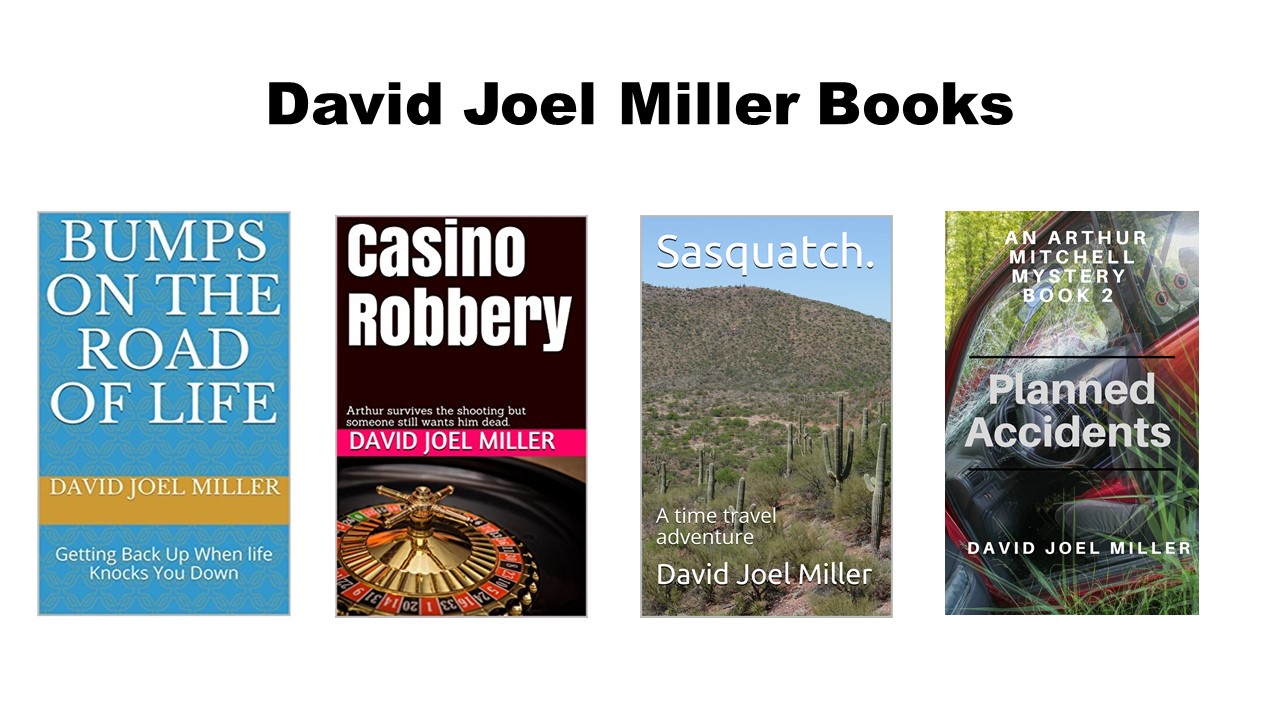
Seven David Joel Miller Books are available now!

My newest book is now available. It was my opportunity to try on a new genre. I’ve been working on this book for several years, but now seem like the right time to publish it.

Story Bureau.

Story Bureau is a thrilling Dystopian Post-Apocalyptic adventure in the Surviving the Apocalypse series.

Baldwin struggles to survive life in a post-apocalyptic world where the government controls everything.

As society collapses and his family gets plunged into poverty, Baldwin takes a job in the capital city, working for a government agency called the Story Bureau. He discovers the Story Bureau is not a benign news outlet but a sinister government plot to manipulate society.

Bumps on the Road of Life. Whether you struggle with anxiety, depression, low motivation, or addiction, you can recover. Bumps on the Road of Life is the story of how people get off track and how to get your life out of the ditch.

Dark Family Secrets: Doris wants to get her life back, but small-town prejudice could shatter her dreams.

Casino Robbery Arthur Mitchell escapes the trauma of watching his girlfriend die. But the killers know he’s a witness and want him dead.

Planned Accidents  The second Arthur Mitchell and Plutus mystery.

Letters from the Dead: The third in the Arthur Mitchell mystery series.

What would you do if you found a letter to a detective describing a crime and you knew the writer and detective were dead, and you could be next?

Sasquatch. Three things about us, you should know. One, we have seen the past. Two, we’re trapped there. Three, I don’t know if we’ll ever get back to our own time.

For these and my upcoming books; please visit my Author Page – David Joel Miller

Want the latest blog posts as they publish? Subscribe to this blog.

For videos, see: Counselorssoapbox YouTube Video Channel

Most read mental health blog posts in 2018.

Image

By David Joel Miller, MS, Licensed Therapist & Licensed Counselor.

Counselorssoapbox.com

Counselorssoapbox.com most-read articles.

Six months into 2018 and time to look at the top read articles on counselorssoapbox.com

Some of these were new articles this year but many have been popular year after year. I wish I could say I knew which posts would be popular when I wrote them but I am frequently surprised. If you have questions or suggestions for future blog posts let me know. I will continue the search for information. Here is the list.

How much should you tell a therapist?

Levels or types of Borderline Personality Disorder

Is nicotine a stimulant or a depressant?

What do drug dreams mean?

Do therapists have to report a crime?

Do people really forget what happened when drinking? – Blackouts

6 ways to recover from Complex Trauma or Complex PTSD

What are the six kinds of hallucinations?

Hyperthymia, Hyperthymic Personality Disorder and Bipolar Disorder.

Do therapists like, fall in love with their clients? Why don’t they tell them?

Can you force a teenager to go for therapy?

What if you go to the hospital drunk or high?

Staying connected with David Joel Miller

Seven David Joel Miller Books are available now!

My newest book is now available. It was my opportunity to try on a new genre. I’ve been working on this book for several years, but now seem like the right time to publish it.

Story Bureau.

Story Bureau is a thrilling Dystopian Post-Apocalyptic adventure in the Surviving the Apocalypse series.

Baldwin struggles to survive life in a post-apocalyptic world where the government controls everything.

As society collapses and his family gets plunged into poverty, Baldwin takes a job in the capital city, working for a government agency called the Story Bureau. He discovers the Story Bureau is not a benign news outlet but a sinister government plot to manipulate society.

Bumps on the Road of Life. Whether you struggle with anxiety, depression, low motivation, or addiction, you can recover. Bumps on the Road of Life is the story of how people get off track and how to get your life out of the ditch.

Dark Family Secrets: Doris wants to get her life back, but small-town prejudice could shatter her dreams.

Casino Robbery Arthur Mitchell escapes the trauma of watching his girlfriend die. But the killers know he’s a witness and want him dead.

Planned Accidents  The second Arthur Mitchell and Plutus mystery.

Letters from the Dead: The third in the Arthur Mitchell mystery series.

What would you do if you found a letter to a detective describing a crime and you knew the writer and detective were dead, and you could be next?

Sasquatch. Three things about us, you should know. One, we have seen the past. Two, we’re trapped there. Three, I don’t know if we’ll ever get back to our own time.

For these and my upcoming books; please visit my Author Page – David Joel Miller

Want the latest blog posts as they publish? Subscribe to this blog.

For videos, see: Counselorssoapbox YouTube Video Channel

Freedom.

Sunday Inspiration.     Post by David Joel Miller.

Freedom.

Freedom.
Photo courtesy of Pixabay.com

Freedom.

“Those who deny freedom to others, deserve it not for themselves”

― Abraham Lincoln, Complete Works – Volume XII

“Most people do not really want freedom, because freedom involves responsibility, and most people are frightened of responsibility.”

― Sigmund Freud, Civilization and Its Discontents

“He who has overcome his fears will truly be free.”

― Aristotle

“For to be free is not merely to cast off one’s chains, but to live in a way that respects and enhances the freedom of others.”

― Nelson Mandela

Wanted to share some inspirational quotes with you.  Today seemed like a good time to do this. If any of these quotes strike a chord with you, please share them.

Look at these related posts for more on this topic and other feelings.

Emotions and Feelings.

Inspiration

Managing Relationship Jealousy.

By David Joel Miller, MS, Licensed Therapist & Licensed Counselor.

Jealousy

Jealousy.
Photo courtesy of Pixabay.com

Relationship jealousy is a major reason people seek marriage counseling.

Jealousy can destroy your primary relationship. Couples who come in for

relationship counseling, are commonly plagued by jealous behaviors. Often one of the parties believes the other is having or has had an affair. Sometimes it’s this discovery of the affair the brings the couple in to see the marriage counselor. Other times the truth of the affair comes out as the couple explores their jealous feelings.

The most destructive type of jealousy is the pathological, delusional variety of jealous, in which one partner is constantly checking because they believe their partners are cheating despite a total lack of evidence. If you do not manage this extreme variety of jealousy, it can escalate to violence, police involvement, restraining orders, and can bring an end to the relationship.

Before coming to counseling, many couples have tried coping with jealous feelings by using unhelpful coping strategies.

Jealous couples may deny they have a problem.

Some couples have an unspoken agreement that they will pretend the jealousy between them is normal and not a problem. When the jealousy is largely on one side, more commonly the male, that partner frequently will deny that they have a problem with jealousy and will blame their partner. The jealous person may refuse to take responsibility for their jealousy and tell their partner “you make me jealous.”

Stonewalling and refusing to talk, will make jealousy worse.

A common way jealous people avoid looking at their part in the problem is to refuse to talk about it. Refusing to discuss problems is very destructive of close relationships.

Seek revenge on your partner or rival doesn’t help jealous feelings.

An unduly jealous partner may drop in on their partner at work, destroy things and try to prevent the object of their jealousy from being able to see or to talk to the person they perceive as their rival. I’ve witnessed jealous people, both men and women, show up at a class and threaten or attack the person they believe to be flirting with their partner.

If jealousy is a problem in your relationship, seek help.

Don’t wait to deal with jealousy in your relationship until it escalates into violence, legal involvement or destroys your relationship. When couples come to counseling and jealousy is an issue there are several things the counselor will look at. Is the jealousy problem a couple’s issue, the result of poor communication or disagreements about appropriate behavior?

When a couple first gets together a shy or insecure person may be very attractive to an outgoing, friendly, person. After a while, what they like the attention, they become jealous when their partner acts in precisely the same that originally attracted them.

One other thing the counselor needs to rule out, sometimes the feeling of jealousy is well-founded. Your partner’s behavior may be a genuine threat to the relationship. Sometimes the causes of jealousy are your partner’s inappropriate close relationship with another person. Jealousy may be well found if your partner is having an affair.

Here are some of the techniques counselors might use to help couples deal openly and honestly with the issue of jealousy.

Talk openly and honestly about your feelings of jealousy.

Not talking about things leaves the imagination to magnify insignificant events into horrific threats. Rather than letting jealousy poison your relationship the jealous person should explain when they are jealous and what is making them feel jealous. It’s important for the jealous person to take ownership of the feeling rather than to blame their partner by saying “you make me jealous.”

Requesting reassurance from your partner may reduce jealousy.

It can be helpful to the jealous person to hear from their partner that their relationship is intact. Hearing that your partner values the relationship and is willing to do things to make you feel less threatened and more secure can help reduce feelings of jealousy.

You may need to reevaluate your relationship.

When a partner can’t reassure you or is unwilling to stop seeing the person that is causing your jealousy, one or both people may need to reevaluate this relationship. If your partner insists they will continue to see someone else, there may be good reasons for your jealousy. Sometimes the feeling of jealousy is trying to tell that there is a real threat to your relationship.

Reduce jealousy by questioning your assumptions.

Many feelings we call “negative feelings,” are based in reality. These feelings tell us that something bad is or has happened. Other times, however, those negative feelings you are experiencing are the result of a lot of “unhelpful thoughts” you are having. Rather than assume that your partner’s jealousy means your relationship is threatened; re-examine those beliefs. Be very careful about jumping to conclusions. People with a bias towards jealousy, anger, anxiety, and depression, are likely to perceive everything is being much more significant and much more negative than it is. If jealousy is troubling your relationships, consider working with a professional to see if you have reason to be jealous or you are making faulty assumptions.

Stay tuned in for more posts about jealousy; it’s causes and its treatment, which is coming up soon. More information about Jealousy and its treatment is or will be at Jealousy.  

David Joel Miller MS is a Licensed Marriage and Family Therapist (LMFT) and a Licensed Professional Clinical Counselor (LPCC.)  Mr. Miller provides supervision for beginning counselors and therapists and teaches at the local college in the Substance Abuse Counseling program.

Staying connected with David Joel Miller

Seven David Joel Miller Books are available now!

My newest book is now available. It was my opportunity to try on a new genre. I’ve been working on this book for several years, but now seem like the right time to publish it.

Story Bureau.

Story Bureau is a thrilling Dystopian Post-Apocalyptic adventure in the Surviving the Apocalypse series.

Baldwin struggles to survive life in a post-apocalyptic world where the government controls everything.

As society collapses and his family gets plunged into poverty, Baldwin takes a job in the capital city, working for a government agency called the Story Bureau. He discovers the Story Bureau is not a benign news outlet but a sinister government plot to manipulate society.

Bumps on the Road of Life. Whether you struggle with anxiety, depression, low motivation, or addiction, you can recover. Bumps on the Road of Life is the story of how people get off track and how to get your life out of the ditch.

Dark Family Secrets: Doris wants to get her life back, but small-town prejudice could shatter her dreams.

Casino Robbery Arthur Mitchell escapes the trauma of watching his girlfriend die. But the killers know he’s a witness and want him dead.

Planned Accidents  The second Arthur Mitchell and Plutus mystery.

Letters from the Dead: The third in the Arthur Mitchell mystery series.

What would you do if you found a letter to a detective describing a crime and you knew the writer and detective were dead, and you could be next?

Sasquatch. Three things about us, you should know. One, we have seen the past. Two, we’re trapped there. Three, I don’t know if we’ll ever get back to our own time.

For these and my upcoming books; please visit my Author Page – David Joel Miller

Want the latest blog posts as they publish? Subscribe to this blog.

For videos, see: Counselorssoapbox YouTube Video Channel

Is watching porn causing your relationship problems?

By David Joel Miller, MS, Licensed Therapist & Licensed Counselor.

Couple not talking

Unhappy relationship.
Photo courtesy of Pixabay.com

What would your therapist say about watching pornography?

In this Internet age, pornography is much more available and widely viewed. Occasionally a client tells their counselor they think they have problems with viewing pornography. Much more often this issue comes up in couple’s sessions when one partner, commonly the woman, is angry, or hurt, or feeling insecure, as a direct result of her partner’s watching of pornography.

Some counselors and therapists received a little bit of information on the problems connected to pornography during their training. Most did not. Those counselors who work with couples are likely to hear about the conflicts couples are having regarding pornography use. What they say to their clients is probably largely based on their own beliefs, what other clients have told them, or their personal “field research.” So just how big a problem is pornography causing in relationships?

The two questions above are, of course, two very different questions. Recently I came across a professional journal article that looked at the training, attitudes, and competencies counselors have when it comes to helping couples work through the issues involving pornography.

Pornography is hard to define.

Even the courts have found it difficult to define pornography. Contemporary standards have changed. You will see things on prime-time television now which once would’ve been considered inappropriate and pornographic. Technically the term pornography is customarily used to refer to explicit sexual material that crosses some line or boundary and therefore becomes illegal.

When clients talk about pornography what they usually mean is “adult entertainment” consisting of pictures of naked people or suggestive poses. Often it includes depictions of people engaging in a variety of sexual behaviors. The intended purpose of this material is to cause arousal in the viewer.

In the year 2000, sexual material was the number 1 item viewed on the Internet and accounted for more than half of the money spent on the Internet. It’s possible that Internet shopping, social media, and the increased popularity of videos has altered those numbers, the way doubt it’s changed that much. It’s quite possible that people viewing pornography were early adopters of the Internet. Whatever the statistics say today, it’s common for individuals and couples in counseling to report using the Internet for a variety of sexual activities (Ayres & Haddock, 2009.)

Pornography is the primary relationship problem for some couples.

Researchers have identified 5 ways internet usage may be harming a couple’s relationships

The largest consumers of pornography are reported to be married, heterosexual males. There use of porn significantly impacts their partner, resulting in reduced self-esteem, loss of respect and trust, and impairment of the connection between the partners (Bergner & Bridges, 2002; Schneider, 2000.)

While some couples are reported to view porn together, this rarely brings them to counseling. The type of viewing which causes the largest problems is when one person, usually the male, views it privately and in secret. The keeping of secrets part significantly damages the trust in the relationship.

Time spent in this secret activity is time away from the partner and family. Discovery of this secret leads to marital discord and frequently separation and divorce.

Online sexual activity can lead to affairs.

Two types of affairs can be facilitated because of online sexual activity.

Cyber affairs and cybersex results in the parties meeting their needs online and having less sex with their regular partner. Online sexual activity can cause the same damage to relationships as real-world affairs.

Sexual activity online can also be a way to facilitate real-world hookups resulting in either a string of casual sexual relationships or a longer-lasting affair. One of the ways these hookups, which are being facilitated online, comes to the attention of the relationship partner is the contraction of a sexually transmitted disease.

Pornography can create individual problems also.

About 10 percent of pornography viewers spend 90 minutes a day or more searching for and viewing sexually explicit materials. Individual issues may include an increase in erectile dysfunction at a young age. Internet viewing porn has been described as “the great porn experiment.” 

In addition to altering patterns of arousal, heavy use of cybersex and pornography has been reported to lead to sexual addictions. The diagnosing of sexual addictions remains controversial. But the pattern of behavior closely matches the pattern of drug addiction. The person addicted to sex spends more time seeking it, engaging in it, and more effort trying to hide what they are doing.

As a sexual addiction develops, the addict shows tolerance, needs more and more sexual encounters, and seeks activities that will increase arousal. The addict lowers their standards and will engage in sex with people they would not have found attractive in the past.

The typical content of adult entertainment is likely to create unrealistic expectations for partners and distorted beliefs about the roles of women. The plots are often bizarre, fantastic, and feature atypical behavior rather than the way in which most couples typically express their sexuality.

Can pornography and cybersex addiction be treated?

Individuals with a pornography problem or sexual addiction can be treated, often with good results. Where these activities have damaged the couple’s relationship, couples counseling can help. Just like in-person sexual affairs, couples can recover from these experiences.

Treatment for sexual issues is very specialized, and you should seek someone experienced in working in these areas. In addition to the couple’s issues, each of the parties probably needs to see a counselor for individual therapy.

If your partner has a problem with pornography or cybersex, it is important not to blame yourself. It’s common for women to believe there is something wrong with them and ask what it is that the other woman had that made them more attractive. The truth is it’s rarely the woman’s fault. What was attractive, whether it was online pornography, cybersex or an in-person affair, was largely the result of one person’s individual problems, their need to constantly seek something different. Individual counseling for the partners of sexual addicts is extremely important.

Pornography and sexual addictions are only one way in which trust can be damaged.

Look here for more on the topic of trust.

David Joel Miller MS is a Licensed Marriage and Family Therapist (LMFT) and a Licensed Professional Clinical Counselor (LPCC.)  Mr. Miller provides supervision for beginning counselors and therapists and teaches at the local college in the Substance Abuse Counseling program.

Staying connected with David Joel Miller

Seven David Joel Miller Books are available now!

My newest book is now available. It was my opportunity to try on a new genre. I’ve been working on this book for several years, but now seem like the right time to publish it.

Story Bureau.

Story Bureau is a thrilling Dystopian Post-Apocalyptic adventure in the Surviving the Apocalypse series.

Baldwin struggles to survive life in a post-apocalyptic world where the government controls everything.

As society collapses and his family gets plunged into poverty, Baldwin takes a job in the capital city, working for a government agency called the Story Bureau. He discovers the Story Bureau is not a benign news outlet but a sinister government plot to manipulate society.

Bumps on the Road of Life. Whether you struggle with anxiety, depression, low motivation, or addiction, you can recover. Bumps on the Road of Life is the story of how people get off track and how to get your life out of the ditch.

Dark Family Secrets: Doris wants to get her life back, but small-town prejudice could shatter her dreams.

Casino Robbery Arthur Mitchell escapes the trauma of watching his girlfriend die. But the killers know he’s a witness and want him dead.

Planned Accidents  The second Arthur Mitchell and Plutus mystery.

Letters from the Dead: The third in the Arthur Mitchell mystery series.

What would you do if you found a letter to a detective describing a crime and you knew the writer and detective were dead, and you could be next?

Sasquatch. Three things about us, you should know. One, we have seen the past. Two, we’re trapped there. Three, I don’t know if we’ll ever get back to our own time.

For these and my upcoming books; please visit my Author Page – David Joel Miller

Want the latest blog posts as they publish? Subscribe to this blog.

For videos, see: Counselorssoapbox YouTube Video Channel

Trust.

Sunday Inspiration.     Post by David Joel Miller.

Trust sign.

Trust.
Photo courtesy of Pixabay.com

Trust

“Love all, trust a few, do wrong to none.”

― William Shakespeare, All’s Well That Ends Well

“The best way to find out if you can trust somebody is to trust them.”

― Ernest Hemingway

“Trust thyself: every heart vibrates to that iron string.”

― Ralph Waldo Emerson, Self-Reliance

“It is more shameful to distrust our friends than to be deceived by them.”

― Confucius

Wanted to share some inspirational quotes with you.  Today seemed like a good time to do this. If any of these quotes strike a chord with you, please share them.

Look at these related posts for more on this topic and other feelings.

Emotions and Feelings.

Inspiration

Trust

Should you be more trusting?

By David Joel Miller, MS, Licensed Therapist & Licensed Counselor.

Trust sign.

Trust.
Photo courtesy of Pixabay.com

How do you decide who and when to trust?

People often described themselves as having “trust issues.” The question they should be asking is, are they trusting too much or too little? Trusting is a complicated issue. How much you trust is affected by your personality and your past experiences. The level of trust you have will and should change with the circumstance.

Trust has been studied largely in 2 situations. Individuals are largely concerned about the trustworthiness of their partners in romantic relationships. Occasionally, this extends to their ability to trust friends or people with whom they conduct financial transactions.

Companies have studied trust in the workplace. It can take a long time to develop group cohesion and teamwork. People today move from job to job, work with consultants, and contractors, and may work in small, temporary work groups. Productivity increases when new workers develop trust in each other.

Here are some factors affecting trust you need to consider.

Trust is challenged when you meet new people.

Trust generally develops slowly over time. The longer you know someone, the more you know about them, the more you will feel inclined to trust them. Some people are extroverts, very outgoing, and easily able to strike up a conversation with strangers. If you’re an introvert, you may find you are wary when meeting new people.

Trust in these situations should be limited. Those who learn to use small talk do better in these situations.

Trust varies with the role this person will have in your life.

You will have one type of trust when you meet a new employee at work. The company selected this person, and it’s reasonable to trust they can do the job they were hired for. You will have a different type of trust with the new doctor or mechanic. This trust is based on their education, license or certification, and the setting in which you meet them.

Your trust should be different in both kind and quantity on a first date. You probably should trust the cashier at the grocery store to ring up your purchases and give you the correct change. You wouldn’t trust that same person to spend the weekend unchaperoned, with your spouse.

You should have levels of trust.

Trust is not an all or nothing characteristic. You’ll have people you trust at school or work, but you should not trust them with the keys to your house or your bank card and pin number. People who said they have “trust issues” often over-trust when they first meet a new person. Because of this excess trust, they are more likely to be hurt when that person fails to live up to their expectations.

Are you more trusting of strangers?

The longer you know someone, the more you learn about their faults. Far too many people jump into a romantic, sexual relationship, on a first or second date. They are trusting this other person because they want them to meet their needs. What they haven’t done is spend the time to get to know them and find out how trustworthy they are.

Your general level of trust is a part of your personality.

The characteristics we call personality are a mixture of your genetic material and your life experiences. How much you trust generally can also be affected by the way you think and the choices you make. Most people have some general underlying beliefs about who to trust, how much to trust, and when they should be trusting.

When many people first meet a new person they use their default level of trust. They are either high in trust or high in distrusting. The longer you know someone, the more information you have about that person, the more likely you are relying on information rather than a general level of trust.

Trust is influenced by the experiences you had before you met them.

Your early life experiences set your baseline level of trust. In mental health, we look at ways young children relate to others based on their experiences with their primary caregiver. Problems in these relationships are diagnosed as attachment disorders, which can be either reactive or disinhibited. Attachment disorders used to only be diagnosed in children, but recently was moved to the group of diagnoses referred to as “trauma- and stressor-related disorders.” With time, treatment, or both, many people alter these patterns of relationship. For some people, however, their adult “trust issues” can be traced back to having caregivers in early life who were untrustworthy.

Life experiences, having been involved in relationships with others who violated your trust, can make it more difficult to trust in the future. If your partner had an affair, it could be hard to trust them again. If you separate from them and begin a new relationship, you’re likely to find you will have difficulties trusting that new partner.

Trust involves things you can’t check on.

Trust is what they will do when you are not watching. If you are standing there watching what they are doing, there’s very little trust involved. One of the best ways to increase your level of trust is to observe what people are doing. Unfortunately, there are too many things in life for you to check up on all of them. That’s where you need to use your trust skills.

Relationships that involve a lack of trust can become very dysfunctional. If you find the need to follow your partner around, check their cell phone, and read their email, this lack of trust can destroy your relationship. Healthy couples can talk about their concerns.

Constant checking your partner can be a sign of excessive or even pathological jealousy. Some people develop delusional jealousy believing their partner is cheating on them even when there’s no evidence. If you have trust issues, you need to ask yourself if this is about them, or is it about your fears and insecurities?

No amount of monitoring can prevent someone from violating your trust. You either must trust people or end the relationship. If a lack of trust and jealousy characterizes all your relationships, consider getting some professional help.

What are the risks of trusting this person in this situation?

It’s easy to trust when the risks are low. When you are faced with “trust issues” consider what are the risks? Some situations are relatively low risk. You go to make a purchase and hand them some money. You are trusting that they will give you your merchandise and your change. Giving them 20 dollars at the grocery store is low risk. Paying cash to someone you just met in an alley for something valuable is a high-risk situation.

What has been your experience with trust? Have you been too trusting? Or does your excessive lack of trust damage your relationships?

Look here more on the topic of trust.

David Joel Miller MS is a Licensed Marriage and Family Therapist (LMFT) and a Licensed Professional Clinical Counselor (LPCC.)  Mr. Miller provides supervision for beginning counselors and therapists and teaches at the local college in the Substance Abuse Counseling program.

Staying connected with David Joel Miller

Seven David Joel Miller Books are available now!

My newest book is now available. It was my opportunity to try on a new genre. I’ve been working on this book for several years, but now seem like the right time to publish it.

Story Bureau.

Story Bureau is a thrilling Dystopian Post-Apocalyptic adventure in the Surviving the Apocalypse series.

Baldwin struggles to survive life in a post-apocalyptic world where the government controls everything.

As society collapses and his family gets plunged into poverty, Baldwin takes a job in the capital city, working for a government agency called the Story Bureau. He discovers the Story Bureau is not a benign news outlet but a sinister government plot to manipulate society.

Bumps on the Road of Life. Whether you struggle with anxiety, depression, low motivation, or addiction, you can recover. Bumps on the Road of Life is the story of how people get off track and how to get your life out of the ditch.

Dark Family Secrets: Doris wants to get her life back, but small-town prejudice could shatter her dreams.

Casino Robbery Arthur Mitchell escapes the trauma of watching his girlfriend die. But the killers know he’s a witness and want him dead.

Planned Accidents  The second Arthur Mitchell and Plutus mystery.

Letters from the Dead: The third in the Arthur Mitchell mystery series.

What would you do if you found a letter to a detective describing a crime and you knew the writer and detective were dead, and you could be next?

Sasquatch. Three things about us, you should know. One, we have seen the past. Two, we’re trapped there. Three, I don’t know if we’ll ever get back to our own time.

For these and my upcoming books; please visit my Author Page – David Joel Miller

Want the latest blog posts as they publish? Subscribe to this blog.

For videos, see: Counselorssoapbox YouTube Video Channel

Parenting

Sunday Inspiration.     Post by David Joel Miller.

Parenting.

Parenting.
Photo courtesy of Pixabay.com

Parenting.

“Children must be taught how to think, not what to think.”

― Margaret Mead

“If you want your children to be intelligent, read them fairy tales. If you want them to be more intelligent, read them more fairy tales.”

― Albert Einstein

“One thing I had learned from watching chimpanzees with their infants is that having a child should be fun.”

― Jane Goodall

Wanted to share some inspirational quotes with you.  Today seemed like a good time to do this. If any of these quotes strike a chord with you, please share them.

Look at these related posts for more on this topic and other feelings.

Emotions and Feelings.

Inspiration

How lonely will you be?

By David Joel Miller, MS, Licensed Therapist & Licensed Counselor.

Lonely person

Loneliness.
Photo courtesy of Pixabay.com

Will loneliness cause you problems?

Loneliness can result in significant emotional problems. While loneliness isn’t considered a specific mental illness, it plays a role in creating and worsening several mental health issues. Loneliness can undermine self-esteem by making people feel empty, worthless, and unwanted. Loneliness is both a cause of and a result of social isolation. If you are feeling lonely, you probably feel that you lack something in your life. Loneliness, coupled with anxiety and depression, increases your risk of feeling threatened and may result in paranoia.

In its milder forms, loneliness can be a motivator for you to seek out human contact. Stronger versions of loneliness result from feeling you have too few social connections or the relationships you have are one-sided and unhelpful.

Researchers have discovered strong connections between loneliness and depression. Lonely people are at an increased risk to think about suicide or even attempt suicide. Lonely people are more likely to use and abuse drugs and alcohol, resulting in alcoholism and addiction. The combination of substance use disorders, feeling lonely and depressed, and believing that others are rejecting you increases the risk of violent behavior. Loneliness has also been linked to physical health problems and poor emotional development.

The very young and very old are at increased risk for feelings of loneliness. Particular life transition points also increase these risks.

Your thinking can make your loneliness better or worse.

How lonely you feel is less likely to be the result of how many friends you have or how much time you spend with others, and is more connected to your attitudes about the quantity and quality of your social connections.

Your feelings of loneliness are primarily the result of your beliefs about four separate factors. When you’re feeling lonely, it is important to look at both the facts and your beliefs in these areas. One way to reduce the feelings of loneliness is to develop the skills you need to change your situation. The other way to feel less lonely is to reconsider your beliefs about things. Often, negative emotions are caused not by the situation, but by the beliefs you have about your circumstances.

What do you think about your friendships?

Loneliness is reduced more by having close, true friends than by the number of casual friendships you have. It’s not how many friends you have, especially your social media friends, but how close you and your friends are.

True friendships should be reciprocal. You care about them, and they care about you. You should be willing to do for them, and they should be equally willing to do for you. If you find that your relationship is all about that other person, that you must do what they want to keep their friendship, that’s not a healthy, positive friendship.

It’s wonderful to have a BFF (best friend forever). Having only one close friend limits the ability of your friendship to be supportive. No one will be able to devote every minute of their life to meeting your needs. If you call that one best friend constantly about your problems, you are likely to burn them out.

Recovery programs often recommend that you have at least five separate people in your support system. Your friends should have other people in their lives besides you. If you’re in a relationship where you can’t have other friends or where you resent the other people in their life, these are not healthy relationships.

Emotionally healthy people belong to a group of friends rather than being dependent on only one person. Having only one person to meet their emotional needs is a large issue for couples. When there are difficulties in your relationship, you will find it hard to turn to your partner for emotional support. It’s risky to turn to friends with whom you might be tempted to develop a close sexual relationship. For heterosexual people, this is the time you need to have friends of your own gender.

Are you isolated?

Feeling socially isolated causes loneliness. If you feel like you have no friends and no one you can talk to, this should prompt you to reach out and make connections. For some people, this means professional counseling, which can help in the short-term. In the long-term, you need to put yourself into situations where you can make friends, and you need to learn the skills necessary for creating and maintaining friendships.

Is being alone a bad thing?

Your attitude towards solitude will magnify or reduce your feelings of loneliness. Ask yourself how you feel about spending time with you? Some people find that when they are alone, they don’t know what to do. Are you bored when there’s no one else around?

Being alone shouldn’t make you unhappy. Alone time is an opportunity to find out about yourself. Focusing on the negative will increase your loneliness. Feeling negative about being alone will cause the time to drag. Filling the alone time with things you enjoy doing turns loneliness into happiness.

Can Solitude be a good thing?

When you are alone, look for the positives. Your time alone should be an opportunity to get to know yourself better. Develop a friendship with yourself. Throughout your life, the one constant will be you. Everywhere you go, every minute of your life, you will be there. Work on enjoying the time you spend by yourself.

Life can get hectic at times. Sometimes it’s nice to get away from it all. If when you get that chance to get away from life’s hassles, you discover you’re getting lonely, consider developing a stronger friendship with yourself.

Other posts about feeling lonely can be found in the category – Loneliness.

Recommended Mental Health Books

David Miller at counselorssoapbox.com is an Amazon Affiliate and may receive a small Commission if you purchase a book or product using the link on this page. Using the link will not increase the cost to you.

Staying connected with David Joel Miller

Seven David Joel Miller Books are available now!

My newest book is now available. It was my opportunity to try on a new genre. I’ve been working on this book for several years, but now seems like the right time to publish it.

Story Bureau.

Story Bureau is a thrilling Dystopian Post-Apocalyptic adventure in the Surviving the Apocalypse series.

Baldwin struggles to survive life in a post-apocalyptic world where the government controls everything.

As society collapses and his family gets plunged into poverty, Baldwin takes a job in the capital city, working for a government agency called the Story Bureau. He discovers the Story Bureau is not a benign news outlet but a sinister government plot to manipulate society.

Bumps on the Road of Life. Whether you struggle with anxiety, depression, low motivation, or addiction, you can recover. Bumps on the Road of Life is the story of how people get off track and how to get their life out of the ditch.

Dark Family Secrets: Doris wants to get her life back, but small-town prejudice could shatter her dreams.

Casino Robbery Arthur Mitchell escapes the trauma of watching his girlfriend die. But the killers know he’s a witness and want him dead.

Planned Accidents  The second Arthur Mitchell and Plutus mystery.

Letters from the Dead: The third in the Arthur Mitchell mystery series.

What would you do if you found a letter to a detective describing a crime, and you knew the writer and detective were dead, and you could be next?

Sasquatch. Three things about us, you should know. One, we have seen the past. Two, we’re trapped there. Three, I don’t know if we’ll ever get back to our own time.

For these and my upcoming books, please visit my Author Page – David Joel Miller

Want the latest blog posts as they publish? Subscribe to this blog.

For videos, see: Counselorssoapbox YouTube Video Channel
Hope.

Sunday Inspiration.     Post by David Joel Miller.

Hope.

Hope

Hope.
Photo courtesy of Pixabay.com

“Hope is the thing with feathers

That perches in the soul

And sings the tune without the words

And never stops at all.”

― Emily Dickinson

“Hope

Smiles from the threshold of the year to come,

Whispering ‘it will be happier’…”

― Alfred Tennyson

“Hope is a waking dream.”

― Aristotle

“Do not spoil what you have by desiring what you have not; remember that what you now have was once among the things you only hoped for.”

― Epicurus

Wanted to share some inspirational quotes about feelings words with you.  Today seemed like a good time to do this. If any of these quotes strike a chord with you, please share them.

Look at these related posts for more on this topic and other feelings.

Emotions and Feelings.

Inspiration

Hope