Why looks matter.

By David Joel Miller, MS, Licensed Therapist & Licensed Counselor.

dirty hand

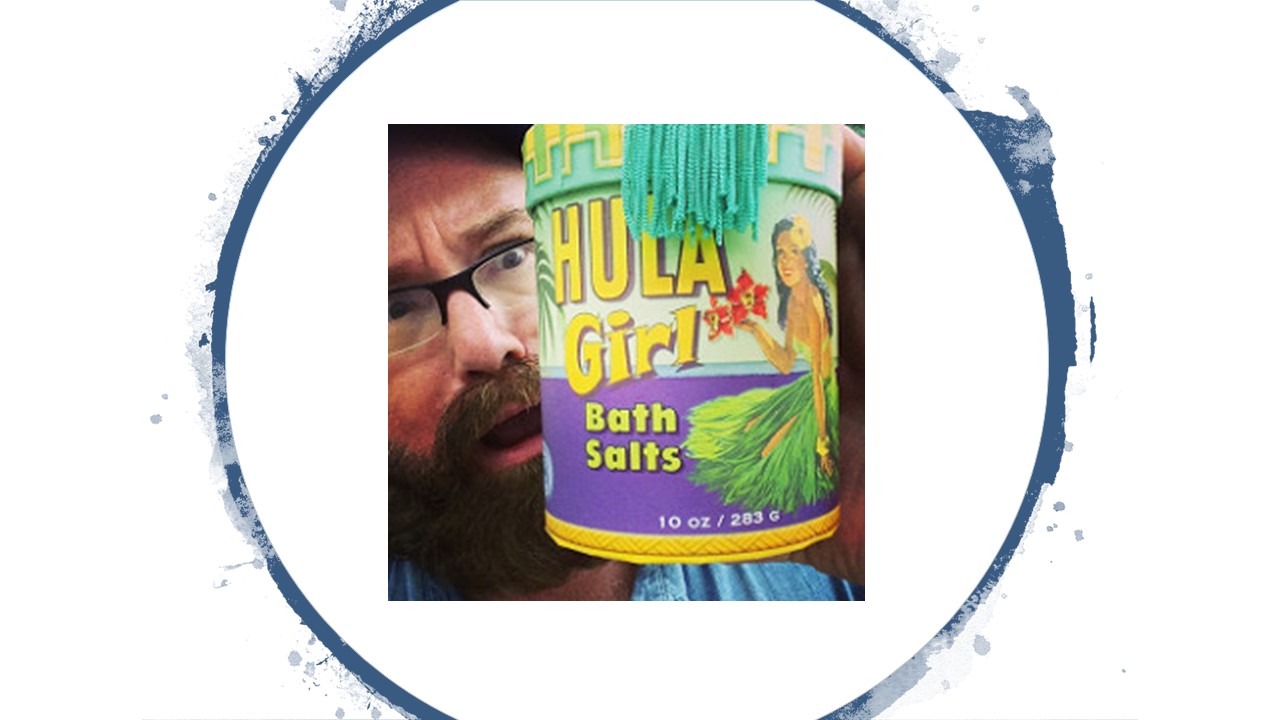
Want him cooking your food?
Photo courtesy of Pixabay.com

Is it fair to judge others by the way they look?

Repeatedly I hear and read that we shouldn’t judge people by the way they look. I know people say that because I have said that myself. But the truth is that most of the time, most of us do judge others by the way they look and there just might be evolutionary reasons why we should go on doing it.

Men and women with tattoos or piercings say it is not fair that they do not get jobs because of their body art. In the 1960’s we said that about beards and long hair. Still, people judged anyone who looked different then and now.

Women complain that we judge women by their bodies and not by what is in their heads. Still, we, men and women, spend a fortune on trying to look good to attract and impress the other sex.

When you wander through the jungle it is helpful to seek out other humans and avoid non-humans like bears or lions and tigers. It is not just humans that do this. Birds flock together by species, looking for a mate, looking for protection.

Consider these times when you might want to judge someone by their looks.

You go for a first appointment with your new doctor. The person at the front desk is sipping on their beer and looks like a homeless bag lady. What is happening here? You get into the exam room and the nurse who comes in to take your vitals is wearing some torn, bloodstained scrubs. When the doctor arrives he has on an old sleeveless tee-shirt and some cut-off shorts. He has grease all over his shirt and hands like maybe he was working on his car between patients.

So how comfortable are you feeling now? From the diplomas on the wall, this person went to a big name medical school. Still, his appearance is not too reassuring. Is it fair to judge him by his looks? Are you willing to risk your life and your medical care to someone who looks like a part-time doctor and a full-time auto mechanic?

Lots of clients tell me it is not fair that they get judged by the way you look. But if you want a job at that bank you might want to lose that “but-wiser” tee shirt and the sagging pants for the interview.

Psychological studies tell us that people tend to like others who are like themselves. This is not specifically related to race. It applies to a lot of other characteristics.

Say you walk into a bar and you are wearing your favorite team tee-shirt. Everyone else in the bar is wearing the shirts for the other team. How safe are you feeling now? Want to hang out and give them a chance? Maybe. But consider that humans, like most other animals, are constantly looking around to see how others look and how they behave. Then we either copy those others or we leave. Staying and not conforming risks being attacked, verbally, emotionally, or physically.

Consider another example.

You move into a new neighborhood. All the kids there seem to be wearing red shirts. You take your teen shopping and they insist on buying a blue shirt. They say they love Navy Blue. So you give in. Then the problems start.

Gangs use clothing styles and colors to identify who is “in” and who is “out.” I am not saying this is right, but do you want your child killed in a drive-by just because they insisted that they wanted to wear what they wanted to wear, and others should accept them.

I am not endorsing this judging behavior, just that there are a whole lot of situations where you can and should judge people by how they look and rest assured that others will judge you that way whether you like it or not.

So if you want to stay safe or get that job, consider that sometimes you need to conform if you want to get along. The older we get the less satisfying it is to say others should or should not do something. I can’t change other’s attitudes but I can put on a suit and tie before that job interview.

Sometimes how people look can tell you a lot about who they are on the inside and whether you want to be around them given the choice.

Staying connected with David Joel Miller

Seven David Joel Miller Books are available now!

My newest book is now available. It was my opportunity to try on a new genre. I’ve been working on this book for several years, but now seem like the right time to publish it.

Story Bureau.

Story Bureau is a thrilling Dystopian Post-Apocalyptic adventure in the Surviving the Apocalypse series.

Baldwin struggles to survive life in a post-apocalyptic world where the government controls everything.

As society collapses and his family gets plunged into poverty, Baldwin takes a job in the capital city, working for a government agency called the Story Bureau. He discovers the Story Bureau is not a benign news outlet but a sinister government plot to manipulate society.

Bumps on the Road of Life. Whether you struggle with anxiety, depression, low motivation, or addiction, you can recover. Bumps on the Road of Life is the story of how people get off track and how to get your life out of the ditch.

Dark Family Secrets: Doris wants to get her life back, but small-town prejudice could shatter her dreams.

Casino Robbery Arthur Mitchell escapes the trauma of watching his girlfriend die. But the killers know he’s a witness and want him dead.

Planned Accidents  The second Arthur Mitchell and Plutus mystery.

Letters from the Dead: The third in the Arthur Mitchell mystery series.

What would you do if you found a letter to a detective describing a crime and you knew the writer and detective were dead, and you could be next?

Sasquatch. Three things about us, you should know. One, we have seen the past. Two, we’re trapped there. Three, I don’t know if we’ll ever get back to our own time.

For these and my upcoming books; please visit my Author Page – David Joel Miller

Want the latest blog posts as they publish? Subscribe to this blog.

For videos, see: Counselorssoapbox YouTube Video Channel

Study drugs can cause you to fail

By David Joel Miller, MS, Licensed Therapist & Licensed Counselor.

Drugs.

Drugs.
Photo courtesy of Pixabay.

Study Drugs are for sale but at what price.

Study drugs and other so-called mind power improving meds are big business on the internet.

Anything related to drugs to make you think better, improve your memory, or learn more with less effort is a popular search term.

Study drugs are less commonly used and less effective than most people think.

Despite the widespread belief that “everyone is doing them,” the truth is that less than 10 % of the school-age population has used a study drug.

These drugs are most popular among the late high school and first-year college students. Just at the time when students are trying to establish themselves as adults and begin a new independent life they are at most risk to begin to abuse stimulants in the name of improved learning.

Who is most at risk to begin using and abusing “study drugs?”

Students with low GPAs, those who skip the class a lot, and those who drink and drug a lot are most likely to reach for something that they see as a shortcut to putting in the study time.

We already know that there is a very direct correlation between alcohol consumption and GPA. The more you drink the lower your GPA. Taking a second drug on top of the alcohol does not improve memory.

Another disturbing trend is the increase in those students who smoke marijuana and experience difficulty learning and remembering things who reach for a study drug to compensate.

One reason that study drugs are so attractive to first-year college students is that tendency to take on too much too soon. There is a strong temptation to work full-time, try to have an apartment and a new car, possibly a new relationship, and still try to carry a lot of classes towards a degree. Trying to do too much and then relying on using a drug – any drug is setting you up for failure.

What does improve grades and make you smarter?

The best study drug is good self-care.  Get plenty of sleep, some basic exercise, eat well, and study.

The students with the best grades are those who go to class. Read the book, take notes, and study. Cut back on or avoid partying and your chances of good grades improve.

You can’t expect to burn the candle at both ends and then throw some magic power on it to make it last longer.

Study drugs turn out to be just another drug use trap that students can fall into.

For more on this topic check out the commentary by Amelia Arria, Ph.D. over on drugfree.org/join together/  Myth of Study Drugs. 

Staying connected with David Joel Miller

Seven David Joel Miller Books are available now!

My newest book is now available. It was my opportunity to try on a new genre. I’ve been working on this book for several years, but now seem like the right time to publish it.

Story Bureau.

Story Bureau is a thrilling Dystopian Post-Apocalyptic adventure in the Surviving the Apocalypse series.

Baldwin struggles to survive life in a post-apocalyptic world where the government controls everything.

As society collapses and his family gets plunged into poverty, Baldwin takes a job in the capital city, working for a government agency called the Story Bureau. He discovers the Story Bureau is not a benign news outlet but a sinister government plot to manipulate society.

Bumps on the Road of Life. Whether you struggle with anxiety, depression, low motivation, or addiction, you can recover. Bumps on the Road of Life is the story of how people get off track and how to get your life out of the ditch.

Dark Family Secrets: Doris wants to get her life back, but small-town prejudice could shatter her dreams.

Casino Robbery Arthur Mitchell escapes the trauma of watching his girlfriend die. But the killers know he’s a witness and want him dead.

Planned Accidents  The second Arthur Mitchell and Plutus mystery.

Letters from the Dead: The third in the Arthur Mitchell mystery series.

What would you do if you found a letter to a detective describing a crime and you knew the writer and detective were dead, and you could be next?

Sasquatch. Three things about us, you should know. One, we have seen the past. Two, we’re trapped there. Three, I don’t know if we’ll ever get back to our own time.

For these and my upcoming books; please visit my Author Page – David Joel Miller

Want the latest blog posts as they publish? Subscribe to this blog.

For videos, see: Counselorssoapbox YouTube Video Channel

Do people really need to stay on anti-psychotic medications over the long haul?

By David Joel Miller, MS, Licensed Therapist & Licensed Counselor.

Drugs

Medications.
Photo courtesy of Pixabay.com

Are psychiatric meds for life?

The conventional wisdom has been that one you were put on an anti-psychotic you were going to be on it for life. People who stopped taking their meds were at high risk for a relapse.

Now comes a blog post, from no other than the director of the National Institute of Mental Health, reporting that we may have been wrong about this.

You can read the full director’s report at the link below.

http://www.nimh.nih.gov/about/director/2013/antipsychotics-taking-the-long-view.shtml

Please do not read my post or even the Director of NIMH and stop taking your meds. Talk to your doctor first.

But consider that meds and meds alone may not be what you or others with a mental illness really need.

You might also want to talk a look at Aaron Beck’s book on cognitive therapy and schizophrenia. The link is below.

Schizophrenia: Cognitive Theory, Research, and Therapy

“Counselorssoapbox is a participant in the Amazon Services LLC Associates Program, an affiliate advertising program designed to provide a means for sites to earn advertising fees by advertising and linking to amazon.com.” We recommend only books we think are good and maybe occasionally make a buck.

So as with all other treatments, one size, one method is not the right approach for everyone.

Staying connected with David Joel Miller

Seven David Joel Miller Books are available now!

My newest book is now available. It was my opportunity to try on a new genre. I’ve been working on this book for several years, but now seem like the right time to publish it.

Story Bureau.

Story Bureau is a thrilling Dystopian Post-Apocalyptic adventure in the Surviving the Apocalypse series.

Baldwin struggles to survive life in a post-apocalyptic world where the government controls everything.

As society collapses and his family gets plunged into poverty, Baldwin takes a job in the capital city, working for a government agency called the Story Bureau. He discovers the Story Bureau is not a benign news outlet but a sinister government plot to manipulate society.

Bumps on the Road of Life. Whether you struggle with anxiety, depression, low motivation, or addiction, you can recover. Bumps on the Road of Life is the story of how people get off track and how to get your life out of the ditch.

Dark Family Secrets: Doris wants to get her life back, but small-town prejudice could shatter her dreams.

Casino Robbery Arthur Mitchell escapes the trauma of watching his girlfriend die. But the killers know he’s a witness and want him dead.

Planned Accidents  The second Arthur Mitchell and Plutus mystery.

Letters from the Dead: The third in the Arthur Mitchell mystery series.

What would you do if you found a letter to a detective describing a crime and you knew the writer and detective were dead, and you could be next?

Sasquatch. Three things about us, you should know. One, we have seen the past. Two, we’re trapped there. Three, I don’t know if we’ll ever get back to our own time.

For these and my upcoming books; please visit my Author Page – David Joel Miller

Want the latest blog posts as they publish? Subscribe to this blog.

For videos, see: Counselorssoapbox YouTube Video Channel
Want to contact counselorssoapbox or David Joel Miller, LMFT, LPCC

Counselorssoapbox.com

Want to contact counselorssoapbox.com or David Joel Miller, LMFT, LPCC 

If you would like to contact me just use this form. I just discovered this feature and plan to add it to future posts.

I have added a page in the black area above for your future use.

← Back

Thank you for your response. ✨

CALPCC board meeting – Professional Clinical Counseling

By David Joel Miller, MS, Licensed Therapist & Licensed Counselor.

Just returned from the CALPCC board meeting. http://calpcc.org/

CALPCC stands for California Association for Licensed Professional Clinical Counselors. It is an honor and privilege to be able to hang out with a group of people who are so concerned about the future of the Counseling profession.

The things we talked about will affect those who work in the field and those who receive services from Professional Counselors everywhere. I try to balance posts on the counselorssoapbox.com blog between things that are of interest to clients, people in recovery from whatever challenge you have, and those who consider themselves professionals. Some people fit into multiple categories.

Today a quick summary and then in the future I plan to write some posts about things I learned and thoughts I have had as a result of this meeting. Today just the highlights of my thoughts, and while I can’t speak on behalf of the organization or the board, as always I have plenty of thoughts of my own.

CALPCC’s primary mission is to further the profession of Clinical Counseling here in California. Many of our board members are very active at the National level and beyond.

I see a difference between the processes of counseling, therapy, and coaching. My students know that while I am licensed as both a Marriage and Family Therapist and a Professional Clinical Counselor I see those functions as two different things and describe myself as a counselor first and a therapist second.

One size does not fit all

There are some disturbing trends in mental health treatment these days.

The first step for most clients is to get them on meds. If they need them that is all well and good, but sometimes the meds cause harm.  In this era of “there is a pill for everything,” it is hard to convince those who pay that clients might benefit more from some counseling than from a meds only approach.

Meds can only do so much, to help a person to have a life worth living; they may need some help learning new skills, like living without drugs or setting and accomplishing goals.

It is estimated that California will need an additional 5,000 mental health clinicians by the year 2019. Many of those clinicians will be working with the poor, the unemployed, and the addicted.

Professional Clinical Counselors are uniquely qualified to fill that need. They are trained in 13 separate “core areas.” Including career counseling – getting a job, addiction counseling, and many have extra training in working with non-verbal clients or those whose primary learning styles is a mode other than words.

As more Clinical counselors get their license some are asking about the prospects of going into private practice. I am working on a PowerPoint and a longer article on the topic of counselors in private practice. That old Business Administration degree keeps calling to me. If that topic interests you, send me an email or other communication and I will put you on a list to get the link or the article when it is finished. The same goes if you are interested in the book that is in progress.

If you are interested in the role of Professional Clinical Counselors consider visiting the CALPCC website. (Links to CALPCC.org or counselorssoapbox.com are always appreciated.)

If you are a student, trainee, or intern, consider becoming a member. The Unlicensed rate is a paltry $30 and includes some perks like accesses to the member’s only page, info on job opportunities, and a discount on your liability insurance. That discount alone will pay for the membership or come real close.

CALPCC is a small but growing group. Most of the work is done by the members and volunteers, not paid professional staff. So when you join, consider volunteering to help and serving on a committee. Member input and participation in CALPCC is welcomed.

At this time the job openings for LPCC’s and PCCI interns are thin. CALPCC is working on getting more government and insurance positions open to LPCC’s. I believe that as more people know the things that LPCC’s can do the more job openings there will be. (Yes Mental Health Directors and other employers, LPCC’s are trained to and may see children.)

I know there are some behemoth counseling organizations who advocate for all mental health professionals, but if you are or plan to become a Clinical Counselor or another professional counselor then you owe it to yourself to join a group that advocates for Professional Clinical Counselors, particularly if you live here in California.

As you might guess I am a bit tired from the long drive and the writing schedule for the counselorssoapbox.com blog is behind schedule. It is a long drive from Fresno California to almost anywhere. If you find any typos that did not get corrected in the proofing, be kind, please.

Please – please, leave a comment or question. Those responses help me know if the things I am writing are useful and what other topics you would like to see posts about.

Does a low IQ score matter? Mental retardation becomes Intellectual Disability.

By David Joel Miller, MS, Licensed Therapist & Licensed Counselor.

Could you be mentally ill?

What Causes Mental Illness?

Mental retardation becomes Intellectual Disability.

How much do I.Q. scores tell us?

There has been a lot of misunderstanding about I.Q. Scores, what they mean, and just how significant a low I.Q. score may be. Some of the things we thought we knew have been challenged recently.

One definition of an I.Q. score is “The number of marks you make correctly on a piece of paper divided by your age.” We expect younger people to get lower scores and older people to get higher scores. What this does not tell us is what those scores are really measuring and what difference does it make.

The conventional belief is that people with low I.Q. scores are less mentally able.

This presumes that there are no biases in the test. Most test manufacturers or publishers work long and hard to eliminate biases. Still, we know that culture matters. Most I.Q. tests rely heavily on words, so if you speak two or more languages, but as a result know fewer words in each language you speak, you might score lower.

The presumption in the past has been that the higher you score on the I.Q. test the smarter you were and the better you should do in life. For someone with a low I.Q. we assumed that learning things would be harder.

This does not explain how someone with a low I.Q. score might be very good at a skill like music or a sport while the person with a high I.Q. might fail at those same skills.

Clearly I.Q. is not the whole story.

The mean I.Q. score is set at 100. The way I.Q. mathematics works are that the majority of people get scores from 85 to 115. That range is considered normal. So mix children with I.Q. scores of 85 and 115 together in a class and the teacher might have difficulty telling which is which, without reference to their test scores.

But if you get a score of 84, now we say you have “Borderline intellectual function.” If the 30 point differences between “normal” don’t make much difference how does that one point difference between 84 and 85 make so much difference?

The truth is small differences don’t make that much difference.

What matters most is what people do with the intelligence they have. So just like the really heavy kid may be no good at football and the skinny little kid may be able to run really fast with the ball, so to differences appear in how people use the intellectual resources they have.

The trend in the DSM-5 to move towards dimensional diagnosis rather than categories has changed our thinking from classifying mental retardation based on I.Q. scores to looking at how that low I.Q. is affecting the person.

So if the person is having difficulty with adaptive functioning because of their intellectual disability they get diagnosed with an intellectual disability disorder. If they are doing a good job of functioning despite a low I.Q. score they just may not get a diagnosis.

I realize this will take a while for the popular culture to catch up. It is no longer your I.Q. score that matters but what you do with what you got.

This shift by therapists and the APA is also likely to cause ripples in all that special education and those government programs that are still using I.Q. scores as a basis for services.

All in all, I see good and bad in this. Good if it reduces stigma against people simply because of the score they got on one piece of paper and bad if as a result of new definitions some people who need help get screened out.

Only time will tell.

So till then stop saying people have mental retardation and look to see if they are having difficulty coping with their life because of an intellectual disability or are they just sad, anxious, or upset about life events like the rest of us.

Staying connected with David Joel Miller

Seven David Joel Miller Books are available now!

My newest book is now available. It was my opportunity to try on a new genre. I’ve been working on this book for several years, but now seem like the right time to publish it.

Story Bureau.

Story Bureau is a thrilling Dystopian Post-Apocalyptic adventure in the Surviving the Apocalypse series.

Baldwin struggles to survive life in a post-apocalyptic world where the government controls everything.

As society collapses and his family gets plunged into poverty, Baldwin takes a job in the capital city, working for a government agency called the Story Bureau. He discovers the Story Bureau is not a benign news outlet but a sinister government plot to manipulate society.

Bumps on the Road of Life. Whether you struggle with anxiety, depression, low motivation, or addiction, you can recover. Bumps on the Road of Life is the story of how people get off track and how to get your life out of the ditch.

Dark Family Secrets: Doris wants to get her life back, but small-town prejudice could shatter her dreams.

Casino Robbery Arthur Mitchell escapes the trauma of watching his girlfriend die. But the killers know he’s a witness and want him dead.

Planned Accidents  The second Arthur Mitchell and Plutus mystery.

Letters from the Dead: The third in the Arthur Mitchell mystery series.

What would you do if you found a letter to a detective describing a crime and you knew the writer and detective were dead, and you could be next?

Sasquatch. Three things about us, you should know. One, we have seen the past. Two, we’re trapped there. Three, I don’t know if we’ll ever get back to our own time.

For these and my upcoming books; please visit my Author Page – David Joel Miller

Want the latest blog posts as they publish? Subscribe to this blog.

For videos, see: Counselorssoapbox YouTube Video Channel

Is There a Cupboard for Cans of Food?

Something well worth reading


5kidswdisabilities's avatarRaising 5 Kids With Disabilities and Remaining Sane Blog

yellow-house-hi

Actual conversation overheard while I was driving children who are blind to activities during the summer program with which I have been working:

Her:   “What street do you live on?”

Him:  “Main Street”, (which is 5 miles long.)

Her:  “What color is your house?”

Him:  “Yellow”

Her:  “YELLOW?!?  I used to live on Main Street in a yellow house.”

Him:  “Wow!  Maybe it is the same one! Did it have two bedrooms upstairs and one bedroom downstairs right next to the bathroom?”

Her:  “YES!  That sounds just like the house I used to live in! Does it have a driveway on the side of the house with bushes by the front steps?”

Him:  “YES!  How about a dining room where it can fit a table that seats ten people?”

Her:  “Oh, my family used to get all together there on Thanksgiving.”

Him:  “MY family gets together there for Thanksgiving!  Did…

View original post 119 more words

Under-housed and almost homeless in America

By David Joel Miller, MS, Licensed Therapist & Licensed Counselor.

Homeless person

Homeless.
Photo courtesy of Pixabay.com

Sometimes homelessness wears disguises.

We here in America have slipped into a shared fantasy. There are the homeless and then there are the rest of us. It would be reassuring if there were only those two kinds of people and if we could somehow pretend that the majority of us would never be homeless.

The truth is that many of us are at risk of becoming homeless. Homeless for many does not spring up overnight. It can begin as a slow slide off the cliff and into the deep waters of hopelessness.

Most of us are only 30 days away from being homeless. Lose your job or other sources of income and the eviction proceedings begin. You can try to starve it off as long as possible, borrow from friends, max out the credit cards. You try one thing, then another. But unless the money flows in again the slide to the street begins.

There is this shadow thing here in America – the under-housed.

Many stop off here on their way to the homeless encampments. One reason it is so hard to get a handle on homelessness is because people slip back and forth between being without a home, the out on the street night after night, and the short-term stay places.

The slide towards homelessness can begin when suddenly you have to leave the place where you stay. Couples fight and break up. There may be domestic violence or addiction. One partner, often the woman has to leave suddenly. So they go to stay with friends and relatives. The intention is to be there for a while until they can find permanent stable housing.

These stays may be temporary. The people who took in their friends or relatives only have so much space, so much money. Eventually the under-housed have to leave and move on.

Couch surfing on the way to being homeless.

Repeated moves can become “couch surfing,” a night here and a night there. You may be able to afford a motel for a night or two. Eventually, this gets expensive. Expensive beyond many people’s means.

Sometimes they are able to stay longer. We find two or more families living together in a house or apartment not designed for much more than a single person.  Not because they want to live in crowded conditions, not because they are cheap, but because they have no income or only limited funds and the cost of permanent housing is beyond their reach.

Families with small children may come apart.

One child stays with grandma, another with an aunt. But there is no place for mothers and children together.

Some of you are saying there are programs for the homeless, why don’t they go to the shelters? Plenty of nights the shelters are full. There are waiting lists and programs may need your contact information. Some programs require a background check. Where do you stay while you wait to qualify for those programs?

If they do find logging in a woman’s shelter, dad or child’s father can’t come.

Women are at high risk to hook up with a man, most any man, in order to have a roof over their head and food for them and their children. Most of these relationships do not last. The cycle repeats.

Before we congratulate ourselves on the efforts to place the homeless into permanent housing, we need to be ever aware of the host of almost homeless who on any given night might end up down at the local encampment.

Staying connected with David Joel Miller

Seven David Joel Miller Books are available now!

My newest book is now available. It was my opportunity to try on a new genre. I’ve been working on this book for several years, but now seem like the right time to publish it.

Story Bureau.

Story Bureau is a thrilling Dystopian Post-Apocalyptic adventure in the Surviving the Apocalypse series.

Baldwin struggles to survive life in a post-apocalyptic world where the government controls everything.

As society collapses and his family gets plunged into poverty, Baldwin takes a job in the capital city, working for a government agency called the Story Bureau. He discovers the Story Bureau is not a benign news outlet but a sinister government plot to manipulate society.

Bumps on the Road of Life. Whether you struggle with anxiety, depression, low motivation, or addiction, you can recover. Bumps on the Road of Life is the story of how people get off track and how to get your life out of the ditch.

Dark Family Secrets: Doris wants to get her life back, but small-town prejudice could shatter her dreams.

Casino Robbery Arthur Mitchell escapes the trauma of watching his girlfriend die. But the killers know he’s a witness and want him dead.

Planned Accidents  The second Arthur Mitchell and Plutus mystery.

Letters from the Dead: The third in the Arthur Mitchell mystery series.

What would you do if you found a letter to a detective describing a crime and you knew the writer and detective were dead, and you could be next?

Sasquatch. Three things about us, you should know. One, we have seen the past. Two, we’re trapped there. Three, I don’t know if we’ll ever get back to our own time.

For these and my upcoming books; please visit my Author Page – David Joel Miller

Want the latest blog posts as they publish? Subscribe to this blog.

For videos, see: Counselorssoapbox YouTube Video Channel
Who is burning out the homeless encampments in Fresno?

Homeless person

Homeless.
Photo courtesy of Pixabay.com

Who is burning out the homeless encampments in Fresno?

Interesting piece by local writer posted on indybay with great pictures of two homeless encampments that burned just days before the city planned to move the homeless out.

This may be mostly of local interest here in California’s central valley but the issue of homelessness touches everyone everywhere.

http://www.indybay.org/newsitems/2013/08/12/18741445.php

By David Joel Miller

Being rich and famous isn’t enough…

Something to think about.


Brad Stanton's avatarIdeas for success

Many will miss charming and loveable Glee star Cory Monteith. Just goes to show you that being rich and famous doesn’t make some people satisfied.

Brian Jones, Jimi Hendrix, Jim Morrison and Janis Joplin all died of drug related causes when they were 27 years old.

Original Rolling Stones bassist Bill Wyman said of Brian Jones, “He formed the band [Rolling Stones]. He chose the members. He named the band. He chose the music we played. He got us gigs. … Very influential, very important, and then slowly lost it — highly intelligent — and just kind of wasted it and blew it all away.”

Brian Jones was kicked out of the band he created due to serious drug problems that hampered his ability to write music, get along with band members and even perform music. Within about one month, he was found dead, drowned in his swimming pool. Some…

View original post 477 more words