Changing Others by Influencing.

By David Joel Miller, MS, Licensed Therapist & Licensed Counselor.

Changing your life

Time for a life change?
Photo courtesy of Pixabay.com

Creating change in others by influencing.

One way we get others to do more of what we want them to do and less of what we wish to avoid is a process called Behavioral Modification.

Here are the links to an ever-growing number of posts on change and how to create it.

Changing others series:

Changing Others – Part One  

Changing others part two

Rewards gone wild – Changing Others Part 3

Why ignoring them doesn’t work – Or does it Part 4

Why Your Child won’t Behave

NO, NO, NO – Learning NO!

For more on the process of change see the blog post series “What are the Stages of Change

Staying connected with David Joel Miller

Seven David Joel Miller Books are available now!

My newest book is now available. It was my opportunity to try on a new genre. I’ve been working on this book for several years, but now seem like the right time to publish it.

Story Bureau.

Story Bureau is a thrilling Dystopian Post-Apocalyptic adventure in the Surviving the Apocalypse series.

Baldwin struggles to survive life in a post-apocalyptic world where the government controls everything.

As society collapses and his family gets plunged into poverty, Baldwin takes a job in the capital city, working for a government agency called the Story Bureau. He discovers the Story Bureau is not a benign news outlet but a sinister government plot to manipulate society.

Bumps on the Road of Life. Whether you struggle with anxiety, depression, low motivation, or addiction, you can recover. Bumps on the Road of Life is the story of how people get off track and how to get your life out of the ditch.

Dark Family Secrets: Doris wants to get her life back, but small-town prejudice could shatter her dreams.

Casino Robbery Arthur Mitchell escapes the trauma of watching his girlfriend die. But the killers know he’s a witness and want him dead.

Planned Accidents  The second Arthur Mitchell and Plutus mystery.

Letters from the Dead: The third in the Arthur Mitchell mystery series.

What would you do if you found a letter to a detective describing a crime and you knew the writer and detective were dead, and you could be next?

Sasquatch. Three things about us, you should know. One, we have seen the past. Two, we’re trapped there. Three, I don’t know if we’ll ever get back to our own time.

For these and my upcoming books; please visit my Author Page – David Joel Miller

Want the latest blog posts as they publish? Subscribe to this blog.

For videos, see: Counselorssoapbox YouTube Video Channel

Anger management during a custody battle?

By David Joel Miller, MS, Licensed Therapist & Licensed Counselor.

Family torn apart

Divorce.
Photo courtesy of Pixabay.com

How does your anger impact a custody case?

Recently I was interviewed by fightyourcase.com about how to handle anger during a custody dispute. The results of the interview and their full article on the way in which anger management issues can affect your court case, your children and you ran today. Read the whole article “Avoiding anger in a custody battle” and let me know what you think.

Busy week this week, but watch for more posts as I get them written.

Staying connected with David Joel Miller

Seven David Joel Miller Books are available now!

My newest book is now available. It was my opportunity to try on a new genre. I’ve been working on this book for several years, but now seem like the right time to publish it.

Story Bureau.

Story Bureau is a thrilling Dystopian Post-Apocalyptic adventure in the Surviving the Apocalypse series.

Baldwin struggles to survive life in a post-apocalyptic world where the government controls everything.

As society collapses and his family gets plunged into poverty, Baldwin takes a job in the capital city, working for a government agency called the Story Bureau. He discovers the Story Bureau is not a benign news outlet but a sinister government plot to manipulate society.

Bumps on the Road of Life. Whether you struggle with anxiety, depression, low motivation, or addiction, you can recover. Bumps on the Road of Life is the story of how people get off track and how to get your life out of the ditch.

Dark Family Secrets: Doris wants to get her life back, but small-town prejudice could shatter her dreams.

Casino Robbery Arthur Mitchell escapes the trauma of watching his girlfriend die. But the killers know he’s a witness and want him dead.

Planned Accidents  The second Arthur Mitchell and Plutus mystery.

Letters from the Dead: The third in the Arthur Mitchell mystery series.

What would you do if you found a letter to a detective describing a crime and you knew the writer and detective were dead, and you could be next?

Sasquatch. Three things about us, you should know. One, we have seen the past. Two, we’re trapped there. Three, I don’t know if we’ll ever get back to our own time.

For these and my upcoming books; please visit my Author Page – David Joel Miller

Want the latest blog posts as they publish? Subscribe to this blog.

For videos, see: Counselorssoapbox YouTube Video Channel
The face of bullying is changing

By David Joel Miller, MS, Licensed Therapist & Licensed Counselor.

Crying child

Youth mental health.
Photo courtesy of Pixabay.com

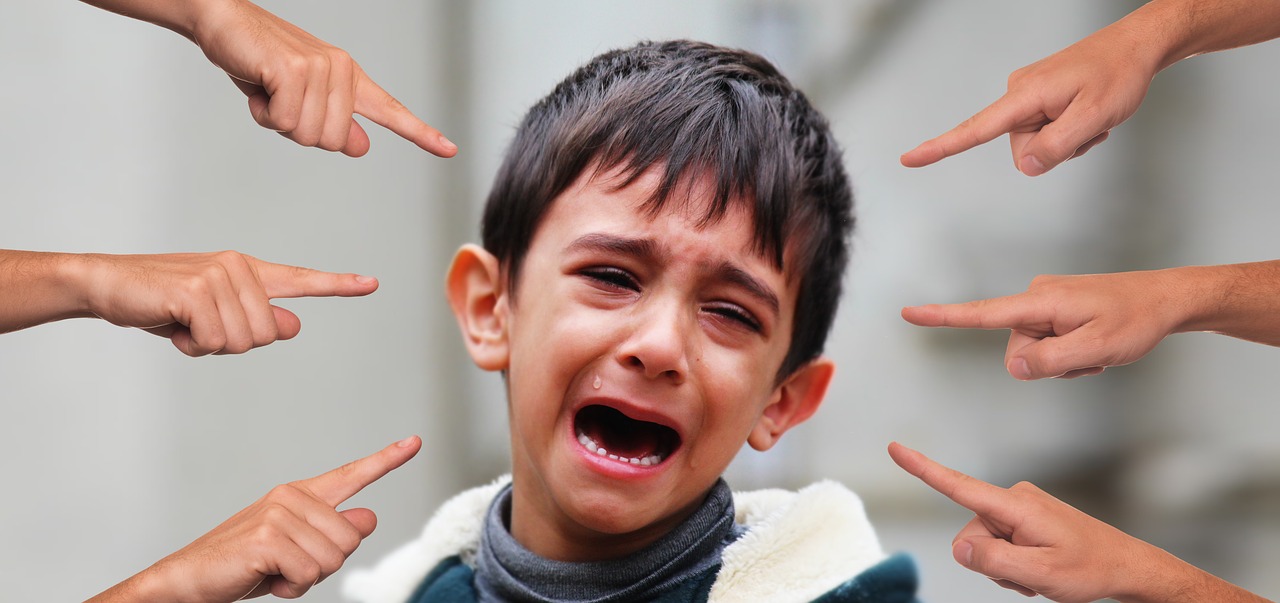
As bullying changes so should our response.

Most kids will be bullied sooner or later.  We used to think that there was something that the victim was doing. It would make us feel safer to think they had done something wrong and if we teach kids to avoid that mistake then our kids will be safe. Like blaming the rape victim, blaming the victim of bullying has not helped reduce the number of incidents. The amount seems to be growing. So is the type.

Our fear of violence in the school has led to crackdowns on violence. We have zero-tolerance policies. Bring a weapon to school and you get kicked out. Hit someone and you will be suspended maybe even expelled. There is no such thing as a “normal” fight between kids anymore. This has reduced the rate of physical bullying – somewhat. It has not reduced the rate of emotional bullying.

Bullying is not always from outside the family. The most devastating form occurs when family members, those who should have protected you, become the bullies. Relentlessly harassing a family member, the name-calling and the feeling of rejection all take their toll.

Kids have come into the psychiatric facilities as a result of a suicide attempt and they tell me their family has called them fat and dumb for years. They finally just gave up. This form of emotional bullying is also emotional abuse. It can and probably usually should be reported to the Child protective services as child emotional abuse. Besides intervening in the family we need to help the victim to get past the trauma of the abuse. But bullying is everywhere.

The new face of bullying is the anonymous face of the internet, cyber-bullying. It is also the acts of kids rejecting and excluding other kids. There is a lot more name-calling and cruel posts online.

Recently Psychotherapy Networker presented a webinar on bullying featuring Stan Davis as part of their parenting skills series. I try to catch as many of their presentations as possible. Most of the programs are designed for professionals and include continuing education units (CEU’s.) They also make some presentations available free of charge, but only for a short time. For more information on Psychotherapy Networker and their webinars see: http://www.psychotherapynetworker.org/

Davis tells us that the old approach to bullying is not working. Education for bullying, as in education for drug abuse does not solve the problem. Kids know they shouldn’t bully, with or without an education component.

The kids who tell me at age 8 that drugs are bad and they learned in school that you should never do drugs; I see them again in their teens after they have had an overdose. Same thing with bullying.

If we really want to create a climate without bullying, or less of it anyway, we can’t excuse or alibi bullying when it happens. We need a consistent message that there is zero-tolerance for emotional bullying just like zero tolerance for physical violence. So far society is not consistent with this message at home or at school.

Drugs are cool in movies and on T. V. so are in your face put-downs of others. Kids are learning to bully from what they see others do and lacking any amount of self-control they imitate the reality shows and the movie and video game bullying.  Like the way, drunk driving stopped being OK as a result of a concerted campaign by MADD we need a campaign to make bullying a not acceptable activity.

Davis also mentioned that the best antidote for bullying is friends. The more a child belongs and feels like a part of something the less likely they will be affected by bullying. The most victimized are the most alone and once they become the victim they are more likely to be shunned by others, who are afraid to become victims also.

Connection reduces the impact of trauma whether it is from bullying or from a natural disaster. We know from other sources that people with a serious mental illness, like schizophrenia, which have partners at home that support them are half as likely to end up in the psychiatric hospital. Kids who have friends are less likely to be permanently harmed by bullying.

Resiliency is also a source of protection when someone is bullied. Resilient people seem to be able to screen out the verbal insults and the put-downs  Screens, says Davis, keep out the injury, but we need help from our friends to keep the screens of protection clean and repaired.

So the summary here is that more bullying today is non-physical like insults and rejection and to protect against this, more friends and resiliency are what is needed.

See also: Bullying, Families, and Resilience 

Staying connected with David Joel Miller

Seven David Joel Miller Books are available now!

My newest book is now available. It was my opportunity to try on a new genre. I’ve been working on this book for several years, but now seem like the right time to publish it.

Story Bureau.

Story Bureau is a thrilling Dystopian Post-Apocalyptic adventure in the Surviving the Apocalypse series.

Baldwin struggles to survive life in a post-apocalyptic world where the government controls everything.

As society collapses and his family gets plunged into poverty, Baldwin takes a job in the capital city, working for a government agency called the Story Bureau. He discovers the Story Bureau is not a benign news outlet but a sinister government plot to manipulate society.

Bumps on the Road of Life. Whether you struggle with anxiety, depression, low motivation, or addiction, you can recover. Bumps on the Road of Life is the story of how people get off track and how to get your life out of the ditch.

Dark Family Secrets: Doris wants to get her life back, but small-town prejudice could shatter her dreams.

Casino Robbery Arthur Mitchell escapes the trauma of watching his girlfriend die. But the killers know he’s a witness and want him dead.

Planned Accidents  The second Arthur Mitchell and Plutus mystery.

Letters from the Dead: The third in the Arthur Mitchell mystery series.

What would you do if you found a letter to a detective describing a crime and you knew the writer and detective were dead, and you could be next?

Sasquatch. Three things about us, you should know. One, we have seen the past. Two, we’re trapped there. Three, I don’t know if we’ll ever get back to our own time.

For these and my upcoming books; please visit my Author Page – David Joel Miller

Want the latest blog posts as they publish? Subscribe to this blog.

For videos, see: Counselorssoapbox YouTube Video Channel

Have you lost your child forever? Parenting after being away.

By David Joel Miller, MS, Licensed Therapist & Licensed Counselor.

Children working

Parentified child.
Photo courtesy of pixabay

How do you reconnect with your children if you have been away a long time?

Recovering people have often been away from their children for extended periods of time, in jail and prison, in rehab programs, or just gone doing their drug of choice. When you have been away from your children for a while, parenting can be especially difficult. Over time they change, you change and the situation changes also. Here are some thoughts on making the transition back home.

The reunification challenges are greatly increased if your child has been in foster care or their other parent has started a new relationship. You may be the biological parent but someone else has been there raising this child while you were gone.

You need their permission to reconnect.

Just being the biological parent does not give you the right to force your way back into their life. Time changes people. Painful as it may be for you, the process needs to move at the child’s pace, not the pace you would want.

The longer you have been away the more your children will have changed. You can’t expect to pick up where you left off. We tend to remember things the way they were and forget how much they will have changed.

Short separations don’t pose the problems that longer separations do. Several clients, I have worked with were away from a decade or more. That cute five-year-old who was starting kindergarten when you went away, would be a teenager now. Your “little girl” may have a boyfriend, piercings, and a whole lot of habits you wish she hadn’t picked up. She won’t take kindly to you coming back after all this time wanting to change her life.

You need to figure out how you fit into the child’s life, not the other way around.

What they went through left wounds.

You may have changed but the only memory they have of you is the way things were. Drug addicts with three days clean wonder why the family can’t forgive them, after all, they quit right? One way people protect themselves is to hold on to that anger or resentment. For some kid,s that has turned to indifference. You left them, whether you chose to or not. Seeing you again can be like being grabbed where the broken bone still hasn’t healed.

They have had to adjust.

Adjusting for the child means developing new relationships. Someone has cared for them, seen that they were fed, taken care of them when they were sick. They got close to that person. They have come to love that person and trust them. They owe that person some loyalty. Reconnecting with you can make them feel like they are betraying the one who cared for them while you were away.

Now suddenly you want them to forget the person who raised them and follow you blindly?  Why should they trust you? You weren’t there?

This is a huge problem if their other parent has started a new relationship. Papernow has written about step-families and tells us that with blended families the new spouse is always an outsider. The parent and the children had a relationship first and the new spouse came second.

If you have been away for a long time you may be in the position of the new stepparent with your own biological children. The child has developed a relationship with their other parent’s new partner. The one who was there all those years has been the one that went to their school activities and played with them.

Biological parent or not you are the new person in the child’s life, and to make it more difficult you are not even living in the house now.

To rebuild this relationship will take time, lots of time and that time will have to fit into your child’s life and their family’s life, not yours.

Reconnecting needs to be a priority.  Lots of people in early recovery fantasize about having those great relationships with their children, the reality is that it takes lots of work and it will probably not live up to your expectations. Lots of people give up. I commend those who are so determined that they stick with the process even when it is less fulfilling than they had hoped.

Staying connected with David Joel Miller

Seven David Joel Miller Books are available now!

My newest book is now available. It was my opportunity to try on a new genre. I’ve been working on this book for several years, but now seem like the right time to publish it.

Story Bureau.

Story Bureau is a thrilling Dystopian Post-Apocalyptic adventure in the Surviving the Apocalypse series.

Baldwin struggles to survive life in a post-apocalyptic world where the government controls everything.

As society collapses and his family gets plunged into poverty, Baldwin takes a job in the capital city, working for a government agency called the Story Bureau. He discovers the Story Bureau is not a benign news outlet but a sinister government plot to manipulate society.

Bumps on the Road of Life. Whether you struggle with anxiety, depression, low motivation, or addiction, you can recover. Bumps on the Road of Life is the story of how people get off track and how to get your life out of the ditch.

Dark Family Secrets: Doris wants to get her life back, but small-town prejudice could shatter her dreams.

Casino Robbery Arthur Mitchell escapes the trauma of watching his girlfriend die. But the killers know he’s a witness and want him dead.

Planned Accidents  The second Arthur Mitchell and Plutus mystery.

Letters from the Dead: The third in the Arthur Mitchell mystery series.

What would you do if you found a letter to a detective describing a crime and you knew the writer and detective were dead, and you could be next?

Sasquatch. Three things about us, you should know. One, we have seen the past. Two, we’re trapped there. Three, I don’t know if we’ll ever get back to our own time.

For these and my upcoming books; please visit my Author Page – David Joel Miller

Want the latest blog posts as they publish? Subscribe to this blog.

For videos, see: Counselorssoapbox YouTube Video Channel
Turning into our parents

By David Joel Miller, MS, Licensed Therapist & Licensed Counselor.

Family

Family.
Photo courtesy of Pixabay.com

Why do we become our parents?

Heard the story about the person who yells at their kid only to hear their parent’s voice coming from their mouth? As we age we tend to imitate the behavior of those we saw and learned from back in our younger days. For some people, this brings a chuckle, a realization that we have moved from being kids who can’t understand why our parents did something to adults who do the same things for the same reasons.

For some people turning into your parent brings terror.

There was a time when we thought all parents were great role models. At least that was what “Leave it to Beaver” portrayed. If parents were less than perfect we didn’t talk about that. Things were great in the country and then the suburbs. Those bad things only happen to others, the ones who lived in big cities.

Today the majority of us live in big cities and now we know that for all our efforts to pretend those things didn’t happen they did and still do. More people are telling me these days that their parents did drugs, molested them, and deserted them. Today we know that in the rural towns, young people are dying from overdoses of pills, and parents abuse and neglect their children when they do drugs. Today we don’t hide the abuse and pain, and more of us are mandated reporters.

People will accuse me of being jaundiced when I say these things. They tell me there are still people who want to be just like mom or dad. It helps to hear those stories. It makes me hope. Maybe we can teach people to be better parents. Maybe we can treat addiction and mental illness. Maybe we can have a future that is brighter than the present.

Then I talk with another person who was abused or molested or neglected as a child. They tell me that their parent was too into drugs or alcohol or some other thing to care about them. I see lots of grandparents raising their children’s children. I ask how this happened.

Grandma or grandpa or both, they used to do drugs. They got clean and sober just in time to raise the grandkids. It pains them to see their children repeating the same mistakes.

A client tells me they remember how it affected them when their parents did these things. Then they cry and tell me they are doing those same things, they are becoming just like their parents, and not in a good way.

People work hard sometimes, they deny themselves and they buy their kids everything, toys, gadgets, clothing. Then the child does drugs or falls into gangs. That child might tell us that they had things but they never felt loved. They got into relationships, sick abusive drug involved relationships. They still don’t feel loved.

They have children. Sometimes they straighten up for the kids. Sometimes society takes the kids away. The girl whose mother drank during pregnancy, the girl with permanent disabilities as a result of her mother’s drinking. She tells me she doesn’t know why she started drinking. Why couldn’t she stop drinking for her child?

For better or worse sometimes we turn into our parents. What kind of parent do you want your children to become?

Staying connected with David Joel Miller

Seven David Joel Miller Books are available now!

My newest book is now available. It was my opportunity to try on a new genre. I’ve been working on this book for several years, but now seem like the right time to publish it.

Story Bureau.

Story Bureau is a thrilling Dystopian Post-Apocalyptic adventure in the Surviving the Apocalypse series.

Baldwin struggles to survive life in a post-apocalyptic world where the government controls everything.

As society collapses and his family gets plunged into poverty, Baldwin takes a job in the capital city, working for a government agency called the Story Bureau. He discovers the Story Bureau is not a benign news outlet but a sinister government plot to manipulate society.

Bumps on the Road of Life. Whether you struggle with anxiety, depression, low motivation, or addiction, you can recover. Bumps on the Road of Life is the story of how people get off track and how to get your life out of the ditch.

Dark Family Secrets: Doris wants to get her life back, but small-town prejudice could shatter her dreams.

Casino Robbery Arthur Mitchell escapes the trauma of watching his girlfriend die. But the killers know he’s a witness and want him dead.

Planned Accidents  The second Arthur Mitchell and Plutus mystery.

Letters from the Dead: The third in the Arthur Mitchell mystery series.

What would you do if you found a letter to a detective describing a crime and you knew the writer and detective were dead, and you could be next?

Sasquatch. Three things about us, you should know. One, we have seen the past. Two, we’re trapped there. Three, I don’t know if we’ll ever get back to our own time.

For these and my upcoming books; please visit my Author Page – David Joel Miller

Want the latest blog posts as they publish? Subscribe to this blog.

For videos, see: Counselorssoapbox YouTube Video Channel

.

How safe if your young child from drugs?

By David Joel Miller, MS, Licensed Therapist & Licensed Counselor.

Drugs

Drugs.
Photo courtesy of Pixabay.com

Are you keeping your child away from drugs?

We would like to think that we can keep our children safe. We expect drug use to be something teens or young adults might do. Not young children. The truth is that younger and younger children are trying drugs. Most kids have been exposed to drugs and alcohol by the end of the third grade. Even kids from drug and alcohol-free homes are at risk. If you are thinking “my kids would never do drugs” you may be fooling yourself.

If you are thinking alcohol, that’s not a drug, think again. Any alcohol use by an eight-year-old is a problem. The younger they begin to use drugs, the more likely there will be problems. Not just the problem of addiction but also changes in emotions and learning. The more a student drinks the lower the GPA they will have. One study said “F” students drink on average twice what “A” student’s drink.

Very young kids get their first drugs at home.

First experiences with drugs frequently happen at home. Sneaking some of their parent’s cigarettes or alcohol is many a child’s first experience with drugs. That half-consumed beer or the carelessly left pack of cigarettes is an easy way to get started. But there are bigger dangers lurking even if the parents don’t smoke or drink.

Early grade kids get their drugs under the kitchen sink or in the garage.

Those cleaning solvents, the gasoline, the spray paint, all these things can be used to inhale or huff. Spray cans are an easy way to alter consciousness. A lot of inhalant abuse goes unnoticed by parents who think “no not my child” until it has caused permanent health problems.

It is not the “pusher” that gets your kid on drugs.

We used to think that there were unscrupulous people out there trying to get our kids hooked on drugs. Most people are introduced to drugs by a close friend or family member. Boys are often started off by an older male cousin or uncle; girls learn drug use from an old sister, aunt, or their first boyfriend.

Most kids who use drugs on a daily basis tell me that at first, they didn’t have to pay for it. Friends gave it to them for free. Later on, the circle of friends began to pool their money to buy it. It is not until the drug habit gets regular and expensive that the kid has to come up with the money to pay.

Street drugs are not the biggest part of the problem

Abuse of prescription drugs is on the rise. In a previous post “Grandma is the drug connect”  I wrote about how unknowing family members, grandma, in particular, are becoming the drug supplier of choice for today’s teen.

When it comes to drug overdoses street drugs are way behind prescription drugs as a cause of death.

So have you really thought about this problem of young kids doing drugs? Just how sure are you that your child is safe from drugs?

Staying connected with David Joel Miller

Seven David Joel Miller Books are available now!

My newest book is now available. It was my opportunity to try on a new genre. I’ve been working on this book for several years, but now seem like the right time to publish it.

Story Bureau.

Story Bureau is a thrilling Dystopian Post-Apocalyptic adventure in the Surviving the Apocalypse series.

Baldwin struggles to survive life in a post-apocalyptic world where the government controls everything.

As society collapses and his family gets plunged into poverty, Baldwin takes a job in the capital city, working for a government agency called the Story Bureau. He discovers the Story Bureau is not a benign news outlet but a sinister government plot to manipulate society.

Bumps on the Road of Life. Whether you struggle with anxiety, depression, low motivation, or addiction, you can recover. Bumps on the Road of Life is the story of how people get off track and how to get your life out of the ditch.

Dark Family Secrets: Doris wants to get her life back, but small-town prejudice could shatter her dreams.

Casino Robbery Arthur Mitchell escapes the trauma of watching his girlfriend die. But the killers know he’s a witness and want him dead.

Planned Accidents  The second Arthur Mitchell and Plutus mystery.

Letters from the Dead: The third in the Arthur Mitchell mystery series.

What would you do if you found a letter to a detective describing a crime and you knew the writer and detective were dead, and you could be next?

Sasquatch. Three things about us, you should know. One, we have seen the past. Two, we’re trapped there. Three, I don’t know if we’ll ever get back to our own time.

For these and my upcoming books; please visit my Author Page – David Joel Miller

Want the latest blog posts as they publish? Subscribe to this blog.

For videos, see: Counselorssoapbox YouTube Video Channel
Blaming obese older parents.

By David Joel Miller, MS, Licensed Therapist & Licensed Counselor.

Older people

Elderly couple.
Photo courtesy of Pixabay.com

Do overweight older parents produce kids with birth defects?

There have been a lot of articles recently telling us that older parents are more likely to have children with autism, schizophrenia, and birth defects. Is this true? And if it is true how do we explain what is going on here. Clearly, not every older parent has a child with a mental illness or birth defects. Nor do all offspring from obese parents develop autism or schizophrenia, not by a long shot. But the studies suggest an increased risk here. What is really going on? Here is my oversimplified counselor – metaphor explanation.  For a more scientific explanation, you may want to talk with or read doctors and geneticists explanations.

My grandmother would be horrified with the thought that there could be such a thing as a baby or a mother being too fat. In her time skinny babies died a lot more than plump babies. Skinny mothers died more often too.

She was right about that, as far as it goes. Women who are significantly underweight from poverty, illness, or an eating disorder are more likely to have a miscarriage, a low birth weight baby, or a child with birth defects. Not eating as a result of anxiety or depression can cause these problems also. But too skinny mothers are not the major source of problems. Not in this century anyway.

Grandma also had lots of aunts and cousins who had very large families. Women had children starting as young as they could and kept it up as long as they were fertile. That was before birth control. She just might have been right about baby’s needing to have some weight on their bones to survive. But there were some things grandma didn’t know.

Grandma wasn’t near as concerned about the age of the parents either. Older men marrying a very young woman was the norm and for good reasons. In colonial days there were forty sometimes fifty or more men for every woman. So the day that a woman began to have her period the men started calling on this marriage prospect. Lots of women married much older men because the men were financially secure. They married older men and then outlived them and married again.

Men remarried a whole lot more then than now also. People didn’t need to divorce then, their partners kept dying.

Women used to be a lot more delicate than they are now. They died in childbirth and they died every spring of the milk sickness. There were also food shortages and epidemics. Skinny people died a lot. Hence the belief that fat was healthy. Now we know that is not the whole story.

We have long suspected that the father’s age was a factor in some things like schizophrenia or autism. This became more of a theory as there were plenty of young men and fewer old men on their third fourth or fifth wife. Women did not use to have so many children late in life. Now with birth control, postponing children, and fertility treatments there are, percentage-wise, more children born to older mothers. That has started us wondering if the mother’s age matters also.

Grandma would have said that healthy kids and long life were in the genes. She would have been partially right.

Genes are not the whole answer! The same gene can do different things at different times in your life. So there are genes and there is gene expression, how the gene acts when in a certain time and place. Think of this as manners for genes.

My genes gave me that nice dark hair when I was young. Somewhere along the way, they decided I was old enough I needed to look the part so now they give me gray hair. I am pretending they are not turning the gray to white. The Same gene for hair color but different age and different hair color. If I had a child at this age they could inherit the dark black hair of my youth but I am stuck with the old man color for no better reason than that I am getting – well older.

Now no cell is made to last forever. Cells like people need to reproduce. I hear that cells replace themselves every seven years. For argument’s sake let’s say that this is true. Why do cell mutilations keep happening? Why do cells have birth defects?

Think of this as the “copier theory of cells.” Every time a cell reproduces it makes a copy of its self. Have you ever made a copy and then when you can’t find the original had to make a copy of a copy? The more generations the copy goes through the more chance it will be fuzzy and someone will read it wrong. Older cells may get fuzzy also. The more copies the more chance for changes – mutations to creep in. Some of those changes in humans may be good things, adaptive changes. But most gene changes cause birth defects.

So what does being overweight or drinking alcohol have to do with birth defects? Alcohol for the record causes more preventable birth defects than anything else. Why is this?

Ever seen someone mark up an original before copying it? Imagine with me an original with white-out on it and some highlighter marks. Now before this stuff can dry the person puts the original on the copier glass and makes their copy. That messy stuff gets all over the glass. Every copy we make now has all those marks on it. They are all hard to read.

So when there are chemicals in the parents’ bloodstream, like alcohol, the copies that get made are fuzzy. More alcohol and the copies get worse. We know alcohol and drugs blur the mother’s contribution to the child’s genes. We also suspect that some chemicals may blur the father’s contribution also.

We used to think that if the mother took in too few calories bad things happened to her and the potential baby. Excess calories were stored as fat in the mother. No harm to the baby there right? Not so fast.

If the mother develops diabetes that high blood sugar could have an effect. So could all sorts of other hormones. So we think that the more overweight the mother the more the risks to the child. Now, remember risks do not equal disease. You can have a risk factor for a disorder and not get it. Strenuous excesses and severe dieting during pregnancy or when you are trying to get pregnant are not recommended. But the mother’s overall health, her efforts to keep her blood sugar under control, and to avoid toxins, especially alcohol, just may increase the chances of a healthy child.

Being older or overweight may not be reasons to avoid having children but the increase in risk factors may explain why we are seeing more children born with certain mental and physical illnesses like autism, psychosis, and ADHD.

Staying connected with David Joel Miller

Seven David Joel Miller Books are available now!

My newest book is now available. It was my opportunity to try on a new genre. I’ve been working on this book for several years, but now seem like the right time to publish it.

Story Bureau.

Story Bureau is a thrilling Dystopian Post-Apocalyptic adventure in the Surviving the Apocalypse series.

Baldwin struggles to survive life in a post-apocalyptic world where the government controls everything.

As society collapses and his family gets plunged into poverty, Baldwin takes a job in the capital city, working for a government agency called the Story Bureau. He discovers the Story Bureau is not a benign news outlet but a sinister government plot to manipulate society.

Bumps on the Road of Life. Whether you struggle with anxiety, depression, low motivation, or addiction, you can recover. Bumps on the Road of Life is the story of how people get off track and how to get your life out of the ditch.

Dark Family Secrets: Doris wants to get her life back, but small-town prejudice could shatter her dreams.

Casino Robbery Arthur Mitchell escapes the trauma of watching his girlfriend die. But the killers know he’s a witness and want him dead.

Planned Accidents  The second Arthur Mitchell and Plutus mystery.

Letters from the Dead: The third in the Arthur Mitchell mystery series.

What would you do if you found a letter to a detective describing a crime and you knew the writer and detective were dead, and you could be next?

Sasquatch. Three things about us, you should know. One, we have seen the past. Two, we’re trapped there. Three, I don’t know if we’ll ever get back to our own time.

For these and my upcoming books; please visit my Author Page – David Joel Miller

Want the latest blog posts as they publish? Subscribe to this blog.

For videos, see: Counselorssoapbox YouTube Video Channel

What if your parents got it wrong?

By David Joel Miller, MS, Licensed Therapist & Licensed Counselor.

Parenting.

Parenting.
Photo courtesy of Pixabay.com

Humans have a significant design flaw.

If I had been the engineer working on the human design team I would have done it differently. Consider for a moment that we put our youngest most inexperienced humans in charge of keeping the species going. Wouldn’t you think we should have the oldest most experienced people in charge of bearing and raising the children? It is a wonder the human species survived.

Fertility is highest among the very young, teens and twenties. Neuroscience tells us that the frontal lobe of the brain is not fully formed until the mid-twenties. Couples get together, have children, and just about the time they get the process down and start to be credible parents they have passed the child-bearing prime and move to being grandparents. Wouldn’t it make more sense to have children late in life when you have the process of growing up figured out?

Most of the time young parents raise their kids exactly the way they were raised or exactly the opposite. So we keep repeating the same excess of behaviors that produced dysfunctional families.

We are told that if parents get it half right their kids will think they are great parents, but what do kids know? And clearly, way too many parents have children at a young age when they are unable to get even half the parent role right.

Did you ever get 100% on a test? Ten years later could you still get one hundred percent? I do pretty well on written tests most of the time. But I do not remember very many 100 %s. So If I only get part of what I am supposed to learn about being a parent and then only pass on half of that – well pretty soon the whole human tribe will be totally ignorant about child-rearing.

Consider the math, if we get it half right and then teach what we know and they get half of what we know and then they pass it on and the third person only gets half of that half we are now down to 12 ½%. Pretty soon at this rate, we are approaching zero. This is the learning curve we used to have on sex education when we avoided telling kids about that all together.

This is an especially large problem for children who grow up in dysfunctional families. Their parents did not know how to be good parents and these children when they become adults have so much trouble caring for themselves there is not much left to use in caring for offspring. But because of that trick of our genes, these uneducated adults reproduce first and then grow up second.

Now don’t get me wrong here – I am not pointing any fingers. I did the “experiment on the first one and see if I can figure this out” method of parenting, just like a lot of my generation.

A few hundred years back they had some mechanisms to reduce the number of children who were reproducing and the problems of young parents who had to learn their parenting skills while on the job of raising kids. First, they used to starve young people, feed the older workers first. And we had lots of childhood mortality. I am not suggesting that we should try this, just saying. Poor diets kept fertility low until people got older and reduced the number of really young people who were giving birth.

More importantly, than late-onset fertility and high death rates among children and young mothers was another factor called relatives. Not just grandparents but other more distant relatives. There was a time when everyone in a town knew each other and they were all connected. That was sometimes good when they supported the younger parents in being better parents and sometimes bad when a dysfunctional pattern, like child abuse or molestation, became common in a small community.

At this point, some of you readers will be saying aren’t people waiting longer to have children? Won’t that solve the problem?  Yes, some people are waiting until they are older to start families. That will help with the better parenting problem if and only if they had good teachers or if they have grown up and matured enough to have learned those how to be better parent lessons. Also, take note there are way too many cases of twelve and thirteen-year-old mothers and fathers. Sometimes these extra young people have help from older adults. In my state, that kind of help is called child sexual abuse and is both illegal and reportable. Not everywhere is it illegal though.

So what is the solution if your parents did not know how to be good enough parents or if you became a parent way too young? I suggest that it is never too late to take a parenting class or read a book on parenting. If you did not learn the lessons you should have learned from your parents you need to learn them and teach yourself first.

One first step in healing the pain of dysfunctional parenting is to learn what good parenting looks like and then to be a good nurturing parent for yourself. As you learn to care for yourself you will get better at caring for others.

Anyone know a good parenting book?

Staying connected with David Joel Miller

Two David Joel Miller Books are available now!

Bumps on the Road of Life. Whether you struggle with anxiety, depression, low motivation, or addiction, you can recover. Bumps on the Road of Life is the story of how people get off track and how to get your life out of the ditch.

Casino Robbery is a novel about a man with PTSD who must cope with his symptoms to solve a mystery and create a new life.

For these and my upcoming books; please visit my Amazon Author Page – David Joel Miller

Want the latest blog posts as they publish? Subscribe to this blog.

Want the latest on news from recoveryland, the field of counseling, my writing projects, speaking and teaching? Please sign up for my newsletter at – Newsletter. I promise not to share your email or to send you spam, and you can unsubscribe at any time.

For more about David Joel Miller and my work in the areas of mental health, substance abuse, and Co-occurring disorders see my Facebook author’s page, davidjoelmillerwriter. A list of books I have read and can recommend is over at Recommended Books. If you are in the Fresno California area, information about my private practice is at counselorfresno.com.

More child sexual predators?

Counseling questions

Counseling questions.
Photo courtesy of Pixabay.com

Have you lost track of the number of reports in the news of people abusing children? I know I have. One topic of discussion around the water coolers and in the media these days is the number of these reports and the number of times the thing we fear most, turns out to be true. Which makes one wonder- is there more child abuse, especially child sexual abuse, going on these days?

We are correct to distrust reports of more – or fewer predictors these days. More people being arrested does not mean more incidents. It is very likely that children have been victimized since time began, which is not to excuse it, just to say we can’t be sure there is more going on now. But the number, frequency, and severity of children being abused are beyond troubling.

With children, professionals like myself are what is called “mandated reporters” which means if we know or reasonably suspect someone is harming a child we are required to report this. From the number of adults who end up in therapy as a result of being victims of sexual abuse, it seems clear that this has been going on largely overlooked for a long time. Mostly we don’t like to think that someone who is working with children might be harming them. The stranger molester is very rare, most of the time the person harming kids is someone that is close to them and is respected by the community.

Beyond the pain of the first abuse, most adult victims will tell you the most painful part of being a victim was the number of adults who dismissed the claim or covered up for the perpetrator. I read that one child victim was punished for “making stories up” about his abuser. Years later we find out that this victim was telling the truth but was intimidated by adults into silence.

The shocking thing about so many of these reports of an adult sexually abusing a child is not just that the incidents are occurring but that the activities have gone on for so long, involved so many children and the perpetrator was allowed so much access to children. There may be some societal changes that account for this.

We live in a more anonymous society than ever before. This is the first time in the history of the world that the majority of people on earth live in large cities instead of rural communities. In the small town, there was always someone who was considered “weird” and the children were told to avoid them. This may not have protected anyone. Kids back then disappeared and things happened to them on the way home from school but we felt safer then, thinking that by avoiding certain people we were keeping kids safe. Today we have little idea who lives next door let alone on the next block.  We also know very little about public figures like the teacher, pastor, or priest.

Some people think that putting lists of child predators online will help reduce children being victimized. This process has proved inefficient in practice. I was at a county fair a while back. It was a relatively small county. The local police had a map in their booth with pins showing the location of registered sex offenders. In this one small town, there was no street that did not have a pin within a block or two. The sex offenders we know about are everywhere. What about the ones we won’t know about for years to come?

There is some likelihood that in times past most predators were solitary creatures. They were afraid to let anyone know their secret. That reduced their ability to abuse children and may have limited the number of victims. You don’t share secrets in a small town where if one person found out your secret everyone might be out to get you.

There was also a lot more social disapproval of people who might be abusing a child especially sexually. There were and still are families in which child sexual abuse is a family tradition. Older relatives abuse children and the parents who were abused themselves cover it up. More than once an adult has cried while talking about their child’s victimization and then they told me they had been a victim themselves, sometimes the adult was molested by the same uncle or cousin that had now molested their child.

In addition to the reduced social disapproval, these days it has become easier for predators to find others who approve of their behavior. They are able to connect via the internet and other electronic media. Children who don’t understand victimization, we all think things won’t happen to us when we are young, put themselves in risky online situations.

The increase in pornography and sexually explicit materials makes deviant behaviors look more normal. A few years back people who wanted sexually explicit materials had to go to a particular store and buy something that was kept under the counter. By today’s standards, most of that stuff was pretty mild. Today situation comedies have more sexual content and more violence than the girly magazines used to portray. Violence and sexual content are a lot more interesting to watch most of the time than normal behavior. If you watch a lot of violence or sex it is easy to get a distorted view of reality and think that things are normal that in times past were clearly off-limits.

The widespread abuse of stimulants has added to the problem of inappropriate sexual behavior, especially the increase in hypersexuality. Meth users report that under the influence they felt extreme sexual urges and participated in sexual acts that when off drugs they would never have considered. Much, but not all child sexual abuse is reported to be connected with drug abuse.

If it were possible to put aside the emotional cost of child mistreatment, which is not possible for most of us, there is still a huge monetary cost to society. According to the CDC, a single year of child abuse costs society over $200,000 in additional lifetime treatment costs. That is more than the cost of a stroke or most physical diseases. More years of abuse means more pain and more expense. We also know from studies of PTSD that the sooner someone gets treatment the less likelihood there will be a severe permanent disability. This makes the early detection and treatment of abused children all the more important.

So this blog post is running long.

The point of all this is that there may not be any more people who are having urges to sexually abuse children now than in times past. What we are seeing now are more cases involving people we all thought we could trust. There are societal factors that may be reducing the inhibitions of people who have these urges. These incidents can make us start to fear and distrust everyone. Some of these cases involve large numbers of victims and have gone on over long periods of time. Being a victim of abuse causes lifelong suffering and we as a society need to do more to prevent and treat these victims. The questions before us are how to prevent or reduce the number of these incidents and do we as a culture have the will to use resources to heal the victims?

Any thoughts on this?

Staying connected with David Joel Miller

Seven David Joel Miller Books are available now!

My newest book is now available. It was my opportunity to try on a new genre. I’ve been working on this book for several years, but now seem like the right time to publish it.

Story Bureau.

Story Bureau is a thrilling Dystopian Post-Apocalyptic adventure in the Surviving the Apocalypse series.

Baldwin struggles to survive life in a post-apocalyptic world where the government controls everything.

As society collapses and his family gets plunged into poverty, Baldwin takes a job in the capital city, working for a government agency called the Story Bureau. He discovers the Story Bureau is not a benign news outlet but a sinister government plot to manipulate society.

Bumps on the Road of Life. Whether you struggle with anxiety, depression, low motivation, or addiction, you can recover. Bumps on the Road of Life is the story of how people get off track and how to get your life out of the ditch.

Dark Family Secrets: Doris wants to get her life back, but small-town prejudice could shatter her dreams.

Casino Robbery Arthur Mitchell escapes the trauma of watching his girlfriend die. But the killers know he’s a witness and want him dead.

Planned Accidents  The second Arthur Mitchell and Plutus mystery.

Letters from the Dead: The third in the Arthur Mitchell mystery series.

What would you do if you found a letter to a detective describing a crime and you knew the writer and detective were dead, and you could be next?

Sasquatch. Three things about us, you should know. One, we have seen the past. Two, we’re trapped there. Three, I don’t know if we’ll ever get back to our own time.

For these and my upcoming books; please visit my Author Page – David Joel Miller

Want the latest blog posts as they publish? Subscribe to this blog.

For videos, see: Counselorssoapbox YouTube Video Channel
Creating an underachiever

By David Joel Miller, MS, Licensed Therapist & Licensed Counselor.

Mistakes and errors

Mistakes.
Photo courtesy of Pixabay.com

We hear there are a lot of underachievers in our society. Our schools and workplaces seem to be designed to create them. If you want to turn someone with a natural talent into an underachiever the process is simple. Here are the steps you will need to take to create an underachiever.

Your child does something cute, it may not be perfect but that first burst of effort gets noticed. You give them lots of praise. What they did was adorable. You tell them so. They love all the attention. In school, the child may put in extra effort to study and do well on a test. For this example let’s say it was a math test. But it could be a sports skill, art, or anything where superior performance would be noticed. They are rewarded with acknowledgment, a good grade. Everyone is happy. They should be motivated to continue putting in the effort. But they don’t. Why?

On the job site, there might be a critical project, a report that needs to be out right away. This is something that takes extra effort. The employee puts in a burst of effort to get the task done. They get the task completed and they get some praise. They feel good about their effort. Then something goes wrong, very wrong.

The child who got lots of recognition begins to be thought of as good at math. The teacher stops spending time with the child on his lessons. There are other students who need her help more. The parents may slack off on helping the child with his homework. He doesn’t need help, right? He is good at math. This time the child gets no help. They study, for sure, just not as hard. No one seems to care about them and they are identified as good at math. Then their grade slips, maybe on the first test, maybe slowly over time. No one notices until the grade gets back to the level of the rest of the class. Suddenly everyone notices.

The employee, who got that report out on time, now gets assigned a lot of reports to do. They are good at report writing, aren’t they?  But now the recognition and the praise stop coming. They are expected to always do better so they start getting assigned more work. Now if that employee gets a raise or a better office that may continue to be rewarding. But often they get taken for granted and the work piles up. Until one day they turn out a report that is not very good or they turn it out late. Then the boss has a talk with them.

Now in both cases, the person is now getting noticed again. The child may study extra hard for the next test. The employee may work extra hard on the next report. They both get a renewed round of attention for their renewed efforts. But this second round of notice fades faster than the first. What is the lesson these people learn from this?

In both cases, they learn that there are more rewards from occasional flashes of brilliance than from persistent good performance. So they learn to hold back most of the time and then occasionally do a superior job which is always rewarded by being noticed. They have learned the advantages of underachievement. If people have low expectations of you, you get rewarded for good work, but if people expect a lot from you, you might occasionally fail and that will be punished.

This procedure is not the only one that encourages people to fail.

The child wants to please his mother. She tells him to come to help with the dishes. So the child finishes what he is doing and then comes to help. He tries really hard. At the end mother thanks him for the help and then adds that back-handed compliment – “But you could have come sooner.” The lesson learned – no amount of effort is good enough. Maybe they start to think they are not good enough.

Another child may study really hard for the math test. They get ninety-nine correct out of the one hundred questions. Is the parent happy? No! They say to the child “Why did you get that one wrong? You knew that!”

No matter how much that child or that report writing employee do, it will never be enough. Pretty soon the connection between their efforts and success or failure doesn’t look to be working. They may develop a connection that Martin Seligman calls “learned helplessness.”  You might want to check out his book called “Learned Optimism.”

So what is the solution to this problem? If you are that child’s parent or teacher, don’t take superior achievement for granted, keep positively reinforcing it. You don’t need to praise the child every time, but over time you need to vary the intervals between praise so the child knows you are still noticing their efforts. If you are the boss or supervisor of a good employee make sure you don’t take them for granted and pile extra work on them while letting the less able employees slide. The rewards need to match the effort and the work output.

What should you do if you are that child or employee and people no longer notice your efforts? What if you were not rewarded as a child and grew up as an underachiever? Are you doomed? Not at all!

In all these examples the problem for the person who is no longer getting rewarded is that they needed reinforcement from external sources. If you can learn to have what we might call an “internal locus of control,” if you can learn to do things so that you can be proud of yourself, then that lack of reinforcement may not affect you so much.

So it would appear that one of the secrets of having a happy life is being happy with the life you are leading.

Staying connected with David Joel Miller

Seven David Joel Miller Books are available now!

My newest book is now available. It was my opportunity to try on a new genre. I’ve been working on this book for several years, but now seem like the right time to publish it.

Story Bureau.

Story Bureau is a thrilling Dystopian Post-Apocalyptic adventure in the Surviving the Apocalypse series.

Baldwin struggles to survive life in a post-apocalyptic world where the government controls everything.

As society collapses and his family gets plunged into poverty, Baldwin takes a job in the capital city, working for a government agency called the Story Bureau. He discovers the Story Bureau is not a benign news outlet but a sinister government plot to manipulate society.

Bumps on the Road of Life. Whether you struggle with anxiety, depression, low motivation, or addiction, you can recover. Bumps on the Road of Life is the story of how people get off track and how to get your life out of the ditch.

Dark Family Secrets: Doris wants to get her life back, but small-town prejudice could shatter her dreams.

Casino Robbery Arthur Mitchell escapes the trauma of watching his girlfriend die. But the killers know he’s a witness and want him dead.

Planned Accidents  The second Arthur Mitchell and Plutus mystery.

Letters from the Dead: The third in the Arthur Mitchell mystery series.

What would you do if you found a letter to a detective describing a crime and you knew the writer and detective were dead, and you could be next?

Sasquatch. Three things about us, you should know. One, we have seen the past. Two, we’re trapped there. Three, I don’t know if we’ll ever get back to our own time.

For these and my upcoming books; please visit my Author Page – David Joel Miller

Want the latest blog posts as they publish? Subscribe to this blog.

For videos, see: Counselorssoapbox YouTube Video Channel