
Are you original or ordinary?

By David Joel Miller, MS, Licensed Therapist & Licensed Counselor.
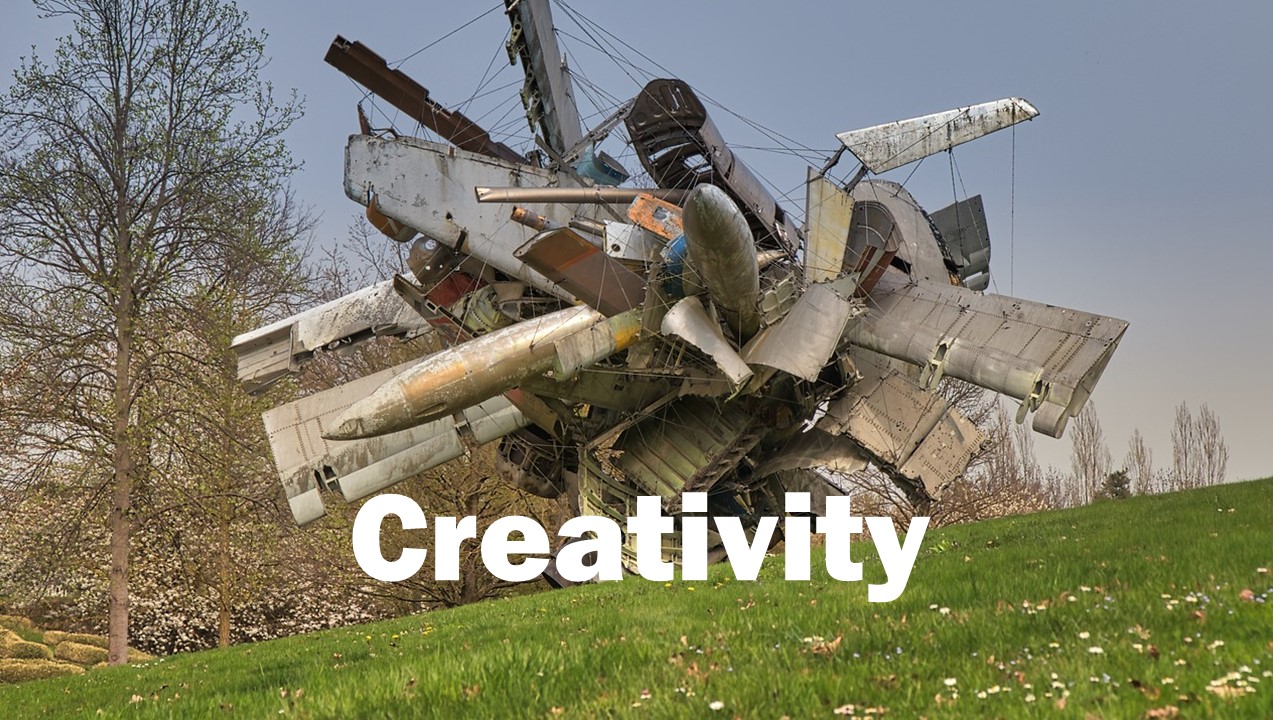
Creativity

Creativity.
Photo courtesy of Pixabay.com

Which is better, being ordinary or being original?

Careful – think about this before you answer. We sometimes tell our kids to be original without thinking about the cost. We adults sometimes forgo being original without thinking about the benefits.

Ordinary people do what is expected.

There is a lot of safety and security in being ordinary. You don’t have to risk criticism as much as original people. You don’t get singled out for punishment. You don’t get much attention. But attention can be a problem if it brings with it negativity and derision. Who wants to be different if that difference is going to be punished?

Ordinary people get left alone but they also don’t get many rewards.

Being ordinary has some survival benefits. People or animals that are too different from others in the herd get driven out. In some cultures, the mentally ill are sent into the jungle to live alone. Better they get eaten that the productive people the reasoning goes.

In those sorts of situations being too original has its punishment.

Some people would prefer to be ordinary. They are willing to forgo the attention and the rewards which accrue from originality in order to avoid the criticism that comes with being unique.

Ordinary people can be counted on to do what is expected, no more and no less. This also means that they attend the preferred religious and political gatherings, think the correct things, and largely do no one any harm. They also are slow to change when the circumstances shift.

Society needs conformity. Ordinary people conform. Even original people need to be original in the prescribed manner.

Original people do something different.

Originality, unfortunately, is also connected to making mistakes. The more original you are the greater the risk that you will do something, new, something unique, and it will be a total unequivocal failure.

Highly productive people do a lot of new original things; they also make some mistakes which can at times be highly visible. Even when original people do not fail, others will resist the changes the original person is causing. The establishment does not like change. Not unless it is change they created, change they can control, and change that benefits them.

Not everyone likes originality. We tend to like the familiar, the routine, and the expected. Even our excitement needs to fall within prescribed limits.

Edison is reported as saying he tried thousands of ways to make a light bulb before he found one that worked. The result could have been viewed as a man who made a record number of failures.

He reframed this as having found out thousands of things that would not work. By persistently trying things he eventually succeeded. He succeeded because he kept trying. Another person might have given up after a few dozen failures and worked on something else that had a better chance of success.

A less original person would have given up a long time before that success occurred.

On the job front, originality is not always valued.

Most companies want to keep their originality confined to a couple of departments. If you work in engineering or advertising departments then originality, up to a point, may be valued. Be careful about being too original if you work in a shipping department.

Highly original people tend to migrate to occupations and to places that encourage originality. Universities and colleges can afford to foster some level of originality because they incubate the original people for the next generation.

Countries that encourage originality find the highly innovative people migrate there. They also get stuck with a lot of dissidents who want to change the very things that brought them there.

In the arena of originality versus ordinary, you have to take the bad with the good. I for one would prefer to be more original but not everyone in my life sees it that way.

Which works best in your life, originality, or being ordinary?

Related articles

Staying connected with David Joel Miller

Seven David Joel Miller Books are available now!

My newest book is now available. It was my opportunity to try on a new genre. I’ve been working on this book for several years, but now seem like the right time to publish it.

Story Bureau.

Story Bureau is a thrilling Dystopian Post-Apocalyptic adventure in the Surviving the Apocalypse series.

Baldwin struggles to survive life in a post-apocalyptic world where the government controls everything.

As society collapses and his family gets plunged into poverty, Baldwin takes a job in the capital city, working for a government agency called the Story Bureau. He discovers the Story Bureau is not a benign news outlet but a sinister government plot to manipulate society.

Bumps on the Road of Life. Whether you struggle with anxiety, depression, low motivation, or addiction, you can recover. Bumps on the Road of Life is the story of how people get off track and how to get your life out of the ditch.

Dark Family Secrets: Doris wants to get her life back, but small-town prejudice could shatter her dreams.

Casino Robbery Arthur Mitchell escapes the trauma of watching his girlfriend die. But the killers know he’s a witness and want him dead.

Planned Accidents  The second Arthur Mitchell and Plutus mystery.

Letters from the Dead: The third in the Arthur Mitchell mystery series.

What would you do if you found a letter to a detective describing a crime and you knew the writer and detective were dead, and you could be next?

Sasquatch. Three things about us, you should know. One, we have seen the past. Two, we’re trapped there. Three, I don’t know if we’ll ever get back to our own time.

For these and my upcoming books; please visit my Author Page – David Joel Miller

Want the latest blog posts as they publish? Subscribe to this blog.

For videos, see: Counselorssoapbox YouTube Video Channel

Will the Counselor, therapist, psychologist keep your secret or tell?

By David Joel Miller, MS, Licensed Therapist & Licensed Counselor.

Keeping your secrets?
Photo courtesy of Pixabay.com

Just how confidential is confidentiality.

Just what is confidential and what is not is a major concern to clients in mental health treatment. I have written several posts in the past on this subject but from the number of searches on this subject, we need to talk some more about this. Links to some of the past posts are at the end of this post.

Confidentiality and its cousin privilege, are legal as well as ethical concepts.  Laws can vary greatly from place to place. Check in the jurisdiction you live in and ask the person you are seeing if you have concerns about this.

We spend a lot of time on these issues in graduate school. We are supposed to explain this to clients when we first see them. Beginning counselors tend to spend a lot of time telling new clients more than most clients want to know. After a few years of doing therapy, the amount the client gets told declines and sometimes slips below the minimum the client needs. If your provider has said less than you need to know please ask.

Please remember I am talking about this from a counselor’s point of view, how we try to meet our legal and ethical responsibilities in practice. For the law in this, you should consult a lawyer.

Here are the general rules.

Everything you tell your therapist-counselor is confidential UNLESS it falls into a required or permitted exception.

1. Danger to self is reportable.

If you are eminently suicidal we can break confidentiality to keep the client alive. We are supposed to do this whether we want to or not. In practice, it is a judgment call whether the client has thoughts but does not intend to carry through or if they plan to kill themselves soon. Our response may vary depending on the circumstances.

2. Danger to others gets reported.

If you say you intend to kill someone in the future this gets reported. Past crimes are generally not reportable unless they fall under one of the other exceptions. Throwing a book at your sister is not a danger to others.

3. Child abuse, abuse of an elderly or disabled person needs reporting.

Generally, all abuse of a child gets reported if the provider has a reason to suspect the child is being abused. The counselor is not responsible for investigating, only to report to authorities. Someone who murdered a child would have committed child abuse and this past crime could be a mandated report in some places.

4. If the counselor needs to consult with another professional.

In this case, they tell the minimum they need to get the answers they need. They might talk to another professional about your treatment, to a lawyer about what is reportable, or to a billing person. They can “use” the information you give them to help in your treatment and their getting paid for providing it, but they are not supposed to “disclose” that information to people who do not need to know. Counselors sometimes call their lawyers to find out what they need to keep confidential and what they need to disclose.

5. If you are Gravely Disabled they need to report to get you help.

If the client can’t feed themselves or use clothing and shelter the counselor needs to call someone and get this person help.

6. You sue your counselor and they can talk about treating you.

If you sue your counselor for doing a bad job they get to introduce your records and prove what you said and why they did what they did.

7. If you introduce your mental status into a court proceeding they will be required to tell things.

Once you use your mental illness as a defense in court for something you are charged with all your mental health records may come out.

8. You are not the client and are not paying for the counseling.

If you are sent for a court-ordered examination, a child protective service interview or other assessment paid for by someone else you will probably be asked to sign a release of information so that the person paying for the services can see what happened.

No release and there will be no treatment. Once you sign that release the person who is paying or who ordered the assessment and or treatment gets reports. You can revoke this sometimes, but not all the time, and what has been disclosed cannot, of course, be taken back and remade confidential.

9. You are a collateral person in a session.

If you go with your partner or child and they are the person being treated you may not be getting any confidentiality on what you say. You should ask about this before you stay things and then want them kept secret.

10. A court subpoenas your records.

This gets problematic. The counselor or therapist will try to keep some things confidential by asserting privilege but that is up to the lawyers and the judge. If this is a worry to you talk to your lawyer before you see the counselor and see if there is a chance this will come up in court.

One last thought. There are some clients who come for therapy and talk extensively about how guilty they feel about past crimes and how they want to change. They don’t usually give all the details of the crimes. There are others who seem to want to brag about what great criminals they are and they don’t want to change. The ones who don’t want to change frequently say things that end up needing to be disclosed.

Facing the things you have done wrong and trying to change is a huge part of recovery.

Staying connected with David Joel Miller

Seven David Joel Miller Books are available now!

My newest book is now available. It was my opportunity to try on a new genre. I’ve been working on this book for several years, but now seem like the right time to publish it.

Story Bureau.

Story Bureau is a thrilling Dystopian Post-Apocalyptic adventure in the Surviving the Apocalypse series.

Baldwin struggles to survive life in a post-apocalyptic world where the government controls everything.

As society collapses and his family gets plunged into poverty, Baldwin takes a job in the capital city, working for a government agency called the Story Bureau. He discovers the Story Bureau is not a benign news outlet but a sinister government plot to manipulate society.

Bumps on the Road of Life. Whether you struggle with anxiety, depression, low motivation, or addiction, you can recover. Bumps on the Road of Life is the story of how people get off track and how to get your life out of the ditch.

Dark Family Secrets: Doris wants to get her life back, but small-town prejudice could shatter her dreams.

Casino Robbery Arthur Mitchell escapes the trauma of watching his girlfriend die. But the killers know he’s a witness and want him dead.

Planned Accidents  The second Arthur Mitchell and Plutus mystery.

Letters from the Dead: The third in the Arthur Mitchell mystery series.

What would you do if you found a letter to a detective describing a crime and you knew the writer and detective were dead, and you could be next?

Sasquatch. Three things about us, you should know. One, we have seen the past. Two, we’re trapped there. Three, I don’t know if we’ll ever get back to our own time.

For these and my upcoming books; please visit my Author Page – David Joel Miller

Want the latest blog posts as they publish? Subscribe to this blog.

For videos, see: Counselorssoapbox YouTube Video Channel

5 reasons learning and memory are not about intelligence

By David Joel Miller, MS, Licensed Therapist & Licensed Counselor.

Puzzle

Memory pieces.
Photo courtesy of Pixabay.com

Average people remember things that supposedly smart people forget.

Our educational system and a lot of parent’s efforts to help their children learn are misguided.

Somewhere along the line, we got the impression that to be a good learner you needed to be really smart and that if you scored low on an I.Q. test then you would never be able to learn.

That is just not so. Being smart helps, but it is not the whole story. There are things anyone can do to improve their memory and learning.

Here are some reasons why.

1. Learning is emotional, not intellectual.

If you truly enjoy something it is easy to learn a lot about that subject. If you don’t care about something it is next to impossible to remember. If you have ever had to take a class in school because it was required, but it was nothing you will ever care about after the class is over, you know what I mean.

Excitement fuels learning. Anything that gets you excited about a subject leads to better, learning, memory, and retention of that subject. Practicing memory games can make learning more fun and goes a long way towards improving your memory.

2. Learning is cumulative.

We find learning about something very difficult when we don’t have the foundation to understand the subject. Knowledge is cumulative. If you don’t have the basics down the advanced material becomes more difficult.

Begin with something simple, something that interests you, and as you learn more about that subject. Ask yourself what else you want to know about. Follow those trails wherever they go and you will find yourself become more knowledgeable about many things.

3. Learning and memory require willpower.

To learn some things requires willpower. I wrote a while back about how many people have difficulties with willpower. One reason willpower is so elusive is our tendency to confuse willpower and won’t power. Another cause of poor willpower is the natural human tendency to enjoy today and forget tomorrow.

The hardest form of willpower is the ability to do something unpleasant today because it will produce future gains.

4. Learning is about how many words you know.

Memories for most people are saved as stories. The more words you know the less effort it takes to convert this expertise, real or imagined, into a story that will be easy to remember.

Movies and books are hard to remember if you don’t have the vocabulary to store and retell the events that made this story important.

Reading anything can improve your vocabulary. The more you read the more you learn and the more able to learn and remember you become.

5. You can’t rely on only one sense to store information into memory.

Having multiple anchors in your memory from multiple senses helps you to store and retrieve that memory.

When there is someone or something that you want to remember to try associating that memory with all your senses. What did it smell like? What were the good smells and the bad orders? Did it touch you internally as well as externally?

Paying attention to the sound of the person’s voice, their facial expressions and the way you experienced their presence will help you in remembering that person.

Most of us have tried to improve memory by becoming better at memorizing words rather than by learning to engage all our senses and fully experience the event.

In future posts, we will talk about some ways to improve your acuity and mental efficiency using senses other than verbal memories as ways to improve your ability to remember.

Go out there and practice mental efficiency, memory improvement, and the other skills you will need to create the success you want.

Staying connected with David Joel Miller

Seven David Joel Miller Books are available now!

My newest book is now available. It was my opportunity to try on a new genre. I’ve been working on this book for several years, but now seem like the right time to publish it.

Story Bureau.

Story Bureau is a thrilling Dystopian Post-Apocalyptic adventure in the Surviving the Apocalypse series.

Baldwin struggles to survive life in a post-apocalyptic world where the government controls everything.

As society collapses and his family gets plunged into poverty, Baldwin takes a job in the capital city, working for a government agency called the Story Bureau. He discovers the Story Bureau is not a benign news outlet but a sinister government plot to manipulate society.

Bumps on the Road of Life. Whether you struggle with anxiety, depression, low motivation, or addiction, you can recover. Bumps on the Road of Life is the story of how people get off track and how to get your life out of the ditch.

Dark Family Secrets: Doris wants to get her life back, but small-town prejudice could shatter her dreams.

Casino Robbery Arthur Mitchell escapes the trauma of watching his girlfriend die. But the killers know he’s a witness and want him dead.

Planned Accidents  The second Arthur Mitchell and Plutus mystery.

Letters from the Dead: The third in the Arthur Mitchell mystery series.

What would you do if you found a letter to a detective describing a crime and you knew the writer and detective were dead, and you could be next?

Sasquatch. Three things about us, you should know. One, we have seen the past. Two, we’re trapped there. Three, I don’t know if we’ll ever get back to our own time.

For these and my upcoming books; please visit my Author Page – David Joel Miller

Want the latest blog posts as they publish? Subscribe to this blog.

For videos, see: Counselorssoapbox YouTube Video Channel

National Problem Gambling Awareness Week

By David Joel Miller, MS, Licensed Therapist & Licensed Counselor.

Problem and problem solving

Problem-solving.

This week, March 3-9, is National Problem Gambling Week.

Problem Gambling is currently described as Pathological Gambling in the Diagnostic and Statistical Manual of Mental Disorders (DSM-TR-4.) Pathological Gambling is one of a group of disorders that currently are considered “impulse control disorders.”

Pathological Gambling is one of a group of disorders that currently are considered “impulse control disorders.”

DSM-5 Update.

In the DSM-5 this is named Gambling Disorder (F63.0) Essentially the same features.

Other impulse control problems not classified as an addictive disorder.

Other impulse control problems are intermittent explosive disorder, kleptomania, pyromania, and trichotillomania. Intermittent explosive disorder gets treated by far the most, but many more people need to get treated for pathological or problem gambling than are currently receiving help.

In California, this week-long effort to make people aware of the difficulties people may have with problem gambling is spearheaded by the California Department of Drug and Alcohol Programs via their Office of Problem Gambling. In a few other states Gambling issues are treated by separately trained and licensed counselors.

One reason for the interest in problem gambling among drug and alcohol counselors is the tendency for clients in early substance abuse or addiction recoveries to “switch addictions” and now off drugs and alcohol, to develop a new problem with compulsive or pathological gambling.

The similarities between addictive disorders and pathological gambling are so large that it was proposed that Pathological Gambling be moved to the addictive disorders rather than the impulse control disorders when the new DSM-5 comes out. We will need to look at that again in the future when the DSM-5 is available.

One of the controversies among treatment professionals is about the choice between trying to control an issue like drug use or gambling and the need to stop doing that activity completely.

If we view drinking excessively or pathological gambling as an addiction then we would expect the client to need to totally abstain. If it is an impulse control issue then we might reasonably try to teach the client to control the impulses and drink or gamble in moderation.

Most people who self-describe as addicts or alcoholics will tell you that control is an illusion. For them, the only answer is complete abstinence.

One reason for the conflict is that funding for treatment often comes from the people who make the most profit from the activity. The alcoholic beverage manufacturers would like counselors to teach people to drink responsibly not tell them to stop drinking altogether. The same issue occurs when problem gambling programs are funded by casinos.

So if you are one of those people who are able to control your drinking or gambling and for whom it is mostly just a source of entertainment, then problem gambling week is not of much interest to you.

But if you are one of those people who have lost the ability to control your gambling or your drinking consider getting help. If you live with someone who has a Pathological gambling problem, consider getting help for yourself as well as for them.

The web address for the California initiative is www.problemgambling.ca.gov

Staying connected with David Joel Miller

Seven David Joel Miller Books are available now!

My newest book is now available. It was my opportunity to try on a new genre. I’ve been working on this book for several years, but now seem like the right time to publish it.

Story Bureau.

Story Bureau is a thrilling Dystopian Post-Apocalyptic adventure in the Surviving the Apocalypse series.

Baldwin struggles to survive life in a post-apocalyptic world where the government controls everything.

As society collapses and his family gets plunged into poverty, Baldwin takes a job in the capital city, working for a government agency called the Story Bureau. He discovers the Story Bureau is not a benign news outlet but a sinister government plot to manipulate society.

Bumps on the Road of Life. Whether you struggle with anxiety, depression, low motivation, or addiction, you can recover. Bumps on the Road of Life is the story of how people get off track and how to get your life out of the ditch.

Dark Family Secrets: Doris wants to get her life back, but small-town prejudice could shatter her dreams.

Casino Robbery Arthur Mitchell escapes the trauma of watching his girlfriend die. But the killers know he’s a witness and want him dead.

Planned Accidents  The second Arthur Mitchell and Plutus mystery.

Letters from the Dead: The third in the Arthur Mitchell mystery series.

What would you do if you found a letter to a detective describing a crime and you knew the writer and detective were dead, and you could be next?

Sasquatch. Three things about us, you should know. One, we have seen the past. Two, we’re trapped there. Three, I don’t know if we’ll ever get back to our own time.

For these and my upcoming books; please visit my Author Page – David Joel Miller

Want the latest blog posts as they publish? Subscribe to this blog.

For videos, see: Counselorssoapbox YouTube Video Channel

February 2013 happenings on counselorssoapbox.com- Top posts

Counselorssoapbox.com

By David Joel Miller, MS, Licensed Therapist & Licensed Counselor.

Thank you for reading counselorssoapbox.com both those of you that have been with me for a while and those of you that joined me over this past month.

So far this year I have been keeping up with my plan to post at least once per day. While I am not able to do counseling or offer personal advice over the internet I have tried to answer questions of a general nature as they came in.

I appreciate all your comments.

Here are the top ten posts over the last month. A few are old, a few are new, and most fall somewhere in between. Stay tuned for a whole new series of posts over the next month. Most of March’s posts are written and in the final editing stage.

February’s top 10 counselorssoapbox.com posts.

How much should you tell a therapist?

Do people really forget what happened when drinking? – Blackouts

What is the difference between Depression and Major Depressive Disorder?

Why can’t we forget the painful past?

Do therapists have to report a crime?

Is nicotine a stimulant or a depressant?

6 ways to recover from Complex Trauma or Complex PTSD

Which border is Borderline Intellectual Functioning on?

Are you Hyperthymic?

Levels or types of Borderline Personality Disorder

Staying connected with David Joel Miller

Seven David Joel Miller Books are available now!

My newest book is now available. It was my opportunity to try on a new genre. I’ve been working on this book for several years, but now seem like the right time to publish it.

Story Bureau.

Story Bureau is a thrilling Dystopian Post-Apocalyptic adventure in the Surviving the Apocalypse series.

Baldwin struggles to survive life in a post-apocalyptic world where the government controls everything.

As society collapses and his family gets plunged into poverty, Baldwin takes a job in the capital city, working for a government agency called the Story Bureau. He discovers the Story Bureau is not a benign news outlet but a sinister government plot to manipulate society.

Bumps on the Road of Life. Whether you struggle with anxiety, depression, low motivation, or addiction, you can recover. Bumps on the Road of Life is the story of how people get off track and how to get your life out of the ditch.

Dark Family Secrets: Doris wants to get her life back, but small-town prejudice could shatter her dreams.

Casino Robbery Arthur Mitchell escapes the trauma of watching his girlfriend die. But the killers know he’s a witness and want him dead.

Planned Accidents  The second Arthur Mitchell and Plutus mystery.

Letters from the Dead: The third in the Arthur Mitchell mystery series.

What would you do if you found a letter to a detective describing a crime and you knew the writer and detective were dead, and you could be next?

Sasquatch. Three things about us, you should know. One, we have seen the past. Two, we’re trapped there. Three, I don’t know if we’ll ever get back to our own time.

For these and my upcoming books; please visit my Author Page – David Joel Miller

Want the latest blog posts as they publish? Subscribe to this blog.

For videos, see: Counselorssoapbox YouTube Video Channel

3 reasons why people keep telling you that.

By David Joel Miller, MS, Licensed Therapist & Licensed Counselor.

Writing through a flood

Just because you can doesn’t mean you should.

Everyone seems to keep telling me the same thing!

Ever had this experience? All over town seems like you keep hearing the same things. You go to your friend and they tell you something. Later that day a parent or spouse tells you something very much like what your friend says. When you ask your counselor they tell you more or less the same thing again. What is going on here?

Clients frequently remark to me after I have made a statement, “that what my — said.” There are some therapists who never tell clients anything. They just ask “how does that make you feel” and sit back and listen. I can’t and don’t do it that way. But I do sometimes provide the client with some information or my opinion.

We professionals try or should try to avoid telling clients what to do. It is your life not mine that we are talking about and what is right for me is not necessarily right for you. But sometimes clients are missing what is going on and I owe it to them to tell them if I am seeing something in them they don’t. That can be a good or a bad thing I see.

Plenty of clients come in depressed and discouraged. They don’t think they can do much of anything. I often see the potential. I also see what they would need to do to reach that potential. I think they need to know both that I think they could accomplish a goal if they tried and also what trying for one goal might cost them in other opportunities given up. The choice is of course up to them.

When professionals do this sort of suggesting, we try to make it clear that this is your life and you are stuck with the results. You better make the decision that is right for you. Other people in your life may not be thinking that way.

So when you hear the same thing over and over you may need to consider who is saying it and why.

There is a saying in recovery circles that if several people tell you the same thing you need to take a serious look at that. There may be three reasons or more that this keeps happening.

1. We are never very objective about ourselves.

We tend to get into a rut in our thinking. We think we are doing things correctly. Not just you and I but people in general. So when someone says we should be doing things in our lives differently we tend to discount that advice.

If several people tell us this same thing they may be seeing something in us or in our situation that we have not been able to see. Take a look at how they perceive the situation. If these are friends or other recovering people they may be trying to be helpful by telling you the way you appear to the world. Quite often we do not look to others anything like we think we do.

Sometimes the worst kinds of secrets we have are the ones we keep from ourselves. These are things we do not want to recognize about ourselves but they are painfully obvious to others around us. These kinds of truths are agonizing to hear but the worst kinds of lies are the ones we tell ourselves.

Don’t keep things about yourself a secret from you.

2. You may now be ready to hear this information.

Remember the old saying “When the student is ready the teacher will appear?” Sometimes we have not been ready or able to hear something, especially something negative about ourselves and our lives. Once we become open to hearing this sort of feedback people become more open and willing to tell us like it really is, not the way we would like to hear them say things are.

Your friends and family may try to avoid telling you things because they think you are not ready to hear them. They may also avoid telling you the truth because people who are not ready for the truth are likely to get angry or hurt.

3. Sometimes the people who are telling us things have ulterior motives.

If your drug-using friends tell you something, they may want you to stay sick and using. Misery does indeed like company, especially if that miserable person can get something out of you.

People who are abusive or want to keep you from trying will be glad to point out all your faults. They usually do this by way of discouraging you from trying.

People who want you to be your best will not only point out your faults but may be willing to make suggestions on how you can overcome those obstacles.

If the message you are getting is don’t try, you will never be successful, discount that message. If the message you are hearing is that you have some defects of character that are holding you back, then seriously consider if those are things you are ready and willing to change about yourself.

If you have been hearing the same thing from multiple sources, take some time to consider if this is useful information that you need to hear.

Staying connected with David Joel Miller

Seven David Joel Miller Books are available now!

My newest book is now available. It was my opportunity to try on a new genre. I’ve been working on this book for several years, but now seem like the right time to publish it.

Story Bureau.

Story Bureau is a thrilling Dystopian Post-Apocalyptic adventure in the Surviving the Apocalypse series.

Baldwin struggles to survive life in a post-apocalyptic world where the government controls everything.

As society collapses and his family gets plunged into poverty, Baldwin takes a job in the capital city, working for a government agency called the Story Bureau. He discovers the Story Bureau is not a benign news outlet but a sinister government plot to manipulate society.

Bumps on the Road of Life. Whether you struggle with anxiety, depression, low motivation, or addiction, you can recover. Bumps on the Road of Life is the story of how people get off track and how to get your life out of the ditch.

Dark Family Secrets: Doris wants to get her life back, but small-town prejudice could shatter her dreams.

Casino Robbery Arthur Mitchell escapes the trauma of watching his girlfriend die. But the killers know he’s a witness and want him dead.

Planned Accidents  The second Arthur Mitchell and Plutus mystery.

Letters from the Dead: The third in the Arthur Mitchell mystery series.

What would you do if you found a letter to a detective describing a crime and you knew the writer and detective were dead, and you could be next?

Sasquatch. Three things about us, you should know. One, we have seen the past. Two, we’re trapped there. Three, I don’t know if we’ll ever get back to our own time.

For these and my upcoming books; please visit my Author Page – David Joel Miller

Want the latest blog posts as they publish? Subscribe to this blog.

For videos, see: Counselorssoapbox YouTube Video Channel

.

Help Wanted – A GOD —

By David Joel Miller, MS, Licensed Therapist & Licensed Counselor.

Search for a higher power.
Photo courtesy of pixabay.

Do you wish you believed but can’t? Want to find a higher power?

There is no doubt that having a religious or spiritual belief can be a great comfort in times of trouble. I have no quarrel with those of you who have some sort of understanding of a higher power, but I know there are lots of you out there who want to believe and just can’t.

There may be a good reason why you find it so hard to believe. There may also be a solution.

You may be one who describes yourself as a recovering Baptist, a recovering Catholic or some other religious label. You grew up in a religion, but it doesn’t fit. You learned the creeds and rituals but the higher power was not someone you would want for a friend, let alone worship. Try as hard as you could you just can’t believe in that religion’s God.

You may have grown up in a home where religion was not practiced. Where the altar was a Television set and the higher power you worshiped was things. You would like more, some deep spiritual connection but you can’t find one.

You may look at the world’s religions and wonder why they all say they worship a higher power and they all hate each other so much. You try to adopt the religion of your family, your ancestors, or your country. My people always believed this way so I am supposed to. But it just does not work for you. You ask yourself if you had been born on in a different country on another continent would you worship a different God?

You know there has to be a solution, and there is, but you can’t find that higher power that is of any use in your life. You want to believe but you just can’t.

You may consider yourself an agnostic, an atheist, or a seeker who studies one faith after another. You may have adopted an unusual religion or rejected them all.

There is a solution and perhaps an example will help.

Say you grew up in a family that worshiped the Flamethrower God. This God hates everyone. He is always out to catch someone doing wrong and then fry them. He hates you and you fear him. He may even ask you to go into his service in some other country to rape, pillage, and burn.

This God, so his followers say, hates everyone and thinks we are all evil and deserve to be punished. This is an easy God to twist to fit your ends. Parents use him to scare little kids at night into behaving. Politicians can use him to justify wars and war atrocities.

If you grew up indoctrinated in this belief, this “you are no good, no one is any good” culture, it is hard to see how this higher power could be of any use to you. The less this God knows of your whereabouts the better. Since you will never be any good you might as well do your worst.

In psychological terms, we call this a non-affirming home. There are plenty of religious leaders who use this system to keep control over their followers by telling them if you do not do everything I, as God’s special representative, tells you, God will get you.

Sometimes we call these Cults and Fanatics but they can just as easily be a part of a large dominant religion.

So what do you do?

Here is a suggestion, not an original one, but one I have heard more than once.

If you could find that ideal Higher Power, that God you so desperately need, what characteristics will that God have? Try to avoid any particular mental image, any characteristics that you have been told that someone else’s God has. Inside you how do you feel this Higher Power would be?

Write out a want ad for this Higher Power.

Wanted – One God must love me unconditionally, must be available 24-7, and in times of need. Does not need to solve my problems for me but must be willing to go with me through whatever I am going through. Must be willing to help me become the best person I can be and not judge me harshly if I can’t do everything perfectly the first time.

Now begin acting as if this Higher Power exists and now knows you are looking for your Higher Power. It also helps, as various Higher Powers are suggested to you if you check back on your want ad and make sure that the powers that respond to this ad are really Higher Powers that will make you a better person, not some imposter that will take you off into doing things that you know are wrong just for someone else’s benefit.

Like any good loving relationship, this new Higher Power relationship will require some development.  Consider including some sort of two-way communication with this power. Personally, I like the expression “prayer and meditation.” You pick the expression that works for you.

The usual caveat here. Some of you have very strong beliefs in this area. You will want to quote a particular religious book, tell me I MUST call my higher power by a particular name, wear a certain piece of clothing, and contribute money to a cause. You are entitled to your opinion but I am resistant to being told that my higher power told me wrong. If you need to prove I or anyone else is wrong then I am convinced you are insecure in your faith and need the rest of us to be wrong to make you right. I am old enough to be willing to be wrong some of the time.

What I would like to hear from some of my readers, if you care to share, is what has your higher power done for you? Has that relationship made you a better person? How would I know that better person when I see them in front of me?

Photo Courtesy of Wikimedia

Staying connected with David Joel Miller

Seven David Joel Miller Books are available now!

My newest book is now available. It was my opportunity to try on a new genre. I’ve been working on this book for several years, but now seem like the right time to publish it.

Story Bureau.

Story Bureau is a thrilling Dystopian Post-Apocalyptic adventure in the Surviving the Apocalypse series.

Baldwin struggles to survive life in a post-apocalyptic world where the government controls everything.

As society collapses and his family gets plunged into poverty, Baldwin takes a job in the capital city, working for a government agency called the Story Bureau. He discovers the Story Bureau is not a benign news outlet but a sinister government plot to manipulate society.

Bumps on the Road of Life. Whether you struggle with anxiety, depression, low motivation, or addiction, you can recover. Bumps on the Road of Life is the story of how people get off track and how to get your life out of the ditch.

Dark Family Secrets: Doris wants to get her life back, but small-town prejudice could shatter her dreams.

Casino Robbery Arthur Mitchell escapes the trauma of watching his girlfriend die. But the killers know he’s a witness and want him dead.

Planned Accidents  The second Arthur Mitchell and Plutus mystery.

Letters from the Dead: The third in the Arthur Mitchell mystery series.

What would you do if you found a letter to a detective describing a crime and you knew the writer and detective were dead, and you could be next?

Sasquatch. Three things about us, you should know. One, we have seen the past. Two, we’re trapped there. Three, I don’t know if we’ll ever get back to our own time.

For these and my upcoming books; please visit my Author Page – David Joel Miller

Want the latest blog posts as they publish? Subscribe to this blog.

For videos, see: Counselorssoapbox YouTube Video Channel

4 Ways Prayer is Answered

By David Joel Miller, MS, Licensed Therapist & Licensed Counselor.

Sunset.
Photo courtesy of Pixabay.com

Why visualization and the law of attraction may bring you garbage.

Whatever you may call it, the process of expressing things to our Higher Power and then waiting for an answer gets extremely misunderstood.

People tell me “God does not answer my prayers.” I also hear the law of attraction does not work or that visualization stuff is bunk. Let’s consider those possibilities.

Whatever terminology makes you comfortable with this discussion is OK by me. For ease of my writing this out, from here on in I am going to call it prayer. You can translate that into some other vocabulary if that works better for you. I will also use God and He or Him to refer to this Higher Power. If you understand your higher power as She or Them, please talk with your higher power, not me, about that.

We get a whole lot more answers to prayer than we realize. They just weren’t the answers we wanted and expected. Let me give you an example.

See a problem with this prayer?

A man new to recovery prays earnestly one night. “God, please give me a better paying job, lots of money, a new car, a nicer house, and a more attractive wife, and I will need this by Friday night when the class reunion occurs.

The AA Big Book refers to this as something like being a greedy child on Santa’s lap at Christmas. That is not the way we should pray.

We are told to pray for “Knowledge of God’s will for us and the power to carry it out.”

You can reframe that as finding your life’s purpose and then living your life that way if you chose. (I need to stop doing those reframes.)

1. The first possible answer to any prayer is NO!

There will be lots of “things” in your life you might ask for and you will not get them. You may pray for God to let someone live and they die. This does not mean that you are a bad person or God hates you. (My higher power loves me and everyone else unconditionally; he may not belong to that kill them all and let me sort it out club.) Getting a NO does not mean that your higher power is cruel.

There were reasons why you got a NO, I don’t know what they are, you may not know why, but then you might want to go on living your life the best you can and see if you can figure that one out.

2. The answer may be yes.

Sometimes my higher power heals sick people. I do not know why he heals some and not others. Praying in this case and the resulting healing could just be coincidences but some of the stories I have heard tell me there might be another, more spiritual reason for this healing.

My higher power does, however, help a whole lot of Alcoholics, addicts, and mentally ill people if they are willing to do a little work on themselves. Why this Higher Power has such a decided interest in the addicted and the mentally ill, I cannot say, but I am firmly convinced that a Higher Power of some kind is a part of the recovery process.

3. The answer to your prayer may well be “Not now, you need to wait.”

Very often we need to keep praying over a long time, all the while doing the required work in order to bring a result into tangible form. Those of you who believe in the “Power of Positive Thinking” can ascribe this to repeatedly placing the thought in your subconscious.

Personally, I do not hold much faith in the subconscious. I know about the conscious and about being unconscious. Like subliminal advertising, I think anything worth doing is worth doing in a conscious manner. The subconscious is part of another discussion; now back to our prayer in progress.

That third answer, you need to wait, some of us get that confused with the NO one.  It would be easy to give up on the conversation at this point and say God never answers my prayers. This is why it is important to not only talk with your higher power but to also listen carefully to what he is saying.

One way of listening to a higher power is to meditate. There are other words that can be used to this process of listening to your Higher Powers voice like “still small voice.” I will let you translate this one as needed.

These first three ways God might answer prayer seem pretty obvious but number four – well hold on to your hats.

4. You want what?

I do not know about any of your Higher Powers out there but mine clearly has a sense of humor. Sometimes God gives us what we ask for, all the while knowing we won’t like it when we get it.

We get this answer to our prayers when there is a spiritual lesson that we need to learn.

For example, say you prayed “God help me get this job” just before you go for the interview. Then you get the job. A few weeks into this new job you start discovering things about what you will be doing that are most distressing. You may have been moved across the country or overseas. You may be trapped and unable to afford the move back home.

This “You want what?” can also apply to love objects and friends. Sometimes we want an important person to like us and then find out that they are no one we want in our lives. Being popular with the in crowd, may not lead to spiritual enlightenment. It may lead us to a whole lot of places we wished we hadn’t gone.

This possible answer to prayer is why that “Praying only for knowledge of his will for us” part is included. We don’t always know what is best for us.

So have you used prayer or something like it? Has it helped in your life journey?

What is next on this road to a happy life? Stay tuned and we shall see.

Staying connected with David Joel Miller

Seven David Joel Miller Books are available now!

My newest book is now available. It was my opportunity to try on a new genre. I’ve been working on this book for several years, but now seem like the right time to publish it.

Story Bureau.

Story Bureau is a thrilling Dystopian Post-Apocalyptic adventure in the Surviving the Apocalypse series.

Baldwin struggles to survive life in a post-apocalyptic world where the government controls everything.

As society collapses and his family gets plunged into poverty, Baldwin takes a job in the capital city, working for a government agency called the Story Bureau. He discovers the Story Bureau is not a benign news outlet but a sinister government plot to manipulate society.

Bumps on the Road of Life. Whether you struggle with anxiety, depression, low motivation, or addiction, you can recover. Bumps on the Road of Life is the story of how people get off track and how to get your life out of the ditch.

Dark Family Secrets: Doris wants to get her life back, but small-town prejudice could shatter her dreams.

Casino Robbery Arthur Mitchell escapes the trauma of watching his girlfriend die. But the killers know he’s a witness and want him dead.

Planned Accidents  The second Arthur Mitchell and Plutus mystery.

Letters from the Dead: The third in the Arthur Mitchell mystery series.

What would you do if you found a letter to a detective describing a crime and you knew the writer and detective were dead, and you could be next?

Sasquatch. Three things about us, you should know. One, we have seen the past. Two, we’re trapped there. Three, I don’t know if we’ll ever get back to our own time.

For these and my upcoming books; please visit my Author Page – David Joel Miller

Want the latest blog posts as they publish? Subscribe to this blog.

For videos, see: Counselorssoapbox YouTube Video Channel

Afraid to say pray? Spirituality, religion and a happy life

By David Joel Miller, MS, Licensed Therapist & Licensed Counselor.

Praying.
Photo courtesy of Pixabay.com

The role of Prayer, spirituality, and religion in creating a happy life.

I have held off on discussing this topic as long as I can. It is with great trepidation that I even put the keywords, prayer, religion, and spirituality into my blog.

But there is a connection between what you believe and your ability to have a happy life. We find that people who have a spiritual belief are more able to create the changes needed to improve their life. Having friends is helpful and having somebody with a whole lot of pull in the universe would be even better.

Nothing has been so effective in human history at dividing us up into in and out groups and becoming an excuse for war or general mayhem, then what we call our particular spiritual belief. If you have a particular aversion to Religion in general, please read on, I believe that for you, recovery is possible also and you don’t need to sign on for my particular religious belief system in order to have a happy life.

I, like so many others, have from time to time referred to myself as a recovering —— (fill in name of several religions here.) I came from a region where at one time the “Regular” Baptists and the “Separate” Baptists used to get guns and shoot at each other. It was the 60’s, the 1860’s. But the idea is still in play.

Further north and a little east of there some of my ancestors tried to kill each other and then had to flee because somewhere Catholic and others were Protestants. Descendants of these faiths and a whole lot of others end up marrying each other and I am one of those results. I find it increasingly difficult, no impossible, to take sides in all these sectarian disputes.

So what does that have to do with recovery?

The hard part for many people in recovery, recovery from any and all of life’s problems, has been to separate those old religious rituals and dogmas from reconnecting with some sort of deeply felt beliefs.

Prayer is one of those useful beliefs.

Now it would appear that there are a whole lot of different understandings of who we pray to and what prayer is, but the results tell me that those that pray have better and happier lives.

Twelve-step groups in their early days had to come up with a solution to this God and belief problem. They use the term “God as you understand him” So that includes all the various denominations as well as the various other names by which people may call their “higher power.”

I will try to avoid those old sectarian disputes, though at this point I suspect I have already wandered into the minefield and shortly my comments and inbox will fill with comments from people saying “If you don’t pray the way we do at the First Church of —- then God hates you and you are going to —.”

Prayer is too important to our recovery from unhappiness and a whole lot of other issues to be left out of the equation.

Wholly sectarian philosophies often incorporate practices that look and sound suspiciously like prayer. Creative visualization, meditation, the law of attraction, all these things try to put us in touch with something greater than ourselves. So does “wish-craft” and psyching yourself up to create better performance.

As we take this journey towards our happy life, whatever you may define that as being, we will need to talk about the role of faith, belief, prayer, and meditation. I don’t expect to write anything that intentionally offends anyone and I do believe that what I say will not contradict anyone’s current religious practice.

I have not studied religion in any professional capacity and don’t presume to tell anyone what they “should” believe. What I do know based on my training in counseling and psychotherapy is that believing in something is helpful in creating a positive, mentally healthy life.

This raises a bunch of questions we need to consider.

Does God, your higher power, the forces of the universe, or whomever, hear and answer your prayers? Even if it is your own subconscious that hears and responds, what might be the advantages of giving some prayer a try?

Why do some people say they get answers to their prayers and others say they don’t? What improves the chances that you will get an answer? How many different ways could your prayer be answered?

What is all this meditation stuff and why do people talk about “prayer and meditation?” Don’t you do one or the other?

This material on prayer, meditation, and spirituality will get sprinkled throughout the year so as to avoid giving anyone spiritual indigestion.

From personal experience, I have concluded that my Higher Power (as I understand them) has not one or two ways to answer my prayers. I am quite convinced that I have received at least four different answers to my requests. Your answers to prayer may vary from that number depending on your actual situation. I have also learned that I was not very skilled at praying. I have needed to change the technique I use.

Let me tell you in a future post about those four different answers you may receive and why we may all be amateur prayers.

Staying connected with David Joel Miller

Seven David Joel Miller Books are available now!

My newest book is now available. It was my opportunity to try on a new genre. I’ve been working on this book for several years, but now seem like the right time to publish it.

Story Bureau.

Story Bureau is a thrilling Dystopian Post-Apocalyptic adventure in the Surviving the Apocalypse series.

Baldwin struggles to survive life in a post-apocalyptic world where the government controls everything.

As society collapses and his family gets plunged into poverty, Baldwin takes a job in the capital city, working for a government agency called the Story Bureau. He discovers the Story Bureau is not a benign news outlet but a sinister government plot to manipulate society.

Bumps on the Road of Life. Whether you struggle with anxiety, depression, low motivation, or addiction, you can recover. Bumps on the Road of Life is the story of how people get off track and how to get your life out of the ditch.

Dark Family Secrets: Doris wants to get her life back, but small-town prejudice could shatter her dreams.

Casino Robbery Arthur Mitchell escapes the trauma of watching his girlfriend die. But the killers know he’s a witness and want him dead.

Planned Accidents  The second Arthur Mitchell and Plutus mystery.

Letters from the Dead: The third in the Arthur Mitchell mystery series.

What would you do if you found a letter to a detective describing a crime and you knew the writer and detective were dead, and you could be next?

Sasquatch. Three things about us, you should know. One, we have seen the past. Two, we’re trapped there. Three, I don’t know if we’ll ever get back to our own time.

For these and my upcoming books; please visit my Author Page – David Joel Miller

Want the latest blog posts as they publish? Subscribe to this blog.

For videos, see: Counselorssoapbox YouTube Video Channel

Body remembers what the mind forgets

By David Joel Miller, MS, Licensed Therapist & Licensed Counselor.

The body remembers what the mind forgets.
Photo courtesy of pixabay.

We don’t have just one memory system.

Seems that memory is a lot more complicated than we used to think. Like computers with different operating systems, our brain has a lot of different ways in which memory is saved, processed, and recalled. This may explain some of the problems we have with sudden unexplained reactions to things that we didn’t know would affect us that way.

People with a history of trauma may respond in extremely strong ways to seemingly minor things. This is not an “over-reaction” but this unusually strong reaction to a small cue in the environment may be connected to the way they have stored that memory.

Let me try to explain this one and see if I can get this memory stuff right.

One way we remember things is by creating a story about the events. This is called the “verbally accessible memory system (VAM.)” These memories can be saved accurately when we are paying full attention to what is going on. This is the kind of memory that is most useful for the student sitting in class listening to the teacher and taking notes.

The second form of memory is called Situational Accessible Memory and is largely a compilation of the sensory data that is stored in a second redundant memory system. So this memory system will be recording how the person felt during that lecture. Was it boring, did their back hurt? If the lecture was boring they may store the bodily sensations they experienced while in class. If the lecture used humor and stories the student may remember laughing and enjoining the class.

These memories are not stored in one system or the other but in both. Which system holds the most detailed and important memories depends on a whole lot of what was going on at the time things happened.

Many people will tell us that their first memory in life was a picture of something they saw often combined with other sensory data such as smells, tastes, or tactile experiences. As we get older we develop more of a vocabulary and are able to record more of the verbal story elements. We come to know that the brown thing was a cookie and those dots were chocolate chips and that smell was mother baking. The sensory data is transformed into the story of mom’s Christmas chocolate chip cookies.

Sometimes, times in later life, when emotional events happen or we experience a trauma, the body shuts off or restricts that verbal channel, and as a result that emotional event is stored as a highly emotional sensory memory.

Levels of various chemicals in the bloodstream and in the brain, which is largely filled with blood, determine the way in which these memory systems interact. Hang with me here because some of this may explain why we remember or don’t remember aspects of trauma.

Our human brains also include some primitive structures and processes. One system governs those basic survival skills we share with other animals. So the lizard’s reaction to stress and ours is a lot alike.

The lizard sees your hand coming, he tries to hide by freezing and not moving. Maybe if he does not move you won’t see him. This protective mechanism functions automatically just like your heart that keeps beating all night even though you are asleep. So regardless of what you plan, there is likely to be a hesitation when an emotionally charged event occurs. During that hesitation, we, just like the lizard, tend to freeze. Police officers and combat troops need to be overtrained to respond in order to reduce that hesitation.

Next, as the hand continues the reach for the lizard, he will suddenly spurt as fast as he can go to get away. This behavior we call flee. During that flee process all resources will be focused on escape. So during this process, verbal memory will stop or reduce recording. People who have experienced trauma might describe this as “blind fear.” So while they are running they may not remember where they went, what they leaped over, or what sound was coming over the radio, still, some other sensory data may be stored at a magnified volume.

Lastly, the poor lizard in our story, cornered with no way out, will turn and flare out to try to make themselves as large as possible. They prepare to fight, even knowing they may die, but they are going to get their licks in and hope when they bite you, you will drop them in pain. Humans sometimes report that when they got far into fear or anger they began to attack even though there was little hope of winning the fight. This is sometimes described as a “red out” meaning the anger got so strong that most other verbal memory processes and rational thought shut off.

In higher mammals, there is one other stress response here that has a bearing for humans. The puppy when under attack may roll over on its back, exposing its stomach or neck and in effect giving up. They are saying to the attacker go ahead do what you want I give up. We might call this behavior “placating.” In a human that rolling over and playing helpless or dead is often accompanied by some form of dissociation. This could be a momentary blank spot in the memory recording or a longer dissociation.

So during all these automatic behaviors, the verbal memory system will be turned down and the sensory memory system will be turned up.

This result of shifting memory systems may explain why a seemingly unrelated sensory trigger can set off an episode of fear and stress. The victim of a previous assault may see a yellow car and suddenly be overcome by fear. Last time an assailant chased them they ran full speed until they ran into a yellow car, seeing that same color car causes the sensory memory to spring back to work and recall the full trauma, stress hormones, and all.

Hope that explains some of the potential relapse triggers for emotional conditions that may be present in the sensory memory even if not available consciously in the verbal memory system. My apologies to any memory researchers out there if I have gotten any of this theory incorrectly.

So have any of you ever experienced a sudden emotional response that came out of nowhere?

Staying connected with David Joel Miller

Seven David Joel Miller Books are available now!

My newest book is now available. It was my opportunity to try on a new genre. I’ve been working on this book for several years, but now seem like the right time to publish it.

Story Bureau.

Story Bureau is a thrilling Dystopian Post-Apocalyptic adventure in the Surviving the Apocalypse series.

Baldwin struggles to survive life in a post-apocalyptic world where the government controls everything.

As society collapses and his family gets plunged into poverty, Baldwin takes a job in the capital city, working for a government agency called the Story Bureau. He discovers the Story Bureau is not a benign news outlet but a sinister government plot to manipulate society.

Bumps on the Road of Life. Whether you struggle with anxiety, depression, low motivation, or addiction, you can recover. Bumps on the Road of Life is the story of how people get off track and how to get your life out of the ditch.

Dark Family Secrets: Doris wants to get her life back, but small-town prejudice could shatter her dreams.

Casino Robbery Arthur Mitchell escapes the trauma of watching his girlfriend die. But the killers know he’s a witness and want him dead.

Planned Accidents  The second Arthur Mitchell and Plutus mystery.

Letters from the Dead: The third in the Arthur Mitchell mystery series.

What would you do if you found a letter to a detective describing a crime and you knew the writer and detective were dead, and you could be next?

Sasquatch. Three things about us, you should know. One, we have seen the past. Two, we’re trapped there. Three, I don’t know if we’ll ever get back to our own time.

For these and my upcoming books; please visit my Author Page – David Joel Miller

Want the latest blog posts as they publish? Subscribe to this blog.

For videos, see: Counselorssoapbox YouTube Video Channel