
What’s the big deal if a therapist smokes a little dope? Ethical Loopholes Part 2

By David Joel Miller, MS, Licensed Therapist & Licensed Counselor.

Cannabis

Marijuana’s effects. 
Photo courtesy of Pixabay.com

What if your counselor does drugs when they are off work?

The series on “Ethical loopholes and why these can strangle you” started in a previous post (last Friday) when I talked about the dangers of counselors talking too much about their clients and then violating confidentiality, this is a violation of most codes of ethics and illegal in most places. I also said there are three other ethical problems for counselors that may be affecting their clients. Here is part two – Counselors who are impaired by drug or alcohol use.

Is it OK to be a casual drug user? Can you just chip a little? Even if someone has a drug problem, should that keep them from working a job?

I think this depends on what that job is and for counselors and therapists, this should be a no.

There are times when working with a client that I do not focus first and exclusively on getting that client to stop drug use. When working with a suicidally depressed client, this is not the time to talk stop smoking, or even about giving up weed.

That is the old approach and it did not work. We used to tell the mentally ill that they had to stop all drugs for 30 days before they could get mental health treatment. Clinicians did not want to diagnose clients until they had a period of sobriety. So they referred them to substance abuse treatment first. The substance abuse treatment provider then refused them saying they were too mentally ill for drug treatment until they got their mental health symptoms under control So the client got ping-ponged back and forth.

The new process is to treat both problems at once and to “meet the client where they are” so if they are not ready or do not want to quit we work on the things they do want to change. So far I am good with this. I believe that any clinician worth their salt substitute can do an adequate assessment on someone who is using, you may have to catch them at a lucid moment but it can be done.

So we help clients work on what they want to work on. But here is where there is a two-part ethical trap.

In being willing to work with clients who are still using we can cross the line into saying that their drug use is OK and that they are entitled to keep doing it. I think we let the client down when we do not at some point mention that their drug use may be causing some of their mental health symptoms and encourage them to stop.

This danger, that accepting their drug use and working with them as they are can turn into advocating for their right to continue to abuse substances.

I am not an advocate of trying to help an airline pilot control their recreational drug use or alcoholism and still keep flying.

The ethical problem for counselors.

Once you begin to advocate for your client’s right to keep getting high and working it is a short hop to thinking that it is OK for the therapist to use and get drunk as long as they do it on their own time.

At what point does this “harm reduction” philosophy move over into it is OK for the therapist to use?

Can you smoke the night before and sleep it off? What if you come to work and are high? What if you come to work and have a hangover?

It is my belief that counselors who started out advocating for the client’s right to keep using can cross the line into being impaired by drugs and alcohol on a regular basis.

Those therapists do not usually get caught because they come to work impaired. They can often hide that. But every time I get my professional magazine it seems like there are more listings for therapists, psychologists, and counselors who got arrested did something violent or delusion while under the influence.

Guess what? Licensing boards do not say “He was off work so the DUI does not count.” Impaired professionals get their licenses suspended or revoked.

Starting to make exceptions for when it is OK to keep on drinking and using includes the risk that the professional will pick up.

I cannot tell you how many times I have seen substance abuse counselor’s crash and burn when they picked up again.

Therapists seem to be able to hide it a lot longer but once they stick their head through that ethical loophole and think that it is OK to abuse substances occasionally when they are off work, then becoming an impaired professional is just around the corner.

Oh my, the word counter is blinking at me again. Seems I have gotten worked up and written more words about this ethical issue than I had planned.

In a future post the dangers of counselors and therapists making exceptions to the “dual relationship” principle.  Getting to be friends with clients and doing things other than therapy with them can hurt clients and therapists. We also need to talk about that sex with counselor thing but we have saved that for last. See you again next time.

David Joel Miller, LMFT, LPCC

Staying connected with David Joel Miller

Seven David Joel Miller Books are available now!

My newest book is now available. It was my opportunity to try on a new genre. I’ve been working on this book for several years, but now seem like the right time to publish it.

Story Bureau.

Story Bureau is a thrilling Dystopian Post-Apocalyptic adventure in the Surviving the Apocalypse series.

Baldwin struggles to survive life in a post-apocalyptic world where the government controls everything.

As society collapses and his family gets plunged into poverty, Baldwin takes a job in the capital city, working for a government agency called the Story Bureau. He discovers the Story Bureau is not a benign news outlet but a sinister government plot to manipulate society.

Bumps on the Road of Life. Whether you struggle with anxiety, depression, low motivation, or addiction, you can recover. Bumps on the Road of Life is the story of how people get off track and how to get your life out of the ditch.

Dark Family Secrets: Doris wants to get her life back, but small-town prejudice could shatter her dreams.

Casino Robbery Arthur Mitchell escapes the trauma of watching his girlfriend die. But the killers know he’s a witness and want him dead.

Planned Accidents  The second Arthur Mitchell and Plutus mystery.

Letters from the Dead: The third in the Arthur Mitchell mystery series.

What would you do if you found a letter to a detective describing a crime and you knew the writer and detective were dead, and you could be next?

Sasquatch. Three things about us, you should know. One, we have seen the past. Two, we’re trapped there. Three, I don’t know if we’ll ever get back to our own time.

For these and my upcoming books; please visit my Author Page – David Joel Miller

Want the latest blog posts as they publish? Subscribe to this blog.

For videos, see: Counselorssoapbox YouTube Video Channel

Which you is the real you? Life Roles

By David Joel Miller, MS, Licensed Therapist & Licensed Counselor.

Hats

How many hats do you wear?

On the stage of life, we each play many parts.

One way we get confused about who we are deep down is the way in which we play many roles in our lifetime, sometimes in the same day. Each and every one of these you’s is the real you even when they can be quite different.

Changing those roles may feel like an actor changing their costume. Roles each come with an imaginary role hat. People in recovery may find it difficult to move from role to role while maintaining their recovery.

We are all children with parents. Even when we reach our senior citizen years, if our parents are still living we will continue to be our parent’s children. For some of us, this is a good thing. For others of you, you would prefer to not fill that role but somehow after one short phone call, we can get right back into the feelings we had as small children.

Five minutes after getting off the phone with your parent you can be yelling at your own child. You are now in the parent role. While these two roles are very different both are the real you. But your roles don’t stop there.

We also are partners or ex-partners or about-to-be-partners depending on the state of our romantic relationships at the time.

We, many of us, also have work roles. Even those who do not work at paid employment may have “welfare recipient” roles that require you to attend sessions and do various activities to continue to receive your assistance.

The critical factor here is to keep your head straight on what your role is now, in this minute, and to be able to meet all these various role requirements.

Recovering people struggle to keep their roles separate. Yes, you are a person with depression, anxiety, or substance abuse issues but you still need to fill those parent, child, partner roles also.

Your disorder does not define you and neither does those other roles.

Learn to be able to slip from one role to another. Remember to change your role-hat when you need to move from recovering person to employee or parent.

Learn that the you that is present when your depression is troubling you is not the same you that will be present when the depression lifts. Accept all these many you’s with equal love and caring.

Realize that sometimes a very small trigger can move you from parent-you to child-you or from loving partner to an angry spouse.

Each of these roles may require different traits. You need to be an affirming parent at home but may need to be a stern boss at work.

The more easily you can comfortably move from one role to another all the while being the real you the better you will adjust to life’s challenges.

The more skills you develop, the more easily you will be able to move from role to role without feeling overwhelmed or being a fake you.

Sometimes these roles may conflict and the challenge is to keep all these roles in balance without them overwhelming the other you’s.

The skills you may use when a part of a group may be very different from the skills you will need for those times in life that you are alone with only yourself.

How many roles do you fill each day and how do you manage to move between roles that require different skills?

Staying connected with David Joel Miller

Seven David Joel Miller Books are available now!

My newest book is now available. It was my opportunity to try on a new genre. I’ve been working on this book for several years, but now seem like the right time to publish it.

Story Bureau.

Story Bureau is a thrilling Dystopian Post-Apocalyptic adventure in the Surviving the Apocalypse series.

Baldwin struggles to survive life in a post-apocalyptic world where the government controls everything.

As society collapses and his family gets plunged into poverty, Baldwin takes a job in the capital city, working for a government agency called the Story Bureau. He discovers the Story Bureau is not a benign news outlet but a sinister government plot to manipulate society.

Bumps on the Road of Life. Whether you struggle with anxiety, depression, low motivation, or addiction, you can recover. Bumps on the Road of Life is the story of how people get off track and how to get your life out of the ditch.

Dark Family Secrets: Doris wants to get her life back, but small-town prejudice could shatter her dreams.

Casino Robbery Arthur Mitchell escapes the trauma of watching his girlfriend die. But the killers know he’s a witness and want him dead.

Planned Accidents  The second Arthur Mitchell and Plutus mystery.

Letters from the Dead: The third in the Arthur Mitchell mystery series.

What would you do if you found a letter to a detective describing a crime and you knew the writer and detective were dead, and you could be next?

Sasquatch. Three things about us, you should know. One, we have seen the past. Two, we’re trapped there. Three, I don’t know if we’ll ever get back to our own time.

For these and my upcoming books; please visit my Author Page – David Joel Miller

Want the latest blog posts as they publish? Subscribe to this blog.

For videos, see: Counselorssoapbox YouTube Video Channel

How much motivation is in your tank?

By David Joel Miller, MS, Licensed Therapist & Licensed Counselor.

Motivation

Motivation.
Photo courtesy of Pixabay.com

Don’t run out of motivation before you reach your destination.

How much motivation do you have? One mistake we tend to make is to think of motivation as an all or nothing characteristic. It is not true that some people are motivated and others are not. In fact, we find that levels of motivation ebb and flow.

If you have ever found yourself driving along a lonely stretch of road and looked down at the gas gauge to see you are getting low, you know the feeling of anxiety that comes with running out of the resource you need to complete your journey.

Motivation is like that gasoline in your tank. None of us has an unlimited supply of motivation and even the most motivated can run out from time to time. The size of our motivation supply may vary but the most successful people also know all the places to stop to refill their motivation.

At the beginning of most novel tasks, we can all summon up some motivation. Unfortunately, many of us run out of that motivation before we reach our goal.

The way in which your motivation tank gets filled up also makes a difference. Some people are highly self-motivating. They are able to refill their own motivation tank. Others need lots of external motivation.

Students, especially college students are particularly prone to lose motivation. This running out of motivation in your tank has been particularly well studied in college students.

Every year college fills up with hoards of students anxious to get an education and find a new better-paying job as a result. They struggle through registration, sometimes standing in lines for hours to add classes that were full. Books are bought and studying commences. From the long lines and the patience of these students, you would be tempted to believe that they were all highly motivated.

But between that first week and the third something happens. Some find they are going to have to work to pay for their tuition, others are tempted away by the immediacy of a job, usually a low paying job but it is a source of income. Some decide that they may want a degree but they don’t want to attend classes or do homework. At this point, students are starting to disappear.

By the semester midpoint, the class has shrunk. Those students who remain are in for the duration. Dropping a class is no longer an option. This group looks like a highly motivated class. Then something happens.

We find that even the most motivated students begin to slack off.  It is difficult if not impossible to hold that same level of motivation for a full semester. The effective students do their papers early while there is still some motivation in their tank.

Over breaks some students do things that are positive, they rest and replenish their motivation. They will return towards the end of the semester ready to jump in and run the distance to finals. A few students never get their motivation back. The process repeats semester after semester. Some students are able to get refueled on motivation enough times to reach the finish line.

Something else also happens here. Frequently we see a decline in motivation within the same student from semester to semester.  At the onset, they are motivated by wanting to master their subject and become proficient in their future occupation. By the last semester of school, many students are now motivated only to do what is needed to finish school and get that degree.

A significant number of students complete the degree so devoid of motivation, so tired of their field of study that they may never work in that field.

There are two takeaways here. If you want to keep up your motivation to accomplish something, you need to be able to break that task up into sections so that you can reward yourself for completing each section. You need to find ways to replenish your motivation. The other thing you need to be sure of is that you have looked down the road sufficiently to be sure that if you keep up this motivation when you get to the goal you will really be in a place that makes you happy.

Let’s see what else we can do this month to crank up our motivation. Anything that especially motivates you over the long haul? Care to share about that motivation?

Staying connected with David Joel Miller

Seven David Joel Miller Books are available now!

My newest book is now available. It was my opportunity to try on a new genre. I’ve been working on this book for several years, but now seem like the right time to publish it.

Story Bureau.

Story Bureau is a thrilling Dystopian Post-Apocalyptic adventure in the Surviving the Apocalypse series.

Baldwin struggles to survive life in a post-apocalyptic world where the government controls everything.

As society collapses and his family gets plunged into poverty, Baldwin takes a job in the capital city, working for a government agency called the Story Bureau. He discovers the Story Bureau is not a benign news outlet but a sinister government plot to manipulate society.

Bumps on the Road of Life. Whether you struggle with anxiety, depression, low motivation, or addiction, you can recover. Bumps on the Road of Life is the story of how people get off track and how to get your life out of the ditch.

Dark Family Secrets: Doris wants to get her life back, but small-town prejudice could shatter her dreams.

Casino Robbery Arthur Mitchell escapes the trauma of watching his girlfriend die. But the killers know he’s a witness and want him dead.

Planned Accidents  The second Arthur Mitchell and Plutus mystery.

Letters from the Dead: The third in the Arthur Mitchell mystery series.

What would you do if you found a letter to a detective describing a crime and you knew the writer and detective were dead, and you could be next?

Sasquatch. Three things about us, you should know. One, we have seen the past. Two, we’re trapped there. Three, I don’t know if we’ll ever get back to our own time.

For these and my upcoming books; please visit my Author Page – David Joel Miller

Want the latest blog posts as they publish? Subscribe to this blog.

For videos, see: Counselorssoapbox YouTube Video Channel

Are we in the middle of a spiritual famine?

By David Joel Miller, MS, Licensed Therapist & Licensed Counselor.

Religion

Religious cemetery.
Photo courtesy of Pixabay.com

Is there a Higher Power shortage?

Recently I have been struck by the number of people who sit down with me to talk about their mental and emotional problems who say they are spiritual but can’t describe themselves as a member of any particular religion.

These clients know that they need some spiritual help, they often have some sort of general idea of a God or higher power that they feel could be particularly helpful to them, but they find no way to connect that belief in a higher power with any particular religious practice.

We know that for recovering people having a strong support system a key ingredient in their recovery. I suspect that having that resource is helpful in keeping other people mentally healthy also. But repeatedly I hear that despite multiple tries these folk are not getting their spiritual needs met at any particular religious organization.

As a professional, I try to not take sides in any religious controversies. It is not my place to tell you what you should believe. I find that having that spiritual belief, so long as it is helpful to you and does not encourage you to harm yourself or others, can be of great benefit to most everyone.

One question on the assessment form we use asks about the client having a particular religious or spiritual connection. Most clients can’t answer this one.

One common saying in recovery is that if you hang out in a barbershop you will get a haircut. We know this also applies to bars and crack houses, not getting a haircut there, but drinking and using drugs. So it makes sense that attending some sort of religious institution should help connect you with other supportive people who are working on their relationship with their higher power.

In trying to help clients find that support system, I often ask what religious or spiritual group they might choose to affiliate with. The suggestion here is that attending a particular church, temple, mosque, coven or what have you, might connect them with other people with similar spiritual beliefs. I make these suggestions despite my sometimes having personal misgivings about the particular religious group they have been affiliated with in the past.

A very large percentage of these folks report that they have tried and are unable to find a religious group that meets their spiritual needs.

It is not just my clients that have this problem. This situation is not unique to those who are in recovery from mental or emotional problems. It is not a special issue for just those who use or abuse drugs and alcohol. Nationwide surveys indicate that the number of people who report being spiritual rather than religious has been rising and in some surveys, those who describe themselves as spiritual rather than religious exceed those who have a particular religious affiliation.

It has been suggested that this move away from God and organized religion is the result of secular materialism and our modern culture. I find that hard to believe. Most of my clients have tried that culture of things and drugs, found it wanting, and are searching for some spiritual values.

There is a spiritual hunger that is not getting fed. This hunger is approaching famine stage.

One reason for this spiritual hunger is that the food being offered in so many religious institutions has spoiled.

We do not need to pick on any particular religion to see the effects of this spiritual spoilage.

Christian groups splitter and hate each other. Wars occur because of doctrinal differences. The Protestants fight the Catholics and then they fight each other. The Muslims divide up into Sunni and Shiite and they then bomb and kill each other.

Clearly these religions Gods are grumpy cantankerous, constipated old men who hate anyone who does not wear the right clothing and join the correct political party.

Too many of my clients have been harmed by someone under the guise of being the servant of some particular God. When I suggest taking the family to church the client may confide in me about being sexually or physically abused by a religious leader. They are afraid to leave their child alone with a religious leader.

They may have been told repeatedly that they are worthless and will never be of any value if they do not do the work prescribed by their religious leader. Once convinced you will never be satisfactory in your god’s eyes, you eventually give up trying. We call this learned helplessness.

When someone says they are an alcoholic I give thanks, I know where to send them. They will find a spiritual tradition and people who will accept them at an A.A. meeting. Drug addicts have N. A. I feel sorry for those who are merely depressed or anxious. I am not sure where to send them.

I find it hard to make religious referrals. Most places of worship do not want my clients. They dress funny, they have used drugs and some of them are mentally ill. Not many religions want those people around.

Where am I to send Mary Ann or Mary Sue? Churches do not want prostitutes or psychotic people coming to services. I am not sure I could make a referral for Mary Magdalena or even Jesus these days.

I am even worried about Mohammed if he were to return. If I send him to the wrong mosque will he die again, this time in a bombing?

Despite a church, mosque, or other religious institution on almost every corner, the spiritual famine continues. My only hope is that God is not restricted to doing business in a particular building and that spirituality can work anywhere.

So if your higher power has let you down consider a new search for a spiritual power and a spiritual home that can help you find that happy life you deserve.

For more on this topic take a look at a previous post here on counselorssoapbox.com about how to hire a God that is up to the task you need him for.

Wishing you the best on your road to a happy life

David Joel Miller, LMFT, LPCC

Staying connected with David Joel Miller

Seven David Joel Miller Books are available now!

My newest book is now available. It was my opportunity to try on a new genre. I’ve been working on this book for several years, but now seem like the right time to publish it.

Story Bureau.

Story Bureau is a thrilling Dystopian Post-Apocalyptic adventure in the Surviving the Apocalypse series.

Baldwin struggles to survive life in a post-apocalyptic world where the government controls everything.

As society collapses and his family gets plunged into poverty, Baldwin takes a job in the capital city, working for a government agency called the Story Bureau. He discovers the Story Bureau is not a benign news outlet but a sinister government plot to manipulate society.

Bumps on the Road of Life. Whether you struggle with anxiety, depression, low motivation, or addiction, you can recover. Bumps on the Road of Life is the story of how people get off track and how to get your life out of the ditch.

Dark Family Secrets: Doris wants to get her life back, but small-town prejudice could shatter her dreams.

Casino Robbery Arthur Mitchell escapes the trauma of watching his girlfriend die. But the killers know he’s a witness and want him dead.

Planned Accidents  The second Arthur Mitchell and Plutus mystery.

Letters from the Dead: The third in the Arthur Mitchell mystery series.

What would you do if you found a letter to a detective describing a crime and you knew the writer and detective were dead, and you could be next?

Sasquatch. Three things about us, you should know. One, we have seen the past. Two, we’re trapped there. Three, I don’t know if we’ll ever get back to our own time.

For these and my upcoming books; please visit my Author Page – David Joel Miller

Want the latest blog posts as they publish? Subscribe to this blog.

For videos, see: Counselorssoapbox YouTube Video Channel

Why can’t I stay better? Why doesn’t recovery last?

By David Joel Miller, MS, Licensed Therapist & Licensed Counselor.

Relapse

Relapse.
Photo courtesy of Pixabay.com

If self-help and self-improvement work, why are people still looking?

There are no shortages of self-help books or self-improvement products.

They appear on talk shows, on the internet, and in bookstores aplenty. With all that help why are so many people still looking for a way to achieve happiness and then to stay happy?

There are more than enough religions on earth and plenty of room for anyone who wants to join one, still, there is widespread unhappiness. Why can’t we find a way to happiness and stay there? Some Religions pride themselves on their ability to bear up under suffering, seem to relish in it, and contend that they are better at suffering than others.

Not many groups can honestly say that their members are happy on a consistent basis. Your higher power may take away your burdens but you still have the requirement to walk the road of life.

The journey from mental illness or addiction to recovery is a long one.

The road is easier to travel if you have a trustworthy guide. Counselors, therapists, and peers can point us in the direction of recovery. Why is no one able to tell you how to stay happy and recovered once you get there?

Recovery reminds me of the bills I pay. Every month I pay the rent and the utilities and come the first of the month that unreasonable landlord, along with the illogical utility close on his heels, sends me another bill to pay. I paid you off completely last month and you want me to pay again?

Why can’t I be rid of bills and unhappiness all by making one final payment?

What I have come to discover is that most of life’s challenges are not the one-time crisis but the day-to-day strains. The things that throw us off track are not the huge things that others may have labeled us with. Unhappiness often comes not from the nature of our challenges, but from the problems of daily living. This is a real-life, some days I like it and some days I do not.

No matter how hard I struggle to get out of the ditch and back on the road of life there are always bound to be more bumps down the road. Just because I get up does not mean that nothing will ever knock me down. The road of life is full of bumps. At any time the problems of life can knock me down again. What matters is how I react to those crises, that and having a good support team that can help pull me out of the ditch and gets me back on the road of life again.

As I face the day-to-day challenges in my life I try to keep reminding myself that this too will pass. The pain may be a part of life but the suffering continues to be optional. I can stay stuck in my problem or I can move forward and have the best life possible under the circumstance. The choice is mine.

How is your recovery going today?

Are you making progress towards being the better person you want to be? Have you seized some positive thoughts and some happiness today? What are you doing to further your recovery? If you have a support system in place have you reached out to them recently? If there is no one in your corner how can you create and maintain that support system we all need? Here is wishing you all the happiness that you can squeeze out of this life whatever the challenges and obstacles you are struggling with today. Life never is about the destination, it is always about how well we make the journey.

Staying connected with David Joel Miller

Seven David Joel Miller Books are available now!

My newest book is now available. It was my opportunity to try on a new genre. I’ve been working on this book for several years, but now seem like the right time to publish it.

Story Bureau.

Story Bureau is a thrilling Dystopian Post-Apocalyptic adventure in the Surviving the Apocalypse series.

Baldwin struggles to survive life in a post-apocalyptic world where the government controls everything.

As society collapses and his family gets plunged into poverty, Baldwin takes a job in the capital city, working for a government agency called the Story Bureau. He discovers the Story Bureau is not a benign news outlet but a sinister government plot to manipulate society.

Bumps on the Road of Life. Whether you struggle with anxiety, depression, low motivation, or addiction, you can recover. Bumps on the Road of Life is the story of how people get off track and how to get your life out of the ditch.

Dark Family Secrets: Doris wants to get her life back, but small-town prejudice could shatter her dreams.

Casino Robbery Arthur Mitchell escapes the trauma of watching his girlfriend die. But the killers know he’s a witness and want him dead.

Planned Accidents  The second Arthur Mitchell and Plutus mystery.

Letters from the Dead: The third in the Arthur Mitchell mystery series.

What would you do if you found a letter to a detective describing a crime and you knew the writer and detective were dead, and you could be next?

Sasquatch. Three things about us, you should know. One, we have seen the past. Two, we’re trapped there. Three, I don’t know if we’ll ever get back to our own time.

For these and my upcoming books; please visit my Author Page – David Joel Miller

Want the latest blog posts as they publish? Subscribe to this blog.

For videos, see: Counselorssoapbox YouTube Video Channel

15 Ways to avoid recovery

By David Joel Miller, MS, Licensed Therapist & Licensed Counselor.

Ball recovery

Recovery and Resiliency.
Photo courtesy of Pixabay.com

How to avoid doing anything that might change your situation.

Stay in the problem.

Spend all the time you can rehashing the pain of the past. Remember every slight and daily tell everyone who will listen, why your current situation is someone else’s fault. Feel helpless and overwhelmed and never, I say never, do anything that might change the way you feel or the things you do.

This is your problem, you earned it and you deserve to roll around and wallow in it until everyone feels appropriately sorry for you.

Look for evidence you are right.

Since your problem is someone else’s fault you need to gather evidence of why they are wrong, why they should not have done that, and why it is all their fault. Do not ever consider that you could have made any contribution to the problem.

If you stayed in a bad relationship, then, of course, you had to stay and it is all their fault that you never made any changes.

Focus on your failures.

You are in pain, your life is a mess, of course, you are a failure. You never had a chance and as above it is all someone else’s fault.

Look for all the things you have done wrong. Turn them over and over in your mind and never let them go.

Discount any possible successes. Those things you did that other people would think were successes; you know they were no big thing. Your one failure cancels out anything that you could ever do to be a success.

Remember and relive your failures daily until you are firmly convinced there is no point in trying anything as it will all turn out badly anyway.

Relive your tragedies.

Never let a tragedy go. Revisit them daily, more often if possible. Take that bad memory out and turn it around. Look for more ways to feel bad about it. Gather more evidence of how you are worthless and how it is all someone else’s fault. Magnify your failings and insecurities. Rewrite that event if possible to add more guilt, shame, and helplessness than before.

Turn the magnifier on any problem you find.

Do not be content with one or two problems. Spend all day, every day, looking for things that can turn out badly.

What is the worst possible case? Can you make that outcome even worse? Say you find some money, it might be counterfeit, you might get arrested; better not pick that money up.

Never try anything new – stick to what does not work.

Stay with the familiar even if it is not working. Do not ever vary from the path to failure. Tell yourself over and over there is no point in trying anything new as it will only turn out worse than the awful way things are now.

If something does not work do more of it more often.

Whatever is wrong in your life has to be bad luck and the fault of others. You need to keep doing the things you have been doing over and over. Sooner or later you will prove that it is not your fault and there is no point in you trying at all.

Avoid learning any new behaviors.

Do not ever learn anything new. There is a risk that this new thing will change your situation and you have by now convinced yourself that all change is bad and that things can only get worse.

Stay focused on the pain of the past.

Do not ever take your eyes off the past pain. Revel in it. Wear that pain as a badge of honor. You deserve to suffer, your suffering is noble and no one needs to take that pain away from you.

Your continued suffering proves that it is not your fault, it is someone else’s fault and you want the whole world to envy how much you suffer.

Never live in the present or plan for the future.

Avoid people and things that might be pleasurable. Ruminate on the past as a way to stay stuck in the problem. Let today take care of its self. Since you do nothing to plan or prepare for the future you will be able to stay in this pain and add more as things continue to go wrong.

Practice quitting and giving up.

If anything starts to go well quit immediately. There is no use getting your hopes up. You know that by not trying you can stay where you are, and having anything change in your life for the better would be just too scary. You know things are so bad they can only get worse. Savor that pain and suffering.

Do not seek out advice or new knowledge.

These are your problems, never share them with anyone. Hide your issues, suffer in silence and you already know all you will ever need to know to maintain the suffering. Never ask for help or look for solutions.

You have established that you need to suffer until the person whose fault this all is has been thoroughly punished by having to see you suffer.

Stick to one thing and don’t try anything else.

What you are doing is the best you could ever do. Stay stuck. No point in trying anything else.

Avoid anything that would be work.

If anyone suggests a solution for your problems search diligently for all the reasons that this new solution might fail. Greet every suggestion with a “NO, But” or a “Yes, But” response. Be ready to explain why nothing could possibly help you as your problems are insurmountable.

Take the easy way out whenever possible.

If anything would require effort do not do it. Always take the easiest way out. Exercise is beyond you, so are making positive changes in your life.

There you have it – 15 ways to avoid recovery.

What you say? You want recovery? You do think you deserve to get better and have a happy life? Then just turn these recovery prevention plans around and do the opposite and you may find that as you make changes and seek help your life gets a whole lot better.

Staying connected with David Joel Miller

Seven David Joel Miller Books are available now!

My newest book is now available. It was my opportunity to try on a new genre. I’ve been working on this book for several years, but now seem like the right time to publish it.

Story Bureau.

Story Bureau is a thrilling Dystopian Post-Apocalyptic adventure in the Surviving the Apocalypse series.

Baldwin struggles to survive life in a post-apocalyptic world where the government controls everything.

As society collapses and his family gets plunged into poverty, Baldwin takes a job in the capital city, working for a government agency called the Story Bureau. He discovers the Story Bureau is not a benign news outlet but a sinister government plot to manipulate society.

Bumps on the Road of Life. Whether you struggle with anxiety, depression, low motivation, or addiction, you can recover. Bumps on the Road of Life is the story of how people get off track and how to get your life out of the ditch.

Dark Family Secrets: Doris wants to get her life back, but small-town prejudice could shatter her dreams.

Casino Robbery Arthur Mitchell escapes the trauma of watching his girlfriend die. But the killers know he’s a witness and want him dead.

Planned Accidents  The second Arthur Mitchell and Plutus mystery.

Letters from the Dead: The third in the Arthur Mitchell mystery series.

What would you do if you found a letter to a detective describing a crime and you knew the writer and detective were dead, and you could be next?

Sasquatch. Three things about us, you should know. One, we have seen the past. Two, we’re trapped there. Three, I don’t know if we’ll ever get back to our own time.

For these and my upcoming books; please visit my Author Page – David Joel Miller

Want the latest blog posts as they publish? Subscribe to this blog.

For videos, see: Counselorssoapbox YouTube Video Channel

Running out of gas, when your self-improvement program stalls.

By David Joel Miller, MS, Licensed Therapist & Licensed Counselor.

Have you run out of fuel?
Photo courtesy of Pixabay.com

Has your self-improvement plan run out of gas?

We see this in all the creative professions. Writers complain about writer’s block. Artists run out of creative ideas. Businesses become stale and stagnate. Why is it so hard to stay creative, to keep making progress on your recovery? What can you do about those out of gas episodes?

As a counselor, I see a similar phenomenon. The client who is making lots of progress and then suddenly after one particularly great session they return and this subsequent session seems to go nowhere. What happened to the resolve to change?

We have different words to use to describe these occurrences but the common thread is that after a period of successful activity there is a period of needing to rest, relax, and recharge your batteries. One thing we learn in mindfulness is that you can’t fix a car when it is being driven at 65. The creative mind needs some time of rest if the creativity is going to keep coming.

Sometimes when we open up and reveal the true us, in counseling or in relationships, we fear we have gone too far in changing, gotten ahead of where we are comfortable and we need to pull back and reevaluate.

The client who has breakthroughs, who achieves insight, sometimes feels they have overdone, over shared, and the next time they are in the office they retreat to a safer, less involved place. The challenge is to not let this pullback, this need to recharge, become an end to our efforts to make things better.

How, if you are making significant progress on an issue do you sustain that effort? What keeps this uncomfortable place from becoming a place of permanently stuck?

How does the creative person recharge their batteries and pick up the process without long periods of being unproductive? Most writers have had episodes of writer’s block but if those episodes last too long then you stop being a writer. The writer writes, the creative business person conducts business and the parent needs to keep on parenting even when they run out of answers.

One reason that your productivity declines after a period of accomplishment are that your interest in the project or the field has decreased. We see this in college majors frequently. The first year and into the second the student wants to learn all they can. By the last year, they just want to get done and get a job. Somewhere along the way, for many of us, the passion ends long before the relationship.

A novelist starts out wanting to tell the story. Partway through the story, the essential ingredients are all down on paper, the plot the characters, and so on. From then and there the author knows how the characters will respond to events, the outcome becomes more predictable. The writer’s problem is to maintain the level of interest in what will happen and in telling the stories of his characters that he had at the beginning.

This same phenomenon happens to businesses. They grow and expand in the early stages and then the owners, having put in all that effort begin to lose interest, the fire of desire has gone out and the new innovative ideas stop flowing. Recharging brains helps but relighting the fires of interest is what is really needed.

We know that good relationships, romantic, parental, or relationships with self, do not just happen. To keep that relationship alive you need to invest some time and effort in maintaining those relationships.

What we all need to learn to do is to spend some time maintaining that one relationship that will last a lifetime, our relationship with ourselves.

What have you done recently to put the fun back into your life? How will you choose to take care of yourself? What specific actions will you take to maintain your relationship with your partner and with your children? How will you find ways to make that job you do, that career or business you own, fun again.

To put that creative spark back in all you do you first need to put the excitement back into what you are doing and how that will get done.

Staying connected with David Joel Miller

Seven David Joel Miller Books are available now!

My newest book is now available. It was my opportunity to try on a new genre. I’ve been working on this book for several years, but now seem like the right time to publish it.

Story Bureau.

Story Bureau is a thrilling Dystopian Post-Apocalyptic adventure in the Surviving the Apocalypse series.

Baldwin struggles to survive life in a post-apocalyptic world where the government controls everything.

As society collapses and his family gets plunged into poverty, Baldwin takes a job in the capital city, working for a government agency called the Story Bureau. He discovers the Story Bureau is not a benign news outlet but a sinister government plot to manipulate society.

Bumps on the Road of Life. Whether you struggle with anxiety, depression, low motivation, or addiction, you can recover. Bumps on the Road of Life is the story of how people get off track and how to get your life out of the ditch.

Dark Family Secrets: Doris wants to get her life back, but small-town prejudice could shatter her dreams.

Casino Robbery Arthur Mitchell escapes the trauma of watching his girlfriend die. But the killers know he’s a witness and want him dead.

Planned Accidents  The second Arthur Mitchell and Plutus mystery.

Letters from the Dead: The third in the Arthur Mitchell mystery series.

What would you do if you found a letter to a detective describing a crime and you knew the writer and detective were dead, and you could be next?

Sasquatch. Three things about us, you should know. One, we have seen the past. Two, we’re trapped there. Three, I don’t know if we’ll ever get back to our own time.

For these and my upcoming books; please visit my Author Page – David Joel Miller

Want the latest blog posts as they publish? Subscribe to this blog.

For videos, see: Counselorssoapbox YouTube Video Channel
Five ways to sabotage your self-improvement or recovery program

By David Joel Miller, MS, Licensed Therapist & Licensed Counselor.

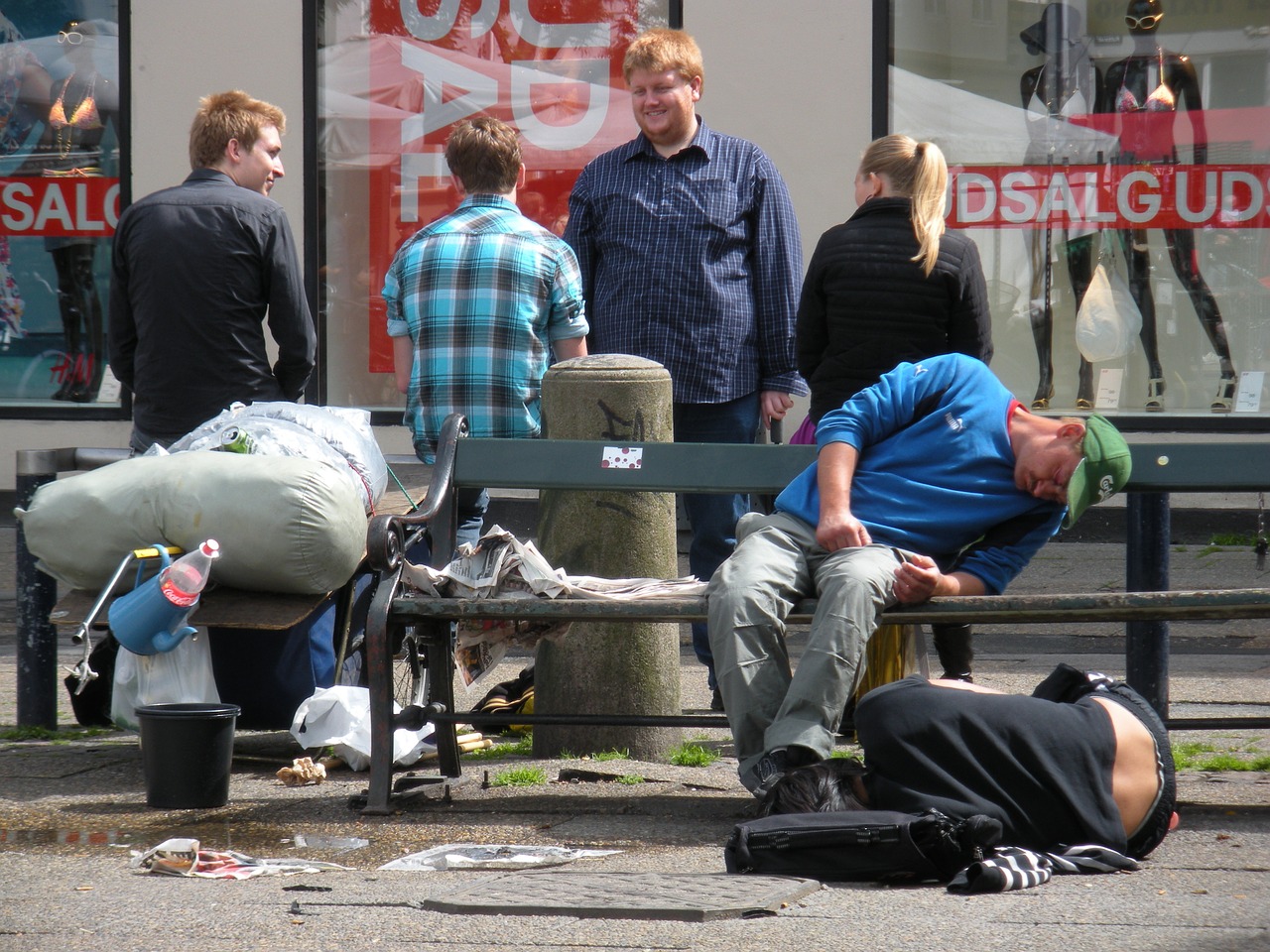
Inebriated people.

Alcoholism.
Photo courtesy of Pixabay.

Five ways to sabotage your self-improvement or recovery program.

1. Giving up undermines recovery.

Nothing will so surely end any self-change effort as to lose hope. Highly successful people will often tell you that they kept going when others stopped trying.

It pays to do your homework before tackling a project. Is this what you really want, can it succeed, and are you committed? But once that decision is made, stick to your efforts and believe that this can happen for you if you just keep moving forward.

It is also helpful if you make sure you are on the right path.

2. Telling yourself you can’t prevents recovery.

Negative self-talk will end any chance of success. The mind believes what we tell ourselves repeatedly. You can even make yourself sick by believing that you will get sick and acting accordingly. (See the Nocebo effect.)

3. Making excuses sabotages recovery.

Saying you are too old or too sick, any form of excuse-making, will prevent you from moving forward on your efforts to change. Tell yourself you can, but be realistic about your progress. Going too fast can set you up for failure and so can saying you can’t.

In this modern age, more than ever, people return to school, change careers, and start new lives at ages that would have stopped them in previous generations. I can tell you from experience that some of the best students, the most productive new employees, can be older people who have started a new life direction.

Eventually, the children grow up. Partners may leave, but you will be you. You will live your allotted time whether you try or not.

When someone says they are too old to do something they have always wanted to do, I ask them how old are you now? How old will you be in ten years if you don’t try? Will you be any older if you do try?

I am not a believer that being unhappy and not trying in this life will make you worthier in the next. We all should be seeking to have the happiest life possible and to learn all the life lessons we need to learn. That way you can reach the end of this earthly life with no regrets or fewer ones anyway.

A happy life, for the record, does not mean one that is selfish and self-indulgent. Doing for others can also make you happy. Doing the things you believe to be right adds to that happiness. Doing the right things for all the wrong reasons, helping others for their recognition, does not lead to happiness.

Do not put off doing something good today.

4. Expecting results overnight devalues recovery.

Change takes time. Really changing requires a commitment to keep trying over the long haul. Don’t let your brain overload the rest of you.

People set unrealistic goals for themselves in early recovery. They expect to lose lots of weight that first month. They expect to give up drugs and suddenly get an education, a good job, and the good esteem of all their family or friends. Repairing damaged relationships takes a lot of time.

Take this process of change, one day, one minute at a time. Make little baby steps. And see how far you will have gotten.

5. Going too fast gets you ahead of your recovery.

Anything that you can do in a day can disappear overnight. Slow consistent progress will take you a lot farther than one sprint followed by weeks of inactivity.

Any process of change requires maintenance. You need to change your habits. Habits made you overweight, an alcoholic, or another problem sufferer. It takes time to create a habit. It takes, even more, time to change that habit into a new functional way of living.

There you have the short list: 5 ways to sabotage your recovery. To improve the chances of success don’t do these things.

Staying connected with David Joel Miller

Seven David Joel Miller Books are available now!

My newest book is now available. It was my opportunity to try on a new genre. I’ve been working on this book for several years, but now seem like the right time to publish it.

Story Bureau.

Story Bureau is a thrilling Dystopian Post-Apocalyptic adventure in the Surviving the Apocalypse series.

Baldwin struggles to survive life in a post-apocalyptic world where the government controls everything.

As society collapses and his family gets plunged into poverty, Baldwin takes a job in the capital city, working for a government agency called the Story Bureau. He discovers the Story Bureau is not a benign news outlet but a sinister government plot to manipulate society.

Bumps on the Road of Life. Whether you struggle with anxiety, depression, low motivation, or addiction, you can recover. Bumps on the Road of Life is the story of how people get off track and how to get your life out of the ditch.

Dark Family Secrets: Doris wants to get her life back, but small-town prejudice could shatter her dreams.

Casino Robbery Arthur Mitchell escapes the trauma of watching his girlfriend die. But the killers know he’s a witness and want him dead.

Planned Accidents  The second Arthur Mitchell and Plutus mystery.

Letters from the Dead: The third in the Arthur Mitchell mystery series.

What would you do if you found a letter to a detective describing a crime and you knew the writer and detective were dead, and you could be next?

Sasquatch. Three things about us, you should know. One, we have seen the past. Two, we’re trapped there. Three, I don’t know if we’ll ever get back to our own time.

For these and my upcoming books; please visit my Author Page – David Joel Miller

Want the latest blog posts as they publish? Subscribe to this blog.

For videos, see: Counselorssoapbox YouTube Video Channel

How did you know that? When and where we learn things matters.

By David Joel Miller, MS, Licensed Therapist & Licensed Counselor.

Memory.
Photo courtesy of Pixabay.com

You know you know something but can’t remember why.

Lately, I am having this problem more and more. How about you? And no it is not just about age. Seems that preschoolers have this same problem. It has to do with differing types of memories that were stored in different ways.

I go to write about something, maybe I remember a fact or a quote but I can’t for the life of me remember which book or article, out of the hundreds I have read, I got that from. I don’t want to just plagiarize someone else’s idea but at what point does it move from being something someone else told me and become something I just know because I know it?

Some things we know because of verbal memory. I know that George Washington was the first president of the United States; I also know that there was a thing called the Hundred Years War. I do not for the life of me remember when and where I first learned about either of those things.

This type of memory is semantic as in words or stories type memories. We know about Washington and the hundred acres woods or was that the hundred years war? But who told us.

There are other things that I remember clearly when and where I was the first time I heard about something. In that case, I can clearly tell you who it was that told me all about that “fact.” These specific learning experiences are called “episodic memories.”

The distinction between these two kinds of knowledge gets glossed over a lot. The result can be that we believe “facts” because someone told us and now, not remembering who it was that said that first; we just accept this as true. What if the person who told us that was wrong?

The source of our “facts” is important also.

This idea of separating out the things we just know from general knowledge and those things we can tell the exact time and place where we learned it has been studied in children. (See Bemis, et al., 2011, note that for once I found one of the studies that I was thinking of.)

Their study on very young children, looked at the times the kids could tell you specifically when and where they were when they first learned something and the times they felt they “just knew” something. They came up with some interesting ideas, albeit the conclusions are a bit tentative. But research types never seem to know anything for sure they just know they need to study this more.

Even in preschool kids, females seem more likely to remember the story of when they learned something rather than to just know that fact. Boys at that age just take it for granted they know what they know, more often than girls. Don’t lay this on genetics though. Researchers have concluded that this comes from the way the parents were spending more time telling their daughters stories about why things were the way they were as opposed to just saying to boys things were that way because they were.

When a little boy tells you he is smart or handsome he believes this is just because it is so. A little girl will be able to provide evidence. She is smart because her grandma said so. She is also cute because dad says so and very cantankerous, whatever that is because mom said so. See the difference between these two approaches?

Kids of both genders reported a variety of times and places they had learned things. They could also at a very early age report whether they saw something, heard it, read it in a book or learned it during an activity like a game.

This variation in how they knew when and where they learned things goes to the basic learning styles. Some people just learn things better when they see them and others when they read or hear and so on. Unfortunately, despite which way you may be best at learning we try to cram all kids into the same learning style. As they move along in school fewer, not more, ways of learning are likely to be emphasized.

Older kids are more likely than younger ones to remember when and where they learned something but the little ones could still describe the time and place that they first learned a particular fact.

This is back to the impact of that first impression. If the first time you learned about pigs you saw grandma feeding one, this is a whole lot different than if you saw “P is for Pig” in a storybook.

Boys do appear to be better able to learn from seeing things even from a very young age. Girls pick things up better from actually doing things. How much of those differences are the boys and girls and how much comes from the way mommies and daddies treat kids is open to debate?

The takeaway here is that we may remember lots of things we think are so, but not as many things that we can say when and where we learned them. Sometimes we might want to question those things we know but can’t say why we know them.

Remember that you heard this on counselorssoapbox.com OK?

  • Forgetting things may not be a memory problem (counselorssoapbox.com)
  • Learning to feel (counselorssoapbox.com)
  • Your autobiography as therapy (counselorssoapbox.com)
  • Mental Health, Self-improvement & Happy life – Counselorssoapbox.com January 2013 Best of Blog (counselorssoapbox.com)
  • Are you a Mind Reader? (counselorssoapbox.com)

  • Staying connected with David Joel Miller

    Seven David Joel Miller Books are available now!

    My newest book is now available. It was my opportunity to try on a new genre. I’ve been working on this book for several years, but now seem like the right time to publish it.

    Story Bureau.

    Story Bureau is a thrilling Dystopian Post-Apocalyptic adventure in the Surviving the Apocalypse series.

    Baldwin struggles to survive life in a post-apocalyptic world where the government controls everything.

    As society collapses and his family gets plunged into poverty, Baldwin takes a job in the capital city, working for a government agency called the Story Bureau. He discovers the Story Bureau is not a benign news outlet but a sinister government plot to manipulate society.

    Bumps on the Road of Life. Whether you struggle with anxiety, depression, low motivation, or addiction, you can recover. Bumps on the Road of Life is the story of how people get off track and how to get your life out of the ditch.

    Dark Family Secrets: Doris wants to get her life back, but small-town prejudice could shatter her dreams.

    Casino Robbery Arthur Mitchell escapes the trauma of watching his girlfriend die. But the killers know he’s a witness and want him dead.

    Planned Accidents  The second Arthur Mitchell and Plutus mystery.

    Letters from the Dead: The third in the Arthur Mitchell mystery series.

    What would you do if you found a letter to a detective describing a crime and you knew the writer and detective were dead, and you could be next?

    Sasquatch. Three things about us, you should know. One, we have seen the past. Two, we’re trapped there. Three, I don’t know if we’ll ever get back to our own time.

    For these and my upcoming books; please visit my Author Page – David Joel Miller

    Want the latest blog posts as they publish? Subscribe to this blog.

    For videos, see: Counselorssoapbox YouTube Video Channel

Drugs increase false memories

By David Joel Miller, MS, Licensed Therapist & Licensed Counselor.

Memory pieces.
Photo courtesy of Pixabay.com

They may not be lying;

They remember things that never happened.

Drugs suppress true memories but also increase false memories. We have heard a lot about false memories over the last few years. Most of it around questioning techniques that suggested to children they had been abused. As a result, they began to believe these things had happened and then thought they remembered things that turned out to be false memories.

Recent research suggests that drugs and alcohol, as well as certain emotional states, may increase the risk that what people in recovery are remembering did not actually happen despite their memories.

People with certain mental or emotional problems are at increased risk to have false memories even if they never abused substances. Something about the chemistry of the brain regulates not only true memories but also creates false memories. We can get ourselves into trouble when we start believing memories that never happened.

There is a common belief in recovery circles that substance abusers have told stories, lies, so often they begin to believe their own dishonesties. I have seen enough examples of this phenomenon to believe it does happen. But the creation of false memories goes beyond simple lies and the person who told that lie beginning to believe the falsehood.

One group of researchers conducted a study using two commonly used and abused substances and came up with some surprising results (Ballard et al 2012) surprising to me anyway.

The test they used, called the DRM, gives people a list of words, such as bed, rest, awake, tired, dream. What is missing from the list is a word that would be commonly associated with the word list but which was never shown to the research participants. In this case, the word they are looking for was “sleep.”

If you remember the list correctly or are very observant you know that sleep was not on the list. The trick here is to see how many people will swear that the missing word, in this case, sleep, was shown to them. Using a procedure like this the researcher can see if a specific drug or emotional condition will increase the risk of a false memory. In this experiment, they wanted to see how many people would say that the word sleep was shown to them when it had not been a part of the experience.

This simple experiment may not make much difference. Does it matter if I think sleep was on the list of words I read? But if a drug or emotion increases my errors on this test it suggests that I may remember other things that did not happen. Did I remember someone being at the party that was never there? Do you remember being touched inappropriately when what really happened was a handshake or a pat on the back? Those things matter.

Some drugs reduce your ability to remember things that did happen. Alcohol is at the head of the list. Benzodiazepines also impair memory. Some drugs have been called date rape drugs and banned or tightly controlled for the same reason. The big question has been what effect do these drugs have on the creation of false memories? Ballard and group looked at that question.

It would be easy to conclude that depressant drugs like Alcohol and benzodiazepines would reduce memory and therefore give room for more false memories to fill in the gap. There is a related concept called “Confabulation” in which alcoholics brains fill in the gaps in memory that are the result of not having stored memories in the first place. Confabulation plus blackouts leave the memory of Alcoholics suspect.

We would expect that stimulants like caffeine and amphetamines would increase true memories and reduce the chance of false memories. That is not what happens. In Ballard’s study Amphetamines, of the type prescribed for ADHD, increased true memories but also increased false memories. An earlier study by Capek and Guenther (2009) cited by Ballard found the same effects for Caffeine.

It would appear that depressants reduce true memories and allow for false memories and stimulants increase memory formation of both true and false memories.

So what about “All Arounder’s.” (See Inaba & Cohen book Uppers, Downers, and All Arounder’s, 2004.)  Ballard and friends also looked at the effects of Marijuana on memory. While I try to stay out of the whole medical marijuana debate some of you may remember my previous post on the effects of Marijuana on memory. That post was about the effects on storage and retrieval of true memories, what about marijuana’s effect on false memories?

The drug used in Ballard’s study was THC, the most studied active ingredient in Marijuana, given in pill form. While this is not exactly the same as smoking Marijuana it is likely to be very similar and much more specific that studies using drugs of unknown potency. There are other chemicals in smoked Marijuana and the research on those other compounds is very lacking.

They found that Amphetamines had a larger effect in creating false memories than THC and while THC may affect both memory storage and memory retrieval, this study at least did not find a significant increase in false memories for THC users.

There are lots of problems with taking studies done in the lab and translating them to the experiences of people who take drugs in their daily life.

It is worth noting that there was significant individual variation in the effects of both drugs on true and false memory. So the conclusions are for all the people in the study as a group and individual results did vary. This raises questions about what individual differences account for these variations.

In Ballard’s study, as in so many other studies, people with diagnosed mental illnesses or those with a current substance abuse problem are not included in the study. Those are exactly the people for whom the effects of drugs and mood states on false memory may be the most critical.

There are some studies of people with various mental health diagnoses examining the effects of having an emotional issue and the creation of false memories. In a future post, I want to talk about the effects of Depression, Anxiety, and OCD on true and false memories.

Staying connected with David Joel Miller

Seven David Joel Miller Books are available now!

My newest book is now available. It was my opportunity to try on a new genre. I’ve been working on this book for several years, but now seem like the right time to publish it.

Story Bureau.

Story Bureau is a thrilling Dystopian Post-Apocalyptic adventure in the Surviving the Apocalypse series.

Baldwin struggles to survive life in a post-apocalyptic world where the government controls everything.

As society collapses and his family gets plunged into poverty, Baldwin takes a job in the capital city, working for a government agency called the Story Bureau. He discovers the Story Bureau is not a benign news outlet but a sinister government plot to manipulate society.

Bumps on the Road of Life. Whether you struggle with anxiety, depression, low motivation, or addiction, you can recover. Bumps on the Road of Life is the story of how people get off track and how to get your life out of the ditch.

Dark Family Secrets: Doris wants to get her life back, but small-town prejudice could shatter her dreams.

Casino Robbery Arthur Mitchell escapes the trauma of watching his girlfriend die. But the killers know he’s a witness and want him dead.

Planned Accidents  The second Arthur Mitchell and Plutus mystery.

Letters from the Dead: The third in the Arthur Mitchell mystery series.

What would you do if you found a letter to a detective describing a crime and you knew the writer and detective were dead, and you could be next?

Sasquatch. Three things about us, you should know. One, we have seen the past. Two, we’re trapped there. Three, I don’t know if we’ll ever get back to our own time.

For these and my upcoming books; please visit my Author Page – David Joel Miller

Want the latest blog posts as they publish? Subscribe to this blog.

For videos, see: Counselorssoapbox YouTube Video Channel