
Why are we so afraid of feelings?

By David Joel Miller, MS, Licensed Therapist & Licensed Counselor.

Man with feelings

Managing feelings.
Photo courtesy of Pixabay.com

Fear of feelings?

You would think that feelings were on the banned substance list. So many people are avoiding them. Failure to feel what we feel is at the root of a lot of mental health problems. Still, people go to great lengths to not feel those feelings.

We hear lots of advice about ways to avoid feelings, think logically, pull yourself together don’t let yourself feel that. The forces of logic have won the day and henceforth feelings are banned.

But we know in our gut that sometimes feelings are telling us the truth when our head wants to mislead us.

Some people grew up in homes where their feelings were invalidated. You said you were sad and you were told you are not sad, you don’t even know what sad is. If you feel that way you are being weak or selfish or some other terrible thing.

Numbing out the feelings.

So you avoided feelings, any and all feelings, and eventually, you became numb, chronically unhappy, or unable to feel any real joy. In your flight from feelings, you may have left a lot of love, friendship, and compassion behind. You may have resorted to drugs or alcohol or other addictions to avoid feeling what you were feeling.

Feelings have been blackballed, put on the most wanted list, and hunted down and exterminated whenever possible. We have become so very afraid that someone will get angry, depressed, or anxious and then something bad will happen. So we tell them to pull themselves together, forget that feeling and think logically.

Logical thinking, the scientific method has resulted in a lot of technological advances. We have more stuff than ever before in the history of the world. Stuff exists now that science fiction writers fantasized about just a few short years ago.

What we haven’t accomplished is any real reduction in pain or unhappiness. We have more pain-killing drugs but no less pain. We have more antidepressants but we have more depression than ever. We teach people to be more rational and there are crimes of passion on every corner.

In this process of avoiding being carried away with excesses of feelings, we have lost the ability to use feelings for the intended purpose.

Your feelings brain.

When we talk about using our brains, what is left out of the equation is just how much of our nervous system lies outside our heads. All those nerve cells, the ones surrounding your stomach, and the ones in your neck, they are trying to tell you things also.

Those expressions, someone is a pain in the neck, or that makes me sick to my stomach, those expressions are full of truth. Those bodily sensations are conveying information to the rest of our beings that we just may need to know.

Those other “thoughts” the ones in our feeling systems ought to get more attention. That skill we call intuition may just be those emotional memories of things in the past that are useful for actions in the present.

By avoiding our feelings for so long we have lost the ability to regulate those emotions. When we do feel something, like sadness, we can easily become overwhelmed.

When feelings are strangers we come to fear their presence. So many of us will do anything, drink, drug, numb out to avoid feeling what it is we are feeling. We become afraid that feelings are enemies out to destroy us rather than old friends here to tell us something.

One huge step in recovery is to learn that we can feel feelings, happiness or sadness, excitement, or anxiety without becoming overwhelmed and carried away. Having a feeling is not the same thing as being taken over by that feeling. Joy does not have to lead to an excessive celebration and sadness or anxiety need not lead to another relapse or flight.

One group of therapists talks about the need to learn distress tolerance. I can feel bad some of the time and that is OK. I will not cease to exist because I feel sad or anxious. It is possible to feel unpleasant feelings, ask what that feeling has to tell us, and then, like so many other thoughts, let that feeling move on.

Not every happy feeling calls for action, a celebration of excess that might lead to a relapse into drug use, overspending or inappropriate sexual activities.

It is possible to feel feelings and let them serve and inform us rather than being controlled by what we feel.

How do you feel about your feelings?

Staying connected with David Joel Miller

Seven David Joel Miller Books are available now!

My newest book is now available. It was my opportunity to try on a new genre. I’ve been working on this book for several years, but now seem like the right time to publish it.

Story Bureau.

Story Bureau is a thrilling Dystopian Post-Apocalyptic adventure in the Surviving the Apocalypse series.

Baldwin struggles to survive life in a post-apocalyptic world where the government controls everything.

As society collapses and his family gets plunged into poverty, Baldwin takes a job in the capital city, working for a government agency called the Story Bureau. He discovers the Story Bureau is not a benign news outlet but a sinister government plot to manipulate society.

Bumps on the Road of Life. Whether you struggle with anxiety, depression, low motivation, or addiction, you can recover. Bumps on the Road of Life is the story of how people get off track and how to get your life out of the ditch.

Dark Family Secrets: Doris wants to get her life back, but small-town prejudice could shatter her dreams.

Casino Robbery Arthur Mitchell escapes the trauma of watching his girlfriend die. But the killers know he’s a witness and want him dead.

Planned Accidents  The second Arthur Mitchell and Plutus mystery.

Letters from the Dead: The third in the Arthur Mitchell mystery series.

What would you do if you found a letter to a detective describing a crime and you knew the writer and detective were dead, and you could be next?

Sasquatch. Three things about us, you should know. One, we have seen the past. Two, we’re trapped there. Three, I don’t know if we’ll ever get back to our own time.

For these and my upcoming books; please visit my Author Page – David Joel Miller

Want the latest blog posts as they publish? Subscribe to this blog.

For videos, see: Counselorssoapbox YouTube Video Channel

Systematic desensitization – conquering fear.

By David Joel Miller, MS, Licensed Therapist & Licensed Counselor.

Anxiety provoking.

Fear and Anxiety.
Photo courtesy of Pixabay.com

Anxiety can be a stubborn foe.

It is tempting to avoid the things you fear and to find ways to numb those unpleasant feelings. Some people use alcohol or sleeping pills other people use avoidance. But eventually, you have to face that fear or be taken prisoner by your fear.

You can’t get over something you don’t face. Sometimes the only way out of a burning building is through the door that is on fire. To begin with, we won’t ask you to walk through the flames, just to look at the door and see how your fear that it might be on fire on the other side is keeping you a prisoner in that room.

Systematic desensitization reduces the impact of fears.

One way of domesticating the anxiety monster is a technique called systematic desensitization. This is an especially effective technique for taming fears or anxiety when those anxieties are a fear of one very specific thing.

Some of these item fears are so specific we name them Specific Phobias. Meaning you are deathly afraid of one particular thing even if you are never around that thing.

Some of these specific phobias are so terrifying to the people with that particular specific phobia that I can’t even write the word out or they would stop reading. So let’s start with an exaggerated and somewhat humors example of how this specific desensitization could work.

Say there is this person that is deathly afraid of crackers. (The little packaged edible kind.)

If you know who I am talking about here please do not let on. That person’s family laughed at him.  But try as he would he just could not bear to eat at a table where there were crackers. Eventually, this got so bad that I – I mean he – could not eat with his family when they were having soup for fear there would be crackers present.

This fear became progressively worse. Soon eating out was impossible because there might be crackers all around. Eventually, even commercials for crackers or the mention of the word might provoke a panic attack. Something needed to be done.

The cure for cracker or saltine phobia? Systematic desensitization.

So off to the therapist this sufferer from cracker phobia went. Here are the steps in recovery from cracker phobia.

First, you need to be willing to talk about this fear and develop a scale of fear. Something like if we just talk about that fear I – I mean he – had by referring to this as the fear of “You know what.” That would be a 1 on the fear scale.

Actually using the name “Cracker” that scored a two. To see a picture of some crackers in a magazine that would rate a fear factor of 4. Entering at a restaurant where there might or might not be crackers present, that was a 5. Seeing actual crackers, that would be a 6, and witnessing someone eat one that would rank an 8. To have to physically touch a cracker that would rank a 9. To personally eat a cracker that would rate a 10.

Now having developed our scale we would begin to work our way up the scale all the while with the therapist reassuring the client.

Along the way, the therapist might teach the client some relaxation techniques, deep breathing, and so on. The theory here is that you can’t really feel two contradictory feelings at the same time. The more you concentrate on your relaxation the more likely you are for the fear, or anxiety if you prefer, to subside.

So over time, the exposure to the dreaded crackers becomes more and more frequent and closer, all the while practicing the relaxation skills.

At the end of treatment, the goal would be for the client to actually open a package of crackers and to eat one while the counselor watched.

Now neither I nor anyone I know has really suffered from a cracker phobia. This cracker fear has been a long time joke in the family. But I hope this has demonstrated how a counselor could help a client overcome a specific phobia that may sound funny to the client’s family and friends but has been causing the client some very real distress.

What are some of the specific phobias that this method is known to work on? Well the number one fear in America, more severe than the fear of death, is the fear of public speaking. Also up there on the list are phobias to snakes and spiders.

Fear of snakes is no big thing for most city dwellers, but if you needed to live and work outdoors this could be a trial. If you worked at the zoo in the reptile house, a fear of snakes could cost you your job.

So whatever your fear or specific phobia there are treatments to help you turn that anxiety or fear control back down to a manageable setting.

Similar to systematic desensitization, at least in my book, is the use of exposure and response prevention. People with Obsessive-Compulsive Disorder (OCD) develop rituals or routines that they feel the need to perform to reduce the anxiety. If we can expose the person to the thing that they fear and prevent the ritual, then over time the fear diminishes. Combine some relaxation techniques with the exposure and response prevention and you move close to the systematic desensitization approach.

Best wishes on taming those pesky excessive anxiety and fear monsters.

Staying connected with David Joel Miller

Seven David Joel Miller Books are available now!

My newest book is now available. It was my opportunity to try on a new genre. I’ve been working on this book for several years, but now seem like the right time to publish it.

Story Bureau.

Story Bureau is a thrilling Dystopian Post-Apocalyptic adventure in the Surviving the Apocalypse series.

Baldwin struggles to survive life in a post-apocalyptic world where the government controls everything.

As society collapses and his family gets plunged into poverty, Baldwin takes a job in the capital city, working for a government agency called the Story Bureau. He discovers the Story Bureau is not a benign news outlet but a sinister government plot to manipulate society.

Bumps on the Road of Life. Whether you struggle with anxiety, depression, low motivation, or addiction, you can recover. Bumps on the Road of Life is the story of how people get off track and how to get your life out of the ditch.

Dark Family Secrets: Doris wants to get her life back, but small-town prejudice could shatter her dreams.

Casino Robbery Arthur Mitchell escapes the trauma of watching his girlfriend die. But the killers know he’s a witness and want him dead.

Planned Accidents  The second Arthur Mitchell and Plutus mystery.

Letters from the Dead: The third in the Arthur Mitchell mystery series.

What would you do if you found a letter to a detective describing a crime and you knew the writer and detective were dead, and you could be next?

Sasquatch. Three things about us, you should know. One, we have seen the past. Two, we’re trapped there. Three, I don’t know if we’ll ever get back to our own time.

For these and my upcoming books; please visit my Author Page – David Joel Miller

Want the latest blog posts as they publish? Subscribe to this blog.

For videos, see: Counselorssoapbox YouTube Video Channel
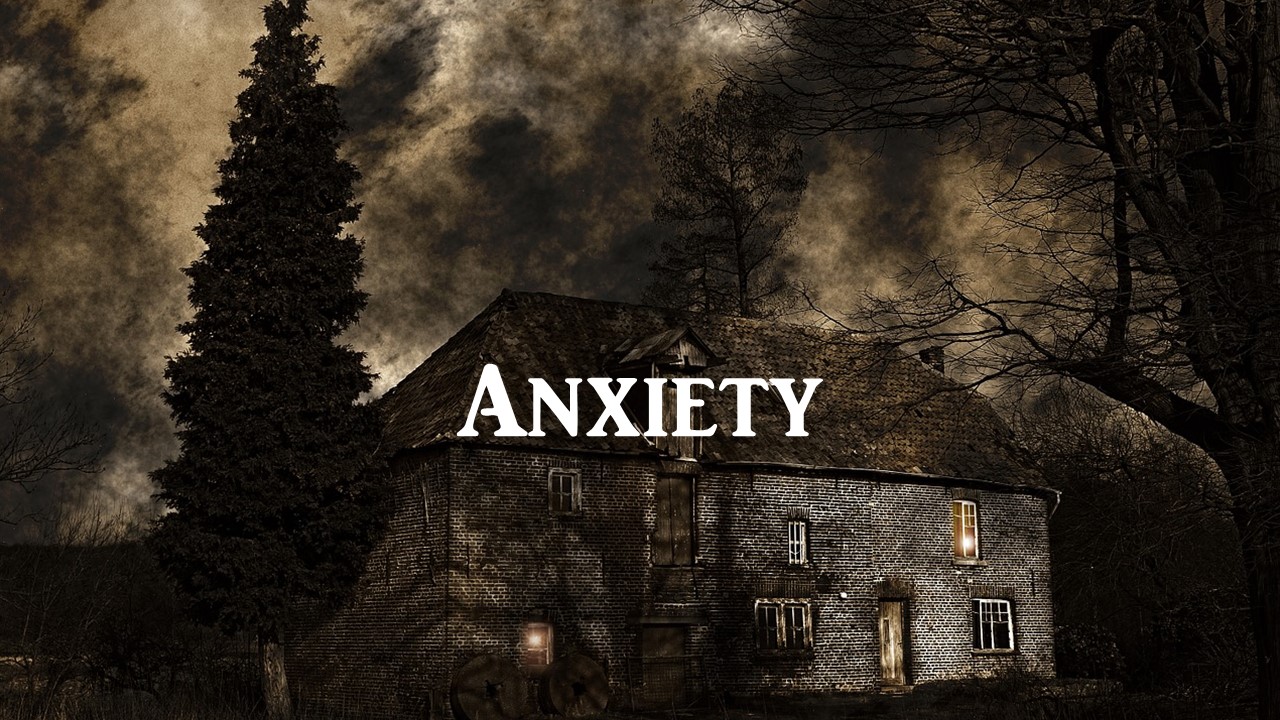
Anxiety is a good thing

By David Joel Miller, MS, Licensed Therapist & Licensed Counselor.

Anxiety provoking.

Anxiety.
Photo courtesy of Pixabay.com

Some anxiety is a good thing.

A little anxiety some of the time may be helpful. It is only when the volume on your anxiety control gets turned up too loud that it becomes a problem.

Dictionary definitions of anxiety include such things as nervousness about something that is going to happen and something that causes you to worry.

In these troubled economic times, worry about your job and job security makes sense, especially if you work in an industry or company that has been having economic difficulties. Even those government jobs that used to be the height of security don’t seem immune from danger these days.

But if you spend needless hours in worry that you might get laid off or fired when there is no basis in fact for that worry, then your anxiety control might have its volume turned up too high.

Anxiety can protect you.

Some anxiety is actually protective – if and only if, you are in a dangerous situation that warrants that anxiety. This is another case of a little is good and too much is harmful. The challenge is in knowing which is which. If you see someone with a gun shooting, it is wise to be nervous, even scared, and to duck behind something for cover.

Anxiety can help you avoid risks and in certain situations, like when someone is shooting at you, that anxiety might save your life.

Anxiety can take control of you.

If when sitting at home on your couch you hear the noise from a car door slamming a block away and you jump behind the couch to take cover, this level of anxiety is a problem.

People become anxious in dangerous situations for a reason. If the stress they are under triggers an excessive response that may be an “Acute Stress Disorder” but if those over-reactions to past stress continue long enough, they can morph into something more serious. Post-Traumatic Stress Disorder is just such a problem.

This was first recognized in servicemen returning from the war and the hallmarks are intrusive thoughts of what happened in the past that are still interfering with your life today and recurrent nightmares that involve memories of things that happened to you in the past or efforts for you to avoid those situations. We now realize that these problems also are prevalent in children and adults who have been abused or molested.

Disrupted sleep from nightmares about past anxiety-producing situations predicts that you will have mental health symptoms in the future. IRT can help reduce nightmares. 

Treating PTSD is a complex subject. There are many theories but the research is less than convincing. What I feel fairly sure about is that taking sleeping pills or drinking alcohol are not a good solution. If you have intrusive thoughts or nightmares you need some counseling to get this under control.

Running and hiding from our fears gives them extra chances to grow.

But what if you do not have a case of PTSD but your anxiety is off the hook? Do your friends tell you that you are an overly anxious person? Do you sometimes think that you are just too scared and worried?

If your anxiety volume control is just turned up too high, if the affairs of everyday living are making you want to crawl out of your skin, then you need treatment.

What kind of treatment? Well, there are several, but one, systematic desensitization is especially helpful if you have fears that do not make sense to others but you find are interfering with your life.

Too much anxiety? Try some systematic desensitization (done with a therapist or counselor) and see if you can’t get that anxiety volume turned back down.

In tomorrow’s post, we will talk about systematic desensitization.

Staying connected with David Joel Miller

Seven David Joel Miller Books are available now!

My newest book is now available. It was my opportunity to try on a new genre. I’ve been working on this book for several years, but now seem like the right time to publish it.

Story Bureau.

Story Bureau is a thrilling Dystopian Post-Apocalyptic adventure in the Surviving the Apocalypse series.

Baldwin struggles to survive life in a post-apocalyptic world where the government controls everything.

As society collapses and his family gets plunged into poverty, Baldwin takes a job in the capital city, working for a government agency called the Story Bureau. He discovers the Story Bureau is not a benign news outlet but a sinister government plot to manipulate society.

Bumps on the Road of Life. Whether you struggle with anxiety, depression, low motivation, or addiction, you can recover. Bumps on the Road of Life is the story of how people get off track and how to get your life out of the ditch.

Dark Family Secrets: Doris wants to get her life back, but small-town prejudice could shatter her dreams.

Casino Robbery Arthur Mitchell escapes the trauma of watching his girlfriend die. But the killers know he’s a witness and want him dead.

Planned Accidents  The second Arthur Mitchell and Plutus mystery.

Letters from the Dead: The third in the Arthur Mitchell mystery series.

What would you do if you found a letter to a detective describing a crime and you knew the writer and detective were dead, and you could be next?

Sasquatch. Three things about us, you should know. One, we have seen the past. Two, we’re trapped there. Three, I don’t know if we’ll ever get back to our own time.

For these and my upcoming books; please visit my Author Page – David Joel Miller

Want the latest blog posts as they publish? Subscribe to this blog.

For videos, see: Counselorssoapbox YouTube Video Channel

How you can beat test anxiety

By David Joel Miller, MS, Licensed Therapist & Licensed Counselor.

Anxious woman

How anxiety holds you back.
Photo courtesy of pixabay.

Do you suffer from test anxiety?

Test anxiety is not just a problem for children in school. Want to drive, you need to take a test. Many jobs require tests. Even after you graduate from school many professions require licensing exams or tests to renew your license. Job interviews are another form of test, an oral one.

Dating is also a sort of test and some of you have only been able to do this with some alcohol to help you overcome that type of test anxiety. Sales also involve tests, does the client want what you are selling? Do you take it personally if you “fail to make the sale?” If you can’t stand being turned down you will never make it in sales.

Test anxiety is far more common than most of us recognize.

So today and in upcoming posts, we will look at test anxiety, how it affects us, and how to overcome it.

It is not the people who know the least that get test anxiety, nor is it those who are at the most risk of failure. Often the people who have the highest test anxiety are actually the best students but they consistently make three so-called thinking errors that interfere with their ability to put down on paper or another medium the full extent of what they know.

Don’t make the three key mistakes of people with high test anxiety. Test anxiety, technically called evaluation anxiety, is maintained by three concurrent thinking errors.

Don’t underrate your abilities.

People with high test anxiety consistently underrate their abilities compared to those who do not have test anxiety. You need to believe in yourself.

Learn to give yourself credit for what you know rather than focus on what you might get wrong. If you suffer from “low self-esteem,” work on being able to see the best in yourself.

Don’t overrate the consequences of doing poorly on the test.

One low score will not flunk you out of college. Cumulatively the consequences of a lot of test anxiety will lower your grades. Even then, slightly lower grades will not keep you from graduating if you do all the other work.

Remember in a hundred years no one, not even you, will know or care about what grades you got.

Honest, grades are not all that important. What does matter, is have you really learned the material? People who cram for tests will have forgotten most of what they learned in a week or two. If you really care about the subject you are studying them you will learn this material at a deep level.

Think grades or GPA matter all that much. Unless you are trying to get into a very exclusive school or are taking a once in a lifetime type test most times you score today is not all that big a deal.

Quick, what was your doctor’s GPA? What kind of grades did your lawyer get in school? Every day we trust our lives and liberties to people and have no idea what grade they received in school.

What we do care about is do they know their stuff. Can they get the job done?

Do not engage in negative self-talk that uses up working memory and creates the poor performance you feared.

Repeatedly telling yourself you are going to fail a test, nearly guarantees that you will. Your brain will try to help you out and make your predictions come true. (See the post on the Nocebo Effect in which you can quite literally think yourself sick.)

Good coaches do not solely focus on the athlete’s mistakes. They also give their players encouragement and recognition for things well done.

Be your own coach and encourage yourself. Tell yourself that you are going to do your best and you will.

Do not put off studying until the last minute.

Learn to study well ahead of time. Putting off your study session and then studying under pressure makes it harder for your brain to store that new information. Study early and often.

Even if time is limited, short periods of study each day are better than last-minute marathon study sessions.

When you really don’t know the answers your test anxiety will increase. If you are well prepared and well-rested your chances of doing well improve.

Watch for a future post on “How you can get A’s.” Tips I have learned from my many years in school and my time as a faculty member.

If all the basic tips for reducing test anxiety do not help, consider getting professional help. A good counselor or therapist can work with you on reducing this and many other anxieties.

Chances are that if you suffer from test anxiety there are lots of other anxieties that are keeping you from having the happy life you deserve.

Staying connected with David Joel Miller

Seven David Joel Miller Books are available now!

My newest book is now available. It was my opportunity to try on a new genre. I’ve been working on this book for several years, but now seem like the right time to publish it.

Story Bureau.

Story Bureau is a thrilling Dystopian Post-Apocalyptic adventure in the Surviving the Apocalypse series.

Baldwin struggles to survive life in a post-apocalyptic world where the government controls everything.

As society collapses and his family gets plunged into poverty, Baldwin takes a job in the capital city, working for a government agency called the Story Bureau. He discovers the Story Bureau is not a benign news outlet but a sinister government plot to manipulate society.

Bumps on the Road of Life. Whether you struggle with anxiety, depression, low motivation, or addiction, you can recover. Bumps on the Road of Life is the story of how people get off track and how to get your life out of the ditch.

Dark Family Secrets: Doris wants to get her life back, but small-town prejudice could shatter her dreams.

Casino Robbery Arthur Mitchell escapes the trauma of watching his girlfriend die. But the killers know he’s a witness and want him dead.

Planned Accidents  The second Arthur Mitchell and Plutus mystery.

Letters from the Dead: The third in the Arthur Mitchell mystery series.

What would you do if you found a letter to a detective describing a crime and you knew the writer and detective were dead, and you could be next?

Sasquatch. Three things about us, you should know. One, we have seen the past. Two, we’re trapped there. Three, I don’t know if we’ll ever get back to our own time.

For these and my upcoming books; please visit my Author Page – David Joel Miller

Want the latest blog posts as they publish? Subscribe to this blog.

For videos, see: Counselorssoapbox YouTube Video Channel

Mental Health Monsters – Depression and Anxiety

By David Joel Miller, MS, Licensed Therapist & Licensed Counselor.

Emotional monsters.
Photo courtesy of Pixabay.com

Has your life been a struggle with monsters?

As children, many of us had monsters in our closet. Some of you needed night lights or parents to turn on the light and check the closet for us. That light chased away the monsters.

But as we grew older some of us discovered we were locked in a struggle with real-life monsters, anxiety, depression, or another emotional problem.

Rather than fearing the monster under the bed or the one in our closet, we began to try to lock those monsters away in the closet. Slam the door on the depression or anxiety and pretend that if we don’t see that monster then he does not exist. Our family, friends, and society were more than willing to play along in this game.

So now older, we discover that the mental health monster has been living in the closets of our mind and all the while that depression monster, the anxiety monster, and maybe you addiction monster, they have all been growing, locked away in the closet.

So how, after all this time of pretending that you are not troubled by an emotional problem monster, do you open that closet and do battle with the creature that you wanted to deny?

Society has been a willing participant in this process of hiding the monsters of mental illness and emotional problems from us. If we pretend that depression does not walk among us, if we can laugh at the ravages of the anxiety monster then we can all feel safe from this gang of emotional problem monsters.

If you are going to fight the great fight against the gang of mental health monsters you will need a host of emotional tools, the weapons you will need to defeat the monsters of the mind.

Have you put together a toolkit that will help you in your struggle with those emotional monsters?

What tools work for you?

Related articles

Staying connected with David Joel Miller

Seven David Joel Miller Books are available now!

My newest book is now available. It was my opportunity to try on a new genre. I’ve been working on this book for several years, but now seem like the right time to publish it.

Story Bureau.

Story Bureau is a thrilling Dystopian Post-Apocalyptic adventure in the Surviving the Apocalypse series.

Baldwin struggles to survive life in a post-apocalyptic world where the government controls everything.

As society collapses and his family gets plunged into poverty, Baldwin takes a job in the capital city, working for a government agency called the Story Bureau. He discovers the Story Bureau is not a benign news outlet but a sinister government plot to manipulate society.

Bumps on the Road of Life. Whether you struggle with anxiety, depression, low motivation, or addiction, you can recover. Bumps on the Road of Life is the story of how people get off track and how to get your life out of the ditch.

Dark Family Secrets: Doris wants to get her life back, but small-town prejudice could shatter her dreams.

Casino Robbery Arthur Mitchell escapes the trauma of watching his girlfriend die. But the killers know he’s a witness and want him dead.

Planned Accidents  The second Arthur Mitchell and Plutus mystery.

Letters from the Dead: The third in the Arthur Mitchell mystery series.

What would you do if you found a letter to a detective describing a crime and you knew the writer and detective were dead, and you could be next?

Sasquatch. Three things about us, you should know. One, we have seen the past. Two, we’re trapped there. Three, I don’t know if we’ll ever get back to our own time.

For these and my upcoming books; please visit my Author Page – David Joel Miller

Want the latest blog posts as they publish? Subscribe to this blog.

For videos, see: Counselorssoapbox YouTube Video Channel
The voices in your head – depression, anxiety and fear – they lie

By David Joel Miller, MS, Licensed Therapist & Licensed Counselor.

The voices in your head, depression anxiety, and fear – they lie
Photo courtesy of Pixabay.com

Should you listen to those voices in your head?

You know the ones I mean, the doubt, the discouragement, the thoughts of depression, and anxiety. Those voices that tell you things will never be better. They say you can’t do this and you must do that. Those voices are maintaining your emotional and mental problems.

We all have those voices in our heads at times. The ones that tell us we must do something or that we will never be able to do something. How we interpret those voices makes all the difference.

Those voices in your head and you do not need to be psychotic to hear them, they arise from all sorts of things. They can be the voices of negative people from your past. Remember that those adults that told you depressing, hurtful things, they may have had an emotional problem also. It is not unusual for a depressed parent to pass those voices of despair down to their descendants.

Not all voices in our heads are negative. Sometimes they are telling us valuable information, memories from our happy experiences. But remember other times what they say are outright lies. How can you tell the difference?

Frequently, that thing we call a voice in our head is our own thoughts, thoughts heavily influenced by our emotional state.  When we are in a bad mood, down and dejected, those voices talk of doom and gloom, the tales of the depressed.

Some people take this to be the devil on one shoulder and an angel on the other. Our thoughts are telling us we should or shouldn’t do or think a particular thing.

If you are more philosophical than religious you might frame this as a conflict between your conscience and your desires. If that voice in your head is telling you to go ahead and do it, you can get away with it this one time. That is probably your desires. If the voice says that what you are thinking about is wrong – that might be your conscience. But there are exceptions.

Others of us will interpret those “voices” in our heads, those thoughts that sound so convincing that they must come from somewhere else, as messages from God or our higher power.  If you get that thought, be careful to check out this message with your spiritual adviser. The God talking to you may be a function of your emotional problems.

Another source of those “voices in your head” is the things you have been told in the past. Under times of stress, and most of life is stressful, memories of what we have been told come back.

What we constantly need to ask ourselves is – are these voices telling the truth?

Believing that because you have a sudden thought, that you must do a particular thing, can result in a lot of problems.

More cognitive humans might interpret these “voices” as automatic thoughts. Over time the things we tell ourselves and are told become so a part of us that we think these thoughts as if they were facts. Those ideas are our automatic default ways of believing even when they do not match the facts of the current situation.

These voices in our heads become problematic when we lose the ability to dispute what they are saying. We do not need to believe everything that we think. What we tell ourselves may only be true because we say it.

If you find that those voices will not be silent even when you command them. If those voices take on a personality of their own, then it is time for professional help and probably medication.

But short of a true psychotic experience, we all have those recurring thoughts that might at times sound like voices telling us things. Whether those voices are the memories of what you were told as a child or are your own imaginings, remember that sometimes the voices lie.

Not only are some of our self-talk lies but what those old voices in your head are telling you, that may be lies also.

What has your depression, bipolar, anxiety, or other emotional problem been telling you? Are your internal voices telling you the truth or has your depression been telling you lies again?

Staying connected with David Joel Miller

Seven David Joel Miller Books are available now!

My newest book is now available. It was my opportunity to try on a new genre. I’ve been working on this book for several years, but now seem like the right time to publish it.

Story Bureau.

Story Bureau is a thrilling Dystopian Post-Apocalyptic adventure in the Surviving the Apocalypse series.

Baldwin struggles to survive life in a post-apocalyptic world where the government controls everything.

As society collapses and his family gets plunged into poverty, Baldwin takes a job in the capital city, working for a government agency called the Story Bureau. He discovers the Story Bureau is not a benign news outlet but a sinister government plot to manipulate society.

Bumps on the Road of Life. Whether you struggle with anxiety, depression, low motivation, or addiction, you can recover. Bumps on the Road of Life is the story of how people get off track and how to get your life out of the ditch.

Dark Family Secrets: Doris wants to get her life back, but small-town prejudice could shatter her dreams.

Casino Robbery Arthur Mitchell escapes the trauma of watching his girlfriend die. But the killers know he’s a witness and want him dead.

Planned Accidents  The second Arthur Mitchell and Plutus mystery.

Letters from the Dead: The third in the Arthur Mitchell mystery series.

What would you do if you found a letter to a detective describing a crime and you knew the writer and detective were dead, and you could be next?

Sasquatch. Three things about us, you should know. One, we have seen the past. Two, we’re trapped there. Three, I don’t know if we’ll ever get back to our own time.

For these and my upcoming books; please visit my Author Page – David Joel Miller

Want the latest blog posts as they publish? Subscribe to this blog.

For videos, see: Counselorssoapbox YouTube Video Channel

Fear of Failure Prevents Success.

By David Joel Miller, MS, Licensed Therapist & Licensed Counselor.

Success or failure sign

Success or failure.
Photo courtesy of Pixabay.com

Fear of failure can paralyze you.

From an early age, humans learn to be afraid of failing. Fear of failing and its cousin fear of being evaluated by others has a survival value some of the time. People who are slow to jump in a flooding river or refrain from walking into a tiger’s cave may live longer. But in modern society, this tendency to avoid things we may fail at keeps us from trying things that could make us successful.

Fear of failure has been linked to Eating Disorders, Anxiety, Worry, and Depression. The fear of failing also causes some people to become antisocial, cheat, or use force. If success is so very important and failure is so unacceptable what might you be willing to do to avoid that failure and guarantee success?

Why does this Fear of Failure mechanism keep you from success?

Fear of failure triggers an automatic avoidance response. Avoid the problem you feel no pain. You also achieve no gain.

Fear of failure in this modern urban setting is more about avoiding shame than avoiding Tigers or falling off mountains. There is a strong connection for many among us between failing and feeling that we are failures. Fear of failure moves beyond being protective when you come to believe that if you try something and can’t accomplish it you are a failure as a person.

In this highly competitive world, some come to think that if you can’t be first place, world champion, then it is better to not try and set yourself up for failure and the accompanying shame. This fear of failure and the avoidance of effort cause you to avoid the activity and assure that you will forgo any possible successes.

Fear of failure affects us in three primary ways.

Fear of failure creates performance Anxiety.

Excessive fear of failure results in constant performance anxiety. By performance anxiety, I am not talking about activities in the bedroom, though that can happen also. Fear of failure prevents people from doing things that might be noticed at work, in school, on the playground, and in life.

The strongest fear known, worse than the fear of death, is public speaking. Most people would rather risk the tiger, swim the raging river than get up in front of an audience and talk about something.

Performance anxiety also affects athletes. Playing it safe does not win games or competitions. To win big you need to take big risks.  Coaches know you need the skills but you also need the heart to take those big risks and make those big plays.

Fear of failure magnify’s Social Anxiety

Fear of failure causes people to avoid social situations. Avoid the situation and the anxiety is reduced. Do this repeatedly and you become afraid to be around people. Avoidance behavior is self-reinforcing. At some point, you will become lonely and isolated. At this stage it is extremely difficult to engage in social activities and when you do you are likely to avoid anything that might be evaluated or bring you notice.

People with social anxiety become lonely even when in a crowd.

School Anxiety can be the result of fear of failure.

Think this is confined only to small children? Think again. Adults who attend a training will attempt to avoid answering questions, getting up in front of the group to talk, or any other activity that might result in their being evaluated.

People high in fear of failure find that their anxiety also interferes with their work life. It becomes fear of the workplace. Similar forms of fear of failure can interfere with many other roles in life and keep us from taking on an activity that might result in a possibility of success or failure. People who are high in Fear of Failure overvalue the cost of failure and underestimate the gains they might achieve from success.

There may be times when a dose of fear of failure is protective and keeps you from attempting things that could be harmful. Beginning swimmers should not attempt to swim the Atlantic Ocean. Most of the time the problem with our fear of failure is in the opposite direction. We have the volumes on our fear meter set way too high.

Is the knob on your fear of failure control turned up to the max?

In future posts, we will look at Fear of failure, what causes it, how it is holding us back, and how we could overcome those fears. Since the opinions and evaluations of others play such a large role in our fear of failure we need to look at the ways in which we are handling the evaluations of others.

We also need to look at the tricks we play on ourselves to avoid failing or thinking of ourselves as failures and how those tricks are holding us back.

We should look at how we evaluated ourselves and how we react when we are evaluated by others.  A classic example of this other evaluation and fear of failure is test anxiety. We will use test anxiety to examine how our fear of being evaluated by others is holding us back and how we might overcome that fear.

Here is wishing you a safe journey on your road to a happy life.

Staying connected with David Joel Miller

Seven David Joel Miller Books are available now!

My newest book is now available. It was my opportunity to try on a new genre. I’ve been working on this book for several years, but now seem like the right time to publish it.

Story Bureau.

Story Bureau is a thrilling Dystopian Post-Apocalyptic adventure in the Surviving the Apocalypse series.

Baldwin struggles to survive life in a post-apocalyptic world where the government controls everything.

As society collapses and his family gets plunged into poverty, Baldwin takes a job in the capital city, working for a government agency called the Story Bureau. He discovers the Story Bureau is not a benign news outlet but a sinister government plot to manipulate society.

Bumps on the Road of Life. Whether you struggle with anxiety, depression, low motivation, or addiction, you can recover. Bumps on the Road of Life is the story of how people get off track and how to get your life out of the ditch.

Dark Family Secrets: Doris wants to get her life back, but small-town prejudice could shatter her dreams.

Casino Robbery Arthur Mitchell escapes the trauma of watching his girlfriend die. But the killers know he’s a witness and want him dead.

Planned Accidents  The second Arthur Mitchell and Plutus mystery.

Letters from the Dead: The third in the Arthur Mitchell mystery series.

What would you do if you found a letter to a detective describing a crime and you knew the writer and detective were dead, and you could be next?

Sasquatch. Three things about us, you should know. One, we have seen the past. Two, we’re trapped there. Three, I don’t know if we’ll ever get back to our own time.

For these and my upcoming books; please visit my Author Page – David Joel Miller

Want the latest blog posts as they publish? Subscribe to this blog.

For videos, see: Counselorssoapbox YouTube Video Channel

.

List of Feelings Posts

Counselorssoapbox.com

By David Joel Miller, MS, Licensed Therapist & Licensed Counselor.

Here are some of the past posts on feelings and emotions.

Some of you have told me that it is hard to find past posts on a particular feeling. Here is a list of some of them as I find more I will add them. If you notice a post on a particular feeling, mine or another blogger’s, which has been helpful please leave a comment.

Anger – Why Controlling Anger does not work

Anxiety – Fear, anxiety or phobia?

Nervous constitution or Anxiety disorder?

              – How to turn anxiety into paranoia

Communication –

Contentment – How far is it to Contentment?

Empathy –  Emotional Chameleon or naturally empathetic?

Fear – Fear, anxiety or phobia?

Guilt – Guilt and Shame

Happiness – Pretending to be happy?

Happy Enough to make your bed? 

Hope – Hope is contagious

Listening – Learning to hear – Do you need to relearn?

Love – Model for unconditional love – your pet

Nervousness – Nervous constitution or Anxiety disorder?

Pain – When Mindfulness makes you feel worse – about pain

Paranoia – How to turn anxiety into paranoia

Perfectionism – Perfectionism – good thing or bad thing

Shame – Guilt and Shame

Trust – What will the therapist tell me about trust? Trust issues

Worry – Why worry may not be a bad thing

How many feelings do you feel? The feelings problem  

That seems to be most of the feelings posts – for now. But we will need to talk more about these and other feelings again in the future.

Hope you are all making progress on your recovery from whatever you see as your challenge and are moving forward on your journey to a happy life.

David Joel Miller, LMFT, LPCC

Why worry may not be a bad thing.

By David Joel Miller, MS, Licensed Therapist & Licensed Counselor.

Man worrying,

Worried.
Photo courtesy of Pixabay.com

Do you worry too much or too little?

Self-help books and common wisdom tend to equate worry and anxiety. It would appear that the two are not the same thing and that sometimes a little worry can be good for you.

We saw in previous posts that words, especially words about feelings, do not mean the same thing to everyone. One person’s worry may not be another’s in the same way that my purple may be your fuchsia. While dictionary definitions make the definitions of worry and anxiety much the same, researchers think they are quite different and that sometimes worrying can be good for you.

Anxiety is about heightened awareness or hyper-vigilance. An anxious person is hypersensitive about things and may overreact to things that have little or no real danger. In that sense, anxiety is related to fear. Anxiety’s role is to keep us on the lookout and avoid things that might be dangerous.

Worry has the connotation of constant thinking about something. Researchers think anxiety and fear are more visual or emotional reactions while worry is a mental and verbal rumination.

Worrying about things can keep them in your mind and this can result in perpetuating fear and anxiety. But there can be good results from worry in addition to the bad ones if worry is not accompanied by excessive anxiety or fear.

Think of worry as being like my very old computer. Sometimes my computer slows down because an operation takes a lot of CPU memory. I get those little warning messages in the corner of my screen saying high CPU usage by and it names a program that is using all that memory.

Worry does the same thing to my mind. It uses up a lot of memory capacity, thinking about the thing that is worrying me. The result is that I slow down on what I am doing and devote more of my thinking ability to the task of worrying.  At this point, worrying is impairing my mental efficiency.

As my mind slows down and devotes more resources to the task that worries me, there is increased attention to that one thing and all other mental tasks are neglected. The result is that as a byproduct of worrying I may do fewer things but I am likely to devote more attention to the one thing I am worried about. Worriers make fewer errors on the task they worry about as a result of that increased attention. So worrying can be useful in reducing error rates by having a task fully occupy your mind.

Worrying results in a trade-off between the time needed to do the routine tasks I need to do and an increased accuracy as I try to avoid making any errors. If accuracy is imperative worrying makes sense.

Worry is not solely about the task or challenge I am facing, it is also about making plans, contingency plans for what I will do if – and here I may worry about both high probability occurrences as well as low probability ones.

As a result of all this worrying and contingent planning, I may react to situations faster than someone who has not thought about this possibility at all. So if you might be faced with a sudden unexpected need to do something and the risk of making an error would be catastrophic, worrying may be just the ticket to allow you to make an instant lifesaving decision.

Worrying can be seen as a symptom of some mental illnesses. It is especially viewed as a process that maintains Generalized Anxiety Disorder (GAD) in the same way that nightmares maintain Posttraumatic Stress Disorder PTSD.)

If you suffer from an anxiety disorder, then worrying is probably going to do you more harm than good. But if you are a relatively normal person and are faced with some really important life-changing decisions then some worry, thinking through all the possibilities and what could go wrong, may be just what you need.

If your worry has gotten out of hand, if you worry needlessly about small things and things that are very unlikely to happen, then improving your worry ability is not for you. If excessive worry has interfered with your job or fun activities it is a problem. If your friends and family avoid you or are concerned about all the worrying you do, then you may need help sorting out what is important and what is just an unproductive loop of constant worry.

If you have a major life change coming then do a little worrying and planning about what might happen and what you will need to do.

But if worry has gotten excessive and is making your life unhappy and out of control, consider getting some professional help for that out of control worry monster that has taken over your life.

Staying connected with David Joel Miller

Seven David Joel Miller Books are available now!

My newest book is now available. It was my opportunity to try on a new genre. I’ve been working on this book for several years, but now seem like the right time to publish it.

Story Bureau.

Story Bureau is a thrilling Dystopian Post-Apocalyptic adventure in the Surviving the Apocalypse series.

Baldwin struggles to survive life in a post-apocalyptic world where the government controls everything.

As society collapses and his family gets plunged into poverty, Baldwin takes a job in the capital city, working for a government agency called the Story Bureau. He discovers the Story Bureau is not a benign news outlet but a sinister government plot to manipulate society.

Bumps on the Road of Life. Whether you struggle with anxiety, depression, low motivation, or addiction, you can recover. Bumps on the Road of Life is the story of how people get off track and how to get your life out of the ditch.

Dark Family Secrets: Doris wants to get her life back, but small-town prejudice could shatter her dreams.

Casino Robbery Arthur Mitchell escapes the trauma of watching his girlfriend die. But the killers know he’s a witness and want him dead.

Planned Accidents  The second Arthur Mitchell and Plutus mystery.

Letters from the Dead: The third in the Arthur Mitchell mystery series.

What would you do if you found a letter to a detective describing a crime and you knew the writer and detective were dead, and you could be next?

Sasquatch. Three things about us, you should know. One, we have seen the past. Two, we’re trapped there. Three, I don’t know if we’ll ever get back to our own time.

For these and my upcoming books; please visit my Author Page – David Joel Miller

Want the latest blog posts as they publish? Subscribe to this blog.

For videos, see: Counselorssoapbox YouTube Video Channel

Fear, anxiety or phobia?

By David Joel Miller, MS, Licensed Therapist & Licensed Counselor.

Fear.

Fear.
Photo courtesy of Pixabay.com

Is it fear, anxiety or have you developed a phobia?

The textbooks tell us there is a difference between Fear and Anxiety. The researchers use some specific criteria to differentiate the two. In our own lives, even without looking it up in the dictionary, we know if we are anxious or in fear. Like so many other words, fear and anxiety may have different meanings to different people.

Fear is about a sense of specific danger. We are afraid of a person with a gun or an animal chasing us. We might also be afraid of a relationship like marriage or an act like public speaking.

Anxiety, on the other hand, is a heightened sense of awareness, a being on alert looking out for danger. New situations, places known to contain dangerous items or risky relationships, can provoke anxiety because of the uncertainty.

Some authors suggest that fear is or should be about a real danger; though in practice many of the fears people are most worried about hold a small risk of harm.

One other distinction between fear and anxiety is that fear is largely about the future while anxiety is about the present. Anxiety is about not knowing.

Specific Phobia is a mental health diagnosis involving excessive anxiety when exposed to a feared object or situation. This used to be called Simple Phobia. This excess anxiety begins interfering in the person’s life to the extent of disrupting relationships, keeping them from school or work or making them personally unhappy.

Both anxiety and fear are survival mechanisms.  Fear tells us to avoid things that are known to be harmful. Anxiety is about being extra careful when in new, novel situations or at times of increased danger. Anxiety is often free-floating and attaches to any and all events that are not expected.

Fear becomes a problem when it is attached to things with a low likelihood of happening and this fear keeps you from doing things you need to do. When that fear becomes debilitating and prevents having a job, family, or friends, then it has gone out of control.

Fear is commonly learned as a result of three factors, personal experience, watching others, and verbal accounts.

A child who climbs on the roof of the house and falls, breaking a limb, may forever after be afraid of heights. People who grew up in homes where violence was a standard part of life may be afraid of relationships or commitment to a long-term relationship.

You do not have to experience the event personally. If you witness someone being injured or killed you will have an increased fear of whatever caused that injury or death. Social learning theory tells us that humans have a phenomenal ability to learn from the experiences of others.

Those experiences of others do not even need to be real to create fear in us. Children told often enough about the boogeyman become frightened of the dark. People of all ages can develop intense fears from watching events unfold on television. As parents discover, the young child may be unable to tell the difference between reality and fantasy and may become fearful of things they saw in fictional movies.

There is a long list of common fears below. This list is far from complete and is not in any particular order. The fear involved often greatly exceeds the risk of something happening but as anyone who has a specific fear (phobia) will tell you real or not that fear can cause great suffering.

Fear of Public Speaking or performing in public.

Public speaking is reported to be the most common fear exceeding even the fear of death. The principle concern here is that the larger the group the more likely you are to say something that alienates someone or causes them to judge you negativity.

This is especially crippling for people whose occupation requires them to appear in front of the public.

Fear of Snakes or Spiders.

The majority of snakes and spiders are not poisonous to humans. Still, this is no comfort if you are bitten and die. Being afraid of particular creatures helped people who lived in rural areas survive.

If your fear reaches a point that you can’t leave the house, it has gotten way out of hand.

Fear of Flying.

Despite plenty of statistics to show that flying in a plane is safer than driving a car on the freeway people are still afraid of flying. There are two reasons I believe for this heightened fear of flying.

In driving, we are largely able to maintain the illusion that we are in control. In flying there is no question that our lives are in the hands of a person we have probably never met.

Plane crashes are spectacular and widely publicized. We see extensive media coverage of these events. This heightened awareness results in an increased perception that flying is dangerous.

Fear of Failure.

Fear of failure is especially troubling for those who were raised in a home where success was everything and failure was interpreted as you were defective. If you have to always be perfect to be worthwhile any failure is catastrophic.

Other common fears include intimacy, marriage, heights, water, clowns, death, terrorist attacks, and violence.

Some of these have clear reasons for causing fear and others are likely learned from experiences and tales we were told.

If fear is impacting your life and the fear you feel is beyond the real risk of danger there is help available. Several therapies, as well as medication, have been shown to be effective in reducing the impact fear has on your life. Systematic desensitization is known to be effective in conquering many of these fears.

Have you been troubled by Fear, Anxiety, or a Specific Phobia and are you willing to do something about those fears?

Staying connected with David Joel Miller

Seven David Joel Miller Books are available now!

My newest book is now available. It was my opportunity to try on a new genre. I’ve been working on this book for several years, but now seem like the right time to publish it.

Story Bureau.

Story Bureau is a thrilling Dystopian Post-Apocalyptic adventure in the Surviving the Apocalypse series.

Baldwin struggles to survive life in a post-apocalyptic world where the government controls everything.

As society collapses and his family gets plunged into poverty, Baldwin takes a job in the capital city, working for a government agency called the Story Bureau. He discovers the Story Bureau is not a benign news outlet but a sinister government plot to manipulate society.

Bumps on the Road of Life. Whether you struggle with anxiety, depression, low motivation, or addiction, you can recover. Bumps on the Road of Life is the story of how people get off track and how to get your life out of the ditch.

Dark Family Secrets: Doris wants to get her life back, but small-town prejudice could shatter her dreams.

Casino Robbery Arthur Mitchell escapes the trauma of watching his girlfriend die. But the killers know he’s a witness and want him dead.

Planned Accidents  The second Arthur Mitchell and Plutus mystery.

Letters from the Dead: The third in the Arthur Mitchell mystery series.

What would you do if you found a letter to a detective describing a crime and you knew the writer and detective were dead, and you could be next?

Sasquatch. Three things about us, you should know. One, we have seen the past. Two, we’re trapped there. Three, I don’t know if we’ll ever get back to our own time.

For these and my upcoming books; please visit my Author Page – David Joel Miller

Want the latest blog posts as they publish? Subscribe to this blog.

For videos, see: Counselorssoapbox YouTube Video Channel