
How to control your drinking

By David Joel Miller, MS, Licensed Therapist & Licensed Counselor.

How to control your drinking.
Photo courtesy of Pixabay.com

Some easy ways to keep your problem drinking under control.

It is not uncommon for a drinker, especially someone new to consuming alcoholic beverages to overdo and experience negative consequences. If you have had a hangover, been stopped for drunk or impaired driving, or ended up in a conflict as a result of your excessive drinking, you may want to try some of these methods to keep your drinking under control.

If after trying these techniques you still are having problems with your alcohol consumption there are some more advanced suggestions at the end of this list.

Set limits and stick to them.

Drinking five or more drinks for a man or four or more for a woman is considered binge drinking. This is the riskiest way of drinking. The damage to the body from excess alcohol consumption is proportionate to the level of alcohol in your bloodstream.

Even at half these levels, in most places; you can be too compromised to drive and risk an arrest for some form of impaired driving.

The best policy is to limit yourself to no more than one or two drinks on any drinking occasion.

Women if you are pregnant or may become pregnant, that limit should be zero. We know of no safe level of alcohol for a pregnant woman. Sorry ladies.

Do not drink because of negative emotions.

Depressed people who drink alcohol to cheer themselves up, become more depressed. Drinking because you are angry increases the risk you will lose control and act on that anger. Drinking to control anxiety results in more anxiety. Drinking away any problem results in more of that problem.

Do not drink to increase happiness.

If one drink makes you happy two should be better and thirty more so.

The trap here is that if you need the alcohol to make you happy you are already in a risky neighborhood.

Do not drink alcohol when you are thirsty.

Alcoholic beverages do not quench your thirst. Alcohol dehydrates you. Drinking alcohol when thirsty will make your dehydration and thirst worse and result in your craving and drinking more alcohol than you intended.

Do not drink when you are very hungry.

Some people believe that a little wine makes for a better dinner. The risk for many of us who lead busy lives is that we wait too long to eat. The result is that we fill up on alcohol and do not eat the food.

Drinking on an empty stomach increases the risk of overdoing the drinking and losing track of how many you have had.

Avoid drinking in situations where the primary activity is drinking alcohol.

A single glass of champagne at a wedding is not likely to cause most people any problem. One drink at a social party where everyone is planning to get drunk is likely to lead to social pressure to consume more than you had planned on.

Many people can safely have a single drink at an event with a non-drinking purpose. Those very same people who go out with others after work to have a drink are at risk of overdoing. Don’t go to a drinking event and expect to be the one person who drinks in moderation. You may be one of those people who can be at a drinking occasion and not drink. The chances are you are not one of those people if you have read this far into a post on controlling your drinking.

If you have tried all the simple methods of controlling your drinking but still find yourself consuming more than you should, you may be one of those people who has crossed the line between a normal drinker and a person with an alcohol use disorder. You may be a problem drinker.

Characteristic features of Alcohol use disorders include things like, loss of control or drinking more than you intended, increased tolerance, needing more alcohol than before to feel the effects, and the development of negative consequences when you drink. Cravings are another warning sign.

If you have an alcohol use disorder of any kind seek help. Counseling and therapy with a professional that understands substance use issues or self-help groups may be able to teach you to live life without the alcohol and avoid the problem of repeatedly trying to control your drinking and not being able to stay sober.

Alcohol use disorders are a group of real illnesses and like many other medical diseases once you have these disorders you are not likely to ever return to being a person without this disease. If you have a drinking problem of any kind please seek help.

Staying connected with David Joel Miller

Seven David Joel Miller Books are available now!

My newest book is now available. It was my opportunity to try on a new genre. I’ve been working on this book for several years, but now seem like the right time to publish it.

Story Bureau.

Story Bureau is a thrilling Dystopian Post-Apocalyptic adventure in the Surviving the Apocalypse series.

Baldwin struggles to survive life in a post-apocalyptic world where the government controls everything.

As society collapses and his family gets plunged into poverty, Baldwin takes a job in the capital city, working for a government agency called the Story Bureau. He discovers the Story Bureau is not a benign news outlet but a sinister government plot to manipulate society.

Bumps on the Road of Life. Whether you struggle with anxiety, depression, low motivation, or addiction, you can recover. Bumps on the Road of Life is the story of how people get off track and how to get your life out of the ditch.

Dark Family Secrets: Doris wants to get her life back, but small-town prejudice could shatter her dreams.

Casino Robbery Arthur Mitchell escapes the trauma of watching his girlfriend die. But the killers know he’s a witness and want him dead.

Planned Accidents  The second Arthur Mitchell and Plutus mystery.

Letters from the Dead: The third in the Arthur Mitchell mystery series.

What would you do if you found a letter to a detective describing a crime and you knew the writer and detective were dead, and you could be next?

Sasquatch. Three things about us, you should know. One, we have seen the past. Two, we’re trapped there. Three, I don’t know if we’ll ever get back to our own time.

For these and my upcoming books; please visit my Author Page – David Joel Miller

Want the latest blog posts as they publish? Subscribe to this blog.

For videos, see: Counselorssoapbox YouTube Video Channel

Mental Health Monsters – Depression and Anxiety

By David Joel Miller, MS, Licensed Therapist & Licensed Counselor.

Emotional monsters.
Photo courtesy of Pixabay.com

Has your life been a struggle with monsters?

As children, many of us had monsters in our closet. Some of you needed night lights or parents to turn on the light and check the closet for us. That light chased away the monsters.

But as we grew older some of us discovered we were locked in a struggle with real-life monsters, anxiety, depression, or another emotional problem.

Rather than fearing the monster under the bed or the one in our closet, we began to try to lock those monsters away in the closet. Slam the door on the depression or anxiety and pretend that if we don’t see that monster then he does not exist. Our family, friends, and society were more than willing to play along in this game.

So now older, we discover that the mental health monster has been living in the closets of our mind and all the while that depression monster, the anxiety monster, and maybe you addiction monster, they have all been growing, locked away in the closet.

So how, after all this time of pretending that you are not troubled by an emotional problem monster, do you open that closet and do battle with the creature that you wanted to deny?

Society has been a willing participant in this process of hiding the monsters of mental illness and emotional problems from us. If we pretend that depression does not walk among us, if we can laugh at the ravages of the anxiety monster then we can all feel safe from this gang of emotional problem monsters.

If you are going to fight the great fight against the gang of mental health monsters you will need a host of emotional tools, the weapons you will need to defeat the monsters of the mind.

Have you put together a toolkit that will help you in your struggle with those emotional monsters?

What tools work for you?

Related articles

Staying connected with David Joel Miller

Seven David Joel Miller Books are available now!

My newest book is now available. It was my opportunity to try on a new genre. I’ve been working on this book for several years, but now seem like the right time to publish it.

Story Bureau.

Story Bureau is a thrilling Dystopian Post-Apocalyptic adventure in the Surviving the Apocalypse series.

Baldwin struggles to survive life in a post-apocalyptic world where the government controls everything.

As society collapses and his family gets plunged into poverty, Baldwin takes a job in the capital city, working for a government agency called the Story Bureau. He discovers the Story Bureau is not a benign news outlet but a sinister government plot to manipulate society.

Bumps on the Road of Life. Whether you struggle with anxiety, depression, low motivation, or addiction, you can recover. Bumps on the Road of Life is the story of how people get off track and how to get your life out of the ditch.

Dark Family Secrets: Doris wants to get her life back, but small-town prejudice could shatter her dreams.

Casino Robbery Arthur Mitchell escapes the trauma of watching his girlfriend die. But the killers know he’s a witness and want him dead.

Planned Accidents  The second Arthur Mitchell and Plutus mystery.

Letters from the Dead: The third in the Arthur Mitchell mystery series.

What would you do if you found a letter to a detective describing a crime and you knew the writer and detective were dead, and you could be next?

Sasquatch. Three things about us, you should know. One, we have seen the past. Two, we’re trapped there. Three, I don’t know if we’ll ever get back to our own time.

For these and my upcoming books; please visit my Author Page – David Joel Miller

Want the latest blog posts as they publish? Subscribe to this blog.

For videos, see: Counselorssoapbox YouTube Video Channel

The Yoga of pain

By David Joel Miller, MS, Licensed Therapist & Licensed Counselor.

I did not realize that yoga could be so painful.

Yoga postures Parshvakonasana

Yoga postures Parshvakonasana (Photo credit: Wikipedia)

Some people are able to do all the postures with little or no discomfort. I, on the other hand, have perfected the art of suffering through Yoga.

Absolutely I am not an expert on Yoga. Not unless three sessions over a two month period make one an expert. I have however learned a large amount about what not to do while practicing Yoga. If any of you out there know more than I do about this subject, feel free to leave a comment and help us, newbies, out.

First a little about how I came to be attending a Yoga class in the first place. I am not too much interested in the religious aspects. I value my hair too much. Once long ago I was tempted for several days to join the Krishnas, cute girls, and all. But the robes and the shaving the head, that cured me of that thought.

So why Yoga? First off my doctor has been urging me to get more exercise. I briefly tried an aerobics, calisthenics, and weightlifting program.  The instructor was of the no pain – no gain school. He was home on leave for the summer and was making a little extra change before resuming his primary job, something about waterboarding on a remote Caribbean island. This was a painful experience.

A second reason to consider Yoga was when I dropped my pen on the floor and had to lay down to get it. My old body no longer bends all the way to the floor.

The first session of Yoga went great, well maybe acceptable would be a better description. By the third session, I was in pain, again. Thereupon I set about trying to ascertain what Yoga and pain might have in common. Was pain really needed for gain in the Yoga arena?

Yoga is defined as “a system or set of breathing exercises and postures derived from or based on Hindu yoga.” I do not think there is anything predictive of pain in that description.

The only common feature that my practice of yoga and I have in common, is  – well – ME!

Clearly, there were things that I was doing incorrectly. I will not give you the full list of the things I do incorrectly, that would require the assistance of a family member. But here are a few of the errors I made in doing my Yoga.

You must continue to breathe while doing yoga postures.

Who knew that breathing was all that important? Turns out that the muscles need oxygen to function properly. If you have the tendency, as I do, to hold your breath while exerting yourself you will stop breathing while in those long poses and the result will be, muscles deprived of oxygen can become painful.

It is not necessary to strain to benefit from the exercise.

Forcing yourself to twist the way the person next to you does is not a good idea. Especially if they have been practicing Yoga for 20+ years. Go as far as you can, using the resistance of your own muscles to help you strengthen. If you are feeling pain this is BAD.

The little booklet we got when I signed up for class said, once I read it, the newcomer benefits from going partway until they can become flexible enough to bend farther. The more experienced person needs to bend a lot farther to get the same benefit.

This is the first time I can remember that being unable to do something was a plus.

Work around your injuries.

Do not force a part of the body that won’t bend, go as far as the part that does bend will go and then stop. The objective is to improve your breathing and ability to move, not to develop a full inventory of past injuries.

Doing a little each day is better than a marathon session once a month.

Between the last two group sessions, I have been doing a few stretching exercises each night before bed.

Guess what I discovered? If I gently stretch while breathing each night, by the end of the week I was able to reach my toes. OK, I was lying down at the time, but look, just being able to reach them, that is like a good thing, right?

Have any of you out there started on a fitness program as part of your recovery? Anybody do Yoga or a related exercise. Could you help an old guy out with any suggested ways to get the benefits without the pain?

Staying connected with David Joel Miller

Seven David Joel Miller Books are available now!

My newest book is now available. It was my opportunity to try on a new genre. I’ve been working on this book for several years, but now seem like the right time to publish it.

Story Bureau.

Story Bureau is a thrilling Dystopian Post-Apocalyptic adventure in the Surviving the Apocalypse series.

Baldwin struggles to survive life in a post-apocalyptic world where the government controls everything.

As society collapses and his family gets plunged into poverty, Baldwin takes a job in the capital city, working for a government agency called the Story Bureau. He discovers the Story Bureau is not a benign news outlet but a sinister government plot to manipulate society.

Bumps on the Road of Life. Whether you struggle with anxiety, depression, low motivation, or addiction, you can recover. Bumps on the Road of Life is the story of how people get off track and how to get your life out of the ditch.

Dark Family Secrets: Doris wants to get her life back, but small-town prejudice could shatter her dreams.

Casino Robbery Arthur Mitchell escapes the trauma of watching his girlfriend die. But the killers know he’s a witness and want him dead.

Planned Accidents  The second Arthur Mitchell and Plutus mystery.

Letters from the Dead: The third in the Arthur Mitchell mystery series.

What would you do if you found a letter to a detective describing a crime and you knew the writer and detective were dead, and you could be next?

Sasquatch. Three things about us, you should know. One, we have seen the past. Two, we’re trapped there. Three, I don’t know if we’ll ever get back to our own time.

For these and my upcoming books; please visit my Author Page – David Joel Miller

Want the latest blog posts as they publish? Subscribe to this blog.

For videos, see: Counselorssoapbox YouTube Video Channel
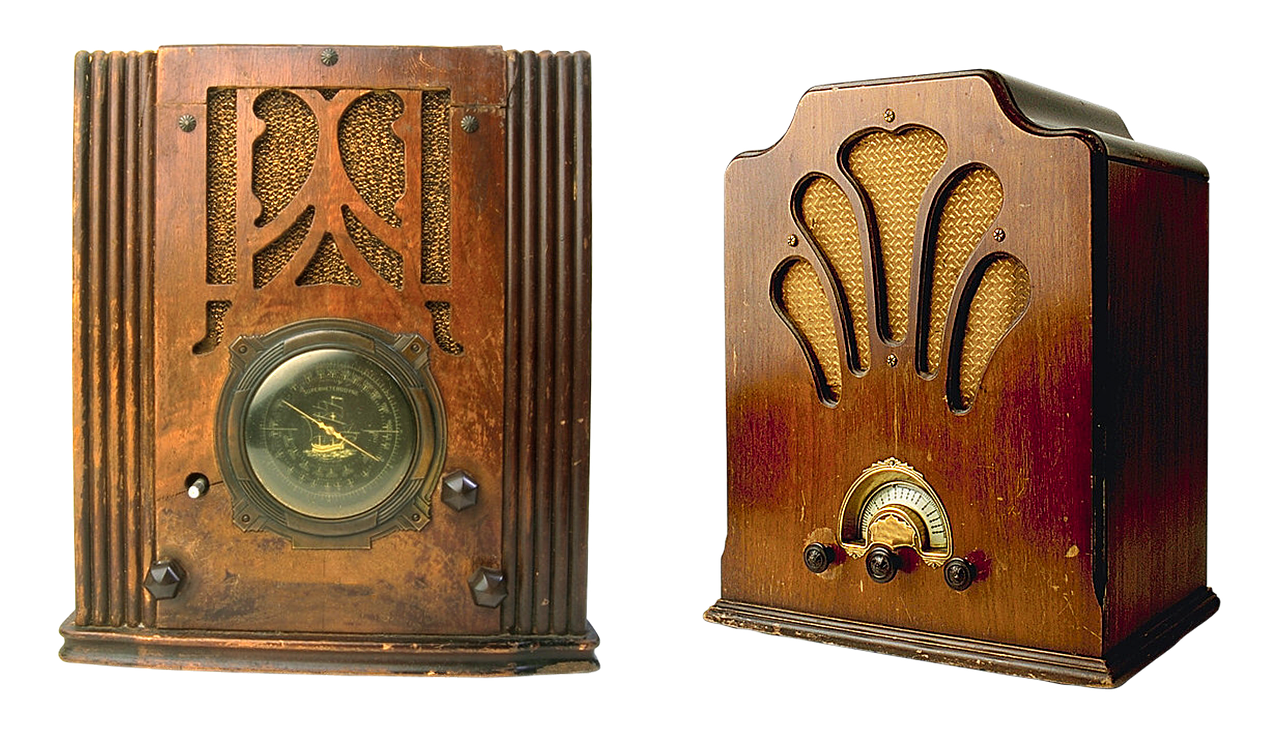
The voices in your head – depression, anxiety and fear – they lie

By David Joel Miller, MS, Licensed Therapist & Licensed Counselor.

The voices in your head, depression anxiety, and fear – they lie
Photo courtesy of Pixabay.com

Should you listen to those voices in your head?

You know the ones I mean, the doubt, the discouragement, the thoughts of depression, and anxiety. Those voices that tell you things will never be better. They say you can’t do this and you must do that. Those voices are maintaining your emotional and mental problems.

We all have those voices in our heads at times. The ones that tell us we must do something or that we will never be able to do something. How we interpret those voices makes all the difference.

Those voices in your head and you do not need to be psychotic to hear them, they arise from all sorts of things. They can be the voices of negative people from your past. Remember that those adults that told you depressing, hurtful things, they may have had an emotional problem also. It is not unusual for a depressed parent to pass those voices of despair down to their descendants.

Not all voices in our heads are negative. Sometimes they are telling us valuable information, memories from our happy experiences. But remember other times what they say are outright lies. How can you tell the difference?

Frequently, that thing we call a voice in our head is our own thoughts, thoughts heavily influenced by our emotional state.  When we are in a bad mood, down and dejected, those voices talk of doom and gloom, the tales of the depressed.

Some people take this to be the devil on one shoulder and an angel on the other. Our thoughts are telling us we should or shouldn’t do or think a particular thing.

If you are more philosophical than religious you might frame this as a conflict between your conscience and your desires. If that voice in your head is telling you to go ahead and do it, you can get away with it this one time. That is probably your desires. If the voice says that what you are thinking about is wrong – that might be your conscience. But there are exceptions.

Others of us will interpret those “voices” in our heads, those thoughts that sound so convincing that they must come from somewhere else, as messages from God or our higher power.  If you get that thought, be careful to check out this message with your spiritual adviser. The God talking to you may be a function of your emotional problems.

Another source of those “voices in your head” is the things you have been told in the past. Under times of stress, and most of life is stressful, memories of what we have been told come back.

What we constantly need to ask ourselves is – are these voices telling the truth?

Believing that because you have a sudden thought, that you must do a particular thing, can result in a lot of problems.

More cognitive humans might interpret these “voices” as automatic thoughts. Over time the things we tell ourselves and are told become so a part of us that we think these thoughts as if they were facts. Those ideas are our automatic default ways of believing even when they do not match the facts of the current situation.

These voices in our heads become problematic when we lose the ability to dispute what they are saying. We do not need to believe everything that we think. What we tell ourselves may only be true because we say it.

If you find that those voices will not be silent even when you command them. If those voices take on a personality of their own, then it is time for professional help and probably medication.

But short of a true psychotic experience, we all have those recurring thoughts that might at times sound like voices telling us things. Whether those voices are the memories of what you were told as a child or are your own imaginings, remember that sometimes the voices lie.

Not only are some of our self-talk lies but what those old voices in your head are telling you, that may be lies also.

What has your depression, bipolar, anxiety, or other emotional problem been telling you? Are your internal voices telling you the truth or has your depression been telling you lies again?

Staying connected with David Joel Miller

Seven David Joel Miller Books are available now!

My newest book is now available. It was my opportunity to try on a new genre. I’ve been working on this book for several years, but now seem like the right time to publish it.

Story Bureau.

Story Bureau is a thrilling Dystopian Post-Apocalyptic adventure in the Surviving the Apocalypse series.

Baldwin struggles to survive life in a post-apocalyptic world where the government controls everything.

As society collapses and his family gets plunged into poverty, Baldwin takes a job in the capital city, working for a government agency called the Story Bureau. He discovers the Story Bureau is not a benign news outlet but a sinister government plot to manipulate society.

Bumps on the Road of Life. Whether you struggle with anxiety, depression, low motivation, or addiction, you can recover. Bumps on the Road of Life is the story of how people get off track and how to get your life out of the ditch.

Dark Family Secrets: Doris wants to get her life back, but small-town prejudice could shatter her dreams.

Casino Robbery Arthur Mitchell escapes the trauma of watching his girlfriend die. But the killers know he’s a witness and want him dead.

Planned Accidents  The second Arthur Mitchell and Plutus mystery.

Letters from the Dead: The third in the Arthur Mitchell mystery series.

What would you do if you found a letter to a detective describing a crime and you knew the writer and detective were dead, and you could be next?

Sasquatch. Three things about us, you should know. One, we have seen the past. Two, we’re trapped there. Three, I don’t know if we’ll ever get back to our own time.

For these and my upcoming books; please visit my Author Page – David Joel Miller

Want the latest blog posts as they publish? Subscribe to this blog.

For videos, see: Counselorssoapbox YouTube Video Channel
Extra practical therapy book is coming

By David Joel Miller, MS, Licensed Therapist & Licensed Counselor.

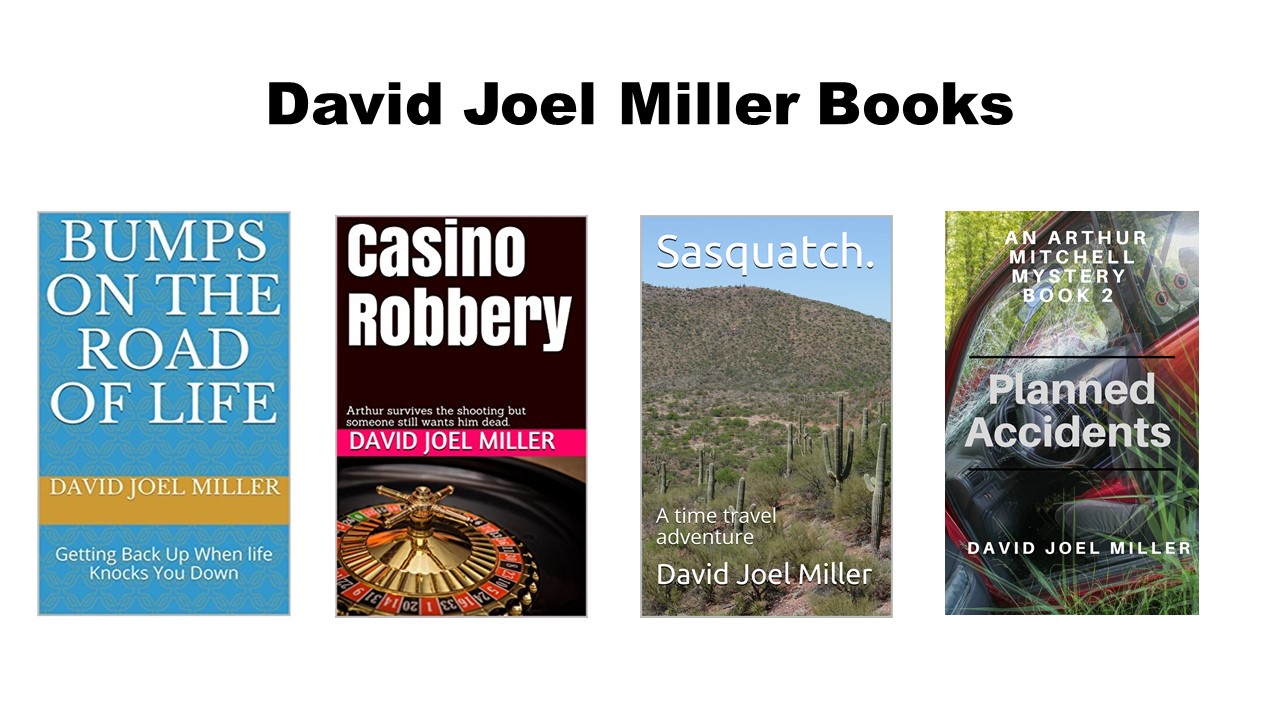
David Joel Miller Books

David Joel Miller Books

Work has resumed on the book I am writing about counseling and therapy.  The planned release date is sometime early next year.

This book is a collection of ideas about counseling and how to get the most out of the process. It is designed specifically for the non-professional. It will cover a lot of questions that so many of you have asked about counseling, therapy, mental health, substance abuse, and related topics. It will include answers to questions such as:

When should you go for counseling?

How will you know if it can help you?

Is Counseling safe and what will I need to do to make it safe and effective?

What kind of professional am I looking for?

How much does it cost and what can I do if I can’t pay?

And much more

Some of this material is from posts to counselorssoapbox.com and reader’s questions to the blog. Much new material has been added each day as the writing progresses.

It is still not too late to get your question answered. Ask now and I will try to answer your question on the blog. Longer or more detailed questions may well end up in the book.

The title is still a work in progress. Any suggestions?

As the book writing progresses, the time for blog posts is getting more difficult to include in my schedule. So some days we may need to skip posts. There have been some spectacular posts recently among the blogs I subscribe too and I plan to share some of these via reposts.

If you would like to stay connected to the posts on counselorssoapbox, the progress of my book in progress, or the flow of the conversation about mental health and substance abuse issues – please subscribe or follow counselorssoapbox.

You will find the follow button at the very tip-top of the page, in the black area, next to the counselorssoapbox.com name. And don’t forget to hit the share and the like buttons at the end of each post.

Thanks and stay tuned for the latest updates.

Staying connected with David Joel Miller

Seven David Joel Miller Books are available now!

My newest book is now available. It was my opportunity to try on a new genre. I’ve been working on this book for several years, but now seem like the right time to publish it.

Story Bureau.

Story Bureau is a thrilling Dystopian Post-Apocalyptic adventure in the Surviving the Apocalypse series.

Baldwin struggles to survive life in a post-apocalyptic world where the government controls everything.

As society collapses and his family gets plunged into poverty, Baldwin takes a job in the capital city, working for a government agency called the Story Bureau. He discovers the Story Bureau is not a benign news outlet but a sinister government plot to manipulate society.

Bumps on the Road of Life. Whether you struggle with anxiety, depression, low motivation, or addiction, you can recover. Bumps on the Road of Life is the story of how people get off track and how to get your life out of the ditch.

Dark Family Secrets: Doris wants to get her life back, but small-town prejudice could shatter her dreams.

Casino Robbery Arthur Mitchell escapes the trauma of watching his girlfriend die. But the killers know he’s a witness and want him dead.

Planned Accidents  The second Arthur Mitchell and Plutus mystery.

Letters from the Dead: The third in the Arthur Mitchell mystery series.

What would you do if you found a letter to a detective describing a crime and you knew the writer and detective were dead, and you could be next?

Sasquatch. Three things about us, you should know. One, we have seen the past. Two, we’re trapped there. Three, I don’t know if we’ll ever get back to our own time.

For these and my upcoming books; please visit my Author Page – David Joel Miller

Want the latest blog posts as they publish? Subscribe to this blog.

For videos, see: Counselorssoapbox YouTube Video Channel

Anger and Depression beat Contentment and Serenity.

By David Joel Miller, MS, Licensed Therapist & Licensed Counselor.

Angry person

Anger.
Picture courtesy of Pixabay.

How fast do you have to drive to reach Serenity?

The advertisers’ version of contentment and happiness is a car, preferably a convertible, and a supermodel of your preferred sex, driving down the highway going as fast as you can. Despite repeated efforts, most of us find no matter how fast we go we never make it to happiness or contentment.

We don’t start to look for positive emotions like contentment, serenity or happiness until we are overwhelmed by all those negative emotions. Swamped with anger and disappointment we realize we can’t run or drive fast enough to reach contentment.

What if we started the other way around?

Is it possible that the really happy person is sitting in their car in the driveway, not having anywhere they have to be? Better yet, is true happiness sitting on the grass under the tree, not having to make the payment on that new car?

Until we become so busy that we can’t do it all, we do not recognize the benefits to be had from sitting quietly and enjoying our ease.

It is only when we experience the pain of negative emotions that we are able to realize the value of those less charged positive emotions like serenity or contentment.

In the collective, we mostly say we want world peace.  But inside ourselves, whether we admit it or not, most of us are hoping for some excitement, even if it comes at the price of more stress and emotional costs.

Try running a web search for “Contentment classes” and then compare those results to “Anger Management Classes.” You will find that few people are looking for contentment, but many are looking for ways to control their anger.

Is it possible that less doing and more being could have relieved this imbalance?

People who value serenity will tell you that they found their inner peace not by more searching but by sitting still and learning to appreciate where they were and what they had.

One of the great illusions of depressions is that there is something we need to find to make us happy. More things, another person in our lives, may be nice, but that sort of happiness does not last. Learning to be content by yourself, in the situation you find yourself, leads to an inner peace that may not resemble that car ad but will be a lot more valuable in the long run.

Sad to say but it appears that everyone is motivated to flee depression, anger, and anxiety, but not many people are willing to sit still and experience contentment and serenity.

Related articles

Staying connected with David Joel Miller

Seven David Joel Miller Books are available now!

My newest book is now available. It was my opportunity to try on a new genre. I’ve been working on this book for several years, but now seem like the right time to publish it.

Story Bureau.

Story Bureau is a thrilling Dystopian Post-Apocalyptic adventure in the Surviving the Apocalypse series.

Baldwin struggles to survive life in a post-apocalyptic world where the government controls everything.

As society collapses and his family gets plunged into poverty, Baldwin takes a job in the capital city, working for a government agency called the Story Bureau. He discovers the Story Bureau is not a benign news outlet but a sinister government plot to manipulate society.

Bumps on the Road of Life. Whether you struggle with anxiety, depression, low motivation, or addiction, you can recover. Bumps on the Road of Life is the story of how people get off track and how to get your life out of the ditch.

Dark Family Secrets: Doris wants to get her life back, but small-town prejudice could shatter her dreams.

Casino Robbery Arthur Mitchell escapes the trauma of watching his girlfriend die. But the killers know he’s a witness and want him dead.

Planned Accidents  The second Arthur Mitchell and Plutus mystery.

Letters from the Dead: The third in the Arthur Mitchell mystery series.

What would you do if you found a letter to a detective describing a crime and you knew the writer and detective were dead, and you could be next?

Sasquatch. Three things about us, you should know. One, we have seen the past. Two, we’re trapped there. Three, I don’t know if we’ll ever get back to our own time.

For these and my upcoming books; please visit my Author Page – David Joel Miller

Want the latest blog posts as they publish? Subscribe to this blog.

For videos, see: Counselorssoapbox YouTube Video Channel

Your Self-talk can predict the future

By David Joel Miller, MS, Licensed Therapist & Licensed Counselor.

Self-talk.
Photo courtesy of Pixabay.com

What you tell yourself can create the things you say.

The more often you tell yourself something the more likely it is to come true. For good or bad what we tell ourselves tends to come true.

Self-talk statements are plans, not facts.

Winners tell themselves that they will win. Once you stop believing in your ability to succeed you begin to fail.

Losers tell themselves they can’t and they are almost universally right.

Your beliefs matter.

Does that mean that we all know deep down how things will turn out, that some people just have it and others do not? Not by any means. If successful people begin to doubt themselves their performance will decline. If you begin to believe that you can do something you will improve.

Something does not have to be true now for you to create it happening in the future. If you believe something so strongly that you see it as already having happened then the chances that it will occur greatly increase.

This does not mean that just believing in something will be enough to make it happen. The great fallacy of manifesting things is to believe that if you imagine something hard enough, say winning the lottery, it will happen.

What is needed to make these things you visualize materialize is to begin to take action and do the work to get you there. Instead of trying to create a sudden jump to wealth imagine yourself getting a better job. Do that work and your financial situation may improve.

Next, see yourself as being a good money manager and you will find you can get more mileage out of the money you have.

Most of your self-talk may be lies.

Most people spend the majority of their time telling themselves why they will fail. Tell yourself you do not deserve something, that you will “NEVER” be able to do something, and you will ensure your defeat.

How long have you been telling yourself these lies?

I can’t

Say this often enough and you will not be able to.

I will never

The result is you stop trying and that ensures that you will never reach this goal.

I need to

Do you really need to do a particular thing before something else can happen? If so start on that necessary project now. If not, stop putting off your dreams until someday.

If only they would

Placing the responsibility and the blame on someone else may feel like you can escape that responsibility but we find that those who look at themselves and do the work improve and those that believe their successes are the result of luck or are due to others actions, never feel good about the results even when they do win.

It is hopeless

Say this often enough and you will lose all hope.

What kind of self-talk are you using? Do you encourage yourself or put you down. What you tell yourself is what you are creating for tomorrow.

Staying connected with David Joel Miller

Seven David Joel Miller Books are available now!

My newest book is now available. It was my opportunity to try on a new genre. I’ve been working on this book for several years, but now seem like the right time to publish it.

Story Bureau.

Story Bureau is a thrilling Dystopian Post-Apocalyptic adventure in the Surviving the Apocalypse series.

Baldwin struggles to survive life in a post-apocalyptic world where the government controls everything.

As society collapses and his family gets plunged into poverty, Baldwin takes a job in the capital city, working for a government agency called the Story Bureau. He discovers the Story Bureau is not a benign news outlet but a sinister government plot to manipulate society.

Bumps on the Road of Life. Whether you struggle with anxiety, depression, low motivation, or addiction, you can recover. Bumps on the Road of Life is the story of how people get off track and how to get your life out of the ditch.

Dark Family Secrets: Doris wants to get her life back, but small-town prejudice could shatter her dreams.

Casino Robbery Arthur Mitchell escapes the trauma of watching his girlfriend die. But the killers know he’s a witness and want him dead.

Planned Accidents  The second Arthur Mitchell and Plutus mystery.

Letters from the Dead: The third in the Arthur Mitchell mystery series.

What would you do if you found a letter to a detective describing a crime and you knew the writer and detective were dead, and you could be next?

Sasquatch. Three things about us, you should know. One, we have seen the past. Two, we’re trapped there. Three, I don’t know if we’ll ever get back to our own time.

For these and my upcoming books; please visit my Author Page – David Joel Miller

Want the latest blog posts as they publish? Subscribe to this blog.

For videos, see: Counselorssoapbox YouTube Video Channel

Picture is worth a thousand words? Not always

By David Joel Miller, MS, Licensed Therapist & Licensed Counselor.

Picture.
Photo courtesy of Pixabay.com

Picture or Words?

Sometimes pictures work better than words, but sometimes pictures have a decided disadvantage.

When we need which and how to keep these two memory systems in balance is one of the challenges in building a happy recovered life.

So do you really think a picture is worth a thousand words?

Can you imagine the Declaration of Independence Picture?

OR

What do you think would have been the result of Lincoln unveiling the Gettysburg Picture?

Anyone want to go to court and plead the “Fifth Picture?”

The memory of pictures and the memory of words.

Humans appear to have at least two different memory systems. One, the emotional intuitive system, largely uses emotional sensory data. The other system is the rational word-based system.

Feelings can be conveyed well by pictures, often better than by words. I can write thousands of words about cute but that single picture of the baby or the kitten and puppies, those pictures tell you instantly what cute is at the most basic emotional level.

More complicated things, those need words to map out the concept. Abstracts like ethics and justice those need words.

Some of us get all up in our heads and we forget to make use of our feelings. In a past post, I wrote about the value of intuition based on experiences in making good decisions.

When it comes to figuring out right and wrong those emotional pictures do not seem so dependable. That’s where we need to use our reasoning and thoughts some of the time.

We therapists, like everyone else, struggle with this dichotomy. One school of counseling says you need to talk about your feelings, get in touch with how you feel, and have someone genuinely hear what is going on inside you. Those therapists spend a lot of time asking you “How do you feel about that?” Some people really can’t answer that question as they are way out of touch with their feelings.

Other therapists, I included, tend to believe that the way to be most helpful is to help you find the flaws in your thinking, get a new viewpoint and your feelings will begin to change.

A good therapeutic connection is about the relationship and that means we need to provide you with the thing that you need.

People are not required to pick one thinking style over the other. Some people are high in one style, maybe logic, maybe intuition and they are low in the other way of thinking. There are those folks who are high in using both rational thoughts and in intuitive thinking. Other people appear to be low in using both forms of thought.

Which works best for you – trust your instincts or think it through carefully? Are their times you switch up and use the other approach? Or are you one of those people who just try to avoid thinking about things and making decisions period?

In the posts to come, I plan to change it up, offer you some in-the-head logical reasons that you are the way you are, and also offer you times to get comfortable with your feelings. Let me know which works for you and what you think of the possibilities using the other approach might open up to you.

Photos courtesy of Flickr

Staying connected with David Joel Miller

Seven David Joel Miller Books are available now!

My newest book is now available. It was my opportunity to try on a new genre. I’ve been working on this book for several years, but now seem like the right time to publish it.

Story Bureau.

Story Bureau is a thrilling Dystopian Post-Apocalyptic adventure in the Surviving the Apocalypse series.

Baldwin struggles to survive life in a post-apocalyptic world where the government controls everything.

As society collapses and his family gets plunged into poverty, Baldwin takes a job in the capital city, working for a government agency called the Story Bureau. He discovers the Story Bureau is not a benign news outlet but a sinister government plot to manipulate society.

Bumps on the Road of Life. Whether you struggle with anxiety, depression, low motivation, or addiction, you can recover. Bumps on the Road of Life is the story of how people get off track and how to get your life out of the ditch.

Dark Family Secrets: Doris wants to get her life back, but small-town prejudice could shatter her dreams.

Casino Robbery Arthur Mitchell escapes the trauma of watching his girlfriend die. But the killers know he’s a witness and want him dead.

Planned Accidents  The second Arthur Mitchell and Plutus mystery.

Letters from the Dead: The third in the Arthur Mitchell mystery series.

What would you do if you found a letter to a detective describing a crime and you knew the writer and detective were dead, and you could be next?

Sasquatch. Three things about us, you should know. One, we have seen the past. Two, we’re trapped there. Three, I don’t know if we’ll ever get back to our own time.

For these and my upcoming books; please visit my Author Page – David Joel Miller

Want the latest blog posts as they publish? Subscribe to this blog.

For videos, see: Counselorssoapbox YouTube Video Channel

Where have all the feelings gone? Emotions or rational logic?

By David Joel Miller, MS, Licensed Therapist & Licensed Counselor.

Where have all the feelings gone?
Photo courtesy of pixabay.

Good feelings, bad feelings, too many or too few feelings, which is it?

You need feelings skills.

Feelings, sometimes called emotions, are one of the major things that send people to therapy. Learning appropriate feelings skills is a part of recovery regardless of what you are recovering from.

One way to define a goal of therapy is having a happy life. I have liked that definition from the first time I heard it. Some people are in so much pain that having a happy life is beyond their expectations; they might define their goal as having less pain. Reducing pain is, in my opinion, one way of describing “Happying up” your life.

Is it OK to be happy?

Recovering people are often uncomfortable with the whole idea of having a happy life. They have spent a good part of their life chasing happiness by using drugs, alcohol or sex in an effort to make them happy. Society tends to equate a good time or being happy with doing drugs or reaching for something outside yourself to make you happy.

The idea that there is something out there that can make you happy is a great deceiver. It comes as a shock to some of us that you can be happy and have fun without reaching for those outside objects.

True happiness comes from inside. Setting things right with yourself and then the rest of the world can fit in its proper place.

Are you too emotional?

Excesses of negative emotions, anger, sadness, anxiety, and so forth, are the major cause of people who come for treatment. They often define their problem as too many feelings. They say that they are “too emotional.” By two emotional they appear to mean they are flooded by negative, unpleasant emotions.

There are also those who come to the counseling room and report that they are just numb. They have lost the ability to feel anything. Sometimes they self-injure, cut, or mutilate themselves in an effort to feel again.

The great irony of using pain to feel again is that often the cause of numbness has been an intense unbearable pain. The emotional part of the body has shut down the feeling systems to protect these folks from an overload of negative emotions.

To move from an excess of negative emotions or numbness to a place where you can feel happy positive feelings require several things.

Recognize that you are feeling.

You need to get past the numbness by recognizing that you are having feelings. You need to allow yourself to experience emotions. For someone engulfed in pain and negative emotions, this can be overwhelming. We call learning to sit with negative emotions and not be swept away by them “distress tolerance.” Sometimes it is OK to feel bad, just for now. If you can hang on, those bad feelings will subside.

If you want a happier more positive life you also need to be able to recognize the positive emotions when you have them. Some people were taught that it was bad to have feelings. Turns out that avoiding emotions and trying to run you on rational logical principles only is not the solution.

Logic and rational thinking are not always correct. So just going by rules and regulations may not be the answer either.

Just because you believe it does not make it true.

In CBT therapy we spend a lot of time looking at irrational or faulty beliefs. In other forms of therapy, the emphasis is on talking through all your feelings and having someone who can really understand what you are going through. Turns out that depending on the situation both approaches can work and the same person may need to do work both on their feelings and their thinking.

There is also a connection between intuition and using feelings to help you make good decisions. There is also a connection between the various senses and the way in which we all experience our emotions.

In keeping with the theme of this blog, recovery from substance abuse and mental illness and generally having a happy life, we will spend some extra time exploring feelings, the senses, and the role of logic and intuition and having a happy recovered life.

Related articles

Staying connected with David Joel Miller

Seven David Joel Miller Books are available now!

My newest book is now available. It was my opportunity to try on a new genre. I’ve been working on this book for several years, but now seem like the right time to publish it.

Story Bureau.

Story Bureau is a thrilling Dystopian Post-Apocalyptic adventure in the Surviving the Apocalypse series.

Baldwin struggles to survive life in a post-apocalyptic world where the government controls everything.

As society collapses and his family gets plunged into poverty, Baldwin takes a job in the capital city, working for a government agency called the Story Bureau. He discovers the Story Bureau is not a benign news outlet but a sinister government plot to manipulate society.

Bumps on the Road of Life. Whether you struggle with anxiety, depression, low motivation, or addiction, you can recover. Bumps on the Road of Life is the story of how people get off track and how to get your life out of the ditch.

Dark Family Secrets: Doris wants to get her life back, but small-town prejudice could shatter her dreams.

Casino Robbery Arthur Mitchell escapes the trauma of watching his girlfriend die. But the killers know he’s a witness and want him dead.

Planned Accidents  The second Arthur Mitchell and Plutus mystery.

Letters from the Dead: The third in the Arthur Mitchell mystery series.

What would you do if you found a letter to a detective describing a crime and you knew the writer and detective were dead, and you could be next?

Sasquatch. Three things about us, you should know. One, we have seen the past. Two, we’re trapped there. Three, I don’t know if we’ll ever get back to our own time.

For these and my upcoming books; please visit my Author Page – David Joel Miller

Want the latest blog posts as they publish? Subscribe to this blog.

For videos, see: Counselorssoapbox YouTube Video Channel

Why your diagnosis does not fit

By David Joel Miller, MS, Licensed Therapist & Licensed Counselor.

Medical record

Diagnosis.
Photo courtesy of Pixabay.com

Why do they keep changing my mental health diagnosis?

If you or someone you know has a mental health diagnosis you might be wondering why the information you get is so inconsistent. You read about your diagnoses somewhere and yes you have some of those symptoms some of the time but there may be other symptoms you do not think you have had ever.

Then you see another professional and they give you a new diagnosis. Keep getting treatment and the diagnosis may keep changing. What is wrong with this? Which of the things you have been told are your problem is the correct diagnosis and why? Are the other diagnoses wrong?

You can have more than one problem.

Could be several diagnoses are correct. You could have high blood pressure and still have diabetes. You may have Depression and Anxiety and still have Partner Relational Problems.

It could also be that none of the diagnoses are right on the money and that what you are being given is a “provisional” diagnosis. As more information comes in your diagnosis might get changed. I know this is frustrating for you, it bothers most professionals also, but the truth is that the correct diagnosis is not always that clear.

“Strict Criteria” leaves a lot of people out.

Mental health diagnoses, in practice, are a lot fuzzier than they look in the textbooks. When we read research reports these are based on “strict criteria.” This means that the research participants are fully screened by someone on the researcher’s team and then they, or their files, are often reviewed again. During this process lots of potential subjects are screened out.  Anyone who has ever had a substance use disorder is not included.

So if you have bipolar disorder and have abused alcohol – no research for or about you. The result of these screening out process is that we know a lot about people who have exactly one and only one issue but not so much about anyone who has two or more problems or whose symptoms do not exactly match the “strict criteria.” The problem with getting a correct diagnosis does not end with strict criteria.

Mental illness as a brain disorder.

Mental illness, as currently understood, includes most all thinking, feeling, and behaving disorders. This creates a conflict when we start talking about “brain disorders.”

You could be born with a brain problem that makes you at more risk for depression – but then being neglected, abused, or other sad life experiences could overload your system and result in depression. So the environment can change the brain. Learning can alter your mood and if you learned to be depressed you can unlearn it.

Life experiences can and do change the wiring in your brain.  As far as your brain is concerned every thought you have is an experience as the electrical impulses and the chemical messengers move through your brain.

Change your thinking and your feelings change. As your feelings change your behavior will change. New feelings, new behavior, and your diagnoses could change.

Changes in thinking are not the only way you can change your feelings.

This freeway in your brain and nervous system moves in both directions. Change your behavior and your feelings will start to change. As your feelings change your thinking will change.

You keep changing without trying.

As you add more years to your life experiences, I am avoiding saying that anyone is getting older, your brain undergoes changes. Some of this is the result of learning and the growth of nerve cells. Other parts of the changes include hormones, puberty, menopause, and so on.

Some mental illnesses are first seen at certain times in people’s life. Schizophrenia symptoms are a lot more likely to first start or become pronounced enough to be recognized during the teen years or early twenty’s.

Bipolar Disorders do not get diagnosed until after you have had your first recognizable manic or hypomanic episode. The result is that most people first get a diagnosis of some kind of depression, with or without irritable mood and behavior, and then, later on, they may get a diagnosis of Bipolar Disorder.

As we age our symptoms may change and the diagnosis will change. The underlying person is still the same person, just the life problems they are working on have shifted.

If you do not feel that your current diagnosis is accurate, do not stress. You could try another provider or you could just wait and that diagnosis may change all on its own.

Diagnoses, like off the rack clothing rarely fit perfectly. What you need is a good enough fit that it assists you in developing a program of recovery. Sometimes that recovery program is primarily about managing your symptoms so you can stay out of the hospitals or institution. For other people recovery involves seeing how far they can take their life.

Personally, I am a believer in recovery. I have seen so many people with serious mental illnesses recover that I find it hard to believe there is anyone who can’t have some recovery in their life.

Recovery means different things to different people. Focus on what you can do, what you can improve, and see where your recovery will take you. Don’t let that ill-fitting diagnoses deter you from making the recovery journey.

Staying connected with David Joel Miller

Seven David Joel Miller Books are available now!

My newest book is now available. It was my opportunity to try on a new genre. I’ve been working on this book for several years, but now seem like the right time to publish it.

Story Bureau.

Story Bureau is a thrilling Dystopian Post-Apocalyptic adventure in the Surviving the Apocalypse series.

Baldwin struggles to survive life in a post-apocalyptic world where the government controls everything.

As society collapses and his family gets plunged into poverty, Baldwin takes a job in the capital city, working for a government agency called the Story Bureau. He discovers the Story Bureau is not a benign news outlet but a sinister government plot to manipulate society.

Bumps on the Road of Life. Whether you struggle with anxiety, depression, low motivation, or addiction, you can recover. Bumps on the Road of Life is the story of how people get off track and how to get your life out of the ditch.

Dark Family Secrets: Doris wants to get her life back, but small-town prejudice could shatter her dreams.

Casino Robbery Arthur Mitchell escapes the trauma of watching his girlfriend die. But the killers know he’s a witness and want him dead.

Planned Accidents  The second Arthur Mitchell and Plutus mystery.

Letters from the Dead: The third in the Arthur Mitchell mystery series.

What would you do if you found a letter to a detective describing a crime and you knew the writer and detective were dead, and you could be next?

Sasquatch. Three things about us, you should know. One, we have seen the past. Two, we’re trapped there. Three, I don’t know if we’ll ever get back to our own time.

For these and my upcoming books; please visit my Author Page – David Joel Miller

Want the latest blog posts as they publish? Subscribe to this blog.

For videos, see: Counselorssoapbox YouTube Video Channel